Forgotten Weapons
Published 11 Nov 2020http://www.patreon.com/ForgottenWeapons
https://www.floatplane.com/channel/Fo…
Cool Forgotten Weapons merch! http://shop.bbtv.com/collections/forg…
The rarest variation of the Webley-Fosbery automatic revolver is the .38 ACP model. Only 341 of these were made by Webley, in an attempt to compete with the new semiautomatic pistols appearing on the market — most notably the Colt Model 1900 and Model 1902. The Colt was chambered for .38 ACP, a remarkable cartridge for its time — high velocity and semi-rimmed. Webley figured that an 8-shot Fosbery-type revolver would offer the same capacity and ballistics as the new Colt, but in a revolver format familiar to the British market. The design could load cartridges individually, but also offered use of an 8-shot moon clip. Unfortunately for Webley, British legislation in 1903 hampered civilian handgun ownership and the military was not interested at all because the bore was too small. Of the 341 originally made, some were finally converted to .455 caliber after years of sitting unsold in Webley’s warehouse.
This model makes a notable appearance in Dashiell Hammett’s novel The Maltese Falcon, which quite specifically identifies it as an 8-shot, .38 caliber Webley-Fosbery. In the movie version, Humphrey Bogart mistakenly says it is an 8-shot .45, however…
Contact:
Forgotten Weapons
6281 N. Oracle #36270
Tucson, AZ 85740
February 2, 2021
.38 ACP Webley-Fosbery Automatic Revolver
QotD: Why “artistes” defended Roman Polanski before #MeToo
In 1977, Roman Polanski drugged, raped, and sodomized a 13-year-old girl. When he believed a sort-of-plea-bargain was about to come unstuck, he took it on the lam. He lived the high life in this self-imposed exile for thirty years, until busted in Switzerland recently. Now various of the usual suspects on the right wing’s enemies list are campaigning to block his extradition.
There’s a good deal of perplexity being expressed about this, and some predictable chuntering from right-wingers about lefties being moral degenerates. But this flap isn’t really about politics at all — it’s much simpler than that. It’s about people who think of themselves as “artistes” reserving themselves a get-out-of-jail card when they feel like behaving like repellent scum of the earth, too.
[…]
If you want to make that argument, Roman Polanski makes a great stake in the ground — not in spite of the heinousness of his crime, but because of it. If even a child-raper can invoke the all-purpose artiste excuse for scumminess, than the merely ordinary transgressions of artistes become trivia to be airily dismissed. And if the Polanski case becomes a “teachable moment” whereby people can be talked into feeling like boors or philistines for even thinking that artistes should be held to civilized standards of behavior, so much the better!
None of this is more than tenuously connected to leftism, and I have to say the the right-wing efforts to gin up indignation on that score sound quite contrived and stupid to me. This dispute isn’t about politics, it’s about privilege — not just whether Roman Polanski is above the law, but about whether his defenders can claim to be too.
Eric S. Raymond, “Why artists defend Roman Polanski”, Armed and Dangerous, 2009-09-29.
February 1, 2021
Battle of Hong Kong 1941 – Pacific War
Kings and Generals
Published 31 Jan 2021The first 100 people to go to https://www.blinkist.com/kingsandgenerals are going to get unlimited access for 1 week to try it out. You’ll also get 25% off if you want the full membership
Kings and Generals 3d animated historical documentary series on modern warfare continues with a video on the battle of Hong Kong of 1941. Japanese Empire is waging another Sino-Japanese war against China and decides that it is time to take over Hong Kong, as the British were using it to supply the Chinese. This battle is considered one of the first in the Pacific War within World War II.
Support us on Patreon: http://www.patreon.com/KingsandGenerals or Paypal: http://paypal.me/kingsandgenerals. We are grateful to our patrons and sponsors, who made this video possible: https://docs.google.com/document/d/1o…
The video was made by Leif Sick, while the script was developed by Ivan Moran. The video was narrated by Officially Devin (https://www.youtube.com/user/OfficiallyDevin)
✔ Merch store ► teespring.com/stores/kingsandgenerals
✔ Podcast ► http://www.kingsandgenerals.net/podcast/
✔ Twitter ► https://twitter.com/KingsGenerals
✔ Instagram ► http://www.instagram.com/Kings_GeneralsProduction Music courtesy of Epidemic Sound: http://www.epidemicsound.com
#Documentary #HongKong #PacificWar
In the wake of l’affaire GameStop, frantic regulators call for more power to intervene in the market
“Regulatory capture” is the term for situations where the regulators and the regulated begin to get too close and the regulated industries or organizations begin to indirectly control the actions of the regulator for their own benefit. A topical example would be the sudden, agonized cries of politicians and market regulators for new powers to clamp down on disruptive players like the Redditors or other small investors who triggered the rise in GameStop share prices causing potentially ruinous financial losses for regulated hedge funds.

“GameStop” by JeepersMedia is licensed under CC BY 2.0
Although the story has garnered the attention of regulators and even the White House, the wrong takeaway is to suggest options for retail investors should be restricted more than they already are. Yet this is precisely what William Gavin, Secretary of the Commonwealth of Massachusetts, has called for. Gavin argued that there should be a 30-day trading suspension on GameStop to protect “small and unsophisticated investors.”
Gavin’s suggestion would have serious extended consequences. First, consider the knowledge problem that is involved in constructing such a restrictive regulation. When exactly would a rally become unacceptable? Despite years of decline, Kodak experienced a rally after its announcement that it would move into pharmaceuticals. Would this be permissible? If so, one could simply point to GameStop’s decision to appoint three new directors in an effort to turn the company around. If this is not enough, regulators must clearly state what identified the investments as unacceptable.
It is unclear if there is a perfect benchmark to distinguish rallies. But without such a measure, the suspension proposal would put every rally at risk of wrongful closure — potentially halting the growth of companies and industries, alike. Worse yet, the fear of missing out on a rising stock may push some investors to rush in with less information than they would otherwise acquire. Even if it is in a traditional rally, an uninformed decision could cause more harm than good.
Yet suppose the knowledge problem is solved and there is a perfect measure in place. Should other protections be put in place? One could make the case for a law against allowing “unsophisticated” gamblers from going to Las Vegas and losing money. And although this may seem like a leap, Gavin himself told Reuters, “This isn’t investing, this is gambling,” when he spoke of the GameStop rally.
The rally has attracted the world’s attention, but it does not require it. Rallies are a normal part of financial market activity. The only difference here is that it was Main Street that pulled one over on Wall Street.
Four Cuts – A Wood Turning Basics Lesson
wortheffort
Published 28 May 2019There are only a few main cuts in turning and 3 turning blank orientations. Success comes from understanding the grain’s interaction with an edge/wedge. And since there are only a few handful of tools this is an easy reach for new woodworkers. Grasp this and your enjoyment of the craft and quality of results will all improve.
———————————————————-
Further Reference Material:Turn Your First Bowl – https://youtu.be/D_P8Fm5-aVs
Woodturning Demystified – https://youtu.be/I60ilWTDss0
Rough’n LIfe – https://youtu.be/xYm8-taV998
$20 Bowl in 20 minutes – https://youtu.be/hwu0R5a1QGc
4 Aspects of Bowl Blanks – https://youtu.be/N8Ds03CG49c
Make and Sell Wood Tops – https://youtu.be/wpjogm7kJdQ
Free Wood – https://youtu.be/nc1SmIlLQh8
Chucks and Jaws – https://youtu.be/qO9xi5xd5NE———————————————————-
This channel is based on the value for value proposition. We depend upon patrons like you to fund our channel if you receive value from it. The time away from “real work” that is our biggest expense. So if you feel these videos and series are of value to you and others please consider shopping and patronizing these sites:
– http://wortheffort.com
– http://instagram.com/wortheffort_ww
– http://twitter.com/wortheffort_sg
– http://patreon.com/wortheffortNon-“Affiliate” Amazon list of recommended stuff – https://www.amazon.com/ideas/amzn1.ac…
QotD: “Useless things … do not further The Revolution”
“Fat acceptance,” slutwalks, and all the rest of it follow naturally from Bolshie beliefs. If you accept — as a good little Dialectical Materialist must — that there’s nothing to human happiness but bread, shoes, and shit, ugliness — physical, moral, mental — becomes a good in itself. How could it be otherwise? Only truly useless things can be beautiful, and useless things, by definition, do not further The Revolution.
Too bad for the Bolshies that it’s in our nature to confuse the messenger with the message. I like to think of myself as an open-minded, tolerant man who takes things as they come, but holy jeeebus, I don’t care what Emma Goldman’s deal is — if she’s for it, I’m against it. I need bleach for my eyes.
We need to use that. It’s no coincidence that Ashley Judd and now Taylor Swift are spouting off about Progtard politics — they used to be cute; now they’re not. See what Social Justice does to you, ladies?
Severian, “The Face You Deserve”, Rotten Chestnuts, 2018-10-11.
January 31, 2021
Fortress Singapore Stands Alone! – WW2 – 127 – January 30, 1942
World War Two
Published 30 Jan 2021The Japanese advance on Singapore has gotten close enough that the British have destroyed the causeway to Singapore Island. The Japanese are also making attacks in the Solomon Islands, Burma, the Philippines, and the Dutch East Indies — their threat to Australia is real. Erwin Rommel’s surprise spoiler offensive in North Africa takes Benghazi, and on the eastern front the Soviets break a hole in the German lines in the north even as the temperature drops to the -50s.
Join us on Patreon: https://www.patreon.com/TimeGhostHistory
Or join The TimeGhost Army directly at: https://timeghost.tvFollow WW2 day by day on Instagram @ww2_day_by_day – https://www.instagram.com/ww2_day_by_day
Between 2 Wars: https://www.youtube.com/playlist?list…
Source list: http://bit.ly/WW2sourcesWritten and Hosted by: Indy Neidell
Director: Astrid Deinhard
Producers: Astrid Deinhard and Spartacus Olsson
Executive Producers: Astrid Deinhard, Indy Neidell, Spartacus Olsson, Bodo Rittenauer
Creative Producer: Maria Kyhle
Post-Production Director: Wieke Kapteijns
Research by: Indy Neidell
Edited by: Iryna Dulka
Sound design: Marek Kamiński
Map animations: Eastory (https://www.youtube.com/c/eastory)Colorizations by:
– Mikołaj Uchman
– Jaris Almazani (Artistic Man) – https://instagram.com/artistic.man
– Norman Stewart – https://oldtimesincolor.blogspot.com/Sources:
– JoJan, Berserker276 – from Wikimedia Commons
– National Portrait Gallery
– Termometer by Andi Nur Abdillah from the Noun Project
– Bundesarchiv – Bild 101I-811-1881-33
– Mil.ruSoundtracks from the Epidemic Sound:
– Rannar Sillard – “Easy Target”
– Jo Wandrini – “Dragon King”
– Rannar Sillard – “Split Decision”
– Craft Case – “Secret Cargo”
– Reynard Seidel – “Rush of Blood”
– Flouw – “A Far Cry”
– Fabien Tell – “Weapon of Choice”
– Johan Hynynen – “Dark Beginning”
– Gunnar Johnsen – “Not Safe Yet”
– Fabien Tell – “Last Point of Safe Return”Archive by Screenocean/Reuters https://www.screenocean.com.
A TimeGhost chronological documentary produced by OnLion Entertainment GmbH.
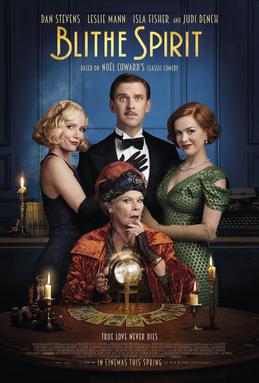
Adapting Noël Coward’s Blithe Spirit for the screen – “The ensuring film has all the light charm and witty élan of a documentary about slaughterhouses”
At The Critic, Alexander Larman is not happy with the latest attempt to translate a Coward play to the big or small screen:
Recently, the new film of Noël Coward’s masterly play Blithe Spirit was released on various streaming services, after its cinematic release was cancelled due to the irritating absence of open cinemas to show it. I had been looking forward to it for some time. It had a fine cast of hugely talented comic actors, led by Dan Stevens and including Isla Fisher, Leslie Mann, Julian Rhind-Tutt, and, in the great role of the fraudulent medium Madame Arcati, none other than Judi Dench. It was directed by Peter Hall’s talented son Edward, and its inspiration remains one of the most uproariously entertaining plays of the twentieth century, complete with some of Coward’s finest dialogue. It would be hard to mess it up.
Alas, “messed up” is an understatement when it comes to describe what has happened to the film. A clue comes in the credit: “adapted by Piers Ashworth, Meg Leonard and Nick Moorcroft”. The three of them were previously responsible for the mediocre sea-shanty comedy (not words one often writes) Fishermen’s Friends, and Ashworth and Moorcroft should be prosecuted at the cinematic equivalent of the Hague for their shameful bastardisation of Ronald Searle’s St Trinian’s series into two terrible films that bear as much relation to Searle’s illustrations as they do to Noël Coward. So it is little surprise that they have decided to “improve” on the original play. The writers throw out most of the original dialogue, retain only the bare bones of the storyline, introduce an irrelevant and mawkish subplot for Madame Arcati (who is now bewilderingly played mostly straight) and generally commit artistic vandalism.
The ensuring film has all the light charm and witty élan of a documentary about slaughterhouses. The cast do their best with the terrible material, but as Stevens manfully tries to make lines about erectile dysfunction amusing – “Mr Peasbody’s got stage fright” – the look of deep shame that occasionally comes over their faces cannot be disguised by the over-bright lighting and incongruously jaunty music. Had it been given a cinematic release, there may well have been indignant walkouts and outraged complaints at the box office. As is, I doubt that many disappointed viewers, expecting a more enjoyable film, will bother watching this travesty to the end.
M37: The Ultimate Improved Browning 1919
Forgotten Weapons
Published 8 Mar 2019http://www.patreon.com/ForgottenWeapons
Cool Forgotten Weapons merch! http://shop.bbtv.com/collections/forg…
In November of 1950, the US Ordnance Department requested an improved version of the Browning 1919 air-cooled machine gun for use in tanks. The new version was to be able to feed from either the left or right, a feature which was unimportant for an infantry gun but much more relevant when mounting guns into the tight spaces of an armored vehicle. An interim conversion of existing guns to the M1919A4E1 pattern came first, followed by manufacture of all-new guns by the Rock Island Arsenal and Saco-Lowell company from 1955 until 1957.
The design of the gun fell to Bob Hillberg at High Standard. He came up with a clever set of reversible plugs to change the bolt between left and right hand feed, as well as a captive recoil spring, manual safety, improved top cover and rear cover latches, and several other strengthened parts. He also incorporated a charging handle extension with integral manual hold open and a link ejection chute that could be mounted to either side of the gun. His T153 design was formally adopted as the M37, in caliber .30-06. A 7.62mm NATO version (the M37E1) followed as well. The M37 would serve into the late 1960s on the M48 and M60 tanks as well as several helicopters.
Contact:
Forgotten Weapons
PO Box 87647
Tucson, AZ 85754
QotD: Sixties music wasn’t what you think it was
“Rock” has always been a pretty amorphous term. Take a gander at the Hot 100 singles from 1969, the very year of Woodstock. We know about “Sugar Sugar,” of course, but there are a LOT of songs on that list that can most charitably be described as “wussy.” For every straight-up rocker like “Honky Tonk Women” (#4, and I think we can all agree that if the Stones did it back then, it was by definition rock’n’roll), there’s one that … isn’t.
Tom Jones is great, I love his stuff, but he’s not going to melt your face with his guitar riffs, and he’s there at #8, right in front of “Build Me Up, Buttercup.” Which is one hell of a catchy tune, and compared to “Love Theme from Romeo and Juliet” (#15) it’s practically Slayer, but rock it ain’t. Ray Stevens is at #61, for pete’s sake, with “Guitarzan.” If that hasn’t convinced you that The Sixties were nothing like they show in the movies (and that maybe the Viet Cong deserved to win), I don’t know what would.
Severian, “Entertainers (III): Hair Metal Attains Nirvana”, Rotten Chestnuts, 2020-10-08.
January 30, 2021
Obey your technocratic elites, peasant!
Scott Alexander considers some historical (and current) examples of you peasants being steamrolled by the powers of the government at the behest of the technological elites of the day:
I am not defending technocracy.
Nobody ever defends technocracy. It’s like “elitism” or “statism”. There is no Statist Party. Nobody holds rallies demanding more statism. There is no Citizens for Statism Facebook page with thousands of likes and followers.
[…] it worries me that everyone analyzes the exact same three examples of the failures of top-down planning: Soviet collective farms, Brasilia, and Robert Moses. I’d like to propose some other case studies:
1. Mandatory vaccinations: Technocrats used complicated mathematical models to determine that mass vaccination would create a “herd immunity” to disease. Certain that their models were “objectively” correct and so could not possibly be flawed, these elites decided to force vaccines on a hostile population. Despite popular protest (did you know that in 1800s England, anti-smallpox-vaccine rallies attracted tens of thousands of demonstrators?), these technocrats continued to want to “arrogantly remake the world in their image,” and pushed ahead with their plan, ignoring normal citizens’ warnings that their policies might have unintended consequences, like causing autism.
2. School desegregation: Nine unelected experts with Harvard and Yale degrees, using a bunch of Latin terms like a certiori and de facto that ordinary people could not understand let alone criticize, decided to completely upend the traditional education system of thousands of small communities to make it better conform to some rules written in a two-hundred-year-old document. The communities themselves opposed it strongly enough to offer violent resistance, but the technocrats steamrolled over all objections and sent in the National Guard to enforce their orders.
US Highway System needs in 1965 from “Needs of the Highway Systems 1955-1984”, a letter from the Secretary of Commerce to the House Committee on Public Works, approved May 6, 1954.
US Government Printing Office via Wikimedia Commons.3. The interstate highway system: 1950s army bureaucrats with a Prussia fetish decided America needed its own equivalent of the Reichsautobahn. The federal government came up with a Robert-Moses-like plan to spend $114 billion over several decades to build a rectangular grid of numbered giant roads all up and down the country, literally paving over whatever was there before, all according to pre-agreed federal standards. The public had so little say in the process that they started hundreds of freeway revolts trying to organize to prevent freeways from being built through their cities; the government crushed these when it could, and relocated the freeways to less politically influential areas when it couldn’t.
4. Climate change: In the second half of the 20th century, scientists determined that carbon dioxide emissions were raising global temperatures, with potentially catastrophic consequences. Climatologists created complicated formal models to determine how quickly global temperatures might rise, and economists designed clever from-first-principle mechanisms that could reduce emissions, like cap-and-trade systems and carbon taxes. But these people were members of the elite toying with equations that could not possibly include all the relevant factors, and who were vulnerable to their elite biases. So the United States decided to leave the decision up to democratic mechanisms, which allowed people to contribute “outside-the-system” insights like “Actually global warming is fake and it’s all a Chinese plot”.
5. Coronavirus lockdowns: The government appointed a set of supposedly infallible scientist-priests to determine when people were or weren’t allowed to engage in normal economic activity. The scientist-priests, who knew nothing about the complex set of factors that make one person decide to go to a rock festival and another to a bar, decided that vast swathes of economic activity they didn’t understand must stop. The ordinary people affected tried to engage in the usual mechanisms of democracy, like complaining, holding protests, and plotting to kidnap their governors – but the scientist-priests, certain that their analyses were “objective” and “fact-based”, thought ordinary people couldn’t possibly be smart enough to challenge them, and so refused to budge.
Nobody uses the word “technocrat” except when they’re criticizing something. So “technocracy” accretes this entire language around it – unintended consequences, the perils of supposed “objectivity”, the biases inherent in elite paradigms. And then when you describe something using this language, it’s like “Oh, of course that’s going to fail – everything like that has always failed before!”
But if you accept that “technocracy” describes things other than Soviet farming, Brasilia, and Robert Moses, the trick stops working. You notice a lot of things you could describe using the same vocabulary were good decisions that went well. Then you have to ask yourself: is Seeing Like A State the definitive proof that technocratic schemes never work? Or is it a compendium of rare man-bites-dog style cases, interesting precisely because of how unusual they are?
I want to make it really clear that I’m not saying that technocracy is good and democracy is bad. I’m saying that this is actually a hard problem. It’s not a morality play, where you tell ghost stories about scary High Modernists, point vaguely in the direction of Brasilia, say some platitudes about how no system can ever be truly unbiased, and then your work is done. There are actually a bunch of complicated reasons why formal expertise might be more useful in some situations, and local knowledge might be more useful in others.

The Extraordinary Voyage of USS Marblehead
The History Guy: History Deserves to Be Remembered
Published 6 Jan 2021By May 1942, nearly half of the forty surface ships of the U.S. Asiatic fleet would be sunk, including the fleet’s largest vessel, the heavy cruiser USS Houston. But the improbable survival of one of the fleet’s vessels, the light cruiser USS Marblehead, is the stuff of legend. The extraordinary voyage of the Marblehead is history that deserves to be remembered.
This is original content based on research by The History Guy. Images in the Public Domain are carefully selected and provide illustration. As very few images of the actual event are available in the Public Domain, images of similar objects and events are used for illustration.
You can purchase the bow tie worn in this episode at The Tie Bar:
https://www.thetiebar.com/?utm_campai…All events are portrayed in historical context and for educational purposes. No images or content are primarily intended to shock and disgust. Those who do not learn from history are doomed to repeat it. Non censuram.
Find The History Guy at:
Patreon: https://www.patreon.com/TheHistoryGuy
Please send suggestions for future episodes: Suggestions@TheHistoryGuy.netThe History Guy: History Deserves to Be Remembered is the place to find short snippets of forgotten history from five to fifteen minutes long. If you like history too, this is the channel for you.
Awesome The History Guy merchandise is available at:
teespring.com/stores/the-history-guyScript by THG
#usnavy #thehistoryguy #WWII
“The only thing ‘dangerous’ about a gang of Reddit investors blowing up hedge funds is that some of us reading about it might die of laughter”
Matt Taibbi says “Suck it, Wall Street!”
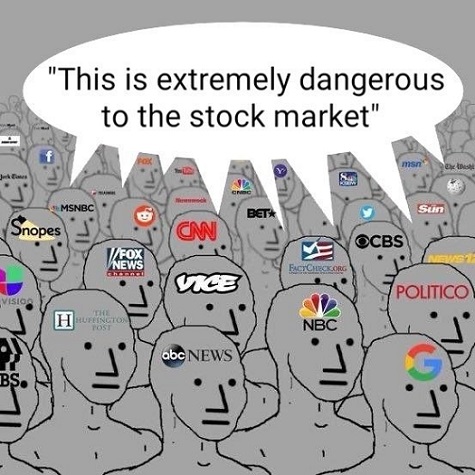
The press conveyed panic and moral disgust. “I didn’t realize it was this cultlike,” said short-seller Andrew Left of Citron Research, without irony denouncing the campaign against firms like his as “just a get rich quick scheme.” Massachusetts Secretary of State Bill Galvin said the Redditor campaign had “no basis in reality,” while Dr. Michael Burry, the hedge funder whose bets against subprime mortgages were lionized in The Big Short, called the amateur squeeze “unnatural, insane, and dangerous.”
The episode prompted calls to regulate Reddit and, finally, halt action on the disputed stocks. As I write this, word has come out that platforms like Robinhood and TD Ameritrade are curbing trading in GameStop and several other companies, including Nokia and AMC Entertainment holdings.
Meaning: just like 2008, trading was shut down to save the hides of erstwhile high priests of “creative destruction.” Also just like 2008, there are calls for the government to investigate the people deemed responsible for unapproved market losses.
The acting head of the SEC said the agency was “monitoring” the situation, while the former head of its office of Internet enforcement, John Stark, said, “I can’t imagine there isn’t an open investigation and probably a formal order to find out who’s on these message boards.” Georgetown finance professor James Angel lamented, “it’s going to be hard for the SEC to find blatant manipulation,” but they “owe it to look.” The Washington Post elaborated:
To establish manipulation that runs afoul of securities laws, Angel said regulators would need to prove traders engaged in “an intentional act to push a price away from its fundamental value to seek a profit.” In market parlance, this is typically known as a pump-and-dump scheme …
Even Nancy Pelosi, when asked about “manipulation” and “what’s going on on Wall Street right now,” said “we’ll all be reviewing it,” as if it were the business of congress to worry about a bunch of day traders cashing in for once.
The only thing “dangerous” about a gang of Reddit investors blowing up hedge funds is that some of us reading about it might die of laughter. That bit about investigating this as a “pump and dump scheme” to push prices away from their “fundamental value” is particularly hilarious. What does the Washington Post think the entire stock market is, in the bailout age?
H/T to Larry Correia for the link.
Toyota’s Invincible Truck
Big Car
Published 1 Nov 2020Toyota’s best-selling vehicle is the long-running Toyota Corolla, but second is Toyota’s resilient pickup the Hilux that’s been sold for over 50 years. No matter where you are in the world, you’ll likely find one moving up to a ton of cargo down a dusty lane. In the process it’s turned into a bit of a Jekyll and Hyde vehicle. On the one hand it’s the basic indestructible commercial vehicle that thousands of businesses rely on every day. On the other it’s become a well-specced weekend leisure vehicle. And in some cases it’s a bit of both! So why did this unassuming vehicle get a place of honour at the Top Gear studio, and what other successful vehicles have been born out of this long-running pickup?
If you’d like to support what I do, and get early access to advert-free videos and exclusive channel updates, please consider supporting the channel from just $1 or 80p a month: http://patreon.com/bigcar
QotD: Positional goods and social signalling
PC-brigadiers behave exactly like owners of a positional good who panic because wider availability of that good threatens their social status. The PC brigade has been highly successful in creating new social taboos, but their success is their very problem. Moral superiority is a prime example of a positional good, because we cannot all be morally superior to each other. Once you have successfully exorcised a word or an opinion, how do you differentiate yourself from others now? You need new things to be outraged about, new ways of asserting your imagined moral superiority.
You can do that by insisting that the no real progress has been made, that your issue is as real as ever, and just manifests itself in more subtle ways. Many people may imitate your rhetoric, but they do not really mean it, they are faking it, they are poseurs … You can also hugely inflate the definition of an existing offense … Or you can move on to discover new things to label “offensive”, new victim groups, new patterns of dominance and oppression.
If I am right, then Political Correctness is really just a special form of conspicuous consumption, leading to a zero-sum status race. The fact that PC fans are still constantly outraged, despite the fact that PC has never been so pervasive, would then just be a special form of the Easterlin Paradox.
Kristian Niemietz, “The economics of political correctness”, Institute of Economic Affairs, 2014-04-30.