Lindybeige
Published 26 Feb 2011A weapon can be very effective even if it never actually kills anyone.
Support me on Patreon: https://www.patreon.com/Lindybeige
Lindybeige: a channel of archaeology, ancient and medieval warfare, rants, swing dance, travelogues, evolution, and whatever else occurs to me to make.
▼ Follow me…
Twitter: https://twitter.com/Lindybeige I may have some drivel to contribute to the Twittersphere, plus you get notice of uploads.
website: www.LloydianAspects.co.uk
May 16, 2021
Bayonets
QotD: Emmanuel Goldstein’s Theory and Practice of Oligarchal Collectivism as applied in Afghanistan
Orwell/Goldstein’s “main point” is the permanent emergency and the advantages that gives the state. The Afghan war can never end because it has no war aims, which means the conditions of victory and defeat are unknown and unknowable, and can never be met. Why America chooses to wage war that way is a question for another day, but there are certainly economic elements at play: Many people have grown rich on an outmoded model of national strength that puts carrier groups in every pond around the globe — the “Floating Fortresses” of Orwell’s vision — while China takes over the planet unencumbered by such things.
Mark Steyn, “Essential Structure and Irreconcilable Aims”, Steyn Online, 2021-01-31.
May 15, 2021
Baelin’s Route review, a discussion on why Viva La Dirt League’s Baelin’s Route is such a great story
Writers Block
Published 10 May 2021In this video we will discuss why Viva La Dirt League’s movie Baelin’s Route is such a masterpiece of story telling.
Viva La Dirt League — Baelin’s Route https://www.youtube.com/watch?v=PEe-Z…
Adventures in military procurement
Back in September, Matt Gurney wrote about the generations-long travesty that is the Canadian government’s procurement system for the Canadian Armed Forces. I missed it at the time, but — this is a shock, I know — it’s still fully accurate and up-to-date, because the government hasn’t done anything to address the blatant failings of the “system”:
Some history first: during the Second World War, Canada manufactured hundreds of thousands of Browning “Hi-Power” 9mm pistols. The pistols were originally made by Belgian manufacturer FN, but Belgium, of course, was overrun by the Nazis early in the war. The schematics and part diagrams were evacuated before the Germans arrived and the pistol saw service in numerous allied militaries. The Canadian army ended up acquiring 60,000 of them, all built in 1944 and 1945. And here’s where things get bonkers: we’ve never replaced them. Some Canadian military units have used more modern pistols, acquired in smaller batches, but the standard sidearm of the Canadian Armed Forces, today, isn’t just the same kind of pistol we used in the Second World War. It’s literally the same pistols.
Reliability issues with the pistols are a chronic problem. I mean, they’re 75 years old, and they’ve been in use continuously. Our military weapons technicians do what they can, and they’ve been stripping some pistols for spare parts to put into other pistols for decades. But the Hi-Powers are in desperate need of a replacement. They’re a generation overdue for replacement. But in keeping with the finest traditions of Canadian military procurement, we can’t get it done. It’s beyond our ability.
We’ve tried, sort of. At the start of 2017, the military began work on a replacement program that would have procured up to 25,000 new 9mm semi-automatic pistols for the Canadian Armed Forces. The military gave itself 10 years to get this accomplished and budgeted $50 million. It’s hard to overstate how crazy that is. Pistols aren’t complicated. If you have a credit card and a firearms licence, you can walk into a store and buy one. A lot of what the military needs is super complex and custom-made. Pistols are easy. There are factories all over the world that are already producing proven, reliable, affordable designs. Buying new pistols has got to be about the simplest procurement any military is ever going to face. And we still thought we’d need 10 years to do it. A decade.
The amazing thing is, by total fluke, in 2016, the British also decided they needed new pistols. And they also decided they needed 25,000 of them. This is entirely coincidental, but it’s a fantastically convenient coincidence: it’s a rare apples-to-apples comparison of two national procurement systems. And how’d it go?
Well, the Brits selected a type of pistol, purchased 25,000 of them and issued them to their military units by 2018. They wrapped the whole thing up in two years. The total cost was $15,000,000.
In Canada, we set a 10-year goal for the same thing, budgeted more than three times as much … but never got it off the ground. No progress was made.
So now, the military is trying again.
When I was in the militia in the late 1970s, we trained with the Browning, although even then we were told it was slated to be replaced within a few years. After thirty-some years of heavy use, the guns were still going strong, but definitely showing significant signs of wear and were probably already at the point they should have been retired even then.

Machine Gun Terminology Part 2: SMG, PDW, & Machine Pistol
Forgotten Weapons
Published 12 Jan 2018http://www.patreon.com/ForgottenWeapons
Cool Forgotten Weapons merch! http://shop.bbtv.com/collections/forg…
Today we have Part 2 of machine gun terminology — the small caliber guns. Specifically, submachine guns, personal defense weapons, and machine pistols. [Part 1 is here]
Submachine Gun: Pistol caliber, fully automatic, and fitted with a shoulder stock. For example, Thompson, MP40, MAS-38.
Machine pistol: Handgun form factor and fully automatic. For example, Glock 18, Mauser Schnellfeuer, Stechkin.
Automatic Rifle: Shoulder or hip fired, limited magazine capacity, minimal sustained fire capacity. Examples: M1918 BAR, Chauchat.
Personal Defense Weapon: (1) Armor-piercing or (2) holsterable submachine gun, not intended for front line combat. For example, FN P90, H&K MP7, Czech vz.61 Skorpion, Polish PM63 Rak.
If you enjoy Forgotten Weapons, check out its sister channel, InRangeTV! http://www.youtube.com/InRangeTVShow
QotD: Military history
Things have changed little today in terms of the exclusive Western monopoly of military history. Six billion people on the planet are more likely to read, hear, or see accounts of the Gulf War (1990) from the American and European vantage points than from the Iraqi. The story of the Vietnam War is largely Western; even the sharpest critics of America’s involvement put little credence in the official communiqués and histories that emanate from communist Vietnam. In the so-called Dark Ages of Europe, more independent histories were still published between A.D. 500 and 1000 than during the entire reigns of the Persian or Ottoman Empire. Whether it is history under Xerxes, the sultan, the Koran, or the Politburo at Hanoi, it is not really history — at least in the Western sense of writing what can offend, embarrass and blaspheme.
Victor Davis Hanson, Carnage and Culture: Landmark Battles in the Rise of Western Power, 2001.
May 14, 2021
100,000 Dead British Subjects in Burma – WAH 034 – May 1942, Pt. 1
World War Two
Published 13 May 2021A large number of European and asian inhabitants of South-East Asia are locked up in Japanese prison camps, while in Burma, a big refugee crisis claims the lives of thousands. In Auschwitz-Birkenau and Sobibor, gassing Jews on an immense scale begins.
(more…)
Recycling when it makes economic sense? Good. Recycling just because? Not good at all.
Tim Worstall explains why a new push to mandate recycling rare earth from consumer electronic devices will be a really, really bad idea … so bad that it’ll waste more resources than are recovered by the recycling effort:
[Indium is] the thing that makes touchscreens work. Lovely stuff. Normally extracted as a byproduct of getting zinc from spharelite. Usual concentrations in the original mineral are 45 to 500 parts per million.
Now, note something important about a by product material like this. If we recycle indium we don’t in fact save any indium from spharelite. Because we mine spharelite for the zinc, the indium is just a bonus when we do. So, we recycle the indium we’re already using. We don’t process out the indium in our spharelite. We just take the same amount of zinc we always did and dump what we don’t want into the gangue, the waste.
So, note what’s happened. We recycle indium and yet we dig up exactly the same amount of indium we always did. We just don’t use what we’ve dug up – we’re not in fact saving that vital resource of indium at all.
[…]
The number of waste fluorescent lamps arising has been declining since 2013. In 2025, it is estimated there will be 92 tonnes of CRMs in waste fluorescent lamps (Ce: 10 tonnes, Eu: 4 tonnes, La: 13 tonnes, Tb: 4 tonnes and Y: 61 tonnes).
That would be the recovery from all fluorescent lamps in Europe being recycled. In a few – there’s not that much material so therefore only a few plants are needed, meaning considerable geographic spread – plants dotted around.
That’s $50k of cerium, about $100k of europium, $65k of lanthanum, $2.8 million of terbium and $2.2 million of yttrium. To all intents and purposes this is $5 million of material. For which we must have a Europe-wide collection system?
They do realise this is insane which is why they insist that this must be made law. Can’t have people not doing stupid things now, can we?
Just to give another example – not one they mention. As some will know I used to supply rare earths to the global lighting industry. One particular type uses scandium. In a quarter milligram quantity per bulb. Meaning that even with perfect recycling you need to collect 4 million bulbs to gain a kilo of scandium – worth $800.
Tank Chats Special | Pak 43/41 Anti-Tank Gun | The Tank Museum
The Tank Museum
Published 18 Sep 2020The Tank Museum’s Archive and Library Manager Stuart Wheeler presents this Tank Chat Special on the Pak 43/41. Find out the history behind the infamous anti-tank gun and the story behind how it came to be in The Tank Museum’s collection — from its time as a gate-guard, to its restoration, and finally its display in the Museum.
Support the work of The Tank Museum on Patreon: ► https://www.patreon.com/tankmuseum
Visit The Tank Museum SHOP & become a Friend: ► tankmuseumshop.orgTwitter: ► https://twitter.com/TankMuseum
Instagram: ► https://www.instagram.com/tankmuseum/
#tankmuseum #tanks
QotD: Gun safety
The really hard part about firearm safety is that they’re Schrodinger devices. Every firearm is both loaded and unloaded at the same time.
When you need them to be unloaded, they have a bullet in the chamber, ready to fire.
When you really need one to be loaded, they make that really sad “click” which tells you you need more ammo.
Chad Irby, posted to the comments at Wizbang, 2005-03-10. (original link had gone stale … updated with current archive link).
May 13, 2021
What can you do with a chisel?
Rex Krueger
Published 12 May 2021Learn how to use the chisel: the most versatile tool in your shop!
More video and exclusive content: http://www.patreon.com/rexkrueger
(more…)
Canada’s (subdued-but-real) class system
In The Line, Howard Anglin offers some observations on how Canada’s class system developed and how it can be very roughly delineated:
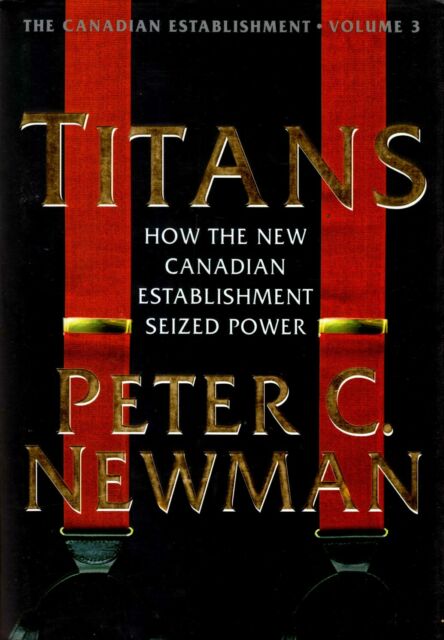
This comfortably flat image of our social hierarchy, however, belies a more complicated series of gradations that, while clearly marked, are rarely observed and almost never described accurately. Peter C. Newman mapped some of the terrain in his three volumes on The Canadian Establishment, but his account was already dated when he began it in 1975 and it was a work of history rather than social commentary by the time he finished in 1998. [Line editor Jen] Gerson’s own description of the Canadian class system explains why it can be hard for outsiders, and even insiders, to see it: “[W]e manage the cognitive dissonance presented by the haves and have-nots of housing,” she says, “by requiring our rich people to keep quiet. They should wear clothes that are well-cut and well-designed, but not flash. Buy the multi-millionaires car, but paint it in a sedate hue.”
Social sorting is intrinsic to human nature, perhaps even necessary — as the Bard has Ulysses remind us: “Take but degree away … and, hark, what discord follows!” — and it’s here in Canada too, if you look for it. Like the United States, Canadians early on replaced a class system based on titles with one based on the more easily-acquired currency of, well, currency. And, as in America, this immediately created a new opportunity for class to subtly reassert itself.
I used to joke that the only meaningful class division in Canada is whether you use “summer” as a noun or as a verb; lately I’ve developed the Starbucks test. In this analogy, Starbucks is Canada’s middle class, with Tim Hortons and fast food franchise coffee below, and specialty cafes and boutique chains (Matchstick, Phil & Sebastian, Bridgehead) above.
Unlike the crude measure of income, coffee choice better replicates a traditional class system because it carries an implicit sense of social solidarity, cultural assumptions and biases. During the days of the Harper government, Tim Hortons became a symbol to a certain sort of conservative as iconic as the Greek fisherman’s cap is to aging Marxists. The Maple Leaf red cup represented the honest values of rural and suburban working families, in contrast to the globalist elites with their overpriced green Starbucks. Starbucks was sipped at dog parks and served in board rooms; Tim Hortons got the job done on a cold winter morning: it was Don Cherry in a mug.
The Starbucks test is a silly heuristic, but it reveals something about the complex nature of class: an aristocrat may be penniless, and a billionaire may love his Tims. It also puts the middle class back in its traditional place as the uneasy middle-child of the social order.
In the old British system, there was pride in being working class. There was a bond of mutual support that grew out of the shared experience of hard labour and was reinforced by institutions like working men’s clubs, the British Legion, and the trade union movement. The middle-class striver with his airs and pretensions, his flash new car and his evolving accent, was a figure of general mockery, even more to the working men he left behind than to the upper classes he aspired to join. Class was about more than money; it was an identity. And there was nothing that gave you away as middle class more than worrying about being middle class — an anxiety exploited by Nancy Mitford in her tongue-in-cheek guide to “U” and “Non-U” language and behaviour. The Starbucks test reveals something similar, something more reflective of Canada’s reality than the Liberal vision of one big happy middle-class family.
Tim Worstall explained that the British middle class is still despised by the upper class and hated by the lower class. Not a model for encouraging aspirational working class folks to “move up”.
Were There Really BLACK CONFEDERATES???!!!
Atun-Shei Films
Published 24 Dec 2020Checkmate, Lincolnites! Debunking the Lost Cause myth that tens of thousands of black men served as soldiers in the Confederate army during the American Civil War.
Support Atun-Shei Films on Patreon ► https://www.patreon.com/atunsheifilms
Leave a Tip via Paypal ► https://www.paypal.me/atunsheifilms
Buy Merch ► teespring.com/stores/atun-shei-films
#CheckmateLincolnites #CivilWar #AmericanHistory
Original Music by Dillon DeRosa ► http://dillonderosa.com/
Reddit ► https://www.reddit.com/r/atunsheifilms
Twitter ► https://twitter.com/atun_shei~REFERENCES~
[1] “Black Confederate Movement ‘Demented'” (2014). AmericanForum https://youtu.be/fYFIWlGJhjM
[2] Sam Smith. “Black Confederates: Myth and Legend.” American Battlefield Trust https://www.battlefields.org/learn/ar…
[3] “25th USCT: The Sable Sons of Uncle Abe.” National Park Service https://www.nps.gov/articles/25-usct.htm
[4] Justin A. Nystrom. New Orleans After the Civil War (2010). Johns Hopkins Press, Page 20-27
[5] Kevin M. Levin. Searching for Black Confederates (2019). University of North Carolina Press, Page 45
[6] James Parton. General Butler in New Orleans (1864). Mason & Hamlin, Page 516-517
[7] Levin, Page 12-15
[8] Levin, Page 34-35
[9] Myra Chandler Sampson & Kevin M. Levin. “The Loyalty of ‘Heroic Black Confederate’ Silas Chandler” (2012). HistoryNet https://www.historynet.com/loyalty-si…
[10] Levin, Page 82-83
[11] James G. Hollandsworth, Jr. “Looking for Bob: Black Confederate Pensioners After the Civil War” (2007). The Journal of Mississippi History, Vol. LXVIX, Page 304-306
[12] Lewis H. Steiner. An Account of the Operations of the U.S. Sanitary Commission During the Campaign in Maryland, September 1862 (1862). Anson D. F. Randolph, Page 19-20
[13] Levin, Page 32-33
[14] Charles Augustus Stevens. Berdan’s United States Sharpshooters in the Army of the Potomac (1892). Price-McGill Company, Page 54-55
[15] Levin, Page 44
[16] Andy Hall. “Frederick Douglass and the ‘N*gro Regiment’ at First Manassas” (2011). Dead Confederates Blog https://deadconfederates.com/2011/07/…
[17] Jaime Amanda Martinez. “Black Confederates” (2018). Encyclopedia Virginia https://www.encyclopediavirginia.org/…
[18] Levin, Page 58-61
[19] Levin, Page 39
[20] Levin, Page 46
QotD: Blogging
A wire story consists of one voice pitched low and calm and full of institutional gravitas, blissfully unaware of its own biases or the gaping lacunae in its knowledge. Whereas blogs have a different format: Clever teaser headline that has little to do with the actual story, but sets the tone for this blog post. Breezy ad hominem slur containing the link to the entire story. Excerpt of said story, demonstrating its idiocy (or brilliance) Blogauthor’s remarks, varying from dismissive sniffs to a Tolstoi-length rebuttal. Seven comments from people piling on, disagreeing, adding a link, acting stupid, preaching to the choir, accusing choir of being Nazis, etc.
I’d say it’s a throwback to the old newspapers, the days when partisan slants covered everything from the play story to the radio listings, but this is different. The link changes everything. When someone derides or exalts a piece, the link lets you examine the thing itself without interference. TV can’t do that. Radio can’t do that. Newspapers and magazines don’t have the space. My time on the internet resembles eight hours at a coffee shop stocked with every periodical in the world — if someone says “I read something stupid” or “there was this wonderful piece in the Atlantic” then conversation stops while you read the piece and make up your own mind.
James Lileks, The Bleat, 2002-10-10.