Quotulatiousness

July 13, 2021

HMCS Bonaventure – Guide 143

Filed under: Britain, Cancon, History, Military — Tags: , , , , , — Nicholas @ 02:00

Drachinifel
Published 21 Sep 2019

Canada’s last carrier is today’s subject for discussion.

Want to support the channel? – https://www.patreon.com/Drachinifel​

Want a shirt/mug/hoodie – https://shop.spreadshirt.com/drachini…​

Want a medal? – https://www.etsy.com/uk/shop/Drachinifel​

Want to talk about ships? https://discord.gg/TYu88mt

Want to get some books? www.amazon.co.uk/shop/drachinifel

Drydock Episodes in podcast format – https://soundcloud.com/user-21912004

QotD: Girls and witchcraft

Filed under: Books, History, Media, Quotations — Tags: , , , , — Nicholas @ 01:00

Like many Canadian teenage girls who came of age in the 1990s, I grew up on 2% milk, dime-store candy and tales of the occult. I was slightly too old for the Harry Potter craze, falling instead for Buffy the Vampire Slayer and films such as The Craft. One of my special favorites was Sabrina the Teenage Witch, an ABC series about a magical American teenager who lives with her 500-year-old aunts and a talking cat.

Witchcraft fascinated me. When girls reach that liminal time between child and woman, our bodies transform — and, with them, our sense of control. It’s a strange thing to go from being cosseted and encouraged to desired and despised. It feels a little like dark magic — though not the kind one can control. Unless, of course, you are a witch.

Like the magical artifacts Harry Potter is always stumbling upon, witchcraft offers power. It promises a way to re-shape the world to a girl’s advantage, to gain freedom from parents, to toy with boys’ hearts while numbing one’s own. Male magic fantasies tend to be centred around power and combat — with lightning perpetually emanating from wands and fingertips into the chests of adversaries blown backwards. However, the sort of witchcraft that interests me is more subtle, and sometimes passes unseen. (In real life, such powers originate in sex — but it takes time for a girl to learn that.) It’s no coincidence that the world of witchcraft becomes a dark mirror of our society, reflecting the dispositions and paranoias of our times. When times are good, the witch is portrayed as a benign, bubbly figure; when they are not, the witch becomes malevolent and dark, in line with medieval lore.

Jen Gerson, “Sabrina the Woke Witch is a Disgrace to Baphomet”, Quillette, 2018-11-26.

July 12, 2021

“The Royal Guard” – Livgardet and the Kalabalik at Bender – Sabaton History 104 [Official]

Filed under: Europe, History, Media, Military — Tags: , , , — Nicholas @ 04:00

Sabaton History
Published 10 Jul 2021

From the devastated battlefield of Poltava to the long exile in the Ottoman Empire, Livgardet never abandoned their King. Even when King Karl XII found himself surrounded by thousands of foes, the remaining four men of his Royal Guard stood by his side. Pistols raised and sabers drawn, the Swedes fought through smoke and fire in the Kalabalik at Bender, protecting their King’s life with their own.

Support Sabaton History on Patreon: https://www.patreon.com/sabatonhistory

Listen to “The Royal Guard” on the album: https://music.sabaton.net/TheRoyalGuard

Watch the Official Music Video of “The Royal Guard” here: https://www.youtube.com/watch?v=kZN5b…

Listen to Sabaton on Spotify: http://smarturl.it/SabatonSpotify
Official Sabaton Merchandise Shop: http://bit.ly/SabatonOfficialShop

Hosted by: Indy Neidell
Written by: Markus Linke and Indy Neidell
Directed by: Astrid Deinhard and Wieke Kapteijns
Produced by: Pär Sundström, Astrid Deinhard and Spartacus Olsson
Creative Producer: Maria Kyhle
Executive Producers: Pär Sundström, Joakim Brodén, Tomas Sunmo, Indy Neidell, Astrid Deinhard, and Spartacus Olsson
Community Manager: Maria Kyhle
Post-Production Director: Wieke Kapteijns
Editor: Karolina Dołęga
Sound Editor: Marek Kaminski
Archive: Reuters/Screenocean – https://www.screenocean.com

Sources:
– Photo of Axel Rose courtesy of andres fernando allain https://commons.wikimedia.org/wiki/Fi…
– Nationalmuseum
– Painting of King Charles XII in Turkey courtesy of Allan Egnell https://commons.wikimedia.org/wiki/Fi…

All music by: Sabaton

An OnLion Entertainment GmbH and Raging Beaver Publishing AB co-Production.

© Raging Beaver Publishing AB, 2019 – all rights reserved.

Shooting the Ishapore MkIII Vickers-Berthier LMG

Filed under: History, India, Military, Weapons, WW2 — Tags: , , — Nicholas @ 02:00

Forgotten Weapons
Published 20 Sep 2017

http://www.patreon.com/ForgottenWeapons

Cool Forgotten Weapons merch! http://shop.bbtv.com/collections/forg…​

The Vickers-Berthier MkIII was adopted by the Indian army in 1933, and served through World War Two and into the 1970s (at least). It is chambered for the standard .303 British cartridge, fires from an open bolt, and uses top-mounted 30-round magazines. I didn’t know exactly what to expect when I had the chance to fire this one — and it turned out the be an excellent experience.

The rate of fire on the Vickers-Berthier is relatively low, and I found it to be an exceptionally stable and controllable gun to fire from its bipod. I don’t know if it’s the unusual muzzle brake design or other factors as well, but the sight picture remains stable and clear in a way that few other LMGs have matched in my experience.

Thanks to Marstar for letting me examine and shoot their Vickers-Berthier!

If you enjoy Forgotten Weapons, check out its sister channel, InRangeTV! http://www.youtube.com/InRangeTVShow

QotD: Führerprinzip

Filed under: Bureaucracy, Germany, History, Quotations, WW2 — Tags: , , , , , — Nicholas @ 01:00

All revolutions bring out the weirdos, of course, and go through purity spirals, and the rest, but the English, American, French, and Bolshevik revolutionaries had a clear, universalizing ideology — a coherent worldview, a real body of doctrine, hashed out in hard debates among serious thinkers. The Nazis were a lot more intellectual, and more ideological, than they’re given credit for, but they were unique in their ideological commitment to Führerprinzip, the “leader principle.” Such that while, say, Communism in practice ended up being “whatever Comrade Lenin says it is,” Nazism started out that way.

Because of this, it was easy to “project” onto Hitler. It was one of the keys of his appeal. When he talked about “international finance capital,” for instance, he often meant “Jews” … but often he didn’t, and even when he did, you could fairly easily convince yourself that he didn’t. Same with his other big bugbear, “Jewish Bolshevism.” Was he primarily an anti-Semite, or an anti-Communist? You could convince yourself either way — that the part you didn’t like was just a personal psychological quirk of Hitler’s, while the part you did like was “true Nazism.”

Unlike the Bolshies, then, or the French or even American and English revolutionaries, you really didn’t know what Hitler and the boys would do once they were in power. You knew it wasn’t going to be sunshine and roses for the folks in tiny hats, of course, but you could very easily convince yourself that stuff was only a small part of Hitler’s program. So much really depended on one man’s psychology.

Which fed into the other big ideological pillar of Nazism, Social Darwinism. The Nazis weren’t the hyper-organized, hyper-efficient monsters of popular imagination. Their org charts looked like plates of spaghetti, by design. Indeed it was often hard to tell who, exactly, was in charge of what — again, by design. Just to take one prominent example, Heinrich Himmler was, in his capacity as head of the German Police, nominally subordinate to the interior minister, Wilhelm Frick … but as head of the SS he controlled a much more powerful organization, and he used it to split the police into several bureaus (Orpo, Kripo, etc., for the specialists), which were then amalgamated into the Reich Main Security Office. Plus, guys in the various police organizations also held SS rank…

All of this, again, was explicitly ideological. As Social Darwinists, the Nazis wanted the various groups to fight it out, letting the most talented (and, needless to say, ruthless) guys rise to the top. Power was wielded by whomever seized it, in whatever capacity. Again, you had Adolf Eichmann running the entire Reich’s transport network in the darkest, most desperate part of the war … and he was a lieutenant-colonel. Not even an Army LTC; he only held rank in the SD, the secret police.

In practice, then, you had little islands of authority. The guys in charge were all freelancers, advancing The Cause however they saw fit, with whatever tools they had to hand. SA guys (brownshirts, “storm troopers”) and SS guys were always locked in conflict with each other; inside the SS, the “general SS” lost out to the SD, all of whom were backstabbing each other. The Wehrmacht and the Waffen-SS were always stomping on each other in the field, constantly squabbling over equipment, manpower, areas of responsibility … even the occupation governments were a mess, with some functions falling to the Army, some to the HSSPF (the parallel SS/SD adminstration), some to the Waffen-SS, some to the Einsatztruppen, and all with the approval of the head honchos, which is why e.g. Poland (the “General Government“) was such a mess … and why such comprehensively awful shit happened there (when you’ve got SOBs on the order of Hans Frank and Odilo Globocnik competing to out-asshole each other, it’s really, really bad).

Severian, “AMA Response: Revolutions”, Rotten Chestnuts, 2021-02-10.

July 11, 2021

Fall Blau – A Victim of Its Own Success? – 150 – WW2 – July 10, 1942

Filed under: Africa, Europe, Germany, History, Military, Russia, WW2 — Tags: , , , , , , , — Nicholas @ 04:00

World War Two
Published 10 Jul 2021

Adolf Hitler is not happy, and yet phase one of Fall Blau has accomplished all of its goals and done so ahead of the timetable. However, the Soviet Army in 1942 is not the same as that in 1941, and is not waiting around this time to be captured by the hundreds of thousands, and if things continue then the Axis might just be wasting a ton of gas to take a ton of empty space.
(more…)

An “ongoing moral panic against the specter of ‘white supremacy’, which is now bizarrely regarded as an accurate description of the largest, freest, most successful multiracial democracy in human history”

From Andrew Sullivan‘s Weekly Dish free excerpt:

“What happened to you?”

It’s a question I get a lot on Twitter. “When did you become so far right?” “Why have you become a white supremacist, transphobic, misogynistic eugenicist?” Or, of course: “See! I told you who he really was! Just take the hood off, Sully!” It’s trolling, mainly. And it’s a weapon for some in the elite to wield against others in the kind of emotional blackmail spiral that was first pioneered on elite college campuses. But it’s worth answering, a year after I was booted from New York Magazine for my unacceptable politics. Because it seems to me that the dynamic should really be the other way round.

The real question is: what happened to you?

The CRT debate is just the latest squall in a tempest brewing and building for five years or so. And, yes, some of the liberal critiques of a Fox News hyped campaign are well taken. Is this a wedge issue for the GOP? Of course it is. Are they using the term “critical race theory” as a cynical, marketing boogeyman? Of course they are. Are some dog whistles involved? A few. Are crude bans on public servants’ speech dangerous? Absolutely. Do many of the alarmists know who Derrick Bell was? Of course not.

But does that mean there isn’t a real issue here? Of course it doesn’t.

Take a big step back. Observe what has happened in our discourse since around 2015. Forget CRT for a moment and ask yourself: is nothing going on here but Republican propaganda and guile? Can you not see that the Republicans may be acting, but they are also reacting — reacting against something that is right in front of our noses?

What is it? It is, I’d argue, the sudden, rapid, stunning shift in the belief system of the American elites. It has sent the whole society into a profound cultural dislocation. It is, in essence, an ongoing moral panic against the specter of “white supremacy”, which is now bizarrely regarded as an accurate description of the largest, freest, most successful multiracial democracy in human history.

We all know it’s happened. The elites, increasingly sequestered within one political party and one media monoculture, educated by colleges and private schools that have become hermetically sealed against any non-left dissent, have had a “social justice reckoning” these past few years. And they have been ideologically transformed, with countless cascading consequences.

Take it from a NYT woke star, Kara Swisher, who celebrated this week that “the country’s social justice movement is reshaping how we talk about, well, everything.” She’s right — and certainly about the NYT and all mainstream journalism.

This is the media hub of the “social justice movement”. And the core point of that movement, its essential point, is that liberalism is no longer enough. Not just not enough, but itself a means to perpetuate “white supremacy”, designed to oppress, harm and terrorize minorities and women, and in dire need of dismantling. That’s a huge deal. And it explains a lot.

History and Disassembly of the Vickers-Berthier MkIII LMG

Filed under: History, India, Military, Weapons, WW1, WW2 — Tags: , , , , — Nicholas @ 02:00

Forgotten Weapons
Published 19 Sep 2017

http://www.patreon.com/ForgottenWeapons​

Cool Forgotten Weapons merch! http://shop.bbtv.com/collections/forg…​

The Vickers-Berthier was initially designed by Andre Berthier in France prior to World War One. It went through a number of substantial design changes before the war, and was actually ordered in quantity by the United States right at the end of WWI — but the order was cancelled with the armistice. In the 1920s, Berthier sold the design to the Vickers company in England, which wanted a light machine gun to market alongside its Vickers heavy machine gun.

When the British military decided to replace its Lewis and Hotchkiss light machine guns, the Vickers-Berthier was one of the leading contenders, although in the endurance trials it was edged out by the Czech ZB-33, which would ultimately be adopted as the Bren. However, the Indian Army opted to take the Vickers-Berthier, and it was put into production at the Ishapore Rifle Factory and saw substantial use in World War Two.

Mechanically, the Vickers-Berthier is a tilting bolt design with a long stroke gas piston. It has a thorough set of covers over the magazine well and ejection port, and a relatively slow rate of fire. The barrel is quick-changeable, and it feeds from top-mounted 30-round magazines, with an aperture type rear sight being offset to the left side of the gun to clear the magazine.

Thanks to Marstar for letting me examine and shoot their Vickers-Berthier!

If you enjoy Forgotten Weapons, check out its sister channel, InRangeTV! http://www.youtube.com/InRangeTVShow

QotD: William and Mary

Filed under: Britain, History, Humour, Quotations — Tags: , , , , , — Nicholas @ 01:00

Williamanmary for some reason was known as The Orange in their own country of Holland, and were popular as King of England because the people naturally believed it was descended from Nell Glyn. It was on the whole a good King and one of their first Acts was the Toleration Act, which said they would tolerate anything, though afterwards it went back on this and decided that they could not tolerate the Scots.

A Darien Scheme

The Scots were now in a skirling uproar because James II was the last of the Scottish Kings and England was under the rule of the Dutch Orange; it was therefore decided to put them in charge of a very fat man called Cortez and transport them to a Peak in Darien, where it was hoped they would be more silent.

Massacre of Glascoe

The Scots, however, continued to squirl and hoot at the Orange, and a rebellion was raised by the memorable Viscount Slaughterhouse (the Bonnie Dundee) and his Gallivanting Army. Finally Slaughterhouse was defeated at the Pass of Ghilliekrankie and the Scots were all massacred at Glascoe, near Edinburgh (in Scotland, where the Scots were living at that time); after which they were forbidden to curl or hoot or even to wear the Kilt. (This was a Good Thing, as the Kilt was one of the causes of their being so uproarious and Scotch.)

Blood-Orangemen

Meanwhile the Orange increased its popularity and showed themselves to be a very strong King by its ingenious answer to the Irish Question; this consisted in the Battle of the Boyne and a very strong treaty which followed it, stating (a) that all the Irish Roman Catholics who liked could be transported to France, (b) that all the rest who liked could be put to the sword, (c) that Northern Ireland should be planted with Blood Orangemen.

These Blood-Orangemen are still there; they are, of course, all descendants of Nell Glyn and are extremely fierce and industrial and so loyal that they are always ready to start a loyal rebellion to the Glory of God and the Orange. All of which shows that the Orange was a Good Thing, as well as being a good King. After the Treaty the Irish who remained were made to go and live in a bog and think of a New Question.

The Bank of England

It was Williamanmary who first discovered the National Debt and had the memorable idea of building the Bank of England to put it in. The National Debt is a very Good Thing and it would be dangerous to pay it off, for fear of Political Economy.

Finally the Orange was killed by a mole while out riding and was succeeded by the memorable dead queen, Anne.

W.C. Sellar & R.J. Yeatman, 1066 And All That, 1930.

July 10, 2021

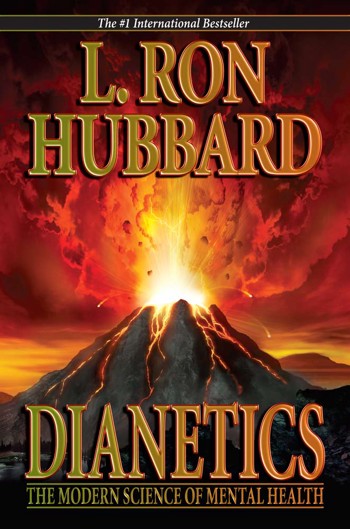
The early growth of “Dianetics”, later known as Scientology

Filed under: Books, History, Media, Religion, Science, USA — Tags: , , , , , — Nicholas @ 05:00

In Quillette, David S. Wills outlines the early years of L. Ron Hubbard’s quasi-religion that eventually turned into a full-fledged cult:

In the 21st century, Scientology has become a synonym for “cult”. Thanks to an array of investigative exposés and testimony from former members, few people in the Western world are unaware of at least some of the Church’s fantastical beliefs and more alarming behaviours. Sixty years ago, however, it was viewed quite differently. Scientology — or dianetics, as it was originally known — was an appealing idea to many intellectuals and creatives at a time when the world was rapidly changing and notions that had once been taken for granted were suddenly being tossed out of the window. In science, art, and philosophy, accepted norms were being turned on their heads, and in the 1950s and ’60s, L. Ron Hubbard’s ideas — peddled as an alternative to psychiatry — fit quite nicely among the emerging doctrines dreamed up by his contemporary thinkers.

Indeed, the original concepts that launched Hubbard’s movement were not as outrageous as those that define it today. Among these, the idea of “engrams” and the “reactive mind” were perhaps the most appealing. Hubbard theorised that humans are marked by unconscious traumas that essentially pre-determine “aberrant” behaviour. Naturally, he claimed that his organisation held the key to removing these traumas and freeing people from a great deal of suffering. Stripped down to its fundamentals, dianetics seemed to be no more implausible than the strange new ideas espoused by Freud and Jung, or even those previously espoused by Nietzsche.

Of course, there were always oddball beliefs bundled in as well, and as the years went by, these became more prominent. Hubbard — a science fiction author prior to his metamorphosis into quasi-religious guru — enjoyed adding new elements of fantasy to his central theories, layering sci-fi storylines on top of one another until his movement had become an extravagant sort of space opera. The more obvious cult-like elements would emerge in due course: charging adherents for advancement in the organisation; trapping them with manipulation and blackmail; the development of esoteric jargon known as “Scientologese” that made it almost impossible for real communication to take place between members and outsiders; and shocking campaigns of harassment against critics and apostates.

In the early days, however, none of this was particularly obvious. Hard as it is to believe now, many intelligent people were once drawn to Scientology out of an overabundance of curiosity, and its absurdities were generally perceived as harmless, affable eccentricities. Among those lured into the fold of this mysterious new organisation were two of the most important authors of the 20th century: Aldous Huxley and William S. Burroughs. Although Hubbard’s own novels elicit little more than derision from critics, his ideas wormed their way into some very influential books and left an indelible mark on American literature.

When people first hear about Huxley’s and Burroughs’s interest in Scientology, they typically express some degree of shock and/or scepticism. These men were highly intelligent thinkers famous for their insightful criticisms of the dominant culture. And both wrote extensively on the topic of coercion — Huxley was keenly aware of how humans could be manipulated into subservience by technodictators, and Burroughs was fascinated by the idea that language could be employed for the purposes of mind control. How then could they have fallen for the very thing they critiqued?

History-Makers: Aristophanes

Overly Sarcastic Productions
Published 9 Jul 2021

He told the Athenians they were a disaster and they gave him a prize. Aristophanes wrote in the new Theatrical genre of Comedy during the golden age of Athens, and used his plays to viciously satirize Athenian society. They create a fabulously clear portrait of ancient Athenian life, and they have the corollary benefit of being funny as hell.

SOURCES & Further Reading: The 11 plays of Aristophanes, with particular focus on Clouds and Women at the Thesmophoria, Britannica’s “Aristophanes”, Crash Course Theater #2 & 4.

Partial Tracklist: “Sneaky Snitch”, “Marty Gots A Plan” Kevin MacLeod (incompetech.com)
Licensed under Creative Commons: By Attribution 4.0 License
http://creativecommons.org/licenses/b…

Our content is intended for teenage audiences and up.

PATREON: https://www.Patreon.com/OSP

PODCAST: https://overlysarcasticpodcast.transi…

DISCORD: https://discord.gg/osp

MERCH LINKS: http://rdbl.co/osp

OUR WEBSITE: https://www.OverlySarcasticProductions.com
Find us on Twitter https://www.Twitter.com/OSPYouTube
Find us on Reddit https://www.Reddit.com/r/OSP/

From the comments:

Overly Sarcastic Productions
2 hours ago
While we’re here, one subject I cut for time is the relationship between “The Clouds” and the trial of Socrates.

It’s commonly assumed that Aristophanes’ satire played a part in Athens’ decision to charge and ultimately kill Socrates, but that interpretation doesn’t really hold up to scrutiny.

The Clouds was performed over 20 years before Socrates’ trial. If the play had that strong an effect on Athens, we can assume Socrates would have been charged far sooner. And Plato’s own writings paint Aristophanes rather favorably — if Plato blamed Aristophanes for the trial, he does not make that obvious.

There IS one snide line in Socrates’ Apology that seems to a modern reader like it’s referring to The Clouds, but really we can’t be sure. Aristophanes was not the only comic playwright in Athens, and certainly not the only person who disliked Socrates. Did The Clouds contribute to a negative public perception of Socrates? Sure, in part, at least when it was performed in 423. But it’s faaar more likely that Socrates’ trial and death in 399 owe more to his persistent habit of being a Colossal Pain In The Ass to whomever he was speaking with.

Reading The Apology makes it clear that nobody had the power to make Athens hate Socrates more than Socrates.
-B

Public libraries or public menaces?

Filed under: Books, Business, Cancon, Economics, Media, USA — Tags: , — Nicholas @ 03:00

In the latest edition of SHuSH, Kenneth Whyte finds a kindred-ish soul in his concerns about the influence public libraries have had in the last fifty years:

“Toronto Public Library” by Jim of JimOnLight is licensed under CC BY-NC-ND 2.0

It’s not easy being a crank, isolated from one’s fellow man by unpopular convictions, burdened by the certain knowledge of truths society can’t bring itself to admit.

The loneliness of crankdom can be insupportable. So I was overjoyed this month to run across an excellent book by Ed D’Angelo: Barbarians at the Gates of the Public Library: How Postmodern Consumer Capitalism Threatens Democracy, Civil Education, and the Public Good.

D’Angelo, a Ph.D. in philosophy with a master’s of library and information sciences, was supervising librarian at the Brooklyn Public Library for more than twenty years. His politics are not altogether mine (he leans Marxist), and his prose is not what you’d call smooth, but we are in total agreement that public libraries went off the rails sometime in the 1960s and now menace much that is good in life.

If you’re new to this space, you might have missed me mentioning here and there that increasingly aggressive lending practices by public libraries are undermining the entire bookselling ecosystem; that three times as many books are borrowed as bought in the US on an annual basis (four times as many in Canada); that libraries are putting booksellers out of business by advertising how much people can save by borrowing rather than buying books; that most library borrowing is done by people who can afford to pay for books, and who are reading for entertainment, not edification; and that all of this free-and-for-pleasure borrowing is a major reason author incomes are at record lows.

[…]

An honest scholar, Ed notes that there were cracks in this foundation before the 1960s. Back at the turn of the twentieth century, none other than Melvil Dewey, inventor of the Dewey Decimal System and founding member of the American Library Association, dissented from the notion that librarians should instill their values in patrons by directing their reading. He wanted a more mechanical, frictionless distribution of books, and encouraged the hiring of women as librarians on the assumption that they would be less inclined to impose their standards on others.

(Melvil […] was a devil, according to his biographer Wayne Wiegand. He subjected female subordinates to unwanted touching and kissing, and was rumored to have asked them to put their bust sizes on application forms. Forced out of the ALA for sexual harassment, Dewey further distinguished himself as racist and anti-semite. Yet his name was attached to the ALA’s highest honor until 2019.)

Ed also notes that there were stocks of popular (i.e., unedifying) literature in most public libraries even in the early years, but these were intended as the first rung on a ladder of development that “ascended toward the classics of western civilization.”

Starting in the 1960s, writes Ed, that the distribution of popular literature became an end in itself for the public library. Librarians lost confidence or interest in their mission of encouraging enlightened citizenship. They abandoned their role as gatekeepers. It was suddenly square to impose standards or tastes on patrons.

A History of Caricature: the Art of Exaggeration

Filed under: Europe, History, Media, USA — Tags: , , — Nicholas @ 02:00

J.J. McCullough
Published 27 Mar 2021

Let’s look at the history of caricature, the art of drawing exaggerated cartoon pictures of famous people like celebrities, politicians, and movie stars. We’ll look at the style of great artists like Al Hirschfeld, Gerald Scarfe, and Robert Risko among others.

Voice cameo by Alec: https://www.youtube.com/user/bostwiki

FOLLOW ME:

🇨🇦Support me on Patreon! https://www.patreon.com/jjmccullough​
🤖Join my Discord! https://discord.gg/3X64ww7​
🇺🇸Follow me on Instagram! https://www.instagram.com/jjmccullough/​
🇨🇦Read my latest Washington Post columns: https://www.washingtonpost.com/people…​
🇨🇦Visit my Canada Website http://thecanadaguide.com​

HASHTAGS: #caricature​ #art​ #history

QotD: The western military tradition versus wealth and decadence

Filed under: History, Military, Quotations — Tags: , — Nicholas @ 01:00

Pessimists see in the lethargic teenagers of the affluent American suburbs seeds of decay. But I am not so sure we are yet at the point of collapse. As long as Europe and America retain their adherence to the structures of constitutional government, capitalism, freedom of religious and political association, free speech, and intellectual tolerance, then history teaches us that Westerners can still field in their hour of need brave, disciplined and well-equipped soldiers who shall kill like none other on the planet. Our institutions, I think, if they do not erode entirely and are not overthrown, can survive periods of decadence brought on by our material success, eras when the entire critical notion of civic militarism seems bothersome to the enjoyment of material surfeit, and an age in which free speech is used to focus on our own imperfections without concern for the ghastly nature of our enemies. Not all elements of the Western approach to warfare were always present in Europe. The fumes of Roman republicanism kept the empire going long after the ideal of a citizen soldier sometimes gave way to a mercenary army.

Victor Davis Hanson, Carnage and Culture, 2002.

July 9, 2021

The Western Warlords of Asian Armies – WW2 Gallery 004

World War Two
Published 8 Jul 2021

From the Battle of Shanghai to the Burma Campaign and beyond, Western military advisors have played a big role in the actions of East Asian armies in the Pacific Theatre. Watch the videos to learn the stories of Joseph Stilwell, Claire Lee Chennault, the Flying Tigers, the Chindits, and more.
(more…)

« Newer PostsOlder Posts »

Powered by WordPress