
Rex Krueger
Published 17 Nov 2021This wooden hinge will put your tools to the test & make an unexpected addition to your skill set.
All plans 50% off until Christmas! https://www.rexkrueger.com/store
Get the plans from this video! (Scroll down)
(more…)
November 18, 2021
Make a Vintage-Style Wooden Hinge with Hand Tools
Comments Off on Make a Vintage-Style Wooden Hinge with Hand Tools
When artillery became powerful enough to literally destroy castles
In Quillette, Paul Lockhart recounts one of the early artillery successes in European siege warfare, the reduction of the English-held fortifications at Odruik:

Portrtait of Philip the Bold (Philip II, Duke of Burgundy), 1342-1404.
Unknown painter of the Flemish School via Wikimedia Commons.
Philip the Bold, duke of Burgundy, was a warrior’s warrior. Hawk-nosed, ambitious, and brash, Philip had been a soldier since childhood. He was still a smooth-faced boy of 14 when he fought alongside his father, King John II of France, in the battle of Poitiers in 1356. Like King John, he was taken prisoner by the English when Edward, the Black Prince of Wales, vanquished the French on the field at Poitiers. A decade later, the duke, always looking for an advantage over the Englishmen who had invaded his country, embraced a novel technology: gunpowder.
This mysterious Asian invention had been known in Europe for more than a century, and for nearly that long European armies had used it as a weapon of war — or, more precisely, as the substance that made another recent innovation, the cannon, work. So far, gunpowder artillery had not shown great promise. Cannon had been used as siege engines in European warfare at least as early as the 1320s. But for all the trouble and effort they demanded, they had not proven themselves to be much more effective than conventional siege weapons such as catapults and trebuchets, machines that used mechanical energy to hurl projectiles at castle walls. Certainly, the early cannon did not appear to be effective enough to justify their cost, which was substantial.
But Philip the Bold saw promise in the new weapons, especially the huge siege guns that came to be known as bombards, and in 1369 he began to invest heavily in them. France and England were then locked in the on-again, off-again series of dynastic conflicts known today as the Hundred Years’ War (1337–1453). In 1377, when Duke Philip’s brother and sovereign, King Charles V of France, ordered him to attack the English in the Calais region, the duke answered the call, bringing with him more than 100 new cannon, including one monster of a gun that fired a stone cannonball weighing some 450 livres (around 485 pounds).
One of the duke’s intended targets was the English-held castle at Odruik, built with stout masonry walls and surrounded by a thick layer of outworks. Odruik would be a tough nut to crack. Its defenders seemed to think so, too, and were confident that they could hold out against Duke Philip’s army, even as the duke’s men began to put their huge siege cannon into position in full view of the castle walls.
The first few shots from Philip’s siege-battery hammered Odruik’s outer walls into dust. Soon, the stone cannonballs were sailing through the walls as if they weren’t there; soon after that, the outer walls actually weren’t there. After Philip’s guns had fired a grand total of about 200 rounds, much of Odruik’s once-proud walls lay in ruin, and before the duke could send his men through the breach and into the castle, Odruik’s defenders capitulated.
Philip the Bold’s triumph at Odruik in 1377 was a harbinger of things to come, a revealer of unsettling truths. Gunpowder artillery had been used in sieges before, but Odruik was its first overwhelming and clear-cut victory over a castle. The siege of Odruik demonstrated that — when the guns were big enough, and when there were enough of them — cannon were more powerful than any siege engine yet invented, and could knock down castles in a matter of hours. What happened at Odruik would be repeated over and over again at castles throughout continental Europe and the British Isles through the remainder of the Middle Ages and beyond.
It was one of the accepted “rules” of war that a besieged town that surrendered before the beseiging army conducted an infantry assault would be spared from sack … the theory being that once the fortifications had been overcome, the final outcome was not in doubt and the defenders lost no honour from the surrender. You can certainly understand why the citizens of the defended town would be eager to avoid the plunder and rapine of an assaulting army once the walls were breached.
Comments Off on When artillery became powerful enough to literally destroy castles
All the Guns on a T-62 Tank (with Nicholas Moran, the Chieftain)
Forgotten Weapons
Published 5 Aug 2021Try out World of Tanks with a special bonus tank using this link!
Today Nicholas Moran (the Chieftain) and I are at Battlefield Vegas courtesy of Wargaming.net, to show you around a Soviet T-62 and all its various armaments. This particular T-62 was built in 1971 or 1972 and initially sold to Syria. It saw combat in the Valley of Tears in 1973, but survived as was eventually transferred to Lebanese ownership. From there is was captured by Israel and eventually imported into the United States via the UK. The T-62 was the last of the “simple” WW2-style Soviet tanks, and equipped with an extremely effective 115mm smoothbore main gun. In addition to that cannon, we will discuss and shoot the coaxial PKT machine gun and the loader’s antiaircraft DShKM heavy machine gun.
If you enjoy this video, check out World of Tanks – and maybe they will send Nicholas and I back again to do the same thing yet again on a third tank!
For videos on the detail of tanks like this one, check out The Chieftain:
https://www.youtube.com/user/WorldOfT…
https://www.youtube.com/channel/UCp4j…0:00:00 – Introduction
0:06:02 – Coaxial PKT
0:13:12 – Antiaircraft DShKM
0:20:25 – 115mm Main Gun
0:28:43 – Firing the main gunContact:
Forgotten Weapons
6281 N. Oracle 36270
Tucson, AZ 85740

Comments Off on All the Guns on a T-62 Tank (with Nicholas Moran, the Chieftain)
QotD: Hormones, puberty, and menopause
… in the early twentieth century, women that made it to positions of prominence, where they became known for professional excellence, had to be GOOD at it. Amazing, in fact.
And even then, they might hit a glass ceiling, because they were the nail that stuck up. Everything conspired to bring them down.
Female liberation was played against this. People looked at these women, knew what they’d achieved against what obstacles, and dreamed that “if only women were allowed to be on an even footing with men, they’d be the best at everything. Every woman would be a leader.”
[…]
Having gone the full ride on the hormonal roller coaster, being a woman built mostly by nature to make more humans, let me tell you, it ain’t easy. The hormonal ramp up of puberty is probably worse for boys, but the monthly ride of women is … interesting. I had years of having really bad pains, which meant if I had a test on one of those days I had to work DESPITE it. How bad? well, neither of my giving-birth experiences were worse, and in fact the second was much milder, until they gave me pitosin (the second started out with pitosin) and then with the ramping up of pain of pitosin, and giving birth in one and a half hours (long story. Let’s say they believed the report on the first birth, which had been doctored (ah!) and should never have given me the d*mn thing) was about the same as I used to endure for two or three days straight. And yes, I studied and took finals under that kind of pain, with no pain killers because most of them just make me more ill and woozy.
Then there were my middle years where I’d get unreasonably angry and borderline-violent for about a week before. It took a lot of engineering my own brain and knowing “this isn’t real, it’s hormonal” to stop myself being hell to live with. And sometimes I didn’t manage it. I’d be in the back of my brain, watching the rest of me rage and go “what the heck? Why am I doing that.”
And then there were various dysfunctions. We won’t go there, because most women don’t get those. But menopause … well … it’s special. I seem to have elided most of it, because I went into it surgically and with a hammer, having everything removed and having to cope, which at least was over in a few months. But I’ve seen relatives and friends go through it: it can stretch to five years of having NO discernible mind. You forget everything, lose everything, can’t sleep, can’t keep commitments, etc. And we still haven’t come up with a replacement that has no bad effects and makes actual sense. We’re trying.
Anyway, so yeah, women are running with their feet in a sack. But most of them are about average for normal human beings. So, yeah, they can do jobs and perform well, despite all of that. What you’re never going to get is “every woman excels”. Even if you stop the hormonal side effects, most women will lack the drive, the brain or the NEED to excel.
Men’s testosterone makes them more competitive, and so in a way gives them a bit more drive, but most of them are still unfocused/not ambitious enough to SACRIFICE to be the best. Because, guess what, success always requires sacrifice. And human beings don’t like to sacrifice.
So, women entered the workforce and most of them became … average. Which of course they would.
But feminist insanity required every woman to be exceptional. And so theories to explain it came up, including seeing patriarchy and oppression in ever-smaller things, including “she’s bossy” and “boys will be boys.”
Sarah Hoyt, “Bad Crazy”, Libertarian Enterprise, 2019-01-20.
Comments Off on QotD: Hormones, puberty, and menopause
November 17, 2021
The Real History Behind The Forgotten Battle | Battle of Walcheren 1944
History With Hilbert
Published 10 Nov 2021The Forgotten Battle is a Dutch/Belgian Netflix war film set during the Battle of Walcheren in 1944, part of the Liberation of the Netherlands from German control following the successful D-Day landings of the Allies. In this video I look at the history of the Battle of the Scheldt and in particular the assault on Walcheren, as well as some of the other historical aspects covered by the film such as Dutchmen who served in the Waffen SS on the Eastern Front and the Dutch Resistance (De Ondergrondse) who fought against the German occupiers and aided the Allies in their push into the Netherlands.
@History Hustle’s excellent videos on Dutch Waffen SS units:
https://www.youtube.com/watch?v=bQlF0…Go Fund My Windmills (Patreon):
https://www.patreon.com/HistorywithHi…Join in the Banter on Twitter:
https://twitter.com/HistorywHilbertIndulge in some Instagram..?(the alliteration needs to stop):
https://www.instagram.com/historywith…0:00 – Intro
3:00 – Walcheren Remains In German Hands
4:14 – The Battle of Walcheren Causeway
6:18 – Operation Infatuate I & II
8:00 – Walcheren Is Captured
8:47 – Dutchmen Serving in the SS
10:18 – The Dutch Resistance In World War 2
13:04 – OutroSend me an email if you’d be interested in doing a collaboration! historywithhilbert@gmail.com
#WW2 #Netherlands #Netflix

Comments Off on The Real History Behind The Forgotten Battle | Battle of Walcheren 1944
Environmental pessimism despite the facts
Alexander Hammond refutes one of the many, many articles preaching global environmental doom and disaster:
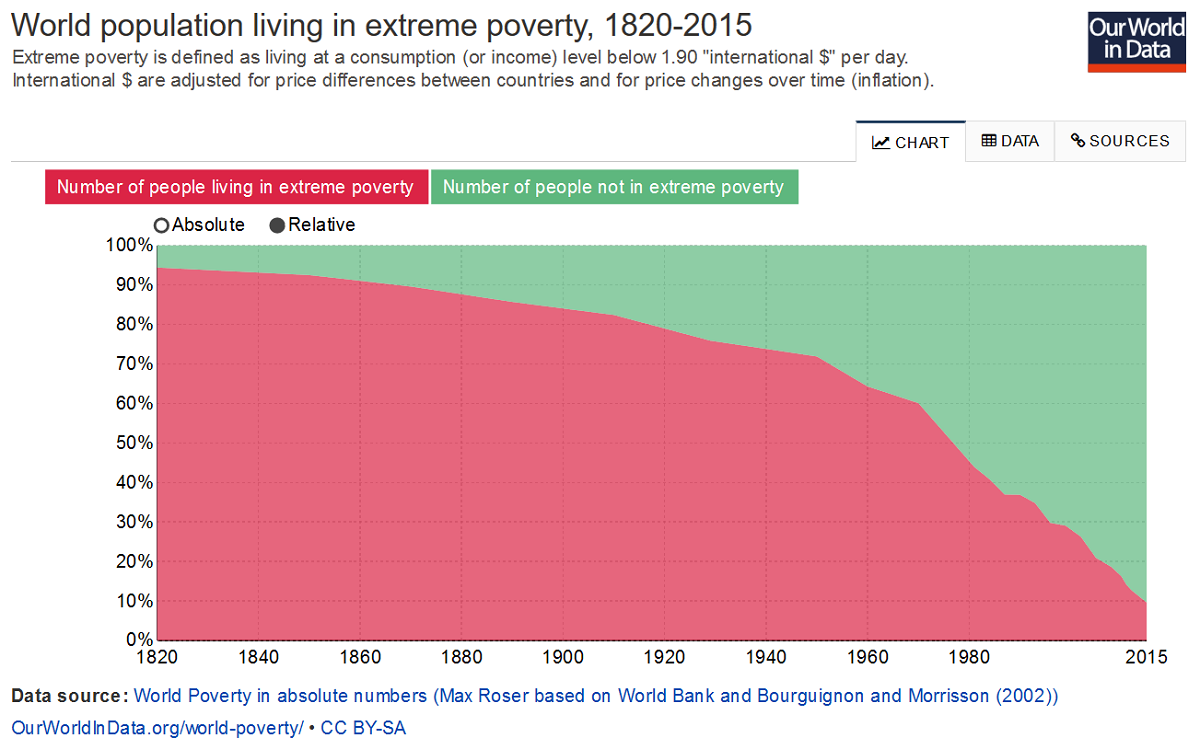
Last week, The Scotsman published an article by the journalist Anastasiia Zagoruichyk. In the piece, Zagoruichyk claims that thanks to climate change, fires, and deforestation in her native Ukraine, her children won’t get to experience childhood joys like “walking in the autumn forest, picking mushrooms and breathing fresh air.”
Forest coverage in Ukraine is, admittedly, a niche topic, but alarmism about the future of our forests and our children is unfortunately widespread. Indeed, it was not long ago that Extinction Rebellion founder Roger Hallam confidently declared that due to deforestation and other environmental damage, “our children are going to die in the next 10-20 years.” Thankfully for humanity, these far-fetched claims are not based in reality.
Contrary to what Zagoruichyk would have you believe, forest coverage in Ukraine has increased drastically in recent years. Between 1992 (the oldest data available) and 2020, the share of land in Ukraine covered by forest increased from 16.1 percent to 16.7 percent. While a 0.6 percentage point increase might seem like a small amount, this equates to an additional 3,622 square kilometers of forest – a land area roughly 1.5 times larger than the country of Georgia.
Globally, the world does continue to lose forest area. However, according to the United Nation’s Food and Agriculture Organisation (FAO), the rate of deforestation between 2010-2020 was 40 percent lower than in 1990-2000. At this rate, even without additional promises from world leaders at COP, the global deforestation rate will likely hit zero. Indeed, over the last 30 years, net afforestation has occurred in Europe (including Russia), North America, Oceania, and Asia.
The world’s two poorest regions, South America and Africa, are also the only ones that continue to experience net deforestation. This is no coincidence; many environmental scientists and commentators suggest that economic and ecological well-being are intimately related. According to one hypothesis, called the Environmental Kuznets Curve, a region’s environment worsens in tandem with economic growth but only until a certain income per capita is reached. At that point, people can afford to protect the environment, and ecosystems flourish. This environmental recovery has occurred across Europe and North America and is currently happening in China, Russia, India, and Vietnam.
Therefore, as South America and Africa continue to become richer, we can expect their rate of forest loss to slow and eventually reverse. Given this good news, why is there so much pessimism about the future of our forests? Zagoruichyk’s article offers some answers.
Earlier this month, Michael Shellenberger also had good-but-ignored environmental news to report in UnHerd:
No global problem has ever been more exaggerated than climate change. As it has gone from being an obscure scientific question to a theme in popular culture, we’ve lost all sense of perspective.
Here are the facts: in Europe, emissions in 2020 were 26% below 1990 levels. In the United States, emissions in 2020 were 22% below 2005 levels. Emissions are likely to start declining, too, in developing nations, including China and India, within the next decade. Most nations’ emissions will be bigger this year than last, due to post-Covid economic growth. But global emissions are still likely to peak within the next decade.
And the result will be a much smaller increase in global average temperatures than almost anyone predicted just five years ago. The best science now predicts that temperatures are likely to rise just 2.5-3°C above pre-industrial levels. It’s not ideal, but it’s a far cry from the hysterical and apocalyptic predictions of 6°C, made just a decade ago. A 3°C increase is hardly an existential threat to humanity.
Not that you’d know it, if you had half an eye on the headlines this summer. The floods, fires and heatwaves that plagued the world were, for many observers, proof that the impacts of climate change have already become catastrophic. In Europe, more than 150 people died in flooding. In the United States, wildfire season started earlier and lasted longer, razing hundreds of thousands of acres. Around the world, hundreds died from heatwaves.
But again, it’s worth reminding ourselves of the facts: there has been a 92% decline in the per decade death toll from natural disasters since its peak in the 1920s. In that decade, 5.4 million people died from natural disasters. In the 2010s, just 0.4 million did. Globally, the five-year period ending in 2020 had the fewest natural disaster deaths of any five-year period since 1900. And this decline occurred during a period when the global population nearly quadrupled — and temperatures rose more than 1°C degree centigrade above pre-industrial levels.
Comments Off on Environmental pessimism despite the facts
Child Soldier Camps, Captured Crewmen, and Chaotic Air Forces – WW2 – OOTF 025
World War Two
Published 16 Nov 2021How did the “Nazi pirates” treat their captured crewmen? Why didn’t the Soviets just bomb the motionless German armies stuck in a traffic jam? And how did the Nazi government convince parents to allow their children to go to “evacuation” camps? Find out the answers in this latest edition of Out of the Foxholes!
(more…)
Comments Off on Child Soldier Camps, Captured Crewmen, and Chaotic Air Forces – WW2 – OOTF 025
The Supreme Court of Canada — four-ninths woke
In The Line, Leonid Sirota discusses a disturbingly narrow victory for freedom of speech in the Supreme Court of Canada’s decision in Ward v Quebec (Commission des droits de la personne et des droits de la jeunesse):
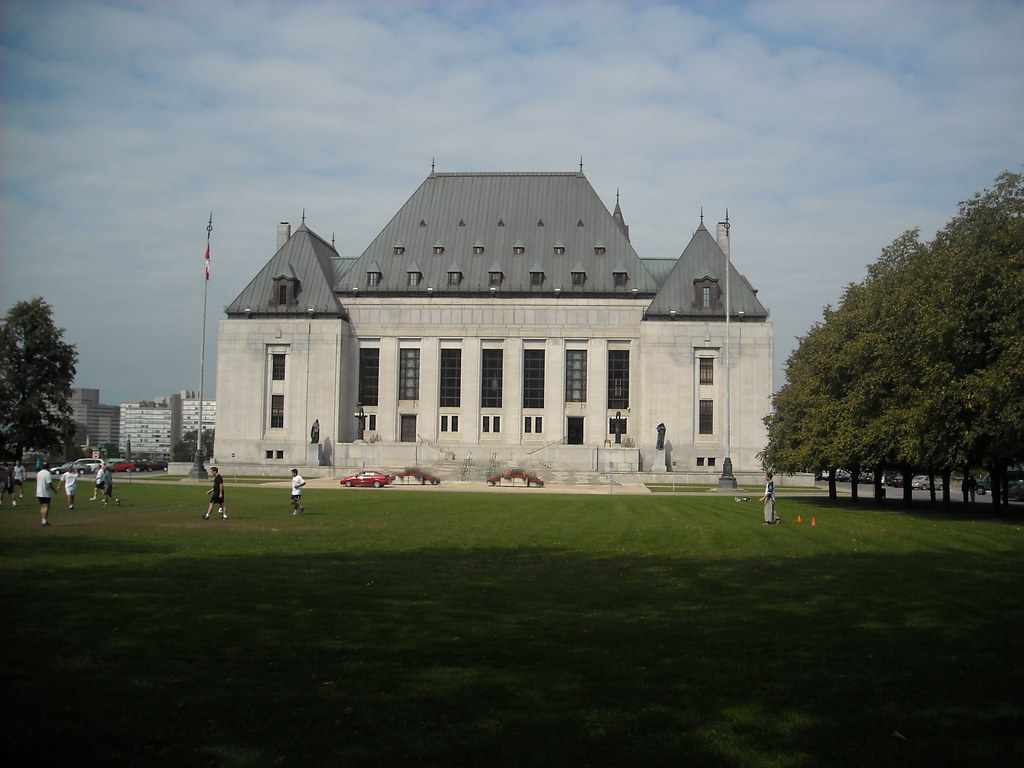
“Supreme Court of Canada, Ottawa”by daniel0685 is licensed under CC BY 2.0

The Supreme Court’s recent decision in Ward v Quebec (Commission des droits de la personne et des droits de la jeunesse) has attracted considerable public attention, and for good reason. Although no law was in danger of being found unconstitutional, the case did concern the limits of the freedom of expression, which have always been controversial, and are perhaps more controversial now than they had been in decades. In brief, the issue was whether nasty jokes by an “edgelord comedian”, as The Line‘s excellent editorial described Mr. Ward, at the expense of Jérémy Gabriel, a well-known disabled child artist, amounted to discrimination that could be punished by an award of damages.
Much has already been written about the Supreme Court’s narrow decision in favour of Mr. Ward; for my part, I have already commented on (mostly) the majority opinion on my blog. Here, I focus on the dissent, in which, as The Line put it, “[t]here’s an incredible amount of popular modern discourse seeping into judicial reasoning” that “culled plausible-sounding legalese from Twitter logic”. That sounds about right.
But let me put it slightly differently. The dissent is, in a word, woke. And I do not mean “woke” as a generic insult. Nor do I mean, incidentally, that Mr. Gabriel is a snowflake. I think he deserves sympathy on a human level, though not the protection of the law for his claim. Rather, what I mean by calling the dissent woke is that it embraces a number of specific tenets of contemporary social-justice ideology, which, if they become law ― and they were just one vote away from becoming law ― would be utterly corrosive to the freedom of expression.
For one thing, the dissent erases the line between words and actions, so that disfavoured words are treated as deeds and therefore subjected to vastly expanded regulation. Justices Abella and Kasirer (with whom two others agree) write:
We would never tolerate humiliating or dehumanizing conduct towards children with disabilities; there is no principled basis for tolerating words that have the same abusive effect. Wrapping such discriminatory conduct in the protective cloak of speech does not make it any less intolerable when that speech amounts to wilful emotional abuse of a disabled child.
In what is going to be a theme of my comment, this twists the meaning of words beyond recognition. Conduct is conduct and speech is speech. Using words instead the proverbial sticks and stones is not just a disguise. It’s the better part of civilization. The law relies on a distinction between words and actions all the time. This is a principle, and a general one, but it has also been a cornerstone of the law of the freedom of expression in Canada since the early days of the Charter. I have criticized the majority decision for disregarding precedent and doctrine. The dissent does the same, only much worse.
Besides, as I once noted elsewhere, the negation of the distinction between speech and conduct often combines with a belief that violence against some politically heretical group or other is permissible with the toxic belief that “[w]hat one says, or does, is expression; what one’s opponents say, or do, is violence.” This, in turn, means that law dissolves into a raw competition for political power, with the ability to decide whose expression will be stripped of its “protective cloak” and proscribed as the prize.
Comments Off on The Supreme Court of Canada — four-ninths woke
Tank Chats #132 | Morris Light Reconnaissance Car | The Tank Museum
The Tank Museum
Published 23 Jul 2021David Fletcher is back with another Tank Chat discussing the Morris Light Reconnaissance Car.
(more…)
Comments Off on Tank Chats #132 | Morris Light Reconnaissance Car | The Tank Museum
QotD: From Theda Bara to Lady Gaga
In 1933, the critic I.A. Richards, writing about “The Waste Land”, spoke of T.S. Eliot’s “persistent concern with sex, the problem of our generation, as religion was a problem of the last.” After the first world war, sexual experimentation and titillating smart talk became the hallmark of the emancipated new woman, who smoked, drank, bobbed her hair and danced the antic Charleston. Hollywood discovered that sex was great box office — leading to pressure from civic and religious groups for a production code, which movie-makers found ingenious ways to evade.
We are approaching the 100-year anniversary of Hollywood sex: Theda Bara’s incarnation as The Vamp in A Fool There Was (1915), a lurid femme fatale who slew overnight the lingering Victorian ideal of the pure, saintly woman-child, portrayed on screen by Mary Pickford and Dorothy and Lilian Gish. Theda Bara, like Lady Gaga, was a manufactured personality; although the studio publicity department claimed she was born in the Sahara to a French artist and Arabian princess, she was actually Theodosia Goodman, the daughter of a Jewish tailor in Cincinnati.
The sexual icon of 1920s Hollywood was Clara Bow, a madcap flapper who was probably falsely rumoured to have bedded the entire University of Southern California football team. Lithe Louise Brooks, with her signature bobbed hair, made landmark films of decadent eroticism in Germany. Wicked Mae West and lushly buxom Jean Harlow began the tradition of the sex bomb, which continued through Hedy Lamarr to Jane Russell and Marilyn Monroe, whose influence endures around the globe. But the cardinal sexual pioneer was Marlene Dietrich, who exploded on the international scene in 1930 as the heartless cabaret singer of The Blue Angel. In her subsequent films with the director Josef von Sternberg, Marlene toyed with transvestism (based on the drag balls of Weimar Berlin) and created the sophisticated look of hard glamour that remains a staple of fashion magazines.
Marlene was Madonna Louise Ciccione’s idol; the seductive, commanding Marlene permeates Madonna’s brilliant videos of the 1980s and the early ’90s, with their dominatrix, transvestite and bisexual motifs. Madonna wanted to play Marlene on film, but the idea was overruled by Marlene herself, who (as the proud daughter of a Prussian officer) decreed Madonna “too vulgar”.
Weimar cabaret was recreated in the 1972 film Cabaret, based on Christopher Isherwood’s Berlin stories. Bob Fosse’s dazzlingly aggressive choreography in that blockbuster film was adopted by Madonna for her videos and stage shows — all of which have been doggedly imitated by Lady Gaga. Gaga has borrowed so heavily from Madonna (as in her latest “Alejandro” video) that it must be asked, at what point does homage become theft? But the main point is that the young Madonna was on fire. She was indeed the imperious Marlene Dietrich’s true heir. Madonna’s incandescence is still on view in videos like “Open Your Heart”, “Vogue” and “Express Yourself”. However, for Gaga, sex is mainly decor and surface; she’s like a laminated piece of ersatz rococo furniture. Alarmingly, Generation Gaga can’t tell the difference. Is it the death of sex? Perhaps the symbolic status that sex had for a century has gone kaput; that blazing trajectory is over.
Camille Paglia, “Lady Gaga: The Death of Sex”, Sunday Times, 2010-09-12.
Comments Off on QotD: From Theda Bara to Lady Gaga
November 16, 2021
Pineapple: the King of Fruits
The History Guy: History Deserves to Be Remembered
Published 15 Nov 2021Pineapples are so culturally significant that pineapples adorn the tops of cathedrals, and serve as the domicile of one of the world’s most popular cartoon characters. An estimated 300 billion pineapples are farmed each year, and a 2021 YouGov poll lists pineapples as the sixth most favorite fruit, ahead of all varieties of apples and oranges.
This is original content based on research by The History Guy. Images in the Public Domain are carefully selected and provide illustration. As very few images of the actual event are available in the Public Domain, images of similar objects and events are used for illustration.
You can purchase the bow tie worn in this episode at The Tie Bar:
https://www.thetiebar.com/?utm_campai…All events are portrayed in historical context and for educational purposes. No images or content are primarily intended to shock and disgust. Those who do not learn from history are doomed to repeat it. Non censuram.
Find The History Guy at:
Patreon: https://www.patreon.com/TheHistoryGuy
Please send suggestions for future episodes: Suggestions@TheHistoryGuy.netThe History Guy: History Deserves to Be Remembered is the place to find short snippets of forgotten history from five to fifteen minutes long. If you like history too, this is the channel for you.
Awesome The History Guy merchandise is available at:
https://teespring.com/stores/the-hist…Script by THG
#history #thehistoryguy #Pineapple

Comments Off on Pineapple: the King of Fruits
Mike Solana interviews Chris Best, the co-founder and CEO of Substack
Not long after I started hearing about Substack, some of my favourite writers and bloggers began to move their work to the new platform. I now subscribe to more than a dozen Substack authors, although being a penniless blogger, I’m restricted to the free offerings in each case. Thus far I’m definitely seeing Substack as a positive influence in the online world, so this Mike Solana post was of some interest to me:

MIKE SOLANA: In your and Hamish McKenzie’s recent essay, “The internet needs better rules, not stricter referees”, you say Substack is changing the publishing model. Before we get into all that, how would you characterize the publishing landscape before Substack?
CHRIS BEST: My general story on this is we’re coming out of an age of attention-monster social media. People used to get bored. People used to have this problem of like, I don’t know what to do with my time. Then the internet, and especially the mobile internet, took over ALL of our time and attention. It filled up every crevice in our life.
In the first phase of that — the attention suck — it was like this giant land grab. If you were making something that competed for attention space, you wanted to grab as much as possible, as quickly as possible, because there’s only so much. You were competing for people’s 10 minutes while they were waiting in line at the grocery store or whatever. So publishers made content free, and they made it as broadly-compelling as possible. The goal was to grab as much attention as possible in the lowest friction way possible, and to turn that attention into money through advertising.
And listen, none of that was nefarious. None of that was like, people with tented fingers going, “Aha! This will create something bad!” But when you create a system like this, you end up with a certain incentive structure. Then, if you build your algorithms to serve your business model, the incentive structure you create for people participating in your network drives a certain sort of behavior.
The platforms all optimized for things that brought cheap engagement at all costs, that interaction weighed to some of the worst aspects of human nature, and drove emergent behavior that gave us many of the things we see today. The legacy media just got totally steamrolled by all of this, and lives in the world created by these platforms.
SOLANA: Do you really feel that Substack is completely protected from this scaled advertising dynamic with its subscription model? There are a lot of legacy media institutions that have subscriptions, and have had subscriptions for the last 10 or 20 years, in addition to running ads. Personally, I’m also getting requests to run ads on Pirate Wires fairly often. I’m not biting, which maybe answers my question before I’ve asked it, but … do you really see this all changing?
BEST: I think the subscription model is necessary, but not sufficient, right? First of all, as a writer, that you can actually make real money doing this is by itself a big deal. I’ve convinced a lot of people to do subscription instead of ads, and usually they come back to me later like, “Thank you, you changed my life. I can’t believe I was ever thinking the other thing.”
People tend to think about this like, “I could make money with ads. I could make money with subscriptions. Two moneys is better than one money.” But when you’re making the best possible product to drive subscriptions, what you end up having to write is qualitatively different — and better — than the thing you’d have to do to drive the most ad revenue.
If you want to earn and keep the trust of a relatively small number of people who value your writing really deeply, deeply enough to pay for it, and you want that number to grow, the work you do in that world is different than the work you do if you’re like, “I need to get as many people to hear my Casper mattress ad read as possible.”
However, to your point, it’s not enough. One of the big problems with Substack now is people are like, “Great, we’ve got this place where the incentive structure works differently, and I want create this better product to earn and keep the trust of my subscribers … but the way that people find out about my stuff is still on Twitter.”
So we’re kind of downstream from this, you know, attention sewage factory of incentives. I think for Substack to live up to the idea of letting readers take back their mind, and their attention, and helping us all create this kind of alternate universe of content with different laws of physics … we need to do more on that front.
Comments Off on Mike Solana interviews Chris Best, the co-founder and CEO of Substack
Bettie Page: The Queen of Pinup
Biographics
Published 4 Mar 2019Visit our companion website for more: http://biographics.org
Credits:
Host – Simon Whistler
Author – Shannon Quinn
Producer – Jennifer Da Silva
Executive Producer – Shell HarrisBusiness inquiries to biographics.email@gmail.com
Source/Further reading:
https://www.youtube.com/watch?v=MJhop…
https://www.pbs.org/video/history-det…
https://nces.ed.gov/pubs93/93442.pdf
http://news.bbc.co.uk/2/hi/americas/7…
https://www.biography.com/news/bettie…
https://www.celebritynetworth.com/ric…
https://www.forbes.com/sites/zackomal…Secondary Sources/Photos/Videos:
(Hey guys- You technically can’t see any of her private parts in these videos, so it’s not really porn, but I still would not call this safe for work. Your wives, co-workers, or people on public transportation may give you really dirty looks if they see these over your shoulder. You have been warned.)
https://en.wikipedia.org/wiki/Bettie_…Dancing video
https://www.youtube.com/watch?v=_Pndr…
The “Striporama” scenes with Bettie Page
https://youtu.be/ZDypKx8c1TM

Comments Off on Bettie Page: The Queen of Pinup
QotD: Writing SF and fantasy
Lois McMaster Bujold, interview at Blogcritics, 2005-05-24.
Comments Off on QotD: Writing SF and fantasy
November 15, 2021
“That is what I like about you Canadians … you are so ready to admit fault. It is a fine, if dangerous, national characteristic. You are all ashamed.”
John E. MacKinnon on the world’s first admittedly genocidal, terminally apologetic, “post-national” state … the entity that used to be known as the Dominion of Canada:
During one broadcast, [late CBC Radio host Peter] Gzowski recalled an incident that had occurred at the annual invitational golf tournament he hosted to benefit adult literacy programs across Canada. As one participant, standing next to Gzowski, leaned thoughtfully on his club, another drove a golf cart over his toes. Although it was unclear from the telling whether the cart-driver was American, the first golfer was obviously Canadian, since, shifting gingerly from foot to aching foot, he could only plead, “sorry”. Gzowski shared this anecdote with evident delight, since it struck him as so endearingly, because emblematically, Canadian.
But Gzowski’s soaring contentment with this view of his country and countrymen was no less emblematic. To Canadian nationalists of Gzowski’s era and ilk, the representative Canadian is no hewer of wood or carrier of water, no builder of bridges, roads and railways, no stormer of barricades or keeper of the peace, but a hobbled guest on a verdant fairway, eagerly apologizing for the pleasure of having his toes crushed. “That is what I like about you Canadians,” says Dr. Gunilla Dahl-Soot in Robertson Davies’s novel The Lyre of Orpheus, “you are so ready to admit fault. It is a fine, if dangerous, national characteristic. You are all ashamed.”
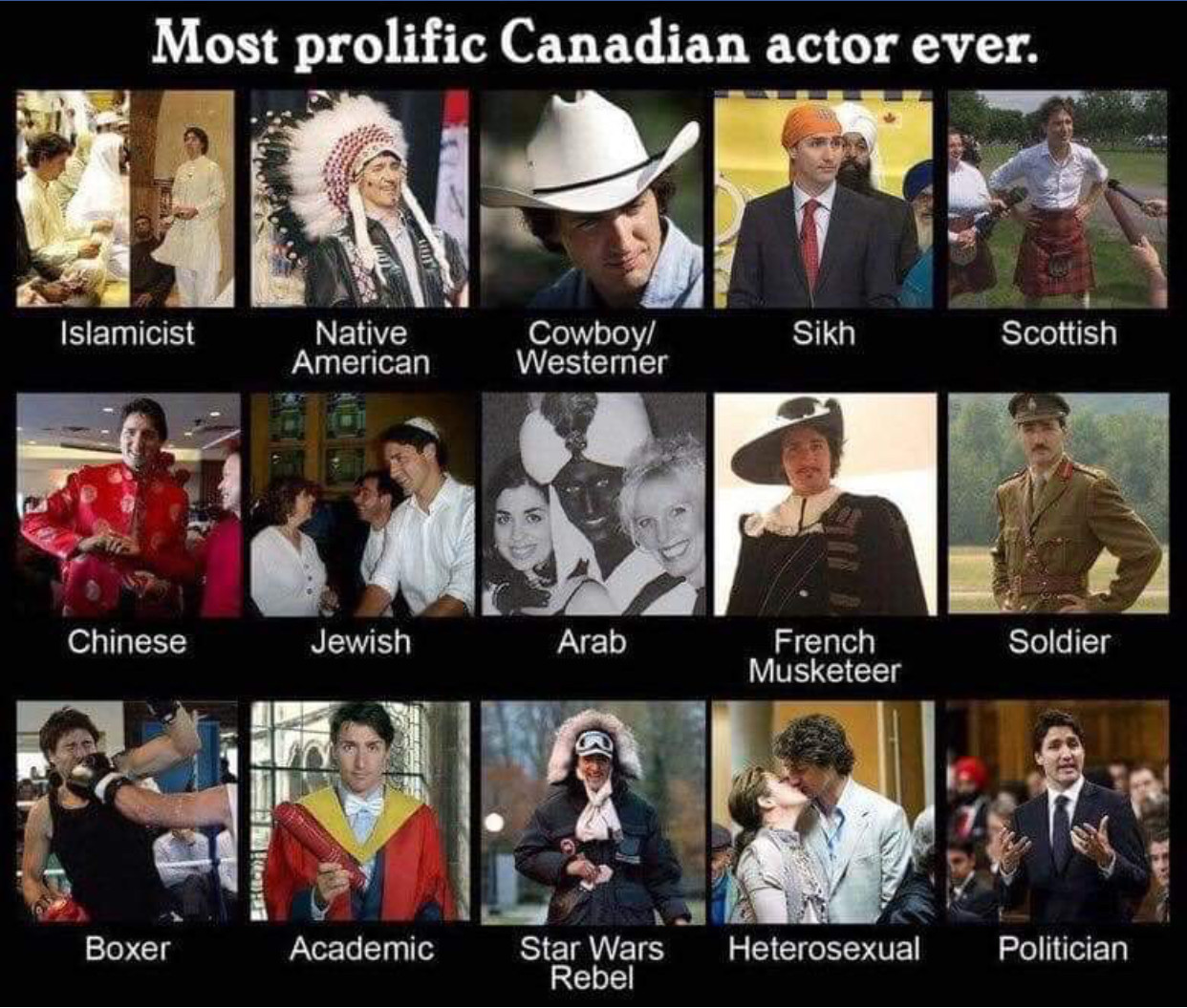
Over the past 200 years, notes Hungarian-born Canadian writer George Jonas, “we have been misled by science. Medicine became our hubris. Having learned to fix appendices, we thought we could fix history.” Today, in Canada, there is no clearer manifestation of this urge to renovate and repair the past than the vogue for apology. And no one has struck this posture of national self-abasement with quite the alacrity of Prime Minister Justin Trudeau. Just months after taking office, he apologized for the Komagata Maru incident in 1914, in which a ship carrying Sikhs, Muslims, and Hindus was sent back to Calcutta, where 20 died in a riot. In 2017, he apologized to Indigenous residential-school survivors in Newfoundland and Labrador, and, just days later, to LGBT Canadians for decades of “state-sponsored, systemic oppression.” A year later, he apologized for the execution, in 1864, of six Tsilhqot’in chiefs over a road-building dispute, and for a government refusal, in June, 1939, to allow into the port of Halifax the MS St. Louis, an ocean liner carrying more than 900 Jews fleeing Nazi Germany. In March, 2019, he apologized for the inhumane manner in which Inuit in northern Canada were treated for tuberculosis in the mid-20th century. Two months later, he exonerated Chief Poundmaker of the Poundmaker Cree, apologizing for the Chief’s conviction for treason more than 130 years before. Still at it in the spring of 2021, Trudeau issued a formal apology in the House of Commons for the internment of Italian-Canadians during the Second World War, even though many, it was subsequently revealed, were indeed hardcore fascists, loyal to an enemy in a time of war. Two weeks later, he lowered the Canadian flag for five months to mark the discovery of the remains of Indigenous children who died at residential schools.
In the midst of this flurry of breathy performances, the BBC asked, with more than a touch of arch obviousness, whether the Canadian Prime Minister might not perhaps apologize too much. And yet, in Trudeau, we simply have the apotheosis of that habit of abject contrition celebrated by Gzowskian nationalists. Under his government, it has become fashionable, even necessary, to apologize, not just for egregious historical episodes or policies, but for the existence of Canada itself. In an interview with the New York Times, Trudeau witlessly described the country that had so favoured him through a lifetime of privilege as “post-national”, suggesting that Canada as we know it had somehow served its purpose, extended itself beyond any warrantable use. And recently, not to be outpaced by more current styles of denunciation, he described Canada, “in all our institutions,” as “built around a system of colonialism, of discrimination, of systemic racism.” When China, responding to criticism of its brutal treatment of Muslim Uyghurs, lashed out at Canada for committing “genocide” against its own Indigenous population and subjecting Asian-Canadians to “systemic racism”, Canada’s political class was in no position to quibble — as its prime minister had already muttered his agreement to the claim that he presided over a genocide state.
This note of cringing repentance now echoes in the pronouncements of all of our institutions. No matter how admired our country may remain internationally, no matter how ardently people around the world long to immigrate here for a chance at a better life, our presumptive leaders are eager to scorn Canada as a meagre and regrettable conceit. That the confessional mode they favour has become so prevalent confirms what Christopher Lasch long ago diagnosed as the strain of narcissism that courses through contemporary culture, lending ready appeal to all such facile gestures of self-reproach. There is, indeed, no cagier career move for any Canadian academic, journalist, bureaucrat, or politician these days than to repudiate Canada, and with feeling.
Comments Off on “That is what I like about you Canadians … you are so ready to admit fault. It is a fine, if dangerous, national characteristic. You are all ashamed.”


