
Overly Sarcastic Productions
Published 29 Apr 2022They say of the Acropolis, where the Parthenon is …
(more…)
August 21, 2022
History Summarized: The Acropolis
Comments Off on History Summarized: The Acropolis
QotD: The “social responsibility” of the corporate executive
In a free-enterprise, private-property system, a corporate executive is an employee of the owners of the business. He has direct responsibility to his employers. That responsibility is to conduct the business in accordance with their desires, which generally will be to make as much money as possible while conforming to their basic rules of the society, both those embodied in law and those embodied in ethical custom. Of course, in some cases his employers may have a different objective. A group of persons might establish a corporation for an eleemosynary purpose — for example, a hospital or a school. The manager of such a corporation will not have money profit as his objectives but the rendering of certain services.
In either case, the key point is that, in his capacity as a corporate executive, the manager is the agent of the individuals who own the corporation or establish the eleemosynary institution, and his primary responsibility is to them.
Needless to say, this does not mean that it is easy to judge how well he is performing his task. But at least the criterion of performance is straight-forward, and the persons among whom a voluntary contractual arrangement exists are clearly defined.
Of course, the corporate executive is also a person in his own right. As a person, he may have many other responsibilities that he recognizes or assumes voluntarily — to his family, his conscience, his feelings of charity, his church, his clubs, his city, his country. He may feel impelled by these responsibilities to devote part of his income to causes he regards as worthy, to refuse to work for particular corporations, even to leave his job, for example, to join his country’s armed forces. If we wish, we may refer to some of these responsibilities as “social responsibilities.” But in these respects he is acting as a principal, not an agent; he is spending his own money or time or energy, not the money of his employers or the time or energy he has contracted to devote to their purposes. If these are “social responsibilities,” they are the social responsibilities of individuals, not business. What does it mean to say that the corporate executive has a “social responsibility” in his capacity as businessman? If this statement is not pure rhetoric, it must mean that he is to act in some way that is not in the interest of his employers. For example, that he is to refrain from increasing the price of the product in order to contribute to the social objective of preventing inflation, even though a price increase would be in the best interests of the corporation. Or that he is to make expenditures on reducing pollution beyond the amount that is in the best interests of the corporation or that is required by law in order to contribute to the social objective of improving the environment. Or that, at the expense of corporate profits, he is to hire “hardcore” unemployed instead of better qualified available workmen to contribute to the social objective of reducing poverty.
In each of these cases, the corporate executive would be spending someone else’s money for a general social interest. Insofar as his actions in accord with his “social responsibility” reduce returns to stockholders, he is spending their money. Insofar as his actions raise the price to customers, he is spending the customers’ money. Insofar as his actions lower the wages of some employees, he is spending their money.
Milton Friedman, “The Social Responsibility of Business is to Increase its Profits”, New York Times, 1970-09-13.
Comments Off on QotD: The “social responsibility” of the corporate executive
August 20, 2022
Yes, you will end up owing your conspiracy theorist friend an apology at this rate …
Chris Bray re-enacts a few of the minor erasures, walk-backs, and out-and-out lies coming from organizations who’ve spent the last two-plus years spreading a line of medical “truth” that, day-by-day, appears a bit less “truth-y” all the time:
I can’t get this attack on Dr. Ryan Cole out of my head:
What’s becoming very clear is that the narrative is going to shift by inches, eventually ending up at the place where mRNA dissenters started, but. Let’s get through the first part, and I’ll get to that but in just a moment. Look at, for example, the recent stealth-edit on the CDC website that quietly removed the assurance about the spike protein from mRNA injection leaving your body in a hurry. So on Monday it’s disinformation to falsely claim that the spike protein lingers in your body, and you’re a dangerous extremist if you say it; on Tuesday, the simple fact of lingering spike protein was always known and never contested. That’s DISINFORMA— hold on, I’ve just been handed a new memo.
This is going to keep happening, in little pieces that move toward reality. There are ZERO mRNA deaths, you lying idiots, and you need to stop spreading disin— uh, hold on, it says here that, uh …
In a year, or in five years, the things that Ryan Cole and Clare Craig and Peter McCullough and Tracy Beth Hoeg and Robert Malone and all the other MONSTERS have been saying will be validated and acknowledged. We’ll know that the mRNA injections caused heart damage and a cancer spike, and we’ll know that mRNA-injected people get sick more often than the dirty unvaccinated. Look at the matter-of-factness with which Deborah Birx says that oh yeah, I always knew these vaccines — vaccines! — weren’t going to prevent infection. A year before she shrugged and said she’d always known that, you would have lost your social media accounts for saying exactly what she just said. Yesterday’s idiotic conspiracy theory disinformation nonsense is today’s “yeah, we always knew that”.
Now, here’s my big but: The narrative is going to turn, in a long series of tiny and unacknowledged shifts, until it matches what the heretics have always been saying — but my bet is that the heretics will not be rehabilitated. Ryan Cole, to stick with the opening example, will be proven correct, but he will not be vindicated. The YOU CAN’T SAY THAT, IT’S DISINFORMATION oh wait it’s totally true maneuver doesn’t rehabilitate the crimethinkers. You can think X when it’s time to think X; if you think X too early, you remain a thought criminal.
The truthtellers in medicine will be proved correct, but they’ll still be resented and excluded.

How Turkey Fought a WW1 Peace Treaty – The Greek-Turkish War 1919-1923
The Great War
Published 19 Aug 2022The defeat of the Ottoman Empire in 1918 meant that it got its own peace treaty like the other three Central Powers. But the emerging Turkish National Movement under Mustafa Kemal resisted the Treaty of Sevres and occupation by various Entente Powers. Their successful resistance led to the creation of modern Turkey and the Treaty of Lausanne in 1923.
(more…)
Comments Off on How Turkey Fought a WW1 Peace Treaty – The Greek-Turkish War 1919-1923
The historical tourist attractions of Pisa
In the latest Age of Invention newsletter, Anton Howes talks about a recent trip to Italy, specifically the historically interesting places in Pisa and Lucca:

Galileo Galilei circa 1640.
Detail of an oil portrait by Justus Sustermans (1597-1681) from the National Maritime Museum via Wikimedia Commons.
Some are famous. Galileo Galilei, for example, is said to have used the leaning tower of Pisa to drop two spheres of different masses, to show that they would fall at the same speed — at least, that’s what his disciple Vincenzo Viviani claimed, ten years after Galileo’s death, and many decades after the alleged demonstration. Even if Viviani was being accurate, however, Galileo certainly wasn’t the first to demonstrate the concept. And Viviani mistakenly claimed priority for all sort of other scientific breakthroughs for his master, so like most other historians I’m inclined to doubt the story.
Nonetheless, Pisa was certainly Galileo’s birthplace — though it turns out that there are three different locations in the city to have claimed the honour over the years.
Galileo was initially thought to have been born in or near the fortress (its walls are impressive to look at and contain a pleasant garden). But this location was then refuted on the basis that for Galileo’s father Vincenzo Galilei to have lived in the fortress he would have had to have been a master at arms, which he was not. He was in fact a merchant and lute-maker. So in the nineteenth century a new location emerged: the casa Bocca, on the Stretto Borgo, which Vincenzo rented a few months before Galileo’s birth, and where the Galilei family lived for the next decade. It seemed a secure candidate for a while, except for a weird discrepancy: Galileo’s baptismal certificate assigned his birth to the wrong parish.
It then emerged that Galileo’s mother’s family — the Ammannati — lived in the correct parish, and that the custom of the time was for women to return to their parents’ home for the birth of their first child. Thus, the evidence points to Galileo having been born at the Casa Ammanati on the via Giusti. It’s a neat story of how a tourist destination can jump around based on new research, though there’s unfortunately not much to visit there other than a plaque.
In terms of things to actually see, one of the most impressive things in Pisa is the Museo delle Navi Antiche (Museum of Ancient Ships), which we found to be undeservedly deserted. Housed in the old stables for the city’s cavalry, and once the site of the Medici-era naval arsenal, the museum gives a fantastically thorough overview of the city from its Etruscan beginnings through to Roman subjugation, Ostrogothic invasion, Byzantine reconquest, and Longbeard settlement in the sixth century (although they’re usually called the Lombards, this comes from langobardi — literally, longbeards — so I think calling them that is both more accurate and more fun).
The museum’s highlight, however, is the ancient ships for which it is named, and which are incredibly well-preserved. I was stunned to see a massive actual wooden anchor, not just a reconstruction, of a cargo ship from the second century BC. It’s so well-preserved that you can even make out a decoration, carved into the wood, of a ray fish. The same goes for the rest of the various ships’ timbers. You can see almost all of their original hulls and planking, as well as finer details like rudder-oars, benches for the rowers, and in one case even the ship’s name carved into the wood — the Alkedo, which appears to have been a pleasure boat from the first century. Apparently, during excavation, the archaeologists could even make out the Alkedo‘s original red and white paint, as well as the impression left by an iron sheet that had covered its prow. The ships’ contents are often just as astonishing, with well-preserved baskets, fragments of clothing, and even bits of the rigging like its wooden pulleys and ropes. Well worth a visit.
Comments Off on The historical tourist attractions of Pisa
Czech M14: The ZK-420S Battle Rifle
Forgotten Weapons
Published 7 Apr 2017The ZK-420S is an experimental Czech rifle that is virtually unknown today, but which was remarkably influential, bearing significant elements of the Garand and several other Czech designs, and influencing the M14 and Kalashnikov rifles. Originally designed by Josef Koucky in 1942, the plans were hurriedly dusted off and improved at the end of World War 2. With many nations looking at the possibility of adopted self-loading military rifles, Brno hoped to make export sales of the design.
The ZK420S uses the trigger mechanism of the M1 Garand and a gas-operated rotating bolt action very similar to the Garand and AK rifles. It has a simple adjustable 3-position gas system, and a quick and simple disassembly procedure. It uses detachable box magazines (10 round, and not copied from an existing design) and was made in a variety of calibers for testing — including 8×57, 7×57, 7.5 Swiss, 6.5 Swedish, and .30-06. Examples were trialed or examined in the United States, Argentina, Israel, Ethiopia, England, Switzerland, Sweden, Norway, Denmark, and elsewhere — this particular rifle is from the Norwegian trials.
In my opinion, it is an excellent rifle, and its failure to sell was probably due to price and the combination of tight budgets and cheap surplus war material in the late 1940s. It is handy, well balanced, and has a good magazine design and good sights. Recoil is comparable to the Garand. Ultimately the development program in Czechoslovakia would lead to the ZK-472 in 7.5x49mm, which would proceed to the 7.62x45mm in the vz.52 rifle.
(more…)
Comments Off on Czech M14: The ZK-420S Battle Rifle
QotD: The improbable survival of the Byzantine empire
The reason for this is that the Mediaeval Roman State was directed by creative pragmatists. Look for one moment beneath its glittering surface, and the Ancient Roman Empire was a ghastly place for most of the people who lived in it. The Emperors at the top were often vicious incompetents. They ruled through an immense and parasitic bureaucracy. They were supreme governors of an army too large to be controlled. They protected a landed aristocracy that was a repository of culture, but that was ruthless in its exaction of rent. Most ordinary people were disarmed tax-slaves, where not chattel slaves or serfs.
The contemporary historians themselves are disappointingly vague about the seventh and eighth centuries. Our only evidence for what happened comes from the description of established facts in the tenth century. As early as the seventh century, though, the Mediaeval Roman State pulled off the miracle of reforming itself internally while fighting a war of survival on every frontier. Much of the bureaucracy was shut down. Taxes were cut. The silver coinage was stabilised. Above all, the senatorial estates were broken up and given to those who worked on them, in return for service in local militias. Though never abolished, chattel slavery became far less pervasive. The civil law was simplified, and the criminal law humanised – after the seventh century, as said, the death penalty was rarely used.
The Mediaeval Roman Empire survived because of a revolutionary transformation in which ordinary people became armed stakeholders. The inhabitants of Roman Gaul and Italy and Spain barely looked up from their ploughs as the Barbarians swirled round them. The citizens of Mediaeval Rome fought like tigers in defence of their country and their Orthodox faith. Time and again, the armies of the Caliph smashed against a wall of armed freeholders. This was a transformation pushed through in a century and a half of recurrent crises during which Constantinople itself was repeatedly under siege. Alone among the ancient empires in its path, Mediaeval Rome faced down the Arabs, and kept Islam at bay for nearly five centuries. Would it be superfluous to say that no one does this by accident?
Sean Gabb, “The Mediaeval Roman Empire: An Unlikely Emergence and Survival”, SeanGabb.co.uk, 2018-09-14.
Comments Off on QotD: The improbable survival of the Byzantine empire
August 19, 2022
Why Quebec rejected the American Revolution
Conrad Black outlines the journey of the French colony of New France through the British conquest to the (amazing to the Americans) decision to stay under British control rather than join the breakaway American colonies in 1776:

Civil rights were not a burning issue when Canada was primarily the French colony of New France. The purpose of New France was entirely commercial and essentially based upon the fur trade until Jean Talon created industries that made New France self-sufficient. And to raise the population he imported 1,000 nubile young French women, and today approximately seven million French Canadians and Franco-Americans are descended from them. Only at this point, about 75 years after it was founded, did New France develop a rudimentary legal and judicial framework.
Eighty years later, when the British captured Québec City and Montréal in the Seven Years’ War, a gentle form of British military rule ensued. A small English-speaking population arose, chiefly composed of commercial sharpers from the American colonies claiming to be performing a useful service but, in fact, exploiting the French Canadians. Colonel James Murray became the first English civil governor of Québec in 1764. A Royal proclamation had foreseen an assembly to govern Québec, but this was complicated by the fact that at the time British law excluded any Roman Catholic from voting for or being a member of any such assembly, and accordingly the approximately 500 English-speaking merchants in Québec demanded an assembly since they would be the sole members of it. Murray liked the French Canadians and despised the American interlopers as scoundrels. He wrote: “In general they are the most immoral collection of men I ever knew.” He described the French of Québec as: “a frugal, industrious, moral race of men who (greatly appreciate) the mild treatment they have received from the King’s officers”. Instead of facilitating creation of an assembly that would just be a group of émigré New England hustlers and plunderers, Murray created a governor’s council which functioned as a sort of legislature and packed it with his supporters, and sympathizers of the French Canadians.
The greedy American merchants of Montréal and Québec had enough influence with the board of trade in London, a cabinet office, to have Murray recalled in 1766 for his pro-French attitudes. He was a victim of his support for the civil rights of his subjects, but was replaced by a like-minded governor, the very talented Sir Guy Carleton, [later he became] Lord Dorchester. Murray and Carleton had both been close comrades of General Wolfe. […]
The British had doubled their national debt in the Seven Years’ War and the largest expenses were incurred in expelling the French from Canada at the urgent request of the principal American agent in London, Benjamin Franklin. As the Americans were the most prosperous of all British citizens, the British naturally thought it appropriate that the Americans should pay the Stamp Tax that their British cousins were already paying. The French Canadians had no objection to the Stamp Tax, even though it paid for the expulsion of France from Canada.
As Murray and Carleton foresaw, the British were not able to collect that tax from the Americans; British soldiers would be little motivated to fight their American kinfolk, and now that the Americans didn’t have a neighboring French presence to worry them, they could certainly be tempted to revolt and would be very hard to suppress. As Murray and Carleton also foresaw, the only chance the British would have of retaining Canada and preventing the French Canadians from rallying to the Americans would be if the British crown became symbolic in the mind of French Canada with the survival of the French language and culture and religion. Carleton concluded that to retain Québec’s loyalty, Britain would have to make itself the protector of the culture, the religion, and also the civil law of the French Canadians. From what little they had seen of it, the French Canadians much preferred the British to the French criminal law. In pre-revolutionary France there was no doctrine of habeas corpus and the authorities routinely tortured suspects.
In a historically very significant act, Carleton effectively wrote up the assurances that he thought would be necessary to retain the loyalty of the colony. He wanted to recruit French-speaking officials from among the colonists to give them as much self-government as possible while judiciously feeding the population a worrisome specter of assimilation at the hands of a tidal wave of American officials and commercial hustlers in the event of an American takeover of Canada.
After four years of lobbying non-stop in London, Carleton gained adoption of the Québec Act, which contained the guaranties he thought necessary to satisfy French Canada. He returned to a grateful Québec in 1774. The knotty issue of an assembly, which Québec had never had and was not clamoring for, was ducked, and authority was vested in a governor with an executive and legislative Council of 17 to 23 members chosen by the governor.
Conveniently, the liberality accorded the Roman Catholic Church was furiously attacked by the Americans who in their revolutionary Continental Congress reviled it as “a bloodthirsty, idolatrous, and hypocritical creed … a religion which flooded England with blood, and spread hypocrisy, murder, persecution, and revolt into all parts of the world”. The American revolutionaries produced a bombastic summary of what the French-Canadians ought to do and told them that Americans were grievously moved by their degradation, but warned them that if they did not rally to the American colours they would be henceforth regarded as “inveterate enemies”. This incendiary polemic was translated, printed, and posted throughout the former New France, by the Catholic Church and the British government, acting together. The clergy of the province almost unanimously condemned the American agitation as xenophobic and sectarian incitements to hate and needless bloodshed.
Carleton astounded the French-Canadians, who were accustomed to the graft and embezzlement of French governors, by not taking any payment for his service as governor. It was entirely because of the enlightened policy of Murray and Carleton and Carleton’s skill and persistence as a lobbyist in the corridors of Westminster, that the civil and cultural rights of the great majority of Canadians 250 years ago were conserved. The Americans when they did proclaim the revolution in 1775 and officially in the Declaration of Independence on July 4, 1776, made the British position in Canada somewhat easier by their virulent hostility to Catholicism, and to the French generally.
Comments Off on Why Quebec rejected the American Revolution
How Accurate is Saving Private Ryan? – WW2 D-Day Special
World War Two
Published 16 Aug 2022How accurate is that famous beach scene in Saving Private Ryan? Is it true to the history or just another Hollywood story? Seeing as we’re about to start the filming for our massive D-Day project, we figured we’d break it down, shot by shot.
(more…)
Comments Off on How Accurate is Saving Private Ryan? – WW2 D-Day Special
“This is her advice: Get Married and Make Sure You Stay Married”
Elizabeth Nickson was a feminist entrepreneur (although I’m sure she would not have used that word to describe herself) in her early 20s, earning money to support herself by pushing feminist ideology through theatrical performance and running consciousness raising sessions. It was, as she says, “fashionable”. She now realizes that the changes to sexual belief and behaviour led directly to the modern “hook-up” culture young people now have to navigate to find relationships:
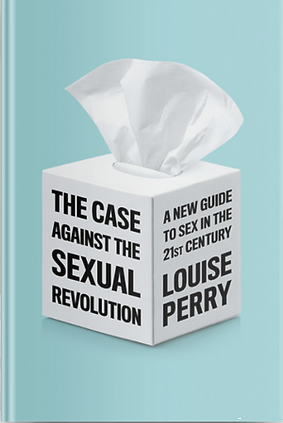
A new book, the Case Against Sexual Revolution, A New Guide to Sex in the 21st Century, written by Louise Perry, a young writer for the New Statesman is published at the end of this month. Perry volunteers in rape centers, and works for the campaign group We Can’t Consent To This, which documents cases in which UK women have been killed and defendants have claimed in court that they died as a result of ‘rough sex’.
This is her advice: Get Married and Make Sure You Stay Married.
Dramatically well-argued and sourced, Perry goes through every “innovation” in the sexual space and demonstrates without flinching, that all of it, all of it, privileges a particular subset of male, the sociosexual male – the kind that preferences quantity over quality – and not only that the worst kind of sociosexual male. The kind who like choking women, the rapists, abusers, serial womanizers, the pedophiles, the pimps, and the traffickers.
Decades later, says Perry, the mothers and grandmothers of 2nd and 3rd stage feminism have created hook-up culture as the near exclusive method of finding a mate. She details the unassailable fact that women, by their very nature, by their evolutionary history, and their specific biology are victimized in every move of hook-up culture, which ruthlessly uses their femininity, their gentleness, kindness, and agreeableness against them. It coarsens men, inflames their worst natures and has turned the netherworld of the sexual marketplace into a vicious free-for-all, a Darwinian thrash-hunt of the most vulnerable.
Everyone is hurt by it. Without exception.
I live in a place socially advanced, jokingly known as the end of the hippie trail. It is prosperous because it is one of the most beautiful places in the world. But, because it is environmentally advanced, our population is aging. The young and busy cannot start businesses or families here, because the environmental regulation is so strict, they cannot afford it. The human wreckage of the sexual revolution, therefore, is on full display. The streets and markets are littered with broken older men and women, long divorced or separated, the women especially living on crumbs, alone and destined to die alone, many without family. Hey, but their 20s and 30s were free. They got to have sex with dozens, if not hundreds of gorgeous men or women. And they used all the drugs.
If you look hard enough, you will see the same people drifting along the margins of every city and town. Break sexual norms, you break the family, and then you break the culture. What is left is pitiable.
Perry makes the point that I have tried to make hundreds of times in the past 20 years. So many of the political aims of upper-middle-class work for them, but for no one else. They are luxury beliefs. Upper-middle-class mothers do not send their gorgeous teens away to college now without very stern warnings about what might happen to them. Without a full delineating of the horrors that attend hooking up. But the less advantaged, those who swallow the propaganda of the culture do not.
Comments Off on “This is her advice: Get Married and Make Sure You Stay Married”
The DeLorean Story
Big Car
Published 5 Jan 2020There’s much more to the DeLorean Motor Company than Doc’s 88mph time machine in Back to the Future. It’s a story of a playboy founder with a meteoric rise, a story of hope and regeneration in an area torn apart after a decade of fighting, and of a cocaine smuggling fall from grace. Yes, this story has it all!
(more…)
Comments Off on The DeLorean Story
QotD: How pre-modern polytheistic religions originated
This is exactly backwards for how the ancients, practicing their practical knowledge, learn about the gods. The myths, philosophical discussions and well-written treatises are not the foundation of the religion’s understanding of the gods, but rather the foaming crest at the top of the wave. In practice, the ruminations of those philosophers often had little to do the religion of the populace at large; famously Socrates’ own philosophical take on the gods rather upset quite a lot of Athenians.
Instead of beginning with a theory of the divine and working forwards from that, the ancients begin with proven methods and work backwards from that. For most people, there’s no need to know why things work, only that they work. Essentially, this knowledge is generated by trial and error.
Let’s give an example of how that kind of knowledge forms. Let’s say we are a farming community. It is very important that our crops grow, but the methods and variations in how well they grow are deep and mysterious and we do not fully understand them; clearly that growth is governed by some unseen forces we might seek the aid of. So we put together a ritual – perhaps an offering of a bit of last year’s harvest – to try to get that favor. And then the harvest is great – excellent, we have found a formula that works. So we do it next year, and the year after that.
Sometimes the harvest is good (well performed ritual there) and sometimes it is bad (someone must have made an error), but our community survives. And that very survival becomes the proof of the effectiveness of our ritual. We know it works because we are still here. And I mean survival over generations; our great-great-grandchildren, for whom we are nameless ancestors and to whom our ritual has always been practiced in our village can take solace in the fact that so long as this ritual was performed, the community has never perished. They know it works because they themselves can see the evidence.
(These sorts of justifications are offered in ancient works all the time. Cicero is, in several places, explicit that Roman success must, at the first instance, be attributed to Roman religio – religious scruples. The empire itself serves as the proof of the successful, effective nature of the religion it practices!)
Bret Devereaux, “Collections: Practical Polytheism, Part I: Knowledge”, A Collection of Unmitigated Pedantry, 2019-10-25.
Comments Off on QotD: How pre-modern polytheistic religions originated
August 18, 2022
MAID in Canada
In The Critic, Ben Woodfinden discusses the maple-flavoured slippery slope we’re gaining speed on: what’s known as “Medical Assistance In Dying (MAID)”:

Toronto General Hospital in 2005.
Photo via Wikimedia Commons.
Canada is widely seen as one of the world’s most progressive nations in the world, “leading the way” (depending on where you stand) on a variety of social issues. But in recent months, Canada has been garnering some less than savoury international attention because of the dark side of one of its recent progressive accomplishments, namely the assisted suicide regime that has been created since the Supreme Court struck down prohibitions on assisted suicide in 2015. The tragic situation that has developed in Canada offers a warning to Britain and other countries considering going down a similar path, both to be cautious about opening the assisted suicide floodgates and about empowering judges to decide whether such things should be allowed.
When Canada’s enlightened judicial philsopher kings and queens overturned criminal prohibitions on assisted suicide in Carter v. Canada, they overturned their own precedent. In 1993 a majority of the Supreme Court found that the criminal code provisions that prohibited assisted suicide did not ultimately violate the Canadian Charter. In 2015 the Court changed its mind. The law didn’t change, of course, but the court decided that “the matrix of legislative and social facts” surrounding the case had changed. Thus the interpretation of constitutional rights must change with them.
Plenty of the same people who were outraged that the United States Supreme Court would overturn precedent on seminal abortion decisions, seemingly had no problem with the overturning of precedent in this Canadian case. This is because implicit in the view of rights and judicial review that many progressives hold, is that it is perfectly acceptable to overturn precedent in the name of expanding or establishing some newly discovered right — but once this is done, the debate is settled and there can be no reasonable dissent or change of heart. History, it seems, only marches in one direction.
An important part of the Carter decision, where the court determined that relevant social facts had changed, was essentially a blithe dismissal of exactly what has come to pass in Canada less than a decade after the decision. The court rejected the concern that once assisted suicide was allowed in some rare cases, there would be a “slippery slope” from helping terminally ill people end their lives, to a system in which vulnerable people like the disabled were caught in a euthanising net.
Evidence presented in the case by a medical expert from Belgium that this might be possible, was dismissed by the court because “the permissive regime in Belgium is the product of a very different medico-legal culture”. Unlike those barbaric Belgians, enlightened Canada could avoid sliding down this slippery slope in which safeguards are easily gotten around. They would avoid the creeping expansion of eligibility by setting up a “carefully regulated scheme” that would keep its application narrow and exceptional.
Spoiler: No. No, we didn’t.
Comments Off on MAID in Canada
The Communist Spies in America’s Atomic Program – WW2 – Spies & Ties 22
World War Two
Published 15 Aug 2022The NKVD have wormed their way into British society. Across the pond, America is also teeming with communist spies. They’re in the government, military, even OSS, and the FBI. Now they’re going for the biggest secret of all – the atomic bomb.
(more…)
Comments Off on The Communist Spies in America’s Atomic Program – WW2 – Spies & Ties 22
The acute lack of numbers in every climate debate
The Grumpy Economist notes that every discussion of laws and regulations “to tackle climate change” only ever seem to cover one side of the issue — how much your taxes will go up and how much more your life “needs” to be regulated to “save the planet”. The almost universally lacking numbers are the expected benefits of the law or regulation in climate terms:
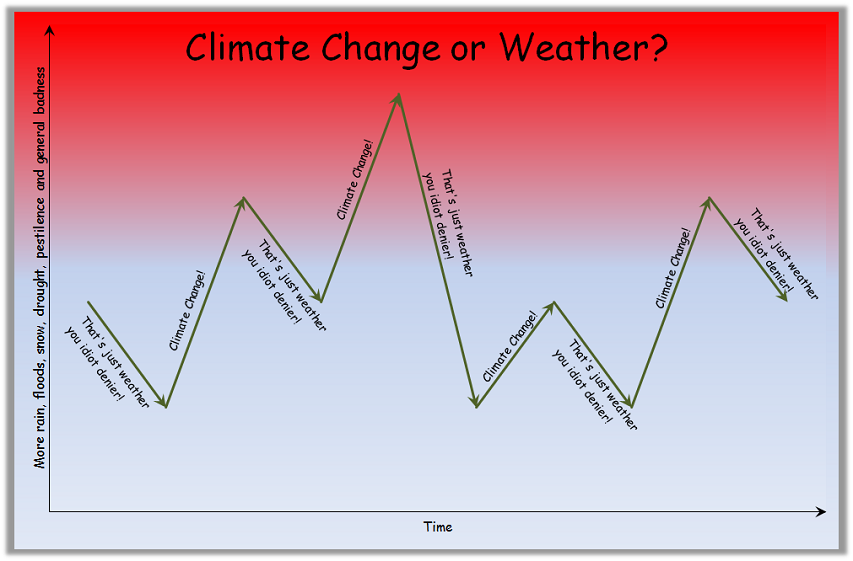
Most legislation or regulation that spends hundreds of billions of dollars aimed at a purpose is extensively analyzed or scored to that purpose. OK, the numbers are often, er, a bit unreliable, but at least proponents go through the motions and lay out assumptions one can examine and calculate differently. Tax and spending laws come with extensive analysis of just how much the government will make or spend. This is especially true when environment is concerned. Building anything requires detailed environmental assessments. An environmental review typically takes 4.5 years before the lawsuits begin.
In this context, I’m amazed that climate policy typically comes with no numbers, or at least none that I can find readily available in major media. We’re going to spend an additional $250 billion or so on climate policies in the humorously titled “inflation reduction act”. OK, how much carbon will that remove, on net, all things included, how much will that lower the temperature and when, how much and when will it quiet the rise of the oceans?
Finally, I have seen one number, advertised in the Wall Street Journal,
Our contributor Bjorn Lomborg looked at the Rhodium Group estimate for CO2 emissions reductions from Schumer-Manchin policies. He then plugged them into the United Nations climate model to measure the impact on global temperature by 2100. He finds the bill will reduce the estimated global temperature rise at the end of this century by all of 0.028 degrees Fahrenheit in the optimistic case. In the pessimistic case, the temperature difference will be 0.0009 degrees Fahrenheit.
Bjorn’s twitter stream on the calculation.
Maybe you don’t like Bjorn’s numbers and the IPCC model. (Not exactly a right-wing operation). Maybe you don’t like the Rhodium group’s analysis. A quick reading left me the impression its thumb might be on the wildly over-optimistic side of what this rathole of pork can produce, and of experience with what the similar past ratholes have produced:
Our preliminary estimate is that the IRA can cut US net greenhouse gas emissions down to 31% to 44% below 2005 levels in 2030—with a central estimate of 40% below 2005 levels — compared to 24% to 35% under current policy. The range reflects uncertainty around future fossil fuel prices, economic growth, and technology costs. It will also meaningfully reduce consumer energy costs and bolster US energy security over the medium-term,
10% of 2005 levels is a lot. Subsidies reduce consumer costs, but not the cost to society overall. Clever. How one can claim that clamping down on fossil fuels and subsidizing windmills and solar panels helps energy security with the German example before us is a good question. Bjorn’s point is that even with this immense thumb on the scale, the actual climate benefit is tiny. If you disagree, fine, produce some alternates.
(BTW, politicians who tell you we need to do something about climate to turn off heat waves and stop forest fires are either lying or profoundly ignorant. Nothing even Greta Thunberg proposes will actually lower temperatures in our great grandchildren’s lifetimes. Read carefully, “reduce the temperature rise“. Not “reduce temperatures”.)
Comments Off on The acute lack of numbers in every climate debate


