Quotulatiousness

April 23, 2011

Another fake war hero emerges

Filed under: Military, USA — Tags: , , , , — Nicholas @ 11:28

This time, it’s a 20-year-old woman in Minnesota:

The town of Cass Lake embraced Elizabeth McKenzie last month when she arrived at the high school in her Army uniform for a welcome home ceremony.

Though she isn’t a tribal member, the Leech Lake Band of Ojibwe Honor Guard gave her a blanket and an eagle feather to honor her as a woman warrior for her service in Afghanistan. There was a tribal drum ceremony and a reception line. Accepting the town’s gratitude, McKenzie talked about the close calls she’d had and a war injury that brought her home. She led the march in the high school gym, carrying the American flag, and the local newspaper documented the hero’s return.

But none of it was true. The 20-year-old McKenzie was never injured in combat, had never been to Afghanistan, never been deployed anywhere. In fact, she’s never been in the military.

Now the 2009 grad of Cass Lake High School has been cited for impersonating an officer, which in Minnesota includes the military. And the people of Cass Lake are trying to recover from feeling duped by their own good intentions.

April 22, 2011

Houston loses space shuttle sweepstakes

Filed under: History, Space, USA — Tags: , , — Nicholas @ 16:26

Houston has a problem with the allocation of the soon-to-be retired space shuttles:

Which city, in the whole of the United States, would the average person associate most clearly with America’s towering achievements, and no few sorrows, over the past half century of sending men and women into space? Why, Houston, of course — home of the Johnson Space Centre, where NASA’s mission control is located. We know this from all that has been said and done in the past. The first words Neil Armstrong uttered as Apollo 11 touched down on the Moon in 1969 were: “Houston, Tranquility base here — the Eagle has landed.”

The name of Houston will forever be associated with the manned exploration of space. No astronaut ever radioed laconically back from a crippled spaceship, “Manhattan, we have a problem”. Yet, in NASA’s recent selection of the final destinations for its four extant space shuttles, now that the last operational ones are about to be pensioned off, New York City will get Enterprise, the first of the shuttles that was rolled out in 1976, while Houston gets snubbed.

A score or more of museums and other institutions around the country competed for the honour of having a shuttle in their permanent collection. Apart from offering an appealing display, each had to be ready to stump up $28.8m to cover the cost of preparing and transporting the winged spacecraft to its new location. Of the three other remaining shuttles, Discovery is destined for the Smithsonian’s National Air and Space Museum annexe outside Washington, DC. After the launch in late June of the 135th (and last) mission in the shuttle programme, Atlantis will remain in Florida to be exhibited at the Kennedy Space Centre’s visitor centre.

Meanwhile, after its own final mission later this month, Endeavour, the youngest of the shuttles, will be ferried to Los Angeles to end its days in the California Science Centre, alongside existing exhibits of the Mercury, Gemini and Apollo spacecraft, and close to the old Rockwell plant in Palmdale where the shuttle was developed. Meanwhile, just up the road, at Edwards Air Force Base, is the runway where nearly half of all shuttle flights touched down.

April 19, 2011

This is why the delays at the US border are so important to Canadians

Filed under: Cancon, Economics, USA — Tags: , , — Nicholas @ 10:11

Stephen Gordon says that the additional costs to the Canadian economy for slower border crossings rival (or possibly even exceed) the savings due to NAFTA:

It is difficult to overstate the importance of Canada-U.S. trade flows: roughly one-quarter of what Canada produces is exported to the United States, and the volume of imports from the U.S. is only slightly smaller.

The increased border security in the wake of the Sept. 11 attacks may be only a minor irritant in the context of a single border crossing, but a small cost multiplied by a large number of crossings can still end up being a very big number. Even a small perturbation in trade flows of this magnitude can have a significant effect on the Canadian economy.

A recent study by Trien Nguyen of the University of Waterloo and Randy Wigle of Wilfrid Laurier University and published in the March 2011 issue of Canadian Public Policy provides some estimates for the economic costs of border crossing delays. These costs can be startlingly large, especially in the auto sector. Parts and subassemblies of cars produced in North America crisscross the border several times during production, so custom rules and border delays can add an extra $800 to the cost of production. In contrast, cars imported from overseas only have to pass through customs once.

WikiLeaks exposes Chinese espionage unit

Filed under: China, Military, Technology, USA — Tags: , , — Nicholas @ 09:15

Strategy Page points out that it’s not just American and allied secrets that have been exposed by WikiLeaks:

Chinese Cyber War units have been plundering foreign government and military online data for over five years now. But thanks to Wikileaks, and several other sources, the identity and location of the main Chinese Cyber War operation is now known. The Chinese Chengdu Province First Technical Reconnaissance Bureau (1st TRB) is a Chinese Army electronic warfare unit located in central China (Chengdu), and is the most frequent source of hacking attacks traced back to their source. The servers used by the 1st TRB came online over five years ago, and are still used. The Chinese government flatly refuses to even discuss the growing pile of evidence regarding operations like the 1st TRB.

The 1st TRB is part of the Chinese Army’s Third Department, which is responsible for all sorts of electronic eavesdropping. But given the praise showered on the 1st TRB, a lot of valuable data has apparently been brought to Chengdu, and then distributed to the appropriate industrial, diplomatic or military operations. The hacking operation has been so successful, that it has obtained more staff and technical resources. As a result, in the last five years, detected hacking attempts on U.S. government and corporate networks has increased by more than six times. Most of these hacks appear to be coming from China. Not all the hacking is done by 1st TRB personnel. A lot of it appears to be the work of Chinese freelancers, often working for pay, but sometimes just to “serve the motherland.”

Reuters has a special report on “Byzantine Hades”:

According to U.S. investigators, China has stolen terabytes of sensitive data — from usernames and passwords for State Department computers to designs for multi-billion dollar weapons systems. And Chinese hackers show no signs of letting up. “The attacks coming out of China are not only continuing, they are accelerating,” says Alan Paller, director of research at information-security training group SANS Institute in Washington, DC.

Secret U.S. State Department cables, obtained by WikiLeaks and made available to Reuters by a third party, trace systems breaches — colorfully code-named “Byzantine Hades” by U.S. investigators — to the Chinese military. An April 2009 cable even pinpoints the attacks to a specific unit of China’s People’s Liberation Army.

Privately, U.S. officials have long suspected that the Chinese government and in particular the military was behind the cyber-attacks. What was never disclosed publicly, until now, was evidence.

U.S. efforts to halt Byzantine Hades hacks are ongoing, according to four sources familiar with investigations. In the April 2009 cable, officials in the State Department’s Cyber Threat Analysis Division noted that several Chinese-registered Web sites were “involved in Byzantine Hades intrusion activity in 2006.”

April 18, 2011

Happy thought of the day

Filed under: Law, Liberty, Media, Technology, USA — Tags: , , , , — Nicholas @ 15:43

Darlene Storm offers this cheery little nugget of information (from a post back in December):

Dear Americans: If you are not “authorized” personnel, but you have read, written about, commented upon, tweeted, spread links by “liking” on Facebook, shared by email, or otherwise discussed “classified” information disclosed from WikiLeaks, you could be implicated for crimes under the U.S. Espionage Act — or so warns a legal expert who said the U.S. Espionage Act could make “felons of us all.”

As the U.S. Justice Department works on a legal case against WikiLeak’s Julian Assange for his role in helping publish 250,000 classified U.S. diplomatic cables, authorities are leaning toward charging Assange with spying under the Espionage Act of 1917. Legal experts warn that if there is an indictment under the Espionage Act, then any citizen who has discussed or accessed “classified” information can be arrested on “national security” grounds.

H/T to Bruce Schneier for the link.

Oh, stop worrying: everything is going according to the plan!

Filed under: Bureaucracy, Government, Liberty, USA — Tags: , , , , , — Nicholas @ 11:02

Julian Sanchez notes a fascinating parallel:

Batman’s archnemesis the Joker — played memorably by Heath Ledger in 2008′s blockbuster The Dark Knight — might seem like an improbable font of political wisdom, but it’s lately occurred to me that one of his more memorable lines from the film is surprisingly relevant to our national security policy:

You know what I’ve noticed? Nobody panics when things go “according to plan.” Even if the plan is horrifying! If, tomorrow, I tell the press that, like, a gang banger will get shot, or a truckload of soldiers will be blown up, nobody panics, because it’s all “part of the plan.”

There are, one hopes, limits. The latest in a string of videos from airport security to provoke online outrage shows a six-year-old girl being subjected to an invasive Transportation Security Administration patdown — including an agent feeling around in the waistband of the girl’s pants. I’m somewhat reassured that people don’t appear to be greatly mollified by TSA’s response:

A video taken of one of our officers patting down a six year-old has attracted quite a bit of attention. Some folks are asking if the proper procedures were followed. Yes. TSA has reviewed the incident and the security officer in the video followed the current standard operating procedures.

While I suppose it would be disturbing if individual agents were just improvising groping protocol on the fly (so to speak), the response suggests that TSA thinks our concerns should be assuaged once we’ve been reassured that everything is being done by the book — even if the book is horrifying. But in a sense, that’s the underlying idea behind all security theater: Show people that there’s a Plan, that procedures are in place, whether or not there’s any good evidence that the Plan actually makes us safer.

April 10, 2011

NYC’s backlash against the bicycle

Filed under: Politics, USA — Tags: , , — Nicholas @ 10:19

Stephen Smith does a quick analysis of the reaction to P.J. O’Rourke’s anti-bike article in the Wall Street Journal last weekend:

Could it be that the bike lobby actually has alienated the rest of America (and even New York), playing into stereotypes (Stuff White People Like #61) of spandex-wearing, pasty-legged effete liberals who think that the bicycle is a reasonable tool for, say, intra-Brooklyn house moves? No, says Streetsblog — it must be some sort of advertiser-driven conspiracy. (Does The New Yorker even have an auto section? How many car ads are there in the latest issue?) This article is of course absurd, but I think it’s a symptom of the way that many bike advocates lionize their preferred mode of transit, perhaps unknowingly prioritizing it above even other non-automobile modes.

Don’t get me wrong — I have no problem with bikes, and even bike lanes. I’ve seen the stats on the Prospect Park West lane, about how it’s improved safety without slowing down auto commutes, and I don’t doubt it for a second. But as much as we wish it weren’t so, political capital is an exhaustible resource, and only so many reforms can be made before voters and citizens start to punish the politicians making them. Janette Sadik-Khan is, realistically, only allowed to anger so many people by changes to the status quo — every bike lane she stripes is a Select Bus Service route that won’t be implemented, a Haitian dollar van driver who will be fined and imprisoned, an outer-borough resident who won’t be able to catch a cab because of the medallion system. The fundamental problem, in my opinion, is that bike lanes are very culturally-loaded, and the anger they produce — which translates directly into other projects being shot down — is out of proportion with their benefits.

April 9, 2011

QotD: “In terms of outcomes — the greatest individual Liberty for the greatest number — Canada is a FAR more Libertarian country than the United States”

Filed under: Cancon, Liberty, Quotations, USA — Tags: , — Nicholas @ 00:07

As a conscious, de jure Libertarian; and antiauthoritarian to the very core of my being — I have more than once observed that in terms of outcomes — the greatest individual Liberty for the greatest number — Canada is a FAR more Libertarian country than the United States.

You see — and you will find this point made in core libertarian writings — liberty requires social infrastructure in order to ensure basic, common wants; otherwise those wants and needs can be and WILL be used by the minority against the majority to reduce them to a state of permanent serfdom.

Unless you can afford to say “take this job and shove it,” you are not free. Arguably, it should not be a trivial step, without consequence, but it absolutely MUST be possible — or you are not living in a free society.

Likewise, there must be robust regulations and vigilant guardians watching over the markets and the commons, so that — well, so that what is happening in economic terms in the US and Europe, does not happen. And in Canada, that is the case. Canada has not abandoned regulatory oversight of critical industries in order to pander to would be Madoffs and Enrons and the result is more — not less — economic opportunity and practical liberty for more people.

But US Libertarians are of the opinion that Liberty is the same as License. It is a movement of the self-indulgent, those who cry that “I have mine, and you are a luser who deserves nothing from me.”

Bob King, “Basement Bunker Libertarians”, Graphictruth, 2009-04-30

April 8, 2011

QotD: the international double standard

Filed under: Europe, Humour, Italy, Quotations, USA — Tags: , — Nicholas @ 13:39

A long time ago we had a president who was doing a chubby intern.

And some Americans got uptight about it.

And we were told by Europeans everywhere ‘Relax, it’s just sex. He’s the leader of the country, they have mistresses, it happens get over it you uptight prudes.’

So now with Silvio Berlusconi having sex with underage prostitutes and orgies and I don’t know what-all I guess that makes Europe — and Italy in particular — about eighteen times more sophisticated [1] than us hicks in the United States and so-on and so-forth.

Y’all must be so proud.

[1] Sarcasm.

Brian Dunbar, “Sophisticated Europe”, Space for Commerce, by Brian Dunbar, 2011-04-07

April 7, 2011

Unmanned sub hunter

Filed under: Military, Technology, USA — Tags: , , , — Nicholas @ 10:25

Lewis Page looks at the Continuous Trail Unmanned Vessel (ACTUV):

No doubt regular readers will recall the US military’s cunning plan to develop unmanned submarine-hunting robotic frigates — warships which would prowl the oceans like automated Mary Celestes, remorselessly tracking enemy submarines regardless of how their pale, sweaty, malodorous captains might twist and turn.

The Anti-submarine warfare Continuous Trail Unmanned Vessel (ACTUV) project is intended to produce “an X-ship founded on the assumption that no person steps aboard at any point in its operating cycle”. The uncrewed frigate would have enough range and endurance for “global, months long deployments with no underway human maintenance”, being able to cross oceans and fight its battles largely without any human input — communications back to base would be “intermittent”, according to DARPA.

As you might imagine, there are lots of potential issues to sending an armed, unmanned ship out into the ocean, including how to handle interactions with other users of the sea lanes. It’d be worse than embarassing to the US Navy to have one of their fancy new ACTUV vessels get tangled up in a fishing net or get caught in the middle of a regatta.

Perhaps unsurprisingly, then, it has been decided that the best way to hammer out a set of tactics for ACTUVs is to develop a game-style simulation pitting ACTUV against submarine and get people to play it — so crowdsourcing the methods and tactical principles that will then be coded into the robo-frigates’ AIs.

The new game — from which these visuals are drawn — is called ACTUV Tactics. The game engine is used in various military sims and in the Dangerous Waters commercial release of 2005. [. . .]. In it, a player tries to find and track an enemy submarine while avoiding collisions with commercial vessels and the like. Various different proposed models of ACTUV robo-frigate are available: Gator, Remora, Seahorse, Shark and Triton.

Wil Wheaton gets the “special” treatment from the TSA

Filed under: Bureaucracy, Government, Liberty, USA — Tags: , , , — Nicholas @ 08:46

The TSA just got another rave review from a traveller who got the full treatment and didn’t like it:

Yesterday, I was touched — in my opinion, inappropriately — by a TSA agent at LAX.

I’m not going to talk about it in detail until I can speak with an attorney, but I’ve spent much of the last 24 hours replaying it over and over in my mind, and though some of the initial outrage has faded, I still feel sick and angry when I think about it.

What I want to say today is this: I believe that the choice we are currently given by the American government when we need to fly is morally wrong, unconstitutional, and does nothing to enhance passenger safety.

I further believe that when I choose to fly, I should not be forced to choose between submitting myself to a virtually-nude scan (and exposing myself to uncertain health risks due to radiation exposure), or enduring an aggressive, invasive patdown where a stranger puts his hands in my pants, and makes any contact at all with my genitals.

When I left the security screening yesterday, I didn’t feel safe. I felt violated, humiliated, assaulted, and angry. I felt like I never wanted to fly again. I was so furious and upset, my hands shook for quite some time after the ordeal was over. I felt sick to my stomach for hours.

This is wrong. Nobody should have to feel this way, just so we can get on an airplane. We have fundamental human and constitutional rights in America, and among those rights is a reasonable expectation of personal privacy, and freedom from unreasonable searches. I can not believe that the TSA and its supporters believe that what they are doing is reasonable and appropriate. Nobody should have to choose between a virtually-nude body scan or an aggressive, invasive patdown where a stranger puts his or her hands inside your pants and makes any contact at all with your genitals or breasts as a condition of flying.

H/T to occasional commenter “Da Wife” for the link.

April 6, 2011

XM-25 video released

Filed under: Military, Technology, USA, Weapons — Tags: , — Nicholas @ 07:14

XM25 from PEO Soldier on Vimeo.

If the field trials in Afghanistan go well, this could be a very useful addition to the US Army’s armament collection. As the video shows, however, firing a 25mm round means there’s quite a kick to the soldier firing the weapon. The capability the weapon provides, however, isn’t available at the squad level any other way, so just hand it to your biggest trooper . . .

April 4, 2011

“Free speech is a great idea, but we’re in a war”

Filed under: Government, Liberty, Politics, Religion, USA — Tags: , , , — Nicholas @ 09:17

I love the smell of censorship in the morning. It smells like politics:

[Senator Lindsey Graham said] “I wish we could find a way to hold people accountable. Free speech is a great idea, but we’re in a war. During World War II, we had limits on what you could say if it would inspire the enemy. So, burning a Koran is a terrible thing but it doesn’t justify killing someone. Burning a Bible would be a terrible thing but it doesn’t justify murder. Having said that, anytime we can push back here in America against actions like this that put our troops at risk we should do it, and I look forward to working with Senators Kerry, and Reid, and others to condemn this, condemn violence all over the world based on the name of religion. But General Petreaus understand better than anybody else in America what happens when something like this is done in our country and he was right to condemn it and I think Congress would be right to reinforce what General Petreasus said.

[. . .]

Here’s your answer Senator. No, you don’t need to hold hearings and you don’t need to be looking into ways to limit the free speech rights of American citizens because of the insane reaction of people thousands of miles away who were obviously ginned up by demagogues. War or not, Terry Jones had every right to do what he did.

Jim Geraghty perhaps put it most appropriately:

This pastor, Terry Jones, has a jones for media attention that makes the Kardashians look like J.D. Salinger. He knows that there’s a good chance that tossing the Koran on a pile of charcoal briquettes will make the easily-enraged in far-off lands lash out in that time-tested tradition, killing aid workers, and he doesn’t give a damn. He knows there’s a chance that the Muslim tantrums might put our men and women in uniform at greater risk. He still doesn’t give a damn. He has never given a damn. What, he’s gonna go weak-kneed at the thought of a unanimous Senate resolution?

April 3, 2011

Picking sides in Libya

Filed under: Africa, Military, USA — Tags: , , , , , — Nicholas @ 11:07

I must have been following the wrong news stories, because I thought the UN resolution empowered the coalition to enforce a no-fly zone, not to attack both sides:

So, having agreed to be the Libyan Liberation Movement Air Force, we’re also happy to serve as the Qaddafi Last-Stand Air Force. Say what you like about Barack Obama, but it’s rare to find a leader so impeccably multilateralist he’s willing to participate in both sides of a war. It doesn’t exactly do much for holding it under budget, but it does ensure that for once we’ve got a sporting chance of coming out on the winning side. If a coalition plane bombing Qaddafi’s forces runs into a coalition plane bombing the rebel forces, are they allowed to open fire on each other? Or would that exceed the U.N. resolution?

Who are these rebels we’re simultaneously arming and bombing? Don’t worry, the CIA is “gathering intelligence” on them. They should have a clear of who our allies are round about the time Mohammed bin Jihad is firing his Kalashnikov and shouting “Death to the Great Satan!” from the balcony of the presidential palace. But America’s commander-in-chief thinks they’re pretty sound chaps. “The people that we’ve met with have been fully vetted,” says President Obama. “So we have a clear sense of who they are. And so far they’re saying the right things. And most of them are professionals, lawyers, doctors — people who appear to be credible.”

Credible people with credentials — just like the president! Lawyers, doctors, just like Dr. Ayman al-Zawahiri, al-Qaeda’s No. 2. Maybe among their impeccably credentialed ranks is a credible professional eye doctor like Bashar Assad, the London ophthalmologist who made a successful mid-life career change to dictator of Syria. Hillary Rodham Clinton calls young Bashar a “reformer,” by which she means presumably that he hasn’t (yet) slaughtered as many civilians as his late dad. Assad Sr. killed some 20,000 Syrians at Hama and is said to have pumped hydrogen cyanide through the town: There wasn’t a dry eye in the house, as the ophthalmologists say. Baby Assad hasn’t done that (yet), so he’s a reformer, and we’re in favor of those, so we’re not arming his rebels.

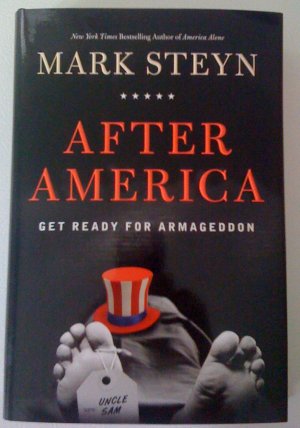
According to the State Department, Colonel Qaddafi’s 27-year-old son, Khamis, is also a “reformer.” Or at least he was a few weeks ago, when U.S. officials welcomed him here for a month-long visit, including meetings at NASA and the Air Force Academy, and front-row seats for a lecture by Deepak Chopra entitled “The Soul of Leadership.” Ten minutes of which would have me buckling up the Semtex belt and yelling “Allahu Akbar!” but each to his own. It would have been embarrassing had Khamis Qaddafi still been getting the red carpet treatment in the U.S. while his dad was getting the red carpet-bombing treatment over in Tripoli. But fortunately a scheduled trip to West Point on February 21st had to be canceled when young Khamis was obliged to cut short his visit and return to Libya to start shooting large numbers of people in his capacity as the commander of a crack special-forces unit. Maybe he’ll be killed by a pilot who showed him round the Air Force Academy. Small world, isn’t it?

H/T to Gerard Vanderleun for the link.

April 2, 2011

Why the F-22 was not deployed to Libya

Filed under: Africa, Military, Technology, USA — Tags: , , — Nicholas @ 11:12

I thought the answer to that question was simple: the F-22 is a pure fighter, and there’s no crying need for pure fighters to enforce the no-fly zone that can’t be met with older aircraft. Apparently, it’s a bit more complicated:

Conspicuously absent in the skies over Libya is the new American F-22. Despite modifying the F-22 to operate as a fighter-bomber, the F-22 was uniquely unsuited to operate as part of the international force assigned to stop Libya from attacking its own people. That job requires aircraft that can carry lots of smart bombs. Defeating the Libyan Air Force was not a major chore, and was easily handled by less capable (and cheaper to operate) air superiority fighters. Another problem was communications. The F-22 is not equipped to operate as part of an international aerial armada. The F-22 is a stealthy lone-wolf. Most of the time, the F-22 does not use its radio. To communicate with other F-22s, a special, short-range system is used. The F-22 does not have the full suite of communications equipment most NATO warplanes carry.

[. . .]

The 36 ton F-22 has internal bomb bays, like the F-117, to enhance stealthiness. Thus it can carry two half ton smart bombs, or eight 250 pound SDBs (ground penetrating Small Diameter Bombs) internally, in addition to a pair of air-to-air missiles. However, the F-22 is not yet modified to carry the SDB. The internal bays were originally designed to carry six air-to-air missiles, not bombs. Using the external hard points, which makes the aircraft more visible on radar, an F-22 can carry about four tons of bombs and missiles.

The F-22 has the most advanced radar and electronic warfare gear of any jet fighter. When you include the cost of research and development, each F-22 ends up costing nearly $400 million. But for pilots in certain types of combat, it’s money well spent. But not for what was needed over Libya, where most non-stealthy fighters can carry four or more tons of bombs and missiles.

« Newer PostsOlder Posts »

Powered by WordPress