
You thought about cooking. You had frozen fish filets in the freezer and a rather nice-looking head of broccoli sitting right there in the produce drawer. But then, somehow, it was 8:10, and it all seemed like too much trouble, so instead you grabbed a bowl of Tostitos, a jar of salsa, and three slices of pepper jack, and you ate it in front of “Chopped.”
Or at least, that’s the explanation that an NPD analyst gave Marketwatch for America’s snacking habits.
“It’s hard to shop and cook for one.” That’s one reason why people are buying more snack foods, she says. “They are individually packaged and often have a very long shelf life. That, and an awful lot of people do not have cooking skills.”
Those whitefish filets were probably going to be overcooked anyway. Tostitos, on the other hand, are always done to a turn.
I have some sympathy. When the Official Blog Spouse travels, sometimes I make things he doesn’t like, such as tofu stir-fry. And sometimes, I surrender to the siren call of Trader Joe’s Mac and Cheese Balls, which require no effort and are every bit as good to eat as they are bad for my waistline.
There are any number of articles and books that promise to tell you how to solve this problem. The best are merely adequate; the worst emit the quiet despair of an unmarked grave. I’ll concede that cooking for small numbers simply isn’t as much fun as cooking for a bigger group. Part of the joy of cooking is sharing the results. The labor-to-output ratio is lower for one or two, and you have to spend a lot of time fiddling with small amounts. Some things simply can’t be done efficiently for one or two people, which is why I save the rib roast for dinner parties. Other things shouldn’t be done for one or two people, which is why I am trying not to give in to the urge to make a layer cake this weekend.
Megan McArdle, “Friday Food Post: 10 Tips on Cooking for One”, Bloomberg View, 2015-08-21.
May 6, 2017
QotD: Cooking for one
May 4, 2017
Words & Numbers: In My Safe Space
Published on 3 May 2017
This week on Words & Numbers James and Ant talk about the “safe spaces” movement on college campuses. Spoiler Alert: they don’t think campuses should be all that safe…at least not for ideas. College is the one time in a person’s life when just about every idea is on the table, and we do no one a service by declaring certain topics settled or off limits in the name of making people feel “safe.”
Check out at their recent column on the topic: http://www.huffingtonpost.com/entry/5905d8ade4b03b105b44b95c
May 3, 2017
Softwood lumber, again
Last week, Megan McArdle provided a quick look at the son of the bride of the revenge of the softwood lumber dispute monster:
According to American lumber producers, this is because of the nefarious subsidies the Canadian government has granted to its timber producers. In America, most softwood timbering takes place on private land, and the lumber is priced to recover the full cost of owning and maintaining many acres of trees. In Canada, forest resources tend to be owned by the government, which sets “stumpage fees” (the cost for cutting down a tree, which used to be assessed per stump and is now usually assessed by board feet or cubic meters [PDF]).
The American producers complain that these fees are set too low, providing an unfair subsidy for Canadian timber, especially because British Columbia (which has a lot of timberland) bans the export of Canadian logs, so that American lumber mills are unable to get in on this sweet, sweet deal.
For variety, American producers occasionally also complain that Canada is “dumping” (basically meaning that a country is selling goods in a foreign market below the price at home. Since this is — except in rare cases such as pharmaceuticals — a stupid business practice, accusations of dumping tend to exceed actual instances by a healthy margin.)
[…]
The history of litigation on this is long, rich and arcane. Since the 1980s, the U.S. and Canada have been locked in a cycle whereby the U.S. complains that Canadian softwood lumber is too darn cheap, complaints are filed with various entities, and eventually both sides decide it’s easier to come to some sort of settlement rather than subject everyone to another endless hearing on the minutiae of the lumber industry. Then an agreement expires, American lumber producers say “Now’s our chance, guys! We’re going over the top!” and the magical cycle of birth and death, conflict and resolution, begins once again in the forest lands.
When trade bodies get around to ruling, those rulings are often mixed: “Yeah, okay, maybe there’s some subsidy in there somewhere, but you Americans are wildly overreacting, so cool it with the huge tariffs.” Which was basically my take on the dispute in 2004, when I last covered it. Research does not reveal any good reason to revise that view, especially because Canadian stumpage has evolved somewhat over the years. British Columbia now uses auctions [PDF] in its coastal forest areas, which should tend to drive the price of stumpage there to par with the world market.
We should also note that any subsidy, however bad for American softwood lumber producers, is actually good for the vast majority of Americans who do not work in forestry. This morning, people were throwing wild numbers around about how much a tariff would increase the price of a house or a box spring. I’d take those numbers with a hefty dose of salt, but undoubtedly, they will drive the price of softwood lumber products up somewhat, which means less money in the pocket of you, The Modern American Consumer. So even if American timber producers were completely right and their tariff were warranted, the American consumer would suffer.
May 2, 2017
Cultural appropriation, to the max!
In the latest issue of Libertarian Enterprise, L. Neil Smith talks about the logical conclusion to the cultural appropriation discussion:
Not all of the transgressions that precious snowflake-thugs accuse real human beings of are sexual in nature. The most ludicrous I’ve heard of is “cultural appropriation”. If I were sitting here, writing this in my sombrero and grass skirt, instead of a t-shirt and jeans, I would be guilty of it. If I adopt any custom, article of clothing, item of cuisine, (yes, chili beans are evil, and kung-pao is beyond the pale) or turn of phrase from another culture (G’day, cobber!), I can be accused — and gotten rid of — by the Cult of Correctness.
But here’s the thing: there is no original American culture. The way we live — pass the spaghetti, please — is made up of bits and pieces from hundreds of different cultures, all mixed delightfully together. I can have Mexican beer — made by German brewers — with my pizza (or kung-pao) and my life is enriched. It is America’s great strength. The leftist crybullies know this, of course. I think it may have been Ayn Rand (we appropriated her from Russia) who pointed out the underhanded collectivist tactic of attacking a person or thing for its virtues.
If I eschew tableware (a French invention, I believe) and knap myself an obsidian knife before dinner, am I appropriating Neanderthal culture?
They don’t give a rat’s ass; it’s just another thing to get people they don’t like with. Whether they know it or not (most likely they do not), their moral exemplars are Pierre-Joseph Proudhon, who infamously said “Property is theft.” and Jean-Jacques Rousseau, who commanded them to “Eat the rich.” So deep and ancient is their resentment of the achievements of others and despite the fact that their ideological leaders have all hypocritically gorged themselves at the public trough, that they’d insanely rather see the right-wing wealthy destroyed than have enough to eat, themselves. […]
Proudhon and Rousseau are bandits on the highway of life, their “philosophies” a crude attempt to render theft respectable. And their vile spawn, Anti-fa, are giving anarchism a bad name. And that is the naked, unvarnished truth. Life is hard enough without trying not to commit “microaggressions” which are simply another way of playing the leftist Gotcha! game with people who actually work — and think — for a living.
Tank Chats #8 Renault FT-17
Published on 4 Aug 2015
The eight in a series of short films about some of the vehicles in our collection presented by The Tank Museum’s historian David Fletcher MBE.
Conceived by General Jean-Baptiste Estienne and manufactured under the control of the Renault Company this was the world’s first mass-produced tank, 3800 being built in all.
They went into action for the first time on 31 May 1918 near Ploissy-Chazelle and proved very successful when they were used in numbers. British forces used a few Renaults as liaison vehicles while the United States Army used them in combat and copied the design.
May 1, 2017
Math is hard … and in Oregon it can lead to hard time
Did you know that you have to be certified by an Oregon regulatory agency to do certain kinds of math? Mats Järlström has discovered just how draconian the state can be about unauthorized mathematizing:
After exploring the math behind traffic light timing, Järlström concluded that the formula, created in 1959, accounted for only two yellow light scenarios: driving straight through the intersection, or stopping.
So Järlström decided to try to improve the math managing the transition time from yellow to red, in order to allow a driver traveling through an intersection with a yellow light to slow down and turn without being flagged for a red light violation. And in early 2015 he shared his proposal with the media, policymakers, and those interested in the traffic technology.
“It’s not rocket science,” Järlström said in a phone interview with The Register. “It took me about 40 minutes to figure it out.”
For communicating his findings in five emails, the Oregon State Board of Examiners for Engineering and Land Surveying in March, 2015 opened an investigation. In August 2016, the rules body found [PDF] that Järlström had engaged in unlicensed engineering and assessed a $500 fine.
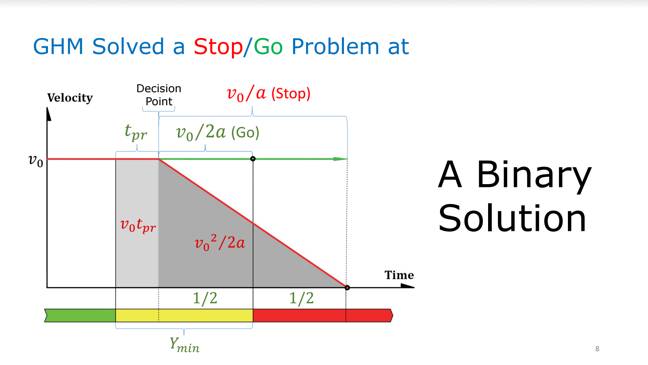

Even better, if he persists, he may even face jail time for his unlicensed mathematical crime spree.
Järlström paid the fine but fears his ongoing interest in traffic light timing will lead to further penalties. Violating the Act could subject him to $1,000 in civil penalties, $6,250 in criminal fines, and as much as a year in jail.
QotD: How to negotiate badly (unless you’re in a movie)
Does the [Republican congressional] caucus nominate a leader who will be itching for more such fights? This would be bad for America’s already dilapidated political institutions and civil society. It would also, I must point out, be bad for the Republican Party, which still shows lingering signs of infection by the dreaded “Ask for the Stars, You’ll Get the Moon” bargaining strategy. (Ever notice that’s so beloved by Hollywood, and by almost no one who actually has to negotiate deals for a living?)
The idea behind this is that you will eventually settle for something about halfway between your initial demands, and what the other side is asking for. The winning strategy is therefore to ask for enormous concessions, include unrealistic demands as bargaining chips, and convince the other side that you’re just crazy enough to walk away if they won’t make a deal.
As it happens, we have just had a demonstration of this technique — a live drama, no Hollywood effects: Greek Prime Minister Alexis Tsipras tried it with the EU. This strategy worked so well that he ended up with a worse deal than the original offer, plus a banking crisis that is still unspooling. Somehow, this never happens in Hollywood movies.
It’s easy to see why Hollywood loves this strategy: It’s really easy to explain without chewing up screen time, and it’s dramatic. Why don’t real-world negotiators more often do this?
Megan McArdle, “Let’s See What Republicans Learn From Losing Boehner”, Bloomberg View, 2015-09-25.
April 29, 2017
100 Days of Trump: Three Best and Worst Moments of Presidency So Far
Published on 28 Apr 2017
Reason presents the three worst—and the three best—achievements of President Trump’s first 100 days.
____________________________________________Third Worst Moment: Replace and Repeal FAIL.
Along with his pledge to build a wall on the southern border and deport illegal immigrants en masse, Trump’s campaign was all about ramming through the “Repeal and Replace Obamacare Act,” which would have cut red tape, gotten rid of the individual mandate, and created a true marketplace for medical insurance. Instead, thanks to the president’s own lack of savvy and GOP dithering, it didn’t even get a proper vote in Congress.
Third Best Moment: The nomination and confirmation of Neil Gorsuch.
The nomination of an intellectually powerful and highly respected jurist to replace the late Antonin Scalia on the Supreme Court demonstrated that President Trump isn’t the flake that many critics figured him to be. Neil Gorsuch might not be libertarian, but he is, in the estimation of Georgetown Law’s Randy Barnett, a serious thinker who believes that government power is and should be limited.
Second Worst Moment: The Country That Bombs Together.
The one action for which President Trump has received bipartisan praise was the bombing of a Syrian government air base to protest the alleged use of chemical weapons by the Assad regime. Even opposition leaders such as Nancy Pelosi and Chuck Schumer signed on to a starkly humanitarian intervention that served no greater purpose than rallying voters here in America.
Second Best Moment: Deregulatory appointees at the FDA, FCC, and EPA.
There’s no question that Trump has picked some terrible cabinet members—Attorney General Jeff Sessions has openly talked about ramping up the war on pot in states where it’s legal, for instance. He also defends asset-forfeiture abuse and has hinted at reviving federal porn prosecutions, too. But picks such as Ajit Pai at the Federal Communications Commission, Scott Gottlieb at the Food and Drug Administration, and Scott Pruitt at the Environmental Protection Agency are serious deregulators who are already starting to prune back regulations that accomplish little but cost taxpayers and innovators lots of time, money, and resources.
Worst Moment: Muslim Travel Ban.
The president has issued two executive decrees calling for a moratorium on travel from several majority-Muslim countries and the suspension of America’s refugee program. Both have been stayed by federal courts and it remains unclear if one will ever become the law of the land. Regardless it’s anti-American to effectively establish a religious test for travelers and migrants here—and it also undermines attempts to reach out to the vast majority of Muslims who are the primary targets of Islamic fundamentalism.
Best Moment: He’s Getting Real.
Every new president enters office thinking they can direct the course of human history via his pen or, in the case of Trump, his Twitter feed. For all his bluster and lack of self-awareness, he’s also learning that the world is more complicated than he reckoned. He’s pushed back deadines for all sorts of projects, from funding for his stupid and useless immigration wall to a timeline for tax reform, which shows that he is living in the real world at least. To the extent he realizes that his best path forward is in cutting economic regulations rather than vilifying immigrants, renegotiating trade deals, and starting new wars, he’ll not only be a better president—he’ll create a better America too.
Written by Nick Gillespie. Produced by Paul Detrick and Alexis Garcia.
April 28, 2017
Words & Numbers: Actually, Life is Pretty Awesome
Published on 26 Apr 2017
This week, James and Antony take a brief departure from talking about the growing national debt, and our absurd tax system to discuss the numerous ways in which more economic and personal freedom has made people wealthier, more equal, and better off all over the world. We’re actually living in pretty amazing times.
Read more:
https://fee.org/articles/actually-life-is-pretty-awesome/
QotD: Tenure
What about tenure? We can imagine an alternate universe where academia is populated with various PhDs on equal footing. Since there would be a glut, their salaries would be very low to start, but low salaries would mean easy employment, and colleges would find a lot of room for them to do one-on-one tutoring, or low-level research, or something like that. Eventually some of them would become a bit more prestigious in their fields and could demand higher salaries from hiring institutions, and a few superstars like Nobel Prize winners and the like could demand millions. At no point would there ever be anything called a “tenure track”. It seems like the main difference between this universe and our own is that tradition plus the reasonable desire of professors to be free from political interference has created this dichotomous variable called “tenure” and caused it to replace the continuous variable of salary as the prize for success. In favor of that theory, top professors seem weirdly underpaid compared to eg top athletes or top artists, even though I would expect having one of the world’s top scientists or historians to be a big draw for a school. According to the List Of Highest Paid Professors, only five professors in the US make more than a million dollars a year, and all of those are professors of lucrative medical subspecialties or of finance, who presumably are being paid that much to compensate them for teaching instead of participating in the high-paying professions they are otherwise qualified for.
Scott Alexander, “Non-Dual Awareness”, Slate Star Codex, 2015-07-28.
April 27, 2017
QotD: Canada the (self-imagined) “moral superpower” … the military midget
… Canada has no influence whatever in the world. It is unique in this condition among G7 countries, because it has a monstrously inadequate defence capability and takes no serious initiatives in the Western alliance or in international organizations.
Canadians seem to imagine that influence can be had in distant corners of the world just by being virtuous and altruistic and disinterested. That is not how international relations work. The powers that have the money and the applicable military strength have the influence, although those elements may be reinforced if a country or its leader is able to espouse a noble or popular cause with great persuasiveness. This last was the case in the Second World War, where Winston Churchill, Franklin D. Roosevelt, Charles de Gaulle and Adolf Hitler were all, in their different ways, inspiring public speakers who could whip up the enthusiasm of their peoples. Churchill and Roosevelt stirred the masses of the whole world who loved and sought freedom. There are no world leaders now with any appreciable ability to stir world opinion, and influence in different theatres is measured exclusively in military and economic strength, unless there is a colossal moral imbalance between contending parties. Even where such a moral imbalance exists, as in the contest between civilized and terrorism-supporting countries, the advantage is not easily asserted.
[…]
But we are almost entirely dependent on the United States for our own defence. When President Roosevelt said at Queen’s University in Kingston in 1938 that the U.S. would protect Canada from foreign invasion, Mackenzie King accepted the responsibility of assuring that invaders could not reach the U.S. through Canada. Since the Mulroney era, we have just been freeloaders. If we want to be taken seriously, we have to make a difference in the Western alliance, which the Trump administration has set out to revitalize. As I have written here before, a defence build-up: high-tech, increased numbers, and adult education, is a win-double, an added cubit to our national stature influence (and pride), and the best possible form of public-sector economic stimulus. It is frustrating that successive governments of both major parties have not seen these obvious truths. Strength, not amiable piety, creates national influence.
Conrad Black, “Being nice gets Canada liked. But we won’t be respected until we pull our weight”, National Post, 2017-04-14.
April 26, 2017
QotD: The modern vice is “ostentatious class disdain”
Yet Another Example… of our current practice of making important policy decisions based upon little except the learned habit of ostentatious class disdain.
You notice that at this late date, with a major policy campaign against the dreaded Semi. Automatic. Weapon., that most of these guys still haven’t bothered to discover what a semi-automatic is?
That’s a learned habit. They are signalling to other members of their class (or the class they aspire to) that they consider such knowledge base, the sort of thing known by the dirty callous-handed illiterates of the rabble and certainly not by the Lords of Intellect.
I mean, it’s like a recipe for ‘Possum Stew. To even know the thing would reduce you in status. Knowledge about guns is something the lower classes have; the criminal class, the agrarian workers (the peasantry), the lesser Servitor Classes of policemen and armed guards and military betas.
What could possibly explain such ignorance at this point, except a calculated, learned ignorance of the habits of one’s putative lessers?
Ace, “The Unburstable Bubble of Willful Ignorance of the International Self-Purported Elites”, Ace of Spades H.Q., 2013-01-09.
April 25, 2017
Cultural appropriation of “poverty culture” in the Tiny House Movement
Ann Althouse linked to this older article by July Westhale on “Poverty Appropriation”:
How many folks, I wonder, who have engaged in the Tiny House Movement have ever actually lived in a tiny, mobile place? Because what those who can afford homes call “living light,” poor folks call “gratitude for what we’ve got.”
And it’s not just the Tiny House Movement that incites my discontent. From dumpster diving to trailer-themed bars to haute cuisine in the form of poor-household staples, it’s become trendy for those with money to appropriate the poverty lifestyle — and it troubles me for one simple reason. Choice.
The Tiny House Movement began in the ’90s, but has only been rising in popularity since the recession. And to be fair, it’s rooted in a very real problem: more and more people being displaced as a result of soaring housing costs, especially in tech-boom areas like the Bay Area.
[…]
It’s likely, from where I sit, that this back-to-nature and boxed-up simplicity is not being marketed to people like me, who come from simplicity and heightened knowledge of poverty, but to people who have not wanted for creature comforts. For them to try on, glamorize, identify with.
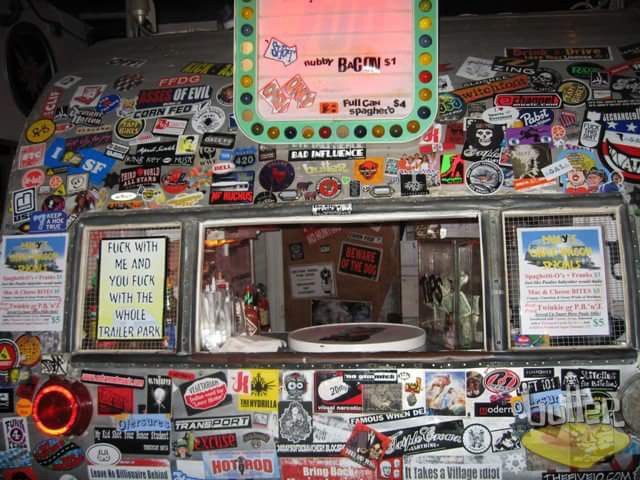
Such appropriation isn’t limited to the Tiny House trend, or even to the idea of simplicity. In major cities, people who come from high-income backgrounds flock to bars and restaurants that both appropriate, and mock, low-income communities. Perhaps the most egregious example is San Francisco’s Butter Bar, a trendy outpost that prides itself on being a true-blue, trailer park-themed bar, serving up the best in “trashy” cuisine and cocktails. With tater tots, microwaved food, and deep-fried Twinkies on the menu, the bar also serves cocktails that contain cheap ingredients, such as Welch’s grape soda. The bar has an actual trailer inside, and serves cans in paper bags, so that bar flies can have a paid-for experience of being what the owners of this bar think of when they think of trailer trash.
Butter Bar in San Francisco (Credit: Facebook)
It’s but one example of an entire hipster movement — can it be called a movement when it’s a subculture rooted not in political consciousness, but in capitalism? — that has brought with it an ethos of poor-culture appropriation and the “re-invention” of things that have largely been tools of survival for poor, disabled, working class, and/or communities of color for decades.
April 24, 2017
Today’s study in “problematic” issues for Teen Vogue
Amy Alkon fisks a recent Teen Vogue piece on soi-disant “cultural appropriation”:
Silly Teen Vogue-ers, Fashion *Is* Appropriation
This bit — from Teen Vogue — is hilariously sad and sadly hilarious:
In our new column Don’t Do It Girl, Jessica Andrews explores the cultural appropriation epidemic at Coachella.
EPIDEMIC! Like AIDS, Zika, or Ebola!
Fashion always has been about appropriation. Appropriating style and appropriating culture. Those lace-up-the-ankle sandals? Ancient Rome!
Yet, do you see Italian kids mewling that you stole their culture? Of course not, because Italians, generally speaking, are exuberant people who really know how to live life.
Meanwhile, back here in America…
The kids growing up now, especially in the United States, are the freest people in human history — both as individuals and through the technology that removes the drudgery that’s been a constant companion for humans throughout the ages.
Naturally, their response to all this unparalleled freedom is to try to control other people’s behavior.
Fashion policing, in this case. Here, from Andrews story on that EPIDEMIC of appreciation:
Even when people feign ignorance, there’s little excuse. In the past, I’ve worn a Pocahontas costume for Halloween. It’s a mistake I regret, and I’ll never do it again knowing how hurtful it is.
Oh, please. I grew up Jewish. If you pretend to be a character from Fiddler on the Roof, should I take to bed and cry for a few days?
With appropriation being such a huge conversation these days…
So much talk…so little reasoning
Like fashion, appropriative hairstyles are now ubiquitous at Coachella. Cornrows or box braids are not a “hot new festival trend”; black women have been wearing them for centuries. When outlets cover the hairstyle as if it started with Kylie Jenner, it’s not appreciation; it’s erasure. Those celebratory headlines are yet another reminder that black hairstyles are only acceptable when they’re removed from actual black people.
Do you need to be high to write for Teen Vogue? It’s a fucking hairstyle. Women wear it because they think it will look good on them. If they’re white with dark hair, they’re probably wrong (nothing like rows of scalpage showing through to make a woman’s head remind us of freshly plowed fields). Women with big honking faces like mine don’t look so hot in them, either.
Unbeknownst to some Coachella attendees, there’s a stigma associated with cornrows and braids when black people wear them.
Unbeknownst to a fucking lot of us, I’d guess.
April 23, 2017
QotD: Unthinking conservative support for the police fuels the public’s growing distrust
Here is what conservatives do not understand — they did this. The hatred you see for cops in this country? It is all on them. They are the cause behind modern hatred of American police officers because while cops were taking kids on nickle rides and were beating suspects with hoses; were mistreating inner city blacks in a fashion conservative whites would never have allowed should it have occurred in their own neighborhoods; were torturing suspects and beating bartenders in Chicago; were shooting dogs to death for no reason and skating due to horrifying laws that shield them from any sort of consequence for their actions, those same conservatives were bowing and scraping and licking the boots of every police officer who happened to come walking by. Then, when one, random cop gets pistol whipped and claims that this was the fault of all who dared to criticize his profession, suddenly conservatives work themselves into a spittle inflected frenzy that they could not seem to manage when cops were doing far worse to their fellow citizens.
Where was the howling right-wing outrage when a cop beat a woman in a bar and his buddies tried to protect him from rightful consequences? Where was this conservative anger and angst when marines, those wonderful soldiers that conservatives adore so very much, were killed during ridiculous no-knock SWAT raids that, in a legitimately free society, never should have even been conducted?
They were nowhere — they did not say a word, they hardly cared. When black and Hispanics were provably tortured by the police, they hardly cared. When marines were killed, there was not a peep from the right and we had to rely on those evil anti-American progressives and libertarians to even discuss the matter.
And then they have the audacity to criticize me for daring to be too mean to the poor widdle boys and girls of our national constabulary. Well, respectfully, I don’t feel too bad about criticizing cops and attacking the unreasonable and often criminal actions of American police officers, and I will continue whether or not I have the permission of National Review or The Blaze or any other conservative media outlet. Maybe one day, if conservatives actually begin to care about the ‘small government’ ideals they’re constantly babbling about but never exercising, they’ll join me in my protest against illegitimate police activity. Until that day, though, I will continue to assume that conservatives are all talk and bluster and mindless blather, and that they don’t actually give a good Goddamn about any of the ideals they pretend to hold.
J.R. Ireland, “Cops Deserve Rightful Criticism No Matter What Whiny, Boot Licking Conservatives Might Like to Pretend”, Locust Kings, 2015-08-20.


