We study history to learn from it. If we can discover what worked and what didn’t work, we can use this knowledge wisely to create a better future. Studying the triumph of American industry, for example, is important because it is the story of how the United States became the world’s leading economic power. The years when this happened, from 1865 to the early 1900s, saw the U.S. encourage entrepreneurs indirectly by limiting government. Slavery was abolished and so was the income tax. Federal spending was slashed and federal budgets had surpluses almost every year in the late 1800s. In other words, the federal government created more freedom and a stable marketplace in which entrepreneurs could operate.
To some extent, during the late 1800s — a period historians call the “Gilded Age” — American politicians learned from the past. They had dabbled in federal subsidies from steamships to transcontinental railroads, and those experiments dismally failed. Politicians then turned to free markets as a better strategy for economic development. The world-dominating achievements of Cornelius Vanderbilt, James J. Hill, John D. Rockefeller, and Charles Schwab validated America’s unprecedented limited government. And when politicians sometimes veered off course later with government interventions for tariffs, high income taxes, anti-trust laws, and an effort to run a steel plant to make armor for war — the results again often hindered American economic progress. Free markets worked well; government intervention usually failed.
Why is it, then, that for so many years, most historians have been teaching the opposite lesson? They have made no distinction between political entrepreneurs, who tried to succeed through federal aid, and market entrepreneurs, who avoided subsidies and sought to create better products at lower prices. Instead, most historians have preached that many, if not all, entrepreneurs were “robber barons”. They did not enrich the U.S. with their investments; instead, they bilked the public and corrupted political and economic life in America. Therefore, government intervention in the economy was needed to save the country from these greedy businessmen.
Burton W. Folsum, “How the Myth of the ‘Robber Barons’ Began — and Why It Persists”, Foundation for Economic Education, 2018-09-21.
December 16, 2020
QotD: Distorting the history of America’s “Gilded Age”
December 14, 2020
Hall Model 1819: A Rifle to Change the Industrial World
Forgotten Weapons
Published 7 Sep 2020http://www.patreon.com/ForgottenWeapons
https://www.floatplane.com/channel/Fo…
Cool Forgotten Weapons merch! http://shop.bbtv.com/collections/forg…
John Hall designed the first breechloading rifle to be used by the United States military, and the first breechloader issued in substantial numbers by any military worldwide. His carbines would later be the first percussion arms adopted by any military force. Hall developed a breechloading flintlock rifle in 1811, had it tested by the military in 1818, and formally adopted as a specialty arm in 1819.
Hall’s contribution actually goes well beyond having a novel and advanced rifle design. He would be the first person to devise a system of machine tools capable of producing interchangeable parts without hand fitting, and this advance would be the foundation of the American system of manufacturing that would revolutionize industry worldwide. Hall did this work at the Harpers Ferry Arsenal, where he worked from 1819 until his death in 1841.
I plan to expand on the details of a variety of Hall rifle models in future videos, and today is meant to be an introduction to the system. Because it was never a primary arm in time of major war, Hall is much less well recognized than he should be among those interested in small arms history.
Contact:
Forgotten Weapons
6281 N. Oracle #36270
Tucson, AZ 85740

December 13, 2020
Hitler Declares War on the USA and the Jews – WW2 – 120 – December 12, 1941
World War Two
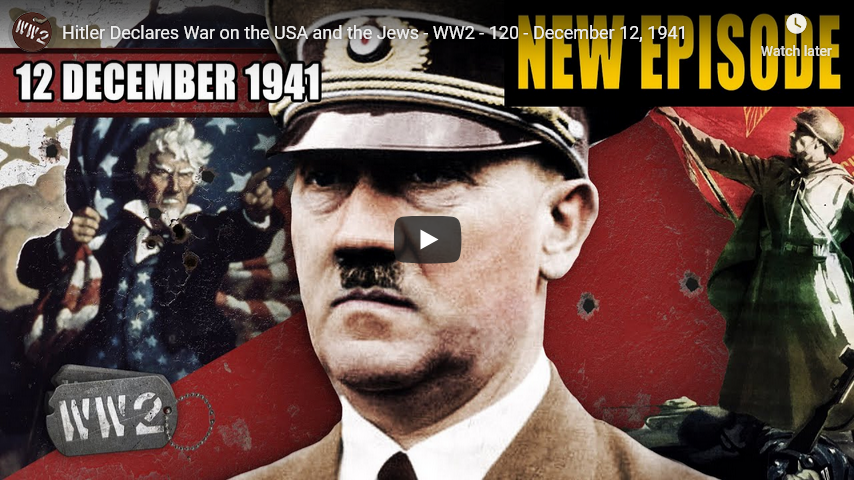
Published 12 Dec 2020The Japanese launch attacks all over Southeast Asia and the Pacific, and launch a preemptive surprise attack on the American Pacific Fleet at Pearl Harbor. The war is suddenly much larger. In the USSR, the Germans find themselves now heavily on the defensive after the failure to take Moscow, while in North Africa, Erwin Rommel decides he must withdraw out of Cyrenaica to await reinforcements.
Join us on Patreon: https://www.patreon.com/TimeGhostHistory
Or join The TimeGhost Army directly at: https://timeghost.tvFollow WW2 day by day on Instagram @ww2_day_by_day – https://www.instagram.com/ww2_day_by_day
Between 2 Wars: https://www.youtube.com/playlist?list…
Source list: http://bit.ly/WW2sourcesWritten and Hosted by: Indy Neidell
Director: Astrid Deinhard
Producers: Astrid Deinhard and Spartacus Olsson
Executive Producers: Astrid Deinhard, Indy Neidell, Spartacus Olsson, Bodo Rittenauer
Creative Producer: Maria Kyhle
Post-Production Director: Wieke Kapteijns
Research by: Indy Neidell
Edited by: Miki Cackowski
Sound design: Marek Kamiński
Map animations: Eastory (https://www.youtube.com/c/eastory)Colorizations by:
Daniel Weiss
Adrien Fillon – https://www.instagram.com/adrien.colo…
Mikołaj Uchman
Carlos Ortega Pereira, BlauColorizations – https://www.instagram.com/blaucolorizations
Klimbim – https://www.flickr.com/photos/2215569…
Julius Jääskeläinen – https://www.facebook.com/JJcolorization/
Jaris Almazani (Artistic Man) – https://instagram.com/artistic.man?ig…Sources:
IWM HU 56120, K 1385, HU 675, TR153, HU 81216, WPN 298
NARA
Bundesarchiv
Narodowe Archiwum Cyfrowe
Picture of a victim of starvation during the siege of Leningrad, courtesy of George Shuklin
Picture of Alfred Godwin-Austen, courtesy of Berserker276 https://commons.wikimedia.org/wiki/Fi…
Picture of Harold Cole, courtesy of Cumbria County ArchivesSoundtracks from the Epidemic Sound:
Phoenix Tail – “At the Front”
Johannes Bornlof – “Deviation In Time”
Johan Hynynen – “Dark Beginning”
Rannar Sillard – “March Of The Brave 4”
Jo Wandrini – “To War!”
Reynard Seidel – “Deflection”
Wendel Scherer – “Defeated”
Johannes Bornlof – “Death And Glory 3”
Johannes Bornlof – “The Inspector 4”
Hakan Eriksson – “Epic Adventure Theme 3”
Skrya – “First Responders”
Bonnie Grace – “Imperious”Archive by Screenocean/Reuters https://www.screenocean.com.
A TimeGhost chronological documentary produced by OnLion Entertainment GmbH.
From the comments:
World War Two
2 days ago (edited)
Five days ago, we covered the Japanese attacks on Pearl Harbor minute by minute in real time over five hours. If you missed that, then check out episode one right here, you’ll love it: https://www.youtube.com/watch?v=Joh2BXPsrXs&t=4sNOTE: An error snuck through our controls regarding the Japanese casualties at Wake, we are working with YouTube to have it fixed before the video goes public. We apologize for this inconvenience.
Japan attacked a whole variety of places that day, launching massive offensives all over SE Asia and the Pacific. I’ll be covering them here weekly, of course, but for even more coverage, check out our day by day Instagram coverage of the war: https://www.instagram.com/ww2_day_by_day
December 12, 2020
Pearl Harbor and the Global War Against Humanity – WAH 024 – December 1941, Part 1
World War Two
Published 11 Dec 2020December 1941 marks the shift to a new chapter in the War Against Humanity. New fronts open up, exposing millions more to the horrors of war. Other developments continue their path of continuous escalation.
Join us on Patreon: https://www.patreon.com/TimeGhostHistory
Or join The TimeGhost Army directly at: https://timeghost.tvFollow WW2 day by day on Instagram @ww2_day_by_day – https://www.instagram.com/ww2_day_by_day
Between 2 Wars: https://www.youtube.com/playlist?list…
Source list: http://bit.ly/WW2sources
—Hosted by: Spartacus Olsson
Written by: Joram Appel
Director: Astrid Deinhard
Producers: Astrid Deinhard and Spartacus Olsson
Executive Producers: Astrid Deinhard, Indy Neidell, Spartacus Olsson, Bodo Rittenauer
Creative Producer: Maria Kyhle
Post-Production Director: Wieke Kapteijns
Research by: Joram Appel
Edited by: Karolina Dołęga
Sound design: Marek KamińskiColorized by:
– Daniel Weiss
– Julius Jääskeläinen – https://www.facebook.com/JJcolorization/
– Carlos Ortega Pereira, BlauColorizations – https://www.instagram.com/blaucolorizations
– Jaris Almazani (Artistic Man) – https://instagram.com/artistic.man?ig…
– Mikołaj Uchman
– Klimbim
– Spartacus OlssonSources:
– Yad Vashem: 76CO9, 3150-122, J3065-2, 85DO1, 1427 83, 1007_31,
– Narodowe Archiwum Cyfrowe
– National Archive NARA
– Library of Congress
– Bundesarchiv
– Berlin Gestapo Museum
– United States Holocaust MuseumSoundtracks from epidemic sounds:
– “Guilty Shadows 4” – Andreas Jamsheree
– “For the Many STEMS INSTRUMENTS” – Jon Bjork
– “Remembrance” – Fabien Tell
– “Not Safe Yet” – Gunnar Johnsen
– “London” – Howard Harper-Barnes
– “Moving to Disturbia” – ExperiaArchive by Screenocean/Reuters https://www.screenocean.com.
A TimeGhost chronological documentary produced by OnLion Entertainment GmbH.
From the comments:
World War Two
3 hours ago
Before we get comments about the countries currently participating in World War Two: in December 1941 there are more countries that are still neutral than we list here, but that won’t last, or as Sparty said these are the ones that will REMAIN neutral. They are without a doubt not at war, not occupied, and not in a state of war. All the other ones are – more or less. Mongolia? Has been in a de-facto state of war with Japan since the Manchurian incident. Ethiopia and Iraq? Both occupied, or at least on the lines of contested territory. The South and North American states? They will mostly enter the war later – but we’d argue that already now the Panama declaration ties them to each other to an extent that the fate of the “neutrals” has been complicated by the countries joining the war in December ’41. Now that you know our reasoning behind this, we encourage you to offer any alternative or additional thoughts on this in the comments.

Trains and Oil | California History [ep.8]
The Cynical Historian
Published 4 Jul 2019After a long hiatus, here is the return of the History of California series. For those who haven’t seen the previous episodes, here’s the playlist: https://www.youtube.com/playlist?list…
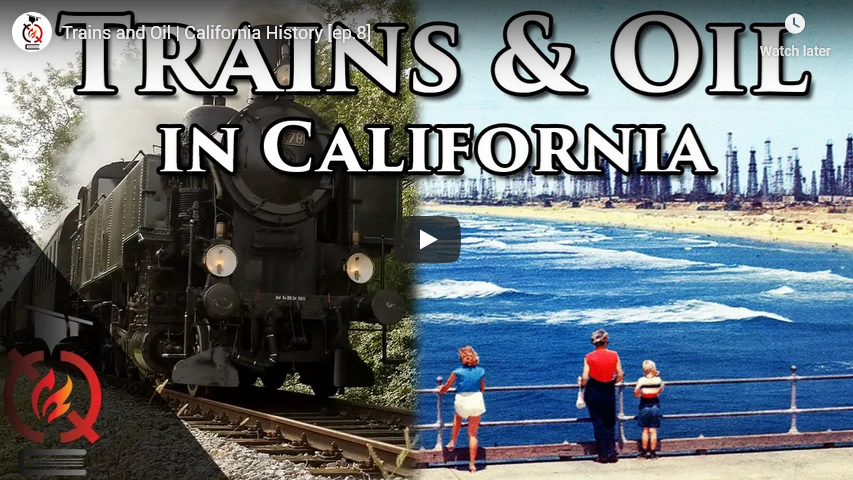
Today we’re going over the history of transcontinental railroads, monopolistic practices, and crude oil production in California.
————————————————————
references:
eds. Richard Francaviglia and David Narrett, Essays on the Changing Images of the Southwest (Arlington: University of Texas at Arlington, 1994). https://amzn.to/2JwNiHkWilliam H. Goetzmann, Army Exploration in the American West, 1803-1863, new ed. (1959; Lincoln: University of Nebraska, 1979). https://amzn.to/2K8tslY
Paul Sabin, Crude Politics: The California Oil Market, 1900-1940 (Berkeley: University of California Press, 2005). https://amzn.to/2W16gtt
Jules Tygiel, The Great Los Angeles Swindle: Oil, Stocks, and Scandal During the Roaring Twenties (Berkeley: University of California Press, 1996). https://amzn.to/2ASH7Z0
Richard White, Railroaded: The Transcontinentals and the Making of Modern America (New York: W.W. Norton, 2011). https://amzn.to/2zkURO3
————————————————————
Support the channel through PATREON:
https://www.patreon.com/CynicalHistorianLET’S CONNECT:
Discord: https://discord.gg/Ukthk4U
Twitter: https://twitter.com/Cynical_History
————————————————————
Wiki: The history of the Southern Pacific stretches from 1865 to 1998. For the main page, see Southern Pacific Transportation Company; for the former holding company, see Southern Pacific Rail Corporation. The Southern Pacific was represented by three railroads. The original company was called Southern Pacific Railroad, the second was called Southern Pacific Company and the third was called Southern Pacific Transportation Company. The third Southern Pacific railroad, the Southern Pacific Transportation Company, is now operating as the current incarnation of the Union Pacific Railroad.The story of oil production in California began in the late 19th century. In 1903, California became the leading oil-producing state in the US, and traded the number one position back-and forth with Oklahoma through the year 1930. As of 2012, California was the nation’s third most prolific oil-producing state, behind only Texas and North Dakota. In the past century, California’s oil industry grew to become the state’s number one GDP export and one of the most profitable industries in the region. The history of oil in the state of California, however, dates back much earlier than the 19th century. For thousands of years prior to European settlement in America, Native Americans in the California territory excavated oil seeps. By the mid-19th century, American geologists discovered the vast oil reserves in California and began mass drilling in the Western Territory. While California’s production of excavated oil increased significantly during the early 20th century, the accelerated drilling resulted in an overproduction of the commodity, and the federal government unsuccessfully made several attempts to regulate the oil market.
————————————————————
Hashtags: #history #California #trains #oil
December 11, 2020
The Salvage of Pearl Harbor Pt 3 – The First and the Last
Drachinifel
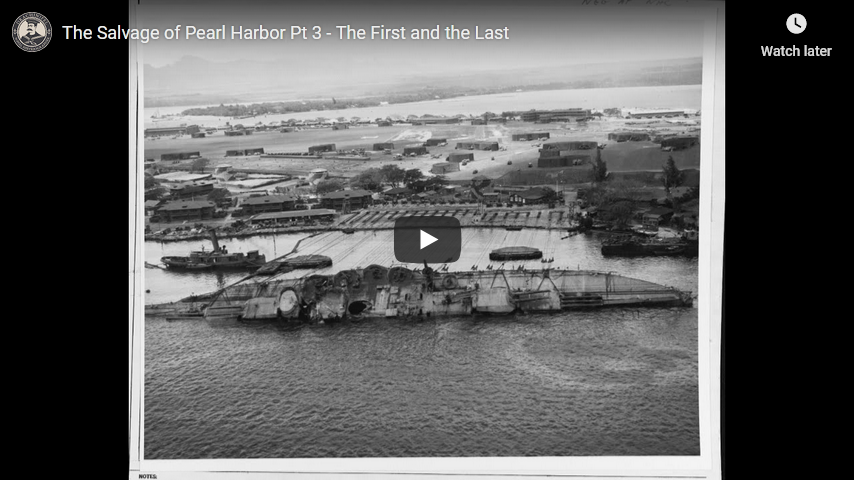
Published 2 Dec 2020Today we look at the salvage efforts on the USS Shaw, first vessel salvaged from the remains of the attack on Pearl Harbor and the work on the last two vessels under the team’s care, the Utah and Oklahoma
Sources:
www.amazon.co.uk/gp/product/B00C0JIXJO
https://www.history.navy.mil/our-coll…
www.amazon.co.uk/Pearl-Harbor-Fleet-Salvage-Appraisal/dp/0898755654
www.amazon.co.uk/Descent-into-Darkness-Harbour-Divers/dp/0891417451
Videos – US National Archives / US Department of DefenseFree naval photos and more – www.drachinifel.co.uk
Want to support the channel? – https://www.patreon.com/Drachinifel
Want a shirt/mug/hoodie – https://shop.spreadshirt.com/drachini…
Want a poster? – https://www.etsy.com/uk/shop/Drachinifel
Want to talk about ships? https://discord.gg/TYu88mt
Want to get some books? www.amazon.co.uk/shop/drachinifelDrydock
Episodes in podcast format – https://soundcloud.com/user-21912004
QotD: Airbrushing out the worst parts of “Lost Cause” mythology
Looking back, we can see that between 1865 and around 1914 the Union and the former South negotiated an imperfect but workable peace. The first step in that negotiation took place at Appomattox, when the Union troops accepting General Robert E. Lee’s surrender saluted the defeated and allowed them to retain their arms, treating them with the most punctilious military courtesy due to honorable foes.
Over the next few years, the Union Army reintegrated the Confederate military into itself. Confederate officers not charged with war crimes were generally able to retain rank and seniority; many served in the frontier wars of the next 35 years. Elements of Confederate uniform were adopted for Western service.
The political leaders of the revolt were not executed. Instead, they were spared to urge reconciliation, and generally did. By all historical precedent they were treated with shocking leniency. This paid off.
Of course, not all went smoothly. The Reconstruction of the South between 1863 and 1877 was badly bungled, creating resentments that linger to this day and – in the folk memory of Southerners – often overshadow the harms of the war itself. The condition of emancipated blacks remained dire.
But overall, the reintegration of the South went far better than it could have. Confederate nationalism was successfully reabsorbed into American nationalism. One of the prices of this adjustment was that Confederate heroes had to become American heroes. An early and continuing example of this was the reverence paid to Robert E. Lee by Unionists after the war; his qualities as a military leader were extolled and his opposition to full civil rights for black freedmen memory-holed.
Lee’s heroism and ascribed saintliness would layer become a central prop in “Lost Cause” romanticism, which portrayed the revolt as an honorable struggle for a Southern way of life while mostly airbrushing out – but sometimes, unforgiveably, defending – the institution of slavery. Even today, the “soft” airbrushing version of Lost Cause retains a significant hold on Southerners who would never dream of defending slavery.
Eric S. Raymond, “Unlearning history”, Armed and Dangerous, 2017-09-22.
December 10, 2020
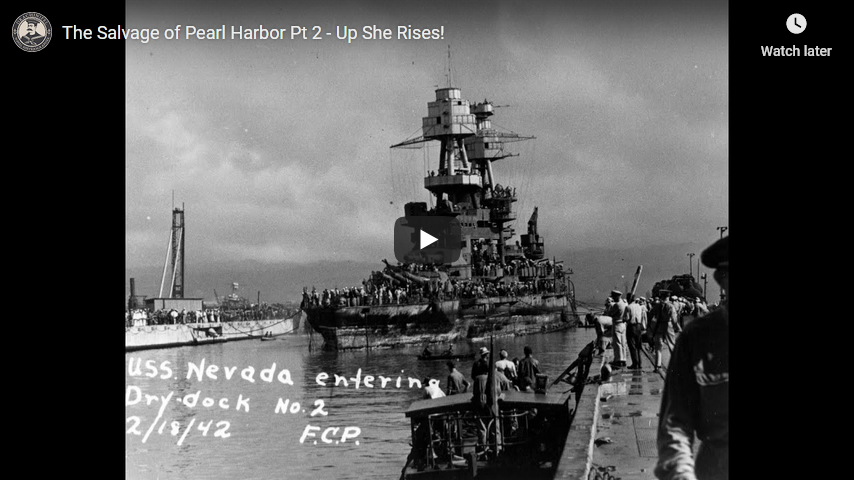
The Salvage of Pearl Harbor Pt 2 – Up She Rises!
Drachinifel
Published 18 Nov 2020Today we look at the salvage efforts on the three battleships outright sunk in the attack on Pearl Harbor that would be returned to service.
Sources:
www.amazon.co.uk/gp/product/B00C0JIXJO
https://www.history.navy.mil/our-coll…
www.amazon.co.uk/Pearl-Harbor-Fleet-Salvage-Appraisal/dp/0898755654
www.amazon.co.uk/Descent-into-Darkness-Harbour-Divers/dp/0891417451
Videos – US National Archives / US Department of DefenseFree naval photos and more – www.drachinifel.co.uk
Want to support the channel? – https://www.patreon.com/Drachinifel
Want a shirt/mug/hoodie – https://shop.spreadshirt.com/drachini…
Want a poster? – https://www.etsy.com/uk/shop/Drachinifel
Want to talk about ships? https://discord.gg/TYu88mt
Want to get some books? www.amazon.co.uk/shop/drachinifelDrydock
Episodes in podcast format – https://soundcloud.com/user-21912004
December 9, 2020
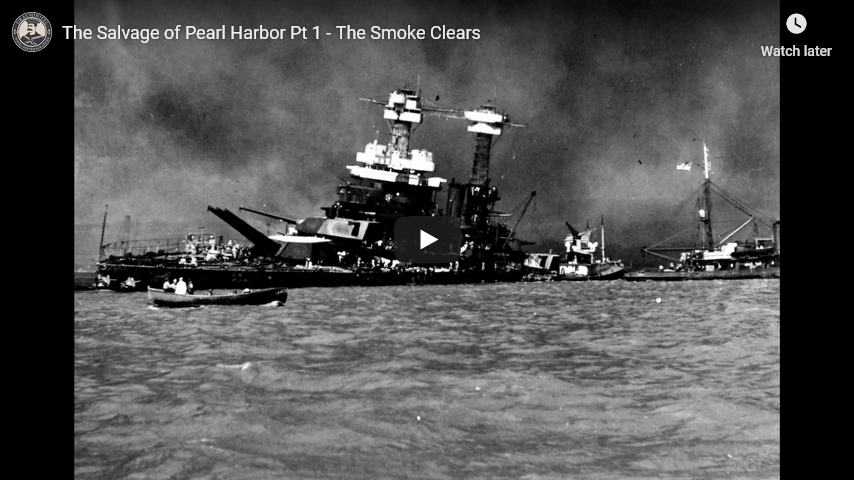
The Salvage of Pearl Harbor Pt 1 – The Smoke Clears
Drachinifel
Published 11 Nov 2020Today we look at the start of the salvage efforts in the aftermath of the attack on Pearl Harbour.
Sources:
www.amazon.co.uk/gp/product/B00C0JIXJO
https://www.history.navy.mil/our-coll…
www.amazon.co.uk/Pearl-Harbor-Fleet-Salvage-Appraisal/dp/0898755654
www.amazon.co.uk/Descent-into-Darkness-Harbour-Divers/dp/0891417451Free naval photos and more – www.drachinifel.co.uk
Want to support the channel? – https://www.patreon.com/Drachinifel
Want a shirt/mug/hoodie – https://shop.spreadshirt.com/drachini…
Want a poster? – https://www.etsy.com/uk/shop/Drachinifel
Want to talk about ships? https://discord.gg/TYu88mt
Want to get some books? www.amazon.co.uk/shop/drachinifelDrydock
Episodes in podcast format – https://soundcloud.com/user-21912004
The late steam-era boxcar and (a brief) flourish of colour
In his Trains blog, George Hamlin discusses the changing colours of the ordinary railway boxcar in the brief era between post-war prosperity and the economic disasters of the 1960s and 70s:
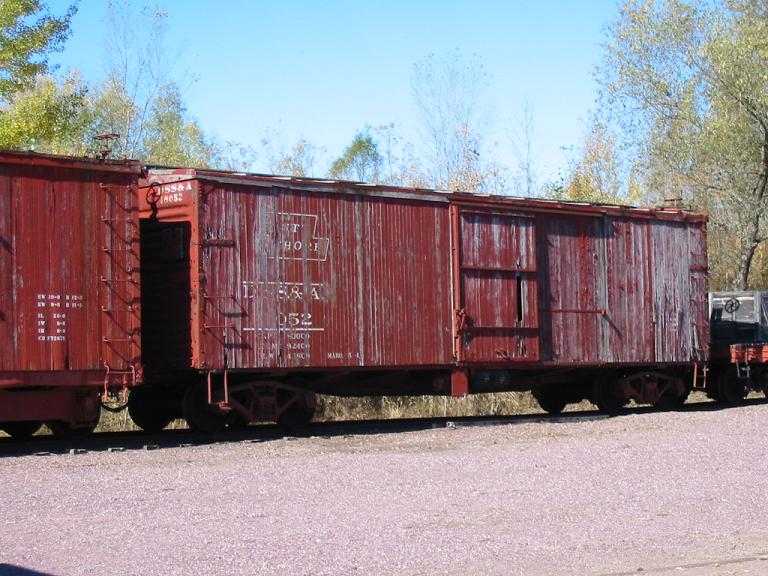
Pre-war Duluth, South Shore & Atlantic boxcar number 18052 at the Mid-Continent Railway Museum.
Photo by Sean Lamb via Wikimedia Commons.
The advent of streamlining in the 1930s started to blow historic convention with regard to car colors away on the passenger side of railroading, but had little impact on freight operations prior to World War II. Following that conflict, however, some of the industry began to consider livening up the equipment that produced much of the revenue (and most of the profits) from which they derived their economic existence.
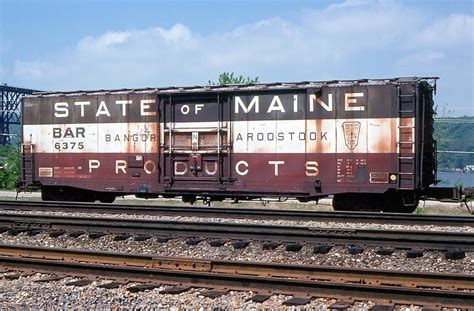
Some railroads also adopted more colorful boxcar paint schemes to promote special aspects of their freight service: the B&O had special schemes for both their “Sentinel” and “Timesaver” services; another example was the Missouri Pacific’s blue and gray (the road’s modern-day passenger colors) for their Eagle Merchandise Service. The Bangor & Aroostook had boxcars with red, white and blue horizontal stripes advertising products emanating from their home state, Maine.
Bangor and Aroostook boxcar 6375 in “State of Maine” paint scheme.
Image originally from Panoramio, but no user information provided.Another example was the large fleet of New York Central’s “Pacemaker” boxcars, adorned in a combination of bright red and gray. Early on, the NYC even ran solid trains of this equipment in an expedited service which was designed to re-capture LCL (less than carload lot) traffic from the increasingly competitive motor trucking industry. (Interestingly, the NYC also had a color they called “Pacemaker Green” that was used for the pre-World War II all-coach New York-Chicago service, as well as on the road’s initial orders of non-stainless steel streamlined coaches.)
In the late 1950s, the Central introduced a more radical change, and began painting its boxcars in a Jade Green color (“Century Green”, according to the railroad) that was quite a dramatic change from boxcar red. The Great Northern also adopted a similar shade. CB&Q boxcars still had the same basic hue, but now they came in a brighter version dubbed “Chinese Red”.
By the 1960s, a number of roads had livened up their freight car liveries; the modestly-sized Reading utilized bright green and beige/yellow for both freight cars and locomotives. Late in its career as an independent railroad, the Great Northern adopted the striking bright “Big Sky Blue” for both passenger and freight cars. At its formation in 1976, Conrail adopted “traditional red oxide” as its choice for freight cars, however, sticking with tradition (and reversing the NYC’s earlier efforts).

Great Northern boxcar 138660 in the “Big Sky Blue” paint scheme, delivered September 1967.
Photo by David Pride http://www.davidpride.com/USA/Minnesota/Osceola_11_007.htm
Historical Models Summarized: The Military Expedition
Overly Sarcastic Productions
Published 18 Feb 2016Today, Blue discusses recurring themes in history! This one’s the Military Expedition, aka what happens when a powerful military juggernaut gets too big for its britches and starts saying stuff like “too big to fail” unironically.
Blue: If you’re curious about the weird chart/graph thing blue showed during the Napoleon segment, look up Charles Joseph Minard [mentioned here and here], the guy who made it. It’s a really cool chart that shows the size of the army as it traveled across Russia (tan) and back (black). You can see how perilous the journey was based on how narrow the line gets. Graphs are cool.

QotD: The rise of bebop
Fourth, beboppers had attitude: “Instead of smooth and hummable melodies designed for dancing, the beboppers created angular tunes with unexpected accents and irregular phrases — and they expected people to listen, rather than jitterbug, to these songs and the solos that followed. The boppers emerged as jazz’s first ‘angry young men.’ They saw themselves as artists first and entertainers second, and they demanded that others respect them and their music accordingly.”
Some of the new jazz was undeniably brilliant, and many of the bebop and hard bop recordings that have been remastered and reissued only seem to acquire more appeal with age. Albums like Parker’s Now’s the Time, Art Blakey and the Jazz Messengers, Dexter Gordon’s Go, Sonny Rollins Vol. 2, and Coltrane’s Blue Train are timeless, bristling with energy, jaw-dropping improvisation, and deep spirituality. But when they cast their spell, they laid complete waste to the pop-jazz tradition. Bebop offered challenges musicians thought they could never get from traditional swing bands, as well as an improvisational ethic that provided an escape from the tough work of writing strong melodies. Some of the players saw this: In 1949 drummer Buddy Rich fired his band because his players “just want to play bop and nothing else. In fact,” Rich added, “I doubt they can play anything else.” Louis Armstrong, whose centennial is being celebrated this year, once referred to bebop as “crazy, mixed-up chords that don’t mean nothing at all.” Before long swing had become a joke. Producer Quincy Jones recalls in the documentary Listen Up that as a young musician he once hid backstage from bebop trumpeter Miles Davis so Miles wouldn’t know he was in the swinging band that had just left the stage.
Suddenly, jazz was Art. Gone were the days when 5,000 people would fill the Savoy Ballroom to lindy hop to the sunny sounds of Ella Fitzgerald or Count Basie. Bebop was impossible to dance to, which was fine with the alienated musicians in Eisenhower’s America. (You can bet this era will be well represented by beatnik [Ken] Burns [in his then-unreleased Jazz documentary TV series].) Even bebop’s own founders weren’t safe from the ideological putsch: when Bird himself made an album of pop standards with a band backed up by a string section, he was labeled a sellout. Then Elvis, to simplify matters greatly, reinvented swing for a new generation, and the Beatles arrived with sacks of great new melodies, and jazz was over as a popular music. Remarkably, beboppers and their fans still blame the drop-off on American racism. Miles once called pop music “white music,” and Kareem Abdul-Jabbar, in a documentary about the Blue Note label, offers that “whites couldn’t appreciate anything that came from black culture.” Yet whites were as responsible as blacks for making stars of Ella, Basie, and other black swing artists. Only two kinds of music were allowed on the radio following the news of FDR’s death: classical and Duke Ellington.
Mark Gauvreau Judge, “Out of Tunes”, Chicago Reader, 2000-08-31.
December 8, 2020
QotD: Booze
Here’s part of the booze problem we face Over Here.
American beer is too weak, and American short drinks are served too strong.
The problem with weak beer is not its weakness per se, but the fact that you have to drink quite a bit of it to get a decent buzz — and the problem with drinking in quantity is that it’s really difficult to know when to stop once the old Alcohol Accelerator comes into play. I’d rather have a pint of Boddington’s Ale than four Michelobs (which are about equal in terms of buzz generation). The difference is that the former is, well, a pint; the latter is three pints. That’s a lot of liquid to drink, in a lunch hour, which means you have to drink it fast; whereas the Brit pint can be savored in a leisurely fashion, knowing that the destination will be the same.
Kim du Toit, “Un-Lubricated”, Kim du Toit – Daily Rant, 2005-02-24.
December 7, 2020
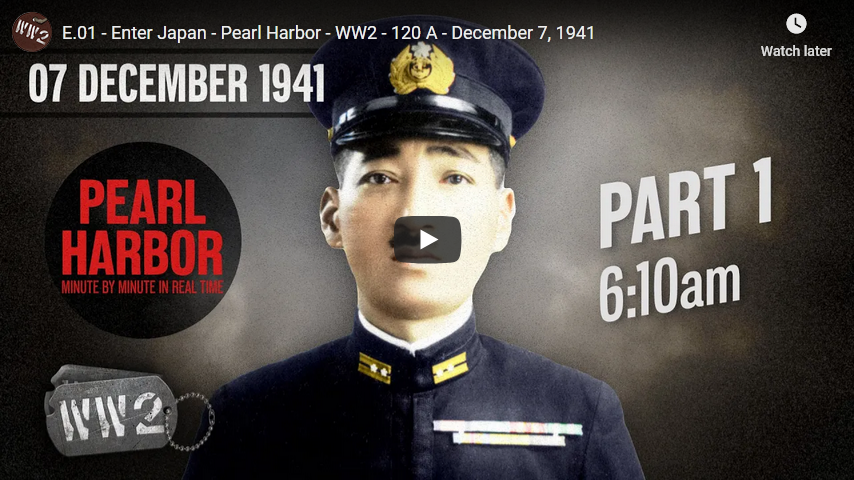
E.01 – Enter Japan – Pearl Harbor – WW2 – 120 A – December 7, 1941
World War Two
Published 7 Dec 2020Powered by World of Warships – https://wo.ws/PearlHarbor – Register now to receive an exclusive bonus!
In this episode: Japan’s meticulous planning and preparation made it possible to surprise the Americans at Pearl Harbor. Alert on Oahu is largely nonexistent. It is the deep breath before the plunge.
Join us on Patreon: https://www.patreon.com/TimeGhostHistory
Or join The TimeGhost Army directly at: https://timeghost.tvFollow WW2 day by day on Instagram @ww2_day_by_day – https://www.instagram.com/ww2_day_by_day
Between 2 Wars: https://www.youtube.com/playlist?list…
Source list: http://bit.ly/WW2sourcesHosted by: Indy Neidell
Written by: Spartacus Olsson and Indy Neidell
Directed by: Wieke Kapteijns
Executive Producers: Astrid Deinhard, Indy Neidell, Spartacus Olsson, Bodo Rittenauer
Produced by: Astrid Deinhard and Spartacus Olsson
Co-Producers: Maria Kyhle and Francis van Berkel
Edited by: Iryna Dulka
Set Design by: Astrid Deinhard
Graphic Design by: Mikolaj Uchman
Map Animations by: Daniel Haczyk and Eastory
Assistant Editors: Miki Cackowski, Daniel Weiss, Karolina Dołega
Still Colorizers: Adrien Fillon, Norman Stewart, Jaris Almazani, Daniel Weiss, Mikolaj Uchman, Carlos Ortega Pereira
Research by: Indy Neidell, Spartacus Olsson, Markus Linke, Wieke Kapteijns, Bastian Gaete, Lewis Braithwaite, Tim Smith, Ian Irungu
Sound Design by: Marek Kamiński
Dogfights by: Daniel Weiss, Bastian Gaete, Ian Sowden, Dennis StepanovVoices:
Mitsuo Fuchida – Daniel Grieb
Ada Peggy Olsson – Shani Neidell Beard
Iyōzō Fujita – Emi Celis
James Anderson – Emi Celis
Dorinda Stagner – Zora Johnson
Jack Kelley – Ryan Socash
James McClelland – Spartacus Olsson
Phil Rasmussen – Spartacus Olsson
Dan Wentrcek – Dennis Stepanov
Thompson Izawa – Samir Mechel
Robert Isacksen – Ian Sowden
Joseph K. Taussig Jr. – Tim Smith
James Cory – Ryan TeboFilm colorization by: Ricks Film Restoration
Naval Gameplay by: World of Warships
Archive material provided by: Reuters/ScreenoceanA TimeGhost chronological documentary produced by OnLion Entertainment GmbH.
From the comments:
World War Two
1 hour ago (edited)
When we set out to do this crazy project we thought we wanted to try some really new things. As anyone knows that follows us regularly, our first and foremost goal is remembrance — to shine a light on our past and learn form our ancestors’ mistakes and achievements. We try our best to do that with a dedication to facts and details liberated from partisan, or ideological historiography. For this purpose, the attack on Pearl Harbor serves very well. It is a compact event over only a few hours that is spectacular in its nature, tragic in its effect, gripping in its drama, and has tremendous impact on WW2 on all fronts. It is also an event that is often simplified to the point of misunderstanding, has been woven into national mythology, and given rise to some pretty nutty conspiracy myths. Simply put: the Attack on Pearl Harbor is short enough, exciting enough, and misunderstood enough for us to do a limited series like this.But more than that we also wanted to try some new technical and narrative things. Since we started doing historical documentaries with the Great War in 2014 we have tried to be on the forefront of pioneering new ways of creating historiography for the modern media world. Narratively, we have dedicated ourselves to chronologies, which in historiography is nothing new, but it is new in the world of film documentaries (at least to the level we do it) — so we thought; “heck what if we go down to minute by minute for this” — well we did and it taught us an enormous amount about Pearl Harbor, but also about how we can write. We will get back to that in further comment on the series. As for technology, it truly is technology that enables our work, well any media — for us it is social media, affordable ways to capture film, global virtual remote working spaces, digital research opportunities, digital film archives, and so on.
Two areas we had not been able to venture into was recreation of scenes using computer graphics and colorization of moving images. Using a gaming engine to create animation is also nothing new, but usually very, very expensive because you have to first create the world, the assets and the characters for your recreation. But for Pearl Harbor, World of Warships https://worldofwarships.com and World of Warplanes https://worldofwarplanes.com opened an opportunity to do this on a new scale at a cost that is only a fraction of what it usually costs. Along the way we also got to know Ricks Film Restorations (https://bit.ly/ricksfilmresorations and https://www.youtube.com/user/Rick88888888) who use AI technology to enhance and colorize film footage. While both of these technologies are only at the beginning of their potential, we think the results are spectacular. More than anything it has enabled us to enhance the emotional and visual experience for this series to a level we never reached before. Last but not least it enabled us to use the financial contributions of the TimeGhost Army, and World of Warships to create five hours of content for less than 1/50th — only 2% — of what it would cost to do with traditional means.
creatingstuff
In the Name of the entire TimeGhost Team,
Astrid, Indy, Spartacus, and WiekeEpisode Guide:
This is a 10 episode limited series within our weekly coverage of WW2 — to see the immediate events leading up to this day watch episode 119 from December 5, https://youtu.be/DYUzmBuX-6Y. Some of the events covered briefly as they start on this day, such as the invasions in the West Pacific will be covered in more detail in the coming weeks, especially in episode 120K (the 11th episode this week).coming out on December 12.The playlist to get all these episodes in one go is here: https://bit.ly/Pearl-min-by-min
USS Pennsylvania and Pearl Harbor
The History Guy: History Deserves to Be Remembered
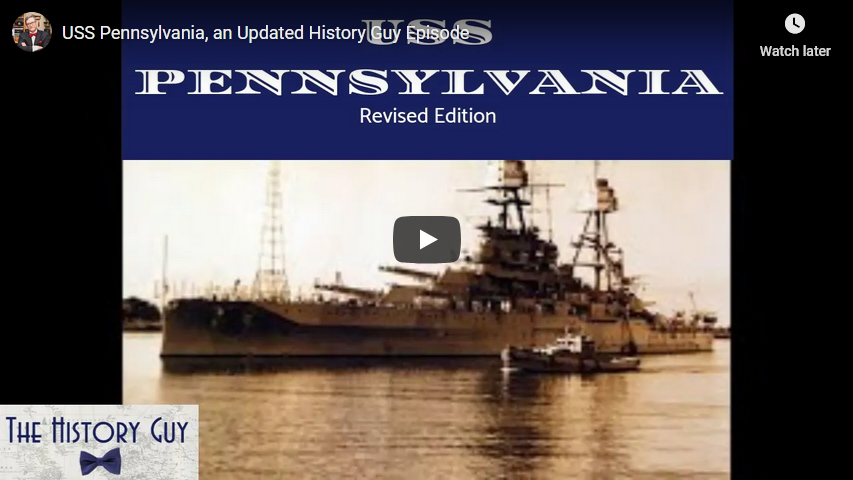
Published 22 Apr 2019USS Pennsylvania was in dry dock when the attack came at Pearl Harbor. The History Guy remembers part of her history that may have been forgotten.
This episode was originally posted December 7, 2017. It has been updated to correct some errors in the original, and new footage of USS Pennsylvania has been added.
This is original content based on research by The History Guy. Images in the Public Domain are carefully selected and provide illustration. As images of actual events are sometimes not available, images of similar objects and events are used for illustration.
All events are portrayed in historical context and for educational purposes. No images or content are primarily intended to shock and disgust. Those who do not learn from history are doomed to repeat it. Non censuram.
Find The History Guy at:
Patreon: https://www.patreon.com/TheHistoryGuy
The History Guy: History Deserves to Be Remembered is the place to find short snippets of forgotten history from five to fifteen minutes long. If you like history too, this is the channel for you.
Awesome The History Guy merchandise is available at:
https://teespring.com/stores/the-hist…Script by THG
#ushistory #thehistoryguy #usspennsylvania