Quotulatiousness

September 3, 2020

Fallen Flag — The Great Northern Railway

This month’s Classic Trains featured fallen flag is an American railway that definitely deserved to call itself “great”, James J. Hill’s Great Northern Railway. Hill was noteworthy as the only “Robber Baron” of that era who was scrupulous in avoiding government entanglements (including grants, loans, subsidies, and other forms of money-with-political-strings-attached), building his entire railway system using private funds and rational profit-oriented economic decision-making (the other transcontinental lines often over-built to claim higher subsidies or added money-losing branch lines to please powerful politicians). The result was that when economic hard times hit the railway business, his was the only transcontinental that never needed to declare bankruptcy.

In an earlier post, Dane Stuhlsatz summarized the GN’s engineering:

Hill’s line […] was methodically surveyed and built, on the shortest routes possible, with the least gradient possible, and using the best steel and other materials on the market at the time. Rather than political largess, Hill made his decisions based on profit and loss. But, for all the efficiency that Hill built into his line — he was able to transport across the country faster, cheaper, and with less maintenance costs than could the UP and CP — arguably the most important aspect for the viability of his business was the freedom to conduct business untethered by the strings that accompanied government subsidies.

Route map of the Great Northern Railway, circa 1920. Red lines are Great Northern trackage; dotted lines are other railroads.
Map by Elkman via Wikimedia Commons.

George Drury outlines the origins of the railway:

In 1857, the Minnesota & Pacific Railroad was chartered to build a line from Stillwater, Minnesota, on the St. Croix River, through St. Paul and St. Cloud to St. Vincent, in the northwest corner of the state. The company defaulted after completing a roadbed between St. Paul and St. Cloud, Minnesota, and its charter was taken over by the St. Paul & Pacific Railroad, which ran its first train between St. Paul and St. Anthony (now Minneapolis) in 1862.

For financial reasons the railroads were reorganized as the First Division of the St. Paul & Pacific. Both StP&P companies were soon in receivership, and Northern Pacific, with which the StP&P was allied, went bankrupt in the Panic of 1873.

Canadian-born “Robber Baron” James J. Hill (1838-1916) in 1914.

In 1878 James J. Hill and an associate, George Stephen, acquired the two St. Paul & Pacific companies and reorganized them as the St. Paul, Minneapolis & Manitoba Railway (“the Manitoba”). By 1885 the company had 1,470 miles of railroad and extended west to Devils Lake, North Dakota. In 1886 Hill organized the Montana Central Railway to build from Great Falls, Montana, through Helena to Butte, and in 1888 the line was opened, creating in conjunction with the StPM&M a railroad from St. Paul to Butte.

In 1881 Hill took over the 1856 charter of the Minneapolis & St. Cloud Railroad. He first used its franchises to build the Eastern Railway of Minnesota from Hinckley, Minnesota, to Superior, Wisconsin, and Duluth. Its charter was liberal enough that he chose it as the vehicle for his line to the Pacific. He renamed the road the Great Northern Railway; it then leased the Manitoba and assumed its operation.

[…]

Even before completion of the route from St. Paul, the Great Northern opened a line along the shore of Puget Sound between Seattle and Vancouver, British Columbia, in 1891. In the years that followed, Hill pushed a number of lines north across the international boundary into the mining area of southern British Columbia in a running battle with Canadian Pacific. In 1912 GN traded its line along the Fraser River east of Vancouver to Canadian Northern for trackage rights into Winnipeg.

Great Northern gradually withdrew from British Columbia after Hill’s death. In 1909 the Manitoba Great Northern Railway purchased most of the property of the Midland Railway of Manitoba (lines from the U.S. border to Portage la Prairie and to Morden), leaving the Midland, which was jointly controlled by GN and NP, with terminal properties in Winnipeg. The Manitoba Great Northern disposed of its rail lines in 1927. They were later abandoned.

Postcard photo of the Great Northern Railway’s “Empire Builder” streamliner between Everett and Seattle, Washington, circa 1963.
Great Northern Railway postcard via Wikimedia Commons.

The Great Northern and Northern Pacific lines agreed to a merger in 1901 (both lines were controlled by Hill) but the plan was vetoed by the Interstate Commerce Commission. A second attempt in the 1920s after Hill’s death was again turned down by the regulator unless the combined company divested ownership of the Chicago, Burlington & Quincy which was both railways’ connection from Minneapolis to Chicago. It was only on the final attempt in 1970 that the deal gained the government’s grudging approval and the Great Northern, Northern Pacific, and CB&Q merged to form the Burlington Northern.

Britain and France vs. The World | The Suez Crisis | Part 2

Filed under: Africa, Britain, France, History, Middle East, Military, USA — Tags: , , , , , — Nicholas @ 04:00

TimeGhost History
Published 2 Sep 2020

After much delay, Britain and France finally keep to their side of the bargain with Israel and begin their bombing campaign of Egypt. But the condemnation from America and the UN calls into question how long the invaders can keep this up.

Join us on Patreon: https://www.patreon.com/TimeGhostHistory

Hosted by: Indy Neidell
Written by: Francis van Berkel and Joram Appel
Director: Astrid Deinhard
Producers: Astrid Deinhard and Spartacus Olsson
Executive Producers: Astrid Deinhard, Indy Neidell, Spartacus Olsson, Bodo Rittenauer
Creative Producer: Joram Appel
Post-Production Director: Wieke Kapteijns
Research by: Francis van Berkel and Joram Appel
Image research by: Shaun Harrison & Karolina Dołęga
Edited by: Karolina Dołęga
Sound design by: Marek Kamiński

Colorizations by:
Mikołaj Uchman
Daniel Weiss
Norman Stewart – https://oldtimesincolor.blogspot.com/

Visual Sources:
Israeli Defense Forces
National Photo Collection of Israel
Universal Studios
Tony Clarke Collection – David Whitworth from Wikimedia Commons
Abubiju from Wikimedia Commons
Fortepan Donor
Government Press Office (Israel)
National Archives NARA
Icons from The Noun Project by: Gilberto, Komkrit Noenpoempisut, Alice Design, Smalllike

Music:
“As the Rivers Collapse” – Deskant
“Moving to Disturbia” – Experia
“March Of The Brave 10” – Rannar Sillard – Test
“Weapon of Choice” – Fabien Tell
“Disciples of Sun Tzu” – Christian Andersen
“London” – Howard Harper-Barnes
“Maze Heist” – Max Anson
“Descending Mount Everest” – Trailer Worx

Archive by Screenocean/Reuters https://www.screenocean.com.

A TimeGhost chronological documentary produced by OnLion Entertainment GmbH.

From the comments:

TimeGhost History
2 days ago (edited)
This episode is pretty much the same as the last, only turned up to 11. Israel continues making gains in Sinai, but they are now aided by British and French air forces that have finally arrived.

Meanwhile, Britain and France continue lying through their teeth about any collusion with Israel. The British Foreign Minister will lie to his own Parliament about military collaboration while French ships are supporting an Israeli offensive against the settlement of Rafah.

The economic costs of this also become very apparent in this episode. Nasser successfully closes the Canal, and with America in no mood to help, the whole of Europe faces oil shortages.

In short, the whole thing is a mess. Don’t worry though, Indy will guide you through it.

“[L]ooting is a powerful tool to bring about real, lasting change in society.”

Filed under: Books, Law, Politics, USA — Tags: , , , — Nicholas @ 03:00

Not everyone on the progressive team is all-in on the “Loot your way to utopia”, as Graeme Wood (risking cancellation by his co-religionists) criticizes Vicky Osterweil’s paean to looters and looting:

Last week, NPR’s Code Switch published an interview with Vicky Osterweil, the author of In Defense of Looting: A Riotous History of Uncivil Action. NPR summarizes the book as an argument that “looting is a powerful tool to bring about real, lasting change in society.” If the real, lasting change you wish to effect is burning society to cinders and crippling for a generation its ability to serve its poorest citizens, then I suppose I am forced to agree. Osterweil sees an upside. Looting is good, she says, because it exposes a deep truth about the great American confidence game, which is that “without police and without state oppression, we can have things for free.” She came to this conclusion six years ago, and in her book, which is written “in love and solidarity with looters the world over,” she defends this view as ably as anyone could.

Osterweil’s argument is simple. The “so-called” United States was founded in “cisheteropatriarchal racial capitalist” violence. That violence produced our current system, particularly its property relations, and looting is a remedy for that sickness. “Looting rejects the legitimacy of ownership rights and property, the moral injunction to work for a living, and the ‘justice’ of law and order,” she writes. Ownership of things — not just people — is “innately, structurally white supremacist.”

The rest of the remedy is more violence, which she celebrates as an underrated engine for social justice. The destruction of businesses is an “experience of pleasure, joy, and freedom,” Osterweil writes. It is also a form of “queer birth.” “Riots are violent, extreme, and femme as fuck,” according to Osterweil. “They rip, tear, burn, and destroy to give birth to a new world.” She reserves her most pungent criticism for advocates of nonviolence, a “bankrupt concept” primarily valuable for enlisting “northern liberals.” Liberal is pejorative in this book. Martin Luther King Jr. is grudgingly acknowledged as a positive figure, but not as positive a figure as he would have been if he had kicked some white-capitalist ass and put a few pigs in the ICU. The “I Have a Dream” speech was, Osterweil writes, “the product of a series of sellouts and silencings, of nonviolent leaders dampening the militancy of the grass roots” and “sapping the movement’s energy.” More to her taste is Robert F. Williams, who practiced armed resistance, and Assata Shakur, who murdered a New Jersey police officer and remains a fugitive in Cuba. The violence needn’t be in self-defense — Shakur’s certainly was not. Osterweil quotes the “wisdom” of Stokely Carmichael: “Responsibility for the use of violence by black men, whether in self-defense or initiated by them [emphasis mine], lies with the white community.”

By now you have guessed that I am not the audience for this book. I have a job, and am therefore invested in building a system where you get paid for your work and pay others for theirs, and then everyone pays taxes to make sure that if these arrangements don’t work out, you can still have a dignified life. (Easily my favorite line in the book was written not by the author but by her publisher, right under the copyright notice: “The scanning, uploading, and distribution of this book without permission is a theft of the author’s intellectual property,” it says. “Thank you for your support of the author’s rights.”) My job sometimes entails traveling to countries recently or currently destroyed by civil unrest, and that experience has made me appreciate the fragility of peace, and has not made me eager to conduct a similar experiment in my own city.

QotD: Racism

Filed under: History, Politics, Quotations, USA — Tags: , , , — Nicholas @ 01:00

Racism is stupid. Humans come in different shades for obvious biological reasons to do with the intensity of sunlight where their ancestors grew up. Apart from calculating intake of Vitamin D when living in cold climates, it shouldn’t matter. Yet people keep on making it matter — for all kinds of reasons; few if any of them good.

America’s race relations problems arise from its shameful history with slavery. Black Americans clearly feel a sense of solidarity based on that history. I can understand the magnificent language of the Declaration of Independence or the majestic ideas behind the US Constitution are tainted for black American students knowing, as they learn about them, that they didn’t apply to their ancestors. It must be hard for them to take the same pride in the foundation of their great nation as white classmates. I get that “Plymouth Rock landed on us” idea.

Many White Americans do feel a corresponding sense of shame but it’s daft to feel guilty for stuff people who share some random attribute with you did. Short people are not to blame for Napoleon and nor (fun though it is to tease them about him) are French people. No doubt we all do feel pride and shame about our ancestors’ achievements and sins, but it’s nuts to base law or policy on those irrational feelings or to allow them to taint relationships today.

Even if we were to go down the mad road of punishing people for the sins of the fathers, we’d have to find out what those “fathers” actually did, person by person. To do it skin tone by skin tone would itself be racist. It would involve, for example, some British people being heroes because their ancestors sailed with the Royal Navy squadron detailed to suppress the Slave Trade while others are villains because theirs crewed slave ships. There would be no way of knowing if you were hero or villain until you played that historical lottery.

As I told a Jewish American friend who teased me one Fourth of July about losing the American Revolutionary War, “That was a dispute between two sets of my ancestors — yours were in Germany at the time. Stay out of our family quarrels.” That’s a good joke but it would be dumb to base a social science on it. Yet America’s “grievance studies” types have done something remarkably similar in creating the wicked notion of “white privilege”.

Tom Paine, “Checking my privilege”, The Last Ditch, 2020-06-02.

September 2, 2020

Trust – the limiting factor on Chinese tech firms’ growth

Filed under: Business, China, Government, India, Media, Technology, USA — Tags: , , , , — Nicholas @ 05:00

Henrik Tiemroth on the “glass ceiling” that Chinese technology companies are struggling with:

The rise of Chinese technology firms has been one of the major developments of the last decade. As some of those companies expand their operations overseas, some observers see China laying the groundwork for a broader imperial project, using their growing digital might to project power and influence. By 2030, will we all be sending messages on WeChat, searching on Baidu, and shopping on Alibaba?

Probably not. As China’s major tech firms attempt to expand to global markets, they are running into a glass ceiling of their government’s own making: people don’t trust them. The recent ban on ByteDance’s popular social media app TikTok in the United States demonstrates the extent – and the limits – of China’s digital ambitions.

TikTok was the first Chinese internet product to have a mass following in the United States. As of 2020, the app has 100 million active users in the US – about a third of the population. But the popular and seemingly innocuous app for making, viewing and sharing quippy homemade music videos has been declared a national security threat.

In August, President Trump signed an executive order effectively banning the app, along with WeChat, unless their US operations are taken over by a domestic company. Given the close links between Chinese companies like ByteDance and the government, they argue, the data collected on American users of the app could be used by the Chinese state for espionage or other nefarious purposes.

The Trump administration is not the first government to take this step. In July, India banned TikTok, along with 59 other Chinese apps, amid rising tensions with China. The government cited similar concerns about the potential for mining and misuse of private data. Indonesia temporarily banned the platform in 2018, and Japan is reportedly considering following the US’s lead.

Across the world, people are becoming warier of who uses their data and how. Lawmakers are perking up, as the implications of data for national security are becoming more clear. In 2018, the European Union implemented landmark data privacy laws. In the US, tech CEOs are regularly dragged before congressional committees and a bipartisan movement for regulation is building.

Chinese internet companies face those same concerns and then some. It’s one thing to have your personal data used to promote conspicuous consumption. It’s another entirely to have it weaponized by a sophisticated digital surveillance state at the cutting edge of data-driven totalitarianism.

Cold War 2.0 — you’re soaking in it

Ted Campbell responds to a recent article in Foreign Affairs by Nadia Schadlow:

Dr Schadlow posits that “A new set of assumptions should underpin U.S. foreign policy … [and, concomitantly, the foreign polices of the US led West, including Canada’s, because] … Contrary to the optimistic predictions made in the wake of the Soviet Union’s collapse, widespread political liberalization and the growth of transnational organizations have not tempered rivalries among countries. Likewise, globalization and economic interdependence have not been unalloyed goods; often, they have generated unanticipated inequalities and vulnerabilities [and] although the proliferation of digital technologies has increased productivity and brought other benefits, it has also eroded the U.S. military’s advantages and posed challenges to democratic societies.”

After outlining the rosy assumption made by leaders and policy makers from Richard Nixon through Bill Clinton to Barack Obama ~ assumption which I shared, Nadia Schadlow says that “China had no intention of converging with the West [because] The Chinese Communist Party never intended to play by the West’s rules; it was determined to control markets rather than open them, and it did so by keeping its exchange rate artificially low, providing unfair advantages to state-owned enterprises, and erecting regulatory barriers against non-Chinese companies. Officials in both the George W. Bush and the Obama administrations worried about China’s intentions. But fundamentally, they remained convinced that the United States needed to engage with China to strengthen the rules-based international system and that China’s economic liberalization would ultimately lead to political liberalization. Instead, China has continued to take advantage of economic interdependence to grow its economy and enhance its military, thereby ensuring the long-term strength of the CCP.” Of course, from a Chinese perspective it might, very reasonably, appear that the liberal, US made (in the late 1940s) “rules based international system” was, in fact, designed to strengthen the US economy and enhance its military and ensure America’s long term strength … and that is not, many would say, a totally unreasonable view.

[…]

America’s allies, including Canada, need to step up and help the USA (and India) with the containment of both China and Russia in several regions: in Asia, Africa, the Middle East and Europe, too. Canada is a G-7 nation. It needs to start acting like one.

Australians, Brits, Canadians and Danes need not share Dr Schadlow’s Trumpian view of the world and of Cold War 2.0 to understand that:

  1. It is here. We are in it, like it or not; and
  2. Like its predecessor, it can turn hot if we do not manage it with care.

Now, at this time, the conventional wisdom is that foreign and defence policy must take a back seat to beating COVID-19 and restarting the economy. But, the Chinese and the Russians are not putting their plans on hold while they deal with the pandemic. (Maybe that’s why Justin Trudeau admires China’s “basic dictatorship” so much.) They will both be moving ahead with plans that aim to put the US-led West, including Canada, at a disadvantage. Additionally, now is a good time to announce plans to build more new warships ~ two or three large helicopter carriers, another supply ship (for a total of four) 16 major surface combatants (the new Type 26 ships) and a dozen smaller corvettes … can be and politicians should say will be built here in Canada, by Canadian workers. Defence related projects, when well conceived and directed, can be great long-term job creators. Canada can do both: speed up our recovery from the pandemic and strengthen our global position by making defence procurement a priority for the recovery.

An artist’s rendition of BAE’s Type 26 Global Combat Ship, which was selected as the Canadian Surface Combatant design in 2019, the most recent “largest single expenditure in Canadian government history” (as all major weapon systems purchases tend to be).
(BAE Systems, via Flickr)

QotD: Prohibition

Filed under: History, Law, Liberty, Quotations, USA — Tags: , , — Nicholas @ 01:00

Prohibition only makes things worse, like when alcohol Prohibition turned us from a peaceful nation of wine and beer drinkers into a crazed culture going blind on bathtub gin while the distributors shot each other down with Tommy-guns in the streets.

Vin Suprynowicz, “On Reporters Who Ask No (Unapproved) Questions”, Libertarian Enterprise, 2018-06-03.

September 1, 2020

King Philip’s War: The Most Important American War You’ve Never Heard Of

[Update, 29 Dec 2022 – Andy has uploaded a new video to correct some of the errors he made in this presentation.]

Atun-Shei Films
Published 9 Jan 2019

A generation after the first Thanksgiving, the sachem of the Wampanoag led a coalition of Native American tribes to battle against the ever-encroaching European colonists of New England.
(more…)

August 31, 2020

Michelle Remembers, the seminal Satanic Panic book

Filed under: Books, Cancon, History, Media, USA — Tags: , , , , , — Nicholas @ 03:00

Jen Gerson discusses the first modern Satanic Panic and the book about the “recovered” childhood memories of a British Columbia woman in the 1970s:

QAnon may sound like something that could only have birthed in the darker corners of the internet. But QAnon predates president Donald Trump and even the internet itself; It’s just the latest iteration of a moral panic that swept the highest levels of Western society only a generation ago. One of the most polarizing and divisive social movements in modern history; it destroyed families, turned communities against one another, and sent numerous innocent men and women to prison.

And it all started in Victoria, BC.

It was known as the Satanic Panic; a conspiracy theory that convinced millions of well meaning and rational people that a secret cabal of Satanists had infiltrated the highest echelons of society in order to sexually molest children. The Satanists were accused of sacrificing animals and using women as “breeders” to create an endless supply of dead babies for use in their gory, bloody-fuelled rituals and orgies.

It destroyed lives and ripped apart families. Reports of ritualistic child abuse were reported across the English speaking-world. Almost all of them were eventually found to have been partially, or wholly fabricated, but not before dozens of innocent people were falsely accused, and sentenced to years and even decades in prison.

Born of a genuine historical injustice — society’s neglect of childhood sexual abuse — this was a panic that saw some of the world’s smartest minds taken in by accusations, that, at their root, were as preposterous as any raised during medieval European witch hunts. It was legitimized by a professional class, captivated law enforcement and proved itself a lucrative grift for fraudsters and attention seekers. Worse, as the conspiracy grew under its own weight and influence, the hysteria inspired real and horrific crimes — usually by disturbed teenagers who claimed they were sacrificing humans to Satan.

This is a case study of how badly off the rails we can go when we allow our best intentions and passions to overwhelm us.

The story begins in 1980, with the publication of a book called Michelle Remembers. It detailed the fantastic claims of Michelle Proby, who recounted several months of gory and sadistic ritualistic abuse at the hands of a cabal of Satanists when she was a child in 1950s Victoria. The memories, she alleged, were repressed for decades, until she sought help from psychiatrist Lawrence Pazder. Under a state of hypnosis, Proby began to uncover a horrifying tale of murder, torture, abduction, and molestation. She claimed to have been taken from her willing family and groomed to take part in a ritual to call the devil — one in which she witnessed the murder of children, was forced to eat human remains, covered in dead baby parts, and locked in a cage with snakes.

An explosive bestseller. Michelle Remembers would become the folkloric template for countless other claims of Satanic Ritual Abuse ostensibly uncovered during therapy during the 80s and 90s.

August 30, 2020

“When I use the word looting, I mean the mass expropriation of property, mass shoplifting during a moment of upheaval or riot. That’s the thing I’m defending.”

Filed under: Books, Law, Politics, USA — Tags: , , , — Nicholas @ 05:00

An NPR interview with author Vicky Osterweil about her new book In Defense of Looting, published last week:

During the uprisings of this past summer, rioting and looting have often gone hand in hand. Can you talk about the distinction you see between the two?

“Rioting” generally refers to any moment of mass unrest or upheaval. Riots are a space in which a mass of people has produced a situation in which the general laws that govern society no longer function, and people can act in different ways in the street and in public. I’d say that rioting is a broader category, in which looting appears as a tactic.

Often, looting is more common among movements that are coming from below. It tends to be an attack on a business, a commercial space, maybe a government building — taking those things that would otherwise be commodified and controlled and sharing them for free.

Can you talk about rioting as a tactic? What are the reasons people deploy it as a strategy?

It does a number of important things. It gets people what they need for free immediately, which means that they are capable of living and reproducing their lives without having to rely on jobs or a wage — which, during COVID times, is widely unreliable or, particularly in these communities is often not available, or it comes at great risk. That’s looting’s most basic tactical power as a political mode of action.

It also attacks the very way in which food and things are distributed. It attacks the idea of property, and it attacks the idea that in order for someone to have a roof over their head or have a meal ticket, they have to work for a boss, in order to buy things that people just like them somewhere else in the world had to make under the same conditions. It points to the way in which that’s unjust. And the reason that the world is organized that way, obviously, is for the profit of the people who own the stores and the factories. So you get to the heart of that property relation, and demonstrate that without police and without state oppression, we can have things for free.

Importantly, I think especially when it’s in the context of a Black uprising like the one we’re living through now, it also attacks the history of whiteness and white supremacy. The very basis of property in the U.S. is derived through whiteness and through Black oppression, through the history of slavery and settler domination of the country. Looting strikes at the heart of property, of whiteness and of the police. It gets to the very root of the way those three things are interconnected. And also it provides people with an imaginative sense of freedom and pleasure and helps them imagine a world that could be. And I think that’s a part of it that doesn’t really get talked about — that riots and looting are experienced as sort of joyous and liberatory.

[…]

What would you say to people who are concerned about essential places like grocery stores or pharmacies being attacked in those communities?

When it comes to small business, family owned business or locally owned business, they are no more likely to provide worker protections. They are no more likely to have to provide good stuff for the community than big businesses. It’s actually a Republican myth that has, over the last 20 years, really crawled into even leftist discourse: that the small business owner must be respected, that the small business owner creates jobs and is part of the community. But that’s actually a right-wing myth.

A business being attacked in the community is ultimately about attacking like modes of oppression that exist in the community. It is true and possible that there are instances historically when businesses have refused to reopen or to come back. But that is a part of the inequity of the society, that people live in places where there is only one place where they can get access to something [like food or medicine]. That question assumes well, what if you’re in a food desert? But the food desert is already an incredibly unjust situation. There’s this real tendency to try and blame people for fighting back, for revealing the inequity of the injustice that’s already been formed by the time that they’re fighting.

H/T to Amy Alkon for the link.

Update: Ann Althouse also commented on the NPR interview:

I don’t know if other people in “the movement” are happy to see that idea spoken aloud [that looters and rioters have “always been a part of our movement”]. I’ve been hearing that there are 2 groups of people — the peaceful protesters and these mysterious other people, who, I’ve noted, the journalists don’t seem to care to identify and investigate. Osterweil is saying these are not 2 different groups. It’s one movement, and it’s been going on for a long time.

[…]

That seems to present looting as street theater with a message. It makes an argument. A terrible argument. We’ve heard that argument in words many times over the years, and most Americans reject it. We want to work and build wealth and enjoy our lives and we want the great mutual benefits of hard work and wealth. Osterweil’s looting is a switch from making the argument against property in words and to speak with actions — the destruction of property. But that doesn’t make the argument more convincing! It’s a nasty tantrum thrown because you can’t convince people with your ideas. Ironically, fortunately, it makes the argument for the other side.

Andrew Sullivan – “… let’s be frank about this and call this by its name: this is very Weimar. The center has collapsed.”

In the latest Weekly Dish, Andrew Sullivan finds himself in agreement with Marcus Aurelius: “The object of life is not to be on the side of the majority, but to escape finding oneself in the ranks of the insane.”

A building burning in Minneapolis following the death of George Floyd.
Photo by Hungryogrephotos via Wikipedia.

I don’t think I’m the only one, as even the Democrats seem now to realize. And this massive blindspot is not hard to understand. When a political party finds itself so wedded to a new and potent ideology it cannot call out violence when it sees it, then it is walking straight into a trap. When the discourse on the left has become one in which scholars and editors and Tweeters vie with one another to up the ante on how inherently evil America has always been, redescribe it as a slaveocracy, and endorse racist books that foment the most egregious stereotypes about “whiteness”, most ordinary people, who love their country and are mostly proud of its past, will rightly balk. One of the most devastating lines in president Trump’s convention speech last night was this: “Tonight, I ask you a very simple question: How can the Democrat Party ask to lead our country when it spends so much time tearing down our country?” A cheap shot, yes. But in the current context, a political bullseye.

The key theme of the RNC was reminding people of the American narrative that once was. Yes, it was unbelievably vulgar. Yes, it looked like a cross between a sophisticated CGI video-game and a crude car dealer ad with a dollop of Leni Riefenstahl. But it was extremely effective. To see that, you have to remove your frontal cortex and put it in a jar, accept that it’s all going to be a series of lies so massive they stupefy us into stutters, and then cop the feels. Pence gave us a vision of America that was a souped up Disney special from the early 1960s — from Fort McHenry no less. And look at the icons Trump invoked: Wyatt Earp, Annie Oakley, Davy Crockett, and Buffalo Bill. You can mock. But in the midst of a culture being redescribed by the left as a form of foul and relentless “white supremacy”, and in a moment of arson and rioting, it felt like a kind of balm.

All this reassurance played out against a backdrop of Kenosha, which was burning, and Minneapolis, where a suicide led to a bout of opportunistic looting, and Washington DC, where mobs of wokesters went through the city chanting obscenities, invading others’ spaces, demanding bystanders raise fists in solidarity, with occasional spasms of violence. These despicable fanatics, like it or not, are now in part the face of the Democrats: a snarling bunch of self-righteous, entitled bigots, chanting slogans rooted in pseudo-Marxist claptrap, erecting guillotines — guillotines! — in the streets as emblems of their agenda. They are not arguing; they are attempting to coerce. And liberals, from the Biden campaign to the New York Times, are too cowardly and intimidated to call out these bullies and expel them from the ranks.

[…]

And let’s be frank about this and call this by its name: this is very Weimar. The center has collapsed. Armed street gangs of far right and far left are at war on the streets. Tribalism is intensifying in every nook and cranny of the culture. The establishment right and mainstream left tolerate their respective extremes because they hate each other so much.

The pattern is textbook, if you learn anything from history: an economic crisis resulting in mass unemployment; the pent-up psychological disorders a long period of lockdown can and will unleash; a failure of nerve on the part of liberals to defend the values and institutions of liberal democracy, and of conservatives to keep their own ranks free of raw demagogues and bigots. But critically: a growing sense of disorder and violence and rioting as simply the background noise; and a sense that authorities do not have the strength or the stomach to restore order. What most people want in that kind of nerve-wracking instability is a figure who will come in and stamp it out. In Trump, we have someone who would happily trample any liberal democratic norm to do it. And the left seems to be all but begging him to do it — if only to prove them right.

A long time ago, I was mocked for saying that I believed that the election of Donald Trump was an extinction-level event for liberal democracy. But this is where we are. There is no place for liberal debate or dissent, just competing mobs deploying propaganda, intimidation and mutual racial hatred. Norms are trashed, from the shameful cooptation of national monuments for partisan purposes, to violating the privacy and peace of ordinary citizens because they are not in the ranks of agitators. Liberals are now illiberal; conservatives are revolutionaries. The Republican convention we are witnessing makes no pretense of even publishing a platform — all to demonstrate total and unfailing fealty to the leader whose own family is now assumed to succeed him. What about this pattern of events do we not already understand?

Why Gods and Generals is Neo-Confederate Propaganda (and Objectively Sucks)

Filed under: History, Humour, Media, Military, USA — Tags: , , , , , — Nicholas @ 02:00

Atun-Shei Films
Published 12 Aug 2019

Like if Ken Burns and Mr. Plinkett had a baby.

Gods and Generals (2003) is a four and a half hour long epic from the director of Gettysburg (1993), chronicling the first two years of the American Civil War in the Eastern Theater from the point of view of General Stonewall Jackson. In this video essay / review, I examine how the film is an insidious piece of pro-Confederate propaganda, echoing the inaccuracies and misconceptions of the notorious Lost Cause myth.

Support Atun-Shei Films on Patreon ► https://www.patreon.com/atunsheifilms
#GodsAndGenerals #CivilWar #VideoEssay

Watch our film ALIEN, BABY! free with Prime ► http://a.co/d/3QjqOWv
Reddit ► https://www.reddit.com/r/atunsheifilms
Twitter ► https://twitter.com/alienbabymovie
Instagram ► https://www.instagram.com/atunsheifilms
Merch ► https://atun-sheifilms.bandcamp.com

August 29, 2020

Durs Egg Ferguson – The Rifle That Didn’t Shoot George Washington

Forgotten Weapons
Published 27 Oct 2018

http://www.patreon.com/ForgottenWeapons

Cool Forgotten Weapons merch! http://shop.bbtv.com/collections/forg…

Captain Patrick Ferguson was a British officer who designed and patented a breechloading rifle in 1776, which would actually see service in the American Revolution at the Battle of Brandywine. Ferguson presented two rifles to the British military for consideration, one of them being this specific gun. In a shooting demonstration on a windy, rainy day he convinced the Board of Ordnance of the viability of his rifle, and a field trials was set in motion. One hundred Ferguson rifles were made for the Crown, and Ferguson was detached from his regiment to be given command of a company of specially trained elite riflemen. His men were drilled in accurate shooting as well as use of the bayonet, they were organized in small groups to make use of cover and concealment, and they were fitted with green uniforms to blend into the terrain. This unit deployed to the American colonies in 1777, and saw action in the Battle of Brandywine.

Unfortunately for Ferguson and his ideas, the unit didn’t make any particularly notable impact on the battle, although not by any fault of their own. Worse, Ferguson was wounded, and because the unit was so heavily dependent on him it was disbanded while he recuperated. He did see service again at the Battle of King’s Mountain, where he was killed in action. This particular Ferguson rifle was made by the noted London gunsmith Durs Egg, and is one of the two guns presented to the Board of Ordnance that began the whole series of events.

Contact:
Forgotten Weapons
PO Box 87647
Tucson, AZ 85754

If you enjoy Forgotten Weapons, check out its sister channel, InRangeTV! http://www.youtube.com/InRangeTVShow

August 27, 2020

Israel Faces U.S. Sanctions – The Second Arab-Israeli War Begins | The Suez Crisis | Part 1

Filed under: Africa, Britain, France, History, Middle East, Military, USA — Tags: , , , , , — Nicholas @ 04:00

TimeGhost History
Published 26 Aug 2020

Israel launches its invasion of Egypt, much to the surprise of America who reacts furiously to the act of aggression. It quickly becomes apparent to America that Israel is not acting alone when Britain and France deliver an ultimatum to Egypt. However, could Anglo-French war plans hit the buffers if the expected American backing does not materialize?

Join us on Patreon: https://www.patreon.com/TimeGhostHistory

Hosted by: Indy Neidell
Written by: Francis van Berkel and Joram Appel
Director: Astrid Deinhard
Producers: Astrid Deinhard and Spartacus Olsson
Executive Producers: Astrid Deinhard, Indy Neidell, Spartacus Olsson, Bodo Rittenauer
Creative Producer: Joram Appel
Post-Production Director: Wieke Kapteijns
Research by: Francis van Berkel and Joram Appel
Image Research: Shaun Harrison & Daniel Weiss
Edited by: Daniel Weiss
Sound design: Marek Kamiński
Maps: Ryan Weatherby

Colorizations:
– Mikolaj Uchman
– Daniel Weiss
– Carlos Ortega Pereira (BlauColorizations) – https://www.instagram.com/blaucoloriz…
– Norman Stewart – https://oldtimesincolor.blogspot.com/

Sources:
National Archives NARA
Library of Congress Geography and Maps Department
Photo From the IAF website, https://www.iaf.org.il

From the Noun Project:
– telegraph – Luke Anthony Firth, GB
– soldier – Wonmo Kang

Soundtracks from Epidemic Sound:
– “Devil’s Disgrace” – Deskant
– “Searching Through Sand” – Deskant
– “As the Rivers Collapse” – Deskant
– “Crying Winds” – Deskant
– “Where Kings Walk” – Jon Sumner
– “Dreamless Nights” – The New Fools
– “Call of Muezzin” – Sight of Wonders
– “Dunes of Despair” – Deskant

Archive by Screenocean/Reuters https://www.screenocean.com.

A TimeGhost chronological documentary produced by OnLion Entertainment GmbH.

From the comments:

TimeGhost History
2 days ago
Some of the military history buffs out there no doubt know about B.H. Liddell Hart and his contribution to interwar strategic theory. Well, he reportedly referred to the Israeli invasion here, code-named Operation Kadesh, as one of the finest applications of the strategy of the indirect approach he developed. This is reason enough to watch this episode, but the opening of hostilities in Sinai is interesting for reasons beyond purely theoretical concerns.

From the get-go, military plans are inherently tied to political maneuvering. From the secrecy and deception of the IDF’s movements to the delaying of the Anglo-French bombing campaign; politics determine the course of this war. However, it’s easy in limited conflicts like this that are almost academic in their application, to forget that it’s destroying the lives of ordinary people. Not only the soldiers fighting, but also the civilians whose homes and lives are under threat.

Average Egyptian and Palestinians suffered disproportionately in this short campaign. You’ll learn in a later episode about at least one massacre in a Palestinian town, and there was a blatant disregard for civilian life on all sides. You probably all have different opinions on which side deserves to win here and who is at fault. But let’s not forget the real people who suffered as a result of international politics.

QotD: Racism and the minimum wage

Filed under: Australia, Business, Cancon, Economics, Quotations, USA — Tags: , , , , , , — Nicholas @ 01:00

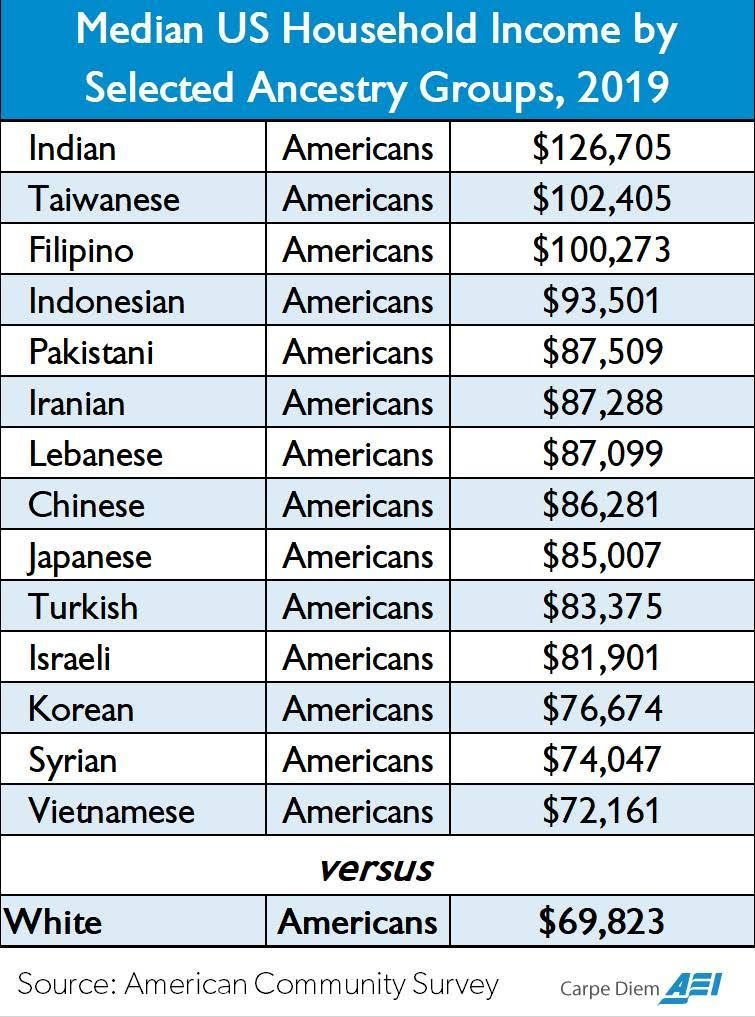
Minimum-wage laws can even affect the level of racial discrimination. In an earlier era, when racial discrimination was both legally and socially accepted, minimum-wage laws were often used openly to price minorities out of the job market.

In 1925, a minimum-wage law was passed in the Canadian province of British Columbia, with the intent and effect of pricing Japanese immigrants out of jobs in the lumbering industry.

A Harvard professor of that era referred approvingly to Australia’s minimum wage law as a means to “protect the white Australian’s standard of living from the invidious competition of the colored races, particularly of the Chinese” who were willing to work for less.

In South Africa during the era of apartheid, white labor unions urged that a minimum-wage law be applied to all races, to keep black workers from taking jobs away from white unionized workers by working for less than the union pay scale.

Some supporters of the first federal minimum-wage law in the United States — the Davis-Bacon Act of 1931 — used exactly the same rationale, citing the fact that Southern construction companies, using non-union black workers, were able to come north and underbid construction companies using unionized white labor.

These supporters of minimum-wage laws understood long ago something that today’s supporters of such laws seem not to have bothered to think through. People whose wages are raised by law do not necessarily benefit, because they are often less likely to be hired at the imposed minimum-wage rate.

Thomas Sowell, “Why racists love the minimum wage laws”, New York Post, 2013-09-17.

« Newer PostsOlder Posts »

Powered by WordPress