
World War Two
Published 22 Feb 2022Humanity has spent millennia developing ever more efficient ways to kill. This reaches its apogee in WWI and WWII, the most terrible conflicts in human history. Broken bodies bring with them broken minds. The trauma of war brings with it the mysteries of shell shock, war neurosis and PTSD.
(more…)
February 23, 2022
From Shell Shock to PTSD – Understanding the Trauma of War – WW2 Special
Comments Off on From Shell Shock to PTSD – Understanding the Trauma of War – WW2 Special
February 13, 2022
Update on that “small fringe minority … holding unacceptable views”
First up, David Warren has a few “little truths” to share:

A screenshot from a YouTube video showing the protest in front of Parliament in Ottawa on 30 January, 2022.
Photo via Wikimedia Commons.
My mind is in Ottawa, and all other places in Canada and abroad where people are struggling to get their lives back — now, before they die. These people are overwhelmingly the self-employed, and workers in small businesses: such as truck drivers, who bought their own rigs. They have consistently been made to pay in many ways for government lockdown measures, and are generally despised by the “laptop class”, who cannot lose their jobs, and work from home.
Few people in the Big City (which includes Toronto and Ottawa) have ever met a trucker, or would think of chatting with him. They may patronize small “boutique” operations, for conspicuous consumption. But Amazon drivers deliver their regular goods, and their services, too, are mostly dialled up.
True, the Batflu has sometimes interfered with their holiday bookings, so I must add, boo hoo.
A Rasmussen report on public opinion recently showed that in America, three-quarters of Democrats supported vaccine mandates, more than half thought those who refuse should be fined, and almost half would give them gaol sentences. Nearly a third thought the “vaccine hesitant” should have their children taken away. As Californicators, and the inhabitants of most urban constituencies, seldom have children, this can be received with rolling eyeballs. For luckily, there are Republicans in the more rural places, whose votes are sometimes counted.
Ottawa (outside “the Valley”) offers a caricature of this point of view. I recall my days as a columnist, published in the Ottawa Citizen. (Eventually, I was deleted.) To walk downtown was to invite verbal assaults by those who recognized my mug in the paper. Some were actually friendly, and said hiya. But I was often called a fascist, or something else obscene, by people who didn’t notice I was human. “Are you David Warren?” the grim inquiry would come. I tried to counter it with some jest. (“It depends: do you like David Warren?”) This might cause my assailant great pain. (Humour is violence, as every Leftist knows.) But it was tiresome for both of us.
One may check election results from the middle of that town, to learn that a large majority of its inhabitants vote Liberal, in the manner of zombies. One thinks of The Invasion of the Body Snatchers.
Rex Murphy (paywalled, unfortunately, so no link) suggests that things are desperate within the imperial capital thanks to the ravaging barbarians beseiging Caesar Justin:
How deep is the terror in our once cozy capital? I am told there are certain fine bakeries in Ottawa where it is no longer possible to get a fresh croissant. There are advisories warning about heading out alone to go to yoga classes. And there are rumours that DoorDash delivery from the better Italian restaurants can take over an hour. It is a horror, a scene too grim for the human mind to grasp, or the human heart to bear. In occupied Ottawa, you may, unasked, be offered soup. Where is the United Nations? Is the Security Council asleep?
Not to despair completely, however, as Canadians know that when the politicians fail, the police stand idle and the military are still, they have the Ottawa press gallery.
It is they who alerted us to the Confederate flag guy. The tribunes of the CBC have been all over him. There’s hardly been a report without the mention of a Confederate flag at the protest. Mention of the wildly more numerous Canadian flags have been wisely subdued.
The national press have been unmatched in getting the word out on what the brigands and racists and misogynists and white supremacists and yobs and Islamophobes and louts have inflicted on our national capital. With strong earplugs and stouter hearts, they have braved the chaos, enduring “taunts”. They shuffled past parked transport trucks, some of them with Alberta drivers in the cabs!
But the real glory belongs further up. The fact that Canada is, for the moment at least, still functioning as a country is a miracle due to the steel will and captivating oratory of our resolute prime minister. Much like England in those tenebrous days of 1939, our country has found its Churchillian voice.
In the free exerpt from his Weekly Dish newsletter, Andrew Sullivan admits that despite acquiring deep knowledge and understanding of Canadian culture from the invaluable South Park, he did not see the truckers’ protest coming:
To be honest, I didn’t quite see the Canadian truckers coming. I’ve watched a lot of Canada coverage over the years (mainly via South Park, I concede) and the whole anti-vaxxer, campfire-burning, horn-tooting, macho revolt among our gentle neighbors to the north nonetheless took me by surprise.
Rob Ford was a harbinger, I guess. It’s as if the ancient, manly, lumberjacky Canadian id was finally roused from its cultural slumber by a soy-boy prime minister, forcing truckers to take a jab or forfeit their livelihood. And some reports suggest that the vaccine issue seems just the proximate trigger for the rage, and not the real source — a rage which has been steadily building for some time, especially in the pandemic, in the most progressive-left country on the planet.
And there’s something very blue-collar male about this populist anger. Trump, of course, identified the testosterone tribe he helped define and rally:
I can tell you I have the support of the police, the support of the military, the support of the Bikers for Trump — I have the tough people, but they don’t play it tough — until they go to a certain point, and then it would be very bad, very bad.
You can see similar “tough people” fault-lines in the other recent Covid contretemps involving Joe Rogan. The millions of men (71 percent male, and evenly split between high school and college grads) who listen to Rogan’s legendary podcast have rallied to him, even as the media establishment has been waging a fully-flexed campaign against him and some of his Covid coverage. There’s something about masking — chin-diapers — and mandating vaccines, and vaccines themselves, that some men seem to find feminizing.
February 9, 2022
“The nominal mayor of Ottawa, who apparently serves under the police chief, is another thoroughgoing jackass”
On Tuesday morning, David Warren had some suggestions for reconstructing Ottawa since the truckers seemed to be doing a lot of useful civic work voluntarily:
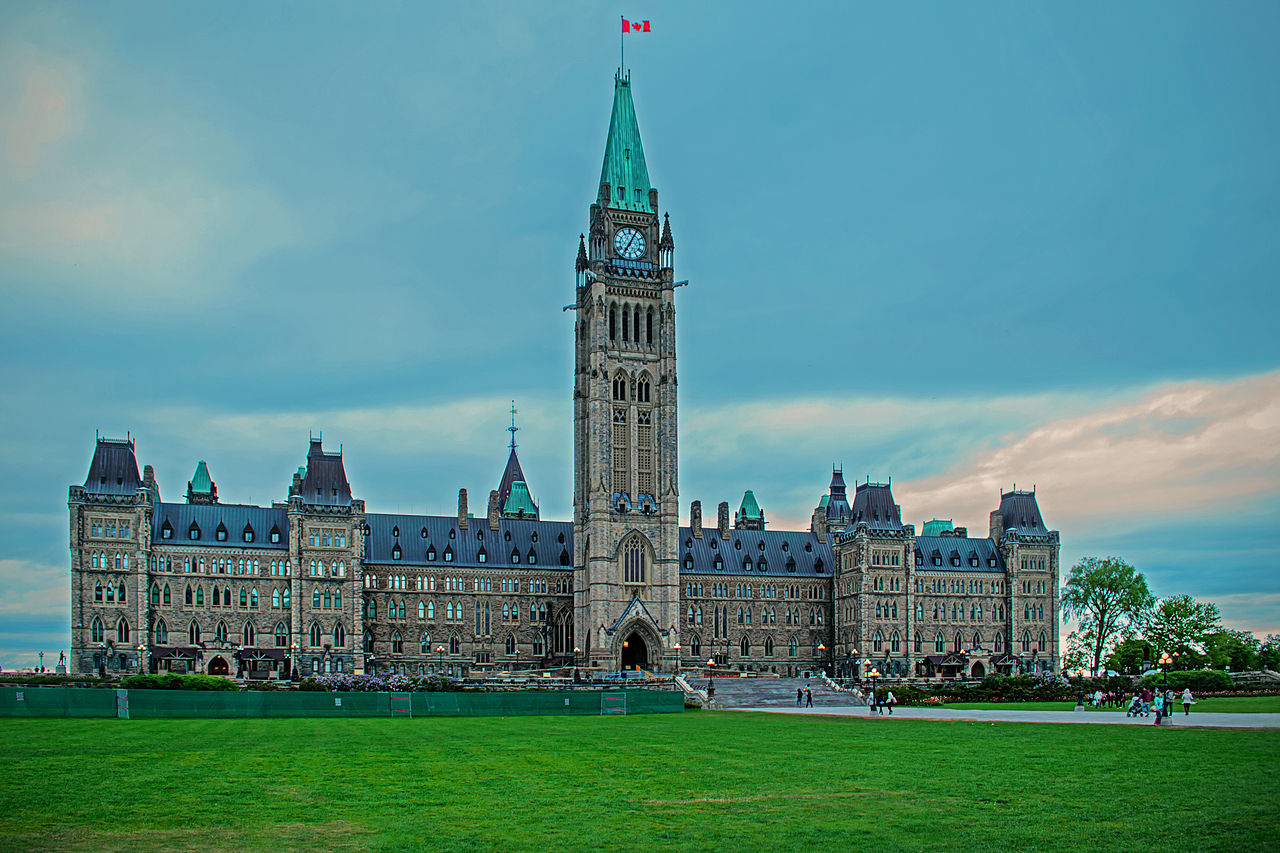
Parliament Hill in Ottawa.
Photo by S Nameirakpam via Wikimedia Commons.
The Ottawa police chief is an embarrassment, but he seems to validly represent the more tight-assed ratepayers, who have objected to the honking of the big trucks; and the ratepayers are an embarrassment, too. (I’ve tried to warn my readers against the perils of democracy.) The chief cop’s theatrical effort to impound some fraction of the Freedom Convoy’s fuel supply, to demolish their food kitchens, and hand out tickets for things like not having licences on their garbage-collecting carts, is now on display. The nominal mayor of Ottawa, who apparently serves under the police chief, is another thoroughgoing jackass.
I once worked out of Ottawa myself; it is our national capital, I was told. And it is where I acquired my notion of the profound corruption that is brought to that town by the Liberal Party — who dominate its bureaucracies whether they are in or out of power. The arrogance, of the gliberal hot-shots, as well as their extravagant waste and incompetence, has left marks on all the Ottawa institutions, and a good place to begin a clean-up would be by “cancelling” the civil service. (They could be taught to load trucks, instead.)
Too, we should defund the municipal police, or more precisely, replace them. A new police force might possibly be funded just by selling off the spiffy vehicles of the old force (after the cost of repainting them), and their dapper “Zomo” gear might fetch a pretty penny in the costume shops.
The truckers have been polishing the streets, removing even cigarette butts and gum wrappers. They have been guarding the Terry Fox statue on Parliament Hill, and could be asked to mind those of all the other defunct worthies, and slaveholders. (There weren’t any up here, as slavery was outlawed in Upper Canada from the start of the Loyalist settlement, but we can pretend.) Sir John A. Macdonald, our hard-drinking and politically incorrigible founding prime minister, may need special protection.
Among the beneficial effects of the truckers’ protest was to catalyze the ouster of “conservative” “leader” Erin O’Toole:
In the last few months, support for O’Toole from different wings of the party seems to have quietly eroded. A fight over legislation banning conversion therapy was one part of this, particularly the way that senior leadership reportedly sprang a surprise unanimous consent motion in parliament to quickly rush it through, much to the surprise of most of the caucus and especially to an important former supporter of O’Toole and important social conservative within the party, Garnett Genuis, who happened to be (conveniently for party leadership) out of the country on party business at the time. Genius was one of the key supporters of O’Toole who got him elected, but was one of many who appears to have flipped away from O’Toole towards the end.
In the last week of O’Toole’s leadership, a truck convoy opposing Covid measures that has essentially set up camp in parts of downtown Ottawa around Parliament Hill has divided the caucus, with O’Toole constantly shifting positions on it to the satisfaction of absolutely no one. This inability to clearly define and stake out a position was ultimately probably what ended his leadership. As I wrote last week in the National Post, “It has become harder and harder to defend O’Toole because it is increasingly hard to know what you’re defending when you do so. O’Toole seems unable, or unwilling, to clearly articulate positions and even when he does he often ends up backtracking a few days later.”
With O’Toole out, the Conservatives have selected a Manitoba MP and the deputy leader of the party, Candice Bergen, as the interim leader. The race to replace O’Toole is, as of right now, up in the air, with rules and candidates all still to be announced. The presumptive frontrunner is the shadow finance minister, Pierre Poilievre. He is extremely popular amongst the Tory base, unapologetic, and easily the party’s most gifted and talented communicator. He has strong name recognition already, and if he runs will be the clear favourite. Other names being thrown around are previous candidates Peter MacKay and Leslyn Lewis, current MPs Michelle Rempel-Garner and Michael Chong, and the mayor of Brampton Patrick Brown.
A Liberal backbencher has broken ranks with Justin Trudeau to call for an end to the Wuhan Coronavirus restrictions and a return to normal life for Canadians:
The federal government needs to quickly offer a road map for the lifting of COVID-19 restrictions, according to Quebec Liberal MP Joël Lightbound, citing mental health concerns from pediatricians and the parents of depressed children, and the inability of many to earn a living from a “MacBook at their cottage.”
Lightbound, MP for Louis-Hébert, chair of the industry committee and the Quebec Liberal caucus, and a former parliamentary secretary to the finance minister, said the Liberal government has changed in policy and in tone since last year’s election campaign and appears unwilling to adapt to the evolution of the pandemic.
“Now the approach stigmatizes people and divides people,” he told reporters this morning, pointing to the loosening of restrictions in European countries with lower vaccination rates than Canada.
Lightbound said he raised his concerns in caucus to Prime Minister Justin Trudeau, but owes it to constituents to publicly voice his concerns and is ready for potential political consequences for speaking out.
But, he added, other Liberal MPs share his concerns and the party has historically been “open for dissent and different opinions.”
Matt Gurney‘s second day report from the streets of Ottawa isn’t as upbeat as yesterday’s installment:
My second report (of three planned) from Ottawa will be a grimmer read than the first. But we might as well start with a moment or two levity, of a kind.
On Tuesday afternoon, I returned to the site of the main protest, on Wellington Street, right along the southern side of Parliament Hill. The crowd was, in a general sense, the same as described in my first dispatch. The barbecues were going, the coffees were being poured, and the speeches were being made off the back of a flatbed truck, with a large Canadian flag, suspended from the chain of a large mobile crane hanging over it. The crowd had been entertained for some time by some singing, mostly of upbeat recent-ish pop hits. The singer was enthusiastic, positive, cheerful and, alas, not very good. She got plenty of applause anyway, especially each time she did a shout out to “Freedom!”
And then things got weirder.
One of the main responses to my first dispatch was skepticism that a tall white dude who easily blends in with the protest crowd was getting a “representative” view at the protest site. I shared that concern! And I was really explicitly clear about that in the first piece. You can take my reporting with all the lumps of salt you want. I am indeed a white dude, and so is almost everyone else at the protest site. It’s not universally white, but it’s overwhelmingly white. People wanted to know if my experience would have been different if I were a woman, or a person of colour, or wearing a mask, or any combination of those. I am also curious about that. I just don’t know, and can’t know. But I did make a point today of watching how anyone who was wearing a mask, or a person of colour, or a woman fared in the crowd. In my two hours on site today, I observed no problems. I don’t draw any conclusions from that, nor do I deny that it might take some bravery to walk through that crowd as a masked woman of colour. But in terms of what I saw, that’s all I can honestly tell you.
[…]
It’s a different place at night. Not in a good way. I got there around 8 p.m. or so on Monday. The streets had almost emptied out. Most of the office workers had gone home by then, I guess. The cheerful revellers had cleared out, too. The music had stopped, the folding tables mostly cleared and put away, and the encampment was quiet. The roving police patrols I’d noticed keeping such an overt presence during the day were gone as well. Instead, the officers had pulled back, way back, and taken positions on the streets and at intersections around the protest site. I saw one foot patrol go in, but just one, and not very far.
By 9:30 p.m., as I continued my walk through the area, there was a very clear difference between the vibe on either side of the police positions. Outside, the city was quiet — the horns had stopped, and there were no fireworks, and it felt like a pretty normal Canadian city. People milled about walking their dogs or picking up food. The nicotine addicts puffed away outside doorways of condo towers and office buildings.
Inside those cordons, though, things were not so good.
Comments Off on “The nominal mayor of Ottawa, who apparently serves under the police chief, is another thoroughgoing jackass”
February 8, 2022
“… across the developed world the elite rise up against the masses: it’s like an anti-1848, prefiguring the post-democratic era that the 2020s will usher in”
A round-up at SteynOnline of various “elites” in Canada and elsewhere rising up against the sexist, hate-speechin’, Islamophobic, transphobic, Putin-controlled white supremacists who are demanding an end to rule-by-decree:
In Ottawa, attempts by agents provocateurs to provoke violence at the Freedom Rally have gone nowhere. So last night, “anti-hate” buffoon Bernie Farber, friend to censors everywhere, was reduced to hate-hoaxing for Justin by circulating “anti-semitic flyers” sent to him by a “friend” “in Ottawa”. Inevitably, within moments, they were revealed to be from something entirely different in Florida some weeks ago. So Bernie explained that his imaginary friend in Ottawa had seen actual hate flyers in Ottawa but had accidentally emailed him a similar flyer from America or something … These days Farber disgraces even himself.
Meanwhile, the Ottawa police have begun arresting citizens trying to deliver food to the truckers. There is no basis in Canadian law for the actions these goon coppers are taking, but the attitude of their dreadful police chief is: hey, the law is whatever I say it is. So he has ordered the arrest of citizens for “mischief”. By mischief, he means bringing sustenance or heat to protesters passing the night in temperatures of twenty below.
~Many parts of the western world are in a very dark place right now, but none more so than Canada. Its unseen prime minister, who came into office promising “sunny ways”, can no longer appear in public and sweepingly, tweetingly declares that he doesn’t need to because the sort of chaps you run into out there are rubes who don’t even know they’re Islamophobes, transphobes, thisaphobes, thataphobes, too dumb even to be aware they’re working for Putin.
As Tucker and I used to joke five years back, across the developed world the elite rise up against the masses: it’s like an anti-1848, prefiguring the post-democratic era that the 2020s will usher in. The present showdown between the Bollywood Bridesmaid and the truckers who deliver his quinoa has made it about as explicit as you can get. The good humour in the face of elite contempt is impressive. Here are a couple of typical “angry” “hate-filled” “white supremacists”:
Who are the real “Sunny Ways” guys? A serial blackface fetishist is calling the masses racist and the court eunuchs of Canada’s state-funded media dutifully tag along.
~The truckers are rallying against “vaccine mandates”, which have no justification in science: The Prime Minister, who is as vaxxed, jabbed and boostered as any mammy singer on the planet, is supposedly hors de combat because he’s down with a second dose of the Covid.
Oh, but don’t worry! To be sure, the common understanding of the word “vaccine” is that you won’t catch what you’re being vaccinated against. But what we really mean is that, if you do get it, it won’t be serious, you won’t be in the ICU, and you certainly won’t die of it.
And by “certainly” we mean, well, probably. Israel, en route to be the world’s first entirely fourth-jabbed nation, currently has a daily death toll higher than before it started giving anyone the first jab. There is no public-health justification for making liberty conditional on compliance with the developed world’s failed strategy of coerced vaccines and constant testing.

At SDA, Francisco provided some quick notes on the situation on the streets in Ottawa over the last couple of days:
Looks like the cops got a couple of slip tanks and some jerry cans. A couple of pickup trucks got towed for having slip tanks on them. Nothing major. The new rule is if you have the paperwork to prove you’re a trucker you can transport fuel to your own vehicle but not to someone else’s. A campaign has started to get everyone on the hill to carry an empty jerry can with them at all times. Let the cops figure out which ones have fuel.
There was a show of force by police. Estimate was up to 100 officers in one group. They got their photo-op for the corporate press. Looks great on TV but it had no real impact. Everyone is still there.
Word on the street is that the goal for the police is to get everyone out of there today, clean things up tomorrow and have parliament resume on Wednesday. To which I say good luck.
Morale amongst the protesters is high.
Again take everything I just wrote here with a grain of salt. It’s a fluid situation and good intel is hard to come by in the heat of the moment.
I am not a lawyer, but I’m deeply puzzled at what part of the Criminal Code the Ottawa police are depending on for these imposed restrictions on fuel, food, and other supplies being provided to the truckers by ordinary Canadians. I don’t recall any provision in the law allowing police to confiscate the legal goods of ordinary people on a whim.
Brendan O’Neill on the shitshow that was the original fundraising campaign to help the truckers on their way to Ottawa:
We need to talk about GoFundMe’s withholding of millions of dollars from the Canadian truckers protesting against vaccine mandates. This is union-busting 21st-century style. This is a multimillion-dollar company using its corporate clout to starve working-class activists of funds. This is a signal from Silicon Valley, clear and loud, that it will wield its power to crush any form of political agitation from “the lower orders” that pushes too hard against the political consensus. Anyone who thinks this clash between a profit-making fundraising website and drivers pissed off at being pushed around by Covid authoritarians is just another weird online spat needs to think again. This is far more than that. It is a scoping out of the battlelines over freedom and power that are likely to define the internet era.
GoFundMe’s deprivation of funds to the truckers protesting against Canada’s vaccine rules is, to my mind, one of the most egregious and anti-democratic acts yet carried out by the California-based elites who oversee the World Wide Web. These truckers, such essential workers, are revolting against Canadian PM Justin Trudeau’s introduction of a new rule earlier this month stipulating that truckers who cross the Canada-US border will need to be vaccinated or else go into quarantine after every trip. This is a mad demand. It would severely undermine some truckers’ ability to earn a living. So truckers have risen up. They drove their vast rigs across Canada in what came to be known as the Freedom Convoy before stopping in the capital Ottawa where they have been blocking roads and causing fainting fits among middle-class liberals who cannot understand why these oiks won’t just carry on dropping off sacks of kale to the local Whole Foods and stop going on about their pesky rights.
There has been an outpouring of support for the truckers. Canadians and Americans tired of corona-authoritarianism are cheering the truckers for honking a huge collective horn at the elite consensus on Covid. Despite the best efforts of woke politicians and columnists to depict the truckers as QAnon on wheels, as a motorised version of Mussolini’s March on Rome, many people know that in truth they are decent working people who simply object to the state making their lives that bit harder. People also know that the woke set’s attempts to delegitimise the Freedom Convoy by flagging up “far-right” comments made by a tiny handful of the truckers is a tactic as old as capitalism itself. Elite opponents of working-class organisation have always used smear and innuendo to try to nullify the throng. Seeing this smear campaign for what it is, lots of folk decided to give the truckers a few bucks. But GoFundMe had other ideas.
GoFundMe says the 10million Canadian dollars raised via its website, on a page titled “Freedom Convoy 2022”, will not be given to the truckers after all. It cited police reports about “violence” in the convoy. What violence? Where? Thousands and thousands of people have joined the truckers’ protest and yet there have only been three arrests. One person was arrested for being in possession of a weapon, one for causing “mischief”, and one for making a threatening comment on social media. As far as mass protests go, this is a staggeringly low level of allegedly criminal behaviour. I once visited the Occupy camp at St Paul’s in London and witnessed at least three misdemeanours in the one hour I was there (public urination, threatening speech, and a disturbing of the peace by a man on smack who kept shouting “GET TAE FUCK”). For a mass, angry, revolting movement, Freedom Convoy is uncommonly peaceful. GoFundMe’s “violence” blather is clearly a jumped-up pretext for its political decision to punish the truckers.
On Friday, GoFundMe issued a statement saying that Freedom Convoy was a peaceful movement when it first started but it has since “become an occupation”. And so, “no further funds will be directly distributed to the Freedom Convoy organisers”. Instead, the $9million that remains in GoFundMe’s coffers will be distributed to “credible” charities or refunded to the people who donated if they fill in a form. As if to make it super clear that this is all very political, Facebook has now removed a page promoting a Freedom Convoy in Washington, DC and deleted the personal account of the trucker who set it up. “It’s censorship at its finest”, he said, and he’s not wrong. This looks like a cut-and-dried case of the new capitalist oligarchies siding with the political establishment – in this case, Justin Trudeau – to shrink and silence the consensus-threatening cries of ordinary people.
I didn’t donate to the original crowdfunding campaign for the truckers on GoFundMe, but after that company attempted to quite literally steal $10 million away from the truckers and donate the money instead to causes they approved of, I scraped up a few bucks to add to the replacement fundraising efforts with GiveSendGo and I will actively avoid ever sending GoFraudMe a penny.
Matt Gurney has driven in from Toronto to see for himself what the protest looks like:
Depending on which person you’re using as your explainer of the local vibe, you could reasonably walk away convinced that most of what was happening in Ottawa was a pretty big party, or a hostile invasion by thugs and harassers. I wanted to find out which one it was, so on Sunday, I drove in from Toronto, arriving early Monday morning. I spent hours wandering the city, particularly the area immediately around Parliament Hill, trying to answer that question. Is this a huge group of friendly people? Is this a mob of unruly, dangerous types?
The answer is yes.
The following is my view of the situation in Ottawa, and should be seen entirely in that light. I should also note that I’m a tall, unsmiling white dude with a buzzed head who wandered the area in a gigantic and delightfully warm NFL hoodie, and it’s very possible that my experience was skewed by the fact that I blended in. There are other protest sites at other parts of the city, as well, and I’ll be heading out to some of them later. The observations below are what I saw around Parliament, and within perhaps a 10-minute walk of it.
The first thing you should know is that the protest is, in the main, friendly, at least to someone like me. The photos you’d have seen do it justice. Large transport trucks and smaller personal vehicles are packed tightly together along major streets around Parliament, and the road space and surrounding sidewalks have been colonized by the occupants. Booths and folding tables are everywhere, some selling trinkets, others for supplies or flyers and leaflets. I suspect this will anger locals tired of the protest, but I have to call it as I see it: the overall vibe was quite friendly. I spent about two hours wandering the largest sites, and was struck by the amount of direct eye contact. There’s none of the usual practiced disinterest in those around you that you internalize when you live in a big city (Ottawa is big enough, in that respect). The protesters are eager to make eye contact and to chat, about everything — the weather (warmer!), the Superbowl, and, oh, how Trudeau has to go and the pandemic is a lie. And how about those Maple Leafs?!
[…]
For all the friendly chatter, there is another element in the group. I haven’t owned any bars, but I’ve spent some very pleasant evenings in them, plus an entire career observing people, and I have passable danger-spotting skills. (My success rate at avoiding getting suddenly sucker-punched at dive watering holes hovers at very near 100 per cent!) There is a harder, nastier edge to this group, what my bar-owning friend would have called “the hard men.” It’s not large, at least not in the area immediately around Parliament during daylight — there are other areas I’ll be checking out later today, and the vibe may well change. The group around Parliament is overwhelmingly quite pleasant and, as noted, unusually friendly and eager to chat. But anyone who denies there’s another element there, though, is blind to it, wilfully or otherwise.
Again, I’m a big white guy, and I blend in by default, but more than once I felt myself being calmly but directly observed by exactly the type my bar-owning friend spoke of. There are hard people there, often in small groups, talking quietly by themselves, or standing silently, watching the comers and goers. If you know what to look for, and not all of us do, they’re easy to spot. The more friendly, chatty types give them a wide berth. I spent a few interesting moments standing by a folding table stacked high with hygiene supplies, observing three stone-faced men participating in a kind of staredown with one of the roving police units. The police simply stopped and stood in place. No one said a thing. After maybe a minute, the hard men left. The police marched off. A woman behind the table with the toilet paper and tooth paste tubes looked at me with relief.
Comments Off on “… across the developed world the elite rise up against the masses: it’s like an anti-1848, prefiguring the post-democratic era that the 2020s will usher in”
February 7, 2022
QotD: The Dunning-Kruger Effect
The Dunning-Kruger effect is a type of cognitive bias in which people believe that they are smarter and more capable than they really are. Essentially, low ability people do not possess the skills needed to recognize their own incompetence. The combination of poor self-awareness and low cognitive ability leads them to overestimate their own capabilities.
The term lends a scientific name and explanation to a problem that many people immediately recognize — that fools are blind to their own foolishness. As Charles Darwin wrote in his book The Descent of Man, “Ignorance more frequently begets confidence than does knowledge.”
An Overview of the Dunning-Kruger Effect
This phenomenon is something you have likely experienced in real life, perhaps around the dinner table at a holiday family gathering. Throughout the course of the meal, a member of your extended family begins spouting off on a topic at length, boldly proclaiming that he is correct and that everyone else’s opinion is stupid, uninformed, and just plain wrong. It may be plainly evident to everyone in the room that this person has no idea what he is talking about, yet he prattles on, blithely oblivious to his own ignorance.The effect is named after researchers David Dunning and Justin Kruger, the two social psychologists who first described it. In their original study on this psychological phenomenon, they performed a series of four investigations and found that people who scored in the lowest percentiles on tests of grammar, humor, and logic also tended to dramatically overestimate how well they had performed. Their actual test scores placed them in the 12th percentile, yet they estimated that their performance placed them in the 62nd percentile.
Kendra Cherry, “What Is the Dunning-Kruger Effect?”, verywellmind, 2018-04-09.
Comments Off on QotD: The Dunning-Kruger Effect
January 26, 2022
“Last year, we’re told, was the ‘deadliest’ year for transgender people since records began”
Tish Still, parent of a child who identifies as transgender, was worried about the “epidemic” of trans murder victims:

Facts always matter — but they take on a particular importance when they’re being used to claim that your child could be murdered. So I decided to delve into the research used to inform these claims. For me, it was personal.
The Government doesn’t publish data on the number of transgender people in the UK, though in 2018 it “tentatively” estimated that the figure stood between “approximately 200,000-500,000”. What proportion of that number must have been killed to warrant today’s warnings of trans murder epidemic? 10? 100? 1,000?
To find out, I analysed data collected by the trans-led organisation Transgender Europe, which has received more than a million dollars from the Arcus Foundation, who are based in the US and take a keen interest in transgender issues. As well as donating almost $150,000 to Stonewall, in 2015 the Arcus Foundation handed $312,000 to Transgender Europe specifically to supply reliable global data on transgender murders. The website it created provides an interactive map and links to documents naming the transgender victims.
Looking at Transgender Europe’s list of cases, it became clear — to my relief — that the total murders reported for the United Kingdom since 2008 amounted to 11. This translates as a murder rate of around 0.165%.
Now, that is still significantly higher than the murder rate for the UK as a whole: the ONS reports that the homicide rate in the UK for the year ending March 2020 was 11.7 per million people, rising to 17 per million among men. But look a bit closer at the list of trans murder victims, and that figure of 11 becomes increasingly suspect.
For instance, two of the listed victims, Vikki Thompson and Jacqueline Cowdry, appear to have been erroneously included. Thompson died by suicide while incarcerated in HMP Leeds, while Cowdry’s death was ultimately ruled as non-suspicious. This reduces the total to nine unlawful deaths, all of whom were born male. (By contrast, the number of homicides committed by transgender people between 2008 and 2017 was 12.) For context, the number of women killed by men during the same period was 1800. So much for our alleged “cis-privilege”.
Searching for more information led me to the work of Karen Ingala-Smith, who founded the Counting Dead Women project in 2012 after she realised that there was no central record of the extent of femicide here in the UK; thanks to her, a list of murdered women is read out in the House of Commons each year to imprint the rate of femicide on the minds our political class. Ingala-Smith’s tireless work focusses on female victims of, predominantly, male violence, though she made an exception to highlight the discrepancy between the mass hysteria about transgender victims of homicide compared to the treatment of woman-killing as mere background noise. (There is still no equivalent to the Trans Day of Remembrance for the much greater number of women killed by male violence.)
Crucially, her research sheds a vital spotlight on the nine remaining victims identified by the Trans Murder Monitoring report. Reading it, two things become clear. The first is that it is not entirely certain that all the victims themselves identified with the label “transgender”. The second is that the motives behind these crimes are more complex than straightforward “transphobia”.
Comments Off on “Last year, we’re told, was the ‘deadliest’ year for transgender people since records began”
January 24, 2022
“Men and woman exist”, opens What Do Men Want?, “Occasionally, we even like each other”
Jarryd Bartle reviews What Do Men Want? by Nina Power:
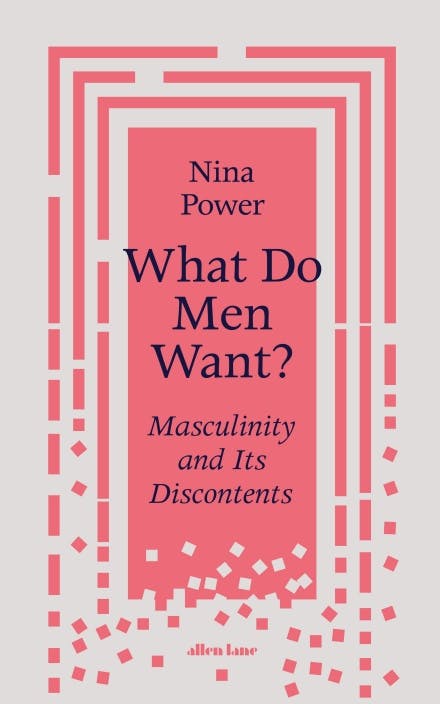
“Most men are, like most women, a mixture of good and bad, but they are not, as a rule, irredeemable,” Power notes.
Indeed, if there is ever to be a reconciliation between men and women, it may require considering the interests, needs and desires of good men, rather than a laser focus on the bad.
What then, do men want?
When Power asked her male friends this incredibly leading question, the responses ranged from “To be left alone” to “Pussy” to “Beer”. However, the real answer seems to be: something to do.
Power writes, “It is hard to imagine how the role [of men] today could be any more evacuated of meaning or status.”
The old-fashioned role of the Patriarch has been dead for at least one full generation now, and we haven’t really found an adequate replacement. The result is that men are adrift in a state of nihilism. In pop culture men seem to play the role of the “horny jester” to the self-serious goals of feminine social change. But men aren’t just interested in sex and frivolity; they also want a life of meaning.
The consequences of this listlessness are all too evident. Men are vastly overrepresented in statistics on suicide, unemployment, drug overdoses and crime.
Most men aren’t violent, but they are far more violent than women. Women are sometimes the target of this violence, but far more often men take out their pent-up aggression and sadism on other men. Often, we are told to blame these pathologies on “toxic masculinity” — that men need to be liberated from their preferences and to embrace the feminine ideals of tenderness, openness and sociability.
This solution sees sex difference as an irrelevancy, merely a reified founding myth of hegemonic masculinity, perfectly capable of tinkering. For Power, this approach is exceedingly cruel, failing to accept men as embodied creatures with a distinct way of experiencing the world:
To describe masculinity as “toxic” is to suggest that not only have men been poisoned, but that they are extending their poison to the rest of society.
This recent call to feminise men also didn’t occur in a vacuum.
There has been a significant decline in the needs for physical labour in Western countries since the turn of the century. Our increasingly service-oriented, tech-mediated economy requires very different temperaments, often drawing on the feminine virtues of empathic communication.
For Power, these broader structural changes have meant “certain kinds of behaviour come to be rewarded over others”.
Whilst we can’t turn back the clock, this re-evaluation of the role of men in society should be done in a manner which respects the dignity of men as different from woman.
Comments Off on “Men and woman exist”, opens What Do Men Want?, “Occasionally, we even like each other”
January 22, 2022
“China’s statistics remain in the hands of officials who carefully do everything possible to make sure China’s image remains unblemished”
I’ve been a disbeliever in official Chinese statistics for many years — one of the first repeat topics on the blog in 2004 was the unreliable nature of Chinese government statistics on economic growth. As a result, I find it very easy to believe that the Chinese statistics on deaths due to the Wuhan Coronavirus pandemic are unreliable, as John Horvat explains:

Wuhan Institute of Virology.
Wikimedia Commons.
As the latest wave of COVID cases surges in the West, all is quiet in the East. It has always been quiet. Millions have died from the coronavirus epidemic as it sweeps the world. However, few consider it strange that the nation where the virus first appeared amid an entirely unprotected public of 1.3 billion people should record a mere 4,636 fatalities over the past three years.
China’s statistics remain in the hands of officials who carefully do everything possible to make sure China’s image remains unblemished. They claim that low numbers are due to the communist nation’s brutal “zero tolerance” policies. China is presented as a model for the West.
Some voices are appearing that dispute this claim. One expert says the fatality figures are likely closer to 1.7 million. This figure would put China in the same camp as the rest of the world. It would also point to the failure of the world’s strictest lockdown and explain the recent shutdowns of whole cities and regions due to the virus, which supposedly kills no one in China.
[…]
Communist parties have always used statistics as a tool and weapon to advance their agenda. Officials feel free to change the numbers to reflect well upon the state, which controls everything. Truth is whatever furthers the fortunes of the party. If statistics must be changed as a result, there is no problem. Hence the notorious unreliability of communist statistics.
The problem is complicated by anxious officials who must report good news to party leaders or face the consequences of their failures, including death. Zero tolerance numbers may be statistically impossible and even absurd, but most officials prefer their survival over inconvenient truths.
Also disturbing is the complicity of Western media that repeat the cooked numbers of communist regimes. Few dare to question impossible figures or “follow the science” when leftist prestige is involved. During the long Cold War, the West presented the Soviet Union as the second-largest economy. When the Berlin Wall fell, the actual size of the economy was found to be significantly less.
Even in a centrally planned socialist state, incentives matter. In the west, failing to meet expected standards may get you fired (unless you work for the government), but in authoritarian states like China it can get you shot or exiled to a remote labour camp for years or decades. The top statisticians know that the numbers they work on are … massaged … at every stage even before they are aggregated for regional or national reporting, but there is literally no point in telling the truth and there is much to be gained by “scenario-ing them rosily” because your bosses will only accept good news regardless of reality.
Comments Off on “China’s statistics remain in the hands of officials who carefully do everything possible to make sure China’s image remains unblemished”
January 18, 2022
A Labour Party attempt to count coup against Boris Johnson may have backfired by showing the NHS in a terrible light
Brendan O’Neill explains why he found the Labour social media post to be a very bad idea:
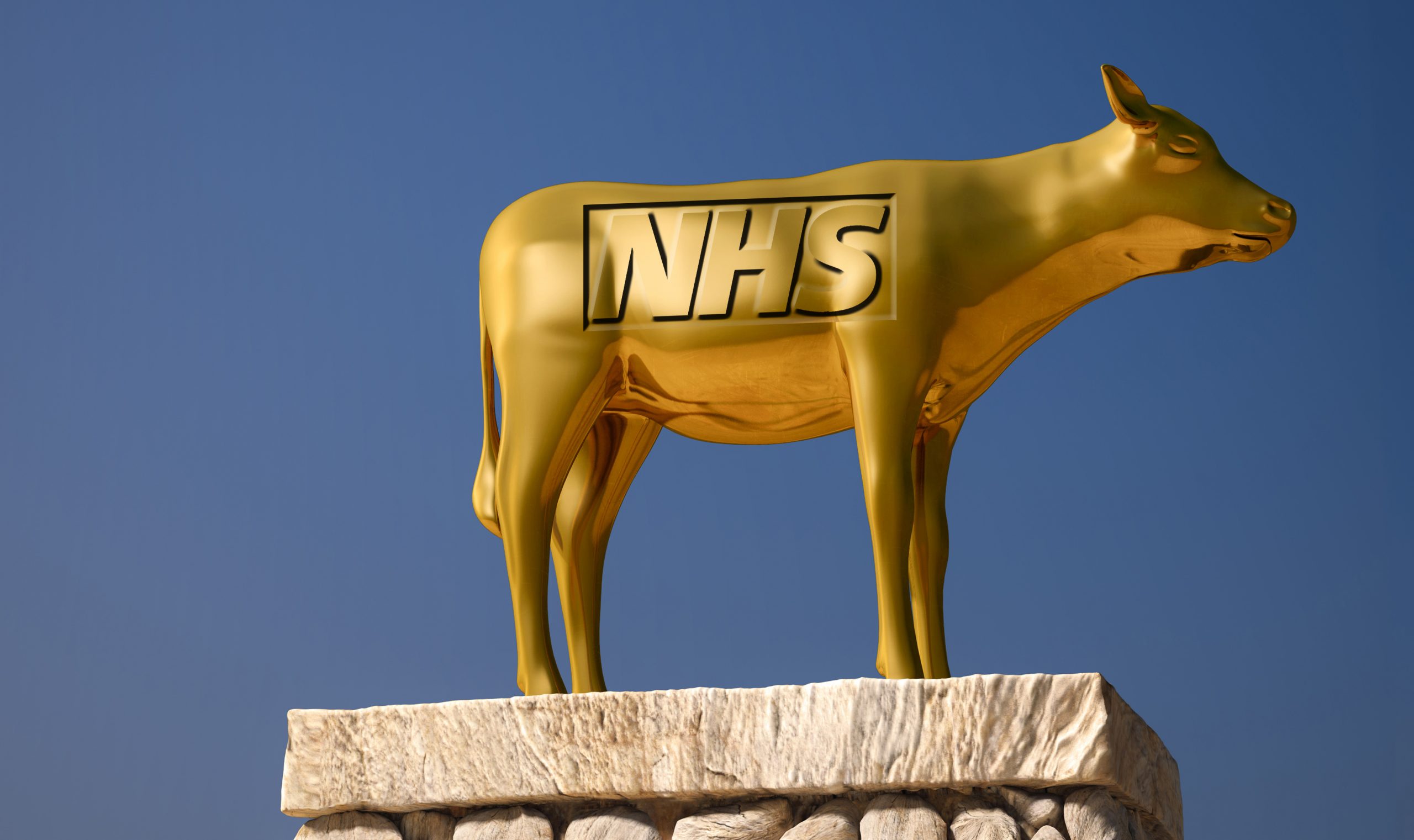
Not actually the official symbol of Britain’s National Health Services … probably.
This week, in response to the latest drinks-during-lockdown scandal engulfing Downing Street, the Labour Party tweeted something so extraordinary, so tone deaf, so inhumane, that it managed to make Boris and his coterie of rule-breaking hypocrites look almost principled in comparison.
It was a comment from an NHS nurse named only as Jenny (thank God for the absence of Jenny’s surname, for I shudder to think of the abuse she would receive if her full identity were revealed). This is what Jenny, according to Labour, had to say about the government’s boozy get-togethers on 20 May 2020 and other occasions when the rest of us were locked down:
I remember 20 May 2020 vividly, I spent hours on the phone to a man who was in the hospital car park, utterly desperate to see his wife. He begged, wept, shouted to be let in, but we said no – for the greater good of everyone else. She died unexpectedly and alone, as the government had a party.
This is a genuinely extraordinary statement. It is astonishing that no one in the Labour social-media team thought twice about posting it. The aim of this tweet is clearly to make us shake our heads and say “I can’t believe the government had a party while the NHS was making such tough decisions”, but in truth it has the exact opposite effect. It made me, at least, think to myself: “I can’t believe we let people die alone. I can’t believe the howling grief of a desperate man was ignored. I can’t believe there was such a complete and catastrophic collapse in everyday humanity during the lockdown.”
Labour clearly wants us to sympathise with “Jenny” against the government. But I find myself far more disgusted, far more outraged, by Jenny’s behaviour than by Boris Johnson’s. To have a sneaky party during lockdown is one thing. To ignore the pleas of a begging, weeping man and to watch as his wife subsequently died alone is something else entirely. It is in an utterly different moral ballpark. It is an unconscionable act. It is an obscenity against the human family that makes Boris and Carrie’s 25-minute visit to a garden party look saintly in comparison.
Comments Off on A Labour Party attempt to count coup against Boris Johnson may have backfired by showing the NHS in a terrible light
January 17, 2022
“We need to address the corrosive influence of behavioural science on public life”
Frank Furedi on the British government’s use (and over-use) of “nudge” polices to influence the behaviour of the British public:
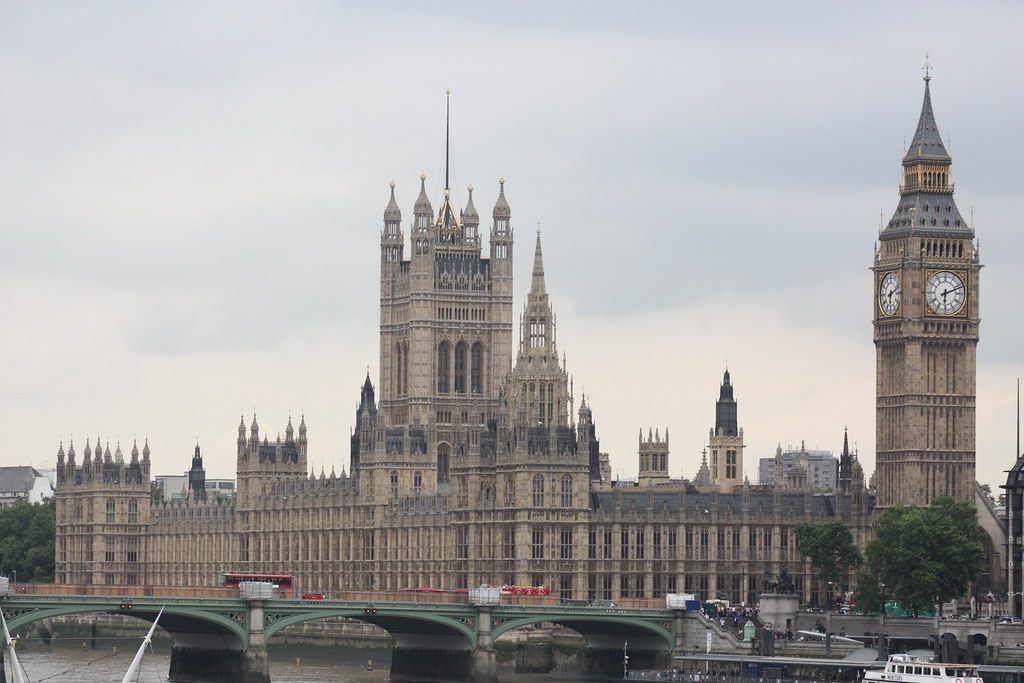
“Palace of Westminster”by michaelhenley is licensed under CC BY-NC-SA 2.0


Behavioural science, aka “nudging”, has been used by the government during the pandemic to scare people into doing the “right” thing. This insidious development has even been acknowledged by Simon Ruda, one of the co-founders of the Behavioural Insights Team, aka the Nudge Unit, which is part-owned by the UK government. He wrote that the “most egregious and far-reaching mistake made in responding to the pandemic has been the level of fear willingly conveyed [to] the public”.
Though he said that the propagation of fear had more to do “with government communicators and the incentives of news broadcasters” than with behavioural scientists themselves, Ruda’s admission is still striking. He even expressed concern about the state’s willingness “to use its heft to influence our lives without the accountability of legislative and parliamentary scrutiny”.
Ruda is not the only behavioural scientist concerned about officialdom’s systematic scaremongering. On 22 March 2020, a paper written by the Scientific Pandemic Influenza Behaviour Advisory Committee (SPI-B) for the government’s Scientific Advisory Group for Emergencies (SAGE) complained that the public was too relaxed about the pandemic. “A substantial number of people still do not feel sufficiently personally threatened”, it stated, adding that too many “are reassured by the low death rate in their demographic group”. It then urged the government to increase “the perceived level of personal threat… among those who are complacent, using hard-hitting emotional messaging”.
Some members of SAGE have since reported feeling “embarrassed” by the nature of SPI-B’s advice. As one regular SAGE attendee put it last year: “The British people have been subjected to an unevaluated psychological experiment without being told that is what’s happening.”
It is to be welcomed that at least some behavioural scientists are now questioning the political use of their discipline. But the problem goes deeper than fear-mongering during the pandemic. We need to address the corrosive influence of behavioural science on public life in general.
Comments Off on “We need to address the corrosive influence of behavioural science on public life”
January 16, 2022
Is the narrative about the Trans Movement about to change?
In the latest Weekly Dish, Andrew Sullivan marks a perhaps significant change in how mainstream media outlets are discussing the Trans Movement:

An unusual thing happened in the conversation about transgender identity in America this week. The New York Times conceded that there is, indeed, a debate among medical professionals, transgender people, gays and lesbians and others about medical intervention for pre-pubescent minors who have gender dysphoria. The story pulled some factual punches, but any mildly-fair airing of this debate in the US MSM is a breakthrough of a kind.
Here’s the truth that the NYT was finally forced to acknowledge: “Clinicians are divided” over the role of mental health counseling before making irreversible changes to a child’s body. Among those who are urging more counseling and caution for kids are ground-breaking transgender surgeons. This very public divide was first aired by Abigail Shrier a few months ago on Bari’s Substack, of course, where a trans pioneer in sex-change surgery opined: “It is my considered opinion that due to some of the … I’ll call it just ‘sloppy’, sloppy healthcare work, that we’re going to have more young adults who will regret having gone through this process.” Oof.
The NYT piece also concedes another key fact: that puberty blockers are neither harmless nor totally reversible. Money quote:
Some of the drug regimens bring long-term risks, such as irreversible fertility loss. And in some cases, thought to be quite rare, transgender people later “detransition” to the gender they were assigned at birth. Given these risks, as well as the increasing number of adolescents seeking these treatments, some clinicians say that teens need more psychological assessment than adults do.
I would think that, just as a general rule, minors making permanent, life-changing decisions should receive more psychological treatment than adults. How on earth is this not the default? In what other field of medicine do patients diagnose themselves, and that alone is justification for dramatic, irreversible medication?
The NYT doesn’t give you the data for the “increasing number” of transitions because it’s hard to find in the US. In the UK, however, the data show a 3,200 percent rise in adolescents seeking transition over a decade — 70 percent of whom are girls seeking to become boys, a break from historical norms where boys/men were much more likely to seek transition. Nor does the NYT give any data for “detransitioners”. But any brief look online suggests they are not exactly “quite rare”. They are, in fact, becoming a small but recognizable and tenacious part of the trans landscape. And among the risks of puberty blockers that the NYT does not mention are neurological damage, bone-density loss, and a permanent inability to experience sexual pleasure. And in almost every case (98 percent in one report), puberty blockers are never reversed.
Comments Off on Is the narrative about the Trans Movement about to change?
January 15, 2022
Merely to be accused of transphobia is enough proof for condemnation
Jean Hatchet on the plight of Staffordshire University professor James Treadwell, who has been anonymously accused of “transphobia” … and therefore must be punished:
Yesterday evening Professor James Treadwell, a criminologist at Staffordshire University, announced his dismay on Twitter at being accused of “transphobia”. The details are vague, even to him. He has not been presented with evidence and he doesn’t and may never know who has accused him.
He wrote: “Ok to hell with it. I have been told by my employer @StaffsUni albeit only verbally that I am being investigated for Transphobia after formal and official complaints about my Twitter conduct. Read my tweets. Go figure.”
Go figure indeed. It is completely baffling. The issue is Professor Treadwell’s tweeting in favour of the right of female inmates to a single-sex prison estate. In a series of tweets on 27 December 2021, Professor Treadwell outlined his experience of the manipulative behaviour of violent sex offenders who will use loopholes to “game” the criminal justice system. He was clear that his tweets were not directed at the transgender community. He wrote:
“The idea that sex offenders are manipulative individuals who would exploit systems and laws could only be unreal to those who do not know how manipulative sexual offenders can be. All groom, seek to exploit and control.”
And he made very clear that his tweets weren’t attacking the transgender community:
“It isn’t about trans people, it’s about bad people who will exploit the law from self interest and work within a legal framework (that could protect women’s spaces) to do as they want and get what they want. You think that won’t happen, you don’t know how many sex offenders act.”
Who would be better placed to discuss this issue than a leading criminologist who has worked with some of the worst sex offenders in the country? The polite and well-informed tweets hit the nerve of public opinion on the topic of trans-identified men incarcerated in the female prison estate and were widely, mostly supportively, distributed.
Today, Professor Treadwell is in the awful position of fearing for his job; for a few tweets about a subject that he is specifically qualified to speak on. Meanwhile an effective message is simultaneously sent to his academic colleagues nationwide, that they could be targeted next. He is not the first and he won’t be the last. Many criminologists are choosing to look the other way. Professor Treadwell felt that he could no longer do so. His professional integrity appears to be exactly what he is being persecuted for.
Comments Off on Merely to be accused of transphobia is enough proof for condemnation
January 14, 2022
People who tell “noble lies” are still liars who should not be trusted
In Spiked, Matt Ridley considers why so many scientists went along with the disinformation campaign to obscure or discredit the lab-leak theory on the origins of the Wuhan Coronavirus:
Wuhan Institute of Virology.
Wikimedia Commons.
In August 2007 there was an outbreak of foot-and-mouth virus on a farm in Surrey. It was a few miles from the world’s leading reference laboratory for identifying outbreaks of foot and mouth. Nobody thought this was a coincidence and sure enough a leaking pipe at the laboratory was soon found to be the source: a drainage contractor had worked at the lab and then at the farm.
In December 2019 there was an outbreak in China of a novel bat-borne SARS-like coronavirus a few miles from the world’s leading laboratory for collecting, studying and manipulating novel bat-borne SARS-like coronaviruses. We were assured by leading scientists in China, the US and the UK that this really was a coincidence, even when the nine closest relatives of the new virus turned up in the freezer of the laboratory in question, at the Wuhan Institute of Virology.Now we know what those leading scientists really thought. Emails exchanged between them after a conference call on 1 February 2020, and only now forced into the public domain by Republicans in the US Congress, show that they not only thought the virus might have leaked from a lab, but they also went much further in private. They thought the genome sequence of the new virus showed a strong likelihood of having been deliberately manipulated or accidentally mutated in the lab. Yet later they drafted an article for a scientific journal arguing that the suggestion not just of a manipulated virus, but even of an accidental spill, could be confidently dismissed and was a crackpot conspiracy theory.
Jeremy Farrar – who organised the call on 1 February with Patrick Vallance, Francis Collins, Anthony Fauci and a Who’s Who of virology – had already spilled a few of the beans in his book, Spike, published last year. He wrote that at the start of February 2020 he thought there was a 50 per cent chance the virus was engineered, while Kristian Andersen of the Scripps Research Institute was at 60-70 per cent and Eddie Holmes of Sydney University put it at 80 per cent. But some time after the call they all changed their mind. Why? They have never troubled us with an answer.
Now, however, we have an email from Farrar, sent on Sunday 2 February to Francis Collins, head of the National Institutes of Health, and Anthony Fauci, head of the National Institute of Allergy and Infectious Diseases. It recounts the overnight thoughts of two other virologists Farrar had consulted, Robert Garry of Tulane University and Michael Farzan of the Scripps Research Institute, as well as Farrar’s own thoughts. Even after the call, their concern centred on a feature of the SARS-CoV-2 genome that had never been seen in any other SARS-like coronavirus before: the insertion (compared with the closest related virus in bats) of a 12-letter genetic sequence that creates a thing called a furin cleavage site, which makes the virus much more infectious.
Comments Off on People who tell “noble lies” are still liars who should not be trusted
January 13, 2022
Canadians believe we have the world’s best healthcare system … we’re sadly deluded about that, as the pandemic has demonstrated
In The Line, Harrison Ruess points out how far down the international “league table” Canadian healthcare ranks, despite our fervent beliefs that it’s our healthcare system that somehow “defines” what it is to be Canadian (I’ve honestly never understood that particular belief):
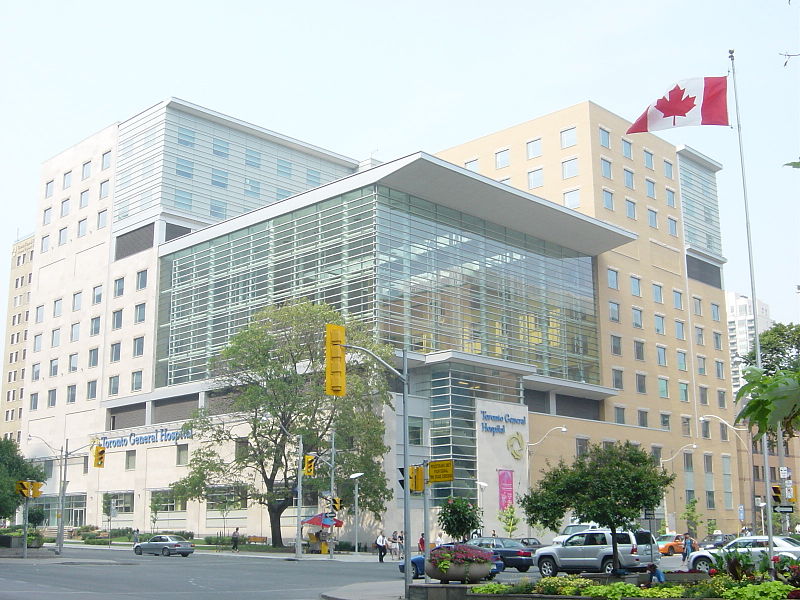
Toronto General Hospital in 2005.
Photo via Wikimedia Commons.
Millions of Canadians are extremely proud of our health-care system. They defend it and are utterly convinced of its greatness. They react with hostility to any hint of change.
But on what basis could Canada make a claim to health-care greatness?
According to OECD data, on life expectancy Canada ranks 16th. On morality rates from avoidable causes, we’re 23rd. On cancer survival rates we range from 13th down to 18th, depending on the cancer type. On the number of one-year-olds vaccinated for diphtheria, tetanus and pertussis, we rank an abysmal 37th (even the U.S. is higher here at 27th. Gulp.). One area where we do rank closer to the top is spending as a proportion of GDP, where we sit at seventh.
In modern parlance of TL;DR, what the OECD data says is that Canada spends a disproportionately large amount of money to get strongly mediocre health outcomes.
For an overall picture we can look at the World Health Organization’s ranking system, which measures, “responsiveness (both level and distribution), fair financing, and health inequality, in addition to the more traditional goal of population health.” Here, Canada ranks 30th overall.
“But …” I’m sure you’re about to say … “Canada has universal health care!”
Yes. And that’s good. But the shortfall of that argument is that dozens of other countries have universal health care and many also have far better overall outcomes. In short, universal health care access is not a unique feature in Canada. For instance, a few notable countries from the WHO’s top 10 include France, Italy, Singapore, Spain, Austria, and Japan. These are hardly countries that let citizens go bankrupt or die in the streets when they need health care.
So why are we so darned committed to defending the Canadian status quo?
I genuinely can’t make sense of it. Canadians are smart, sensible people. We want the best for ourselves and our children. But at the same time, we have a very long history of refusing to change and improve our health care despite every piece of evidence that says we desperately must do better. The COVID pandemic has made this especially clear over the last couple years, but none of this is new.
As Robyn Urback recently asked in the Globe & Mail, “When do we admit Canada’s health-care system just isn’t working?” and as Matt Gurney pondered on TVO, “When can we start trying to make it [better]?”
Comments Off on Canadians believe we have the world’s best healthcare system … we’re sadly deluded about that, as the pandemic has demonstrated
January 8, 2022
“We are a sexually dimorphic species, and men and women are different”
A statement like that on Twitter or other social media platforms might run you the risk of denunciation, cancellation, and a plethora of accusations of transphobia, but it isn’t the intent of Robert King to troll the hypersensitive online:

No, this carving isn’t directly related to the article … but it is eyecatching.
We are a sexually dimorphic species, and men and women are different. Evolution has designed us to be different. Realising that we evolved through slow steps, rather than just popping into being in an act of creation, has implications. For one thing, it means that men and women have their own separate evolutionary histories, as a result of differing (although not wholly different, of course) selection pressures. Resisting this truth — pretending that men and women are a sort of silly putty, totally moulded by social forces — has already had serious consequences in medical science, and it also has implications for my field of study.
I study the nature and function of the female orgasm. It might surprise people that there is even a set of questions about this phenomenon, but it is one of the most vexed fields in evolutionary biology. I do not claim that we have solved the puzzle of it. However, I do claim that we know a lot more about female orgasm than we used to. For example, female orgasm is multi-faceted in nature (unlike male orgasm) and is associated with a host of complex, fertility-related, functions. Male orgasm has but one (and a pretty-well understood one at that) fertility related function: reinforcing sexual behaviour. How is it that these stark differences between the sexes have been missed?
A major reason is that sex researchers, in some cases even self-described feminists, have often persisted in treating female orgasm as a mere adjunct to male orgasm. On this view — the by-product view — only male orgasms have a function. Female ones exist as a sort of afterthought of nature. Thus, clitorises have been routinely compared to (functionless) male nipples by, among others, the influential palaeontologist, Stephen Jay Gould. However, this comparison does not stand up to scrutiny. Clitorises are not substandard penises. For starters, they are large, four inches in length, on average. They are highly complex, but their structure — including muscular, erectile, and sensitive tissue — is mostly internal.
The external part — the glans — is highly sensitive, but so is the rest of it, when appropriately aroused. Clitorises connect to their own dedicated area of brain (the somatosensory cortex) utterly distinct from the male version. To see some of this for yourself you could read any number of excellent works by, for example, the brilliant anatomist Helen O’Connell.
If the structure that generates female orgasm is at least as, if not more, complex than the male counterpart, then it makes little sense to assume that the female version depends on the male one. This is doubly true of the event of orgasm itself, prompting the eminent biologist Robert Trivers to quip of female orgasms that “One has to wonder how often Steve [Gould] has been near to that blessed event to regard it as a by-product.” That may be a tad unkind — but it raises a rather important point. If we restrict ourselves to studying female orgasm, or human sexual behaviour generally, in the laboratory alone, then we run a very real risk of missing out on crucial aspects.
Let me make this point more concrete. Over the last couple of years, zoos and wildlife parks across the planet have seen a huge upswing in births, among species previously thought to be sexually frigid — like Pandas. Why? Simple. No humans were about. The animals had some privacy from prying eyes. Does it really stretch imagination to appreciate that the full range of human sexual responses might be also muted when under laboratory conditions? Inefficiency is a hallmark of good sex, and humans use the privacy of the boudoir to do more than make each orgasm as rapidly as possible. We use this space to find out about one another.
Comments Off on “We are a sexually dimorphic species, and men and women are different”


