
World War Two
Published 6 Jan 2022North Africa. The Axis and Allies are fighting each other but even more, they’re fighting the desert itself. The men of the desert burn during the day and freeze at night. They do most of their fighting on a litre of water and a packet of army biscuits. What is life in such a hostile environment?
(more…)
January 7, 2022
Desert War – Dysentery, Disease, and Dehydration – WW2 Special
Comments Off on Desert War – Dysentery, Disease, and Dehydration – WW2 Special
January 6, 2022
The war on “ultra-processed food”
Our self-imagined “elites” have a new crusade to prosecute — the crusade against “ultra-processed food”:
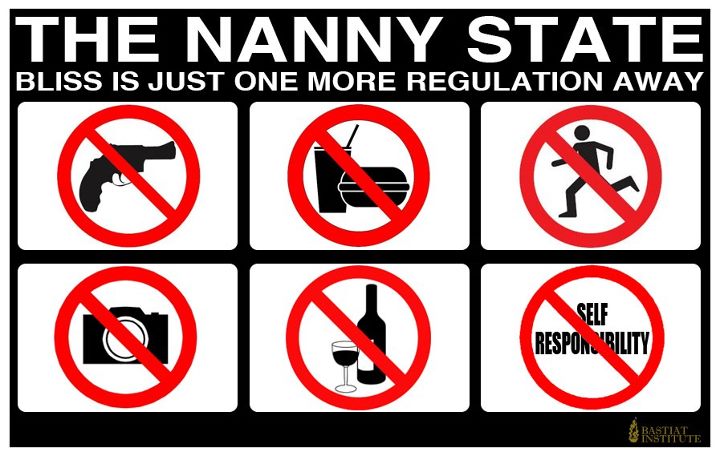
In “public health”, the name of the game is to interfere with people’s lives without having your own choices meddled with. This is straightforward with smoking since the philosopher kings of the nanny state don’t smoke. Alcohol is more tricky since most of them drink, but minimum pricing — which was introduced in Ireland yesterday — offers the perfect way to penalise ordinary people while leaving fine wine and craft beer unaffected.
The war on food poses the trickiest problem since its pretext — obesity — is the result of over-consumption and physical inactivity rather than the consumption of any specific type of food. “Junk food” is too narrow since most people interpret it to mean “fast food” from a handful of restaurant chains. And so, in the absence of an obvious dietary culprit, the “public health” lobby is shifting towards a crusade against “ultra-processed food”.
Most people don’t know what this means, but it sounds bad if you have an instinctive objection to industry and modernity. Perhaps it evokes thoughts of “chemicals” and “E numbers”. Certainly, it sounds like the opposite of the “natural”, “organic” and “home made” food so beloved of those who think they are superior to other people. It is, however, a classic “public health” bait and switch. Just as people didn’t realise that a ban on “junk food” advertising would result in adverts for cheese and butter being banned, people won’t realise what a war on ultra-processed food means for them until it is too late.
In a deranged op-ed in BMJ Global Health, some of Mike Bloomberg’s minions from Vital Strategies call for tobacco-style regulation of “ultra-processed food”, starting with warning labels.
Simply put, ultra-processed foods are foods that can’t be made in your home kitchen because they have been chemically or physically transformed using industrial processes. They are recognisable on the supermarket shelf as packaged foods that are ready-to-eat, contain more than five ingredients and have a long shelf-life. The industrial processing, as well as the cocktail of additives, flavours, emulsifiers and colours they contain to give flavour and texture, make the final product hyper-palatable or more appealing and potentially addictive, which in turn leads to poor dietary patterns.
With more than half the total calories consumed in high-income countries coming from ultra-processed foods and rapid increases in low- and middle-income countries, these products are exposing billions of people to a higher risk of type 2 diabetes, heart disease, stroke, depression and death.
Scary stuff, eh? Alas, they don’t give any examples of ultra-processed foods so let us instead turn to a recently published study about them …
Baked goods, including cakes, pastries, industrial breads, and soft drinks ranked among the top contributors to sales of UPFDs [ultra-processed food and drinks]
According to the the British Heart Foundation, ultra-processed foods include …
Ice cream, ham, sausages, crisps, mass-produced bread, breakfast cereals, biscuits, carbonated drinks, fruit-flavoured yogurts, instant soups, and some alcoholic drinks including whisky, gin, and rum.
I’m not sure how hard liquor made the cut, but I suppose if you’re going be a fun sponge you might as well go all the way.
Comments Off on The war on “ultra-processed food”
“When speaking to a contemptible idiot who is kind of evil, don’t call them a contemptible idiot who is kind of evil! Many contemptible idiots find that language insulting”
Tom Chivers reviews a recent book from Lee McIntyre, How to Talk to a Science Denier: Conversations with Flat Earthers, Climate Deniers, and Others Who Defy Reason:

Imagine you bought a book with the title How to Talk to A Contemptible Idiot Who Is Kind of Evil. You open the book, and read the author earnestly telling you how important it is that you listen, and show empathy, and acknowledge why the people you’re talking to might believe the things they believe. If you want to persuade them, he says, you need to treat them with respect! But all the way through the book, the author continues to refer to the people he wants to persuade as “contemptible idiots who are kind of evil”.
At one stage he even says: “When speaking to a contemptible idiot who is kind of evil, don’t call them a contemptible idiot who is kind of evil! Many contemptible idiots find that language insulting.” But he continues to do it, and frequently segues into lengthy digressions about how stupid and harmful the idiots’ beliefs are. Presumably you would not feel that the author had really taken his own advice on board
This is very much how I feel about How to Talk to A Science Denier, by the Harvard philosopher Lee McIntyre.
McIntyre wants to help us change people’s minds. Specifically, to help us change the minds of these strange, incomprehensible people called “science deniers”. He addresses five main groups of “deniers”: flat earthers; climate deniers; anti-vaxxers; GMO sceptics; and Covid deniers.
This is, on the face of it, an important project. It’s a truism that the world is polarised, and our sense of shared reality is under attack. If there is some way of learning how to talk across difference, and to persuade without attacking, that might go a long way to bridging our various divides, not just the five he discusses.
The framing is that McIntyre goes and meets representatives of these groups and tries to persuade them out of their wrong beliefs. He goes armed with social-psychology research about how best to persuade people. His big trick (which I think is a good, if limited, one) is asking: what evidence would it take to make you change your mind?
But the whole book is premised on one idea: McIntyre is right, and the people he is “talking to” are wrong.
[…]
McIntyre constantly wants to make a clean distinction between “science deniers” and non-deniers. So, for instance, he says that there are five “common reasoning errors made by all science deniers” [my emphasis]. They are: cherrypicking, a belief in conspiracy theories, a reliance on fake experts, illogical reasoning and an insistence that science must be perfect. If you don’t make all five of those errors, you’re not an official McIntyre-accredited science denier.
Hang on, though. A “belief in conspiracy theories”? McIntyre spends a lot of time talking about the tobacco firms who manufactured doubt in the smoking/lung cancer link, and the oil firms who did the same with the fossil fuel/climate change link. He says that the spread of Covid denialism through the US government was driven by Republican desire to keep the economy open and win the election. Aren’t these conspiracy theories?
Ah, but for McIntyre these aren’t conspiracy theories, they’re conspiracies. The distinction is “between actual conspiracies (for which there should be some evidence) and conspiracy theories (which customarily have no credible evidence).”
Comments Off on “When speaking to a contemptible idiot who is kind of evil, don’t call them a contemptible idiot who is kind of evil! Many contemptible idiots find that language insulting”
January 2, 2022
QotD: Female preference for dominant males
In what follows, I will argue that sexual selection liberated sexual dominance from its coercive, ancestral demons. Specifically, I posit that ancestral women, when faced with the prospect of mating with a coercive and dominant man, a non-coercive and non-dominant man, or a non-coercive albeit dominant man, usually opted for the third option.
The first reason for this is the value of male dominance in competition with other males. Specifically, if a man exhibits dominance during courtship and copulation, he is signalling his ability to successfully compete with other men for social status in male hierarchies. Women are attracted to high-status men because such men are either genetically superior, have the resources necessary to invest in a woman and her children, or both. Although some degree of sexual conflict between men and women is expected, a man’s non-coercive dominance during courtship and copulation may say something about his ability to stand his ground in interactions with other men.
The second reason that women prefer dominant men is the fact that other women prefer dominant men. This is not a tautology. My high school American History teacher, Ms. Gibbs, once told us an anecdote about Benjamin Franklin. It was said that old kite-flying Ben would surround himself with average looking women at dinner parties so as to grab the attention of the more attractive ones. Whether true or not, Ben Franklin’s supposed exploits are supported by research on what makes men attractive. Specifically, women are attracted to men whom other women — especially physically attractive women — find attractive. So, if other women find dominant men attractive, it would benefit a woman to mate with a dominant man because any son born of such a union would inherit his father’s dominance and thereby help to spread his mother’s genes. This hypothesis — the so-called sexy-son hypothesis — suggests that whatever other benefits a man might accrue through his dominance, it is simply enough for women to consider it “sexy” for it to be sexually selected into the male line of our species.
Most of the time, however, traits that are preferred by members of the opposite sex communicate something important about the bearer of those traits in addition to sexiness per se. As I will elaborate in my discussion of sexual subordination, sexually selected traits are often selected by prospective sex partners because they are honest, costly signals of an individual’s genetic status. So, for example, a man who is capable of exhibiting dominance, while curbing it just enough to not come off as coercive, may be communicating something important about his physical and psychological state. Specifically, if a man is able to toe the fine line of sexual dominance (and even exhibit a certain amount of passionate aggression) without veering over into the danger-zone of coercion, he may be a good catch, indeed. The subtlety, tact, and finesse required to accomplish this should not be dismissed. As it happens, being a successful “dom” (i.e., a sexually dominant or sadistic individual in the BDSM scene) requires such subtlety, tact, and finesse. As Philip Miller and Molly Devon write in Screw the Roses, Send Me the Thorns:
The ideal [dominant] controls himself, so that he might control his submissive. He will, as a stern dominant, cause tears to flow, and as lover, kiss them away … He understands that to own a woman, one must court the mind with intelligence and humor; win the spirit with compassion and warmth; and take the body with determined strength … He is the honorable sadist who uses pain to extend the bounds of pleasure, vigilant that no harm comes of the hurt.
Understanding the evolution of consensual sexual dominance is half the battle. As BDSM practitioners are never tired of saying, the “sub” (i.e., the submissive or masochistic individual in a BDSM interaction) is just as active a participant as the dom. Some further assert that the sub actually controls the scene and that it is the dom who has to read or intuit the needs, desires, fears, discomforts, and pleasures of the sub.
Gregory Gorelik, “What Sadomasochism Can Teach Us About Human Sexuality”, Quillette, 2017-04-04.
Comments Off on QotD: Female preference for dominant males
December 30, 2021
HogmaNO! Scottish government warns Scots not to cross the border to celebrate Hogmanay
In Scotland, one of the traditions of the winter is Hogmanay (spelled umpteen different ways), the last day of the old year, but Scottish public health and government officials are trying to keep the Scots away from the English border this year:
Scots have been urged not to travel to England for new year celebrations to get around the more stringent Covid-19 restrictions north of the border.
There is no travel ban currently in place to stop people going to England, where nightclubs are still open.
But Deputy First Minister John Swinney said doing so would go against the “spirit” of Scottish Covid-19 measures.
He said travelling would be “the wrong course of action” due to the “serious situation” with the Omicron variant.
Case numbers in Scotland hit “alarming” record highs over Christmas and Boxing Day, with the faster-spreading strain now accounting for the majority of all infections.
First Minister Nicola Sturgeon — who is to update MSPs in a virtual sitting of the Scottish Parliament on Wednesday afternoon — said she expected the figures to rise even more in the days ahead.
Scots have been encouraged to stay at home as much as possible, and to limit any social gatherings to no more than three households.
Large events such as Edinburgh’s traditional Hogmanay street party have been cancelled, with extra curbs in hospitality settings and nightclubs shut down entirely.
Clubs remain open south of the border, where no new restrictions are being imposed, but Mr Swinney told BBC Breakfast that he would “discourage” anyone from travelling to England to see in the new year.
He said: “People are free to make their own judgments. But what we have got recognise is that Omicron is a serious threat to absolutely everybody within our society and we have all got to take measures to protect ourselves by limiting our social contacts and connections and by complying with the restrictions we have in place.
Despite the Scottish government’s warnings, English pubs along the (currently) undefended border are expecting over a hundred thousand thirsty Scots to invade on the 31st:
English border pubs are expecting upwards of 100,000 Scottish and Welsh revellers to cross into England on New Year’s Eve amid mounting anger at Nicola Sturgeon and Mark Drakeford for cracking down on festivities.
Comments Off on HogmaNO! Scottish government warns Scots not to cross the border to celebrate Hogmanay
December 18, 2021
The bully doesn’t actually want you to do this one thing they demand, they want your constant submission to all demands
Charles Eisenstein on the ongoing relationship between the citizens of most western countries and their governments:
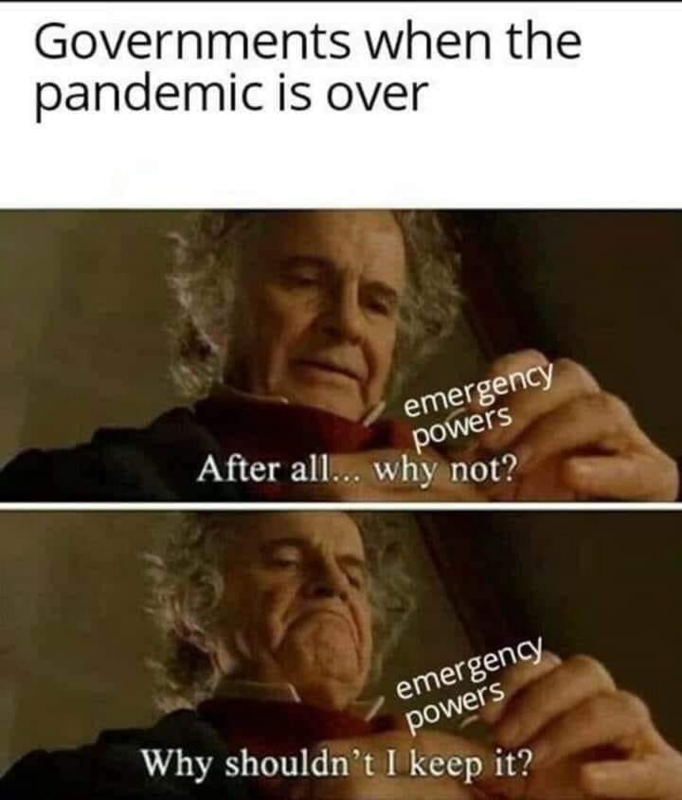
The relationship between our governing authorities and the public today bears many similarities to the abuser-victim dynamic. Facing a bully, it is futile to hope that the bully will relent if you don’t resist. Acquiescence invites further humiliation. Similarly, it is wishful thinking to hope that the authorities will simply hand back the powers they have seized over the course of the pandemic. Indeed, if our rights and freedoms exist only by the whim of those authorities, conditional on their decision to grant them, then they are not rights and freedoms at all, but only privileges. By its nature, freedom is not something one can beg for; the posture of begging already grants the power relations of subjugation. The victim can beg the bully to relent, and maybe he will — temporarily — satisfied that the relation of dominance has been affirmed. The victim is still not free of the bully.
That is why I feel impatient when someone speaks of “When the pandemic is over” or “When we are able to travel again” or “When we are able to have festivals again.” None of these things will happen by themselves. Compared to past pandemics, Covid is more a social-political phenomenon than it is an actual deadly disease. Yes, people are dying, but even assuming that everyone in the official numbers died “of” and not “with” Covid, casualties number one-third to one-ninth those of the 1918 flu; per-capita it is one-twelfth to one-thirty-sixth. As a sociopolitical phenomenon, there is no guaranteed end to it. Nature will not end it, at any rate; it will end only through the agreement of human beings that it has ended. This has become abundantly clear with the Omicron Variant. Political leaders, public health officials, and the media are whipping up fear and reinstituting policies that would have been unthinkable a few years ago for a disease that, at the present writing, has killed one person globally. So, we cannot speak of the pandemic ever being over unless we the people declare it to be over.
Of course, I could be wrong here. Perhaps Omicron is, as World Medical Association chairman Frank Ulrich Montgomery has warned, as dangerous as Ebola. Regardless, the question remains: will we allow ourselves to be held forever hostage to the possibility of an epidemic disease? That possibility will never disappear.
Another thing I’ve been hearing a lot of recently is that “Covid tyranny is bound to end soon, because people just aren’t going to stand for it much longer.” It would be more accurate to say, “Covid tyranny will continue until people no longer stand for it.” That brings up the question, “Am I standing for it?” Or am I waiting for other people to end it for me, so that I don’t have to? In other words, am I waiting for the rescuer, so that I needn’t take the risk of standing up to the bully?
If you do put up with it, waiting for others to resist instead, then you affirm a general principle of “waiting for others to do it.” Having affirmed that principle, the forlorn hope that others will resist rings hollow. Why should I believe others will do what I’m unwilling to do? That is why pronouncements about the inevitability of a return to normalcy, though they seem hopeful, carry an aura of delusion and despair.
In fact, there is no obvious limit to what people will put up with, just as there is no limit to what an abusive power will do to them.
H/T to Perry de Havilland for the link.
Comments Off on The bully doesn’t actually want you to do this one thing they demand, they want your constant submission to all demands
December 17, 2021
Scott Alexander on the risk of ancient plagues returning
The other day, Scott Alexander responded to a hair-on-fire New York Magazine piece of hysteria-mongering about climate change warming up arctic zones that may still harbour ancient plagues that can return:
I’m a little nervous talking about this, because I am not a microbiologist. But I haven’t seen the proper experts address this properly, so I’ll try, and if I’m wrong you guys can shout me down.
(Also, the real microbiologists are apparently “self-injecting [3.5 million year old bacteria] just out of curiosity” and we should probably stay away from them for now)
I think we probably don’t have to worry very much about ancient diseases from millions of years ago.
Animal diseases can’t trivially become contagious among humans. Sometimes an animal disease jumps from beast to man, like COVID or HIV, but these are rare and epochal events. Usually they happen when the disease is very common in some population of animals that lives very close to humans for a long time. It’s not “one guy digs up a reindeer and then boom”.
If a plague is so ancient that it’s from before humans evolved, it’s probably not that dangerous. In theory, it could be dangerous for whatever animal it originally evolved for — a rabbit plague infecting rabbits, or an elephant plague infecting elephants. And then maybe after many rabbits are infected, some human might eat an infected rabbit and get unlucky, and the plague might mutate to affect humans. But I don’t think this is any more likely than any of the zillion plagues that already infect rabbits jumping to humans, and nobody is worrying about those.
The story about anthrax is a distraction. The fact that someone got anthrax from a corpse frozen in permafrost is irrelevant; there is anthrax now, and you could get it from a perfectly fresh corpse or living animal if you wanted. It’s adapted to animals and it can’t spread from person to person. Just because you got an irrelevant-to-humans modern animal disease when you dug up a modern animal, doesn’t mean you’re going to get a dangerous-to-humans disease from an ancient animals.
But I’m more concerned about recent human plagues coming back.
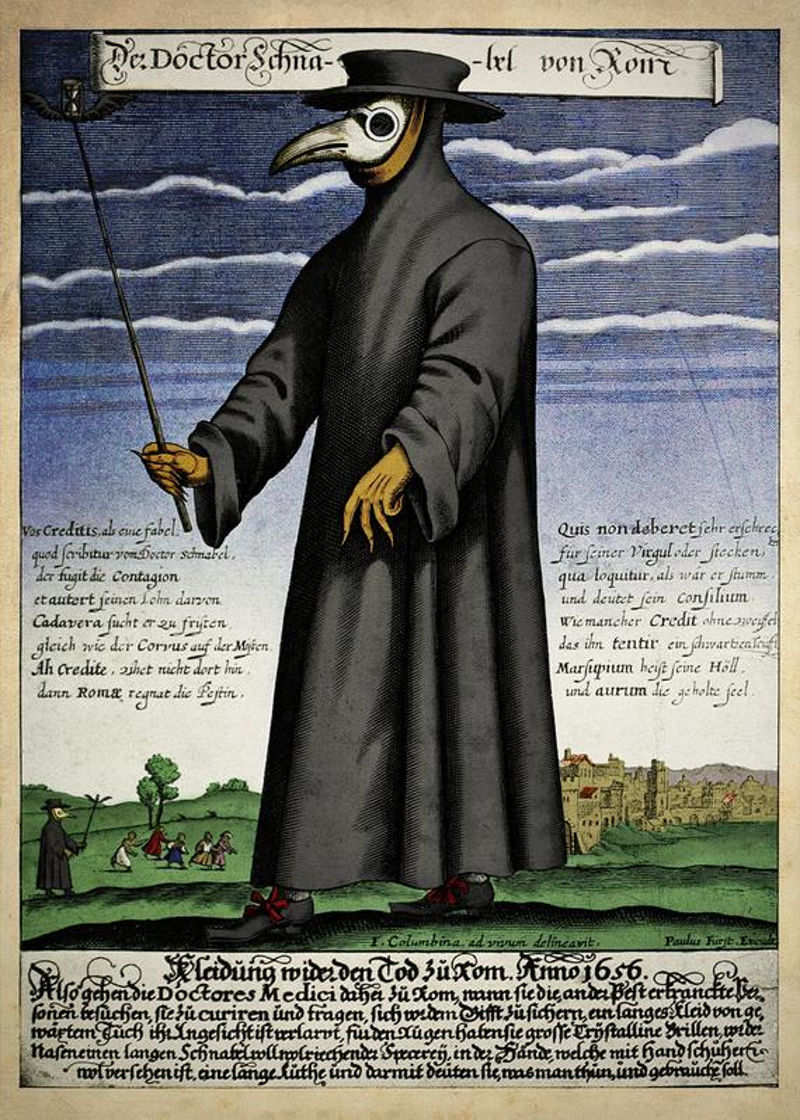
Not bubonic plague; that one is another distraction. The reason we don’t get more Black Deaths isn’t because yersinia pestis died off or mellowed out. It’s because we have good sanitation and pest control.
And doctors whose knowledge of medicine doesn’t begin and end with “look like a creepy bird”
But the 1918 Spanish flu has, as far as I know, legitimately died out. Lots of people like saying that in a sense it’s still with us. This NEJM paper (with a celebrity author!) points out that it’s the ancestor of all existing flu strains. But most of these flu strains are less infectious than it was. This didn’t make sense to me the first, second, or third time I asked about it: why would a flu evolve into an inferior flu? Sure, it might evolve into a less deadly flu because it’s perfectly happy being more infectious but less deadly. But I think the Spanish flu was also especially infectious; so why would it evolve away from that?
Comments Off on Scott Alexander on the risk of ancient plagues returning
December 14, 2021
The Omicron variant of the Wuhan Coronavirus
Jim Treacher gets to the essential question about the dreaded and fast-spreading Omicron variant that the media somehow always forgets to ask:
We’ve seen a lot of headlines about the Omicron variant, which is the latest thing we’re all supposed to panic about. That’s how it works: You must be driven into a perpetual state of hysteria. You must never be allowed a moment to stop and catch your breath and think about what’s happening, because you might fall into badthink. The latest name for that is Omicron.
Omicron! OMG!! Run around like a headless chicken!!!
But here’s a question that none of our moral, ethical, and intellectual betters in the press are asking, because they have no incentive to ask: How many people have died of Omicron?
Like, in the entire world. It doesn’t need to be a precise number. A rough estimate is fine. You can round up to the nearest 10.
Anybody? Hello?
I’m not sure how trustworthy Snopes is, but they say the number so far is … zero.
Zip.
Zilch.
Goose egg.
1 – 1.
None.
So please excuse me if I don’t freak the hell out every time somebody gets Omicron. Every story about it lists the number of cases but glosses over minor little details. Like what happens to the people who get it.
Do they get sick?
If so, how sick do they get?
If not, what’s the problem?
The media is just selling fear, as usual. Yes, COVID-19 is real, and a lot of people have died. No, nobody is dying from this Omicron variant. That’s good news, which is why the “news” isn’t interested.

Of course, on the weekend British PM Boris Johnson announced the death of someone in Britain who had contracted the Omicron variant … but it’s not clear if the person’s death was a direct result of that infection. So, we know at least one person has died with the Omicron variant, but we don’t know if it was from it.
Comments Off on The Omicron variant of the Wuhan Coronavirus
December 11, 2021
QotD: In praise of getting stinkin’ drunk
Slingerland admits the problem of problem drinking. Yet he convincingly argues that the downside of booze has been addressed at length over the last 30 or 40 years. It’s time, he observes, for some pushback against the “puritanical discomfort with pleasure lurking in the background of scholarly discourse.” Slingerland decries “our current age of neo-prohibition and general queasiness about risk,” and exports “the simple joy of feeling good.”
Slingerland, a philosopher at the University of British Columbia in Canada, then goes even further, positing that by causing humans “to become, at least temporarily, more creative, cultural, and communal … intoxicants provided the spark that allowed us to form truly large-scale groups.”
That is to say, without Budweiser and red wine, civilization might not have been possible. For our ancestors, intoxication was “a robust and elegant response to the challenges of getting a selfish, suspicious, narrowly goal-oriented primate to loosen up and connect with strangers.” Brewing vats and drinking vessels were found at a 12,000-year-old site in Turkey. When humans began to sow crops and domesticate livestock, it allowed us to get over distrust and work in larger numbers, giving rise to towns and then cities. Slingerland: “It is no accident that, in the brutal competition of cultural groups from which civilizations emerged, it is the drinkers, smokers and trippers who emerged triumphant.”
Mark Judge, “Drunk: The Vital Pleasure of Getting Hammered”, SpliceToday, 2021-09-01.
Comments Off on QotD: In praise of getting stinkin’ drunk
December 10, 2021
QotD: The media and the replication crisis
Warren Meyer, “A Couple of Thoughts on Medical Studies Given Recent Experience”, Coyote Blog, 2021-08-31.
Comments Off on QotD: The media and the replication crisis
December 8, 2021
Pandemic authoritarianism in the EU will be the death of Europe’s liberal traditions
In Spiked, Brendan O’Neill says we’re watching the “death of Europe” driven by the authoritarian instincts of government and EU leaders in thrall of public health officials:
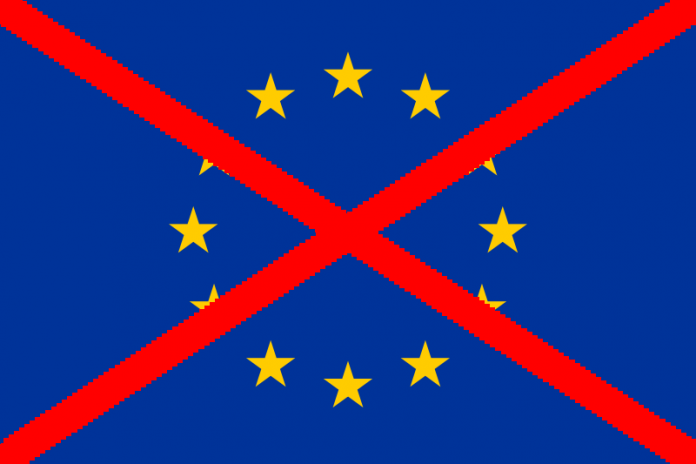
Europe is on a precipice. It has marched, blindly, towards something very much resembling tyranny. Austria will shortly criminalise those who refuse the Covid vaccine. Germany looks set to follow. Ursula von der Leyen, president of the European Commission, is wondering out loud if every member state should do likewise and make offenders of those who reject this form of medication. In Italy you are deprived of your livelihood rather than your liberty if you say no to vaccination: the unvaxxed are not permitted to work. Anywhere. In Greece, everyone over the age of 60 must pay the government 100 euros for every month they remain unvaxxed. As if the Greek government, in cahoots with its masters in Brussels, had not immiserated Greek pensioners enough already.
Police in Rotterdam opened fire on people protesting against Covid restrictions. Three were seriously injured. Austrian cops have wielded batons and shields against the thousands who took to the streets of Vienna to say no to mandatory vaxxing. In Brussels, the black, bureaucratic heart of the EU project, water cannons and tear gas were unleashed upon citizens agitating against vaccine passes. The irony is almost too much: in the European quarter of Brussels, the very part of Europe in which the modern European sensibility was forged by politicians, experts and technocrats, ordinary people make a blow for freedom and the forces of this supposedly liberal new continent beat them down. Rarely has modern Europe’s bluster about “human rights” and “respect” been so savagely exposed.
What is happening in Europe right now is nothing short of terrifying. We are not merely witnessing another round of Covid restrictions. This isn’t just the introduction of another set of emergency measures that some people believe are necessary to stave off the latest Covid wave and the Omicron threat lurking on the horizon. No, we are living through a chilling overhaul of the entire relationship between the state and the individual, with the state empowered to such an extraordinary degree that it can now instruct its citizens on what to inject into their bodies, and the individual so politically emaciated, so denuded of rights, that he no longer even enjoys sovereignty over himself, over that tiny part of the world that is his own body and mind. We are witnessing the violent death of European liberalism and the birth pangs of a new and deeply authoritarian era.
Many seem not to recognise how serious a development mandatory vaccination is. Even those of us who are pro-vaccination, who have been happily vaxxed against Covid-19, should look with nothing less than horror upon the proposal that it should be an offence not to be vaccinated; that a citizen should be fined thousands upon thousands of euros if he refuses this treatment. One of the ideas being discussed in Austria ahead of its mandatory vax law that will be introduced in February is that citizens who refuse vaccination will be summoned to a local court. If they ignore the summons twice they will face a fine of 3,600 euros. If they continue ignoring the state’s demand that they receive medical treatment that they do not want, they’ll be fined 7,200 euros. These are life-ruining fines. There is no talk – yet – of imprisoning people who reject the vaccine, but the Austrian state is making it crystal clear that it will happily wield its power to propel the unvaxxed into destitution.
[…]
This spells the end of freedom as we know it. Bodily autonomy is the foundation stone of self-government, and self-government is the thing that gives freedom meaning. If we do not enjoy sovereignty over our minds and our flesh, then we are not free in any meaningful way. And it won’t just be the minority of people who feel forced to receive the vaccine whose freedom will suffer under this new regime of state power over people’s bloodstreams and muscles and flesh – everyone’s freedom will. The state diktat determining that only those who receive a certain form of medical treatment will get to enjoy freedom will make freedom itself contingent upon doing what the state wants you to. Even the vaxxed will not be truly free people in this world. Rather, we will be the beneficiaries of state favour, the enjoyers of small privileges, in return for our agreeing to receive an injection. We will have a license from on high to go about our daily lives. And we will know that that license could swiftly be revoked if we refuse medical treatment in the future. The redefinition of “freedom”, the making of liberty contingent upon submission to medicine, will throttle the rights of all of us – vaxxed and unvaxxed alike.
Comments Off on Pandemic authoritarianism in the EU will be the death of Europe’s liberal traditions
QotD: Self-bullying
This tragic event inspired a research project by Sameer Hinduja and colleagues at the Cyberbullying Research Center in Florida. Their analysis of around 5,500 teenagers produced some surprising results: “We knew we had to study this empirically,” Hinduja remarked, “and I was stunned to discover that about 1-in-20 middle- and high-school-age students have bullied themselves online. This finding was totally unexpected, even though I’ve been studying cyberbullying for almost 15 years.”
Boys reported digital self-harm more often (7.1 percent) than girls (5.3 percent). Asked why they participated in such behaviour, their replies included: “I already felt so bad with myself that I wanted to make myself feel even worse” and “I wanted to see if someone really was my friend.” However, there were also those who claimed that they did it to justify their aggressive behaviour towards others, or just for fun, to see how others would react.
If teenagers are prepared to harm themselves in cyberspace to attain the status of victim, it should not be especially surprising that some adults do so in the real world. In the most notorious example of this behaviour, actor Jussie Smollett told police he had been the victim of a racist and homophobic attack on January 20th, 2019. He immediately found himself at the centre of media attention and public opinion. But the subsequent investigation revealed that Smollett had paid two men to assault him and that he had sent himself the threatening letters he had received the week before.
This was not an isolated incident. In his book Hate Crime Hoax, political scientist Wilfred Reilly analysed 346 alleged hate crimes and found that fewer than a third were genuine. He provides detailed descriptions of almost a hundred high-profile cases that never actually happened, most of which were supposed to have taken place on university campuses. Reilly concludes that, contrary to popular belief, we are not experiencing an epidemic of hate crimes, but an epidemic of hate crime hoaxes perpetrated by people searching for public attention and sympathy.
Nor is it only hate crimes that are the subject of hoaxes and false accusations. A meta-analysis conducted by Australian scholars Claire E. Ferguson and John M. Malouff in 2015 revealed that as many as 5.2 percent of all reported rape cases are false. The authors note, however, that their analysis only accounts for accusations that were disproven in the course of investigations — many others were never confirmed or were withdrawn for reasons unknown.
Tomasz Witkowski, “The Victims’ Race”, Quillette, 2021-08-27.
Comments Off on QotD: Self-bullying
December 7, 2021
Sarah Hoyt on the nonsense of so many pandemic measures
Posting at Instapundit, Sarah Hoyt lists some of the many, many poor and even counter-productive public-health-theatre measures most western governments have been indulging in since the beginning of 2020:

Wuhan Institute of Virology.
Wikimedia Commons.
Let’s say you’re one of those insane people who dismissed the low numbers of death/serious illness aboard the Diamond Princess because apparently people on cruise ships have “top quality medical care” (Coo-ey! Is the sky made of candy floss in your world?) in what world — even a candy floss sky one — did it make sense to close local grocery stores but keep Walmart open? In what world did it make sense to direct flow in stores so everyone crammed in through the same door, and everyone walked the same path (thereby a crowded/grimy, etc. path)? In what world did reducing hours of stores make sense? In what world did it make sense to wear a mask to your table then remove it to eat? (Are you less contagious when sitting?) In what world did curfews make sense? In what world did mask mandates outside in botanic gardens and zoos make sense? In what world did it make sense that you were hectored for getting out and driving around, while remaining your car?
In what world did the government stomp on every — no matter how crackpot or inocuous — rumored treatment? In what world, despite all studies to the contrary, do two layers of thin fabric stave off viral infection? In what world are doctors and nurses laid off by the thousands during a supposed pandemic? And finally in what world does it make any sense that a completely ineffective — if not (the numbers are not trustworthy in the sense that we can’t trust anything from collection to reporting, but in the UK there are indications that way) counterproductive — vaccine is being forced on the population by government mandate?
The deaths of so many people — thanks to dodgy statistical reporting and frequent moving-the-goalpost sleights of hand we may not know exactly how many — are tragic, but the deliberate destruction of public trust in our governments, healthcare systems, and media reporting will continue for a long, long time to come. The Wuhan Coronavirus has not been the civilization-wrecker we were all told to fear, but the breakdown in trust will make us all more vulnerable the next time a serious disease strikes. Trust is earned, slowly, and rebuilding lost trust will be a much slower process.
Comments Off on Sarah Hoyt on the nonsense of so many pandemic measures
December 4, 2021
Things I never expected to read on the CBC website — “…frantically firing up the gaslights and moving the goalposts on COVID restrictions and vaccinations”
Canada’s state broadcaster has been — as you would expect — a staunch supporter of every government initiative to limit free speech and the rights of Canadians in tackling the Wuhan Coronavirus pandemic. They’ve consistently portrayed any concerns or doubts about draconian government action as irrational, anti-science conspiracy theories and the people raising such concern as effectively “enemies of the people”. As such, I never expected to see anything like this CBC Opinion piece by Allan Richarz:
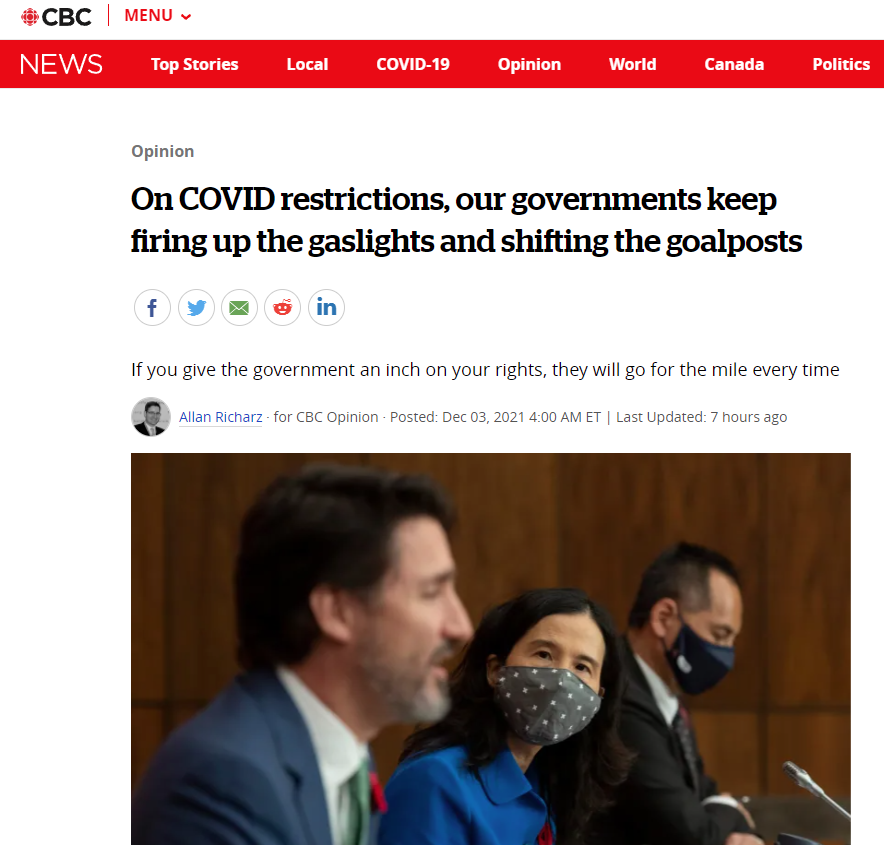
Listen closely and one might be able to discern the unmistakable sounds of our elected and unelected officials frantically firing up the gaslights and moving the goalposts on COVID restrictions and vaccinations.
It was a precipitous but inevitable shift from “two weeks to flatten the curve” to get the jab or lose your job, and unsurprisingly, there is still more to come.
Met the provincial vaccination targets? Great; but now it’s time for a booster. Ready for the “temporary” vaccine passport system to expire? Sorry, we need to extend it through spring; proving once again that if you give the government an inch on your rights, they will go for the mile every time.
Less than a year ago, government and public health officials touted vaccination as a panacea to end the pandemic. It’s safe, effective and will allow the country to put COVID behind us, we were told. To that end, citizens were encouraged, prodded and eventually threatened to get their shots, with holdouts demonized by politicians at all levels. Yet, in Ontario, even as the province exceeded by weeks its vaccination and case number targets of the government’s phased reopening plan, citizens were offered only breadcrumbs in return: moving up Phase 3 reopening by just a few days, with no plans at the time for a complete reopening.
And now, with new case numbers in Ontario essentially split evenly between the unvaccinated and fully vaccinated and questions about waning vaccine efficacy, the goalposts shift again with the rollout of booster shots elsewhere in the country and calls for expanded eligibility.
One does not need to look hard to guess what the next step will be across Canada. In Israel and France, the definition of fully vaccinated was changed to include boosters; those six months out from their second dose, or first booster, are now considered unvaccinated, and their vaccine passport privileges suspended.
H/T to SDA for the link.
Comments Off on Things I never expected to read on the CBC website — “…frantically firing up the gaslights and moving the goalposts on COVID restrictions and vaccinations”
December 3, 2021
“Power corrupts and absolute power …” is something governments are not eager to give up, post-pandemic
Miguel Castaneda quotes Lord Acton’s famous aphorism (which I truncated in my headline) and warns of the consequences of giving governments too much power:
“Power corrupts and absolute power corrupts absolutely”. The words of Lord Acton, a fierce opponent of state power, are sadly no less relevant today than they were at his time of writing.
Over the past 20 months, the authoritarian approach of Western leaders has been justified by our representatives as a necessary response to a global emergency. Whether that’s true or not is up for discussion, however, one thing remains clear: such attitudes have handed governments a level of power that, left unchecked, severely curtails individual rights.
This path is not unique to the UK, nor is it unique to Europe. We’re seeing a near global normalisation of state overreach. Lockdowns in many liberal democracies have been brought in suddenly and without thorough scrutiny.
In this country, at no point were other methods to address the pandemic tested. They were barely even suggested. And with little counter from the mainstream media, the UK and others have normalised shutting down the country for the purpose of virus control.
It was only a few months ago that Australia locked over 5 million people after identifying a single case. A severe overreaction which likely contributed to the dramatic fall in Australian Prime Minister Scott Morrisson’s approval ratings of the handling of the pandemic, which fell from 85 per cent at the start of the pandemic to 47 per cent in the latest poll in August.
A commonly overlooked consequence of these authoritarian practices is the precedence it sets for how governments can and should act when faced with novel challenges. It has been predicted that future pandemics will become more frequent, and perhaps more deadly. Are we going to react again by shutting entire populations in their homes?
Looking to the continent, the ease at which governments are bringing in authoritarian measures should be an international scandal. Take Austria, where a national lockdown has just been extended until at least December 11th. Or Germany, which has announced today a de facto lockdown for the unvaccinated, and is debating bringing in a policy of mandatory vaccinations.
This extreme way of thinking is a new virus spreading across the Western world. Spain, France, Italy, Greece and Australia have all seen similar policies introduced.
Comments Off on “Power corrupts and absolute power …” is something governments are not eager to give up, post-pandemic


