Quotulatiousness

March 19, 2023

Ron DeSantis as an American Neville Chamberlain

Filed under: Media, Politics, USA — Tags: , , , , , — Nicholas @ 05:00

Andrew Sullivan points out the inanity of comparing Florida Governor and potential presidential candidate to former British PM Neville Chamberlain over DeSantis not including the idea of increasing support to Ukraine as “a new Munich”:

Governor Ron DeSantis speaking with attendees at the 2021 Student Action Summit hosted by Turning Point USA at the Tampa Convention Center in Tampa, Florida on 18 July, 2021.
Photo by Gage Skidmore via Wikimedia Commons.

For a written statement on foreign policy from a potential presidential candidate, it was, I suppose, a big deal. The salient sentence from Governor Ron DeSantis:

    While the U.S. has many vital national interests — securing our borders, addressing the crisis of readiness with our military, achieving energy security and independence, and checking the economic, cultural and military power of the Chinese Communist Party — becoming further entangled in a territorial dispute between Ukraine and Russia is not one of them.

It’s open to some interpretation. DeSantis says the Ukraine war is not in the “vital national interests” of the US, but is it maybe still in our general interests? Not clear. And he commits to no further entanglement, which could mean sticking with where we are now, but no more. Sure: no F-16s. But that’s also Biden’s position.

“Territorial dispute?” That set a lot of people off. But of course it’s undeniably, at some level, a border dispute. The entire post-Soviet settlement was a redrawing of national borders — and marked an extraordinarily rapid advance of Western arms and allies to the edge of Russia itself. In any kind of perspective, the current war has come at the end of that now-disputed settlement, and is indeed a debate over where Russia ends and Ukraine — which literally means “borderland” — begins. DeSantis didn’t blame Ukraine for its self-defense. He didn’t defend Putin. He merely proffered a different view of vital US national interests in the medium-term.

The gall!

The Blob declared another “Munich!” — an ancient neocon ritual — and declared the DeSantis candidacy all-but-over. Chris Christie called DeSantis “Neville Chamberlain“; Chuck Schumer asked, “I have to wonder what [DeSantis] would’ve thought if he was around in the 1930s”; Jenn Rubin called DeSantis “pro-Putin“; and the WSJ warned of a return to “isolationism in the 1930s”. This morning, the WaPo dusted down and wheeled out their perennial “appeasement!” editorial. And we got a French-Brooks double-whammy direct from 1983. Churchill envy never dies.

And I’m sorry. But I don’t get it. It is surely perfectly fine for a country to have two political parties that differ on foreign policy. In fact, it’s a critical advantage that democracies have over more rigid regimes: it helps us correct mistakes in time (and sometimes not), change personnel, and adjust to an always changing reality.

And in the 21st century, after the collapse of the imperial ideologies of the 20th, the role and reach of the United States is legitimately open to debate. It makes sense that one party would be more interventionist and one would be less so; it makes even more sense for the conservative party to be the one more skeptical of wars, small and large, and the unintended consequences they invariably entail.

That’s what’s happening — partly in reaction to the catastrophic, and bipartisan, hyper-interventionism of the first two decades of this century, and partly because of the rise of China. And it’s a good, normalizing thing. It will keep pressure on Biden not to escalate any further; and force us to think through the ugly compromises that will almost certainly confront us in the future. DeSantis’ position is pretty much where Obama was on Ukraine — and Obama was not some far-right fanatic. Money quote:

    The fact is that Ukraine, which is a non-NATO country, is going to be vulnerable to military domination by Russia no matter what we do. … We have to be very clear about what our core interests are and what we are willing to go to war for. And at the end of the day, there’s always going to be some ambiguity.

Replace “core” with “vital” and it’s DeSantis’ outrageous position. Yes, Putin miscalculated badly and invaded Ukraine, which means a new situation, and defense of Ukraine. But the core reality of America’s and Russia’s interests is unchanged. And Putin is not in command of a huge war economy and occupying the Sudetenland. He’s stuck in Eastern Ukraine, for Pete’s sake, and can barely move. China is maneuvering to counter and exploit our escalation. We need flexibility. What we absolutely do not need is some kind of shrill, bipartisan consensus on yet another war — and the usual McCarthyite smears of critics.

Disagree with the Canadian government’s attempt to take over significant parts of the internet? Get ready for administrative punishment, citizens!

Michael Geist, who often seems like the only person paying close attention to the Canadian government’s growing authoritarian attitudes to Canadians’ internet usage, shows the utter hypocrisy of the feds demanding access to a vast array of private and corporate information on a two-week deadline, when it can take literally years for them to respond to a request for access to government information:

Senator Joe McCarthy would be in awe of the Canadian government’s audacious power grab.
Library of Congress photo via Wikimedia Commons.

The government plans to introduce a motion next week requiring Google and Facebook to turn over years of private third-party communication involving any Canadian regulation. The move represents more than just a remarkable escalation of its battle against the two tech companies for opposing Bill C-18 and considering blocking news sharing or linking in light of demands for hundreds of millions in payments. The motion – to be introduced by the Parliamentary Secretary to the Minister of Canadian Heritage (yes, that guy) – calls for a series of hearings on what it describes as “current and ongoing use of intimidation and subversion tactics to avoid regulation in Canada”. In the context of Bill C-18, those tactics amount to little more than making the business choice that Heritage Minister Pablo Rodriguez made clear was a function of his bill: if you link to content, you fall within the scope of the law and must pay. If you don’t link, you are out of scope.

While the same committee initially blocked Facebook from even appearing on Bill C-18 (Liberal MP Anthony Housefather said he was ready for clause-by-clause review after just four hearings and no Facebook invitation), bringing the companies to committee to investigate the implications of their plans is a reasonable approach. But the motion isn’t just about calling executives before committee to answer questions from what will no doubt be a hostile group of MPs. The same motion sweeps in the private communications of thousands of Canadians, which is a stunning disregard for privacy and which could have a dangerous chilling effect on public participation. Indeed, the intent seems fairly clear: guilt by association for anyone who dares to communicate with these companies with an attempt to undermine critics by casting doubt on their motivations. Note that this approach is only aimed at those that criticize government legislation. There has been a painfully obvious lobbying campaign in support of the bill within some Canadian media outlets, but there are no efforts to uncover potential bias or funding for those that speak out in favour of Bill C-18, Bill C-11, or other digital policy initiatives.

It is hard to overstate the broad scope of the disclosure demands. Canadian digital creators concerned with Bill C-11 who wrote to Youtube would find their correspondence disclosed to the committee. So would researchers who sought access to data from Google or Facebook on issues such as police access to social media records or anti-hate groups who contacted Facebook regarding the government’s online harms proposal for automated reports to law enforcement. Privacy advocates focused on how Google administers the right to be forgotten in Canada would ironically find their correspondence disclosed as would independent media sites that wrote to Facebook about the implications of Bill C-18.

March 18, 2023

“Strongmen” all run the same basic “playbook” says scholar

Filed under: Books, History, Politics — Tags: , , , , , — Nicholas @ 04:00

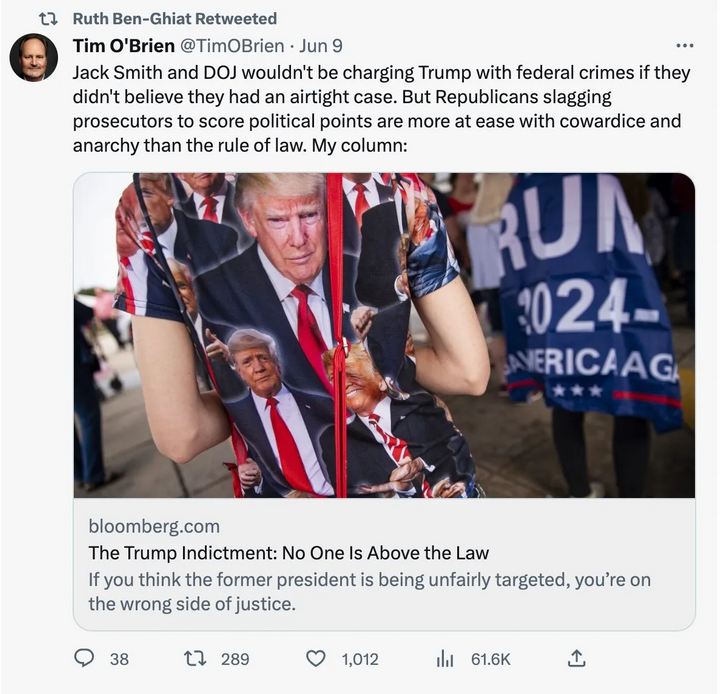
Chris Bray considers the arguments made by Ruth Ben-Ghiat that ropes every “strongman” together into a single, coherent strategy that applies at all times and under all circumstances:

Holocaust scholars have always argued from every possible perspective, and will always argue from every possible perspective, about causation. There’s a school gathered around “No Hitler, no Holocaust”, and there’s Zygmunt Bauman, who barely mentions the man in an argument about the inherently dehumanizing tendencies of the modern bureaucratic state. Christopher Browning depicts a battalion of Order Police participating in state-organized mass killing because of cowardice, habitual obedience, and social compliance; Daniel Goldhagen replies that no, Germans killed Jews because Germans hated Jews, full stop. But in this extraordinary diversity of voices, there is argument. If you ask, why did this happen?, many answers follow — growing out of questions about the operation of power, the limits of moral agency, the basic human willingness to comply, and so on, that aren’t easy to answer.

Then comes 21st century American political scholarship.

Here’s how the publisher explains this book:

    Ruth Ben-Ghiat is the expert on the “strongman” playbook employed by authoritarian demagogues from Mussolini to Putin—enabling her to predict with uncanny accuracy the recent experience in America and Europe. In Strongmen, she lays bare the blueprint these leaders have followed over the past 100 years, and empowers us to recognize, resist, and prevent their disastrous rule in the future …

    Vladimir Putin and Mobutu Sese Seko’s kleptocracies, Augusto Pinochet’s torture sites, Benito Mussolini and Muammar Gaddafi’s systems of sexual exploitation, and Silvio Berlusconi and Donald Trump’s relentless misinformation: all show how authoritarian rule, far from ensuring stability, is marked by destructive chaos.

All that stuff is the same, see, “from Mussolini to Putin”. Pinochet and Berlusconi are the same, Russia and Italy are the same, new postcolonial nations and old reborn nations are the same, resource economies and service economies are the same, 1922 is 2016, modern culture is postmodern culture, mass media is social media — all in a blended mass of social reality and cultural factors, turning the March on Rome and mean tweets into the same “playbook”, which is also the same “blueprint”.

What caused the Bolshevik revolution? Lenin said so. What caused the Holocaust? Hitler said so. Why was there political violence in Chile? Pinochet said so. You can see the richness and complexity of single-actor history with blueprints and playbooks.

Turning the urgent precision of this analysis to the task of understanding contemporary politics, scholars know that Trump’s personality is very bad, but is DeSantis more badderer in the badness of his mean and bad personality? Does he use the playbook, exactly like Lenin and Mobutu Sese Seko? Is he running Florida just like the Congo? (Is Kristi Noem precisely identical to Joe Stalin, Idi Amin, and Tiberius? Depends on how she does in the primaries.)

It’s politics without politics, stripped of systems, processes, principles, historical uniqueness, geographic and economic factors, and competing forces in culture and society. Political power is a weight falling off a table onto a lever; the leader acts, his instruments are acted upon, and the machine of society moves according to the force and direction applied by the leader. Is it significant that our particular political moment is postindustrial, urbanizing, and increasingly made up of social and economic interactions mediated through an electronic screen? No, Trump is using Lenin’s playbook. Politics is all the same, and entirely about names and personalities.

If not “woke”, then what should we call it?

Filed under: Media, Politics, USA — Tags: , , , — Nicholas @ 03:00

Freddie deBoer devoutly hopes for a proper term to use instead of the by-now highly pejorative term “woke”:

As I have said many times, I don’t like using the term “woke” myself, not without qualification or quotation marks. It’s too much of a culture war pinball and now deemed too pejorative to be useful. I much, much prefer the term “social justice politics” to refer to the school of politics that is typically referred to as woke, out of a desire to be neutral in terminology. However: there is such a school of politics, it’s absurd that so many people pretend not to know what woke means, and the problem could be easily solved if people who support woke politics would adopt a name for others to use. No to woke, no to identity politics, no to political correctness, fine: PICK SOMETHING. The fact that they steadfastly refuse to do so is a function of their feeling that they shouldn’t have to do politics like everyone else. But they do. And their resistance to doing politics is why, three years after a supposed “reckoning”, nothing has really changed. (If there’s no such thing as the social justice politics movement, who made the protests and unrest of 2020 happen? The fucking Democrats?)

The conceit is that “woke” has even shaggier or vaguer boundaries than “liberal”, “fascist”, “conservative”, or “moderate”. And I just don’t think that’s true.

“Woke” or “wokeness” refers to a school of social and cultural liberalism that has become the dominant discourse in left-of-center spaces in American intellectual life. It reflects trends and fashions that emerged over time from left activist and academic spaces and became mainstream, indeed hegemonic, among American progressives in the 2010s. “Wokeness” centers “the personal is political” at the heart of all politics and treats political action as inherently a matter of personal moral hygiene — woke isn’t something you do, it’s something you are. Correspondingly all of politics can be decomposed down to the right thoughts and right utterances of enlightened people. Persuasion and compromise are contrary to this vision of moral hygiene and thus are deprecated. Correct thoughts are enforced through a system of mutual surveillance, one which takes advantage of the affordances of internet technology to surveil and then punish. Since politics is not a matter of arriving at the least-bad alternative through an adversarial process but rather a matter of understanding and inhabiting an elevated moral station, there are no crises of conscience or necessary evils.

QotD: Experts outside their field of expertise

… just because someone is really smart and successful at A does not necessarily mean their opinion on B is worth squat. As always, as a consumer of opinions, caveat emptor should always be the watchwords.

The first time I really encountered this phenomenon (outside of obvious examples such as the political and economic opinions of Hollywood celebrities) was related to climate change. I don’t see them as often today, but for a while it used to be very common for letters to circulate in support of climate change science signed by hundreds or thousands of scientists.

The list of signatures was always impressive, but when you looked into it, there was a problem: few if any of the folks who signed had spent any time really looking at the details of climate science — they were busy happily studying subatomic particles or looking for dark energy in space. It turned out most of them had fallen for the climate alarmist marketing ploy that opposition to catastrophic man-made global warming theory was by people who were anti-science. And thus by signing the letter they weren’t saying they had looked into it all and confirmed the science looked good to them, they were merely saying they supported science.

When some of them looked into the details of climate science later, they were appalled. Many have reached the same general conclusions that I have, that CO2 is certainly causing some warming but the magnitude of that warming or in particular the magnitude and direction of its knock on effects like floods or droughts or tornadoes, is far from settled science.

So it is often the case that people who show strong support for ideas or people outside of their domain do so for reasons other than having made use of their expertise and experience to take a deep dive into the issues. Theranos is a great example from the business world. Elizabeth Holmes convinced a bunch of men (and they were mostly all men — women seemed to have more immunity to her BS) who were extraordinarily successful in their own domains (George Schultz, the Murdochs, Henry Kissinger, Larry Ellison) to become passionate believers in her vision. Which is fine, it was a lovely vision. But they spent zero time testing whether she could really do it, and worse, refused to countenance any reality checks about problems Theranos was facing because Holmes convinced them that critics were just bad-intentioned people representing nefarious interests who wanted her vision to fail.

Warren Meyer, “People Who Express Opinions Outside of their Domain Seldom Have Really Looked into it Much”, Coyote Blog, 2019-05-28.

March 15, 2023

Mining the moon would be “harmful” to indigenous people, say activists

Filed under: Media, Politics, Science, Space, USA — Tags: , , , — Nicholas @ 03:00

Among the many, many things that are said to be harmful to indigenous culture we’re now told to include any kind of Lunar exploitation as modern colonialism:

Artist’s conception of Helium-3 mining on the surface of the Moon.
Image from Inhabitat.com

Humans have boldly ventured beyond the Earth into space for more than half a century now. It’s a testament to the ambition of the modern world.

And today, humanity is still more ambitious. A new space race is underway between the US and China to mine the Moon for rare metals. NASA is even hoping to establish a long-term presence on the Moon and eventually send humans to Mars.

But it seems that some scientists-cum-activists, in hock to identity politics, want to rein in that ambition. Speaking ahead of a US conference on the ethics of space exploration, held by the American Association for the Advancement of Science (AAAS) last week, astrobiologist Dr Pamela Conrad told the Guardian that space exploration, particularly efforts to mine the Moon, is in danger of becoming an exercise in “colonialism” and “exploitation”. Conrad warned that “if something that’s not here [on Earth] is seen as a resource, just ripe to be exploited, then that [perpetuates] colonialism”.

Conrad’s fellow panellist at the conference, Dr Hilding Neilson, went even further. According to Neilson, a member of the Native American Mi’kmaq people, indigenous people have a deep connection with celestial bodies like the Moon. They therefore have a more profound and, by implication, superior “way of knowing” the Moon compared with those advocating space exploration. The latter merely see the Moon “as a dead object to be conquered”, Neilson says – meaning that those advocating space exploration are “essentially cheering on the history of colonialism”.

There are so many problems with this argument it’s difficult to know where to start. Both Conrad and Neilson appear to be using the specific and brutal practice of “colonialism” to describe – and demonise – humanity’s attempt to master nature in general. That’s a flawed enough approach to take to the history of our growing mastery of nature on Earth. But it’s even more flawed in the context of space.

After all, there’s one big difference between laying claim to the resources of other countries under colonialism and attempting to mine the Moon – nobody lives on the Moon! So no one would be “exploited” or “colonised” if humans were to mine it. Space exploration is therefore not the same as colonialism.

QotD: The coming generation isn’t the Millennials … it’s Gen X

Filed under: History, Politics, Quotations, USA — Tags: , , , , — Nicholas @ 01:00

The reason this matters is: The whole thing now — St. George Floyd, the Kung Flu, the Seattle “autonomous zone”, all of it — is being portrayed as the revolt of the New New Left against the Old Left. It’s Alexandria Ocasio-Cortez vs. Nancy Pelosi (born 1940) … but lost in all of this is the fact that the next generation to take power won’t be the Millennials, it’ll be the Gen Xers. Those people born between 1965 and 1980(-ish)? You know, the “Slackers”? Did we all just kinda, umm, forget about them?

That’s your next layer of political and social control. The youngest of us are in their late 30s (again, using the broadest definition); most of us are well into middle age, and some of us are plunging headfirst into late middle age. The chiefs of police, the military’s senior staff officers (including, by now, some general and flag officers), the CEOs and CFOs … they’re not Millennials, they’re Xers.

Admittedly we’re a forgettable bunch. We didn’t get a chance at natural, healthy teenage rebellion, because our parents, the goddamn Boomers, claimed a monopoly on rebellion, so we had to be all, you know, like, whatever about it. The Boomers thought Andy Warhol was a serious artist and Bob Dylan a talented musician; is it any wonder that Kurt Cobain’s godawful caterwauling was the best we could do?

All of that is water under the bridge, of course. But here’s where it gets really, really meta: This great social upheaval is, for us, a copy of a copy. It’s people who were actually alive in the 1960s cosplaying The Sixties™ — just like they did the entire time we were growing up. Just as we had no template for teenage rebellion, we don’t really have a template for riots and whatnot either. Some of us have decided to crank it up to eleven — all of the most obnoxious Karens are Gen Xers — but lots of us … haven’t. I really have no idea just what the majority of my generational cohort is doing right now while our most vocal idiots are out Karening, in much the same way I have no idea what the majority of Silents were doing while the Chicago Seven were out doing their thing.

All I know is, there’s an entire layer of political power between AOC and Pelosi. We haven’t really seen it up until now, but it’s there. Is Gen X finally, at long last, going to get its shit together? I suspect that the real drama is still waiting in the wings.

Severian, “Talkin’ ’bout My Generation!”, Rotten Chestnuts, 2020-06-11.

March 14, 2023

“Strangely, my friends have a more negative view of the feminist movement than I do”

Filed under: Books, Media, Politics, USA — Tags: , , , — Nicholas @ 05:00

Bryan Caplan explains why he chooses to write the books he writes:

Almost by definition, writing controversial books tends to provoke negative emotional reactions. Anger above all. Anger which, in turn, inspires fear. And not without just cause; the sad story of Salman Rushdie sends shivers down the spine of almost any writer. If you write controversial books — or care about someone who does — you should be at least a little afraid of the anger your writing inspires.

[…]

In contrast, when I announced the imminent publication of Don’t Be a Feminist, the fear went through the roof. Several folks warned me of “career suicide”. Others told me that I had no idea what horrors awaited me. Friends staged mini-interventions on my behalf.

The underlying premise, naturally, was that the feminist movement is at once terribly powerful and horribly bad-tempered.

My best guess is that the warnings are overblown. Strangely, my friends have a more negative view of the feminist movement than I do. Whether my guess is right or wrong, though, all this intense, widespread fear really ought to trouble the feminist conscience.

If I said, “Hi” to one of my kids’ friends, and they responded by fleeing in terror, my reaction would be, “Did I do something to scare him?” I would ask my kids, “Why was he so afraid of me?” If such incidents started to repeat, I would be severely troubled. “I thought I came off as a friendly dad, but I guess I’m seen as an ogre.”

The same applies if I were a feminist, and I discovered that critics are literally afraid to criticize feminism. If only a few critics feared feminism, my question would be, “What did we do to scare them?” If I discovered that fear of feminism was widespread, a full soul-search would be in order. “I thought we came off as a friendly movement, but I guess we’re seen as ogres.”

And guess what? Fear of feminism plainly is widespread.

What, then, are feminists doing wrong? Above all, cultivating and expressing vastly too much anger. Sharing your angry feelings is an effective way to dominate the social world, but a terrible way to discover the truth or sincerely convince others. Maybe you don’t mean to scare others; maybe you’re just acting impulsively. Yet either way, the fear feminists inspire is all too real.

March 13, 2023

People in high places like “Pryam Farll”

Filed under: Media, Politics, Russia, USA — Tags: , , , , , , — Nicholas @ 05:00

Elizabeth Nickson on the kakistocratic “elites” of the west and the dangerous policies they’ve been pushing:

How our leaders are seen by the people, their prey.

Around early Trump, a character calling himself Pryam Farll acquired a host of “friends” on Facebook among the most influential intellectual activist/writers on the right. He claimed to be a member of the Danish Royal Family, related to Prince Phillip, who spent Christmas at Sandringham, mentored Prince Harry and who read Putin’s email. He hated Putin with all his strength, claimed to be a General in US Intelligence, had worked in Reagan White House, and spent his time dropping into NATO, the EU, and Defence Departments in countries adjacent to Russia in the service of marshalling power against Putin, surrounding him with armies and bases and, as it turns out, bioweapons labs. He was also, tongue-in-cheek, “6’8″, devastatingly handsome and mind-blowingly rich”. He posted a dozen times a day, hilarious, way too bright, and substantive. Around the time that the first lie emerged about the Russia Hoax, which he claimed to have helped invent, he said he was in at the War Office in Romania, and to “start no trouble whilst he worked”.

Then he vanished.

And whether he was a genius kid in the basement or a mock-up by MI6 counter-intelligence meant to influence the influential, he serves as a type, the type that got us into this mess, where we are ghost-walking into nuclear conflict. The British since McKinder have had it out for the Russians and Russia-hate is baked into their intellectual class. Did the U.S. blow up Nordstream? Maybe, maybe not, but we very probably paid for it. More like MI6 and General Farll did the deed, and theirs is the ghastly world we now inhabit.

The early neo-cons promoted war as a way to get the “common” people “exhilarated and unified”. Get them off rock and roll, sex and shopping onto a spiritual crusade for “democracy”, they thought, demonstrating one of the aspects of this type: they didn’t have much fun in high school.

Iraq 1 and 2 were a result of this thinking. And now Ukraine. This crowd has spent almost a decade since Trump’s throwaway remark that maybe we should ally with Russia, stirring up hate. This entirely, entirely to cover for their thefts and crimes. And now they present us with another opportunity to be exhilarated and unified. Aren’t we just blessed?

If the Ukraine had signed and executed Minsk 2, we wouldn’t be in this mess. This was created by slender boy-men like Antony Blinken and little-girl-women like Samantha Power and Victoria Nuland, playing the Great Game without any notion of the actual effect of their ambitions on those they see as servile nothings, good for tax dollars like us, or foreign meatsuits to bomb to death. They have killed or wounded 500,000 Ukrainians in the last two years. Britain alone has issued 190,000 visas to terrified Ukrainians. Soros’s 2014 Color Revolution, where they installed a puppet over an actually elected Russian-friendly President, started the rush and ever since it’s all Pryam Farll angling for nuclear conflict.

[…]

Of course this is all centered around the intellectual fatuity of the Davos plan to enslave humanity in a technocratic prison because “climate change”. Russia under Putin is rapidly reclaiming its thousand year old culture, reintegrating the church, refusing the revolting ambi-sexual garbage of our culture. Davos couldn’t tolerate that. Plus Davos Man wants Russian resources, the vast wealth locked up in the steppes and Siberian wastes can power unimaginable wealth. So, they are willing to destroy the culture that created Tolstoy. No other literature approaches Russia’s in its prime, nor is there a more transcendent music. This is what Big Money and Davos want to bend to the west’s corrupt values? Imagine the arrogance it takes to decide to destroy a 1000 year old culture. And one that is nuclear-armed. And to do it with the bodies of Ukrainians.

They will spend eternity experiencing the pain of those families they ruined in service of their vanity. The sooner we get rid of them, the better.

When did the “elites” of the West become so bumbling and incompetent?

Filed under: Government, Media, Politics, USA — Tags: , , , , — Nicholas @ 03:00

Chris Bray on the blatant decay of western political leadership on display at the #Twitterfiles hearing in Washington D.C.:

I should probably just go back to sleep for a decade, because Walter Kirn always has it covered:

I was trying to be clever about this yesterday, but it should be said plainly for the space aliens who eventually find the ruins of our former civilization and have to use the surviving digital evidence to report to their superiors on the collapse of the earth losers.

The most striking thing about the average member of the contemporary political class — the “elite”, and yes, I know — isn’t that they’re almost invariably wrong, or that they’re never interesting, or that they have no wisdom of any kind that ever shines through anything they do, ever. Instead, the most striking thing about the contemporary political class is that most of them can’t actually speak, in the sense that you ask them something and then they think and then words come out. Here, watch:

Even in the screenshot, her face is pointed downward at a piece of paper. She’s only ever reading. She’s looking at prepared questions and giving voice to a script, like a much dumber Anne Hathaway. And, yes, what the script says is idiotic — Matt Taibbi gets paid for his journalismz!!!!! (unlike members of Congress, who take a vow of poverty and work for free) — but the more interesting thing to me is that this person, in her fifty-trillionth term in Congress, can’t say what she thinks without reading it. Mr. Taibbi, it says on this piece of paper that you are a very bad person.

They don’t know anything. They don’t think anything. They have no ability, no insight, no value to offer. So they make our laws.

March 11, 2023

QotD: We used to call them “parlour pinks”

Leftists […] were, are, and always shall be nothing more than irritated butterflies. They don’t have to leave their ivy-covered ivory towers, so they won’t. They don’t know anyone who has ever killed so much as a mouse. When it comes right down to it, they find this whole “Revolution” business to be just … so … vulgar.

What’s life like in the Soviet Union? They neither know nor care, until the brute facts of life in the USSR are rubbed into their faces for so long that they have to acknowledge them. At which point they simply switch allegiances. Kolakowski’s essay doesn’t mention Paul Hollander’s Political Pilgrims, but they arrive at essentially the same conclusion — that instead of becoming disillusioned with Communism (Socialism, “social justice”) itself, the irritated butterflies of the Left grow disillusioned with a particular country or leader. The USSR has failed, yes, but — all together now! — “real Communism has never been tried”, so let’s put all our faith in Mao … and then Castro … and then Chavez, et cetera ad nauseam.

It’s all about maintaining the purity of the idea in the face of disappointing, vulgar, grubby reality. An honest-to-Marx Communist will come into plenty of contact with reality. A Leftist never will, because xzhey have convinced xzhemself that even the mugging they’re currently experiencing is a lofty and noble expression of authenticity. They’re willing to die for the Revolution, certainly — the urge for martyrdom has always been highly conspicuous on the Left. So long as they never feel that base, grubby, vulgar proletarian urge to defend themselves, they’ll be fine.

[…]

“Never cheer for your own.” When you come right down to it, that’s the Leftist motto. Leftists don’t deride “sportsball”, for instance, because they’re un-athletic little dweebs who were always picked last at recess (well, ok, not only that). It’s because cheering for a team, any team, is vulgar. It’s what grubby little proles do. (That’s another way to distinguish a Communist from a Leftist, by the way. Actual Commies love sports; look at all the resources the USSR poured into the Olympics, for instance. That’s because sports are good training for war).

Is Leftism curable? Can they be made to cheer for their own? Experience suggests that the cure will be very harsh indeed … if indeed it’s possible at all.

Severian, “Grubby Little Proles”, Rotten Chestnuts, 2020-05-31.

March 9, 2023

Then: “Never be the first to stop clapping”. Now: “In our culture of exhibitionism, silence is suspect”

Filed under: Britain, Politics — Tags: , , — Nicholas @ 04:00

Chris Bray cross-posted this article by Christopher Gage, who had a painful realization while waiting on hold for a human customer service rep at British Gas:

British Gas has traded the lovely Ludwig van (much too excellent for these advanced times) for a two-chord earwig we once glorified as polyphonic ringtones. Whilst captive to the receiver, British Gas snatches the opportunity to douse you, an innocent and increasingly frozen bystander, in the warm soup of its right-on philosophy.

British Gas is an inclusive company”, it purrs. “We believe all people, regardless of gender, ethnicity, or background, should be treated with dignity and respect.”

This divination, reader, was news to me. You see, I signed up to British Gas not for warm radiators and gas-lit stoves, but for the surreptitious fascism of a company with “British” in the name.

I assumed British Gas was firmly jackboots, shaved heads, and lumpy knuckles. On hold, I expected not a polyphonic ringtone but the greatest hits of Skrewdriver, with jaunty anthems such as “Keep Britain White” and “It’s All Because of The Jews”.

To my incomprehension, British Gas does not believe that Auschwitz was a holiday camp, nor, like Kanye West, that Hitler had his good points.

The horror. The horror.

Once you notice this culture of Obviousness, this modern theatre in which the captive audience is force-fed a diet of entirely humdrum beliefs shared by absolutely everyone save a few whack-jobs, you cannot unsee it.

A coffee shop I recently and regrettably frequented offered not only espresso and cortado and obscenely priced cheesecake but a syrupy treatise of that coffee shop’s founding beliefs. You’d think a coffee shop’s founding beliefs would be: “Buy coffee. Sell coffee.” No. This coffee shop was against all forms of discrimination.

Relentless is this modern culture of making the most obvious, universal statements and painting them as revolutionary.

When I decide I’d like gas piped into my home, or coffee piped into my stomach, my motivations hover around the middle of Maslow’s hierarchy of needs. Will this gas warm my home? Will this coffee induce a mild, somewhat enjoyable panic attack?

To reveal, like British Gas did, that one thinks all people should be treated with dignity and with respect is like revealing one doesn’t shit on a bus seat in full view of other passengers. That one is anti-shitting-in-public.

Much of the modern world is that episode of Seinfeld in which Kramer joins an AIDS march but refuses to wear the ribbon proclaiming his opposition to AIDS.

In our culture of exhibitionism, silence is suspect.

March 8, 2023

Perhaps the Prime Minister ran out of glitterbomb distractions?

Filed under: Cancon, China, Government, Media, Politics — Tags: , , — Nicholas @ 05:00

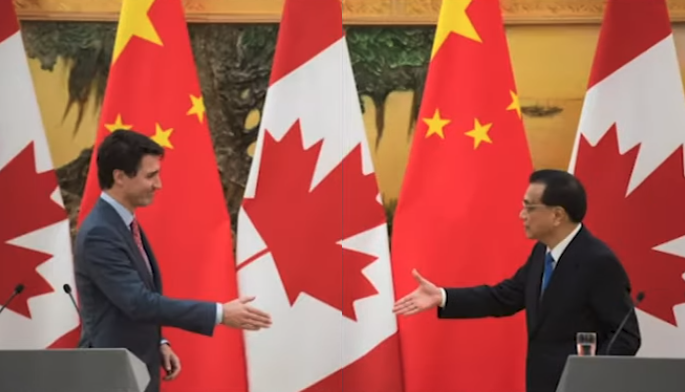
In The Line, Matt Gurney speculates on why the federal government needed to be “punched in the face” for literally weeks before finally taking (some) action:

Let’s acknowledge something right at the top: no one really knows what the hell the prime minister proposed yesterday. Not in any specific policy sense, at any rate. But boy, did we ever learn something about how the Liberals are viewing this politically.

After weeks of bobbing and weaving and throwing out fistfuls of increasingly ridiculous chaff, Justin Trudeau has belatedly agreed to a series of actions to probe Chinese electoral interference in Canada. And maybe other interference? We don’t know. We do know it’ll involve NSICOP, which is an acronym in desperate need of an agreed-upon pronunciation, if Monday’s press conference was any guide. NSICOP is a joint House-Senate committee that reviews various matters relating to Canada’s national security and intelligence (read this on its website and you’ll know more than 99.9 per cent of Canadians do about NSICOP). There’s also going to be a splash of the National Security and Intelligence Review Agency (NSIRA), plus a special rapporteur. The special rapporteur will apparently be given broad powers and, should they recommend a full public inquiry, the PM will accept that.

Hell of an endorsement for someone who hasn’t been selected yet. It’s almost like the PM decided he had to make an announcement before he was ready to actually share many details about that announcement, for some reason. Like the announcement itself was the point. Weird, eh? Wonder what that was about. In any case, all we know is it’ll be an eminent Canadian.

Shoutout to all you eminent Canadians out there, I guess. Brush up those cover letters.

Winston Churchill frequently has this attributed to him: “You can depend upon the Americans to do the right thing. But only after they have exhausted every other possibility.” Our Canadian version might be that you can depend on Prime Minister Trudeau to do something, but only after he’s exhausted all of his glitterbombs on distracting public attention.

The way that the Liberals responded wasn’t shocking. They only have a few plays left in their playbook, and we’ve seen something just like this only a few weeks ago. (Which is why I’m wondering if they actually only have the single play left, come to think of it.) The Liberals have responded to the barrage of news stories over Chinese interference exactly the way they did over their controversial gun-control amendments from the fall. First, deny there’s a problem. Then accuse anyone saying there’s a problem of being Donald Trump 2.0 or somesuch. Then just cut right to the chase and call them racist. When that doesn’t work, wait a few days to see if the problem goes away. When it doesn’t — indeed, when it gets worse — that’s when you finally admit that you can’t just yell “DISINFORMING MAGA BIGOTS!” at people and watch as your problem magically evaporates.

With guns, after everything else failed, they withdrew the amendments (though I imagine they’ll try again, though probably with no better luck). With China interference, it was agreeing to some kind of process. All the unfilled blanks notwithstanding, even the fact that something is being agreed to shows a dawning of political reality in the PMO: ignoring this and hoping the leaks stop if you called enough people racist Trumpers wasn’t going to work. Clearly, sometime in the last few days, the PM and his staff reached the acceptance stage, and concluded that either they had to admit that there was enough here to warrant some kind of serious process, or they could just start randomly talking about abortion in the hopes that people fell for that.

No, no, wait. They tried that anyway.

It would be fascinating to know what specifically led to the mental breakthrough that enabled Monday’s announcement. Weeks of denials, evasions and counterattacks, a day of performatively fretting about abortion, and then, zap!, we’re getting an rapporteur — an eminent one! — and a process. Maybe they looked at some internal polling. Maybe they’re worried about a big scoop that’s yet to land. Or maybe they’re just tired of being on the defensive and figured that the proposals would stand a decent chance of smothering the issue to death with pillows stuffed with bureaucracy and abbreviations.

“By fostering intense family loyalties and strong nepotistic urges”, cousin marriage “makes the development of civil society more difficult”

Filed under: Media, Middle East, Military, Politics, USA — Tags: , , , , , , , — Nicholas @ 03:00

Ed West on what he calls the worst western foreign policy disaster since 1204, the Iraq quagmire:

Mohammed Saeed al-Sahhaf, better known in the West as “Baghdad Bob” or “Comical Ali”, Iraqi Minister of Information for President Saddam Hussein.

This month marks the 20th anniversary of the greatest western foreign policy disaster since the Fourth Crusade. It was the pre-eminent modern-day example of folly, driven by wishful thinking, utopianism and a lack of interest in history and how human societies differ. This was mostly carried out by good people, including our own Tony Blair, and promoted by thoughtful and humanitarian commentators who thought they were making the world a better place.

The White House regime which brought chaos and misery to Iraq were most of all entranced by The Weekly Standard, the now-defunct magazine most associated with neoconservative foreign policy. Had any of them read The American Conservative instead, they might have avoided the whole tragedy. In particular they ought have read Steve Sailer’s “The Cousin Marriage Conundrum“, printed in the run-up to the invasion and in which the author made a seemingly curious argument for why nation-building in Iraq would fail — its high rates of cousin marriage.

Pointing out that between 46 and 53 percent of Iraqis who married did so to first or second cousins, Sailer wrote that: “By fostering intense family loyalties and strong nepotistic urges”, cousin marriage “makes the development of civil society more difficult”. The neocon dream of jumpstarting democracy was therefore clearly doomed to failure.

Even those with a cursory knowledge of the country knew that Iraq was split between Sunni and Shia Arabs, as well as Kurds in the north, each group’s area of dominance roughly corresponding to three former Ottoman provinces. However, these were further subdivided into “smaller tribes, clans, and inbred extended families — each with their own alliances, rivals, and feuds”, in total about 150 tribes comprising some 2,000 clans.

Saddam’s politics were mired in blood, in both senses. He came from the al-Bu Nasir, a tribe comprising some 25,000 people based in the town of Tikrit, and his regime was filled with his relatives. His political career had begun in 1957 when the 20-year-old had joined the revolutionary Ba’ath (“Resurrection”) Party, following his uncle Kharaillah Tulfha, who had fought against the British in the Second World War. Tulfha would become his father-in-law, for Saddam also married his first cousin, although he later took a second wife. Family life wasn’t entirely harmonious, and the man who introduced that couple, Saddam’s food taster, was later stabbed to death by the dictator’s psychotic eldest son Uday at a party thrown by Egyptian president Hosni Mubarak.

The unfortunate food taster was an Assyrian Christian, and within Saddam’s regime religious minorities could rise high, as is often the case in empires, because they presented no threat. His foreign minister, Tariq Aziz, was also a Christian, his birth name being Mikhail Yuhanna.

The family was everything in Saddam’s Iraq. Mark Weiner wrote in The Rule of the Clan of countries governed by “clannism” that: “These societies possess the outward trappings of a modern state but are founded on informal patronage networks, especially those of kinship, and traditional ideals of patriarchal family authority. In nations pervaded by clannism, government is co-opted for purely factional purposes.” The inevitable result of clannism is kin-based corruption whereby resources, positions and other rewards are monopolised by family groups. In these societies, Weiner wrote, “the nuclear family, with its revolutionary, individuating power, has yet to replace the extended lineage group as the principle framework for kinship or household organisation”.

The Weekly Standard was called the in-flight magazine of Air Force One, but presumably there weren’t that many White House staffers reading the American Conservative at the time, a publication started by Pat Buchanan, the great Republican critic of neocon foreign policy. So the Coalition blundered into a disastrous invasion that cost hundreds of thousands of lives, wrecking Iraq and leaving many areas newly-divided along sectarian lines, while minorities like the Christians and Mandaeans were driven almost to extinction.

March 6, 2023

Britain’s Free Speech Union at three

Filed under: Britain, Liberty, Media, Politics — Tags: — Nicholas @ 10:00

Earlier this month, Toby Young’s Free Speech Union celebrated its third birthday:

Toby Young founded the Free Speech Union in early 2020, and on Wednesday, 1 March a party was thrown to celebrate the organisation’s third birthday. The delicate baby born just before the Covid-19 lockdowns has grown into a boisterous, disruptive toddler that stomps about the political scene breaking things.

Over 100 people came to the In and Out on St James’s Square to enjoy the FSU’s success, including Professor Nigel Biggar, whose book Colonialism was effectively cancelled by Bloomsbury when the publisher’s executives decided that “public feeling” was against its publication. The legal profession was well-represented — Francis Hoar acted as counsel in various legal challenges for those damaged by the government’s lockdowns. He was heard to complain that the Covid-19 inquiry under Lady Hallett had granted core participant status to various bereaved family groups and those suffering from long Covid, but had denied it to the hospitality and other businesses which had been pushed into bankruptcy. Other attendees included Matthew Elliott, who led Vote Leave; Matt Ridley, the author of The Rational Optimist; and Adam Afriye MP. The FSU has been remarkably successful in raising funds, and there was a good turn out of donors like Lady Bell, the widow of Bell Pottinger founder Lord Bell of Belgravia.

Young told the room what his creation had achieved in its short life so far — a paying membership of 11,000; more than 2,000 cases taken on; a staff of 16 including eight full time employees — and talked about his political campaigns. Currently in his crosshairs is the Worker Protection (Amendment of Equality Act) Bill, which has been tabled by Vera Hobhouse MP and is supported by the government. The Equality Act already imposes a duty on employers to stop their workers from being harassed by other employees in relation to a protected characteristic such as sexual orientation, disability or age. Hobhouse’s bill will extend that duty so companies can be liable for third parties’ harassing actions, unless the employer has taken “all reasonable steps” to protect them.

It is almost certain to have a chilling effect on free speech in the workplace, as well as creating additional costs which will have to be passed on to consumers — perhaps good news for HR departments, probably bad news for everyone else. The FSU hopes to see amendments proposed to the bill which will need to have public consultation, thereby delaying its parliamentary progress. It is hoped that the delay will prove fatal.

« Newer PostsOlder Posts »

Powered by WordPress