
Quotulatiousness

September 12, 2009

The untold story from the Plains of Abraham

Filed under: Cancon, History, Military — Tags: , , — Nicholas @ 00:03

Desmond Morton points out that one of the most interesting parts of the battle — after both Wolfe and Montcalm had become casualties — is almost unknown today:

What happened next? Suddenly French soldiers knew: they would die. The chill of terror that dissolved British regulars in earlier battles now struck Montcalm’s men. A British cannon shell smashed their general’s side. As soldiers lugged Montcalm back to Quebec, they were jostled by terrified whitecoats fleeing for their lives.

Bayonets glinting, the British followed at their heels. On the left, Fraser’s Highlanders dropped their muskets, drew their heavy claymores, and raced forward with blood-curdling screams to cut off a French escape to Beauport.

This is as much of the battle as most historians report. What more do you need?

Montcalm died before dawn on the 14th. Hit again, probably by a Canadien militiaman, Wolfe died as the French ranks dissolved. Fighting on the Plains continued until dusk, sustained by Canadien militia and their native allies. When Quebec sovereignists killed plans to re-enact the battle they helped keep that heroic story secret. Perhaps they had no idea that it happened. When French regulars fled, the militia fought on.

Five times they stopped Fraser’s terrifying Highlanders from slaughtering the terrified regulars. Thanks to their despised militia and aboriginal allies, Montcalm’s French regulars could safely stop at Beauport, catch their breath, and begin a long, dreary march back to Montreal to prepare for another year of war. Did the separatists not want anyone to know?
September 11, 2009

Visiting HMCS Toronto

Filed under: Cancon, Military — Tags: , , — Nicholas @ 12:04

The Economist reports on a visit to HMCS Toronto during Operation Nanook:

Thursday

A BLAST of the bosun’s whistle at 7am starts the day on the HMCS Toronto. Footsteps echo through the metal hull as the day watch makes their way to breakfast. We journalists lag behind. It is not easy to climb out of the bunks (or racks, in navy slang) stacked three high in areas kept permanently dark because someone is always sleeping. It was even harder to get into our racks the night before, as there were no ladders and no obvious way to get up to the middle or top racks.

Yesterday we were warned that we might have to climb a rope ladder to board the frigate from the Zodiacs. This threat was withdrawn and a set of steep metal steps with handrails was provided. Perhaps they took pity on the sedentary hacks that normally spend their days staring at computer screens. More likely, it was because the Canadian prime minister, the defence minister, and the top military brass are joining us.

While having the leaders assembled in one place appears risky — one well-aimed torpedo from an enemy submarine could cripple the Canadian government and wipe out its military command — we are assured that there is no conventional military threat in the Canadian arctic.

A true cynic might say something like “it’s a good thing the Liberals don’t have any submarines . . .”

September 10, 2009

British army gets some new kit

Filed under: Britain, Military, Weapons — Tags: , , — Nicholas @ 12:48

In what the British government is announcing as a boost for British industry, the PBI are getting some new equipment:

  • Thermal sights will be provided for rifles, marksman’s weapons and light machineguns. These can be used to detect hidden enemies and bombs while on patrol, and function even in total darkness – when the regular light-amplifying night vision gear now in use doesn’t work. This stuff is already in use by some units, and is considered good by our sources.
  • New Lightweight Day Sights will be provided, replacing the SUSAT* sights which came in when the SA80 weapons were introduced during the 1980s. SUSAT was very popular in its day (unlike the SA80s, which were only sorted out twenty years later in a German factory), but according to our sources the new sights are much better, offering improved field of view and a clearer picture. “A gleaming bit of kit,” we’re told.
  • The new thermal scopes, in a popular bit of good sense, have open Close Quarter Battle Sights mounted on top of them. This means that a soldier in a close-up gunfight doesn’t need to peer through a scope as he shoots, and lose track of what’s happening around him. This gets the thumbs up as well.

It’s typical in situations like this — regardless of the country involved — for the politicians to view any military spending as being primarily to serve political ends, rather than military ones. This often means choosing a less capable piece of equipment if it can be produced in a key state/province/constituency even if it costs more than a competing product. Unusually, this doesn’t appear to have been the case this time:

Overall, then, most of the gear is necessary and popular. Refreshingly, the MoD seems also to be breaking with tradition and simply purchasing stuff from the firms best able to supply it rather than trying to use the buy to subsidise UK industry. Despite minister Quentin Davies’ assertion at DSEi that the FIST cash will “support the British defence industrial base”, actually it seems that at least half the money will go to overseas firms.

The grenade fire-control gadgets and the commanders’ target-marking binos (two of the most expensive systems) are to come from Switzerland, for example. Swiss provider Vectronix say they’ll be making 92 million francs on the deal, about £53m — more than a third of the total spend, and that’s without allowing for prime contractor Thales’ cut off the top. The new day-sights, another pricy piece of kit, will come from Canada and the periscopes from Israel. The only substantial UK buy is the thermal sights, from Qioptiq.

September 9, 2009

Operation Nanook

Filed under: Cancon, Military — Tags: , , — Nicholas @ 13:13

I was surprised that they chose this particular name for the exercise, as I’d have assumed it would provoke mild symptoms of offensensitivity. Apparently not:

Ostensibly, we’re here to witness Canada asserting its control of the Arctic, which is attracting increased military and commercial interest due to the melting polar ice cap. But a political motive lurks behind the PR: Stephen Harper, the Conservative prime minister of a minority government, may well be facing an election in the autumn. He has made the Arctic one of his signature issues, and will drop by for grips and grins.

We are told to be at Apex Beach, a five-minute drive from central Iqaluit, at 5:30am to witness the first part of the exercise. Around 140 soldiers and their guides, known as Canadian Rangers, will land from the frigate HMCS Toronto and icebreaker CCGS Pierre Radisson. Midway through the two-month arctic summer, the waters of Frobisher Bay are glass-smooth and ice-free.

Although the sun has already been up for an hour, the weather is cool, more like a crisp autumn day than a midsummer morning. The military has thoughtfully provided a tent stocked with coffee and muffins for the journalists. Those who forgot their hats and gloves shelter there as the first of the Zodiac boats zip across the calm waters to the beach. Aside from the Sea King helicopter circling overhead, there is little drama in the landing. The soldiers, clad in green camouflage, calmly disembark and march off in groups of four to assemble at the top of a rocky hill.

The Canadian Rangers may be the least well-known of Canada’s military:

Rangers reflect the communities they are drawn from, says Mr Buzzell. In the western Arctic, where he is from, they are a mix of white, Indian, Métis and Inuit. In Nunavut, where Inuit make up 85% of the territory’s population, they are mainly Inuit. In any exercise on land, the regular forces would be lost without the Rangers’ survival skills, as would the numerous expeditions from all over the world that set out each year for the North Pole.

The Inuit are usually too polite to make a point of this. But a video I picked up in Iqaluit called “Quallunat: Why white people are funny” provides a rare glimpse of how Inuit view hapless southerners. The scene in which an Inuit on a snowmobile rescues two so-called explorers, equipped with the latest gear but little sense, makes for funny, if uncomfortable viewing.

September 4, 2009

Survey of military use of UAV assets

Filed under: Military, Technology — Tags: , — Nicholas @ 08:17

There’s a useful overview of how Unmanned Aerial Vehicles (UAVs) are changing the tactical situation for troops on the ground in this week’s Economist Technology Quarterly section:

Drones are much less expensive to operate than manned warplanes. The cost per flight-hour of Israel’s drone fleet, for example, is less than 5% the cost of its fighter jets, says Antan Israeli, the commander of an Israeli drone squadron. In the past two years the Israeli Defence Forces’ fleet of UAVs has tripled in size. Mr Israeli says that “almost all” IDF ground operations now have drone support.

Of course, small and comparatively slow UAVs are no match for fighter jets when it comes to inspiring awe with roaring flyovers — or shooting down enemy warplanes. Some drones, such as America’s Predator and Reaper, carry missiles or bombs, though most do not. (Countries with “hunter-killer” drones include America, Britain and Israel.) But drones have other strengths that can be just as valuable. In particular, they are unparalleled spies. Operating discreetly, they can intercept radio and mobile-phone communications, and gather intelligence using video, radar, thermal-imaging and other sensors. The data they gather can then be sent instantly via wireless and satellite links to an operations room halfway around the world — or to the hand-held devices of soldiers below. In military jargon, troops without UAV support are “disadvantaged”.

Of course, it wouldn’t be a current-day Economist article without at least one gloomy caveat:

There is a troubling side to all this. Operators can now safely manipulate battlefield weapons from control rooms half a world away, as if they are playing a video game. Drones also enable a government to avoid the political risk of putting combat boots on foreign soil. This makes it easier to start a war, says P.W. Singer, the American author of “Wired for War”, a recent bestseller about robotic warfare. But like them or not, drones are here to stay. Armed forces that master them are not just securing their hold on air superiority — they are also dramatically increasing its value.

I don’t particularly credit this risk . . . as Chris Taylor pointed out in a comment on a recent post, “degrading the comm links is the easiest way to render UCAVs largely toothless. In their current incarnation they are only good for permissive environments where the other guy can’t really harm your aircraft or comms. When they get autonomous then they’ll be more practical for warfighting against advanced foes.”

Actually, go read the comment thread on that post. Between Chris and “cirby”, I think they cover the technical side very well indeed.

August 27, 2009

QotD: Taliban propaganda, as abetted by the mainstream media

Filed under: Cancon, Media, Military, Quotations — Tags: , , , — Nicholas @ 10:02

Well, surprise, surprise: yesterday’s VBIED attack in the city of Kandahar killed at least 41, and wounded over 80 more people. All of them were civilians. Every single one.

And yet still, in the AP piece above, you read the phrase “Taliban spokesmen were not immediately available for comment…” What if these lying sacks of shit had been available for comment, folks? Would we have been reading their misinformation in black and white, juxtaposed credibly against BGen Tremblay’s words in a pathetic bow to “balanced reporting” — like somehow both should be weighed equally? You bet we would.

I’m tired of it. I’m sick and tired of our media giving them a soapbox from which to proclaim what is clearly, plainly, and obviously pure propaganda designed to attack our will as part of a well planned and executed information operations campaign. I’m tired of our journalists willfully ignoring the fact that they’re not just observing the war, they’re affecting it with their reporting. I’m bone-tired of them refusing to take steps to ensure their powerful voice isn’t used against the very system of government that allows them such unfettered speech in the first place.

Damian “Babbling” Brooks, “Real propaganda”, The Torch, 2009-08-26

The only Canadian conspiracy theory

Filed under: Cancon, Military, Technology — Tags: , , , , — Nicholas @ 08:29

American conspiracy enthusiasts have plenty to choose from, but their Canadian confreres don’t have much . . . but they do have the Avro Arrow controversy:

InnovationCanada.ca spoke with Campagna 50 years after the only examples of Canada’s premier jet fighter were cut into pieces.

InnovationCanada.ca (IC): What would most Canadians be shocked to find out about the Arrow, 50 years after its demise?

Palmiro Campagna (PC): Most people don’t know that the order to destroy the Arrow did not come from Prime Minister John Diefenbaker. One theory was that Diefenbaker decided to cancel as this was a Liberal project and he had problems with A.V. Roe president Crawford Gordon. But the reports I had declassified showed that was clearly not the case.

The decision to cut the Arrows into scrap was blamed on Diefenbaker as an act of vengeance, but it was actually an act of national security. The Arrow was an advanced piece of military technology, and the Canadian government didn’t want the test planes to go to a Crown disposal group that would be allowed to auction them off to anyone in the world.

I’ve written a little bit about the Arrow controversy back in 2004:

I hate to sound like a killjoy, but everything I’ve read about the AVRO Arrow says that, while Dief was widely viewed as an idiot for destroying the . . . finished planes, it would never have been a viable military export for Canada. The plane was great, there seems to be no question about that, but it was too expensive for the RCAF to be the only purchaser, and neither the United States nor the United Kingdom was willing (at that time) to buy from “foreign” suppliers. With no market for the jet, regardless of its superior flying and combat qualities, there was little point in embarking on full production.

Also, given the degree of penetration by Soviet spies, the Canadian government took the easiest option in destroying the prototypes. That doesn’t make it any less tragic if you’re a fan, but it does put it into some kind of perspective, I hope.

August 19, 2009

24th Air Force now activated

Filed under: Military, Technology — Tags: , — Nicholas @ 12:39

The US Air Force has officially activated the 24th Air Force, consisting of the 688th Information Operations Wing and the 67th Network Warfare Wing:

According to Air Force Space Command, under which the new cyber force comes, the 688th will be “exploring, developing, applying and transitioning counter information technology, strategy, tactics and data to control the information battle space”. The unit was formerly known as the Air Force Information Operations Center, and will continue to function as an “information operations centre of excellence”.

The 67th, by contrast, seems to be a more offensive unit. It will “execute computer network exploitation and attack” as required, and when not doing that will conduct “electronic systems security assessments” for US military units and facilities.

August 7, 2009

No more manned fighters? This is not a repost from 1957

Filed under: Britain, History, Military — Tags: , , — Nicholas @ 08:01

Back in the depths of the cold war, the British Minister of Defence proclaimed that the end was in sight for manned fighter aircraft, and that automation was rapidly making humans obsolete in the cockpit. A few generations on, another British minister is saying the same thing, with a bit more chance of being proven correct:

In a bizarre repeat of history, a British defence minister has given it as his opinion that we are currently witnessing development of the final generation of manned combat aircraft. The comments made last week by Quentin Davies MP echo those made in a 1957 government white paper by the then Defence minister, Duncan Sandys.

Mr Davies, minister for Defence Equipment and Support, made his new “last of the manned fighters” comments at an Unmanned Air Systems exhibition held on Friday at the London headquarters of the Ministry of Defence (MoD).

“My own working assumption is that although we certainly need the manned combat aircraft, and are investing in some very good ones at the moment… that will take us through to the 2030s, but beyond that I think the name of the game will be UAVs [Unmanned Aerial Vehicles],” he said.

To be fair, the view from 1957 was not as dazed and confused as it might appear to be in hindsight. It was only 13 years after the start of the first widespread and successful cruise missile attacks (Nazi Germany’s V-1 “buzz bombs”), and in the middle of the nuclear arms race. Strategic bombing was still the way wars were expected to be won . . . and with thermonuclear warheads, it was likely to be a final war for all concerned. Flying fighter aircraft was seen to be a relic of the second world war, and an expensive relic at that.

August 6, 2009

More threats to Royal Navy’s carrier plans

Filed under: Britain, Military — Tags: , , , , — Nicholas @ 12:03

An interesting report in The Register discussing the possibility of abandoning the planned STOVL variant of the F-35 and switching to the more traditional catapult-launch and tailhook-landing variant being developed for the US Navy:

The UK Ministry of Defence (MoD) is set to make a major change to the design of the new aircraft carriers for the Royal Navy, according to a newspaper report. It’s suggested that the ships will now be equipped with catapults and arrester wires, allowing them to operate normal carrier aircraft rather than the complex, expensive jump-jets which had been planned.

According to the Daily Telegraph today “the MoD has indicated that it will drop the jump-jet… The Daily Telegraph has learnt from senior defence officials that an announcement is due this autumn.”

There would definitely be advantages to going with a more traditional aircraft: less mechanical complexity, greater weapons-carrying capability, and (probably most important in the MoD) lower per-aircraft costs. It’s not a slam-dunk decision, however:

Catapults and arrester gear aren’t a significant expense in themselves, but current catapults are powered by steam from the ship’s engines. The planned new Royal Navy ships will be propelled by gas turbines, however, and so have no steam (US and French carriers use nuclear propulsion, which can easily furnish steam from their associated turbines).

Adding powerful auxiliary steam boilers for catapults or upgrading the ships to nuclear propulsion would significantly increase their cost. There is an alternative option, the use of electrically-powered catapults, but these don’t yet exist. They are being developed in the States for the next US carrier, but as a new technology there is naturally some risk that they won’t pan out, or may be subject to delays and cost increases.

Of course, there’s always the risk that the MoD, under pressure from the government of the day would cancel the ships altogether, as a cost-saving measure (see this post from last year for further grim speculation on that topic).

China soon to be capable of settling the “Taiwan question”?

Filed under: China, Military — Tags: , , — Nicholas @ 10:37

According to a recent report from RAND Corporation, unlike the last time they ran the simulation (in 2000), their current projections have the Chinese able to win an air battle over Taiwan:

In 2000, the influential think thank RAND Corporation crunched some numbers regarding a possible Chinese invasion of Taiwan, and concluded that “any near-term Chinese attempt to invade Taiwan would likely be a very bloody affair with a significant probability of failure” — especially if the U.S. raced to the island nation’s defense. But nine years later, a new, much-updated edition of the RAND study found that China’s improved air and missile forces “represent clear and impending dangers to the defense of Taiwan,” whether or not the U.S. is involved.

“A credible case can be made that the air war for Taiwan could essentially be over before much of the Blue [American and allied] air force has even fired a shot,” the monograph notes.

I’m not sure if this comment was intended to forestall the cancellation of the last part of the F-22 order, or if it’s a marker for a future “We told you so” debate:

It’s a potentially controversial assertion — and one that might have fueled the (now-resolved) debate over whether the U.S. Air Force should buy more F-22s. RAND found that F-22s flying from the relative safety of Guam could be surprisingly effective in blunting a Chinese air assault.

Remember that the air battle would only be part of the military equation . . . fighters and bombers still can’t overcome ground forces by themselves. A seaborne invasion would still be necessary, and the PLAN does not (yet) have sufficient lift tonnage to ensure a chance of success. Amphibious attacks are the hardest to accomplish (despite the Allied string of successes from 1942 to 1951), and always depend on both command of the air and command of the sea. China could, according to RAND’s latest study, win the air battle but still does not have the necessary preponderance of force to win control of the sea.

But the century is yet young . . .

H/T to Jon for the link.

July 29, 2009

Another lost WW2 combat aircraft discovered

Filed under: History, Military — Tags: , , , — Nicholas @ 20:28

This time it’s a US Navy carrier plane:

On May 28, 1945, the SB2C-4 Helldiver was on a practice bombing run from a nearby aircraft carrier. The crew members survived the emergency landing.

At the time, the Navy opted not to recover the plane.

Yesterday, Raia said she couldn’t comment on how long it will take Navy officials to decide whether to salvage the plane. Typically, the Naval Aviation Museum in Pensacola, Fla., plays a major role in the evaluation process.

One of the pilots is believed to be 90 years old and living in Michigan, but the Navy hasn’t provided his name.

“Wouldn’t that be something to fly him out here and have him standing on the shoreline when they lift the plane out?” Manville said.

That’d be cool . . . as long as they don’t make him pay for the recovery of the plane.

July 24, 2009

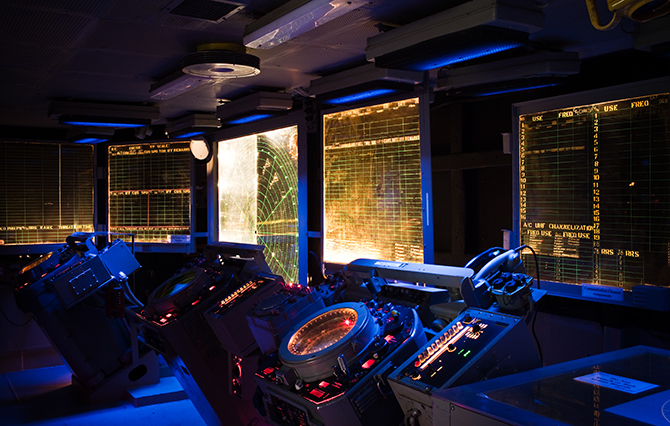
Photo tour of the USS Hornet

Filed under: History, Military — Tags: , , , , — Nicholas @ 10:06

I’ve been onboard several retired battleships, but so far I’ve not managed to get onto an aircraft carrier. This will have to do for the time being:

The USS Hornet was on hand 40 years ago to pick up the Apollo 11 astronauts after their Columbia Command Module splashed down in the Pacific Ocean on July 24, 1969.

Today, the aircraft carrier is preserved as a museum in Alameda, California. Its main deck is littered with historic warplanes and space artifacts including an Apollo command module and Mobile Quarantine Facility from subsequent missions, pictured below. The first footsteps the Apollo 11 crew took on Earth after walking on the moon are traced on the deck.

USS Hornet CIC

USS Hornet CIC

Above: The USS Hornet’s Crisis Information Center is pictured. While engaged in active warfare, crewmembers would stand behind transparent, hanging boards and write information backwards to keep from getting in the way of the officers who needed to read it.

I think it was actually the “Combat” Information Center, but I could be mistaken. Lots of cool images, but I’d like to see more . . .

July 20, 2009

Oh, it’s okay . . . manufacturer claims the EATR is vegetarian

Filed under: Military, Technology — Tags: , , , , — Nicholas @ 14:47

Take back all the panic-mongering in this post. Cyclone Power Technologies assures us that their battlefield robot (the disturbingly named EATR) is on a strictly no human corpses diet:

Many commentators, our own Lewis Page included, not unreasonably took this vague “biomass in the environment” concept to mean anything EATR could get its robotic claws on, including humans.

Some press reports went further, suggesting EATR would suck nourishment from corpses as it went about its unholy business.

Cue an entertaining press release (pdf) from Cyclone, which stresses that EATR is “strictly vegetarian”. The company explains: “Despite the far-reaching reports that this includes ‘human bodies,’ the public can be assured that the engine Cyclone has developed to power the EATR runs on fuel no scarier than twigs, grass clippings and wood chips.”

Cyclone marvellously adds: “Desecration of the dead is a war crime under Article 15 of the Geneva Conventions, and is certainly not something sanctioned by DARPA, Cyclone or RTI.”

July 15, 2009

Thoughtful gifts for your sniper

Filed under: Military — Tags: — Nicholas @ 13:19

For the sniper who has everything, a rifle-mounted cupholder:

SniperRifleCupholder

The spare-time chainsaw-style mount (last slide) looks very much like a weapon from Doom or Quake . . .

(Cross-posted to the old blog, http://bolditalic.com/quotulatiousness_archive/005586.html.)

« Newer Posts — Older Posts »

Powered by WordPress


