
Forgotten Weapons
Published 3 Aug 2017http://www.patreon.com/ForgottenWeapons
With the end of World War One, it was finally possible for the French military to replace the 8mm Lebel cartridge with a modern rimless cartridge, and they wasted no time in doing so. By 1924 a new round had been adopted, and along with it a new modern light machine gun. Next, the arsenals would start working on converting 8mm rifles to the new cartridge. The first candidate was the Lebel, and in 1927 a conversion was approved and a batch of a few hundred made — but this was a more expensive and time-consuming process than anyone wanted. After some brief trials, it was decided to work on adapting the Berthier instead, and in 1934 a conversion designed from St Etienne was approved as the 1907/15-M34.
This new design used a new 22.5″ barrel (570mm), a Mauser style internal 5-round double stack magazine, and new sights. The receivers and trigger parts were retained from the rifles being converted, along with the nosecaps and barrel bands, but not much else. Still, these conversions were put into production alongside the manufacture of new MAS-36 bolt action rifles. By the time of the German invasion about 63,000 M34 Berthiers had been converted, and were issued to frontline troops. They would fight in the Battle of France, and would also be used by German occupation forces as the Gewehr 241(f).
(more…)
August 2, 2022
M34: The Berthier Converted to the 7.5mm Rimless Cartridge
August 1, 2022
Hamburg’s Citizens Burnt Alive – WAH 071 – July 31, 1943
World War Two
Published 31 Jul 2022In Italy the Fascists fall from power in a peaceful coup, while in Germany the RAF and USAAF bring down a rain of fire of biblical proportions in Operation Gomorrah, launching the Firestorm of Hamburg.
(more…)
July 31, 2022
Mussolini Falls from Power – WW2 – 205 – July 30, 1943
World War Two
Published 30 Jul 2022The Allied advance on Sicily continues, though they’re really gearing up for operations next week. The Soviet advances in the USSR and in New Georgia also continue, with the enemy deciding to withdraw in both; Allied firebombing kills tens of thousands of German civilians, but the big news is still the fall of Benito Mussolini from power in Italy.
(more…)
Look at Life — Pipeline (1961)
ian16th Jones
Published 20 Aug 2017Refuelling at Sea and in the Air 1960’s style
QotD: Intervention and non-intervention in the Spanish Civil War
The outcome of the Spanish war was settled in London, Paris, Rome, Berlin — at any rate not in Spain. After the summer of 1937 those with eyes in their heads realized that the Government could not win the war unless there were some profound change in the international set-up, and in deciding to fight on Negrin and the others may have been partly influenced by the expectation that the world war which actually broke out in 1939 was coming in 1938. The much-publicized disunity on the Government side was not a main cause of defeat. The Government militias were hurriedly raised, ill-armed and unimaginative in their military outlook, but they would have been the same if complete political agreement had existed from the start. At the outbreak of war the average Spanish factory-worker did not even know how to fire a rifle (there had never been universal conscription in Spain), and the traditional pacifism of the Left was a great handicap. The thousands of foreigners who served in Spain made good infantry, but there were very few experts of any kind among them. The Trotskyist thesis that the war could have been won if the revolution had not been sabotaged was probably false. To nationalize factories, demolish churches, and issue revolutionary manifestoes would not have made the armies more efficient. The Fascists won because they were the stronger; they had modern arms and the others hadn’t. No political strategy could offset that.
The most baffling thing in the Spanish war was the behaviour of the great powers. The war was actually won for Franco by the Germans and Italians, whose motives were obvious enough. The motives of France and Britain are less easy to understand. In 1936 it was clear to everyone that if Britain would only help the Spanish Government, even to the extent of a few million pounds’ worth of arms, Franco would collapse and German strategy would be severely dislocated. By that time one did not need to be a clairvoyant to foresee that war between Britain and Germany was coming; one could even foretell within a year or two when it would come. Yet in the most mean, cowardly, hypocritical way the British ruling class did all they could to hand Spain over to Franco and the Nazis. Why? Because they were pro-Fascist, was the obvious answer. Undoubtedly they were, and yet when it came to the final showdown they chose to stand up to Germany. It is still very uncertain what plan they acted on in backing Franco, and they may have had no clear plan at all. Whether the British ruling class are wicked or merely stupid is one of the most difficult questions of our time, and at certain moments a very important question. As to the Russians, their motives in the Spanish war are completely inscrutable. Did they, as the pinks believed, intervene in Spain in order to defend Democracy and thwart the Nazis? Then why did they intervene on such a niggardly scale and finally leave Spain in the lurch? Or did they, as the Catholics maintained, intervene in order to foster revolution in Spain? Then why did they do all in their power to crush the Spanish revolutionary movements, defend private property and hand power to the middle class as against the working class? Or did they, as the Trotskyists suggested, intervene simply in order to prevent a Spanish revolution? Then why not have backed Franco? Indeed, their actions are most easily explained if one assumes that they were acting on several contradictory motives. I believe that in the future we shall come to feel that Stalin’s foreign policy, instead of being so diabolically clever as it is claimed to be, has been merely opportunistic and stupid. But at any rate, the Spanish civil war demonstrated that the Nazis knew what they were doing and their opponents did not. The war was fought at a low technical level and its major strategy was very simple. That side which had arms would win. The Nazis and the Italians gave arms to the Spanish Fascist friends, and the western democracies and the Russians didn’t give arms to those who should have been their friends. So the Spanish Republic perished, having “gained what no republic missed”.
Whether it was right, as all left-wingers in other countries undoubtedly did, to encourage the Spaniards to go on fighting when they could not win is a question hard to answer. I myself think it was right, because I believe that it is better even from the point of view of survival to fight and be conquered than to surrender without fighting. The effects on the grand strategy of the struggle against Fascism cannot be assessed yet. The ragged, weaponless armies of the Republic held out for two and a half years, which was undoubtedly longer than their enemies expected. But whether that dislocated the Fascist timetable, or whether, on the other hand, it merely postponed the major war and gave the Nazis extra time to get their war machine into trim, is still uncertain.
George Orwell, “Looking back on the Spanish War”, New Road, 1943 (republished in England, Your England and Other Essays, 1953).
July 30, 2022
Beartrap: The Best Way To Land A Big Helicopter On A Small Ship At Sea
Polyus Studios
Published 29 Jul 2022Don’t forget to like the video and subscribe to my channel!
Support me on Patreon – https://www.patreon.com/polyusstudiosToday, navies across the world use an ingenious system to land helicopters on the rolling deck of a ship at sea. It enabled the powerful helicopter-destroyer combination that has become the dominant form of at sea anti-submarine warfare. It’s the “helicopter haul down and rapid securing device”, more commonly known as Beartrap. This device may be little known to the public, but it stands as one of the greatest contributions Canada has ever made to naval aviation, and ushered in the age of helicopters at sea.
(more…)
PTRD 41: The Simple Soviet Antitank Rifle of WWII
Forgotten Weapons
Published 25 May 2018http://www.patreon.com/ForgottenWeapons
Cool Forgotten Weapons merch! http://shop.bbtv.com/collections/forg…
The Soviet Union had originally eschewed the use of large numbers of antitank rifles, anticipating that any potential combat use of them would be largely against tanks impervious to AT rifle cartridges. However, when German forces came flooding across the border in 1941, the Soviet Union found themselves being attacked by quite large numbers of tanks which were in fact vulnerable to an antitank rifle cartridge. Stalin ordered an immediate development and production of such a weapon, and the designers responded with concepts. Simonov produced the PTRS-41, a semiautomatic 14.5mm weapon that was sophisticated, expensive, and effective. Degtyarev produced the PTRD-41, a single shot 14.5mm weapon which was simple, cheap, and also effective. Both used the same cartridge, which fires a 980gr armor piercing projectile at a remarkable 3320 fps.
Both the Simonov and Degtyarev rifles were ordered into production, with the PTRD-41 being available and fielded within a month because of its very simple nature. By the end of the war some 185,000 of these rifles had been made, and even after the new German tanks became impervious to them, they remained effective weapons for use on light armored vehicles, field guns, machine gun nests, pillboxes, and other hardened targets.
The PTRD-41 is a mechanically interesting and unusual weapon in that despite being only a single shot system, it is recoil operated. When fired, the entire barrel assembly recoils rearward, absorbing some of the immense recoil energy and also opening the bolt and ejecting the spent case. The shooter then need only drop a new cartridge into the action and close the bolt to be ready for a subsequent shot.
(more…)
QotD: The advent of horses and firearms on the North American plains
Horses arrived in the Great Plains from the south via the Spanish and moving through Native American peoples west of the Rocky Mountains by both trade and eventually raiding in the early 1700s. Notably firearms also began moving into the region in the same period, but from the opposite direction, coming from British and French traders to the North and West (the Spanish had regulations against trading firearms to Native Americans, making them unavailable as a source). Both were thus initially expensive trade goods which could only be obtained from outside and then percolated unevenly through the territory; unlike firearms, which remained wholly external in their supply, horses were bred on the plains, but raiding and trade were still essential sources of supply for most peoples on the plains. We’ll get to this more when we talk about warfare (where we’ll get into the four different military systems created by this diffusion), but being in a position where one’s neighbors had either the horse or the gun and your tribe did not was an extreme military disadvantage and it’s clear that the “falling out” period whereby these two military innovations distributed over the area was very disruptive.
But unlike guns, which seem to have had massive military impacts but only minimal subsistence impacts (a bow being just as good for hunting bison as a musket, generally), the arrival of the horse had massive subsistence impacts because it made hunting wildly more effective. But the key thing to remember here is: the horse was introduced to the Great Plains no earlier than 1700, horse availability expanded only slowly over the area, but by 1877 (with the end of the Black Hills War), true Native American independence on the Great Plains was functionally over. Consequently, unlike the Steppe, where we have a fairly “set” system that had already been refined for centuries, all we see of the Plains Native American horse-based subsistence system is rapid change. There was no finally reached stable end state, as far as I can tell.
Though there is considerable variation and also severe limits to the evidence, it seems that prior to the arrival of the horse, most Native peoples around the Great Plains practiced two major subsistence systems: nomadic hunter-gathering on foot (distinct from what will follow in that it places much more emphasis on the gathering part) on the one hand and a mixed subsistence system of small-scale farming mixed seasonally with plains hunting seems to have been the main options pre-horse, based on the degree to which the local area permitted farming in this way (for more on those, note Isenberg, op. cit., 31-40). Secoy (op. cit.) notes that while there is some evidence that the Plains Apache may have shifted through both systems, being hunter-gatherers prior to the arrival of horses, by the time the evidence lets us see clearly (which is shortly post-horse) they are subsisting by shifting annually between sedentary agricultural racheirias (from the Spring to about August) and hunting bison on the plains during the fall. Isenberg notes the Native Americans of the Missouri river combining corn agriculture with cooperative bison hunting in the off-season (in that case, in the summer). Meanwhile, the Comanches and Kiowas seem to have mostly subsisted on pedestrian bison hunting along with gathering fruit and nuts, with relatively little agriculture, prior to going fully nomadic once they acquired horses. Bison hunting on foot required a lot of cooperation (so a group) and it seems clear that it was not enough to support a group on its own and had to be supplemented somehow, at least before the arrival of the horse. Some mix of either bison+gathering or bison+horticulture was required.
Isenberg argues (op. cit.), that at this point the clear advantage was to what he terms the “villagers” – that is the farmer-hunters who lived in villages, rather than the nomadic hunter-gathers. These horticulturists were more numerous and seem quite clearly to have had the better land and living conditions. Essentially the hunter-gatherers stuck on marginal land were mostly hunter-gatherers because they were stuck on marginal land, which created a reinforcing cycle of being stuck on marginal land (the group is weak due to small group size because the land is marginal and because the group is weak, it is only able to hold on to marginal lands). That system was stable without outside disruption. The horse changed everything.
A skilled Native American hunter on a horse, armed with a bow, could hunt bison wildly more effectively than on foot. They could be found more rapidly, followed at speed and shot in relative safety. It is striking that while pedestrian bison hunting was clearly a team effort, a hunter on a horse could potentially hunt effectively alone or in much smaller groups. In turn, that massively increased effectiveness in hunting allowed the Native Americans of the region, once they got enough horses, to go “full nomad” and build a subsistence system focused entirely on hunting bison, supplemented by trading the hides and other products of the bison with the (increasingly sedentary and agrarian) peoples around the edges of the Plains. Many of the common visual markers of Plains Native Americans – the tipi, the travois, the short bow for use from horseback – had existed before among the hunter-gathering peoples, but now spread wore widely as tribes took to horse nomadism and hunting bison full time. At the same time, Isenberg (op. cit. 50-52) has some fascinating paragraphs on all sorts of little material culture changes in terms of clothing, home-wares, tools and so on that changed to accommodate this new lifestyle. The speed of the shift is quite frankly stunning.
We’ll come back to this later, but I also want to note here that this also radically changed the military balance between the nomads and the sedentary peoples. The greater effectiveness of bison hunting meant that the horse nomads could maintain larger group sizes (than as hunter-gatherers, although eventually they also came to outnumber their sedentary neighbors, though smallpox – which struck the latter harder than the former – had something to do with that too), while possession of the horse itself was a huge military advantage. Thus by 1830 or so, the Ute and Comanche pushed the Apache off of much of their northern territory, while the Shoshone, some of the earliest adopters of the horse, expanded rapidly north and east over the Northern Plains, driving all before them (Secoy, op. cit., 30-31, 33). Other tribes were compelled to buy, raise or steal horses and adopt the same lifestyle to compete effectively. It was a big deal, we’ll talk about specifics later.
Bret Devereaux, “That Dothraki Horde, Part II: Subsistence on the Hoof”, A Collection of Unmitigated Pedantry, 2020-12-11.
July 29, 2022
Nightmare Fuel For Soviet Submarines; the story of the Canadair CP-107 Argus
Polyus Studios
Published 4 Dec 2020Don’t forget to like the video and subscribe to my channel!
Support me on Patreon – https://www.patreon.com/polyusstudiosIn its day the Argus was the most formidable anti-submarine warfare platform fielded by any NATO country. Canadair adapted the Bristol Britannia into a highly effective low and slow sub hunter. This gave Maritime Air Command the edge in the North Atlantic. It served on the front-line of the Cold War and kept the Soviet submarine threat in check for almost 25 years.
(more…)
Why Ghost Division? What did Rommel do?
Military History Visualized
Published 5 Feb 2019Why was Rommel’s 7th Panzer Division called Gespensterdivsion – the “Ghost Division”? From all we know it earned this name during the Battle of France.
(more…)
July 28, 2022
The Posh Brits Betraying Their Country – WW2 – Spies & Ties 20
World War Two
Published 27 Jul 2022Being allies does little to discourage Moscow from recruiting double agents in the British establishment. The most famous of them all, Kim Philby and the Cambridge Five, penetrate deep into MI5, MI6, and Bletchley Park. With friends like the NKVD, who needs enemies?
(more…)
Is the US Navy in crisis?
CDR Salamander outlines why he is very concerned about the current state of the United States Navy:
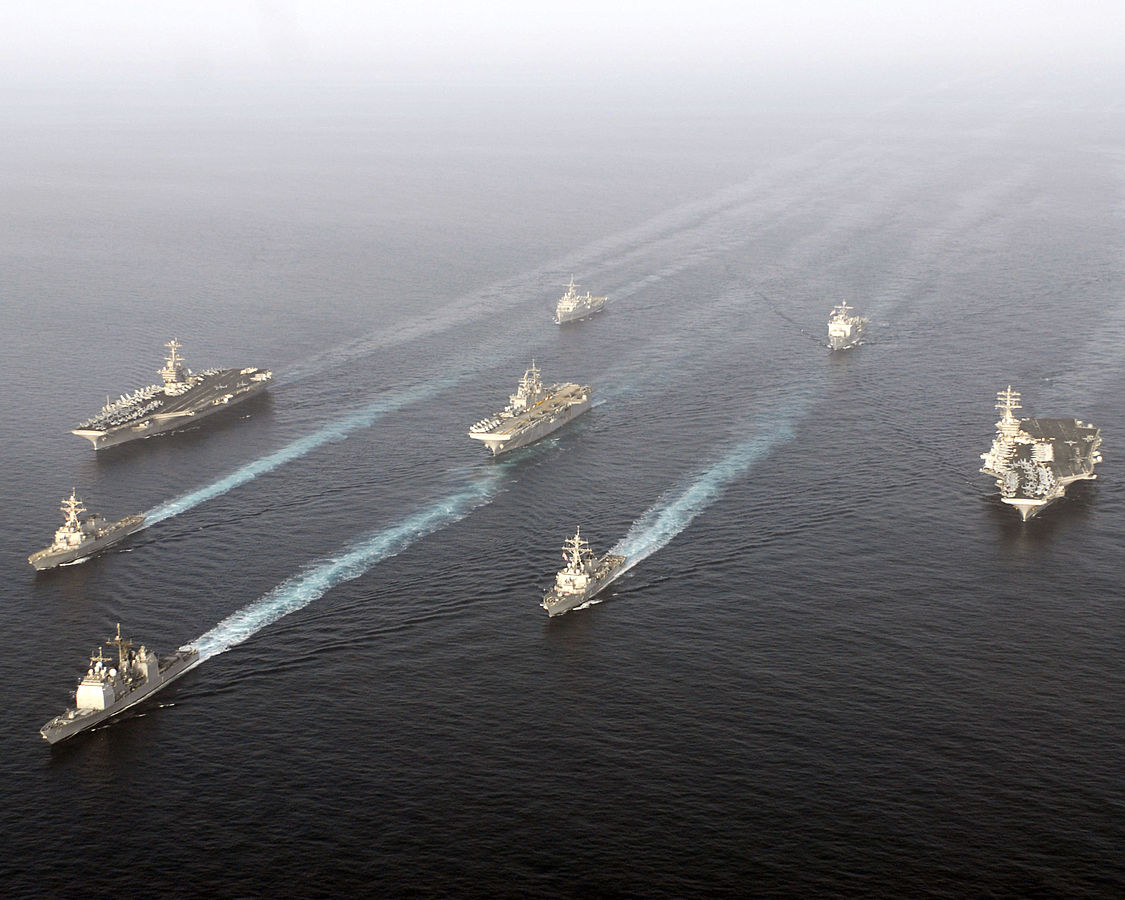
US Navy ships from the John C. Stennis and Nimitz Carrier Strike Groups with ships from the Bonhomme Richard Expeditionary Strike Group in the Gulf of Oman, 22 May 2007.
US Navy photo by Mass Communication Specialist 1st Class Denny Cantrell via Wikimedia Commons.
If you believe the threat from China is overblown, our Navy is well led, and that our fleet is big enough, then this is not the post for you. If you are concerned for all of it, grab a fresh drink and dive right in.
We are facing of something our nation has not had to seriously consider in well over three decades; we do not have free and unfettered access to the sea.
Even when Soviet submarines roamed the world’s oceans at will – though closely watched – and the Red Banner Fleet could send battle groups on cruises through the Gulf of Mexico, we had fair confidence in one thing – the Pacific was an American lake.
No more.
The leaders of the USN seem to have very different notions about what the Navy needs:
f you feel the Navy needs a larger share of the budget to meet the challenge of China, then you need to advocate for it. You need to fight for it … and when I say “you” I mean “we” and the most important and powerful parts of that “we” are our institutions; our maritime power institutions dedicated to seeing the USA remain the premier seapower.
Let’s start with the most obvious. Our uniformed Navy is itself an institution. It reports to its civilian leadership in the Executive Branch with oversight from the Legislative Branch. There are your big pixel maritime governmental institutions; the uniformed and civilian leaders in the Department of the Navy.
As reviewed yesterday, the CNO is engaged in a rather low-energy talking point about 500-ships, but in 2022 that is not even remotely achievable. He knows it, you know it, Congress knows it as well. A number is not an argument, and yet he is investing personal and institutional capital on this line that is almost immediately ignored if it is heard at all. Why?
In the last year one of his highest profile public appearances was when he shoveled heaping piles of personal and institutional capital in a fight defending a red in tooth and claw racial essentialist Ibram X. Kendi against who would normally be the US Navy’s natural allies in Congress. Ultimately he lost that battle and removed Kendi’s racist book and others from his reading list, but in the face of everything else going on in the maritime world, why?
What about the Vice CNO, Admiral William K. Lescher, USN? Maybe he could throw some sharp elbows for the maritime cause? Sadly, not. Just look at his exchange with Rep. Mike Gallagher (R-WI) back in March. He seems to be the “Vice Chief of Joint Force Operations” more than anything else. He is focused on something, but advocating for sea power is not it.
With the night orders from the CNO and VCNO as they are, if you expect any significant advocacy from the uniformed Navy leadership who report to them for — checks notes — the Navy, you are going to have to wait for a long time, time we don’t have. It isn’t going to happen.
[…]
Take a moment and ponder – when was the last time you heard the SECNAV or Under out front on The Hill or to the greater public about our maritime requirements? Yes, I fully understand what goes on behind closed doors, but that slow roll in an ever-slower bureaucracy infested with scoliotic nomenklatura is well past being of use. The American people must be provided the information and motivation to understand how their entire standard of living – and to a great extent their freedoms – is guaranteed by our mastery of the seas. Is even a rudimentary effort being made in this regard?
Just look at the USN’s YouTube feed – a primary communication device for the American people. What has the SECNAV talked about there this year? LGBTQ+ Pride Month, Juneteenth, Army birthday, Asian-Pacific Islander Month, Mental Health Awareness Month, Women’s History Month, carrier air birthday, and Black History Month.
There you go. There’s your communication. Dig harder if you want … but if you read CDRSalamander and you are not readily aware, then imagine the general population’s situational awareness of the dragon just over the horizon.
July 27, 2022
Poland and South Korea Ink Huge Arms Deal
Ed Nash’s Military Matters
Published 26 Jul 2022Poland and South Korea are apparently on the verge of signing a huge arms deal that will replace much of the heavy frontline equipment of the Polish Army.
Sources for this video can be found at the relevant article on:
https://militarymatters.online/
(more…)
When the founder of the SAS was captured by Italian troops in 1943
In The Critic, Saul David describes what happened when Lieutenant Colonel David Stirling was captured during his “most hare-brained scheme” to link up the troops of Britain’s First and Eighth armies in Tunisia:
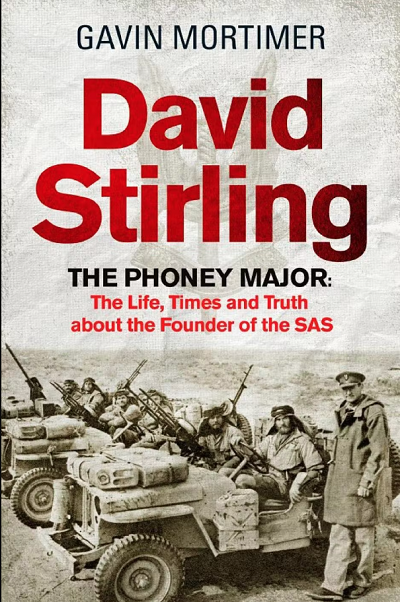
In January 1943 Lieutenant Colonel David Stirling, founder of the SAS, was flown to Rome for interrogation. He had been captured by the Italians on his “most hare-brained scheme yet” — leading a small raiding party deep into enemy territory in Tunisia to attack lines of communication, reconnoitre the terrain and become the first Eighth Army unit to link up with the First Army advancing from the west.
Cautious when speaking to the Italians, he was “vain and voluble” in conversation with a fellow “captive”, Captain John Richards. Unbeknown to Stirling, Richards was an Anglo-Swiss stool pigeon, Theodore Schurch, who had deserted from the British army and was working for fascist intelligence.
Prior to Schurch’s court-martial for treachery in late 1945, Stirling denied he had revealed any sensitive information. If he had, it was inaccurate and “designed to deceive”. This was a lie, told to protect Stirling’s reputation. In fact, as the British authorities knew all too well from intercepted signals, Stirling had told Richards vital details about current SAS operations, including the location of patrols and their orders. He had even given them the name of his probable replacement as SAS commander: Paddy Mayne.
The story of Stirling’s unfortunate encounter with Schurch has been told before, notably by Ben Macintyre in his bestselling SAS: Rogue Heroes. But Macintyre underplays Stirling’s indiscretion and fails to link it to the many other examples of the SAS commander’s recklessness and poor judgement of character. For Gavin Mortimer, on the other hand, both the capture and loose talk were typical of a man who was “imaginative, immature, immoderate and ill-disciplined”. Small wonder that even his own brother Bill thought he would be better off in a prisoner-of-war camp.
The subtitle of Mortimer’s book — a carefully researched and impeccably sourced take-down of the legendary special forces pioneer — is a corrective to the flattering but inaccurate nickname that was first coined for Stirling by British tabloids during the Second World War. “When word reached Cairo of the Phantom Major moniker,” writes Mortimer, “it must have sparked a mix of hilarity and indignation. All the falsehoods and fabrications would have been harmless enough had Stirling not stolen the valour of his comrades.”
Thread by thread, Mortimer unpicks the myth of Stirling’s life and war service that the subject and his fawning admirers had so carefully constructed, both during and after the war. Stirling was not training in North America for an attempt on Mount Everest’s summit when war broke out in 1939, as he later claimed, but rather working as a ranch hand because his exasperated family hoped it might give the feckless youth some focus and direction.
Italy’s Worst Machine Gun: The Breda Modello 30
Forgotten Weapons
Published 28 Jul 2017http://www.patreon.com/ForgottenWeapons
Cool Forgotten Weapons merchandise! http://shop.bbtv.com/collections/forg…
The Breda Model 30 was the standard Italian light machine gun of World War II, and is a serious contender for “worst machine gun ever”. Yes, given the choice we would prefer to have a Chauchat (which really wasn’t as bad as people today generally think).
The Breda 30 suffered from all manner of problems. To begin with, it was far more complicated than necessary. The amount of machining needed to build one is mind boggling compared to contemporary guns like the ZB26/Bren or BAR. And for all that work, it just didn’t work well in combat conditions.
Mechanically, the Breda used a short recoil action with a rotating bolt. The recoil action meant that the barrel moved with each shot, so the sights were mounted on the receiver to keep them fixed. This seems like a good idea, but it meant that the sights would need to be re-zeroed each time the barrel was changed. To compound this, the gun fired from a closed bolt which made it more susceptible to overheating and it was recommended to change barrels every 200 rounds or so. An oiling mechanism was built in to lightly oil each cartridge on feeding. This allowed the gun to extract without ripping rims off the cases, but was a disaster waiting to happen on the battlefield. In places like North Africa, the oil acted as a magnet for sand and dust, leading to quick jamming if the gun were not kept scrupulously clean.
The next huge judgment error on Breda’s part was the magazine. The thought behind it was that magazine feed lips are easily damaged in the field, and they can be protected by building them into the gun receiver rather than in each cheap disposable box magazine (the Johnson LMG and Madsen LMG recognized this issue as well). However, Breda’s solution was to make the 20-round magazine a permanent part of the gun. The magazine was attached to the receiver by a hinge pin, and was reloaded by special 20-round stripper clips. This meant that reloading took significantly longer than changing magazines, and any damage to the one attached magazine would render the gun inoperable. As if anything else were needed, the magazine was made with a big opening on top to allow the gunner to see how many rounds remained – and to let more of that North African sand into the action.
Most of the Breda Model 30s were made in 6.5 Carcano, but a small number were made in 7.35 Carcano when that cartridge was adopted. The rate of fire was about 500 rounds per minute, which was a bit slower than most other machineguns of the day.
(more…)


