
Forgotten Weapons
Published 25 Sep 2017There is a common assumption that the MAS-36 was a fool’s errand from the outset — why would a country develop a brand new bolt-action rifle in the mid 1930s, when obviously semiautomatic combat rifles were just on the cusp of widespread adoption? Well, the answer is a simple one — the French were developing a semiautomatic rifle at the same time, and the MAS-36 was only intended to go to rear echelon and reserve troops. It would serve as a measure of economy, reducing the number of the more complex and expensive self-loaders necessary, while still providing sufficient arms to equip the whole reserve in case of a mobilization.
Well, the plan didn’t quite work out that way, because Germany invaded France before the semiauto rifle was ready for production (it was, at that point, the MAS-40 and was in trials). Not until 1949 would the self-loader go into mass production with the MAS-49 (discounting the short-lived MAS-44). With this in mind, the MAS-36 suddenly makes much more sense. It is a simple, economical, and entirely adequate rifle without extraneous niceties. In a word, it is a Russian rifle rather than a Swiss one.
Production began in the fall of 1937, and by the time of the German invasion there were about 205,000 in French stockpiles. They saw extensive use in the Battle of France, along with M34 Berthiers in 7.5x54mm. Some would escape to serve the Free French forces worldwide through the war, and others would be captured and used by German garrisons in France and along the Atlantic Wall. Production resumed upon the liberation of St Etienne in 1944, and by 1957 about 1.1 million had been made. They basically fall into two varieties, with several pre-war milled components changed to more economical stamped designs after the war.
(more…)
September 11, 2022
MAS-36: The Backup Rifle is Called to Action
September 10, 2022
QotD: “Working toward the Führer“
Sir Ian Kershaw was broadly right about how the Third Reich operated. He says Nazi functionaries were “working towards the Führer“. In other words, the Führer — the idealized, mythologized leader, not Adolf Hitler the individual — made it known that “National Socialism stands for X“. Hitler was famously averse to giving direct orders, so that’s often the only thing big, important parts of the government had to work from — the Führer‘s* pronouncement that “National Socialism means X“. It was up to them to put it into practice as best they could.
This had several big advantages. First, it’s in line with Nazi philosophy. The Nazis were Social Darwinists. Social Darwinists hold that “survival of the fittest” applies not only to humans as a whole, but to human social groups as well. Any given organization, then, must exist to do something, to advance some cause, to reach some goal. Ruthless competition between groups, and inside each group, is how the goal works itself out (you should be hearing echoes of Hegel here). The struggle refines and clarifies what the group’s goal is, even as the individual group members compete to reach it. The end result gets forced back up the system to the Führer, such that, dialectically (again, Hegel), “National Socialism means X” now encompasses the result of the previous struggle.
[…]
As with philosophy, “working towards the Führer” fit well with German military culture. Auftragstaktik is a fun word that means “mission-type tactics.” In practice, it delegates authority to the lowest possible level. Each subordinate commander is given an objective, a force, and a due date. High command doesn’t care how the objective gets taken; it only cares that the objective gets taken. Done right, it’s a wonderfully efficient system. It’s the reason the Wehrmacht could keep fighting for so long, and so well, despite being overpowered in every conceivable way by the Allies. The Allies, too, were constantly flabbergasted by their opponents’ low rank — corporals and sergeants in the Wehrmacht were doing the work of an entire Allied company command staff (and often doing it better).
Consider the career of Adolf Eichmann. In the deepest, darkest part of the war, this man pretty much ran the Reich’s rail network. Say what you will about the Nazi’s plate-of-spaghetti org chart, that’s some serious power. He was a lieutenant colonel.
The final great advantage of “working towards the Führer” is “plausible deniability”. Let’s stipulate Atrocity X. Let’s further stipulate that we’re in the professional historian’s fantasy world, where every conceivable document exists, and they’re all clear and unambiguous. It’s a piece of cake to pin Atrocity X on someone … and that someone would, in all probability, be a corporal or a sergeant. Maybe a lieutenant. What you wouldn’t be able to do is trace it up the chain any higher. Everyone from the captain to Hitler himself could / would give you the “Who, me?” routine. “I didn’t tell Sergeant Schultz to execute those prisoners. All I said was to go secure that objective / defeat that army / that National Socialism means fighting with an iron will.”
*I’m deliberately conflating them here — to make it clearer how confusing this could be — but in talking about this stuff the terminology is crucial. Adolf Hitler, the man, played the role of The Führer. What Hitler the man wanted was often in line with what the Führer role required, of course, but not always. This is one of the footholds Holocaust deniers have. Did Hitler-the-man actually put his name to a liquidation order? No. Did Hitler-the-man actually want it to happen? Unquestionably yes, but like all men, Hitler-the-man vacillated, had second thoughts, doubted himself, etc., and you can find documented instances of that. But The Führer very obviously wanted it to happen, and it was The Führer that motivated the rank-and-file. The man created the role, but very soon the role started playing the man …
Severian, “Working Towards the Deep State”, Rotten Chestnuts, 2020-01-06.
September 9, 2022
The Velvet Glove and Sparrow II missiles; A Beginners Guide To Post-War Bomber Interception Tactics
Polyus Studios
Published 14 Jul 2018The Velvet Glove was a semi-active guided missile system developed by the Canadian Armament Research and Development Establishment. Its successor, the Sparrow II, was developed by Canadair in association with the US Air Force. This is the story of the development of the missiles in the context of contemporary weapons systems.
(more…)
September 8, 2022
Chinese Type 56 AK-47 (Shooting and History)
Forgotten Weapons
Published 23 Sep 2016One of the most common types of AK rifle in existence today is the Chinese Type 56 in its several variations, although very few of those rifles are in the United States in authentic full-auto form. This particular one was captured by a US soldier in the Vietnam War, who brought it back and registered it, making it a fully transferrable gun.
The Chinese received the technical package for the AK (and also the SKS, among other weapons) from the Soviet Union in the 1950s, as part of the USSR’s policy of providing military and technical aid to other nations sympathetic to the Communist cause (although a rift would grow between the USSR and China later). China would manufacture tens of millions of AK rifles, both of this milled receiver type (the Type 3 style) and the later stamped AKM pattern. The standard fixed-stock rifles like this one were fitted with under-folding spike bayonets. Folding stocked types were also made, both underfolding (Type 56-1) and side folding (Type 56-2). These weapons have become extremely prolific, and can be found in virtually any significant international conflict zone to this day.
(more…)
QotD: Pre-modern armies could not march much faster than 8-12 miles per day … on good days
For reference on how much time this can eat up, 1950s US Army marching regulations (this is again FM21-18 “Foot Marches”) suggest that “battle groups or smaller” (800 men or less, generally – so small, fast-moving infantry) can “under favorable conditions” (read: good, modern paved roads in good weather) make 15-20 miles in a continuous eight hour march. A forced march – marching longer than 8 hours and at a higher than normal pace – can cover more ground (c. 35 miles in a day in some cases) but such a pace will wear out an infantry force fast.
At the end of the day, the army needs to arrive at its planned camp site [early] enough to make camp. Cooking needs to be done. Food that was foraged by flanking units needs to get to the camp, be recorded and stored (or processed and eaten) – speaking of which, note that we haven’t even discussed flankers, scouts and foraging parties. Wages may need to be paid, paperwork needs to be done. In many armies, the camp will need to be fortified – the Romans built a wood-palisade fortified camp every night on the march. And then everyone goes to sleep around 9pm. And that, to be clear, is when everything works like clockwork – which it never does.
For a large army, the breaking camp, waiting to begin marching, waiting for the last man to arrive, dealing with pack animals and wagons slices a few hours off of that eight hour march routine. All of which is why a normal large body of infantry moves something closer 8-12 miles per day than the 24 miles (8 hours x 3.1mph) per day implied by Wikipedia’s Average Human Walking Speed.
Historians doing studies of campaigns thus tend to use these sorts of rule-of-thumb speeds without much feeling the need to explain why armies move so slow because I think they expect that most of their readers are either fellow historians or former soldiers and in either case, already know. These rules of thumb, in turn, derive from staff planning in the age when armies still mostly walked to war (especially the 1800s and early 1900s): those staff office planners would have (and presumably still do have) elaborate tables of how many men can move how fast over what sort of roads in what kind of weather – because bad staff work multiplied over massive armies can mean catastrophic logistics and timing failures (see: Frontiers, Battle of the (1914) for examples).
If anything, for a medieval army of conscripts, fresh from a successful battle, with a long supply-train moving off of the main roads, 12 miles per day is actually quite fast. Large armies with lots of wagons often strayed into single-digit marching speeds. And, to be clear, marching speeds are highly variable based on terrain and the rest.
Bret Devereaux, “New Acquisitions: How Fast Do Armies Move?”, A Collection of Unmitigated Pedantry, 2019-10-06.
September 7, 2022
“For those brave right-wing Americans… if you want to fight against the country, you need an F-15. You need something little more than a gun.”
Kurt Schlichter begs to differ with Joe Biden’s “Triumph of the Shrill” warmongering from last week:

Hmmmm, but do they? Really?
Grandpa Badfinger’s premise is that all you tens of millions of semi-fascists out there with your AR-15s would have no shot stopping the woke military, which would eagerly crush you with their potent force package of F-15s and esoteric pronouns. It is a flawed premise on more grounds than one column can cover (hence my book), but we need to focus and that means we will need to overlook some important questions. These important questions include:
– Why do you imagine your sorry band of socialist creeps who treat the Constitution like Jerry Nadler treats his boxers constitutes “the country”?
– The useless senior officer corps aside, why do you believe the normals who make up the vast majority of America’s combat forces will gleefully butcher their friends and family for the amusement of a bunch of Chardonnay-swilling blue checks?
– Have you ever heard of Afghanistan?
Let’s focus on his key sound bite. Gun vs. Jets … who ya got?
I’m putting my money on the guns. You dumb progressives can go for the jets and the points.
Now, let’s start raising the kind of facts that tend to undermine the soundbite that launched a thousand MSNBCgasms.
First up, what does a gun do? What does a fighter-bomber do?
Well, a gun gives an individual soldier – and that’s what civilian freedom fighters would be – the ability to dominate the space on the ground around them out to a couple hundred meters of open territory (let’s not argue about maximum effective ranges, or the fact that civilians have a lot of weapons that outrange the 5.56mm weapons systems currently used by the military – a weapon system whose bullets Mr. 10% Off The Top thinks fly “five times as rapidly as a bullet shot out of any other gun“). In other words, a gun controls space on the ground. Coincidentally, the ground happens to be where people live.
A jet fighter dominates air space and keeps other planes away. Few people actually live in the air. Now, a jet fighter bomber like the F-15 can drop bombs on the enemy – which is, according to Crusty, us freedom-loving American citizens. Of course, this kind of tactical employment works to support guys on the ground dominating terrain with guns. Planes don’t hold territory; they help soldiers hold territory. So, it’s an apples and oranges thing at the threshold, which is appropriate since the whole discussion Slow Joe began is pretty much Fruit Loops.
Biden assumes he’s got soldiers to support with his jets. How many? Who knows? Some. But lots of colonels and generals, the kind who add (he/him) or (zip/zap) to their official signature blocks – would salute and carry out order to kill other Americans. Hey, maybe they can win this war and finally get one in the “Win” column after three decades! They’re due!
But the problem for them is quantity. There are tens of millions of American patriots with guns, AR-15s being only one color in the rainbow of freedom-defending firearms. Real diversity is 5.56mm alongside 7.62mm and .30-06 and 12 gauge and .45 and others, all firing together for a brighter tomorrow. So, there better be a lot of airplanes to balance out millions of patriots.
Um, how many fighter-bombers do we have anyway?
Well, let’s give America’s Greatest Matlock Superfan the benefit of the doubt and include all types of fighter-bombers – F-25s, F-16s, F-18s, F-35s and even A-10s. Let’s see – there are about 1750 planes for the Air Force, about 1100 planes for the Navy, and maybe 300 for the Marines, so call it 3150 aircraft. Okay, where are they? You have to have them here in America if you want to kill Americans for refusing to obey, so how many are in the continental United States and available for Hunter’s Dad’s open season on dissidents?
Call it two-thirds. We have lots of planes forward deployed – Europe, Asia, on ships. He’s got about 2000 aircraft to use to kill other Americans – that’s what he was saying, so we’ll take him at his slurred, semi-coherent word. Add maybe another 400 combat drones in the USA.
Now, there’s a thing called the OR Rate – operational readiness. That’s the percentage of planes that are ready to go at a given time. Planes need maintenance. They break, and even routine use requires massive upkeep efforts. And parts can be hard to get, especially when you are spending all your money on woke nonsense. What’s the real OR Rate? I don’t know – it’s probably classified and, as we know, today exposing classified material is bad and we can’t wait for it to go back to being A-OK when Hillary does it again, or when someone leaks something classified to the NYT or WaPo and they publish it. Let’s assume 75% – that loud laughing you just heard is military aviation professionals scoffing at a consistent 75% OR Rate.
This means President Gumby has 1500 planes and 300 drones to suppress those millions of dissenters. Hey, that’s 36 aircraft a state!
September 5, 2022
Amon Göth: The Super Nazi – WAH 076 – September 4, 1943
World War Two
Published 4 Sep 2022While the Allies give up on the first Battle of Berlin, Amon Göth goes on a murderous rampage in the Tarnow Ghetto.
(more…)
September 4, 2022
Extreme Ultra-MAGA terrorist Trump voters are endangering “our” democracy!!!1!
Perhaps I exaggerate a tiny bit in my headline … but events here in Clown World metastasize so quickly that parodists and satirists are becoming an endangered species because it’s nearly impossible to come up with more incredibly stupid stuff than the political class do for real:
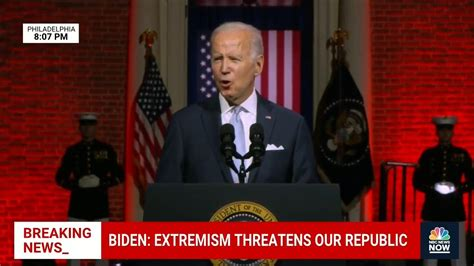
Over the past couple of weeks, it seems that the Regime has really been ramping up its rhetoric against its political and ideological enemies. In a coordinated rollout, talking heads across the media have been stating that “MAGA Trump voters” are “threats to democracy”, “trying to take away our freedoms”, “stochastic terrorists”, and so forth. This all has been timed to culminate with the pResident himself going on national television to explicitly state that the entire half of the country that didn’t vote for him are mortal enemies of the state. This takes on a somewhat more ominous tone when we remember that just a few days previous, this same pResident essentially threatened to use F-15s to bomb patriotic Americans who believe in the Constitution.
While these could be dismissed as the senile ramblings of a doddering old dementia patient, the thing to keep in mind is that Biden himself is merely a sock puppet. What he says reflects the words put into his mouth by the progressive theatre kids who staff his administration, as well as other elements within the Regime. Indeed, all of the huffinpuffery about how “your hillbilly AR-15 can’t take on tanks and fighter jets hurr durr!!” is basically the sort of thing you’d have heard on Reddit for years. But the fact that official channels are now openly talking about using the military against their own people for mere ideological purposes suggests that there is an acceleration going on in the Left’s subversion of this country.
I’ve said it before and I’ll say it again — if there is to be an open civil war in the USA, it will almost assuredly be instigated and started by the Left. However, it is not one that they are likely to win, for a number of reasons that I will elaborate briefly below. They are ones that I suspect the Regime itself knows, which makes the current trajectory they seem to be setting appear all the more desperate. Common sense would dictate that they should try to keep the repression at just a high enough level to intimidate the citizenry into compliance without actually provoking a broad response, even if not a violent one. Yet, the Left is dynamiting what is left of the social contract because once they’ve got started down this path there’s no stopping.
So briefly, let’s talk about why the Regime would not win a war against Red America, despite the hopes and expectations of thousands of redditards across the country. First and foremost there is the unreliability (from the Regime’s perspective) of the current military. Simply put, most military personnel below the O-4 or O-5 levels are not ideologically indoctrinated into woke progressivism and are unlikely to be willing to wage war on their own countrymen. They’re especially not likely to go along with wokester fever dreams of bombing Red cities into oblivion and turning the heartland into ashes just to stick it to those Trumpsters. So there would be deep fractures, mutinies, fragging incidents galore.
Of course, that’s why the Regime is trying to wokify the military to be more ideologically compatible with the Left. In a sense, for the Left the drastic recruiting shortfall that the military is currently experiencing is a feature, not a bug, since it provides them with the justification to make up the difference by recruiting foreigners with no connexion to the American people (and thus no compunctions about shooting at them). Which then introduces a further competency factor in that when you recruit a third world army, you … have a third world army, so you’re sacrificing competency for reliability. Nevertheless, as it currently stands most enlisted men and lower-level officers are not going to be inclined to incinerate their buddy’s parents for believing in the second amendment.
As Severian posted right after the “Triumph of the Shrill” speech by Biden:
I’d like to address the “they’re going in for the kill” argument, eloquently argued by MBlanc46 and others. I agree, there is exactly as much, if not more, evidence for this thesis then there is for my “they’re panicking” thesis. And whatever else they thought Brandon was doing last night, there’s definitely a “throw down the gauntlet” aspect to it.
The reason I favor “panic” over “going in for the kill” is that as hard as it is to believe, the Left always see themselves as the heroic underdog, struggling against a rigged system. Even when they’re throwing you into boxcars, they’re bewailing the fact — and in what passes for their minds it IS a fact — that you forced them to do it.
They cry out in pain as they strike you, as another demented shitbag collectivist said about a different group in an eerily similar context.
What all this — Biden’s big “My Struggle” speech (hereafter to be known, as Mmack put it, as “the Triumph of the Shrill”), the hiring of a zillion new IRS agents, the works — is designed to do is: provoke a reaction. To put it bluntly, there is no “domestic extremism”. Of course there really are some retards out there doing retard shit, but as we all know, the typical “Klan” meeting is an ATF agent trying to entrap a DEA agent who’s trying to entrap an FBI agent who is trying to entrap his own informant. Hello, fellow patriots!
But they keep failing to do roll-the-tanks-level shit. Which is a problem for the Apparat, because the ATF agent can’t get permission from the DEA to provide enough guns to the FBI agent to really kick things off (not least because he’s going to be foiled by the other undercover FBI agent who’s trying to entrap the other DEA agent and so on).
So they just keep upping the ante, hoping that maybe this time, finally, somebody will do a terrorism.
If they’re confident enough to put Brandon in a Darth Vader suit on national TV, in other words, they long ago passed the point where anyone not crippled by the psychological compulsion to see himself as a victim would’ve said “fuck it, drop the hammer”. We wore diapers on our faces for two fucking years, for Christ’s sake, and shot ourselves up with mystery goop because the same evil little goblin who turned AIDS from an easily containable plague of deviants into a legit public health crisis told us to.
The War is Four Years Old this week – WW2 – 210 – September 2, 1943
World War Two
Published 3 Sep 2022Four years of war and no real end in sight, but as the week ends the Allies land their first troops on Italy, actively committing themselves to a front in Western Europe. In the USSR the Soviets are taking heavy casualties but still pushing back the enemy with big partisan help and in Pacific plans are made for offensive against yet more Japanese held islands.
(more…)
Experimental Primer-Actuated Semiauto Springfield 1903
Forgotten Weapons
Published 3 Sep 2016During the 1920s, a lot of experimental rifle development work was being done in the US. The military was interested in finding a semi-automatic rifle, and plenty of inventors were eager to get that valuable military contract. One particular item of interest to the military was the possibility of being able to convert large existing stockpiles of bolt-action 1903 Springfield rifles into semi-automatics, and that is what this particular example was an attempt at.
This rifle is built with a barrel and receiver made in 1921 (it was not uncommon for the government to provide parts to inventors working in this area), and uses an operating system which is pretty much unheard of today: primer actuation. In this system, the primer pushes back out of the cartridge case (intentionally) upon firing, acting as a small piston. This pushes the firing pin backwards (as well as the bolt face in this rifle), which begins the process of unlocking and cycling. It is a system that saw some popularity for a brief time in the 20s, as it allowed semi-automatic action without the need for a drilled gas port or a moving barrel — several of John Garand’s early prototypes operated this way. However, substandard performance and the need for special ammunition (most military ammunition had primers solidly crimped in place) led to its abandonment.
(more…)
September 3, 2022
Napoleon Defeats Russia: Friedland 1807
Epic History TV
Published 28 Sep 2018Napoleon brings his war against Russia and Prussia to an end with victory at Friedland, leading to the famous Tilsit conference, after which Napoleon stood at the peak of his power.
(more…)
September 2, 2022
Alliance For Peace (1951) North Atlantic Treaty Organization Promo Film
PeriscopeFilm
Published 14 May 202sProduced by NATO and the Signal Photographic Service of the U.S. Army, this black & white film is about the formation of NATO and its importance in the defense of the free world. Copyright 1951. The film features a score by William Alwyn. The film dates from the time when Gen. Dwight Eisenhower was supreme commander of NATO (1950-52), a post he left in order to run for President of the United States.
(more…)
US Navy to get its very own Zampolit cadre
CDR Salamander reports on the latest politically correct doings at the US Naval Academy, which he points out always filter down to the active duty fleet, both good and bad … and I don’t think he considers this particular initiative to be a good one:

The quasi-woke religion as promoted by the CNO provided all the supporting fires they needed and the commissariat decided to make hay while the sun shines.
You know the drill.
Do you want Political Officers, USNA’s own Zampolit? You’ll get them.
Want blue and gold Red Guards? You’re going to have them.
You want red in tooth and claw racism, quotas, and different standards based on self-identified racial groups? You’re going to have more of it.
First let’s pull some nice bits from the governing document; COMDTMIDNINST 1500.5, the “Diversity Education Program” from February of this year. You can read it at the link, or below the pull quotes;
BEHOLD!
1. Purpose. To provide guidance and designate responsibilities for implementation of the Diversity Peer Educator (DPE) Program.
…
b. DPEs support moral development at USNA by facilitating small group conversations that educate and inform midshipmen, faculty, and staff and foster a culture of inclusion across the Yard, resulting in cohesive teams ready to exert maximal performance and win the Naval service’s battles.
I’m not sure you could get more Orwellian … but they’re going to try;
4. Responsibilities
a. USNA Chief Diversity Officer. The Chief Diversity Officer is the final approving authority for all matters pertaining to the DPE Program and will ensure the program is in line with Department of the Navy and Superintendent’s guidance in reference (a).
a. DPE Program Manager. The program manager for DPE is an active-duty officer appointed by the Chief Diversity Officer. Faculty/staff from the Stockdale Center for Ethical Leadership, the Naval Academy Athletic Association (NAAA), or other cost-centers on the Yard will aid the program manager.
Yes, the football booster organization will “help” the Zampolits. Huh. You see that, yes? Pull that thread …
c. Brigade Dignity and Respect Officer. Reference (c) delineates the roles and responsibilities of the Brigade Dignity and Respect Officer (BDRO) who is accountable for the training, development, and qualification of the DPEs. However, the DPEs are organized and managed by the Midshipman DPE Lead.
d. Midshipmen DPE Lead. A midshipman selected annually by the DPE Program Manager and confirmed by the USNA Chief Diversity Officer. The Midshipmen DPE Lead is typically a First Class Midshipman. Responsibilities include:
(1) Work with the DPE Program Manager to ensure the mission of the program is met.
(2) Provide feedback and keep the DPE Program Manager informed regarding anything that may impact the DPE program.
(3) Serve as the senior DPE, and as the program representative to the BDRO.
(4) Lead and provide guidance to the DPE Midshipmen.
(5) Appoint and manage DPE leads in each battalion, company, varsity athletic team and club sport team.I’ll let you do the math on how many bodies “each” means. That is a lot of Zampolits. I guess MIDN have a lot of extra time.
Again, I want you to ponder the opportunity cost of this across USNA and how it relates to professional development.
The Paras Last Drop – Gamil Airfield 1956
Mark Felton Productions
Published 18 Apr 2020The last time the Parachute Regiment dropped into combat was during the 1956 Suez Crisis when 3 PARA landed on El Gamil Airfield outside Port Said, Egypt.
(more…)
QotD: Historical parallels between the British and American empires
England was colonised by the Norman Empire (a tribe that spread across France, Britain, Italy, and the Middle East can be referred to as an empire I believe), in 1066. After some initial fierce resistance, they settled well, integrated with the local economy, and started developing a more advanced economic society.
North America was colonised by the British Empire (and Spanish and French of course), in the sixteenth century. After some initial fierce resistance, they settled well, integrated with the local economy, and started developing a more advanced economic society.
Norman England spent the next few centuries gradually taking out its neighbours. Wales, Ireland, and eventually Scotland (though the fact that the Scottish King James I & VI actually inherited England confuses this concept a bit). The process was fairly violent.
The North American “English” colonies spent the next few centuries taking out their neighbours. Indian tribes, Dutch, Spanish and French colonists, etc. The process was fairly violent.
England fought a number of wars over peripheral areas, particularly the Hundred Years war over claims to lands in France.
The North American colonies enthusiastically joined (if not blatantly incited) the early world wars, with the desire of taking over nearby French and Spanish colonies
The English fought a civil war in the 1640s to 50s over the issue of how to share power between the executive government, the oligarchs, and the commons. It appears that the oligarchs incited the commons (which was not very common in those days anyway). It was extremely bloody, and those on the periphery — particularly the Scots and Irish — came out badly (and with a long term bad taste for their over-mighty neighbour).
The Colonies fought their first civil war over the issue of how to share power between the executive, the oligarchs and the commons in the 1770s to 80s. It is clear that the oligarchs incited the commons (who in the US were still not very common — every male except those Yellow, Red or Black. An improvement? Certainly not considering the theoretical philosophical base of the so-called Revolution!). It was not really so bloody, but those on the periphery — particularly the Indians and slaves (both of which were pro-British), and the Loyalists and Canadians — came out badly. (60-100,000 “citizens” were expelled or forced to flee for being “loyalists”, let alone Indians and ex-slaves). Naturally the Canadians and their new refugee citizens developed a long term bad taste for their over-mighty neighbour — who attempted to attack them at the drop of a hat thereafter.
The British spent the next century and a half accumulating bits of empire — the Dominions, the Crown Colonies, and the Protectorates — in a haphazard fashion. Usually, but not always, troops followed traders and settlers.
The United States spent the next century and a half accumulating bits of empire — conquests from the Indians, purchases from France and Russia, conquests from Mexico and Spain, annexations of places like Hawaii, etc. — in a haphazard fashion. Usually, but not always, troops followed traders and settlers.
Nigel Davies, “The Empires of Britain and the United States – Toying with Historical Analogy”, rethinking history, 2009-01-10.


