
Combined Arms is the use of different kinds of combat arms in concert; typically this is the combined use of some mix of infantry, artillery, armor (tanks and other armored fighting vehicles or AFVs) and airpower (when analyzing much older armies, we often talk about combined arms as mixing shock infantry, missile infantry and cavalry, so the “arms” being combined vary from era to era). This is important because effective use of these arms in modern warfare requires them to be used together: artillery and aircraft need infantry to help identify targets to strike (since both engage targets they typically cannot observe), while infantry needs them to provide supporting fires. AFVs of all kinds (but especially tanks) typically have poor situational awareness (there’s only so much you can see through even a good set of optics while buttoned up in a tank) and at close range are vulnerable to infantry-carried anti-tank weapons and so require infantry to screen them and be their eyes (while the superior firepower of AFVs enhance the infantry). Note that this can mean that good systems (e.g. an effective tank) can still be ineffective if not used appropriately with supporting arms (e.g. screening infantry with supporting fires). In the opening days of the invasion [of Ukraine in 2022], Russia struggled to use these arms in concert effectively, with the result that the Russian advantage in vehicles and fires, which was considerable, wasn’t realized. That in turn makes it difficult at this point to make clear assessments about the effectiveness of Russian equipment or the overall usefulness of certain kinds of equipment (e.g. tanks) when used properly in a combined arms framework.
Bret Devereaux, “Miscellanea: A Very Short Glossary of Military Terminology”, A Collection of Unmitigated Pedantry, 2022-03-25.
September 3, 2026
QotD: Combined arms
September 2, 2026
The Korean War Week 115 – What About Japan? – September 1, 1952
The Korean War by Indy Neidell
Published 1 Sep 2026The aftershocks of Typhoon Karen have dumped so much rain on Korea that it’s quiet in the field this week, so I turn my attention to Japan. Japan’s situation with regard to Korea is very important, but is in a state of flux after the occupation of Japan officially ended and the UN troops there went from occupiers to guests. It’s very interesting.
00:00 Hook
00:52 Recap
01:14 Typhoon Karen
02:42 National Police Reserve Japan
07:55 Expanding Forces
10:28 US Military Status
12:38 The Joint Committee
15:04 Summary
15:15 Mobilisation
The Ancient Greeks 05 – The Greeks Fight Back 2 – Salamis
seangabb
Published 30 Mar 2026Greece: A Brief History, c.700 BC – 500 AD
How did a smaller Greek fleet destroy the naval power of Persia? This lecture examines the Battle of Salamis, one of the most decisive naval engagements in world history. Against overwhelming numbers, the Greeks achieved a catastrophic defeat of the Persian fleet — changing the course of the war.
We explore:
– Themistocles’ deception of Xerxes
– The strategic choice of the narrow waters at Salamis
– The nature of ancient naval warfare and trireme tactics
– Eyewitness accounts from Aeschylus and Herodotus
– The collapse of Persian naval supremacyWe also consider the wider implications of the battle: the loss of Persian control of the sea, the danger to Xerxes’ supply lines, and the beginning of the Persian retreat.
Salamis is not merely a battle — it is the moment at which the invasion begins to fail.
QotD: The great natural experiment in plant-based eating
It is the most vegetarian large country on earth, hundreds of millions of people, many vegetarian from birth. Grain at the base, pulses, vegetables, all cooked in vegetable oil: the government Eat Well plate, run as a national experiment for thousands of years.
The result. Around a third of its children are stunted, the largest share of the world’s stunted children of any nation. The Indian Dietetic Association reports 84% of the country’s vegetarians are protein deficient, against 65% of its meat eaters. And the nation that eats the least meat is the diabetes capital of the world, with over 100 million diabetics.
Before anyone blames poverty, a Journal of Nutrition study found a vegetarian mother predicted stunting across every wealth bracket, rich families included. The diet was carrying its own weight.
Bioavailable iron, zinc, B12 and complete protein build a child’s skeleton. Strip them out and it comes out smaller. The animal fat, meanwhile, got swapped for refined grain, sugar and seed oil. India is now the world’s biggest vegetable oil importer, per-person intake tripled since 2001.
The diet sold to the West as optimal human nutrition has been run here, at the scale of a billion people, for longer than the West has existed. It did not produce optimal humans. It produced the largest population of stunted, diabetic, protein-starved people on earth.
Sama Hoole, The social media site formerly known as Twitter, 2026-05-31.
September 1, 2026
Marius: The Outsider Who Rose to Command Rome’s Army | Rome’s First Civil War
The Rest Is History
Published 31 Aug 2026Who was Gaius Marius, one of the two men who would shape the fate of Rome in the first century BC? Why was his road to fame, fortune, and political greatness, from total obscurity, so dangerous? And, would Marius be the man to face down the existential threat facing the empire during this period?
Join Tom and Dominic as they launch into one of the greatest struggles in the history of Rome, as two titanic generals and politicians clash over hegemony of the empire, in an age of tumult.
0:00 Gaius Marius: Rome’s outsider
6:13 Marius goes to war
12:09 Climbing Rome’s political ladder
18:35 Amazon
19:45 The Roman Republic turns violent
27:00 Marius takes on the aristocracy
31:45 War with Jugurtha
37:53 Marius betrays Metellus
40:12 Marius becomes Consul
44:28 A new threat approaches Rome
45:09 Marius meets his future rival: Sulla
“Under Communism, everyone has a job”
Sandy Petersen responds to the “Under Communism, everyone has a job” claim that has been circulating recently thanks to the rising popularity of useful idiots:

“Under Communism, everyone has a job”. This is absolutely true.
Here’s what else was true.
1) You were ASSIGNED your job AND the region for that job by the state (i.e., a bureaucrat). You were required to stay in your job at least 3 years.
2) After 3 years, if you wanted to switch jobs, you needed the approval of both your labor board AND your employer. If you switched too often (for example: every 3 years), there were legal penalties, up to imprisonment.
3) Promotions were based on party membership, loyalty, and sucking up. I’ve talked to a lot of former Soviet citizens, and zero of them thought merit was of use. Also many nice jobs were only for party members.
4) Wages were pretty even across the board. A factory worker, engineer, and factory manager had similar salaries, so it was indeed egalitarian, but didn’t have a lot of incentive. The higher-rank workers did get perks to make up for it. They might get a vacation dacha on the Black Sea. Or a “company” car with a chauffeur. That sort of thing. The higher-ups had better stuff.
5) You needed a passport to travel inside your own country. You couldn’t just move to Leningrad and look for work. Or even go on vacation without permission.
6) You had a union. It was state-controlled. You could not go on strike. If you criticized your factory manager, you would be arrested. Yay unions.
If you look at the above, they are an evil capitalist’s wet dream. Think of a movie with a foul imaginary super-corporation so beloved of science fiction movies — they would support every one of those initiatives.
Because that’s what the Soviet Union was — the biggest, most evil corporation that ever existed.
St. Chamond 75mm field gun: From Mondragon to WW1 tanks to Israel
Forgotten Weapons
Published 13 Apr 2026The design for the St Chamond 75mm field gun was initially created by Mexican small arms designer Manual Mondragon, who worked extensively in artillery as well as small arms. As Mexico had no domestic artillery production capability, he worked with the engineering team at St Chamond under Emile Rimailho to complete the design, and Mexico purchased 100 of these guns by 1910, forming the backbone of Mexican Army artillery during the period. The gun is a screw breech rapid fire piece, using fully self-contained ammunition (both shrapnel and HE projectiles). It fires a 12-16 pound shell at about 1650 fps, with a range of about 6500 meters.
In September 1914 the French government panic-ordered a batch of these guns, but then reconsidered and cancelled its order in favor of simplifying logistics with just the more common Mle 1897 75mm guns. That decision changed again in 1915, with an order for 200. These were not formally classified by the French Army, but St Chamond called them the Mle 1915. The gun was identical to the original Mexican pattern except revised to use the same ammunition as the Mle 1897 (the classic “French 75”) instead of its original slightly different cartridge. These guns were initially used for general field service, but pulled off the line when it became apparent that their recoil systems were not really able to handle the stresses of the constant firing required. Instead, they were used as the main armament for the initial 210 St Chamond heavy tanks (less the first 48 that did not receive main guns). After these were used up, the Mle 1897 was used instead.
One final element of combat service for the guns took place in 1948, when Mexico sold 32 of them to Israel, where they were used in Israel’s war of independence. Three examples remain on display in Israeli museums today, more than anywhere else. The one I am looking at today is a Mexican contract piece made in 1904, registered in the US as a live and transferrable Destructive Device.
(more…)
QotD: “Down-line clear …”
On one occasion, noticing us waiting by the gates, the signalman slid open his window and asked us if we’d like to come up and see inside the signal box. I was up those stairs almost before he’d finished his sentence and he treated us both to a conducted tour of a fascinating and beguiling little empire.
When bells started ringing, he explained about the bell code system and announced that there was a cross-country passenger train about to pass through Stanford, without stopping, on its way to Rugby. Suddenly, he asked me: “Would you like to signal this train through the station?”
“Gosh, yes! Of course I would!”
The sequence started by closing the gates on the level crossing. These were the traditional, heavy timber gates, rather than the comparatively minimal lifting-barriers seen today. They were opened and closed by turning a huge ship’s wheel-type contraption in the signal box and it took all my strength, plus more than a little help from the signalman, to turn it sufficiently to get the gates completely closed. This reliance on a direct mechanical linkage is the reason why the signal box had to be immediately adjacent to the gates.
Next, it was the signals, which were operated by a system of wires opposed by counterweights. The signalman showed me which levers to pull. I had to pull with all my might to get that red upper-quadrant signal to rise. Pulling the yellow distant signal “off” took even more effort, because its greater distance from the signal box meant that the wire was very long indeed. All these tasks were completed solely by manual devices without any mechanical assistance. It was a technology which hadn’t changed since Victorian times.
After what seemed like a long wait, the train eventually appeared in the distance and I felt so proud, hearing it whistling a greeting. Actually the whistle is a warning device, but I was only eight and I was convinced that the driver was saying “thank you” as he steamed through the station past the signal box, courtesy of my hard work.
And just as it had been with the farm horses, it would not be long before Dr Beeching would sweep away rural railways, together with the way of life which went with them and make such experiences as this impossible.
Whenever I see a railway these days, with everything surrounded by high steel fences, their vertical pales topped with barbarous triple-spikes and further surmounted with coils of barbed wire, together with notices threatening huge fines for trespass, I’m reminded of just how lucky I was to grow up in a time when a signalman could invite a child and his father to join him and give them a singular experience which they would both remember for the rest of their lives.
Brian Meredith, “A 1950s childhood, Part 2: ‘Down-line clear …'”, The Conservative Woman, 2026-05-31.
August 31, 2026
David Friedman on the racial IQ controversy
David Friedman responds to a question from one of his readers:

Lynn’s national IQ estimates (source)
It is never too much to remember how much ethnic cleansing was made in the past based on “scientific evidence” that some races were “not as intelligent as ours” … (Comment on my blog)
Claims of this sort, about genocide, slavery, or ethnic cleansing, are offered as a reason not to talk about group differences. The implicit argument is that even if the average IQ of Africans is lower than that of Europeans or fewer women than men are talented at mathematics it is better not to say so, better to pretend it isn’t true. People making the argument rarely put it that way but it is pretty clearly what they believe.
This raises three questions. One is whether group differences exist. My view is that they almost certainly do. Darwinian evolution implies that humans are “as if designed” for reproductive success. Male and female differ in their role in reproduction so it would be surprising if the same distribution of talents were optimal for both. Africans are optimized against different environments than Europeans; that is the reason for the differences in appearance by which we distinguish them. It would again be surprising if the same distribution of abilities were optimal for both. That does not tell us what the differences are but it makes me skeptical of claims that they do not exist.
That is not, however, the subject of this post.
A second question is whether, if the claim is true, it is a valid argument for concealing true facts about group differences. It might be. If something is true and the consequences of it being known are sufficiently bad that is a reason to conceal it. Consider, for example, accurate instructions for creating a plague virus.
Whether that is the case for the existence of group differences depends on the consequences of concealing or not concealing it; my guess is that if significant group differences exist the consequences of pretending they don’t are worse than of admitting that they do1 but that is also not the subject of this post.
The third question is whether the claim is true, whether the belief that some groups were less intelligent was the cause of terrible things in the past. As far as I can tell it was not. There were terrible things done in the past and the perpetrators often expressed a low opinion of the victims but I have found no case in which supposedly scientific evidence of their inferior intelligence was the cause. In the most plausible cases, mass killing of Jews, Slavs and Romani by the Nazis, prejudice and conflict long predated the purported scientific evidence.
Consider some examples of terrible things.
Ethnic cleansing in Yugoslavia, so far as I can tell, had nothing to do with scientific evidence, real or bogus, about the relative intelligence of races. In some cases the cleansers and their victims differed only in whether their ancestors had or had not converted to Islam in the distant past. In others, the justification offered for the cleansing was “it’s historically our land, and they have taken it over by immigrating and having more babies than we did”.
The largest race killing in the post-war period may have been the Hutu/Tutsi conflicts in southern Africa.2 The victims were mostly Tutsi, an ethnic minority that before independence been the dominant group.3 It is hard to believe that any significant amount of it was motivated by evidence of their inferior IQ.
What about the Holocaust? Some Nazis made claims about Jewish inferiority of one sort or another but the basis for their antisemitism was the idea that Jews were race enemies, in which case the more intelligent they were, the more dangerous. One can see that pretty clearly in Henry Ford’s less malevolent version of antisemitism. The Nazis claimed that Slavs were an inferior race but their motive for killing or deporting them was to seize their land, a conflict that had been running, off and on, since medieval times. The Romani, the other major target of racial killing, were viewed as inferior but principally as criminals and vagabonds, again an issue that long predated the Nazis.
- Nathan Cofnas argues that the confident denial of group differences is responsible for the popularity of woke beliefs. If you know for certain that Africans and Europeans, men and women, have the same distribution of abilities it follows that any difference in group outcomes must be due to one group having a less favorable environment; if you cannot find evidence of racism, sexism, or something similar you must not be looking hard enough.
- The Nigerian Civil War may have killed more people but although the sides were racially different the conflict was over the attempt of the Ibo minority to secede from Nigeria.
- I somewhat oversimplify.
A Fighter to Make the European Skies Nazi – Nazi Rearmament 03 – Bf 109
World War Two
Published 30 Aug 2026The Messerschmitt Bf 109 was designed to solve one of the fundamental problems of modern warfare: how do you gain control of the air long enough for everything else to operate unhindered? Germany’s answer was a fast, heavily armed, highly advanced fighter that became the spearhead of the Luftwaffe‘s pursuit of air superiority.
In this German Rearmament special, we trace the Bf 109 from its origins in the clandestine development programs of the 1930s to its first combat missions over Spain and its emergence as one of the defining fighters of the Second World War. We examine its revolutionary design, its development and production, its role in the emerging doctrine of Bewegungskrieg, and its deployment from the opening campaigns in Poland and France to the Battle of Britain and the vast air war over the Eastern Front.
But the 109 also exposes the limits behind the image of an unstoppable German war machine. Its narrow-track landing gear made it notoriously unforgiving, its short range limited its effectiveness over Britain, and its ageing airframe became increasingly difficult to improve as the war progressed. By the later years of the war, Germany could still produce thousands of Bf 109s, but lacked the fuel, experienced pilots, industrial resources, and ultimately the air superiority needed to make those aircraft decisive.
The Bf 109 was an exceptionally advanced fighter for its time, and in the hands of an experienced pilot it remained lethal long after its first flight. But it also became a symbol of a deeper problem within the Nazi war economy: the growing inability to replace yesterday’s weapons with tomorrow’s.
This is the story of the fighter that made Blitzkrieg possible, and the machine that stayed in the sky long after Germany had lost control of it.
Never Forget.
The unerring predictions of climate doom
On the social media site formerly known as Twitter, John Wright provides a useful timeline of climate catastrophism in response to someone posting “projected” sea rise in Florida due to global warming:

For those of you keeping track:
1. 1958 New York Times: Ice-free Arctic within 70 years.
2. 1967 Salt Lake City Tribute, quoting Paul Ehrlich: Global famine by AD 1975. Involuntary mass sterilization needed to curtail population growth.
3. 1970 Boston Globe, quoting James Lodge: Ice Age by the 21st Century.
4. 1971 Washington Post, quoting NASA: Ice Age within 50 years.
5. 1972 Brown University: Global climate deterioration due to Global Cooling.
6. 1974 Guardian: Ice Age coming fast.
7. 1974 Time Magazine: New Ice Age.
8. 1978 New York Times: No end in sight to cooling trend.
A year later, the same paper with the same somber urgency, was reporting the opposite.
9. 1979 New York Times: Global climate catastrophe. Ice-free Arctic within 70 years.
10. 1982 New York Times, quoting UN: Environmental catastrophe by AD 2000.
11. 1988 AP: Global Warming: Maldives drowned by rising sealevel within 30 years (AD 2019).
12. 1989 San Jose Mercury, quoting UN: Global Warming: nations drowned AD 2000.
13. 2000 Independent: Snowfalls a ‘thing of the past’ in England within ‘a few years’.
14. 2001 Albuquerque Journal, quoting George Hurt: Climate-change to kill New England maple syrup industry.
15. 2004 Guardian, quoting secret Pentagon report: Climate change will trigger nuclear war, submerge major European cities, Britain ‘Siberian’ by AD 2020.
16. 2006 AP, quoting Al Gore: Greenhouse gas. Point of no return in 10 years (AD 2016).
17. 2007 New York Times, quoting UN: Point of no return by 2012.
18. 2007 Canwest News: Ice-free Arctic by AD 2010 or 2015.
19. 2007 AP, quoting NASA: Ice-free Arctic by AD 2012.
20. 2007 BBC: Ice-free Arctic before AD 2013.
21. 2008 Xinhua (Chinese News), quoting Norwegian official: Ice-free Arctic.
22. 2008 New Scientist Magazine, quoting director National Snow and Ice Data Center: Ice-Free Arctic by AD 2008 (that year).
23. 2008 National Geographic, quoting scientist: Ice-Free Arctic by AD 2008 (that year).
24. 2008 AP, quoting NASA: Ice-Free Arctic by AD 2013 to 2018.
25. 2009 USA Today, quoting Al Gore: Ice-Free Arctic by AD 2014.
Note that on or about this time, circa 2010, the Glacier National Park erected signs warning that all glaciers would be melted entirely away by AD 2020
26. 2012 Australian: Snow gone by AD 2020.
27. 2013 Guardian: Ice-Free Arctic by 2015, will trigger methane catastrophe.
28. 2017 Sydney Morning Herald: Climate Changes to curtail Australia’s ski industry.
29. 2018 Forbes, quoting Harvard University: Ice-Free Arctic by AD 2022. Chance of any permanent ice remaining is “essentially zero”. (Despite these odds, 5.6 million square miles remain.)
30. 2018 Greta Thunberg, autistic schoolgirl, quoting ‘Top Climate Scientist’: Humans to go extinct if Climate Change not fixed by AD 2023. All humanity to perish unless fossil fuel use stopped within five years.
31. 2021 LA Times: No Snow in California by “sooner than you think”.
32. 2022 Bloomberg: End of Snow threatens to upend 76 million American lives.
Please note that in AD 2020, Glacier National Park (see above) removed the signs predicting the glaciers clearly looming above the sightseers were to have had vanished by now.
Terrible Naval Plans – Five of the worst ideas of naval history
Drachinifel
Published 22 Apr 2026Today we look at some of the worst thought out naval strategies and plans of all time, as selected by me.
00:00 – Intro
00:34 – Selection Criteria
02:17 – The 1914 Dardanelles Bombardment
11:38 – Britain’s post-WW2 Carrier Plan
29:01 – Germany’s High Seas Fleet Build-Up
38:43 – French attempts to invade Ireland
44:16 – The US “we don’t need a navy” plan
August 30, 2026
Why Machiavelli Matters Now by Stephen Bowd and Alexander Lee
In The Critic, Tom Jones reviews a new work on Niccolo Machiavelli by Stephen Bowd and Alexander Lee:
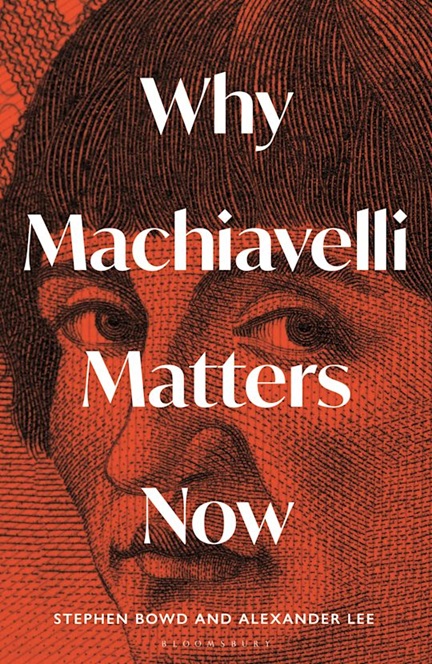
Machiavellian is rather a dirty idea in politics, conjuring tired images of scheming Wormtongues, smoke and mirrors, nights of long knives, Peter Mandelson.
But a new book hopes to change that, by offering us a more rounded view of this important figure, who has been sadly lost — like Sun Tzu and Marcus Aurelius, but thankfully not Edward Gibbon or Carl von Clausewitz — to business bros who buy their books in branches of TG Jones in regional airports.
The first chapter of Why Machiavelli Matters Now is dedicated to the closest thing to methodology the Italian ever laid out. Halfway through The Prince, he writes that “it has seemed only proper to go straight to the effectual truth of the matter [alla verità effettuale della cosa], rather than to how it is imagined”. This, authors Stephen Bowd and Alexander Lee claim, “is perhaps the most crucial sentence in the whole of Machiavelli’s writings”.
But it might be best summarised as wanting to understand things not as they were, but as they came to be — or, more precisely, what caused them to change. That wasn’t all; since he used the concept in relation to a prince’s relations to “his subjects and friends”, it means the specifics of how human behaviour produces political change. This, as the authors note, “was genuinely revolutionary. No one until then had thought of politics in such overtly dynamic terms.”
This, at least, was Strauss’ reading. But as with most of Machiavelli’s work, the thing is more subtle than it first appears. Informed by both Aristotle and Lucretius (it should be obvious at this point how heavily I am cribbing from this interesting, short and consumable book), it was:
a truth that had to be decided pragmatically, through experience, on the basis of what felt right, rather than what could be rigorously verified – and all too often shaded off into mere verisimilitude. It sought to explain changes of all kinds but was preoccupied above all with the causes of civil unrest and factional struggles, which undermined rulers and republican regimes more than anything else
Understanding the effectual truth was, for Machiavelli, essential if princes were to avoid being either baffled or frightened by political developments. Alas, were our own princes aiming for such lofty ideals of governance.
The unspoken dividing line between “BCE” and “CE”
I’m not a trained historian, so I don’t know if it’s a guild requirement for modern historians to ostentatiously avoid using traditional “BC” and “AD” to denote historical dates or if it’s just another sop to the easily offended like so many other things:

An Olmec head, By Marshall Astor (Life on the Edge), CC BY-SA 2.0, https://commons.wikimedia.org/w/index.php?curid=19349056
Although I work primarily as a computer programmer, my college degree is in History. Over the years, I have retained a high level of interest in history, both recent and ancient.
A few months ago I listened to a Great Courses presentation about the Olmecs — one of the lesser known Central American civilizations — given by Dr. Ed Barnhart. The course lived up to its name and taught much about the history and society, as well as the giant heads, of the Olmecs. However, one thing bothered me about Dr. Barnhart’s presentation.
Dr. Barnhart generally uses CE and BCE for dates. CE stands for “common era” and BCE stands for “before common era”. Other than that fact, CE perfectly coincides with the previous AD and BCE perfectly coincides with BC.
Perhaps Dr. Barnhart should not be singled out. He is not alone in the use of these terms. In fact, the majority of historical presentations these days employ CE and BCE. And it may be that using these terms is not a personal decision; rather, it may be that a department-wide or even university-wide convention.
However, in my view, using CE and BCE instead of AD and BC is not okay. As an (amateur) historian, I believe that it’s bad for history. And as a Christian, I find it a bit offensive. I will probably never have the opportunity to tell Dr. Barnhart why he should not use CE/BCE, but if I did, here’s what I would tell him:
1) The prime commitment of a historian should be to history. A historian should be careful that the information presented is the most accurate, the most complete, and most contextually grounded. CE/BCE fails to be most accurate because it takes an obviously true historical fact — that the currently used Julian/Gregorian calendar is based on the birth of Christ — and obscures that fact. It is not the most complete because there is no way on its own to understand that CE/BCE means to present the same system as AD/BC. To truly understand the system, the AD/BC system would need to be explained. The AD/BC system can stand on its own, but the CE/BCE can only be understood along with AD/BC.
And it lacks context because the terms “common era” and “before common era” give no indication as to what exactly is the demarcation between the two eras. Since CE/BCE gives no referent, a student could reasonably conclude that the dating system is entirely arbitrary. For these reasons, using CE/BCE leaves students or listeners knowing less than they should and perhaps even having a wrong understanding of the dating system. AD/BC preserves important historical information. CE/BCE does not. On the basis of that alone, CE/BCE should not be used by historians who want to be as accurate and complete as possible.
2) Using AD/BC does not require anyone to profess Christianity. Some might say that AD/BC unfairly burdens non-Christians, but the terms Anno Domini and Before Christ are clearly not confessional statements. There is no serious historical dispute that Jesus Christ existed in approximately the time and place given in the Scriptures, and AD/BC merely recognizes that this is the basis for the year numbering system. Anno Domini, or year of the Lord, doesn’t require the user to say “my Lord” or otherwise confess Christianity, just to recognize that the calendar was created by people who did confess Christianity. That is an important fact, not something to be hidden.
The fact is that every calendar starts dating from something, generally from an important event. Some examples are:
- Roman dating: years counted from the traditional founding of Rome, Ab Urbe Condita, conventionally placed in 753 BC.
- Hebrew calendar: years are traditionally counted from a calculated date for the creation of the world.
- Islamic calendar: years are counted from the Hijra, Muhammad’s journey from Mecca to Medina in AD 622.
- French Republican calendar: years were counted from the establishment of the French Republic in AD 1792.
To use a particular calendar says nothing about one’s religious beliefs.
The Ancient Greeks 05 – The Greeks Fight Back 1 – The Way to Salamis
seangabb
Published 29 Mar 2026Greece: A Brief History, c.700 BC – 500 AD
How did the Greeks recover from what looked like total defeat? In this lecture, we pick up the story at the darkest moment of the Persian invasion. Athens has fallen. The Acropolis has been burned. Xerxes appears on the verge of total victory. And yet, the Greek resistance does not collapse.
We examine the extraordinary political and strategic crisis of 480 BC, including:
– The evacuation of Athens and the transformation of the city into a “nation at sea”
– The internal divisions within the Greek alliance
– Spartan reluctance to defend central Greece
– The decisive leadership of Themistocles
– The strategic importance of naval powerAt the centre of this lecture is the question of strategy: should the Greeks abandon the north and defend the Peloponnese, or risk everything in a naval battle at Salamis?
This is the turning point of the war — not yet a victory, but the moment at which survival becomes possible.


