Quotulatiousness

April 2, 2014

Enigma’s 21st century open sourced descendent

Filed under: History, Military, Technology, WW2 — Tags: , , — Nicholas @ 09:51

The Enigma device was used by the German military in World War 2 to encrypt and decrypt communication between units and headquarters on land and at sea. Original Enigma units — the few that are on the market at any time — sell for tens of thousands of dollars. You may not be able to afford an original, but you might be interested in a modern implementation of Enigma using Arduino-based open-source hardware and software:

Actual hand-crafted Final design

Actual hand-crafted Final design

Enigma machines have captivated everyone from legendary code breaker Alan Turing and the dedicated cryptographers from England’s Bletchley Park to historians and collectors the world over.

But while many history buffs would surely love to get their hands on an authentic Enigma machine used during WWII, the devices aren’t exactly affordable (last year, a 1944 German Enigma machine was available for auction at Bonhams with an estimated worth of up to $82,000). Enter the Open Enigma Project, a kit for building one from scratch.

The idea came to Marc Tessier and James Sanderson from S&T Geotronics by accident.

“We were working on designing and building intelligent Arduino-based open-source geocaching devices to produce a unique interactive challenge at an upcoming Geocaching Mega Event,” Tessier told Crave. “A friend of ours suggested we use an Enigma type encrypting/decrypting machine as the ultimate stage of the challenge and pointed us to an Instructables tutorial that used a kid’s toy to provide some Enigma encoding. We looked all over to buy a real Enigma machine even if we had to assemble it ourselves and realized that there was nothing available at the moment. So we decided to build our own.”

[…]

“Our version is an electronic microprocessor-based machine that is running software which is a mathematical expression of how the historical mechanical machine behaved,” Sanderson told Crave. “Having never touched a real Enigma M4, we built our open version based on what we read online. From what we understand, the real electro-mechanical devices are much heavier and a little bigger.”

They took some design liberties — replacing the physical rotors with LED units and replacing the light bulbs with white LEDs. The replica can be modified by changing the Arduino code and can communicate to any computer via USB. Future versions may include Wi-Fi and/or Bluetooth.
Mapaholics rejoice!

Filed under: History, Media, USA — Tags: , — Nicholas @ 07:53

The New York Public Library has released over 20,000 historical maps under a Creative Commons license:

Lionel Pincus & Princess Firyal Map Division is very proud to announce the release of more than 20,000 cartographic works as high resolution downloads. We believe these maps have no known US copyright restrictions.* To the extent that some jurisdictions grant NYPL an additional copyright in the digital reproductions of these maps, NYPL is distributing these images under a Creative Commons CC0 1.0 Universal Public Domain Dedication. The maps can be viewed through the New York Public Library’s Digital Collections page, and downloaded (!), through the Map Warper. First, create an account, then click a map title and go. […]

What’s this all mean?

It means you can have the maps, all of them if you want, for free, in high resolution. We’ve scanned them to enable their use in the broadest possible ways by the largest number of people.

Though not required, if you’d like to credit the New York Public Library, please use the following text “From The Lionel Pincus & Princess Firyal Map Division, The New York Public Library.” Doing so helps us track what happens when we release collections like this to the public for free under really relaxed and open terms. We believe our collections inspire all kinds of creativity, innovation and discovery, things the NYPL holds very dear.

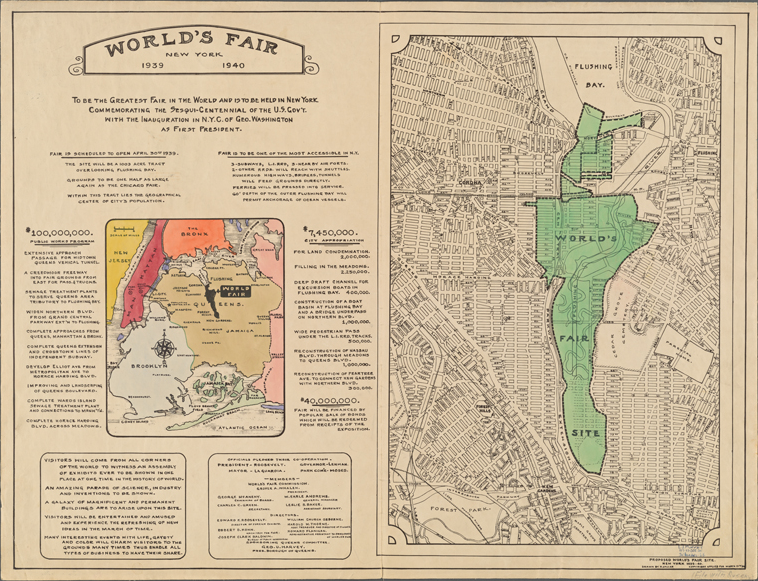
World's Fair New York 1939-1940. Proposed World's Fair site.

World’s Fair New York 1939-1940. Proposed World’s Fair site.

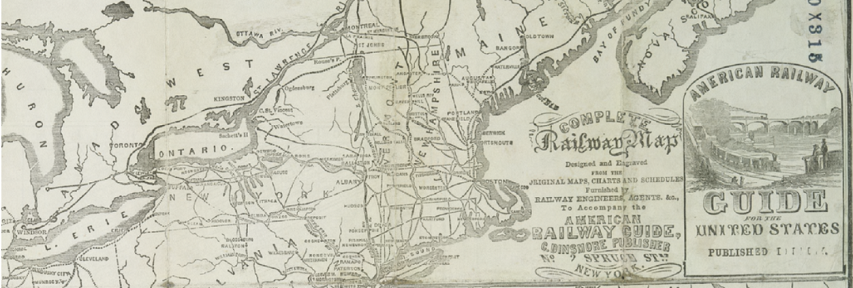
Complete railway map designed and engraved from the original maps, charts and schedules furnished by railway engineers, agents &c. to accompany the American Railway Guide (detail)

Complete railway map designed and engraved from the original maps, charts and schedules furnished by railway engineers, agents &c. to accompany the American Railway Guide (detail)

April 1, 2014

The Unauthorized Autobiography of Kim Jong Il: Q&A with Michael Malice

Filed under: Asia, Books, History, Humour, Media — Tags: , , — Nicholas @ 00:01

Published on 28 Mar 2014

Kim Jong Il, who was the supreme leader of North Korea until his death in 2011, was a leading authority on gymnastics, cinema, literature, war, cooking, and the arts. He wrote 1,400 works when he was in college, including a senior thesis that was an achievement comparable to Columbus’ discovery of America. He revolutionized the opera, personally discovered that Paleolithic man originated on the Korean Peninsula, and came up with a theory of art that was as impactful on modern culture as the Copernican Revolution. Why did the supreme leader always wear sunglasses? That’s because his eyes were constantly bloodshot from staying up all night figuring out ways to help his country.

These are details from celebrity ghostwriter (and former editor of Overheard in New York) Michael Malice’s new book Dear Reader: The Unauthorized Autobiography of Kim Jong Il, a strange, tragic, and humorous first-person account of the supreme leader’s life. On March 18, 2014, at an event held at New York City’s Museum of Sex and sponsored by the Reason Foundation, The New York Times columnist John Tierney sat down with Malice to discuss the book.

Highlights from the event included a discussion of how Malice came to write Dear Reader (1:28); why Kim Jong Il is despised by North Koreans (7:00); how North Koreans are forced to engage in regular self-criticism sessions in which they’re denounced by their peers (9:00); why it was a surprise that Kim Jong Il succeeded his father, Kim Il-sung (12:00); why there’s no hope that political change will come to North Korea anytime soon (20:20); Ayn Rand’s influence on Malice (23:20); why Kim Jong Il hated the Mona Lisa (27:15); an example of a North Korean joke (29:15); why Malice thinks the media’s coverage of Dennis Rodman’s relationship with Kim Jong Un is deplorable (31:35); the story behind the 1987 bombing of Flight 858 by North Korean agents (33:20); the origins of the Korean famine (41:00); Kim Jong Il’s “spot on critiques of U.S. foreign policy” (42:00); why North Korea allows its citizens to reunite with family members from South Korea (43:30); the relationship between China and North Korea (50:00); and North Korea’s nuclear capabilities (51:15).

For more on Malice’s time in North Korea researching the book, read his account from the August/September 2013 issue of Reason.

March 30, 2014

The rise of Vladimir Putin

Filed under: Europe, History, Politics, Russia — Tags: — Nicholas @ 10:29

BBC News charts the unlikely rise of Russian leader Vladimir Putin:

On 16 August 1999, the members of Russia’s parliament — the State Duma — met to approve the candidacy of a prime minister. They heard the candidate’s speech, they asked him a few questions, and they dutifully confirmed him in the position.

This was President Boris Yeltsin’s fifth premier in 16 months, and one confused party leader got the name wrong. He said he would support the candidacy of Stepashin — the surname of the recently sacked prime minister — rather than that of his little-known successor, before making an embarrassing correction.

If even leading Duma deputies couldn’t remember the new prime minister’s name, you couldn’t blame the rest of the world if it didn’t pay much attention to his speech. He was unlikely to head the Russian government for more than a couple of months anyway, so why bother?

That man was a former KGB officer, Vladimir Putin, and he has been in charge of the world’s largest country, as president or prime minister, ever since. Few realised it at the time, because few were listening, but that speech provided a blueprint for pretty much everything he has done, for how he would re-shape a country that was perilously close to total collapse.

Just 364 days previously, Russia had defaulted on its debt. Salaries for public sector workers and pensions were being paid months late, if at all. Basic infrastructure was collapsing. The country’s most prized assets belonged to a handful of well-connected “oligarchs”, who ran the country like a private fiefdom.

The once-mighty Russian army had lost a war in Chechnya, a place with fewer inhabitants than Russia had soldiers. Three former Warsaw Pact allies had joined Nato, bringing the Western alliance up to Russia’s borders.

Meanwhile, the country was led by Yeltsin, an irascible drunkard in fragile health. The situation was desperate, but Putin had a plan.


Russian President Vladimir Putin attends a meeting with members of the Council of the Federation on March 27, 2014 in Moscow, Russia. (Photo by Sasha Mordovets/Getty Images)

March 29, 2014

A Conservative reading of Canadian history

Filed under: Cancon, History, Politics — Tags: , , — Nicholas @ 10:33

David Akin notes that Stephen Harper’s self-appointed task — to change the narrative from a Liberal view of Canada to a Conservative one — is still underway. He points to a recent speech by John Baird as proof:

Both his fans and his critics agree on one thing about Stephen Harper. He wants to transform the country, so Canadians will come to see his Conservatives and not the Liberals as the natural governing party.

By the election of 2015, he will have done much in that regard.

But to make that work endure, the Conservatives need history on their side. They need a narrative of Canada in which Conservative Party values are integral to the story. Voters who buy this history will then turn to Conservative leaders as the default choice in this century the way Canadians turned to Liberal leaders by default in the last century.

[…]

“As I reflect on Diefenbaker’s legacy,” Foreign Affairs Minister John Baird said this week, “I realise that our past makes me optimistic about our future. What we can offer the world is more important, not less. More relevant, not less. I think that it is fair to say our country has defied the low expectations of ‘middle power’. We have defied it with the ambition of leading rather than following.”

Baird’s 2,000-word speech was a neat encapsulation of this Conservative view of our history. There was a brief mention of Dief’s Bill of Rights, but much talk about how the Chief stood up to Soviet communism, just as Harper is standing up to Russian imperialism today.

“We are builders and pioneers,” Baird said. “We are warriors when war is thrust upon us, and we are compassionate when confronted by catastrophe.”

Professional historians have been taking issue with Conservatives for this reading of history but their argument is a column for another day.

Today, it’s worth marking Baird’s speech as a manifesto, a rationale for the Harper government’s decision to spend millions marking the War of 1812, and millions more for upcoming First World War commemorations.

It is through the re-telling of these stories that Harper hopes Conservatives will be able to displace Liberals as Canada’s “natural governing party”.

China’s “barbarian-handling tools” date back 2,000 years

Filed under: China, History, Military, Weapons — Tags: , , — Nicholas @ 09:35

Edward Luttwak describes the very first time China was able to bring powerful “barbarians” into a tributary state, and how that first success has become a key element of Chinese geostrategic thought ever since:

It is this successful transformation of a once superior power first into an equal (signified by imperial marriages) and then into a subservient client-state that seems to have left an indelible residue in China’s tradition of statecraft. It was achieved with a specific “barbarian-handling” tool box first described by its early practitioner, the scholar and imperial advisor Lou Jing (婁敬) 199 BCE. His method was first applied when the Xiongnú [匈奴 horse-nomad state] were still very strong and the Han were not only tactically inferior (their chariots were totally obsolete for fighting mounted archers) but also beset by political divisions, so much so that a 198 BCE4 treaty required the payment of an annual tribute in kind (silk, grain, etc.), and the formal attestation of equality for the Chanyu [Qagan, Khan] embodied in a marriage alliance, formalized by imperial letters that make the equality fully explicit.

The first barbarian-handling tool is normally translated as “corruption” in English translations, but perhaps “addiction,” or more fully “induced economic dependence” are more accurate: the originally self-sufficient Xiongnú were to be made economically dependent on Han-produced goods, starting with silk and woolen cloths instead of their own rude furs and felt. At first supplied free as unrequited tribute, these goods could still be supplied later on when the Han were stronger, but only in exchange for services rendered.

The second tool of barbarian handling, is normally translated as “indoctrination”: the Xiongnú were to be persuaded to accept the authoritarian Confucian value system and the collectivistic behavioral norms of the Han, as opposed to the steppe value system, based on voluntary allegiance to a heroic (and successful in looting) fighting and migration leader. One immediate benefit was that once the Chanyu’s son and heir married an imperial daughter, he would be ethically subordinated to the emperor as his father-in-law — remaining so when he became Chanyu in turn.

The much larger, longer-term benefit of the second tool was to undermine the entire political culture of the Xiongnú, and make them psychologically well as economically dependent on the imperial radiance, which was willingly extended in brotherly fashion when the Han were weak, and then contemptuously withdrawn when the Xiongnú were reduced to vassalage. What happened between the Han and the Xiongnú from the equal treaty of 198 BCE to the vassalage treaty of 51 BCE, remained thereafter, and still remains today the most hopeful precedent for Han dealings with powerful and violent states — evidently the assigned role of the United States in the present Beijing world-view.

The method forms a logical sequence:

Stage One: start by conceding all that must be conceded to the superior power including tribute, in order to avoid damage and obtain whatever forbearance is offered. But this in itself entangles the ruling class of the still-superior power in webs of material dependence that reduce its independent vitality and strength.

Stage Two: offer equality in a privileged bipolarity that excludes all lesser powers, or “G-2” in current parlance. That neutralizes the still powerful Other party, and isolates the manipulated soon-to-be former equal from all its potential allies, preventing from balancing China with a coalition.

Stage Three: finally, when the formerly superior power has been weakened enough, withdraw all tokens of equality and impose subordination.

Until the Chinese government decided — very prematurely I believe — to awaken the world to its classically imperial territorial ambitions by demanding the cession of lands, reefs, rocks, and sea waters from India, Japan, Malaysia, the Philippines, and Vietnam (demands that disturb and damage the concurrent Tianxia narrative of an alternative and more harmonious state system, disseminated even within the confines of Stanford University), it was making much progress towards Stage Two, the stage of equality preparatory to the final stage of subordination.

March 27, 2014

Remembering “the war on Dungeons and Dragons

Filed under: Gaming, History, USA — Tags: , , , , , , — Nicholas @ 08:31

First, the comment that @FakeTSR linked to:

It was never a fair fight between fundamentalist Christianity and D&D. One was a dangerous system full of dark mysticism and threats to warp a young mind beyond repair, and the other was a tabletop RPG.

And then, the article by Annalee Newitz:

Thirty years ago, a war raged between the dorks who played Dungeons & Dragons, and the conservative parent groups who believed that gaming was debauched at best and Satanic at worst. Lives were ruined. People died. And now that war is over. I still can’t believe we won.

[…]

Still, unlike my fantasy of being a hot half-elf, the Christians actually had some control over our lives. My best friend got kicked out of Catholic school for playing D&D, which we counted as a win because it meant she could come to our shitty public school and play D&D with us. Outside our southern California town, however, D&D players weren’t getting off so easily. They were ostracized by their peers, kicked out of public schools, and sent to glorified reeducation camps by parents who feared their children were about to start sacrificing babies to Lolth the spider demon.

Dungeons and Dragons moral panic

Update, 28 March: Techdirt‘s Timothy Geigner sorrowfully points out that even though this particular moral panic eventually came to a happy end, the lessons of each significant outbreak of hysteria are not carried forward and the next professional pants-wetting politician or “concerned parent group” does not get the scrutiny they deserve.

As the article says, looking back from the vantage point of a world where entertainment is strewn with the fantasy genre, it’s stunning to see the propaganda that had been unleashed. Unsurprisingly, said propaganda has since been eviscerated, with all the common tales of kids killing themselves being shown to be completely unrelated to anything having to do with children’s games. Still, this kind of thing propagated like hell-fire. For all the normal, non-Satan-worshipping kids out there that were just trying to have a little fun, it must have seemed like insanity would rule the day. Fortunately, it didn’t.

[…]

Winners who are now all grown up and who have moved on to their next moral panic, be it violent video games, drill gangster rap, or any number of the next thing the younger generations will come up with. The cycle repeats. Every generation was young, became old, and feared the new young again. That’s too bad, but for those of us still reveling in our youth, real or imagined, it’s nice to know that the moral panic over video games, like all those before it, will eventually subside.

Smithsonian on the 50th anniversary of John Coltrane’s A Love Supreme

Filed under: History, Media — Tags: , , , — Nicholas @ 08:04

One of my all-time favourite jazz albums is turning 50, and the Smithsonian is marking the occasion:

The Smithsonian’s National Museum of American History will kick off the 13th annual Jazz Appreciation Month March 26 at 11 a.m., with donations from Ravi Coltrane, son of international music legends, John and Alice Coltrane, and from notable jazz photographer, Chuck Stewart. Coltrane will then discuss his father’s career and the famed studio album, A Love Supreme, widely considered one of the greatest jazz albums of all time and celebrating its 50th anniversary. During its own 50th anniversary year, the museum is displaying Coltrane’s original score in the “American Stories” exhibition through June 17. The ceremony will be webcast live online.

Ravi Coltrane will donate his father’s Selmer Mark VI tenor saxophone, made in Paris about 1965, the year that A Love Supreme was released. The saxophone is one of three principal saxophones Coltrane played and will be on view in the “American Stories” exhibition starting June 17. An accomplished bandleader and composer in his own right, Ravi Coltrane tours extensively with his own groups and with many other artists, including jazz musicians. He is a Blue Note recording artist.

“Today, a cherished and beloved Coltrane family heirloom becomes a national treasure and through Stewart’s never before seen images, our view of Coltrane expands,” said John Gray, director of the museum. “These generous donations help us preserve not only the legacy of individual artists, but of jazz music as a whole and its integral role in the history of music in America.”

H/T to Julian Sanchez for the link.

March 26, 2014

I, Claudius by Robert Graves

Filed under: Books, Europe, History, Media — Tags: , , — Nicholas @ 00:01

March 25, 2014

The origins of Hound of the Baskervilles

Filed under: Books, Britain, History, Media — Tags: — Nicholas @ 08:51

In History Today, Richard Cavendish tells the story behind the best-known of Arthur Conan Doyle’s Sherlock Holmes stories:

Much ink and accusations of plagiarism have been spilled over the story’s origins. Conan Doyle’s initial inspiration came from a young journalist friend named Bertram Fletcher Robinson, nicknamed ‘Bobbles’, with whom he spent four days on a seaside golfing holiday at Cromer in Norfolk in the spring of 1901. While they were there, Robinson told Doyle the legend of a ghostly hound on Dartmoor and the two men decided to write what the latter called ‘a real creeper’ together. Robinson lived at Ipplepen, near Newton Abbot in South Devon, and the two friends went there to investigate Dartmoor. Robinson wrote later that Doyle ‘listened eagerly to my stories of the ghost hounds, of the headless riders and of the devils that lurk in the hollows – legends upon which I had been reared, for my home lay on the borders of the moor.’ They stayed at Robinson’s home and at Rowe’s Duchy Hotel at Princetown near the prison, whose governor, deputy governor, chaplain and doctor solemnly came, as Robinson noted, ‘to pay a call on Mr Sherlock Holmes’, to Doyle’s irritation. He and Robinson explored the moor together and appropriated the surname of Robinson’s coachman, Harry Baskerville.

Doyle decided early on to make the tale a Sherlock Holmes mystery, presumed to be an episode in Holmes’ earlier career, before his fatal grapple with Professor Moriarty at the Reichenbach Falls. Writing to the editor of the Strand Magazine, Herbert Greenhough Smith, to tell him about the new story, he stipulated that Fletcher Robinson’s name must appear as joint author. ‘I can answer for the yarn being all my own in my own style without dilution, since your readers like that. But he gave me the central idea and the local colour, and so I feel his name must appear.’ This was finally watered down to a note added to the first part, recording Doyle’s indebtedness to Fletcher Robinson, to whom ‘this story owes its inception’ and ‘who has helped me both in the general plot and in the local details.’ The British and American editions in book form also acknowledged Robinson’s help.

March 24, 2014

The Great Escape (with bonus Canadian content)

Filed under: Cancon, Europe, Germany, History, Military, WW2 — Tags: , — Nicholas @ 16:06

It was 70 years ago today that the “Great Escape” from Stalag Luft III took place:

March 23, 2014

QotD: Woodrow Wilson

Filed under: History, Politics, Quotations, USA, WW1 — Tags: , , , — Nicholas @ 09:59

The fraudulence of Wilson is now admitted by all save a few survivors of the old corps of official press-agents, most of them devoid of both honesty and intelligence. No unbiased man, in the presence of the revelations of Bullitt, Keynes and a hundred other witnesses, and of the Russian and Shantung performances, and of innumerable salient domestic phenomena, can now believe that the Doctor dulcifluus was ever actually in favor of any of the brummagem ideals he once wept for, to the edification of a moral universe. They were, at best, no more than ingenious ruses de guerre, and even in the day of their widest credit it was the Espionage Act and the Solicitor-General to the Post Office, rather than any plausibility in their substance, that got them that credit. In [Theodore] Roosevelt’s case the imposture is less patent; he died before it was fully unmasked. What is more, his death put an end to whatever investigation of it was under way, for American sentimentality holds that it is indecent to inquire into the weaknesses of the dead, at least until all the flowers have withered on their tombs. When, a year ago, I ventured in a magazine article to call attention to Roosevelt’s philosophical kinship to the Kaiser I received letters of denunciation from all parts of the United States, and not a few forthright demands that I recant on penalty of lynch law. Prudence demanded that I heed these demands. We live in a curious and often unsafe country.

H.L. Mencken, “Roosevelt: An Autopsy”, Prejudices, part 2, 1920.

March 22, 2014

Night Bombers, 1943

Filed under: Britain, Germany, History, Military, WW2 — Tags: , , — Nicholas @ 00:01

Published on 30 Dec 2012

A unique record of the nightly air raids made on Germany during World War II. Archive colour footage from No. 1 Group, Royal Air Force operating Avro Lancaster bombers, in action, winter 1943. In the winter of 1943, RAF Bomber Command was sending massive raids almost every night into the heart of Germany. This is the story of one of them, an attack on Berlin. Although certain scenes had to be re-created for technical reasons, make no mistake, the raid is a real one and there are no actors.

Made by Air Commodore H.I. Cozens while station commander at Hemswell. This is the Only known colour record of the Bomber Command during WWII documenting a bombing raid targeting Berlin.

Another great find from the folks at Think Defence.

March 21, 2014

Byzantium’s secret weapon

Filed under: Europe, History, Weapons — Tags: , , — Nicholas @ 07:50

Military History Now had a guest post from Κonstantinos Karatolios talking about the Byzantine secret weapon known as “Greek Fire”:

The thousand-year Byzantine Empire could not have survived through the centuries without its powerful military. But Constantinople’s mighty army and navy didn’t just keep enemies at bay, they also helped it to expand into new territories and ultimately dominate the whole of the Mediterranean for hundreds of years. Of course, while the Byzantines’ stunning battlefield success was in part a by-product of military knowledge inherited from the old Roman Empire, it was also born out of new tactics and weaponry. One example of this is Greek fire. Also known as thalassion pyr, skeyaston pyr and medikon elaion, this incendiary liquid, which could be squirted or hurled into the ranks of an enemy, was perhaps the most fearsome of all of the empire’s armaments. Its use, whether on land or sea, verges on legend and yet almost all we know about Greek fire remains clouded in mystery. We are sure of one thing however — it was used with devastating effect throughout the whole course of the Byzantine Empire.

Here are nine little known facts about Greek fire.

I think there’s a typo in the list, as it mentions the first recorded use of the weapon by Anastasios I in 541, which was actually the middle of the reign of Justinian I. Anastasios I reigned from 491 to 518.

The Dambusters Raid – Full Documentary

Filed under: Britain, Europe, Germany, History, Military, WW2 — Tags: , , — Nicholas @ 00:01

Published on 20 Apr 2013

On May 17th, 1943 the Royal Air Force carried out one of the most remarkable raids ever undertaken by any aircrew. On that night a squadron of Lancaster heavy bombers flew at low level across a blacked out Europe, towards the four great dams that delivered water and power to the German industrial heartland of the Ruhr. The aircrews had been trained for months to carry out this most daring and courageous of raids. Against a storm of anti-aircraft fire, they calmly flew their bombers in across the reservoirs, holding a specific height and speed, to deliver their strange cylindrical bouncing bombs, to explode against the face of the dams, and blow great holes in them. The factories of the Ruhr were crippled. 1300 German civilians died, and 53 aircrew were lost. For the very first time this programme explores both sides of a raid that has become an epic in the history of World War 2.

H/T to Think Defence for the link.

« Newer PostsOlder Posts »

Powered by WordPress