
[W]e can thank Henry VIII (really Thomas Cromwell, I suppose, and Thomas Wolsey, and ironically Saint Thomas More) for giving us a good look at how Church administration actually functioned in the late Middle Ages. England was by far the best-governed major polity in Europe, even before the famous “Tudor revolution in government“. Lots of paperwork in Merrie Olde, and so Henry VIII’s little cock-driven temper tantrum gives us a priceless picture of how the Reformation went down.
It’s easy to get lost in this stuff — I had a long bit about Cardinal Wolsey, Thomas Cromwell, the Supplication Against the Ordinaries, the Annates Bill, and so on here — but the upshot is, pulling the Church down in England revealed the massive scale of its corruption. I want to say that the Annates Bill alone doubled the King’s revenue, and the dissolution of the monasteries (well underway in Cardinal Wolsey’s time, incidentally) unlocked unimaginable wealth. But it also fatally undermined the regime, because now an attack on the existing Church structure was also an attack on the King … and vice versa.
What you got, in short, was a total social conflagration. The “Reformation” wasn’t really about theology. Nothing Luther said was particularly new. Jan Huss and John Wyclif said basically the same things 100 years earlier; hell, St. Augustine said them 1000 years before. There’s still an irreconcilable “Protestant” strain in Catholicism now — Cornelius Jansen was just a Catholic Luther, and in a lot of ways a much better one; he was declared a heretic because reasons, and “because reasons” was good enough in Jansen’s time (the very nastiest phase of the Thirty Years’ War), but since he’s just quoting St. Augustine …
The point is, the undeniable rottenness of the Catholic Church made it a convenient whipping boy for any conceivable beef against society as a whole. Because it wasn’t just the Church that was too decadent, depraved, and corrupt to go on — it was the entirety of Late Medieval society. Again, stop me if this sounds familiar, but Late Medieval society looks a lot like spoiled, histrionic children playing dress up. They look like kings, and they act like kings (popes, bishops, etc.), but it’s obvious it’s just an act — they know they’re supposed to do these things (put on tournaments, hold jubilees, preach sermons, fight wars, etc.) but they have no idea why.
Severian, “Reformation”, Founding Questions, 2022-03-07.
November 6, 2025
QotD: The Reformation
November 5, 2025
The Korean War Week 72: UN Censors as Communists Speak! – November 4, 1951
The Korean War by Indy Neidell
Published 4 Nov 2025The Panmunjom peace talks continue, but a real sticking point is Kaesong- both sides insist that they must have control of it. Frustration mounts among the Allied journalists, though, as they are allowed less access to what’s going on than their Communist counterparts. Despite the talks, there’s new action in the field this week, as the Chinese attack in force to try and retake Maryang-san, a commanding strategic position.
Chapters
00:00 Intro
00:40 Recap
00:59 The Kaesong Issue
03:24 Voluntary Repatriation
07:14 US Command’s Position
09:15 All For All Repatriation
10:35 UN Censorship
12:29 Maryang-San
13:35 Summary
13:37 Conclusion
14:39 CTA
(more…)
Hands To Flying Stations (1975)
David Bober (Royal Navy Films)
Published 25 Jun 2013Official govt film uploaded as “fair use”. Naval Instructional Film A2690.
Royal Navy documentary from 1975 featuring aircraft carrier HMS Ark Royal (R09). The film details flight operations aboard the Ark. Aircraft in the film include the Phantom FG1, the Buccaneer S2, the Gannet AEW3, the Wessex HAS1 and the Sea King HAS2.
HMS Ark Royal (R09) was an Audacious-class aircraft carrier built by Cammell Laird, Birkenhead and commissioned into the Royal Navy on 25 February 1955. She was decommissioned on 14 February 1979 after 23-years service. She was the last operational RN aircraft carrier to use “cats and traps” (conventional catapult launch and arrested landing). The Ark featured in the 1976 BBC television series Sailor.
November 4, 2025
Sir Arthur Currie, Canada’s best general in WW1
On the social media site formerly known as Twitter, InfantryDort gives a lesson in Canadian military history that your kids are unlikely to ever get in school:
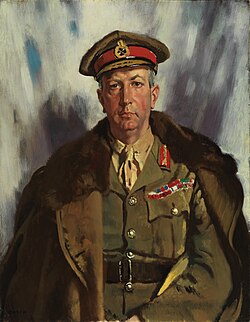
Canada: Let us remind you of what your nation was once capable of, and likely still is again. Time will tell. Courtesy of @grok UNHINGED👇
SIR ARTHUR CURRIE: The Ontario slide-rule psychopath who turned war into a goddamn spreadsheet and made the Kaiser cry uncle.
Listen up, you trench-foot tourists and armchair Haigs. While Europe’s aristocrats were using human meat to plug shell holes, some lanky insurance salesman from Napperton, Ontario rolled up with a protractor and a grudge against inefficiency so pure it could sterilize a field hospital. Six-foot-four of quiet Canadian fury. No Sandhurst polish. No inherited estate. Just a militia gunner who looked at the Western Front and said: “This is sloppy. Let me fix your murder math.”
Vimy Ridge: the ridge that laughed at French corpses for two years. Currie hands every platoon leader a map accurate to the latrine, rehearses the assault until the boys can do it blindfolded in a thunderstorm, then unleashes a creeping barrage so precise it’s basically a Roomba made of high explosives. Four days later the ridge is theirs. France needed therapy. Canada needed a birth certificate.
Hill 70: supposed to be a sideshow. Currie turned it into a German obituary — 9,000 Canadian casualties for 20,000 German ones. That’s not a battle, that’s a hostile takeover with extra steps.
Passchendaele: Haig wants it. Currie says, “Fine, but it’ll cost exactly 16,000 of my boys”. Mud eats them like clockwork. Sixteen thousand. He predicted it to the body. The man could forecast death better than the Farmer’s Almanac predicts frost.
Amiens: the day the German army discovered existential dread. Currie’s corps punches twenty-two kilometers through the Hindenburg Line in four days like it’s made of wet cardboard. Ludendorff calls it “the black day of the German Army” and probably wet his monocle.
The Hundred Days: wherever the Canadians go, the war ends faster — Arras, Cambrai, Canal du Nord. German prisoners start asking for Currie by name like he’s the Grim Reaper’s polite cousin. “Wenn Currie kommt, bricht die Linie.” When Currie shows up, your defense budget becomes a suggestion.
And the best part? He’s not screaming. He’s not posing for propaganda photos with a riding crop. He’s in the back, recalculating artillery tables while lesser generals are still figuring out which end of the horse goes forward.
Post-war? Becomes principal of McGill because apparently breaking the German army wasn’t challenging enough. Gets slandered for “wasting lives” at Mons, sues the bastard for libel, and wins with the same cold precision he used to win battles. Even his lawsuits had kill ratios.
Runner-ups:
Sir Richard Turner — the human participation ribbon. Managed the 2nd Division like success was contagious.Sir David Watson — followed Currie’s plans like IKEA instructions: mostly right, but slower.
Sir Henry Burstall — thought “supporting fire” meant “hope the shell lands somewhere in Europe”.
Currie carried their divisions like a Sherpa with a PhD in applied violence.
Verdict: Currie didn’t just win battles. He invented the modern battlefield while everyone else was still playing medieval siege with extra mustard gas. Montgomery called him “the best corps commander of the war”, and Monty would rather die than compliment anyone.
Share this if you’d let Currie balance your checkbook, plan your wedding, and end your existential crisis with a well-timed barrage. Canada’s greatest general was a nerd with a death wish for waste and a heart that bled maple syrup for every lost soul. Never forget.
The Bear Who Beat the Nazis | Wojtek
The Rest Is History
Published 29 Jun 2025The story of Wojtek — the bear who took on the Nazis — amidst the death and devastation of the Second World War, and more specifically Poland’s heroic resistance, is a flicker of redemption amidst an otherwise deeply depressing period of history. His is a life that exemplifies not only Poland’s struggle in microcosm, but also the global nature of the war overall. Discovered by a young boy as a tiny cub, his mother dead, he was sold to Polish officers travelling to Palestine in the hills outside Tehran. The soldiers nursed and fed the young bear with milk from a vodka bottle, treating him like one of their own. Later, he was even purported to keep them warm at night, drink beer, delight in wrestling and showers, and both march and salute. When the Polish forces were finally deployed to Europe, “Wojtek” as he had been named, went with them; a mascot and morale booster to the men. There he was given military rank, and actively participated in the Italian campaign, carrying ammunition and artillery crates. But with death and destruction on all sides, what would be his fate?
Join Tom and Dominic as they discuss Wojtek, one of history’s most extraordinary animals, and his life in the army — an emblem of hope and resilience in the face of the horrors of the Second World War.
(more…)
QotD: What are Castles?
That purpose (defense) and that method (denying freedom of movement) are key to understanding how castles function, why they matter, and why they sprang up everywhere across Europe. So remember it: a castle is built in order to deny an enemy freedom of movement. We’ll get into what that actually means below.
But let’s stay on this definition for a moment, because, while all castles are fortifications, not all fortifications are castles.
I’ve often seen a further narrowing of the definition among medieval scholars, who often argue that to be a true castle, the structure must be from the European Middle Ages and be a fortified residence. This is why castles often have courtly rooms within them (like grand halls, bedrooms, chapels, etc.) beyond the storerooms, barracks, and defensive structures that their military purpose require.
I, of course, defer to the scholarly opinion in that definition — that a castle must be a medieval fortified residence. However, whether or not a castle’s owner continually lives there is actually less important for our purposes than the fact that a castle would be continually inhabited by someone loyal to its owner. A castle would not be left empty, whether or not anyone was sleeping in the master bedroom.
Eric Falden, “What Were Castles Actually For?”, Falden’s Forge, 2025-07-29.
November 3, 2025
Plastic Fantastic: How the Modern World Became Synthetic – W2W 051
TimeGhost History
Published 2 Nov 2025From the miracle material of the 1950s to the global crisis of the 21st century — this is the story of how plastic reshaped our lives, our economies, and our planet.
Born from wartime innovation, plastic promised a future of convenience, color, and endless possibility. From nylon stockings to Tupperware parties, it defined modern life — light, bright, and disposable. But the same durability that made it revolutionary also made it permanent.
In this episode of War 2 War, we trace how postwar optimism turned into an age of overproduction and pollution — how a chemical miracle became the material legacy of the modern world. Join us as we uncover how the postwar dream of “Better Living Through Chemistry” changed everything — forever.
(more…)
Swedish Kulspruta m/36 Double Browning MGs
Forgotten Weapons
Published 18 Jun 2025Despite being a neutral power during World War Two, Sweden had a variety of very interesting small arms — like their dual-mount Browning m/36 machine guns. These were originally adopted because the Swedes wanted a heavier medium MG cartridge and didn’t think their delayed-blowback Schwarzlose guns could handle it. The cartridge was 8x63mm, pushing a 219 grain projectile at 2500 fps. The m/36 Browning was a water cooled gun, an improvement on the older M1917 design. It not only handled the powerful new round, but it could also be easily swapped to the older 6.5x55mm round to use stocks of existing ammunition (and it would be later adapted to 7.62mm NATO as well). Most of the guns were built as matching pairs for antiaircraft use, with mirrors left and right side feeds and in effective recoil-absorbing cradle mounts.
Special thanks to Bear Arms in Scottsdale, AZ for providing access to this rare pair of guns for today’s video!
(more…)
QotD: Was Alexander “the Great”?
And that’s just not a reading of Alexander which can survive reading all of any of our key sources on him. The moment you read more than just the genteel anecdotes (“for he, too, is Alexander”, – though note that Alexander’s gentle words do not keep him from trying to use Darius’ family to extort Darius out of his kingdom, Arr. Anab. 2.14.4-9), I think one must concede that Alexander was quite ruthless, a man of immense violence. I mean, and I want to stress this, he killed one of his closest companions with a spear in a drunken rage. I do not think there is a collection of polite-but-witty one-liners to make up for that. But Cleitus was hardly the only person Alexander killed.
Alexander had Bessus, the assassin of Darius, mutilated by having his nose and ears cut off before being executed (Arr. Anab. 4.7.3). He has 2,000 survivors of the sack of Tyre crucified on the beach (Q. Curtius Rufus 4.4.14-17). Because he resisted bravely and wouldn’t kneel, Alexander had the garrison commander at Gaza dragged to death by having his ankles pierced and tied to a chariot (Q. Curtius Rufus 4.4.29). Early in his reign, Alexander sacks Thebes and butchers the populace, as Arrian notes, “sparing neither women nor children” (Arr. Anab. 1.8.8; Arrian tries, somewhat lamely, to distance Alexander from this saying it was is Boeotian allies who did most – but not all – of the killing). Of the Greek mercenaries enrolled in the Persian army at Granicus – a common thing for Greek soldiers to do in this period – Arrian (Anab. 1.16.6) reports that he enslaved them, despite, as Plutarch notes, the Greeks holding in good order and attempting to surrender under terms before they were engaged (Plut. Alex. 16.13). Not every opponent of Alexander gets Porus’ reward for bravery and pride.
Meanwhile, Alexander’s interactions, as noted above, with the civilian populace were self-serving and generally imperious. That’s not unusual for ancient armies, but I should note that Alexander’s conduct towards civilians was also no better than the (dismally bad) norm for ancient armies: he foraged, looted what he wanted, occasionally burned things (including significant parts of Persepolis, the Persian capital), seized land and laborers for his colonies and so on. Alexander’s operations in Central Asia seem to have been particularly brutal: when the populace fled to fortified settlements, Alexander’s orders were to storm each one in turn, killing all of the men and enslaving all of the women and children (Arr. Anab. 4.2.4, note also 4.6.5, doing the same in Marakanda).
And this, at least, brings back to our original question: Was Alexander “Great”? In a sense, I think the expectation in this question is to deliver a judgment on Alexander, but I think its actual function is to deliver a judgment on us.
The Alexander we have in our sources – rather than in the imperialistic hagiographies of him that still condition so much popular memory – seems to have been a witty, charismatic, but arrogant, paranoid and violent fellow. As I joke to my students, “Alexander seems to have enjoyed two things in life, killing and drinking and he was only good at the former”. He could be gentle and witty, but it seems, especially towards the end of his reign, was more often proud, imperious and murderous.
He was at best an indifferent administrator and because he was so indifferent to that task, most of his rule amounted to questions of the men he chose to do the job for him, and those choices were generally quite poor. He made no meaningful preparations for the survival of his empire, his family or his friends upon his death; Arrian (Anab. 7.26.3) reports famously that his last words were, when pushed by his companions to name a successor, τῷ κρατίστῳ (toi kratistoi), “to the strongest”. Translation: kill each other for it. And they did, killing every member of Alexander’s family in the process.1
He was not a great judge of men – for every Perdiccas, there is a Harpalus – or a great military innovator. He largely used the men and the army that his father gave him, and where he deviated from the men, the replacements were generally inferior. That said, he was an astounding commander on campaign and on the battlefield, managing the complex logistics of a massive operation excellently (until his pride got the better of him in Gedrosia) and managing his battles with unnatural calm, skill and luck. He was also, fairly clearly, a good fighter in the personal sense. Alexander was a poor ruler and a lack-luster king, but he was extremely good at destroying, killing and enslaving things.
To the Romans – who first conferred the title “the Great” on Alexander, so far as we know (he is Alexander Magnus first in Plautus’ Mostellaria 775 (written likely in the late 200s)) – that was enough for greatness. And of course it was enough for his Hellenistic successors, who patterned themselves off of Alexander; Antiochus III even takes the title megas (“the Great”) in imitation of Alexander after he reconquers the Persian heartland. Evidently by that point, if not earlier, the usage had slipped into Greek (it may well have started in Greek, of course; Plautus’ comedies are adapted from Greek originals). It should be little shock that, for the Romans, this was enough: this was a culture that reserved their highest honor, the triumph, for military glory alone. And it was clearly enough for Droysen and Tarn too: to be good at killing things and then hamfistedly attempt – and mostly fail – to civilize them, after all, was what made the German and British Empires great. It had to be enough, or else what were all of those Prussian officers and good Scottish gentlemen doing out there with all of that violence? To question Alexander might mean questioning the very system those men served.
What is greatness? Is it pure historical impact, absent questions of morality, or intent? If that is the case, Alexander was Great, because he killed an exceptionally large number of people and in so doing set off a range of historical processes he hadn’t intended (the one he did intend, fusing the Macedonian and Persian ruling class, didn’t really happen) which set off an economic boom and created the vibrant Hellenistic cultural world, outcomes that Alexander did not intend at all. This is a classic “great, but not good” formulation: we might as well talk of “Chinggis the Great”, “Napoleon the Great” or (more provocatively) “Hitler the Great” for their tremendous historical impact. Yet this is a definition that can be sustained, but which robs “greatness” of its value in emulation.
One cannot help but suspect in many of these circumstances, “greatness” is about killing larger numbers of people, so long as they are strange people who live over yonder and dress and pray differently than we here do. It is ironic that Tarn credited Alexander with imagining the unity of mankind, given that Alexander was in the process of butchering however many non-Macedonians was required to set up a Macedonian ethnic ruling class over all other peoples. One suspects, for Droysen and Tarn, it was “greatness”, to be frank, because they understood the foot inside the boot Alexander was planting on the necks of the world, was European and white and so were they. In that vision, greatness is “our man” as opposed to “their man”. But that is such a small-minded, petty form of greatness, “our killer and not your killer”.
Does greatness require something more? The creation of something enduring, perhaps? Alexander largely fails this test, for it is not Alexander but the men who came after him, who exterminated his royal line and built their kingdoms on the ashes of his, who constructed something enduring. Perhaps greatness requires making the world better? Or some kind of greatness of character? For these, I think, it is hard to make Alexander fit, unless one is willing, like Tarn was, to bend and break the narrative to force it. Had Alexander, in fact, been Diogenes (Plut. Alex. 14.1-5), rather than Alexander, but with his character – witty, charismatic, but imperious, arrogant and quick to violence – I do not think we would admire him. As for making the world better, Alexander mostly served to destroy a state he does not seem to have had the curiosity or cultural competence to understand, as Reames puts, it, “not King of Asia, but a Macedonian conqueror in a long, white-striped purple robe” (op. cit. 212). He surely did not understand their religions.2
In a sense, Alexander, I think, serves as a mirror for us. We question the greatness of Alexander and what is revealed are the traits, ideals, and actions we value. Alexander’s oversized personality is as captivating and charismatic now as it was then, and his record as a killer and conqueror is nearly unparalleled. But what is striking about Alexander is that beyond that charisma and military skill there is almost nothing else, which is what makes the test so discerning.
And so I think we continue to wrestle with the legacy and value of Alexander III of Macedon.
Bret Devereaux, “Collections: On the Reign of Alexander III of Macedon, the Great? Part II”, A Collection of Unmitigated Pedantry, 2024-05-24.
- I thus find it funny that every few years another “inspiring” anecdote about Alexander’s wise last words filters around the internet that Alexander’s actual reported last words were so grim and heartless.
- On this, see F. Naiden, Soldier, Priest and God (2018).
November 2, 2025
North Africa Ep. 6: Do You Smell What The Fox Is Cooking?
World War Two
Published 1 Nov 2025Rommel pushes his HQ toward the front, seizes the oasis at Marada, and sends a long-range Italo-German column deep toward Murzuk to harden his forces for true desert warfare. A brutal Ghibli sandstorm shows how the Sahara itself is a third enemy, choking engines, wrecking vehicles, and nearly killing Rommel in the air. At the same time, ULTRA intelligence finally reaches Wavell, Malta’s bombers are forced off the island under relentless Luftwaffe pressure, and Rommel is already ordering preparations to hit El Agheila despite supposedly leaving for Berlin.
(more…)
Biryani from 16th Century India
Tasting History with Max Miller
Published 27 May 2025Basmati rice cooked with spiced ghee, lamb, onions, and chickpeas
City/Region: Mughal Empire | India
Time Period: 16th CenturyIt’s likely that the word biryani comes from Persian, which would have made its way to India with the Mughal court of the emperor Babur in the 16th century. The actual dish of rice and meat cooked with ghee, however, had been around for hundreds of years before that, appearing sometime in the Vedic Period (1500 B.C.E. – 500 B.C.E.).
Whatever its true origins may be, biryani carries influences of Indian and Mughal (and thus Persian) cuisine and is delicious. The spices make the whole house smell amazing, and the rice is simultaneously fluffy and has the richness of fried rice thanks to the spiced ghee. It’s a bit of work, but it is so, so good.
10 seer meat, 3 1/2 seer rice; 2 seer ghi; 1 seer gram; 2 seer onions; 1/4 seer salt; 1/4 seer fresh ginger; 2 dam garlic, and round pepper, cinnamon, cardamoms, cloves, 1 dam of each: this gives six dishes.
OF BREAD
… Bread is made in the pantry. There is a large kind, baked in an oven, made of 10 s. flour; 5 s. milk; 1 1/2 s. g’hí; 1/4 s. salt. They make also smaller ones. The thin kind is baked on an iron plate. On sér will give fifteen, or even more. There are various ways of making it: one kind is called chapáti, which is sometimes made of khushkah; it tastes very well, when served hot …
— Ain-i akbari by Abu’l-Fazl ‘Allami, 16th century
November 1, 2025
The Spanish-American War 1898
The Great War
Published 13 Jun 2025In the last years of the 19th century, tension was building in the Caribbean. American newspapers were filled with grisly reports of Spanish atrocities against the people of Cuba struggling for independence. US businessmen and expansionist politicians also saw practical opportunities in Spain’s struggles: great power status and an empire for the United States. It’s the Spanish-American War.
(more…)
October 30, 2025
Javier Milei’s party does well in mid-term elections
J.D. Tuccille on the results of Argentina’s recent elections which returned significantly more of Javier Milei’s allies than pre-election polls predicted:

And things were going so well before 2am …
Argentina’s libertarian President Javier Milei won an important election victory on Sunday when his coalition, La Libertad Avanza (LLA), received a plurality of votes in the country’s legislative elections. With about half of the seats in the lower house up for grabs and a third of the Senate, LLA didn’t gain a majority, but it dramatically increased its share enough to block repeals of presidential decrees by lawmakers from other parties and to support presidential vetoes.
As Reason‘s César Báez commented, the results give Milei and his allies crucial time to continue needed free-market reforms and, hopefully, restore the fortunes of a country once held up as a model of prosperity, but which has been driven into poverty by decades of statist misrule.
In what it calls “a shocking electoral victory”, La Nacion reports that LLA pulled 40.66 percent of the vote. That’s well ahead of the opposition Peronists, who have long dominated the country and drew 31.7 percent of votes. Importantly, LLA won the populous province of Buenos Aires (home to 40 percent of voters), a Peronist stronghold where Milei’s allies were recently trounced in local elections.
From Wealth to Poverty Under Government Economic Meddling
This is good news for anybody who hopes for the advance of freedom, of course. But it’s especially encouraging for Argentines who, over the course of generations, have seen their country reduced from one of the wealthiest in the world to an impoverished basket case.
“At the end of the 19th century, economists agreed: Argentina, the ‘land of silver’, had a golden future ahead of it,” Deutsche Welle noted in 2020. “‘Rich like an Argentine’ was a common phrase at the time.”
The German broadcaster added, “in an unprecedented fall, Argentina went from ranking among the world’s top economies to one at the very bottom of the list. Today, economists simply roll their eyes at the fate of Argentina, which is now a developing country.”
The reason is simple enough: Argentines handed their political fates to a man named Juan Peron. In the 1930s, Peron served as a military observer in Europe, traveling to countries including Germany, Italy, and the Soviet Union. He was deeply impressed by some of the worst ideas to ever motivate a government and blended them into his own “justicialist” ideology. Through decades of political dominance, first Peron and then successor justicialists demonstrated that, in practice, there’s no real difference between fascism and socialism and that statist economics by any name are destructive.
To illustrate just how destructive Peron’s legacy has been, it’s worth pointing out that after Sunday’s election, The Wall Street Journal reported that Milei’s free-market, smaller-government policies “have restored some credibility to Latin America’s third-largest economy, but about one in three people still live in poverty”. One-third of the population living in poverty is horrifying, but what’s remarkable is that this is an improvement over what went before. At the end of the preceding Kirchner presidency, poverty stood at 41.7 percent and then briefly rose to 52.9 percent before falling to its current level.
In Spiked, Hugo Timms points out that the success of La Libertad Avanza is almost diametrically opposed to what most mainstream media reports were saying in the days leading up to the elections:

Argentine president Javier Milei has won a significant victory in Argentina’s midterm elections, held on Sunday. His libertarian party, La Libertad Avanza (Liberty Advances), claimed more than 40 per cent of the vote, effectively doubling its share of seats in the senate and lower house to 37 (out of 72) and 64 (out of 257) respectively.
The result came as a bitter shock to much of the mainstream Western press. Milei’s assault on established economic orthodoxies since his election in December 2023 led many “experts” to take it for granted that Milei’s party was in for a hiding.
In a primer for the election published last weekend, the Observer had already begun salivating over the prospect of Milei’s defeat. “Argentina is counting the cost of its turn to Javier Milei”, wrote economics editor Heather Stewart. Glum portraits of Nigel Farage and Donald Trump behind Milei loomed above the article. “Politicians around the world are closely watching what happens when populist economic prescriptions collide with reality”.
This was a comparatively soft take compared with what the Guardian published earlier in October. “Farage, Trump, Musk: your boy Javier Milei just took one hell of a beating. Why so quiet?”, blared the headline when Milei’s party was defeated in a provincial election in the capital Buenos Aires. The Guardian said Milei’s “hard right” administration was “melting away”, along with his “once-packed international throng of cheerleaders and wolf-whistlers”.
Unsurprisingly, the BBC struggled to get to grips with Milei’s victory on Sunday, even though its only job was to convey the results impartially. Apparently, the president made gains despite Argentina “hurtling towards an economic collapse”, it editorialised. It said the voter turnout of 68 per cent reflected “widespread apathy”. This might be lower than past midterm elections in Argentina, but it was still higher than turnouts at last year’s US presidential election (65 per cent) and the most recent UK General Election (60 per cent).
None of this should come as a shock. Since Milei’s rise to power in 2023, most of the commentariat has been eager to see him fail. His promises to radically cut public spending and deregulate key industries were seen in the eyes of many economic experts to only mean one thing: the dreaded return of Thatcherite “neoliberalism”, from which, they claim, Britain and America have never truly recovered.
The antipathy is mutual. In a speech to the World Economic Forum in January 2024, Milei famously referred to the world’s political classes as “parasites who live off the state”. That his speech was shared approvingly by Elon Musk on X confirmed, in the eyes of the Western establishment, Milei’s status as a dangerous insurrectionist.
Cowardice & Courage – Fear, Flying & Combat Stress
HardThrasher
Published 24 Oct 2025Just getting into a bomber took guts. To do it twice required balls of steel. What happened when men wouldn’t or couldn’t continue to fly? We’ll look at the dangers they faced, what the RAF and the USAAF did to tackle the problem and talk about the infamous “LMF” cases in the RAF
00:00 – Come with Me
03:51 – Intro
04:16 – Shell Shock
06:00 – Inter War vs Early War
09:17 – Night Terrors
10:31 – Death in the Daylight
11:00 – Common Fears
13:22 – Raw Numbers
14:55 – The Mew Who Flew
16:35 – In The Hands of the CO
18:53 – LMF
21:01 – Combat Stress in the USAAF
22:03 – Attempts at treatment
24:47 – Wrap up and Closing Message
(more…)
Arab-Israeli War, 1973 (Yom Kippur War)
Real Time History
Published 6 Jun 2025On October 6, 1973, Israelis celebrating the holiday of Yom Kippur are shocked by news of a mass two front attack in the Sinai and Golan Heights. Egypt and Syria, two nations still reeling from their humiliating defeat by Israel in 1967, smash through Israeli defenses.
(more…)


