
For 20 years between the wars [Field Marshal Viscount Slim] was a Gurkha officer, as so many of the 14th Army’s fighting generals were. Indeed, for a time, they were known on the front as the “Mongol Conspiracy.” Slim loves the Gurkhas, whose language he speaks. His favourite stories are of Gurkhas. He tells of the paratroopers who were to jump at 300 feet. As they had never jumped before, their Havildar [Sergeant] asked if they might go a little nearer the ground for their first jump. He was told that this was impossible because the parachutes would not have time to open. “Oh,” said the Gurkha, “so we get parachutes, eh?”
October 28, 2020
QotD: The Gurkhas
Comments Off on QotD: The Gurkhas
October 27, 2020
America’s “brutal system of slavery [was] unlike anything that had existed in the world before”
I missed this article by Kay S. Hymowitz when it was published by City Journal a couple of weeks back:
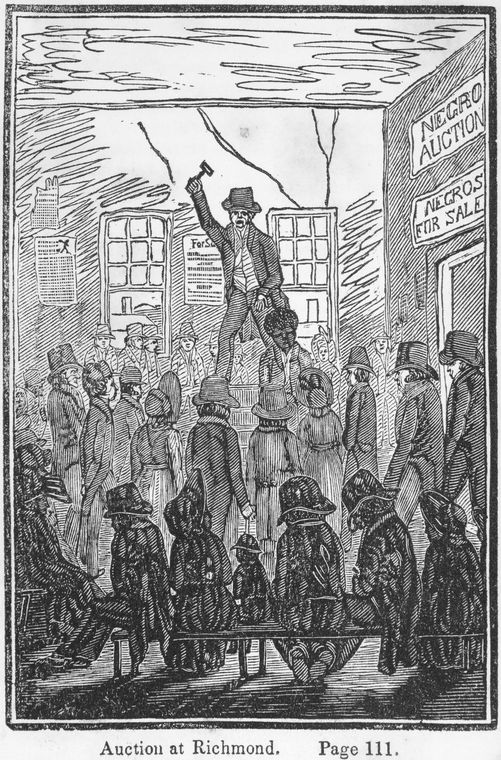
Auction at Richmond. (1834)
“Five hundred thousand strokes for freedom ; a series of anti-slavery tracts, of which half a million are now first issued by the friends of the Negro.” by Armistead, Wilson, 1819?-1868 and “Picture of slavery in the United States of America. ” by Bourne, George, 1780-1845
New York Public Library via Wikimedia Commons.
… slavery was a mundane fact in most human civilizations, neither questioned nor much thought about. It appeared in the earliest settlements of Sumer, Babylonia, China, and Egypt, and it continues in many parts of the world to this day. Far from grappling with whether slavery should be legal, the code of Hammurabi, civilization’s first known legal text, simply defines appropriate punishments for recalcitrant slaves (cutting off their ears) or those who help them escape (death). Both the Hebrew Bible and the New Testament take for granted the existence of slaves. Slavery was so firmly established in ancient Greece that Plato could not imagine his ideal Republic without them, though he rejected the idea of individual ownership in favor of state control. As for Rome, well, Spartacus, anyone?
In the ancient world, slaves were almost always captives from the era’s endless wars of conquest. They were forced to do all the heavy labor required for building and sustaining cities and towns: clearing forests; building roads, temples, and palaces; digging and transporting stone; hoeing fields; rowing galley ships; and marching to almost-certain death in the front line of battle. Women (and often enough boy) slaves had the task of servicing the sexual appetites of their masters. None of that changed with the arrival of a new millennium. Gaelic tribes took advantage of the fall of the Roman Empire to raid the west coast of England and Wales for strong bodies; one belonged to a 16-year-old later anointed St. Patrick, patron saint of Ireland. “In the slavery business, no tribe was fiercer or more feared than the Irish,” writes Thomas Cahill in How the Irish Saved Civilization.
Today, of course, the immorality of slave-owning is as clear as day. But in the premodern world, no neat division existed between evil slaveowners and their innocent victims. Once the Vikings arrived in their longboats in the 700s, the Irish enslavers found themselves the enslaved. Slavery became the commanding height of the Viking economy; Norsemen raided coastal villages across Europe and brought their captives to Dublin, which became one of the largest slave markets of the time. The Vikings thought of their slaves as more like cattle than people; the unlucky victims had to sleep alongside the domestic animals, according to the National Museum of Denmark in Copenhagen. Norsemen rounded up captured Irish men and women to settle the desolate landscape of Iceland; scientists have found Irish DNA in present-day Icelanders, a legacy of that time. The Slavic tribes in Eastern Europe were an especially fertile supplier for Viking slave traders as well as for Muslim dealers from Spain: their Latin name gave us the word slave. Slavs were evidently not deterred by the misery they must have suffered; when Viking power waned by the twelfth century, the Slavs turned around and enslaved Vikings as well as Greeks.
Slavery was a normal state of affairs well beyond the territory we now call Europe. The Mayans had slaves; the Aztecs harnessed the labor of captives to build their temples and then serve as human sacrifices at the altars they had helped construct. The ancient Near East and Asia Minor were chockfull of slaves, mostly from East Africa. According to eminent slavery scholar Orlando Patterson, East Africa was plundered for human chattel as far back as 1580 BC. Muhammad called for compassion for the enslaved, but that didn’t stop his followers from expanding their search for chattel beyond the east coast into the interior of Africa, where the trade flourished for many centuries before those first West Africans arrived in Jamestown. Throughout that time, African kings and merchants grew rich from capturing and selling the millions of African slaves sent through the Persian Gulf and Indian Ocean to Persians and Ottomans.
From the fifteenth to the eighteenth centuries, the North African Barbary coast was a hub for “white slavery.” This episode was relatively short-lived in the global history of slavery, but one with overlooked impact on Western culture. Around 1619, just as the first Africans were being sailed from the African coast to Jamestown, Algerian and Tunisian pirates, or “corsairs” as they were known, were using their boats to raid seaside villages on the Mediterranean and Atlantic for slaves who happened in this case to be white. In 1631, Ottoman pirates sacked Baltimore on the southern coast of Ireland, capturing and enslaving the villagers. Around the same time, Iceland was raided by Barbary corsairs who took hundreds of prisoners, selling them into lifetime bondage.
Comments Off on America’s “brutal system of slavery [was] unlike anything that had existed in the world before”
What Happened 100 Years Ago? – October 1920 I THE GREAT WAR
The Great War
Published 26 Oct 2020It’s time for our monthly summary of the events 100 years ago.
» SUPPORT THE CHANNEL
Patreon: https://www.patreon.com/thegreatwar» OUR PODCAST
https://realtimehistory.net/podcast – interviews with World War 1 historians and background info for the show.» BUY OUR SOURCES IN OUR AMAZON STORES
https://realtimehistory.net/amazon *
*Buying via this link supports The Great War (Affiliate-Link)» MORE THE GREAT WAR
Website: https://realtimehistory.net
Instagram: https://instagram.com/the_great_war
Twitter: https://twitter.com/WW1_Series
Reddit: https://reddit.com/r/TheGreatWarChannel»CREDITS
Presented by: Jesse Alexander
Written by: Jesse Alexander
Director: Toni Steller & Florian Wittig
Director of Photography: Toni Steller
Sound: Toni Steller
Editing: Toni Steller
Motion Design: Philipp Appelt
Mixing, Mastering & Sound Design: http://above-zero.com
Maps: Daniel Kogosov (https://www.patreon.com/Zalezsky)
Research by: Jesse Alexander
Fact checking: Florian WittigChannel Design: Alexander Clark
Original Logo: David van StepholdContains licensed material by getty images
All rights reserved – Real Time History GmbH 2020
Comments Off on What Happened 100 Years Ago? – October 1920 I THE GREAT WAR
October 26, 2020
“Immigrant Song” cover in Old Norse 700 A.D – 1500 A.D
the_miracle_aligner
Published 13 Oct 2020“Get in virgin, We’re raiding England”
Original by @Led Zeppelin: https://www.youtube.com/watch?v=RlNhD…
First off, apologies if I screwed this up because this was probably one of the hardest covers I have ever attempted (One does not simply try and emulate Robert Plant). If there were any mistakes in the pronunciations or translation too please do let me know 🙂 Thank you so much for watching guys, leave a like if ya liked it. And if you haven’t subbed yet, please consider doing so. Help me get to 100k Subs 🙂
Consider supporting the channel, I know what I do ain’t much but its honest work ❤: https://www.patreon.com/the_miracle_a…
Wanna follow me?
https://twitter.com/KholeJa
https://www.instagram.com/the_miracle…Big thanks to @Constantine for the instrumentals, PLEASE for the love of God go support his channel too 🙂 https://www.youtube.com/channel/UCoHA…
Big thanks to Angus Bolton for the translation and training. Twas truly a pleasure.
Source of the BG: https://in.pinterest.com/pin/29885612…
Lyrics, Courtesy of Angus (Its in Icelandic btw, I bet you don’t wanna be reading runes XD)
ís ok snœrs landi frá Komum
Af miðnótts boði,laugar vellar
Æsa hamarr
Vil drifum draka vár til noyer landum
Að vega hjrøða ok að hlakka ok söngr
Valhøl ver komumFram sveipum með bitinn øra
vestr strandi einn sœkjumís ok snœrs landi frá Komum
Af miðnótts boði, laugar vellar
Hvo mýkr síns grænar bjoðar
blóðs sögur susa megar
Af hvé dolgsstormi þegdum
síns bardgisherrar ver erumFram sveipum með bitinn öra
vestr strandi einn sœkjumSvo nu fallaðyrka létta ok simða síns betra
Þvi at and-fang mega daginn vinna þar allr#LedZeppelin #Norse #Bardcore #Skaldcore

Comments Off on “Immigrant Song” cover in Old Norse 700 A.D – 1500 A.D
Classic Imperial British Revolvers: the Webley WG Army and Target
Forgotten Weapons
Published 19 Aug 2018http://www.patreon.com/ForgottenWeapons
Cool Forgotten Weapons merch! http://shop.bbtv.com/collections/forg…
The Webley company used the “WG” (Webley Government) nomenclature in its literature starting in 1883, but the first revolver actually marketed as such was the WG Model of 1889. These revolvers were made primarily for the military market, as officers were responsible for supplying their own sidearms in the British military until 1915. The WG was a full size service revolver in .455 caliber (accepting a wide variety of .45 inch British cartridges, including the .450, .455, .476, Enfield Mk II, and Enfield MkIII). A series of refinements would be made to the design culminating in the generally-accepted standard WG pattern in 1896. These would be produced until 1902, when they were replaced by the Webley WS (Webley Service).
The two main variation of the WG were the Army and the Target. The Army typically had a bird’s-head grip and a 6 inch barrel, where the Target had a longer 7.5 inch barrel and a flared square-butt grip, as well as adjustable sights. However, Webley was happy to supply and mix of features to a customer, and many branded patterns exist. The Target pattern proved very successful for shooters at the Dublin, Glasgow, and Wimbledon matches of the period. A total of about 22,000 WG pattern revolvers were made, with the “standard” 1896 model appearing around s/n 10,000.
Contact:
Forgotten Weapons
6281 N Oracle #36270
Tucson, AZ 85704

Comments Off on Classic Imperial British Revolvers: the Webley WG Army and Target
October 25, 2020
Martial Law in Moscow, but is the Cavalry coming? – WW2 – 113 – October 24, 1941
World War Two
Published 24 Oct 2020The Germans draw ever closer to Moscow, but Soviet reinforcements have begun to arrive from Siberia and the city’s defenses have grown stronger. Meanwhile in the south, the Germans are sweeping into the Crimea and looking hungrily at the Caucasus.
Join us on Patreon: https://www.patreon.com/TimeGhostHistory
Or join The TimeGhost Army directly at: https://timeghost.tvFollow WW2 day by day on Instagram @ww2_day_by_day – https://www.instagram.com/ww2_day_by_day
Between 2 Wars: https://www.youtube.com/playlist?list…
Source list: http://bit.ly/WW2sourcesWritten and Hosted by: Indy Neidell
Director: Astrid Deinhard
Producers: Astrid Deinhard and Spartacus Olsson
Executive Producers: Astrid Deinhard, Indy Neidell, Spartacus Olsson, Bodo Rittenauer
Creative Producer: Maria Kyhle
Post-Production Director: Wieke Kapteijns
Research by: Indy Neidell
Edited by: Miki Cackowski
Sound design: Marek Kamiński
Map animations: Eastory (https://www.youtube.com/c/eastory)Colorizations by:
Julius Jääskeläinen – https://www.facebook.com/JJcolorization/
Mikolaj Uchman
Klimbim – https://www.flickr.com/photos/2215569…
Daniel Weiss
Carlos Ortega Pereira, BlauColorizations – https://www.instagram.com/blaucolorizations
Dememorabilia – https://www.instagram.com/dememorabilia/
Norman Stewart – https://oldtimesincolor.blogspot.com/Sources:
Mil.ru
Bundesarchiv
Narodowe Archiwum Cyfrowe
Yad Vashem 90FO3
from the Noun Project: Skull by Muhamad Ulum, Horse by RIZCA, Injury by Adriano Emerick, Oil Tank by MangsaabguruSoundtracks from the Epidemic Sound:
Johannes Bornlof – “The Inspector 4”
Reynard Seidel – “Deflection”
Johannes Bornlof – “Death And Glory 3”
Johan Hynynen – “Dark Beginning”
Hakan Eriksson – “Epic Adventure Theme 4”
Gunnar Johnsen – “Not Safe Yet”
Andreas Jamsheree – “Guilty Shadows 4”Archive by Screenocean/Reuters https://www.screenocean.com.
A TimeGhost chronological documentary produced by OnLion Entertainment GmbH.

Comments Off on Martial Law in Moscow, but is the Cavalry coming? – WW2 – 113 – October 24, 1941
The Crimes of Madame Delphine LaLaurie: The Truth Behind the Legends
Atun-Shei Films
Published 16 Dec 2019Madame Delphine LaLaurie, New Orleans’ most reviled serial killer, has become world famous thanks to American Horror Story and the wildly popular French Quarter ghost tour industry. The story of this deranged socialite who tortured, mutilated, and murdered her slaves has lost none of its horrifying bite, and the supposedly haunted mansion where her home once stood has become a major tourist attraction. Despite its popularity (or perhaps because of it), this story is steeped in legend and folklore. Most online sources about LaLaurie’s crimes are outdated, wrong, or both. In this video I attempt to separate the truth from the myth, and tell a purely historical account of the crimes of Delphine LaLaurie.
Support Atun-Shei Films on Patreon ► https://www.patreon.com/atunsheifilms
#MadameLaLaurie #NewOrleans #History
Watch our film ALIEN, BABY! free with Prime ► http://a.co/d/3QjqOWv
Reddit ► https://www.reddit.com/r/atunsheifilms
Twitter ► https://twitter.com/atun_shei
Instagram ► https://www.instagram.com/atunsheifilms
Merch ► https://atun-sheifilms.bandcamp.com
Comments Off on The Crimes of Madame Delphine LaLaurie: The Truth Behind the Legends
October 24, 2020
Andrew Sullivan on the potentials of therapeutic use of psilocybin
In the last free edition of his Weekly Dish newsletter — and probably the last time I’ll be able to link to it — Andrew Sullivan discusses the medical trials and legalization initiatives for psilocybin along with some of the history of its use in the Elusinian Mysteries in ancient Greece:
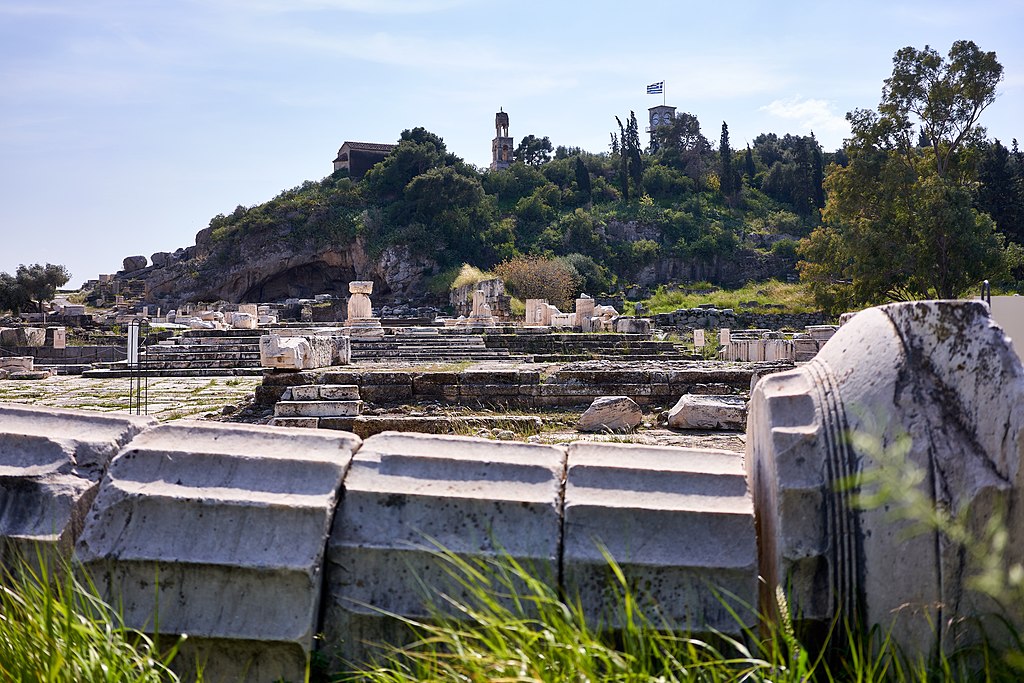
At the archaeological site of the Sanctuary of Demeter at Eleusis. The information board on the left stands on what was once the courtyard of the sanctuary. Over the staircase behind it stood the Greater Propylaea. Next to the cavern in the background stood the Sanctuary of Pluto (who abducted Persephone, Demeter’s daughter). The cavern represents the entrance to the Underworld. The path to the left of the cavern leads to the Telesterion where the faithful were initiated to the Eleusinian mysteries. The brown building up on the hill (left) is a church dedicated to the Virgin Mary (Church of Panagitsa Mesosporitissa) and stands over the area of the Telesterion.
Photo by George E. Koronaios via Wikimedia Commons.
There are many ways in which this election might portend the future, but there’s a seemingly small issue — only on the ballot in Oregon and the District of Columbia — that’s a sleeper, it seems to me, and worth keeping an eye on. It’s the decriminalization of naturally-occurring psychedelics, in particular, psilocybin, the psychoactive ingredient in some mushrooms which have long been dubbed “magic.”
This doesn’t come out of the blue. Huge strides have been taken in the last few years in the decriminalization of cannabis, with 33 states allowing medical use, of which 11 allow recreational as well. The FDA recently greenlit clinical trials for psilocybin as a “breakthrough therapy” for depression — with some wildly impressive results. Books like Michael Pollan’s magisterial How To Change Your Mind have helped shift the reputation of psychedelics from groovy, counter-cultural weirdness to mature, spiritual, and regulated mental health treatment. Ketamine — previously a party drug and an animal tranquilizer — has shown more promise as an anti-depressant than any therapy since the mid-1990s.
The familiar worry, of course, is that we might be ushering in an era of wild drug experimentation, with unforeseen and unknowable results. Some people fear that relaxing some of the legal restrictions on things that grow in nature could lead to social disruption or higher levels of addiction or worse. The great popularizer of psychedelics, Aldous Huxley, gave us a somewhat sobering description of what might be our future in Brave New World, and many in the West have been terrified of these substances for quite a while.
But new research suggests that this shift toward integrating psychedelics into a healthy, responsible life for Westerners may not be new at all. It would, in fact, be a return to a civilization that used these substances as a bulwark of social and personal peace. New literary investigations of ancient texts, new — and re-examined — archeological finds, and cutting edge bio-chemical technology that can detect and identify substances in long-buried artifacts, suggest that deploying psychedelics would, in fact, be a return to a Brave Old World we are only now rediscovering.
We’ve long known that human knowledge of psychedelic aspects of nature goes back into pre-history; and use of them just as far. But perhaps the most surprising find in this new area of research is that sacred tripping was not simply a function of prehistoric religious rituals and shamanism, but an integral, even central part, of the world of the ancient Greeks. The society that remains the basis for so much of Western civilization seems to have held psychedelics as critical to its vision of human flourishing. And that vision may have a role to play in bringing Western civilization back into balance.
A breakthrough in understanding this comes in the form of a rigorously scholarly new book, The Immortality Key: The Secret History of the Religion With No Name, by Brian Muraresku. What he shows is the centrality of psychedelic use for the ancient Greeks, in an elaborate and mysterious once-in-a-lifetime ceremony at the Temple of Eleusis, a short distance from Athens. We’ve long known about this temple of the Mysteries, as they were known, and the rite of passage they offered — because it’s everywhere in the record. Many leading Greeks and Romans went there, including Plato and Marcus Aurelius. Here is Cicero, no less, in De Legibus:
For it appears to me that among the many exceptional and divine things your Athens has produced and contributed to human life, nothing is better than those Mysteries. For by means of them we have been transformed from a rough and savage way of life to the state of humanity, and been civilized. Just as they are called initiations, so in actual fact we have learned from them the fundamentals of life, and have grasped the basis not only for living with joy, but also for dying with a better hope.
Comments Off on Andrew Sullivan on the potentials of therapeutic use of psilocybin
Napoleon’s Masterpiece: Austerlitz 1805
Epic History TV
Published 28 Jun 2018Napoleonic Wars Part 1: Napoleon’s brilliant 1805 campaign culminates in victory at Austerlitz.
Start your FREE trial with The Great Courses Plus here: http://ow.ly/t5FO30kFTfy
Get early access and a vote on future topics by supporting Epic History TV on Patreon: https://www.patreon.com/epichistorytv
With thanks to HistoryMarche, check out his channel here: https://www.youtube.com/channel/UC8MX…
Learn more about the Napoleonic Wars with titles from our co-production partner Osprey Publishing (as an Amazon Associate I earn from qualifying purchases):
Austerlitz 1805 http://geni.us/DlxI
Trafalgar 1805 http://geni.us/4zBYD
French Napoleonic Infantry Tactics 1792 – 1815 http://geni.us/lodnYmMusic from Filmstro: https://filmstro.com/?ref=7765
Get 20% off an annual license with this exclusive code:EPICHISTORYTV_ANN“The Great Courses Plus is currently available to watch through a web browser to almost anyone in the world and optimized for the US market. The Great Courses Plus is currently working to both optimize the product globally and accept credit card payments globally.”
#EpicHistoryTV #NapoleonicWars #Napoleon
Music track “Heavy Interlude” by Kevin MacLeod (incompetech.com)
Licensed under Creative Commons: By Attribution 3.0
http://creativecommons.org/licenses/b…

Comments Off on Napoleon’s Masterpiece: Austerlitz 1805
“So – a Truth and Reconciliation Commission in America?”
Arthur Chrenkoff responds to this tweet from Robert Reich:

In case you are unfamiliar with the term, the Truth and Reconciliation Commission was instituted in the post-apartheid South Africa as a way of non-violently and non-punitively coming to terms with the painful racist past. It was a forum where the victims of human right abuses were able to testify about their experiences, and where some of the perpetrators could respond on record – ideally with some contrition – and request amnesty for their misdeeds. It was an exercise in “not forgotten, but possibly forgiven”, a way forward in transition to democracy that would not have to involve mass incarceration of those connected with the old regime. While criticised by many, this model of community healing is thought to have been quite successful in as much as it has been replicated in numerous other countries around the world as a way of dealing with the past and moving on. As the Good Book says, “the truth shall set you free”.
So – a Truth and Reconciliation Commission in America? You don’t have to have actually lived in a totalitarian society (even if, like with yours truly, it helps) to be taken aback at the insensitivity and the sheer tone deafness exhibited by a privileged member of the American elite (Clinton’s Labor Secretary, Berkley professor, 1 million Twitter followers) comparing the last four years in the United States to the four decades of South African apartheid or a quarter of a century of a military dictatorship in some coup-prone South American republic. Are these people really so lacking in self-awareness?
The answer is yes, and in turn it points to a more interesting socio-political phenomenon. For the past few decades, intellectuals (the great majority at various distances to the left of centre) have been looking at activists and dissidents outside of the developed, democratic “First World” – people like Nelson Mandela and Archbishop Desmond Tutu in South Africa, Ang Sang Suu Kyi in Burma/Myanmar, academics and trade unionists throughout Latin America fighting against right-wing dictatorships, and to a lesser extent those in opposition to communist dictatorships like the Dalai Lama, Lech Walesa in Poland, Vaclav Havel in Czechoslovakia, and Sakharov, Sharansky, Solzhenitsyn and others in the Soviet Union – and I think their main, if secret, reaction was envy and guilt.
Guilt because their own lives in the West were by and large safe, secure, privileged and prosperous, while their counterparts (intellectuals, artists, community leaders) in the Second and the Third World (now developing world) were putting their lives, freedom and livelihoods on the line for the principles and ideals they believed in. And envy because, as the stakes were so much higher “over there”, the lives of all these dissidents, oppositionists and human rights activists seemed so much more meaningful – and, yes, exciting. While you were pondering on the next New York Times op-ed you are going to write, while turning up to your monthly faculty meeting in your new Prius, somewhere in Africa or Asia or Latin America a prisoner of conscience was on a hunger strike, actually living the ideas you believed in and not just writing about them. Sure, it’s terrible, yet how much more interesting and consequential than your placid and predictable existence of mortgage repayments and the Monday morning undergraduate class in political theory?
Comments Off on “So – a Truth and Reconciliation Commission in America?”
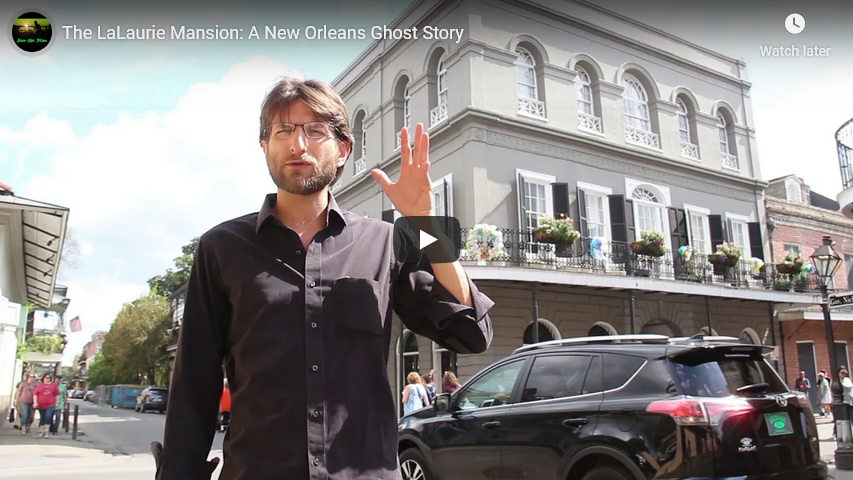
The LaLaurie Mansion: A New Orleans Ghost Story
Atun-Shei Films
Published 25 Mar 2019Thought I’d try something different with this video. This is the story of famous serial killer Delphine LaLaurie and her allegedly haunted mansion.
Sorry for the background noises… such are the pitfalls of filming in the French Quarter.
Support Atun-Shei Films on Patreon ► https://www.patreon.com/atunsheifilms
#NewOrleans #GhostStory #History #AmericanHistory #MadameLaLaurie
Watch our film ALIEN, BABY! free with Prime ► http://a.co/d/3QjqOWv
Reddit ► https://www.reddit.com/r/atunsheifilms
Twitter ► https://twitter.com/alienbabymovie
Instagram ► https://www.instagram.com/atunsheifilms
Merch ► https://atun-sheifilms.bandcamp.com
Comments Off on The LaLaurie Mansion: A New Orleans Ghost Story
October 23, 2020
On Stalin’s Secret Service – Richard Sorge – WW2 Biography Special
World War Two
Published 22 Oct 2020A spy who is famous for warning Stalin about Hitler’s plan to invade the Soviet Union. But he was so much more than that. His fascinating life begins in the Caucasus and eventually leads him to Tokyo.
Join us on Patreon: https://www.patreon.com/TimeGhostHistory
Or join The TimeGhost Army directly at: https://timeghost.tvFollow WW2 day by day on Instagram @ww2_day_by_day – https://www.instagram.com/ww2_day_by_day
Between 2 Wars: https://www.youtube.com/playlist?list…
Source list: http://bit.ly/WW2sourcesWritten and Hosted by: Indy Neidell
Director: Astrid Deinhard
Producers: Astrid Deinhard and Spartacus Olsson
Executive Producers: Astrid Deinhard, Indy Neidell, Spartacus Olsson, Bodo Rittenauer
Creative Producer: Joram Appel
Post-Production Director: Wieke Kapteijns
Research by: Indy Neidell
Edited by: Monika Worona
Sound design: Marek KamińskiColorizations by:
Carlos Ortega Pereira
Daniel Weiss
Mikołaj UchmanSources:
Bundesarchiv
Milu.ru
Archive.orgArchive by Screenocean/Reuters https://www.screenocean.com.
A TimeGhost chronological documentary produced by OnLion Entertainment GmbH.
From the comments:
World War Two
16 hours ago (edited)
More fascinating World War Two spy stuff we know you love. We’ve already spoken about Popov, Enigma, and much more, but what makes Sorge particularly stand out is the amount of praise he has consistently received. Both Tom Clancy and Ian Fleming have said they consider him one of the world’s greatest spies, and other espionage workers, including ones who worked on the opposing side to him, have admitted their admiration for the man.

Comments Off on On Stalin’s Secret Service – Richard Sorge – WW2 Biography Special
“The Lion From The North” – Gustavus Adolphus – Sabaton History 090 [Official]
Sabaton History
Published 22 Oct 2020It was a time of religion and war. Legends tell the tale of a mighty Swedish King, a Lion from the North, who arrived in the German Empire with a mighty host to save Protestantism. Beyond the legends, Gustavus Adolphus was a warrior king who sought to create a Swedish empire through hegemony on the Baltic Sea. Once, Sweden’s involvement in the 30 Years War had begun out of sheer necessity, but soon send her armies on a path of glory and fame. But would this path lead the Swedish King to victory or his inevitable demise?
Support Sabaton History on Patreon: https://www.patreon.com/sabatonhistory
Listen to “The Lion From The North” on the album Carolus Rex: https://music.sabaton.net/CarolusRexEN
Watch the Official Music Video of “The Lion From The North” here:
https://www.youtube.com/watch?v=T1gvN…Listen to Sabaton on Spotify: http://smarturl.it/SabatonSpotify
Official Sabaton Merchandise Shop: http://bit.ly/SabatonOfficialShopHosted by: Indy Neidell
Written by: Markus Linke and Indy Neidell
Directed by: Astrid Deinhard and Wieke Kapteijns
Produced by: Pär Sundström, Astrid Deinhard and Spartacus Olsson
Creative Producer: Maria Kyhle
Executive Producers: Pär Sundström, Joakim Brodén, Tomas Sunmo, Indy Neidell, Astrid Deinhard, and Spartacus Olsson
Community Manager: Maria Kyhle
Post-Production Director: Wieke Kapteijns
Editor: Karolina Dołęga
Sound Editor: Marek Kaminski
Maps by: Eastory – https://www.youtube.com/c/eastory
Archive: Reuters/Screenocean – https://www.screenocean.comVisual Sources:
– Nationalmuseum
– Arms of Vasa courtesy of Sodacan from Wikimedia
– Nils Forsberg Gustav II Adolf courtesy of Nils Forsberg, Swedish painter from Wikimedia
– Death of King Gustav II Adolf of Sweden by Carl Wahlbom courtesy of Osama Shukir Muhammed Amin FRCP (Glasg) from Wikimedia
– Icons from The Noun Project: Cannon by Graphic Nehar, Man by Milinda CoureyAll music by: Sabaton
An OnLion Entertainment GmbH and Raging Beaver Publishing AB co-Production.
© Raging Beaver Publishing AB, 2019 – all rights reserved.

Comments Off on “The Lion From The North” – Gustavus Adolphus – Sabaton History 090 [Official]
Tank Chats #83 Valiant | The Tank Museum
The Tank Museum
Published 30 Aug 2019Described by David Fletcher as the worst tank at The Tank Museum! Find out how the WW2 Valiant tank failed in quite so many areas.
Support the work of The Tank Museum on Patreon: ► https://www.patreon.com/tankmuseum
Visit The Tank Museum SHOP: ► https://tankmuseumshop.org/
Twitter: ► https://twitter.com/TankMuseum
Instagram: ► https://www.instagram.com/tankmuseum/
Tiger Tank Blog: ► http://blog.tiger-tank.com/
Tank 100 First World War Centenary Blog: ► http://tank100.com/

Comments Off on Tank Chats #83 Valiant | The Tank Museum
October 22, 2020
When England “Londonized”
In the latest Age of Invention newsletter, Anton Howes looks at changes in urbanization in England from the Middle Ages onward and the astonishing growth of London in particular:
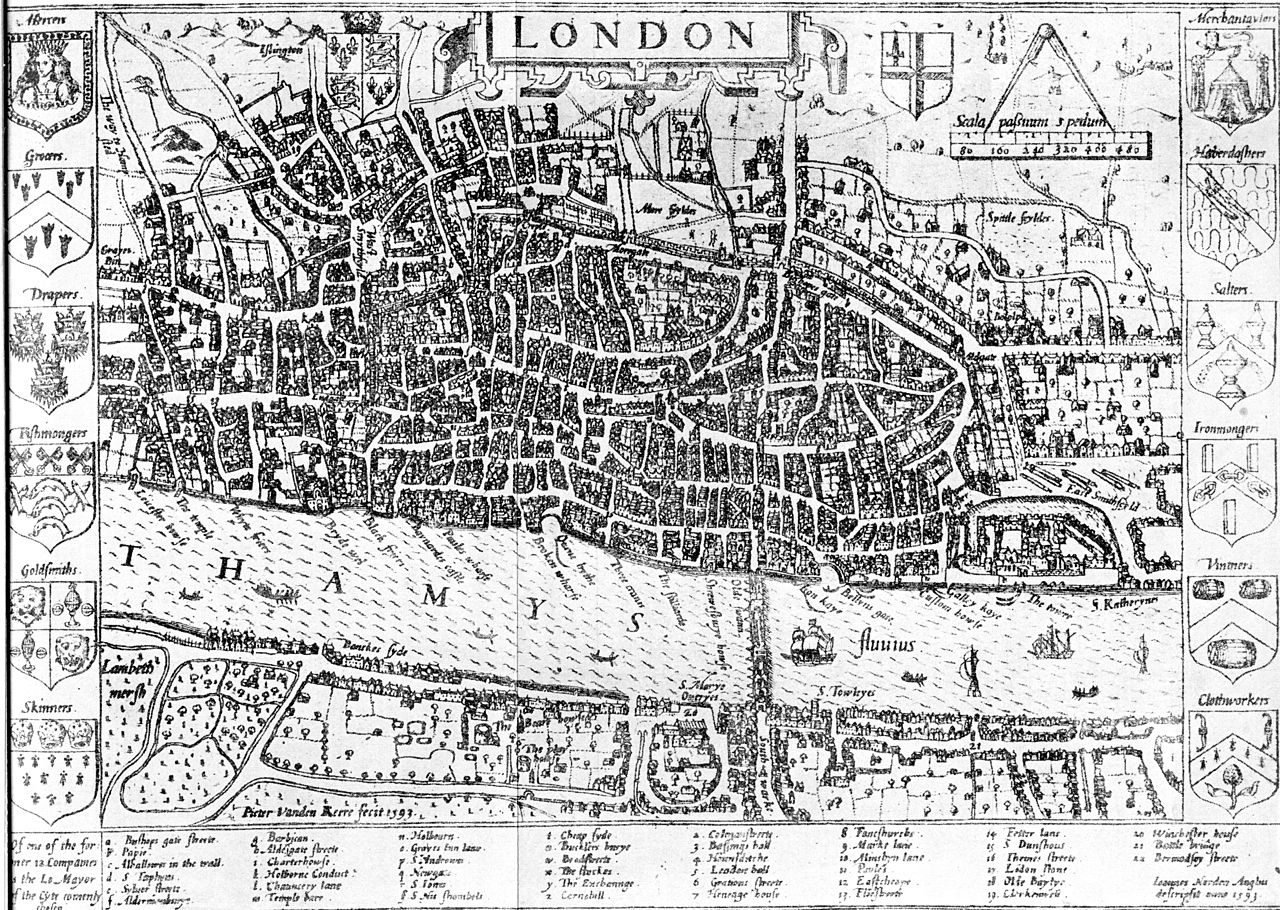
John Norden’s map of London in 1593. There is only one bridge across the Thames, but parts of Southwark on the south bank of the river have been developed.
Wikimedia Commons.
We must thus imagine pre-modern England as a land of tens of thousands of teeny tiny villages, each having no more than a couple of hundred people, which were in turn served by hundreds of slightly larger market towns of no more than a few hundred inhabitants, and with only a handful of regional centres of more than a few thousand people. By the 1550s, the country’s population had still not recovered to its pre-Black Death peak, and still only about 4% of the population lived in cities. London alone accounted for about half of that, with approximately 50-70,000 people (about five times the size of its closest rival, Norwich). So after a couple of centuries of recovery, London was only a little past its medieval peak.
But over the following century and a half, things began to change. At first glance, England’s continued population growth was unremarkable. By 1700, its overall population had finally reached and even surpassed the medieval 5 million barrier, despite the ravages of civil war. This was, perhaps, to be expected, with a little additional agricultural productivity allowing it to surpass the previous record. But the composition of that population had changed radically, largely thanks to the extraordinary growth of London. England’s overall population had not only recovered, but now 16% of them lived in cities of over 5,000 inhabitants — over two thirds of whom lived in London alone. Rather than simply urbanise, England londonised. By 1700, the city was nineteen times the size of second-place Norwich — even though Norwich’s population had more or less tripled.
London had, by 1700, thus risen from obscurity to become one of the largest cities in Europe. At an estimated 575,000 people, it was rivalled in Europe only by Paris and Constantinople, both of which had been massive for centuries. And although by modern standards it was still rather small, it could at least now be comfortably called a city — more or less on par with the populations of modern-day Glasgow or Baltimore or Milwaukee.
During that crucial century and a half then, London almost single-handedly began to urbanise the country. Its eighteenth-century growth was to consolidate its international position, such that by 1800 the city was approaching a million inhabitants, and from the 1820s through to the 1910s was the largest city in the world. In the mid-nineteenth century England also finally overtook Holland in terms of urbanisation rates, as various other cities also came into their own. But this was all just the continuation of the trend. London’s growth from 1550 to 1700 is the phenomenon that I think needs explaining — an achievement made all the more impressive considering how many of its inhabitants were dropping dead.
Throughout that period, urban death rates were so high that it required waves upon waves of newcomers from the countryside to simply keep the population level, let alone increase it. London was ridden with disease, crime, and filth. Not to mention the occasional mass death event. The city lost over 30,000 souls — almost of a fifth of its population — in the plague of 1603 (which was apparently exacerbated by many thousands of people failing to social distance for the coronation of James I), followed by the loss of a fifth again — 41,000 deaths — in the plague of 1625, and another 100,000 deaths — by now almost a quarter of the city’s population — in 1665. And yet, between 1550 and 1700 its population still managed to increase roughly tenfold.
I’ve been hard-pressed to find an earlier, similarly rapid rise to the half-a-million mark that was not just a recovery to a pre-disaster population or simply the result of an empire’s seat of government being moved. Chang’an, Constantinople, Ctesiphon, Agra, Edo, for example — all owed their initial, massive populations to an administrative change (often accompanied by a degree of forcible relocation), and all then grew fairly gradually up to or beyond half a million. As for a very long-term capital like Rome, it seems to have taken about three or four centuries to achieve the increases that London managed in just one and a half (though bear in mind just how rough and ready our estimates of ancient city populations are — our growth guesstimate for Rome is almost entirely based on the fact that the water supply system roughly doubled every century before its supposed peak). The rapidity of London’s rise from obscurity may thus have been unprecedented in human history — and was certainly up there with the fastest growers — though we’ll likely never know for sure.
But how? I can think of a multitude of factors that may have helped it along, but I find that each of them — even when considered altogether — aren’t quite satisfactory.
Comments Off on When England “Londonized”


