
Rex Krueger
Published 21 Oct 2020Cast-iron vises are convenient and popular, but there might be some much better options.
More video and exclusive content: http://www.patreon.com/rexkrueger
Build my angled Leg Vise: https://www.youtube.com/watch?v=eiwtB…
Get the plans: https://www.rexkrueger.com/store/xngn…
(more…)
October 22, 2020
Are cast-iron vises secretly terrible?
Comments Off on Are cast-iron vises secretly terrible?
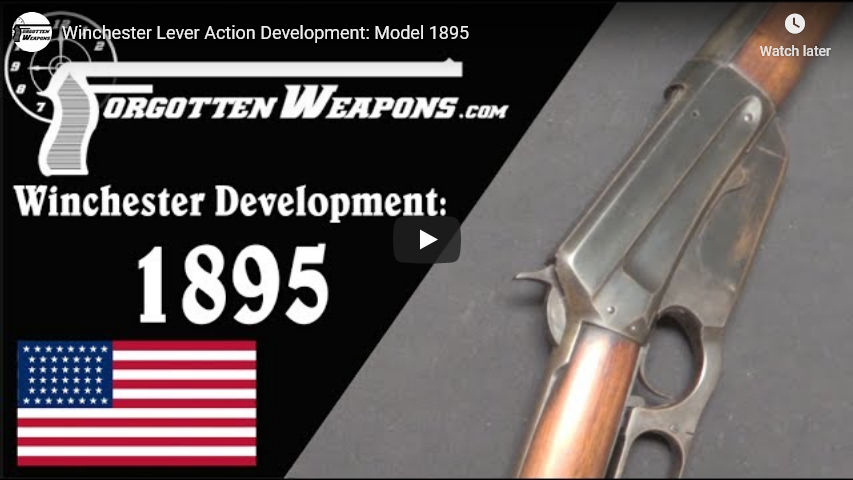
Winchester Lever Action Development: Model 1895
Forgotten Weapons
Published 19 Jun 2017We have reached the final iteration of the Winchester lever action rifle development story today, the Model 1895. This was another John Browning design, although the locking system is basically the same as the 1894 but with the bolt extending over the top of the locking block and hiding it from sight.
The new feature of the Model 1895 was the replacement of the traditional tube magazine with a single stack box magazine located under the action. By this time, spitzer (pointed) bullets were becoming commonplace, to exploit the new high velocities made possible by the new smokeless powders. In a tubular magazine, these pointed bullets would rest on the primer of the next cartridge in the magazine, and ran the risk of causing rounds to detonate in the magazine tube under recoil. The box magazine, of course, negated this danger completely.
The Model 1895 was built around the .30-40 military cartridge, although was initially released in two black powder chamberings. It would eventually be offered in a wide variety of chamberings, including .30-03, .30-06, .303 British, and the .405 Winchester — Theodore Roosevelt’s “Big Medicine”. In addition, more than half of the total production (nearly 300,000 rifles) would be for the Russian military, with the rifles chambered for 7.62x54R and fitted with stripper clip guides.
Cool Forgotten Weapons merchandise! http://shop.bbtv.com/collections/forg…
http://www.patreon.com/ForgottenWeapons
If you enjoy Forgotten Weapons, check out its sister channel, InRangeTV! http://www.youtube.com/InRangeTVShow
Comments Off on Winchester Lever Action Development: Model 1895
October 21, 2020
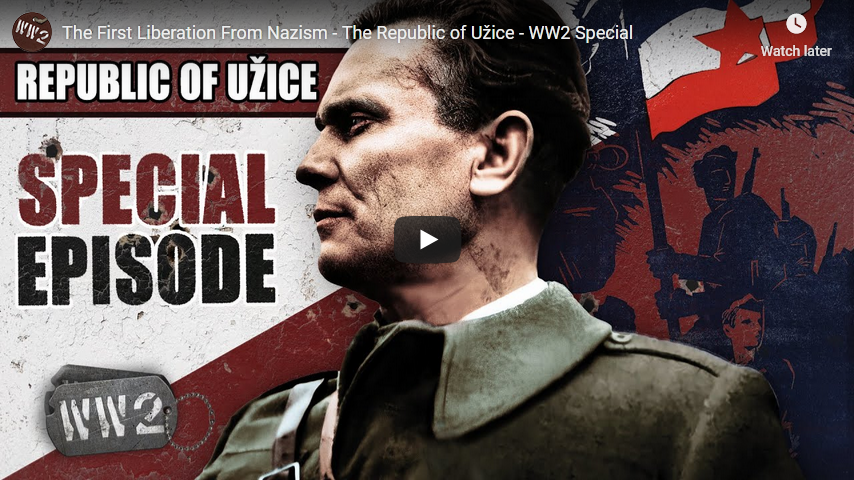
The First Liberation From Nazism – The Republic of Užice – WW2 Special
World War Two
Published 20 Oct 2020When the Yugoslav Partisans and Chetniks liberate a large part of modern-day Serbia, the Partisans found the Republic of Užice, complete with its own governmental structure, education and cultural policy and weapons factory.
Join us on Patreon: https://www.patreon.com/TimeGhostHistory
Or join The TimeGhost Army directly at: https://timeghost.tvFollow WW2 day by day on Instagram @ww2_day_by_day – https://www.instagram.com/ww2_day_by_day
Between 2 Wars: https://www.youtube.com/playlist?list…
Source list: http://bit.ly/WW2sourcesHosted by: Indy Neidell
Written by: Joram Appel
Director: Astrid Deinhard
Producers: Astrid Deinhard and Spartacus Olsson
Executive Producers: Astrid Deinhard, Indy Neidell, Spartacus Olsson, Bodo Rittenauer
Creative Producer: Maria Kyhle
Post-Production Director: Wieke Kapteijns
Research by: Joram Appel
Edited by: Miki Cackowski
Sound design: Marek Kamiński
Map animations: Eastory (https://www.youtube.com/c/eastory)Colorizations by:
Mikolaj Uchman
Carlos Ortega Pereira, BlauColorizations – https://www.instagram.com/blaucolorizations
Dememorabilia – https://www.instagram.com/dememorabilia/Sources:
Narodowe Archiwum Cyfrowe
FOTO-FORTEPAN – MZSL-Ofner Károly
Yad Vashem 3731/1
Bundesarchiv
IWM H 11368
Museum of Yugoslavia
ETH-Bibliothek
map of Belgium, courtesy of Marcuscalabresus https://commons.wikimedia.org/wiki/Fi…
from the Noun Project: Injury by Adriano Emerick, Dead Soldier by Gan Khoon Lay, Helmet by Daniel Turnel, person by Adrien Coquet, Skull by Muhamad UlumSoundtracks from the Epidemic Sound:
Johannes Bornlof – “The Inspector 4”
Hakan Eriksson – “Epic Adventure Theme”
Reynard Seidel – “Deflection”
Rannar Sillard – “March Of The Brave 4”
Philip Ayers – “Trapped in a Maze”
Johan Hynynen – “Dark Beginning”Archive by Screenocean/Reuters https://www.screenocean.com.
A TimeGhost chronological documentary produced by OnLion Entertainment GmbH.
Comments Off on The First Liberation From Nazism – The Republic of Užice – WW2 Special
“Canadian conservatism often suffers from a unique form of self-loathing”
In his latest essay for The Dominion, Ben Woodfinden reviews an old book by Peter Brimelow and how it influenced the Canadian conservative scene at the time and why the book’s insights mattered so much to Stephen Harper:
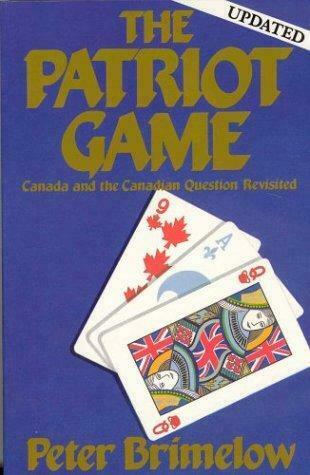
Published in 1986, The Patriot Game captures the ideas and sentiment of an entire generation of Canadian conservatism. One quick note on Brimelow. He’s a controversial figure and has been called a “leader within the alt-right.” He’s also the founder of VDARE, an American anti-immigration website. I’m not getting into a back and forth with anyone about how best to describe his views, I’ll just say that none of this means his older work like The Patriot Game should be discounted or ignored, especially given the influence it’s had.
The game Brimelow is describing is the manufacturing of a new national identity that was undertaken by what he terms “Canada’s New Class.” This is a term he borrows from Irving Kristol. It refers to Canada’s politicians, civil servants, academics, business elites, writers, and journalists, who have a disproportionate influence shaping public discourse and national consciousness.
The manufacturing of a new national identity by this class, centred on the Liberal Party, was one that both rejected our heritage and replaced it with a self-serving and contradictory ideology that serves the interests of this New Class. The strategy of the Canadian New Class throughout Canada’s history has been “to concentrate rents from a resource-based economy in Central Canadian hands.”
The nationalism they manufactured to do this was an entirely artificial one, built around multiculturalism, bilingualism, anti-Americanism and heavy federal government involvement in the economy. At its core Brimelow’s argument is that 20th-century Canada is the creation of the Liberal party, but ultimately that it is fake and built to serve the interests of the New Class. This was done especially by placating Quebec at the expense of the West, and attempting to construct a new national identity that could unite English and French Canada.
This game played by Canada’s elite to enrich them and their bases of support in places like Quebec not only took money from the West and transferred it elsewhere, it dragged down the Canadian economy by crippling it in overbearing and burdensome regulation and the heavy hand of government involvement.
The most interesting, and clarifying part of the book to me is Brimelow’s description of the identity and nationalism that he thinks the Liberals consciously destroyed and then replaced with their own. Brimelow thinks that the New Class are consciously and actively anti-British, not just anti-American, and that this new identity was built as both a rejection of British heritage and the cultural affinities English Canada has with “North American identity.”
According to Brimelow “All of Anglophone Canada is essentially part of a greater English-speaking North American nation … Canada is a sectional variation within this super nation.” Our British heritage is at the core of who we are along with our common Anglo affinities with Americans, and this new national project is doomed to failure. Brimelow suggests that “Canada’s fundamental contradictions cannot be resolved in the present Confederation” and while English Canada is currently in a strange period of identity agnosticism, it will eventually recover and “assert its North American identity.” This process will only be accelerated by regional tensions within Canada that expose the futility of this new Liberal national identity. Modern Canada, in short, is a fraud and doomed to failure.
Comments Off on “Canadian conservatism often suffers from a unique form of self-loathing”
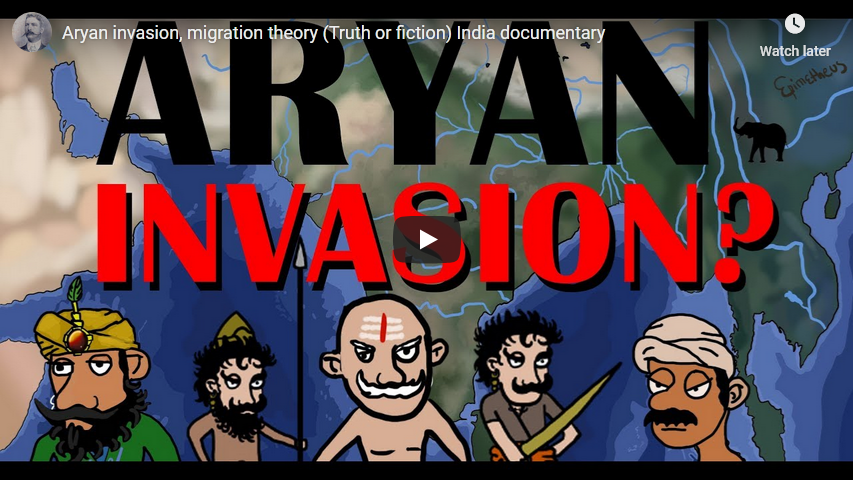
Aryan invasion, migration theory (Truth or fiction) India documentary
Epimetheus
Published 24 Jan 2018Aryan invasion, migration theory (Truth or fiction) India documentary
Epimetheus on Patreon
https://www.patreon.com/Epimetheus1776David Frawley Aryan invasion videos
https://www.youtube.com/watch?v=qych3…
https://www.youtube.com/watch?v=jyz_S…Tags:
Aryan invasion india, india history, indian history, documentary, history of india, india,history, india documentary, hindi, 2018, ancient india, indus valley civilization, 5,000 Years History of India documentary, Aryan migration theory, Aryan invasion theory, indo-aryan, indo Aryan migration
Comments Off on Aryan invasion, migration theory (Truth or fiction) India documentary
October 20, 2020
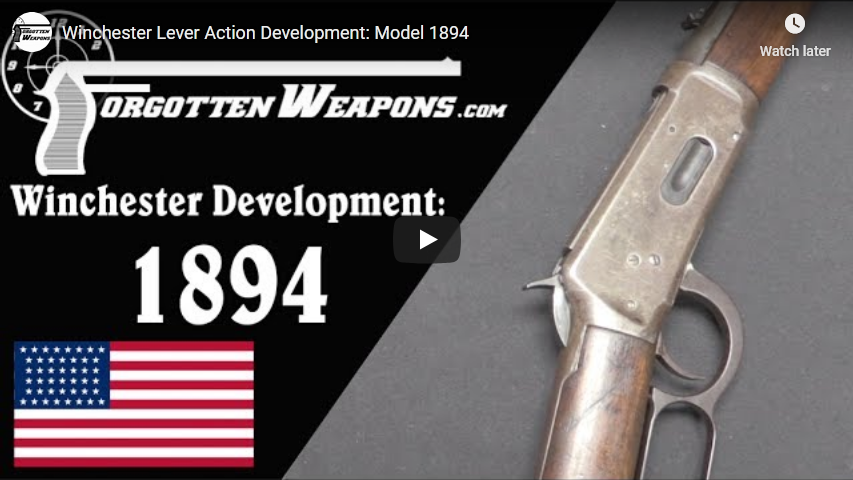
Winchester Lever Action Development: Model 1894
Forgotten Weapons
Published 17 Jun 2017The Winchester 1894 has become one of the most manufactured and most popular sporting rifles in American history, and it owes this success to a combination of factors. Mechanically, the 1894 was a continued improvement on John Browning’s already-excellent 1892 model. It was strong and simple to operate, offering both speed and power. The cartridge that cannot be separated from the history of the Winchester 94 is the .30-30 Winchester, aka the .30 WCF (Winchester Center Fire).
While the .30-30 shared a naming convention with the many black powder rounds that were in use (a .30 caliber bullet over 30 grains of powder), this new round was a smokeless powder cartridge. As such, it offered a very significant increase in velocity over everything else that was then available (just shy of 2000 fps). The cartridge was well suited for taking nearly any North American game, and the package of the 94 and the .30-30 made an outstanding general purpose weapon for a huge swathe of the American market.
By 1927, one million had been manufactured (the millionth one was presented to President Coolidge), and by 2006 production had exceeded 7 million. This truly is the iconic American deer and ranch rifle — so ubiquitous that its remarkable quality has set a new standard for the entire industry.
Cool Forgotten Weapons merchandise! http://shop.bbtv.com/collections/forg…
http://www.patreon.com/ForgottenWeapons
If you enjoy Forgotten Weapons, check out its sister channel, InRangeTV! http://www.youtube.com/InRangeTVShow
Comments Off on Winchester Lever Action Development: Model 1894
October 19, 2020
A bowyer talks about authentic longbows
Lindybeige
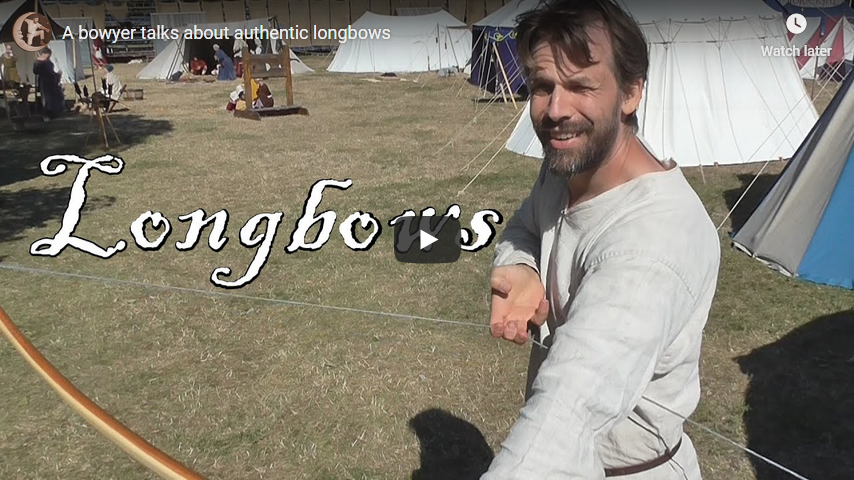
Published 10 Sep 2016Shot in Visby. I talk to Swedish bowyer Henrik Thurfjell about bows, asking stupid questions so that he sounds comparatively clever.
Support me on Patreon: https://www.patreon.com/LindybeigeHe talks about wood, of hunting, of string, and of bear fat. Many people in the comments have suggested exotic meanings for the mark on the side of the yew bow. The comparatively mundane truth is that the symbol is a combination of the Norse runes for H and T – the bowyer’s initials.
Thanks to Johan Käll for showing me round the re-enactors’ camp.
Picture credits:
By the Mary Rose Trust, CC BY-SA 3.0, https://commons.wikimedia.org/w/index…
By Mary Rose Trust – Mary Rose Trust, CC BY-SA 3.0, https://commons.wikimedia.org/w/index…
By Mary Rose Trust – Mary Rose Trust – official webpage, CC BY-SA 3.0, https://commons.wikimedia.org/w/index…
By Own scan. Photo by Gerry Bye. Original by Anthony Anthony. – Anthony Roll as reproduced in The Anthony Roll of Henry VIII’s Navy: Pepys Library 2991 and British Library Additional MS 22047 With Related Documents ISBN 0-7546-0094-7, p. 42., Public Domain, https://commons.wikimedia.org/w/index…
By the Mary Rose Trust, CC BY-SA 3.0, https://commons.wikimedia.org/w/index…
By the Mary Rose Trust, CC BY-SA 3.0, https://commons.wikimedia.org/w/index…Buy the music – the music played at the end of my videos is now available here: https://lindybeige.bandcamp.com/track…
Lindybeige: a channel of archaeology, ancient and medieval warfare, rants, swing dance, travelogues, evolution, and whatever else occurs to me to make.
▼ Follow me…
Twitter: https://twitter.com/Lindybeige I may have some drivel to contribute to the Twittersphere, plus you get notice of uploads.
website: www.LloydianAspects.co.uk
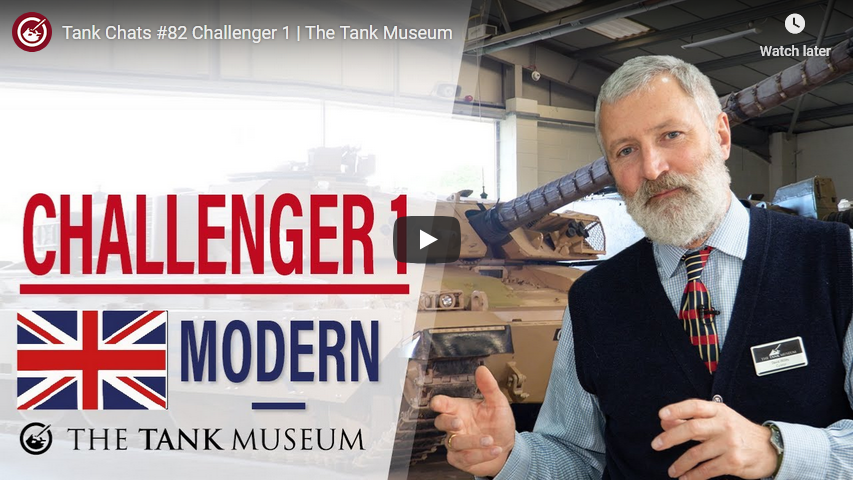
Tank Chats #82 Challenger 1 | The Tank Museum
The Tank Museum
Published 9 Aug 2019David Willey, The Tank Museum Curator, discusses the development and deployment of the UK’s Main Battle Tank from 1983 – 2001, the Challenger 1.
Challenger 1 was in service with the British Army and saw action during the First Gulf War. It remains in service with the Jordanian Army.
Support the work of The Tank Museum on Patreon: ► https://www.patreon.com/tankmuseum
Visit The Tank Museum SHOP: ► https://tankmuseumshop.org/
Twitter: ► https://twitter.com/TankMuseum
Instagram: ► https://www.instagram.com/tankmuseum/
Tiger Tank Blog: ► http://blog.tiger-tank.com/
Tank 100 First World War Centenary Blog: ► http://tank100.com/
Comments Off on Tank Chats #82 Challenger 1 | The Tank Museum
QotD: Afflicting the comfortable
In 1893, Finley Peter Dunne, a journalist-turned-humorist at the Chicago Evening Post, introduced Martin J. Dooley to the people of Chicago. Mr. Dooley, as he was best known, was a thick-accented bartender from Ireland who owned a tavern in the Bridgeport neighborhood. Mr. Dooley became popular among Chicagoans for his rich satire of politics and society. Of course, Mr. Dooley wasn’t real. He was a fictional character created by Dunne. His work included countless sketches and wide-ranging commentary, but he may be best known for his biting one-liner on newspapers, since reclaimed by journalists as central to the profession’s creed: “The job of the newspaper is to comfort the afflicted and afflict the comfortable.”
The original quote is from Observations by Mr. Dooley, one of several works Dunne produced as the character, in which Dunne specifically satirizes the press’s penchant for trial-by-media. He presented Mr. Dooley through Irish dialect pieces, hence the diction, so the “affliction” quote below has been lightly edited for comprehension:
When anything was wrote about a man ’twas put this way: “We understand on good authority that … is on trial before Judge G. on an accusation of larceny. But we don’t think it’s true.” Nowadays, the larceny is discovered by a newspaper. The lead pipe is dug up your backyard by a reporter who knew it was there because he helped you bury it. A man knocks at your door early one mornin’ an’ you answer in your nighty. “In name of the law, I arrest you,” says the man seizin’ you by the throat. “Who are you?” you cry. “I’m a reporter for The Daily Slooth,” says he. “Photographer, do your duty!” You’re hauled off in the circulation wagon to the newspaper office where a confession is ready for you to sign; you’re tried by a jury of the staff, sentenced by the editor-in-chief, and at ten o’clock Friday the fatal thrap is sprung by the fatal thrapper of the family journal. The newspaper does evrything for us. It runs the police force and the banks, commands the militia, controls the legislature, baptizes the young, marries the foolish, comforts the afflicted, afflicts the comfortable, buries the dead and roasts them aftherward.
That journalists of all stripes have touted a scathing critique of their profession and repurposed it as a mission statement is a textbook definition of irony that belongs on a Roman pedestal behind bulletproof glass in the Smithsonian. What is most vexing about the modern interpretation of Dunne’s quote is that its new meaning is implied to be synonymous with dispassionately seeking truth, which it necessarily is not.
Robert Showah, “Journalism Is Not Activism”, Quillette, 2018-07-05.
Comments Off on QotD: Afflicting the comfortable
October 18, 2020
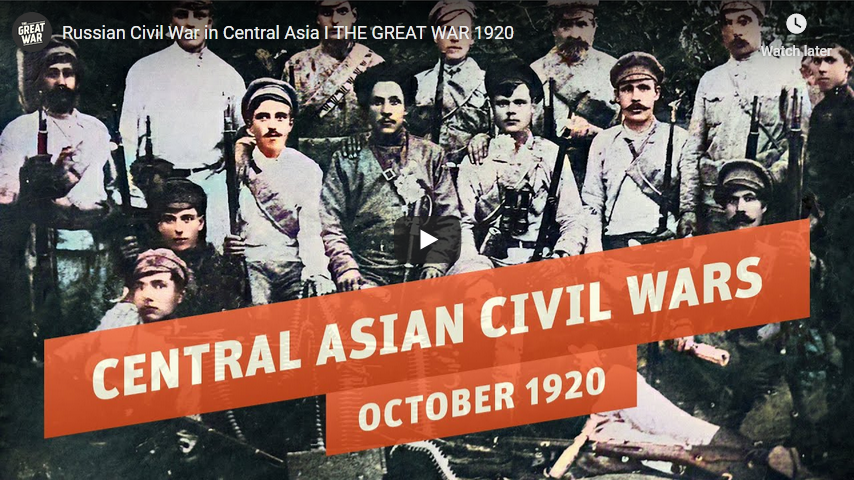
Russian Civil War in Central Asia I THE GREAT WAR 1920
The Great War
Published 17 Oct 2020Sign up for Curiosity Stream and get Nebula bundled in: https://curiositystream.com/thegreatwar
By the fall of 1920, the Russian Civil War had unleashed three years of ethnic and internal conflict in Central Asia, and there was no end in sight. In this episode we’ll catch up on the dramatic events of the former Russian imperial lands in Central Asia from the revolution right up to the end of 1920, 100 years ago.
» SUPPORT THE CHANNEL
Patreon: https://www.patreon.com/thegreatwar» OUR PODCAST
https://realtimehistory.net/podcast – interviews with World War 1 historians and background info for the show.» BUY OUR SOURCES IN OUR AMAZON STORES
https://realtimehistory.net/amazon *
*Buying via this link supports The Great War (Affiliate-Link)» SOURCES
Baumann, Robert F. Russian-Soviet Unconventional Wars in the Caucasus, Central Asia, and Afghanistan, Combat Studies Institute, 2010.Becker, Seymour. Russia’s Protectorates in Central Asia: Bukhara and Khiva, 1865-1924, RoutledgeCurzon, 2004.
Brower, Daniel R. Turkestan and the Fate of the Russian Empire, Routledge, 2010.
Buttino, M. “Study of the Economic Crisis and Depopulation in Turkestan, 1917–1920”, Central Asian Survey, no. 4, 1990, pp. 59-74, doi:10.1080/02634939008400725.
Campbell, Ian W. Knowledge and the Ends of Empire: Kazak Intermediaries and Russian Rule on the Steppe, 1731-1917, Cornell University Press, 2017.
Everett-Heath, Tom. Central Asia: Aspects of Transition, Routledge, 2003.
Hiro, D. Inside Central Asia, Abrams, 2011.
Keller, Shoshana. Russia and Central Asia: Coexistence, Conquest, Convergence, University of Toronto Press, 2020.
Khalid, A. “Central Asia Between the Ottoman and the Soviet Worlds”, Kritika: Explorations in Russian and Eurasian History, no. 2, 2011, pp. 451-76, doi:10.1353/kri.2011.0028.
Khalid, Adeeb. “The Bukharan People’s Soviet Republic in the Light of Muslim Sources”, Die Welt Des Islams, no. 3, 2010, pp. 335-61, doi:10.1163/157006010×544287.
Khalid, Adeeb. Making Uzbekistan: Nation, Empire, and Revolution in the Early USSR, Cornell University Press, 2019.
Khalid, Adeeb. The Politics of Muslim Cultural Reform: Jadidism in Central Asia, Oxford University Press, 2000.
Loring, B. “‘Colonizers With Party Cards’: Soviet Internal Colonialism in Central Asia, 1917–39”, Kritika: Explorations in Russian and Eurasian History, no. 1, 2014, pp. 77-102, doi:10.1353/kri.2014.0012.
Olcott, M. B. “The Basmachi or Freemen’s Revolt in Turkestan 1918–24”, Soviet Studies, no. 3, 1981, pp. 352-69, doi:10.1080/09668138108411365.
Poujol, Catherine. “Jews and Muslims in Central Asia”, A History of Jewish-Muslim Relations: From the Origins to the Present Day, edited by Abdelwahab Meddeb, Benjamin Stora, Jane Marie Todd and Michael B. Smith, Princeton University Press, Princeton; Oxford, 2013, pp. 258–268.
Sahadeo, Jeff. Russian Colonial Society in Tashkent: 1865-1923, Indiana University Press, 2010.
Sokol, Edward D. The Revolt of 1916 in Russian Central Asia, Johns Hopkins University Press, 2016.
» MORE THE GREAT WAR
Website: https://realtimehistory.net
Instagram: https://instagram.com/the_great_war
Twitter: https://twitter.com/WW1_Series
Reddit: https://reddit.com/r/TheGreatWarChannel»CREDITS
Presented by: Jesse Alexander
Written by: Jesse Alexander
Director: Toni Steller & Florian Wittig
Director of Photography: Toni Steller
Sound: Toni Steller
Editing: Toni Steller
Motion Design: Philipp Appelt
Mixing, Mastering & Sound Design: http://above-zero.com
Maps: Daniel Kogosov (https://www.patreon.com/Zalezsky)
Research by: Jesse Alexander
Fact checking: Florian WittigChannel Design: Yves Thimian
Original Logo: David van StepholdContains licensed material by getty images
All rights reserved – Real Time History GmbH 2020
Comments Off on Russian Civil War in Central Asia I THE GREAT WAR 1920
Panic in Moscow! The Germans are here! – WW2 – 112 – October 17, 1941
World War Two
Published 17 Oct 2020Moscow panics as the Germans edge closer and take prisoners by the hundreds of thousands, even as the temperature drops far below freezing. At home in Germany, Josef Goebbels has a problem – he’s promised victory too soon and too often. And in Japan, a government falls.
Join us on Patreon: https://www.patreon.com/TimeGhostHistory
Or join The TimeGhost Army directly at: https://timeghost.tvFollow WW2 day by day on Instagram @ww2_day_by_day – https://www.instagram.com/ww2_day_by_day
Between 2 Wars: https://www.youtube.com/playlist?list…
Source list: http://bit.ly/WW2sourcesWritten and Hosted by: Indy Neidell
Director: Astrid Deinhard
Producers: Astrid Deinhard and Spartacus Olsson
Executive Producers: Astrid Deinhard, Indy Neidell, Spartacus Olsson, Bodo Rittenauer
Creative Producer: Joram Appel
Post-Production Director: Wieke Kapteijns
Research by: Indy Neidell
Edited by: Monika Worona
Sound design: Marek Kamiński
Map animations: Eastory (https://www.youtube.com/c/eastory)Colorizations by:
Jaris Almazani
Daniel Weiss
Mikołaj Uchman
Carlos Ortega Pereira
Julius Jääskeläinen
Adrien Fillon
Norman StewartSources:
Bundesarchiv
Archive.orgArchive by Screenocean/Reuters https://www.screenocean.com.
A TimeGhost chronological documentary produced by OnLion Entertainment GmbH.
From the comments:
World War Two
2 days ago
Japan’s immediate future seems decided with a new government that certainly has no issue with the war in China or with extending that war to the south, meanwhile Moscow panics as the Germans approach. What does all this mean for the men and women in the occupied territory? What does it mean for those at home?To learn more about that check out our sub-series “War Against Humanity” and “On the Homefront”:
War Against Humanity playlist: https://www.youtube.com/playlist?list=PLsIk0qF0R1j4cwI-ZuDoBLxVEV3egWKoM
On the Homefront playlist: https://www.youtube.com/playlist?list=PLsIk0qF0R1j5Ug9lCaxygenFf3lzuGXap

Comments Off on Panic in Moscow! The Germans are here! – WW2 – 112 – October 17, 1941
Miscellaneous Myths: Orion
Overly Sarcastic Productions
Published 10 Jul 2020Look! Up in the sky! It’s a giant! It’s a hunter! It’s Orion!
PINS: https://crowdmade.com/collections/ove…
Our content is intended for teenage audiences and up.
PATREON: https://www.Patreon.com/OSP
MERCH LINKS: https://www.redbubble.com/people/OSPY…
OUR WEBSITE: https://www.OverlySarcasticProductions.com
Find us on Twitter https://www.Twitter.com/OSPYouTube
Find us on Reddit https://www.Reddit.com/r/OSP/
From the comments:
Overly Sarcastic Productions
6 days ago
whoops, uh – YES, way back in my Endymion video I DID say that Artemis loved Orion, but in my defense, I was a much less diligent researcher back then, and that little nugget of “common knowledge” was EVERYWHERE I LOOKED. I had to do some serious digging this time to find where it came from and how unsupported it really was. I wasn’t kidding — that interpretation was so appealingly tropey that it eclipsed the MUCH larger body of work that completely contradicted it, and even completely unrelated articles and descriptions will mention “btw Artemis and Orion were totally smoochin” like it’s a Thing. Mythology is fun like that! 😅 -R

Comments Off on Miscellaneous Myths: Orion
QotD: Nietzsche’s concept of “eternal recurrence”
This is exactly why he was not a militant atheist in the way we understand the expression today. He felt no need to concern himself with the veracity of Christianity’s claims about the afterlife, something we cannot be sure about. He seldom railed against the theological pretensions of Christianity or the absurdity of religion because to him the only thing that mattered was how religion affected us. He objected to Christianity because he saw it as nihilist and life-negating. It taught people to be meek, humble and to accept their lot. Nietzsche was an empiricist in that he wanted people to fulfil their life in the here and now, something that Christianity was hostile to.
Yet Nietzsche’s eternal recurrence belongs strangely to the realm of metaphysics and dualism. Its fatalism and determinism contradicts Nietzsche’s exhortation for each of us to become our own masters and to become who we truly are. While he did not believe in free will, he did believe that the Übermensch could harness and master the forces of his inner “will to power”. Contrarily, the eternal recurrence condemns us to history and supernatural fate. The notion of “eternal recurrence” reeks too much of his youthful dalliance with Schopenhauerian metaphysics.
This is perhaps why Nietzsche rarely mentioned it, and made even less effort to explain it in the books published in his lifetime. It seems too much of a flight of fancy, and the only time he spoke of it in all seriousness is when he recounted one day in August 1881, when walking in the Swiss mountains, when he had a kind of strange, rapturous religious experience – the day when the notion of “eternal recurrence” came to him in the first place.
Patrick West, “Nietzsche and the struggle against nihilism”, Spiked, 2018-08-03.
Comments Off on QotD: Nietzsche’s concept of “eternal recurrence”
October 17, 2020
History Hijinks: Greek Wise Guys
Overly Sarcastic Productions
Published 16 Oct 2020When I first studied Ancient Philosophy in college I thought it was engaging and interesting to discuss and whatever, but only years later did I come to appreciate the true hilarity of these Wise-Guys.
SOURCES & Further Reading: Plato’s Dialogues (Apology & Republic), Aristotle’s Ethics, Gorgias’ Encomium of Helen, and when direct sources aren’t available, there’s a bucketload of great write-ups from Stanford: https://plato.stanford.edu/entries/pr…, https://plato.stanford.edu/entries/de…, https://plato.stanford.edu/entries/ar…, https://plato.stanford.edu/entries/pl…, https://plato.stanford.edu/entries/so…
This video was edited by Sophia Ricciardi AKA “Indigo”. https://www.sophiakricci.com/
Our content is intended for teenage audiences and up.
PATREON: https://www.Patreon.com/OSP
PODCAST: https://overlysarcasticpodcast.transi…
DISCORD: https://discord.gg/kguuvvq
MERCH LINKS: http://rdbl.co/osp
OUR WEBSITE: https://www.OverlySarcasticProductions.com
Find us on Twitter https://www.Twitter.com/OSPYouTube
Find us on Reddit https://www.Reddit.com/r/OSP/

Comments Off on History Hijinks: Greek Wise Guys
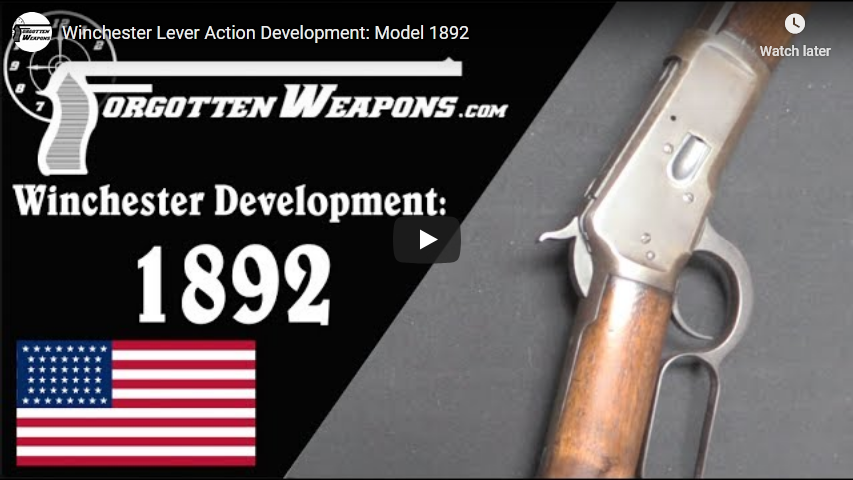
Winchester Lever Action Development: Model 1892
Forgotten Weapons
Published 15 Jun 2017As the Model 1873 began to show its age, Winchester wanted a new rifle to take its place in the company catalog. Scaling down the Model 1886 to the pistol cartridges of the 1873 seemed like a fine option, and Winchester executives approached John Browning, offering him $10,000 if he could produce such a gun within 3 months, or $15,000 if he could do the job in two months. Browning’s response was to say that he would take $20,000 and have the rifle in company hands within 30 days — or else he would give it to them for free.
The $20,000 that Winchester paid him for the new rifle was well worth it, as the 1892 would become the best-selling Winchester rifle to that date, selling more than a million guns by the 1930s. It used the stronger and more cost-effective locking system of the 1886, while being chambered for the same cartridges as the 1873 — the .44 WCF (.44-40), .38 WCF (.38-40), and .32 WCF (.32-20), as well as a few new cartridges added over time.
Cool Forgotten Weapons merchandise! http://shop.bbtv.com/collections/forg…
http://www.patreon.com/ForgottenWeapons
If you enjoy Forgotten Weapons, check out its sister channel, InRangeTV! http://www.youtube.com/InRangeTVShow
Comments Off on Winchester Lever Action Development: Model 1892


