
Why does nothing in today’s rock music sound like the Beatles?
It’s a pertinent question because the Beatles were so acclaimed as musical innovators in their time and still so hugely popular. And yet, nobody sounds like them. Since not long after the chords of the “Let It Be” died away in 1969, every attempt to revive the Beatlesy sound of bright vocal-centered ensemble pop has lacked any staying power among rock fans. It gets tried every once in a while by a succession of bands running from Badfinger to the Smithereens, and goes nowhere. Why is this?
Another, related question is: Why does so very little in today’s rock music sound like Chuck Berry?
Inventor of rock and roll, they still call him. And yet outside of occasional tributes and moments of self-conscious museumizing, nobody writes rock music that sounds anything like “Johnny B. Goode” anymore. Modern tropes and timbre are vastly different. Only the rock beat – only the drum part – survives pretty much intact.
It’s odd, when you think about it. The sound that electrified the late Fifties and Sixties is still revered, but it’s gone. The basic rock beat remains, but everything above it has been flooded out, replaced by something harder and darker.
We all sort of know, even as casual listeners, that rock has evolved a lot. There’s even a tendency for the term “rock and roll” to nowadays be specifically confined to the older sound, with “rock” standing alone to refer to the more modern stuff.
[…]
The sea-change happened between 1969 and 1971. The moving figures were: Jimi Hendrix. British Invasion bands like the Rolling Stones and Led Zeppelin and the Who. American West Coast bluesmen like Mike Bloomfield and Al Cooper. The San Franciso acid-rock scene. And many lesser imitators.
What they did was raze old-school rock-and-roll to the ground, replacing it with a bastard child of LSD and Chicago-style hard electric blues. That angry, haunting, minor-key idiom is what buried the Beatles and put a stamp on rock music so final that today the sound of any modern arena rocker – like, say, Guns’n’Roses – is recognizably the same thing musicians began to record around 1970.
(Which it should be pointed out, is a very long run for a mass-market pop genre. It’s as though in 1970 our radios had still been full of pop in forms dating from 1925 …)
Eric S. Raymond, “The blues ate rock and roll!”, Armed and Dangerous, 2017-12-28.
February 9, 2021
QotD: Nothing sounds like the Beatles
February 8, 2021
Why Everybody Disagrees on the Efficacy of the English Longbow – A Video Essay
SandRhoman History
Published 7 Feb 2021Everybody quarrels over the efficacy of the English longbow. Many historians, reenactors and history enthusiasts alike hold the view that arrows piercing armor is a myth. Some base this view on testing as was done for example by Tod from Tod’s workshop. Together with his team, he provided an invaluable data point for this debate. Others, such as traditionalist historians are often open to the possibility of arrows piercing armor, even though they are aware of actual testing of the longbow. In general, the efficacy of a weapon is much more complicated than its mere armor penetration value. So, in this video we’d like to shed light on the whole debate and explain why it is so hard to find common ground on this issue. This is why everybody disagrees on the efficacy of the English longbow.
Patreon: https://www.patreon.com/sandrhomanhis…
Twitter: https://twitter.com/Sandrhoman
Tod’s Video: ARROWS vs ARMOUR – Medieval Myth Busting https://youtu.be/DBxdTkddHaE
Tod’s playlist: MEDIEVAL MYTH BUSTING https://youtube.com/playlist?list=PLI…
Bibliography:
Rogers, C.J., The Efficacy of the English Longbow, 1998.
Devries, K., Medieval Military Technology, 1994.
Bane, M., “English Longbow Testing against various armor circa 1400”, 2006.
Soar, H., Gibbs, J., Jury, C., Stretton, M., Secrets of the English War Bow. Westholme, 2010, pp. 127–151.
Magier, Mariusz; Nowak, Adrian; et al., “Numerical Analysis of English Bows used in Battle of Crécy”. Problemy Techniki Uzbrojenia. 142 (2), 2017, 69–85.

How did the Holy Roman Empire Work?
History Matters
Published 25 Aug 2019Twitter: https://twitter.com/Tenminhistory
Patreon: https://www.patreon.com/user?u=4973164
Merch: teespring.com/stores/history-matters-…Special Thanks to the following Patrons for their support on Patreon:
Kevin Sanders
Chris Fatta
Daniel Lambert
Richard Wolfe
Joshua
Tom Loghrin
Warren Rudkin
Andrew Niedbala
Mitchell Wildoer
Blaine Tillack
Bernardo Santos
Matthew
John Garcia
Richard Hartzell
Will Davis-Coleman
Danny Anstess
Henry Rabung
August Block
Perry Gagne
Shaun Pullin
Joooooshhhhh
Vesko Dinev
PaulToon
Kelly Moneymaker
FuzzytheFair
Armani_Banani
Jeffrey Schneider
Byzans_Scotorius
Seth Reeves
Haydn Noble
Josh Cornelius
Gideon Rashkes
Spencer Smith
Cornel Borină
Roberto
Andrew Keeling
Richard Manklow
Chance Cansler
João Santos
Gabriel Lunde
Pierre Le Mouel
anonHow did the Holy Roman Empire work? It was an antiquated mess but it did have a system of government that did work. Sort of. If everyone felt like it.
Sources:
Prussia’s Relations with the Holy Roman Empire, 1740-1786 by Peter H. Wilson.
Benjamin Franklin, Student of the Holy Roman Empire: His Summer Journey to Germany in 1766 and His Interest in the Empire’s Federal Constitution by Jürgen Overhoff.
The Constitution of the Holy Roman Empire after 1648: Samuel Pufendorf’s Assessment in His Monzambano by Peter Schröder.
Bolstering the Prestige of the Habsburgs: The End of the Holy Roman Empire in 1806 by Peter H. Wilson.

QotD: The deeply rooted anti-Americanism in Canadian politics
Ben Woodfinden, “True North Patriotism and a Distinctly Canadian Conservatism”, The Dominion, 2020-10-20.
February 7, 2021
Pearl Harbor Avenged! – WW2 – 128 – February 6, 1942
World War Two
Published 6 Feb 2021The Japanese advance in Burma and the Dutch East Indies, but they’ve reached the end of the Malayan Campaign- Singapore, which they have under siege. They now prepare for the final assault. The Allies are going on the offensive at sea, though, in the Marshalls-Gilberts Raids, while on land in the Soviet Union the Red Army launches another series of offensives against the Germans.
Join us on Patreon: https://www.patreon.com/TimeGhostHistory
Or join The TimeGhost Army directly at: https://timeghost.tvFollow WW2 day by day on Instagram @ww2_day_by_day – https://www.instagram.com/ww2_day_by_day
Between 2 Wars: https://www.youtube.com/playlist?list…
Source list: http://bit.ly/WW2sourcesWritten and Hosted by: Indy Neidell
Director: Astrid Deinhard
Producers: Astrid Deinhard and Spartacus Olsson
Executive Producers: Astrid Deinhard, Indy Neidell, Spartacus Olsson, Bodo Rittenauer
Creative Producer: Maria Kyhle
Post-Production Director: Wieke Kapteijns
Research by: Indy Neidell
Edited by: Iryna Dulka
Sound design: Marek Kamiński
Map animations: Eastory (https://www.youtube.com/c/eastory)Colorizations by:
– Mikołaj Uchman
– Julius Jääskeläinen – https://www.facebook.com/JJcolorization/
– Dememorabilia – https://www.instagram.com/dememorabilia/
– Norman Stewart – https://oldtimesincolor.blogspot.com/Sources:
– National Portrait Gallery
– Ministerie van Defensie
– Arrow by 4B Icons from the Noun Project
– Yad Vashem: 76BO2, 4331_21Soundtracks from the Epidemic Sound:
– Rannar Sillard – “Easy Target”
– Jo Wandrini – “Dragon King”
– Fabien Tell – “Last Point of Safe Return”
– Howard Harper-Barnes – “Sailing for Gold”
– Craft Case – “Secret Cargo”
– Rannar Sillard – “Split Decision”
– Flouw – “A Far Cry”
– Johannes Bornlöf – “The Inspector 4”
– Johan Hynynen – “Dark Beginning”
– Edward Karl Hanson – “Spellbound”
– Howard Harper-Barnes- “Underlying Truth”Archive by Screenocean/Reuters https://www.screenocean.com.
A TimeGhost chronological documentary produced by OnLion Entertainment GmbH.

Roman legion vs Macedonian phalanx
Epimetheus
Published 13 Aug 2018Roman legion vs Macedonian phalanx (Macedonian wars)
Battle of Pydna 168 BC and battle of Cynoscephalae 197 BCSupport new videos from Epimetheus on Patreon! 😀
https://www.patreon.com/Epimetheus1776roman legion, roman legion tactics, macedonian phalanx, Macedonian phalanx tactics, Macedonian phalanx vs roman legion, ancient Macedonian army, ancient roman army, roman army, Roman legionary, rome vs Greece, Rome vs Macedon, roman army weapons, Roman army tactics, Macedonian wars, battle Cynoscephalae, battle of Pydna, republican Roman army, Roman maniple, Roman republic, documentary, ancient Rome documentary, ancient Greece documentary, rome documentary, battle of magnesia, rome selucid empire, Roman empire vs selucid empire, diadochi, ancient,

QotD: The greatest sin of the Baby Boomers
If that’s harsh on the Boomers, well, sorry, Moonbeam — History don’t care about your feelings. But “the Sixties” isn’t the gravest charge History can lay against you. This is: After all that, you gave the world us, Gen X, the Dumbest Generation of Narcissists in the History of the World. Yes, you guys are responsible for both “Rocky Raccoon” and “Smells Like Teen Spirit.”
Severian, “The Look”, Rotten Chestnuts, 2020-10-09.
February 6, 2021
From an improbable 1930s “death ray” to the radar network that helped defeat the Blitz
In a story from a few years back, Tim Harford outlines how a British Air Ministry prize for developing a “death ray” to use against enemy aircraft eventually helped kick off the discovery of radar:

The Chain Home radar tower in Great Baddow Chelmsford.
Photo by Stuart166axe via Wikimedia Commons.
… sometimes inventions need other inventions to unlock their full potential.
For the aviation industry, that story starts with the invention of the death ray, or at least an attempt to design a death ray, back in 1935.
Officials in the British Air Ministry were worried about falling behind Nazi Germany in the technological arms race.
The death ray idea intrigued them: they had been offering a £1,000 prize for anyone who could zap a sheep at a hundred paces. So far, nobody had claimed it.
But should they fund more active research? Was a death ray even possible?
Unofficially, they sounded out Robert Watson Watt, of the Radio Research Station.
And he posed an abstract maths question to his colleague Skip Wilkins.
“Suppose, just suppose,” said Watson Watt to Wilkins, “that you had eight pints of water, 1km [3,000ft] above the ground.
“And suppose that water was at 98F [37C], and you wanted to heat it to 105F.
“How much radio frequency power would you require, from a distance of 5km?”
Skip Wilkins was no fool.
He knew that eight pints was the amount of blood in an adult human, 98F was normal body temperature and 105F was warm enough to kill you, or at least make you pass out, which — if you’re behind the controls of an aeroplane — amounts to much the same thing.
So Wilkins and Watson Watt understood each other, and they quickly agreed the death ray was hopeless: it would take too much power.
But they also saw an opportunity.
Clearly, the ministry had some cash to spend on research. Perhaps Watson Watt and Wilkins could propose some alternative way for them to spend it?
Wilkins pondered. It might be possible, he suggested, to transmit radio waves and detect — from the echoes — the location of oncoming aircraft long before they could be seen.
Watson Watt dashed off a memo to the Air Ministry’s newly formed Committee for the Scientific Survey of Air Defence. Would they be interested in pursuing such an idea? They would indeed.
What Skip Wilkins was describing became known as radar.
Hitler’s Zipper: The MG-42 Universal Machine Gun
Forgotten Weapons
Published 4 Nov 2020http://www.patreon.com/ForgottenWeapons
https://www.floatplane.com/channel/Fo…
Cool Forgotten Weapons merch! http://shop.bbtv.com/collections/forg…
The MG42 was developed to be a more reliable and easier to manufacture replacement for the MG34, although both would serve side by side until the end of World War Two. Designed by Grossfuss company engineer Werner Gruner with no previous military or small arms design experience, the MG42 used heavy stampings for its main assemblies, thus reducing German need for expensive and difficult to obtain alloyed steels.
As a practical matter, the MG42 had a much higher rate of fire than the MG34, at 1500-1600 rounds per minute (more than 50% faster than the MG34). This was deemed desirable to improve the effectiveness of suppressing fire and the density of the cone of fire, but naturally resulted in much higher ammunition consumption than other machine gun models.
This example is a very early production Gustloff example, with the early horizontal charging handle, unreinforced wooden stock, and adjustable front sight. It was most likely captured in North Africa from Rommel’s forces, as they were a primarily user of the very early MG42s.
Contact:
Forgotten Weapons
6281 N. Oracle #36270
Tucson, AZ 85740

February 5, 2021
Where Hitler’s Moustache Came From, Kurds in WW2, and Germans in Italy – WW2 – OOTF 020
World War Two
Published 4 Feb 2021Where is Kurdistan and how were its people involved in World War Two? Did Germany try to annex South Tyrol from Italy? And why did Hitler have that Moustache? Find out in this episode of Out of the Foxholes.
Join us on Patreon: https://www.patreon.com/TimeGhostHistory
Or join The TimeGhost Army directly at: https://timeghost.tvFollow WW2 day by day on Instagram @ww2_day_by_day – https://www.instagram.com/ww2_day_by_day
Between 2 Wars: https://www.youtube.com/playlist?list…
Source list: http://bit.ly/WW2sourcesHosted by: Indy Neidell
Written by: Lewis Braithwaite, Ian Irungu, Timothy Smith
Director: Astrid Deinhard
Producers: Astrid Deinhard and Spartacus Olsson
Executive Producers: Astrid Deinhard, Indy Neidell, Spartacus Olsson, Bodo Rittenauer
Creative Producer: Maria Kyhle
Post-Production Director: Wieke Kapteijns
Research by: Lewis Braithwaite, Ian Irungu, Timothy Smith
Edited by: Michał Zbojna
Sound design: Marek Kamiński
Map animations: Eastory (https://www.youtube.com/c/eastory)Colorizations by:
Klimbim https://www.flickr.com/photos/2215569…
Mikołaj UchmanIcons from The Noun Project:
noun_Helmet_25216 Helmet by Daniel Turner
X by Richard KunáSoundtracks from Epidemic Sound:
“When in Bavaria” – Trabant 33
“Dawn Of Civilization” – Jo Wandrini (1)
“Ancient Discoveries” – Gabriel LewisSources:
Bundesarchiv, Bild 137-055690
Bundesarchiv, Bild 137-055691Archive by Screenocean/Reuters https://www.screenocean.com.
A TimeGhost chronological documentary produced by OnLion Entertainment GmbH.

The 369th Infantry Regiment in WW1 – the “Harlem Hellfighters”
Lawrence W. Reed remembers the US regiment that spent the most days in combat during WW1 and was awarded the French Croix de Guerre for the unit’s incredible fighting efforts:
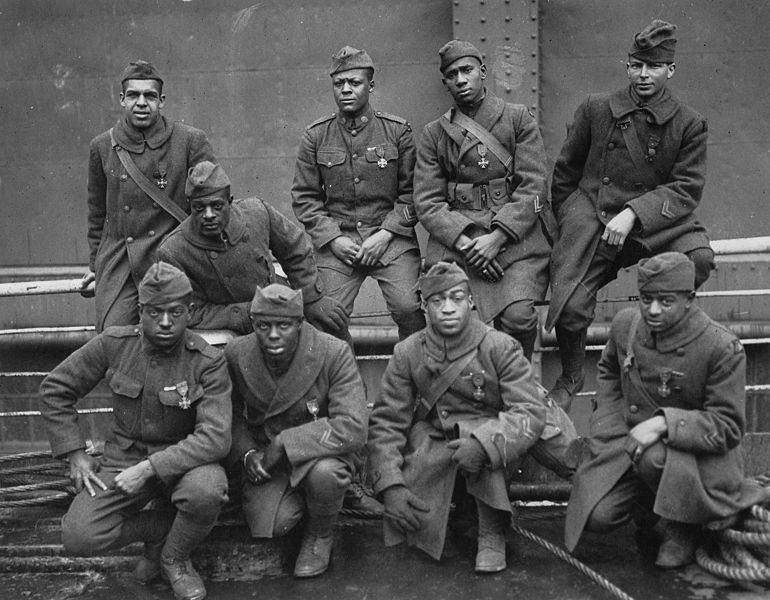
“Some of the colored men of the 369th (15th N.Y.) who won the Croix de Guerre for gallantry in action.” Left to right. Front row: Pvt. Ed Williams, Herbert Taylor, Pvt. Leon Fraitor, Pvt. Ralph Hawkins. Back Row: Sgt. H. D. Prinas, Sgt. Dan Strorms, Pvt. Joe Williams, Pvt. Alfred Hanley, and Cpl. T. W. Taylor.
Records of the War Department General and Special Staffs via Wikimedia Commons.
Formed from a New York National Guard unit, the men of the 369th learned basic military practices at Camp Whitman, New York, before being sent to Camp Wadsworth in Spartanburg, South Carolina, for combat training. They were not welcomed by many of the locals there, and some were subjected to discrimination and vile epithets for no more reason than their color. In December 1917, they were shipped to France where they expected to see action on the front lines.
Their high spirits were quickly dashed when it became apparent the Army did not want to deploy them for anything other than manual labor, far from the fighting. Even the rifles they brought with them were confiscated by US Army officials.
The commander of the American Expeditionary Force, General John J. Pershing, was reluctant to commit any US troops to the front until he felt he had assembled them in sufficient numbers to ensure victory. The French, meanwhile, were desperate for manpower. Finally bowing to French pressure, Pershing gave them the 369th. While some regarded black troops as expendable, they ultimately proved themselves indispensable.
Consider this amazing record of the Harlem Hellfighters: No American unit experienced more time in combat than they did — no less than 191 days under fire. They never lost an inch of ground. The enemy never captured a single of their number. They suffered the highest casualty rate of any US regiment. None deserted. The grateful French bestowed their highest military honor, the Croix de Guerre, upon the entire regiment. Many individuals of the regiment received the US Army’s second-highest award, the Distinguished Service Cross. Posthumously, Henry Johnson received America’s Medal of Honor in 2015. The 369th ended up as the most decorated US regiment of the war.
Another distinguishing feature of the Harlem Hellfighters was their band, the largest and best-known of any regiment. Its leader was James Reese Europe, whose enlistment in 1917 proved to be a boon for recruitment. He was one of America’s best-known black musicians and others like Noble Sissle, who became Europe’s lieutenant and lead vocalist, were eager to serve with him.
Europe’s band was extremely popular with the French, even when Europe introduced his own arrangement of La Marseillaise, France’s national anthem. The Hellfighters’ band brought both jazz and ragtime music to France, where nobody had heard either before.
Tank Chats #93 Humber Hornet | The Tank Museum
The Tank Museum
Published 24 Jan 2020Here David Fletcher takes a look at the Humber Hornet, a specialised air-deployable Armoured Fighting Vehicle. It was designed to carry the Malkara, an anti-tank guided missile developed by Australia and the United Kingdom.
Support the work of The Tank Museum on Patreon: ► https://www.patreon.com/tankmuseum
Visit The Tank Museum SHOP: ►tankmuseumshop.org
Twitter: ► https://twitter.com/TankMuseum
Instagram: ► https://www.instagram.com/tankmuseum/
Tiger Tank Blog: ► http://blog.tiger-tank.com/
Tank 100 First World War Centenary Blog: ► http://tank100.com/

February 4, 2021
The New World: A Beautiful Mess
Atun-Shei Films
Published 3 Feb 2021A review of the Terrence Malick film The New World, a lavish and beautifully shot historical epic that nonetheless falls short in a few important ways.
Support Atun-Shei Films on Patreon ► https://www.patreon.com/atunsheifilms
Leave a Tip via Paypal ► https://www.paypal.me/atunsheifilms
Buy Merch ► teespring.com/stores/atun-shei-films
#TerrenceMalick #Jamestown #Pocahontas
Original Music by Dillon DeRosa ► http://dillonderosa.com/
Reddit ► https://www.reddit.com/r/atunsheifilms
Twitter ► https://twitter.com/atun_shei

February 3, 2021
Just Following Orders? – Death Camp Commandants – WW2 Gallery
World War Two
Published 2 Feb 2021All Nazi transit, concentration, labour and extermination camps were led by Nazi officers. In this episode, we’re taking a look at some of them to see what kind of people rose to those positions and what impact they made.
The video Spartacus mentions about how Eicke created the Concentration Camp model is here: https://youtu.be/SjLFdw5u26s
Join us on Patreon: https://www.patreon.com/TimeGhostHistory
Or join The TimeGhost Army directly at: https://timeghost.tvFollow WW2 day by day on Instagram @ww2_day_by_day – https://www.instagram.com/ww2_day_by_day
Between 2 Wars: https://www.youtube.com/playlist?list…
Source list: http://bit.ly/WW2sourcesHosted by: Spartacus Olsson
Written by: Joram Appel and Spartacus Olsson
Director: Astrid Deinhard
Producers: Astrid Deinhard and Spartacus Olsson
Executive Producers: Astrid Deinhard, Indy Neidell, Spartacus Olsson, Bodo Rittenauer
Creative Producer: Maria Kyhle
Post-Production Director: Wieke Kapteijns
Research by: Joram Appel
Edited by: Iryna Dulka
Sound design: Marek Kamiński
Map animations: Eastory (https://www.youtube.com/c/eastory)Colorizations by:
– Mikołaj Uchman
– Norman Stewart – https://oldtimesincolor.blogspot.com/Sources:
– United States Holocaust Memorial Museum
– Bundesarchiv: 152-01-14, 152-01-26, 152-01-024, 119-0052-01, 152-01-16, 183-W0402-503, 152-23-10A, 152-26-27, 183-78612-0004, 146-2007-0068, 152-23-21A
– Yad Vashem: 202_65, 202_71, 4613_666, 202_169, 202_167, 202_133, 192-093, 11CO3, 192-006, 11FO7, 1137_208
– Watchtower by Eliricon from the Noun ProjectSoundtracks from the Epidemic Sound:
– Gunnar Johnsen – “Not Safe Yet”
– Cobby Costa – “From the Past”
– Brightarm Orchestra – “On the Edge of Change”
– Phoenix Tail – “Last Minute Reaction”
– Christian Andersen – “Barrel”
– Farrell Wooten – “Rainy Landscapes”
– Flouw – “Endlessness”
– Wendel Scherer – “Defeated STEMS INSTRUMENTS”
– Craft Case – “Secret Cargo”Archive by Screenocean/Reuters https://www.screenocean.com.
A TimeGhost chronological documentary produced by OnLion Entertainment GmbH.
From the comments:
World War Two
5 hours ago (edited)
This is our first official “Gallery” episode. There are too many significant, impactful and interesting individuals to give them all their own Biography episodes. So we decided to bundle some of them together in categories in which they played a significant role, like the people who served as camp commandants in this episode. We will still do Biography specials when one individual story deserves to be told, but with the addition of this new format we will be able to cover a lot more and provide the broadest context to this immense war.

Fatah demands that Britain return Big Ben to its original Jerusalem home
Daniel Greenfield unravels the historical misconceptions that informed the demand:
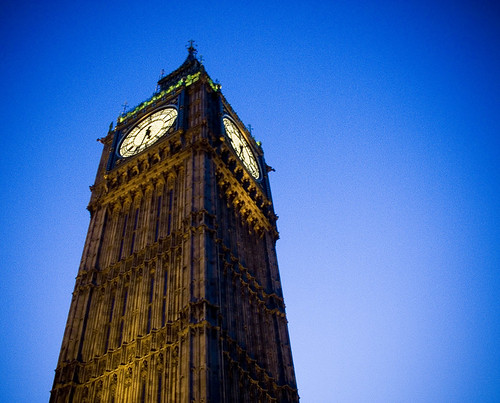
“Big Ben” by kev_zilla is licensed under CC BY-NC-ND 2.0


“The Jerusalem Clock is hidden in London today,” Fatah, the political movement behind the PLO and the Palestinian Authority, asserts in a post titled, “Jerusalem Stolen Clock”.
It goes on to claim that the British military ordered the clock tower dismantled. Then the “British moved the clock first to a new tower across from the municipality of Jerusalem, and transferred it to the British Museum in London, to become the famous British icon, ‘Big Ben’.”
How did Big Ben, which was built in 1859, become a Muslim clock tower from the 20th century?
There are some other slight differences between London’s Big Ben and the “stolen clock” such as the fact that Big Ben is 316 feet tall while the “Palestinian” clock tower was only 42 feet.
But the story of the “Palestinian clock” is also the story of the entire myth of “Palestine”.
When you believe that the Jerusalem of King David and King Solomon was originally yours, you can just as easily believe that London’s Big Ben was originally the property of “Palestine”.
The “Palestinian clock” is as real as “Palestine”. The myth of a “Palestinian” people propounded by Fatah which has spent decades killing over it is also the story of the “Palestinian clock”.
There’s no more of a “Palestinian” people who were dispossessed by the Jews than Big Ben is a “Palestinian” clock stolen and passed off as London’s Big Ben. Both are fake history built out of resentments and garbled stories whose context has been lost, but whose hatreds remain real.
There were never any Palestinians. When the clock was built the region had been part of the Ottoman Empire, the last Caliphate until ISIS. The caliphates had settled it with Arab Muslim clans who dominated Christian refugees fleeing Muslim persecution, along with groups of other minorities from escaped slaves to gypsies, along with the indigenous Jewish population.
The Ottomans had become obsessed with clock towers as a symbol of their empire. But the Ottomans hadn’t invented them, they had adopted them from Europe, and planted them in major cities of the empire to create a common sense of time and belonging for their subjects.
Sultan Abdul Hamid II, the last real sultan of the empire, obsessively erected clock towers to show off how modern the Ottoman Empire was. But by then the Empire was anything but modern and Hamid’s clock tower craze was powered by his German allies. Kaiser Wilhelm II gave Hamid a batch of clocks at the turn of the century which the Turks put into clock towers.
The Ottoman Empire erected some of its clock towers in Israel. These clock towers utilized the talents and funds of the indigenous Jewish and the Arab Muslim settler population. The clock tower projects in Israel began in 1901 which is also the date when Wilhelm sent Hamid a whole bunch of clocks. One of these clock towers was stuck on Jerusalem’s Jaffa Gate which Hamid had previously cut a hole in so that the Kaiser could enter Jerusalem in his tall plumed helmet.
H/T to Kate at SDA for the link.


