
seangabb
Published 24 Sept 2023A lecture given in absentia to the 2023 meeting of the Property and Freedom Society in Bodrum. The subject is Slavery in the Roman World. It covers these issues:
Introduction: Sean Gabb, face to camera – 00:00:00
Classical Liberalism, the Natural Law and Slavery – 00:06:38
The Growth of Roman Slavery – 00:16:27
Slave Markets – 00:21:20
The Valuation of Slaves – 00:24:07
Slave Occupations – 00:29:41
The Treatment of Slaves: Galen and the Broken Cup – 00:33:04
Sex and Slavery – 00:38:32
Other Mistreatment of Slaves – 00:00:00
Escape and Punishment – 00:45:49
Slaves and the Arena – 00:48:10
The Moral Effects of Slavery – 00:49:18
The Slave Revolts – 00:58:20
Manumission – 01:03:14
Conclusion and Bibliography – 01:10:20
(more…)
January 12, 2024
Slavery in the Roman World: A Lecture Given in September 2023
QotD: Rome’s Italic “allies”
The Roman Republic spent its first two and a half centuries (or so) expanding fitfully through peninsular Italy (that is, Italy south of the Po River Valley, not including Sicily). This isn’t the place for a full discussion of the slow process of expanding Roman control (which wouldn’t be entirely completed until 272 with the surrender of Tarentum). The consensus position on the process is that it was one in which Rome exploited local rivalries to champion one side or the other making an ally of the one by intervening and the other by defeating and subjecting them (this view underlies the excellent M.P. Fronda, Between Rome and Carthage: Southern Italy During the Second Punic War (2010); E.T. Salmon, The Making of Roman Italy (1982) remains a valuable introduction to the topic). More recently, N. Terranato, The Early Roman Expansion into Italy (2019) has argued for something more based on horizontal elite networks and diplomacy, though this remains decidedly a minority opinion (I myself am rather closer to the consensus position, though Terranato has a point about the role of elite negotiation in the process).
The simple (and perhaps now increasingly dated) way I explain this to my students is that Rome follows the Goku Model of Imperialism: I beat you, therefore we are now friends. Defeated communities in Italy (the system is different outside of Italy) are made to join Rome’s alliance network as socii (“allies”), do not have tribute imposed on them, but must supply their soldiers to fight with Rome when Rome is at war, which is always.
It actually doesn’t matter for us how this expansion was accomplished; rather we’re interested in the sort of order the Romans set up when they did expand. The basic blueprint for how Rome interacted with the Italians may have emerged as early as 493 with the Foedus Cassianum, a peace treaty which ended a war between Rome and [the] Latin League (an alliance of ethnically Latin cities in Latium). To simplify quite a lot, the Roman “deal” with the communities of Italy which one by one came under Roman power went as follows:
- All subject communities in Italy became socii (“allies”). This was true if Rome actually intervened to help you as your ally, or if Rome intervened against you and conquered your community.
- The socii retained substantial internal autonomy (they kept their own laws, religions, language and customs), but could have no foreign policy except their alliance with Rome.
- Whenever Rome went to war, the socii were required to send soldiers to assist Rome’s armies; the number of socii in Rome’s armies ranged from around half to perhaps as much as two thirds at some points (though the socii outnumbered the Romans in Italy about 3-to-1 in 225, so the Romans made more strenuous manpower demands on themselves than their allies).
- Rome didn’t impose tribute on the socii, though the socii bore the cost of raising and paying their detachments of troops in war (except for food, which the Romans paid for, Plb. 6.39.14).
- Rome goes to war every year.
- No, seriously. Every. Year. From 509 to 31BC, the only exception was 241-235. That’s it. Six years of peace in 478 years of republic. The socii do not seem to have minded very much; they seem to have generally been as bellicose as the Romans and anyway …
- The spoils of Roman victory were split between Rome and the socii. Consequently, as one scholar memorably put it, the Roman alliance was akin to, “a criminal operation which compensates its victims by enrolling them in the gang and inviting them to share to proceeds of future robberies” (T. Cornell, The Beginnings of Rome (1995)).
- The alliance system included a ladder of potential relationships with Rome which the Romans might offer to loyal allies.
Now this isn’t a place for a long discussion of the Roman alliance system in Italy (that place is in the book I am writing), so I want us to focus more narrowly on the bolded points here and how they add up to significant changes in who counted as “Roman” over time. But I should note here that while I am calling this a Roman “alliance system” (because the Romans call these fellows socii, allies) this was by no means an equal arrangement: Rome declared the wars, commanded the armies and set the quotas for military service. The “allies” were thus allies in name only, but in practice subjects; nevertheless the Roman insistence on calling them allies and retaining the polite fiction that they were junior partners rather than subject communities, by doing things like sharing the loot and glory of victory, was a major contributor to Roman success (as we’ll see).
First, the Roman alliance system was split into what were essentially tiers of status. At the top were Roman citizens optimo iure (“full rights”, literally “with the best right”) often referred to on a community basis as civitas cum suffragio (“citizenship with the vote”). These were folks with the full benefits of Roman citizenship and the innermost core of the Roman polity, who could vote and (in theory, though for people of modest means, only in theory) run for office. Next were citizens non optimo iure, often referred to as having civitas sine suffragio (“citizenship without the vote”); they had all of the rights of Roman citizens except for political participation in Rome. This was almost always because they lived in communities well outside the city of Rome with their own local government (where they could vote); we’ll talk about how you get those communities in a second. That said, citizens without the vote still had the right to hold property in Roman territory and conduct business with the full protection of a Roman citizen (ius commercii) and the right to contract legal marriages with Roman citizens (ius conubii). They could do everything except for vote or run for offices in Rome itself.
Next down on the list were socii (allies) of Latin status (note this is a legal status and is entirely disconnected from Latin ethnicity; by the end of this post, Rome is going to be block-granting Latin status to Gauls in Cisalpine Gaul, for instance). Allies of Latin status got the benefits of the ius commercii, as well as the ability to move from one community with Latin status to another without losing their status. Unlike the citizens without the vote, they didn’t automatically get the right to contract legal marriages with Roman citizens, but in some cases the Romans granted that right to either individuals or entire communities (scholars differ on exactly how frequently those with Latin status would have conubium with Roman citizens; the traditional view is that this was a standard perk of Latin status, but see Roselaar, op. cit.). That said, the advantages of this status were considerable – particularly the ability to conduct business under Roman law rather than what the Romans called the “ius gentium” (“law of peoples”) which governed relations with foreigners (peregrini in Roman legal terms) and were less favorable (although free foreigners in Rome had somewhat better protections, on the whole, than free foreigners – like metics – in a Greek polis).
Finally, you had the socii who lacked these bells and whistles. That said, because their communities were allies of Rome in Italy (this system is not exported overseas), they were immune to tribute, Roman magistrates couldn’t make war on them and Roman armies would protect them in war – so they were still better off than a community that was purely of peregrini (or a community within one of Rome’s provinces; Italy was not a province, to be clear).
The key to this system is that socii who stayed loyal to Rome and dutifully supplied troops could be “upgraded” for their service, though in at least some cases, we know that socii opted not to accept Roman citizenship but instead chose to keep their status as their own community (the famous example of this were the allied soldiers of Praenesti, who refused Roman citizenship in 211, Liv. 23.20.2). Consequently, whole communities might inch closer to becoming Romans as a consequence of long service as Rome’s “allies” (most of whom, we must stress, were at one point or another, Rome’s Italian enemies who had been defeated and incorporated into Rome’s Italian alliance system).
But I mentioned spoils and everyone loves loot. When Rome beat you, in the moment after you lost, but before the Goku Model of Imperialism kicked in and you became friends, the Romans took your stuff. This might mean they very literally sacked your town and carried off objects of value, but it also – and for us more importantly – meant that the Romans seized land. That land would be added to the ager Romanus (the body of land in Italy held by Rome directly rather than belonging to one of Rome’s allies). But of course that land might be very far away from Rome which posed a problem – Rome was, after all, effectively a city-state; the whole point of having the socii-system is that Rome lacked both the means and the desire to directly govern far away communities. But the Romans didn’t want this land to stay vacant – they need the land to be full of farmers liable for conscription into Rome’s armies (there was a minimum property requirement for military service because you needed to be able to buy your own weapons so they had to be freeholding farmers, not enslaved workers). By the by, you can actually understand most of Rome’s decisions inside Italy if you just assume that the main objective of Roman aristocrats is to get bigger armies so they can win bigger battles and so burnish their political credentials back in Rome – that, and not general altruism (of which the Romans had fairly little), was the reason for Rome’s relatively generous alliance system.
The solution was for Rome to essentially plant little Mini-Me versions of itself on that newly taken land. This had some major advantages: first, it put farmers on that land who would be liable for conscription (typically placing them in carefully measured farming plots through a process known as centuriation), either as socii or as Roman citizens (typically without the vote). Second, it planted a loyal community in recently conquered territory which could act as a position of Roman control; notably, no Latin colony of this sort rebelled against Rome during the Second Punic War when Hannibal tried to get as many of the socii to cast off the Romans as he could.
What is important for what we are doing here is to note that the socii seem to have been permitted to contribute to the initial groups settling in these colonies and that these colonies were much more tightly tied to Rome, often having conubium – that right of intermarriage again – with Roman citizens. The consequence of this is that, by the late third century (when Rome is going to fight Carthage) the ager Romanus – the territory of Rome itself – comprises a big chunk of central Italy […] but the people who lived there as Roman citizens (with and without the vote) were not simply descendants of that initial Roman citizen body, but also a mix of people descended from communities of socii throughout Italy.
Bret Devereaux, “Collections: The Queen’s Latin or Who Were the Romans, Part II: Citizens and Allies”, A Collection of Unmitigated Pedantry, 2021-06-25.
January 11, 2024
Pushing back against the Colonialism Narrative
At Samizdata, Brendan Westbridge praises Nigel Biggar’s 2023 book Colonialism: A Moral Reckoning:
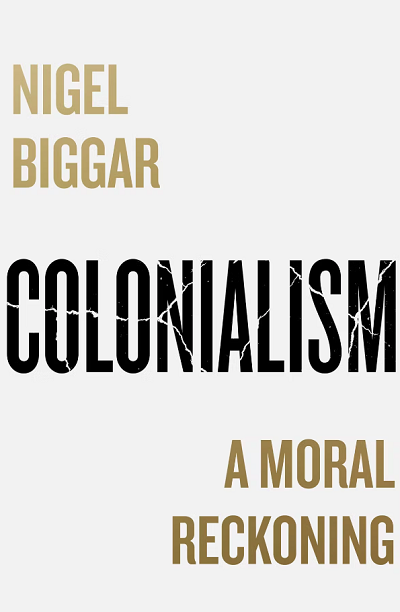
He examines the various claims that the “de-colonisers” make: Amritsar, slavery, Benin, Boer War, Irish famine. In all cases he finds that their claims are either entirely ungrounded or lack vital information that would cast events in a very different light. Amritsar? Dyer was dealing with political violence that had led to murder. Some victims had been set alight. Anyway, he was condemned for his actions by the British authorities and, indeed, his own standing orders. Slavery? Everyone had it and Britain was the first to get rid of it. Benin? They had killed unarmed ambassadors. Irish famine? They tried to relieve it but they were quite unequal to the size of the task. In the case of Benin he comes very close to accusing the leading de-coloniser of knowingly lying. The only one of these where I don’t think he is so convincing is the Boer War. He claims that Britain was concerned about the future of the Cape and especially the Simonstown naval base and also black rights. I think it was the pursuit of gold even if it does mean agreeing with the communist Eric Hobsbawm.
He is far too polite about the “de-colonisers”. They are desperate to hammer the square peg of reality into their round-hole of a theory. To this end they claim knowledge they don’t have, gloss over inconvenient facts, erect theories that don’t bear scrutiny and when all else fails: lie. Biggar tackles all of these offences against objectivity with a calmness and a politeness that you can bet his detractors would never return.
The communists – because they are obsessed with such things and are past masters at projection – like to claim that there was an “ideology” of Empire. Biggar thinks this is nonsense. As he says:
There was no essential motive or set of motives that drove the British Empire. The reasons why the British built an empire were many and various. They differed between trader, migrant, soldier, missionary, entrepreneur, financier, government official and statesman. They sometimes differed between London, Cairo, Cape Town and Calcutta. And all of the motives I have unearthed in this chapter were, in themselves, innocent: the aversion to poverty and persecution, the yearning for a better life, the desire to make one’s way in the world, the duty to satisfy shareholders, the lure of adventure, cultural curiosity, the need to make peace and keep it, the concomitant need to maintain martial prestige, the imperative of gaining military or political advantage over enemies and rivals, and the vocation to lift oppression and establish stable self-government. There is nothing morally wrong with any of these. Indeed, the last one is morally admirable.
One of the benefits of the British Empire is that it tended to put a stop to local wars. How many people lived because of that? But that leads us on to another aspect. Almost no one ever considers what went on before the Empire arrived. Was it better or worse than went before it? Given that places like Benin indulged in human sacrifice, I would say that in many cases the British Empire was an improvement. And if we are going to talk about what went before what about afterwards? He has little to say about what newly-independent countries have done with their independence. The United States, the “white” (for want of a better term) Commonwealth and Singapore have done reasonably well. Ireland is sub-par but OK. Africa, the Caribbean and the Indian sub-continent have very little to show for themselves. This may explain why Britain needed very few people to maintain the Empire. At one point he points out that at the height of the Raj the ratio of Briton to native was 1 to 1000. That implies a lot of consent. Tyrannies need a lot more people.
The truth of the matter is that talk of reparations is rooted in the failure of de-colonisation. If Jamaica were a nicer place to live than the UK, if Jamaica had a small boats crisis rather than the UK then no one would be breathing a word about reparations or colonial guilt. All this talk is pure deflection from the failure of local despots to make the lives of their subjects better.
Biggar has nothing to say about what came after the empire and he also has little to say about how it came about in the first place – so I’ll fill in that gap. Britain acquired an empire because it could. Britain was able to acquire an Empire because it mastered the technologies needed to do it to a higher level and on a greater scale than anyone else. Britain mastered technology because it made it possible to prosper by creating wealth. That in itself was a moral achievement.
Art Deco Architecture
Prof. Lynne Porter
Published 22 Apr 2021Lecture for Fairfield University class called “What We Leave Behind: the History of Fashion & Decor”.
QotD: Slavery in the United States
Everyone hated the idea of being a slave but few had any qualms about enslaving others. Slavery was just not an issue, not even among intellectuals, much less among political leaders, until the 18th century – and then it was an issue only in Western civilization. Among those who turned against slavery in the 18th century were George Washington, Thomas Jefferson, Patrick Henry and other American leaders. You could research all of the 18th century Africa or Asia or the Middle East without finding any comparable rejection of slavery there. But who is singled out for scathing criticism today? American leaders of the 18th century.
Deciding that slavery was wrong was much easier than deciding what to do with millions of people from another continent, of another race, and without any historical preparation for living as free citizens in a society like that of the United States, where they were 20 percent of the population.
It is clear from the private correspondence of Washington, Jefferson, and many others that their moral rejection of slavery was unambiguous, but the practical question of what to do now had them baffled. That would remain so for more than half a century.
In 1862, a ship carrying slaves from Africa to Cuba, in violation of a ban on the international slave trade, was captured on the high seas by the U.S. Navy. The crew were imprisoned and the captain was hanged in the United States – despite the fact that slavery itself was still legal at the time in Africa, Cuba, and in the United States. What does this tell us? That enslaving people was considered an abomination. But what to do with millions of people who were already enslaved was not equally clear.
That question was finally answered by a war in which one life was lost [620,000 Civil War casualties] for every six people freed [3.9 million]. Maybe that was the only answer. But don’t pretend today that it was an easy answer – or that those who grappled with the dilemma in the 18th century were some special villains when most leaders and most people around the world saw nothing wrong with slavery.
Incidentally, the September 2003 issue of National Geographic had an article about the millions of people still enslaved around the world right now. But where is the moral indignation about that?
Thomas Sowell, The Thomas Sowell Reader, 2011.
January 10, 2024
The problem of engaging with “the great classical works”
The first book review for 2024 at Mr. and Mrs. Psmith’s Bookshelf is a look at Xenophon’s Education of Cyrus by John Psmith:
It is easier, given his nature, for a human being to rule all the other kinds of animals than to rule human beings. But when we reflected that there was Cyrus, a Persian, who acquired very many people, very many cities, and very many nations, all obedient to himself, we were thus compelled to change our mind to the view that ruling human beings does not belong among those tasks that are impossible … We know that Cyrus, at any rate, was willingly obeyed by some, even though they were distant from him by a journey of many days; by others, distant by a journey even of months; by others, who had never yet seen him; and by others, who knew quite well that they would never see him. Nevertheless, they were willing to submit to him.
I am not well-read in the classics. My excuse ultimately boils down to the same argument that all the classicists give for why you should be well-read in the classics: reading a book that has been widely admired for a very long time isn’t just reading a book, it’s entering into a “great conversation” taking place across the aeons. I feel awkward reading a book like that without knowing something about the commentaries on the book, all the people it has influenced, all the people who influenced it, the commentaries on the commentaries, and so on. It’s exhausting and overwhelming, and when I ignore all that and plunge ahead, I often don’t enjoy the book and then I feel dumb. A “great conversation” sounds nice, but only if you’re one of the participants and you actually get the inside jokes and references. Otherwise it’s as alienating and isolating as showing up to a party where you don’t know anybody, and where everybody else has already been chatting for a few thousand years.
I don’t remember who recommended Xenophon’s Cyropaedia to me or how it wound up on my reading list, but when it finally made its way to the top of my stack, I saw it and shuddered. How could I possibly appreciate this semi-fictionalized biography of the founder of the Persian Empire without first being familiar with Xenophon’s work as a mercenary for one of Cyrus the Great’s distant descendants? Or with all the ways he was riffing on and responding to the political philosophy of his frenemy Socrates? Or with the complicated politics of the Peloponnesian War, and the way that Xenophon, an Athenian exile and the original Sparta-boo, was actually writing PR for King Agesilaus II, but concealing it within a story about the exotic Persians?1 Or with how this book led to the creation of an entire major genre of books in the Middle Ages? Or with the most famous and subversive instance of that genre, Machiavelli’s The Prince, and with all the hundreds of subsequent works reacting and responding to that one?
You see the problem? One could very easily conclude that it would be impossible for me to appreciate this book. Fortunately, I ignored all that and read it anyway. No doubt I missed all kinds of subtle layers of meaning and nuance, but even read on a totally superficial level by an ignoramus, this book rocks.
The title has the word “education” in it, but the book covers Cyrus’s entire life and reign, and only the first section concerns his education in the literal sense. That first section is very important to what comes next, though, so I’m going to dwell on it a bit. Cyrus, along with the other Persian boys of his social class, is being trained to lead. And so their education is centered around having lots of opportunities to judge, instruct, and coerce others; but also opportunities to serve and obey. If you’re old enough, you might remember when the education of the American leadership class worked this way too, but even those of you who are younger have seen vestiges of it in the bizarrely disproportionate weight given to extracurriculars in US college admissions.
1. If you’re an American, then you’re already familiar with this trick. Most of our debates about the virtues and vices of other nations are just thinly-veiled attempts to “own” domestic political opponents.
January 9, 2024
AMX-13 | Tank Chats #174
The Tank Museum
Published 6 Oct 2023With over 7,700 units built and still in service today, this French light tank stands as a testament to its enduring legacy and historical significance. David Willey gives us an in-depth analysis of the development and history of the AMX-13.
(more…)
January 8, 2024
QotD: Nomadic cultures’ territorial needs
The chief thing that nomads, both Great Plains Native Americans and Eurasian Steppe Nomads used violence to secure control of is the one thing the Dothraki never do: territory. To agrarian elites (who write most of our sources) and modern viewers, the vast expanses of grassland that nomads live on often look “empty” and “unused” (and thus not requiring protection), but that’s not correct at all. Those “empty” grasslands are very much in use; the nomads know this and are abundantly willing to defend those expanses of grass with lethal force to keep out interlopers. Remember: the knife’s edge of subsistence for nomads is very thin indeed, so it takes only a small disruption of the subsistence system to push the community into privation.
For the Eurasian Steppe nomad, the grass that isn’t near their encampment is in the process of regrowth for the season or year when it will be near their encampment and need to support their herds. Allowing some rival nomadic group to move their sheep and their horses over your grassland – eating the essential grass along the way – means that grass won’t be there for your sheep and your horses when you need it; and when the sheep starve, so will you. So if you are stronger than the foreign interloper, you will gather up all of your warriors and confront them directly. If you are weaker, you will gather your warriors and raid the interloper, trying to catch members of their group when they’re alone, to steal horses and sheep (we’ll come back to that); you are trying to inflict a cost for being on your territory so that they will go away and not come back.
The calculus for nomadic hunters like the Great Plains Native Americans is actually fairly similar. Land supports bison, bison support tribal groupings, so tribal groups defend access to land with violent reprisals against groups that stray into their territory or hunt “their” bison. And of course the reverse is true – these groups aren’t merely looking to hold on to their own territory, but to expand their subsistence base by taking new territory. Remember: the large tribe is the safe tribe; becoming the large tribe means having a larger subsistence base. And on either the plains or the steppe, the subsistence base is fundamentally measured in grass and the animals – be they herded sheep or wild bison – that grass supports. Both Secoy and McGinnis (op. cit.) are full of wars of these sorts on the Great Plains, where one group, gaining a momentary advantage, violently pushes others to gain greater territory (and thus food) for itself. For instance, Secoy (op. cit., 6-32) discusses how access to horses allowed the Plains Apache to rapidly violently expand over the southern Plains in the late 17th century, before being swept off of them by the fully nomadic Ute and Comanche in the first third of the 18th. As McGinnis notes (op. cit., 16ff), on the Northern Plains, prior to 1800 it initially was the Shoshone who were dominant and expanding, but around 1800 began to be pushed out by the Blackfoot, who in turn would, decades later, be pushed by the expanding Sioux.
This kind of warfare is different from the way that settled, agrarian armies take territory. Generally, the armies of agrarian states seek to seize (farm-) land with its population of farmers mostly intact and exert control both over the land and the people subsequently in order to extract the agricultural surplus. But generally (obviously there are notable exceptions) nomads both lack the administrative structures to exert that kind of control and are also very able to effectively resist that sort of control themselves (it is hard for even nomads to tax nomads), making “empire building” along agrarian lines difficult or undesirable (unless you are the Mongols). So instead, polities are trying to inflict losses (typically more through raiding and ambush than battle). Since rivals will tend to avoid areas that become unsafe due to frequent raiding, the successful tribe can essentially push back an opposing tribe with frequent raids. In extreme circumstances, a group may feel threatened enough to get up and move entirely – which of course creates conflict wherever they go, since their plan is to disposess the next group along the way of their territory.
Within that security context, larger scale groupings – alliances, confederations, and super-tribal “nations” – are common. On the Eurasian Steppe, such alliances tended to be personal, although there was a broad expectation that a given ethnic grouping would work together against other ethnic groupings (an expectation that Chinggis actually worked very hard, once he became the Great Khan of a multi-ethnic “Mongol” army, to break up through the decimal organization system; this reorganization is part of what made the Mongol Empire so much more successful than previous Steppe confederations). Likewise, even a cursory look at the Native Americans of the Great Plains produces both a set of standard enmities (the Sioux and the Crow, for instance) but also webs of peace agreements, treaties, alliances, confederations and so on. The presence of British, French, Spanish and American forces (both traders and military forces) fit naturally into that system; the Plains Apache allied with the Spanish against the Comanche, the Crow with the United States against the Sioux and so on. Such allies might not only help out in a conflict, but also deter war and raiding because their strength and friendship made lethal retaliation likely (don’t attack someone allied to Chinggis Khan and expect to survive the experience …).
Exactly none of that complexity appears with the Dothraki, who have no alliances, no peace agreements, no confederations and no territory to attack or defend. Instead, the Dothraki simply sail around the grass sea, fighting whenever they should chance to meet.
Bret Devereaux, “Collections: That Dothraki Horde, Part IV: Screamers and Howlers”, A Collection of Unmitigated Pedantry, 2021-01-08.
January 7, 2024
Evelyn Waugh’s horrible family
In the latest SHuSH newsletter, Ken Whyte explains why Evelyn Waugh drank:
Happy New Year! How were your holidays? Were you as festive as undergraduate Evelyn Waugh kicking off his Christmas break in 1924?
Then I went to Oxford. Drove to 31 St Aldates where I found an enormous orgy in progress. Billy and I unearthed a strap and whipped Tony. Everyone was hideously drunk except, strangely enough, myself. After a quiet day in cinemas, I had a dinner party of Claude, Elmley, Terence, Roger Hollis and a poor drunk called MacGregor. I arrived quite blind after a great number of cocktails at the George with Claude. Eventually the dinner broke up and Claude, Rogers Hollis and I went off for a pub crawl which after sundry indecorous adventures ended up at the Hypocrites where another blind was going on. Poor Mr McGregor turned up after having lain with a woman but almost immediately fell backwards downstairs. I think he was killed. Next day I drank all morning from pub to pub and invited to lunch with me at the New Reform John Sutro, Roger Hollis, Claude and Alfred Duggan. I ate no lunch but drank solidly and was soon in the middle of a bitter quarrel with the President — a preposterous person called Cotts — who expelled me from the club. Alfred and I then drank double brandies until I could not walk. He carried me to Worcester where I fell out of the window then relapsed into unconsciousness punctuated with severe but well directed vomitings. On Wednesday I lunched with Robert Byran at the New Reform and the man Cotts tried to throw me out again. Next day I lunched with Hugh and drank with him all the afternoon and sallied out with him fighting drunk at tea time when we drank at the New Reform till dinner… Next day, feeling deathly ill, I returned to London having spent two months’ wages. I had to dine with Alex, Richard Greene, Julia Strachey … and then back to Richard’s home for a drink. …
[…]
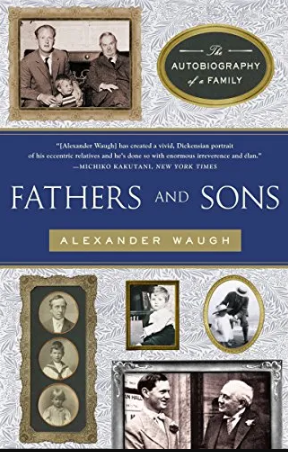
I picked up Alexander Waugh’s Fathers and Sons: The Autobiography of a Family (2004), several weeks ago. I’ve been enjoying it so much that I’m rationing it, reading about ten pages at a time to make it last.
Alexander Waugh is a music writer and biographer, former opera critic at the Evening Standard, son of novelist and Private Eye diarist Auberon Waugh, grandson of the aforementioned Evelyn, the titan of English letters whose brother, Alec, and father, Arthur, were also reasonably famous writers. The book is about the interpersonal relations of these three generations of men who produced about 180 books among them. And it’s wild. These are hugely and incorrigibly flawed people. Often horrible to one another (also to outsiders but they save their best for kin). They are in equal parts perverse and hilarious, and often brilliant, especially Evelyn. I can’t believe people ever behaved this way.
Undergraduates have never required reasons to binge drink, but you can’t read the opening chapters of Fathers and Sons without thinking Evelyn had special motivation. He was the second son of Arthur. His older brother, Alec, was “the firstling”, the “future head of the family”, their parents’ “darling lamb”, and mom and pop didn’t care who knew it, least of all Evelyn.
Arthur and his missus, Kate, had an “unbounded fascination for Alec”, who won all his school honours and was star of the cricket team. Arthur considered the boy a literal gift from God and believed that they could communicate telepathically. He would write him notes like: “I simply go about thinking of your love for me all the time”. Their relationship, writes Alexander, was “hot, clammy and compulsive”, and to the “objective eye their behavior might have resembled a pair of star-crossed teenage lovers”. Indeed, it was romantic in all but the physical sense — Arthur saved his sexual depredations for girls of tender age with whom he played “tickling games” (he also had a fetish involving young women and bicycles).
In addition to being second born, Evelyn made the mistake of being male. His parents had wanted a daughter; they consoled themselves by giving him an effeminate name and dressing him in bonnets and frills long beyond the standard of the day. He was said to be a “warm, bright. sweet-natured and affectionate child”, at least until an awareness of the family dynamic dawned. In Edwardian terms, he was treated as a bastard child by his legitimate parents. His possessions were hand-me-downs. He attended the less expensive school. When eleven-year-old Evelyn asked for a bicycle, his parents bought a bigger and better one for Alec. When Alec asked for a billiard table, space was found for it in Evelyn’s room. Despite winning prizes and becoming head of his house in school, and president of the debating society, and editor of the school magazine, Evelyn remained an afterthought and something of a nuisance in the minds of his Alec-obsessed parents.
Evelyn responded to his circumstances in a clever and self-protective fashion, defining himself against his brother and father. By adolescence, he had an inkling that he was smarter and funnier than both. They could keep their mawkish outpourings of emotion toward one another; he would be hard of head and sharp of tongue. By his early teen years, he was confiding to his diary that Arthur was a fat and “ineffably silly” Victorian sentimentalist. He considered both Alec and Arthur philistines. “Terrible man, my father”, Evelyn said to a schoolmaster. “He likes Kipling.”
To the extent that his parents thought about Evelyn, they were disturbed by his dark moods and lassitude, and intimidated by his cynical wit. Both Alec and Arthur were threatened by Evelyn as a potential literary rival. When Evelyn, in what was becoming a typical act of rebellion, ran up an expensive restaurant tab and had it sent to an outraged Arthur, Alec said: “You know father, if Evelyn turns out to be a genius, you and I might be made to look very foolish by making a fuss over ten pounds, seventeen and ninepence.”
So you can perhaps see how young Evelyn Waugh developed an enthusiasm for drink remarkable even in an undergrad, and why the rare characters killed in gruesome fashion in his fiction tended to be fathers.
1945 Begins! – WW2 – Week 280 – January 6, 1945
World War Two
Published 6 Jan 2024The Germans launch a new offensive, Operation Nordwind, in Alsace, even as their offensive in the Ardennes is stalled. The Allies in the west don’t just have to fight these, they are also having serious issues amongst themselves in High Command that threaten their unity. The siege of Budapest is in full swing and is a hard, fought, bloody battle, and the Soviets and the Americans have big plans for new offensives soon to kick off in Eastern Europe and the Philippines (respectively).
00:00 INTRO
01:20 The Siege of Budapest
04:51 German defense plans in the East
06:38 Montgomery versus Eisenhower
08:32 Eisenhower versus the French
10:35 New German Offensive in Alsace
13:49 Monty’s plans for the press
15:04 The Battle of the Bulge
17:45 Preparations for the Luzon Landings
20:56 Notes to end the week
21:51 Summary and conclusion
(more…)
“Of course, you know that you Eeenglish invented modern people smuggling?”
In The Critic, Peter Caddick-Adams talks about the huge problems faced by European nations in combatting people smuggling:
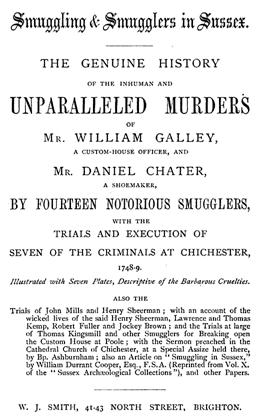
Title page of a book covering the trial of seven smugglers for the murder of two revenue officers. In the preface the author says “I do assure the Public that I took down the facts in writing from the mouths of the witnesses, that I frequently conversed with the prisoners, both before and after condemnation; by which I had an opportunity of procuring those letters which are herein after inserted, and other intelligence of some secret transactions among them, which were never communicated to any other person.”
W.J. Smith, Smuggling and Smugglers in Sussex, 1749, via Wikimedia Commons.
The Prime Minister has nailed his colours to his mast and decided we should “stop the boats”. The slogan is everywhere. What Mr Sunak means is the vessels crossing the Channel laden with bedraggled folk seeking succour on the shores of Albion. I attended a conference recently to see how this was to be done. As the perpetrators are highly organised transnational criminals, the response must be a multi-national one. Delegates were given some historical context. Ours is not a unique era. Since pre-recorded history, mankind has been inclined to see the grass as always greener on the other side of the fence. Hollow out a log to cross a river, invade an island, a coastline, Troy, the Euphrates, the Tigris, the Nile. Anywhere, for trade, for adventure, for sanctuary. Leap the Channel by longship to escape overcrowding, poor crops, for plunder, to claim a crown.
However, we were reminded — for the conference was hosted by several coastal nations studying security and crime — that most of Europe’s maritime problems with criminality and smuggling, be it booze, tobacco, narcotics, fake branded goods, or people, involve rivers, not the open sea. An old friend from the Gendarmerie Maritime observed that the great rivers of the world are not only frontiers, but also highways; earlier versions of today’s motorways, as logistically familiar to the Romans as to our own times. Those long gaggles of barges which still shuffle along the Rhine or Danube are a happenstance of trade we Brits tend to overlook, as our canals and rivers have long been consigned to pleasure-boating.
Based in Messina, the gendarme’s opposite number from the Servizio navale of the Italian Carabinieri, wearing the most resplendent braid-laden uniform of anyone at our gathering, then fixed me with his gimlet eye. “Of course, you know that you Eeenglish invented modern people smuggling?” By this he went on to explain that many of the tricks of shifting people covertly through the Mediterranean, along the Dalmatian coast, by patrol boat about the Baltic, trawler braving the North Sea, MTB across the Channel, caïque over the Aegean, among the Ionian islands, and along the Adriatic, were devised by Britain’s Special Operation’s Executive (SOE) during the Second World War.
My Belgian and French friends observed that such smuggling had honourable roots. From 1789 and post-1917, many nations had aided middle class and aristocratic refugees to flee Revolutionary France and Russia. Subsequently, their descendants helped Jewish families quit the Third Reich. Others aided the British to move vast numbers of manpower by small boat in 1940 from Dunkirk, which emboldened fishermen to repeat the manoeuvre on a smaller scale to confound their German foes. Female Greek, Turkish and Croatian officers chipped in with their knowledge of various rat-lines established during World War Two to support partisans with personnel and weapons, and extract downed airmen, spies and important scientists. Post-war, as a Spanish policeman I knew from my days in Gibraltar observed, the same systems exported Nazi war criminals, and imported drugs and guns.
The modus operandi created in those heady days of derring-do were continued for spies during the Cold War, often by the same families, using the same craft. This applied as much to jaunts and japes up and down the Danube, Rhine, Meuse and Elbe waterways as it did to the open seas. Our Danish representative observed that “boat people” were a distraction. Their numbers were vastly overshadowed by far greater numbers of religious refugees and assorted shady characters, then and now, who used stolen genuine, or expertly forged papers; another legacy from the even more distant times that preceded World War Two. The man from Interpol revealed that today’s Italian and Albanian crime families have such advanced facilities for reproducing many of the world’s passports, ID cards, work permits and driving licences, that they will pass muster even at most European electronic frontier posts and airport controls. Our Albanian colonel shifted uncomfortably.
With the fall of the Iron Curtain, espionage went out of business and, casting about for new business, these latter-day privateers and licenced black marketeers started smuggling industrial quantities of things and people, to replace the nocturnal movement of atomic secrets by night over water. A dinghy full of people in mid-Ocean is merely the tip of a giant iceberg of organisation and logistics that started on 22 July 1940 by direct order of Winston Churchill, but has continued in various legal, semi-legal and illegal forms ever since.
QotD: The US Army between 1945 and 1950
The trouble is, different men live by different myths.
There are men who would have a society pointed wholly to fighting and resistance to Communism, and this would be a very different society from the one Americans now enjoy. It might succeed on the battlefield, but its other failures can be predicted.
But the infantry battlefield also cannot be remade to the order of the prevailing midcentury opinion of American sociologists.
The recommendations of the so-called Doolittle Board of 1945-1946, which destroyed so much of the will — if not the actual power — of the military traditionalists, and left them bitter, and confused as to how to act, was based on experience in World War II. In that war, as in all others, millions of civilians were fitted arbitrarily into a military pattern already centuries old. It had once fitted Western society; it now coincided with American customs and thinking no longer.
What the Doolittle Board tried to do, in small measure, was to bring the professional Army back into the new society. What it could not do, in 1946, was to gauge the future.
By 1947 the United States Army had returned, in large measure, to the pattern it had known prior to 1939. The new teen-agers who now joined it were much the same stripe of men who had joined in the old days. They were not intellectuals, they were not completely fired with patriotism, or motivated by the draft; nor was an aroused public, eager to win a war, breathing down their necks.
A great many of them signed up for three squares and a sack.
Over several thousand years of history, man has found a way to make soldiers out of this kind of man, as he comes, basically unformed, to the colors. It is a way with great stresses and great strains. It cannot be said it is wholly good. Regimentation is not good, completely, for any man.
But no successful army has been able to avoid it. It is an unpleasant necessity, seemingly likely to go on forever, as long as men fight in fields and mud.
One thing should be made clear.
The Army could have fought World War III, just as it could have fought World War II, under the new rules. During 1941-1945 the average age of the United States soldier was in the late twenties, and the ranks were seasoned with maturity from every rank of life, as well as intelligence.
In World War III, or any war with national emotional support, this would have again been true. Soldiers would have brought their motivation with them, firmed by understanding and maturity.
The Army could have fought World War III in 1950, but it could not fight Korea.
T.R. Fehrenbach, This Kind of War: A Study in Unpreparedness, 1963.
January 6, 2024
Inside Mark I: The First Fighting Tank
The Tank Museum
Published 15 Sept 2023The first ever use of the tank in battle happened during the Battle of the Somme in 1916. In this video we look inside a unique survivor – the last British Mark I Heavy Tank in existence and examine the first tank action at Flers, an event that changed the face of warfare.
(more…)
January 5, 2024
Pacific Theater USMC-Modified Johnson M1941 Rifle
Forgotten Weapons
Published 25 Aug 2023Johnson M1941 rifles were used in limited numbers by the US Marine Corps in the Pacific theater of World War Two, but they were used — and generally well liked. Interestingly, there was a fairly common field modification done by the Marines, and that was to cut off the front sight wings, and sometimes cut the rear aperture into a deep V-notch or a flat U-notch style. This particular ex-Marine rifle shows both of these modifications.
(more…)
January 4, 2024
The Halifax Naval Museum – A Hidden Treasure
Drachinifel
Published 15 Sept 2023Today we look take a quick tour through Canada’s naval history as exemplified by the RCN Naval Museum in Halifax, Canada.
(more…)


