
The Great War
Published on 7 Dec 2017This week in the Great War, we see some action in Italy and none at all in Russia – the peace negotiations are well underway. The Allied Supreme War Council meets for the first time as the Battle of Cambrai comes to a close. Two ships collide in Nova Scotia resulting in a deadly explosion.
December 8, 2017
Halifax Explosion – Peace in the East? | THE GREAT WAR Week 176
Comments Off on Halifax Explosion – Peace in the East? | THE GREAT WAR Week 176
December 5, 2017
Origins Of The German Alpenkorps I THE GREAT WAR On The Road
The Great War
Published on 4 Dec 2017Get Immanuel’s book about the Alpenkorps in English: https://www.zeit-lupen.de/alpinecorps
When World War 1 broke out, the German Army didn’t really have troops specialised in mountain warfare. But by 1915, they brought together the first parts of the Alpenkorps. To train them, the troops were sent – in secrecy – to the new Italian front to learn from their Austrian counterparts. From May to October 1915 the Alpenkorps was forged in the Dolomites on the peaks with names like Lagazuoi, Col di Lana or Marmolata.
Comments Off on Origins Of The German Alpenkorps I THE GREAT WAR On The Road
December 4, 2017
Otto von Bismarck – Lies – Extra History
Extra Credits
Published on 2 Dec 2017We’ve wrapped up our series on Otto von Bismarck, but we’ve only touched on the first half of his life! Maybe someday we’ll get to come back. Until then, James answers questions and discusses errors in this episode of Lies!
Comments Off on Otto von Bismarck – Lies – Extra History
December 3, 2017
Command and microcontrol
Ted Campbell relays some thoughts from a recent British criticism of how military operations are now capable — and therefore very frequently are — micromanaged by higher authority:
There is a very useful and, I hope, thought provoking article (written under a nom de plume by a serving British officer) published in the Wavell Room website.* It is entitled “Mission Command; The Fall of the Strategic Corporal; the Rise of the Tactical Minister,” and in it the author laments the fact ~ and it is a fact in Canada, too, I assert ~ that “British Mission Command and performance has regressed, largely as a result of our headquarters incorporating American military information technology as well as replicating American headquarters structures and manning. During recent counterinsurgency operations we have employed increased quantities of manpower, technology and process to try and make sense of the exponentially increasing volumes of information piped into an increasingly static headquarters. These bloated headquarters have bred a culture of over planning and control. The information technology revolution has allowed Ministers and UK based senior officers to directly reach down to the tactical level in distant operational theatres.” As a British general said in a recent speech titled “‘In command and out of control’ [the] creep at the National Level to from Mission Command to Mission Control. Prolonged campaigning in Iraq and Afghanistan has created an expanded bureaucracy with a function of identifying and mitigating risk that has not receded. The advent of ‘lawfare’ and a hysterical media has reduced our Civil Service’s threshold for presentational and reputational risk. This has led to an ever increasing legal and policy oversight and scrutiny of operations. The lack of domestic appetite for wars of choice rather than of national survival has led to a dramatically reduced appetite for risk to life on operations.” I am 99.99% certain that several serving Canadian generals and senior officers (post ship/regiment-battalion and squadron command level) could have and wish they had written the same words.
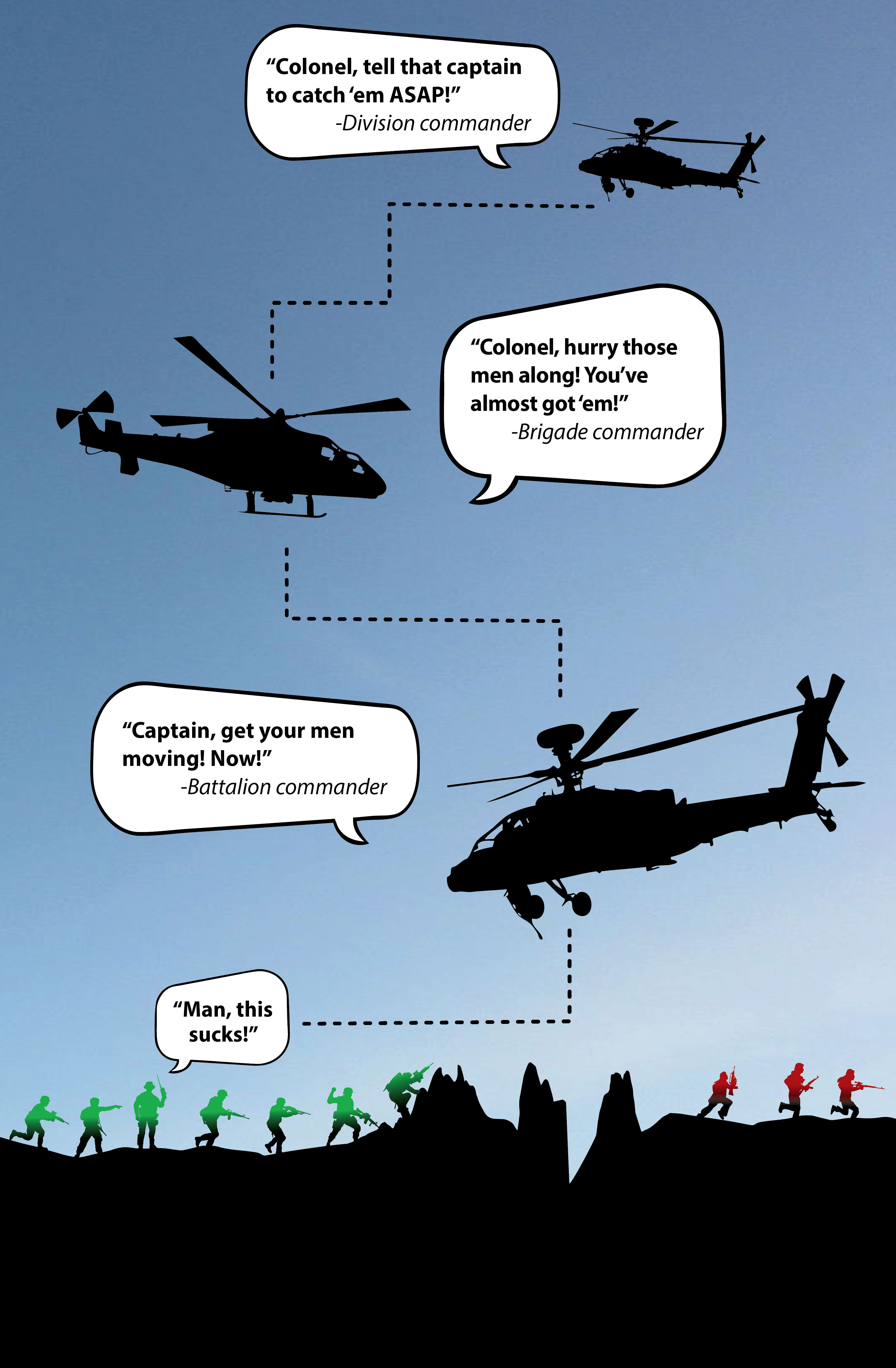
First, the very term “Mission Command” is rubbish. I know there is a whole body of literature about it, but it’s still rubbish ~ just well very documented rubbish. There is, very simply, command which is supported by control. The notion of “Mission Command” came about in the USA when it became clear that too many US senior officers were unable to exercise effective combat command because they were “nervous nellies” (or overzealous careerist) who would not or could not trust their subordinates to get on with the job. The image of a helicopter belonging to the division commander hovering over a helicopter belonging to the brigade commander hovering over the battalion commander’s helicopter that is hovering over the company of men on the ground comes to mind. Then a few other US military leaders decided that a new “concept” and a few PowerPoint presentations featuring gothic lettering and pictures of German generals would put things right … instead things went from bad to worse, but not just in the US military.
[Click to see full-size image]
Second, command and control (C2) is, actually, a quite simple thing to understand … it is the whole process by which a commander receives and analyzes his (or her) orders, does his (or her ~ always presumed from here on in) reconnaissance, makes his appreciation (estimate) of the situation and his plan and then issues the orders that commit his troops to battle. There it is in under 40 words … that’s not too hard to grasp, is it? But it can be bloody hard to do!
Comments Off on Command and microcontrol
Shell Recycling – WW1 Monuments in WW2 – Resistance Movements I OUT OF THE TRENCHES
The Great War
Published on 2 Dec 2017Chair of Wisdom Time!
Comments Off on Shell Recycling – WW1 Monuments in WW2 – Resistance Movements I OUT OF THE TRENCHES
December 2, 2017
Breaking news from 55 BC
Despite the written records left by Julius Caesar, Cicero, and Tacitus, until now there had apparently been no physical evidence of Caesar’s invasion of Britain:
… a chance excavation carried out ahead of a road building project in Kent has uncovered what is thought to be the first solid proof for the invasion.
Archaeologists from the University of Leicester and Kent County Council have found a defensive ditch and javelin spear at Ebbsfleet, a hamlet on the Isle of Thanet.
The shape of the ditch at Ebbsfleet, is similar to Roman defences at Alésia in France, where a decisive battle in the Gallic War took place in 52 BC.
Experts also discovered that nearby Pegwell Bay is one of the only bays in the vicinity which could have provided harbour for such a huge fleet of ships. And its topography echoes Caesar’s own observations of the landing site.
Dr Andrew Fitzpatrick, Research Associate from the University of Leicester’s School of Archaeology and Ancient History said: “Caesar describes how the ships were left at anchor at an even and open shore and how they were damaged by a great storm. This description is consistent with Pegwell Bay, which today is the largest bay on the east Kent coast and is open and flat.
“The bay is big enough for the whole Roman army to have landed in the single day that Caesar describes. The 800 ships, even if they landed in waves, would still have needed a landing front 1-2 km wide.
“Caesar also describes how the Britons had assembled to oppose the landing but, taken aback by the size of the fleet, they concealed themselves on the higher ground. This is consistent with the higher ground of the Isle of Thanet around Ramsgate.”
Thanet has never been considered as a possible landing site before because it was separated from the mainland until the Middle Ages by the Wanstum Channel. Most historians had speculated that the landing happened at Deal, which lies to the south of Pegwell Bay.
Comments Off on Breaking news from 55 BC
December 1, 2017
All Quiet On The Eastern Front – Action in East Africa I THE GREAT WAR Week 175
The Great War
Published on 30 Nov 2017This week in the Great War, the Battle of the Ngomano was fought in East Africa between the Germans and Portuguese, which was a decisive win for Lettow-Vorbeck’s men. On the Eastern Front, the fighting stops and Trotsky published the secret treaties that Russia and the other Allies had signed. The Battle of Cambrai continued, with attacks and counterattacks from both sides, including the implementation of the new Hutier assault tactics. Armando Diaz was making changes for the better on the Italian Front, with the express aim of improving the morale among his men.
Comments Off on All Quiet On The Eastern Front – Action in East Africa I THE GREAT WAR Week 175
November 28, 2017
Invasions, Naval Battles and German Raiders – WW1 in the Pacific I THE GREAT WAR Special
The Great War
Published on 27 Nov 2017New Zealand: A Society At War: http://amzn.to/2A7Ojz0
One of the theatres of war that’s often overlooked, the Pacific saw some of the earliest military actions of the Great War. On top of this, there were many naval engagements in this particular ocean, including some famous German merchant raiders. We cover all this and more in today’s special episode.
Comments Off on Invasions, Naval Battles and German Raiders – WW1 in the Pacific I THE GREAT WAR Special
November 27, 2017
Top Gear Facts Of Handbrake Turns
Dave Lee
Published on 20 Jan 2014Sorry for the bad quality. Season 19 Episode 4
Comments Off on Top Gear Facts Of Handbrake Turns
Sea Peoples: The 1200 BC System Collapse
Space And Intelligence
Published on 7 May 2017In the 12th century B.C., after centuries of brilliance, the civilized and globalized world of the Bronze Age came to an abrupt and cataclysmic end. Kingdoms fell like dominoes over the course of just a few decades. No more Minoans or Mycenaeans. No more Trojans, Hittites, or Babylonians. The thriving economies and cultures of the late second millennium B.C., which had stretched from Greece to Egypt and Mesopotamia, suddenly ceased to exist, along with writing systems, technology, and monumental architecture. Could it happen again?
Comments Off on Sea Peoples: The 1200 BC System Collapse
November 26, 2017
Dropping Bombs on Germany – WW1 in Heavy Metal I OUT OF THE TRENCHES
The Great War
Published on 25 Nov 2017Indy’s back in his Chair of Wisdom, and ready to answer more of your questions. This week we discuss Allied bombings on Germany and the influence of WW1 on Metal, including on the power-metal band Sabaton.
Comments Off on Dropping Bombs on Germany – WW1 in Heavy Metal I OUT OF THE TRENCHES
Rowan Atkinson in ‘We are most amused’
Kevin
Published on 3 Dec 2008Rowan Atkinson tells the Gospel of John in ‘We are most amused’, broadcast on ITV on November 15th marking Prince Charles’s 60th birthday.
Comments Off on Rowan Atkinson in ‘We are most amused’
The “fall” of the Roman Empire
If you haven’t read much history, you may be aware that the Roman Empire fell in 476 AD. If you have read a bit more history, you’ll be fully aware that the Western Roman Empire fell then … the rest of it lasted nearly another thousand years. Richard Blake, who has a very readable series of novels set in the “blind spot” of history between the collapse of the West and the revival of the Eastern Empire, offers a quick thumbnail sketch of the historical background to his fiction:
In 395 AD, following a century of experiment, the Roman Empire was divided into Eastern and Western administrative zones, with joint Emperors in Rome and in Constantinople. The purpose was to let each Emperor deal with the pressure on his own critical frontiers – the barbarians along the Rhine and Danube frontiers in the West, and the Persians along the Euphrates and desert frontiers in the East.
In theory, each Emperor was equal. In practice, the Eastern Emperor, ruling from Constantinople, was soon the senior partner. During the next two hundred years, becoming increasingly Greek in language in culture, the Eastern Empire flourished, and Constantinople became one of the largest and most opulent cities in the world.
The Western Empire went into immediate and rapid decline. In 406 AD, barbarians crossed the Rhine in large numbers, and broke into Italy. In 410 AD, they sacked Rome. By then, the Western Capital had been moved to Ravenna, a city in North Eastern Italy, impregnable behind marshes, and within easier reach of the frontiers – and within easier reach of Constantinople.
During the next seventy years, the Barbarians took France and Spain and North Africa from the Empire. Britain remained in the Empire, but its people were told to look to their own defence. In 476 AD, the last Western Emperor was deposed. By 500 AD, the whole of the Western Empire had been replaced by a patchwork of barbarian kingdoms.
After 527 AD, the Emperor Justinian began to reach out from Constantinople to reconquer the lost Western provinces. He recovered North Africa and Italy and part of Spain. However, the effort was exhausting. After his death in 568, the Empire lost much of Italy to the Lombard barbarians, and Rome itself fell under papal domination. Slavic and Avar barbarians crossed the Danube and conquered and burned all the way to Athens and the walls of Constantinople. After 602, the Persians began a war of destruction against the Empire. Though they ultimately lost, they did briefly take Egypt and Syria.
Comments Off on The “fall” of the Roman Empire
November 25, 2017
Cambrai Tank Chats Special: The Mark IV Tank
Tank Museum
Published on 24 Nov 2017The Mark IV tank was the most numerous of the First World War and went in to battle en masse at the Battle of Cambrai, 20 November 1917. In this special edition of Tank Chats, Curator David Willey explains how the Mark IV tank functions and how it was used to break through the World War One German defences.
Comments Off on Cambrai Tank Chats Special: The Mark IV Tank
Paul Kidby’s Discworld Imaginarium
Jessica Brisbane linked to this Guardian overview of a new book by Paul Kidby, collecting his art to accompany Terry Pratchett’s Discworld series:
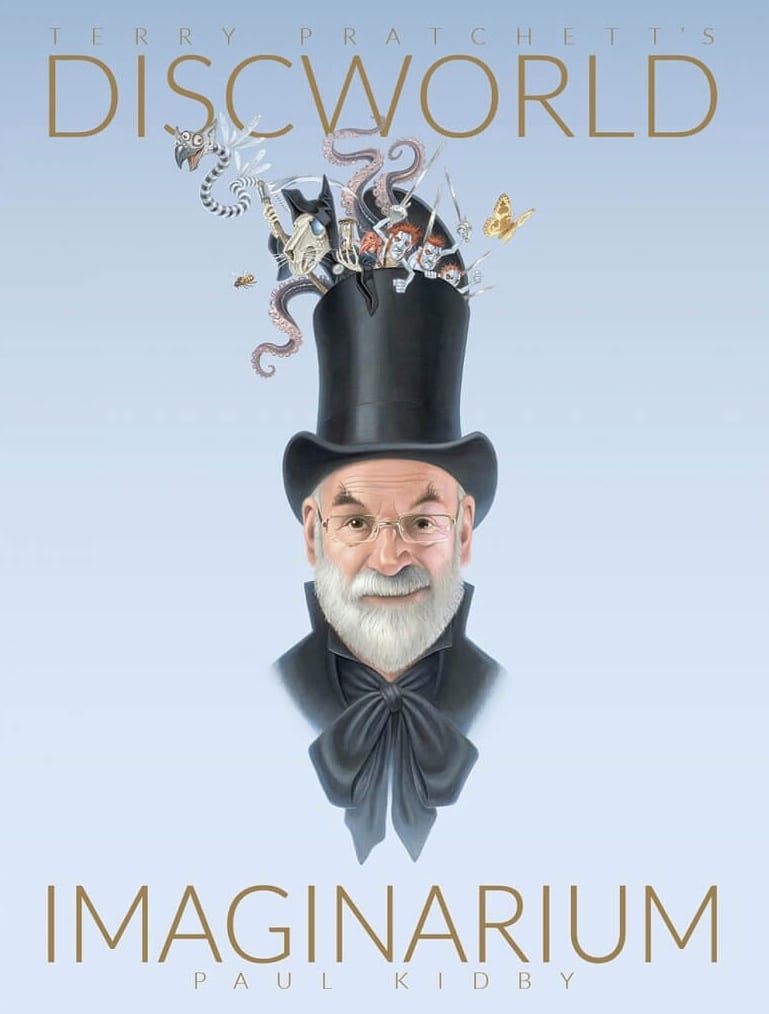
Terry Pratchett’s ‘artist of choice’ Paul Kidby introduces some of the images he produced during their decades-long collaboration
Comments Off on Paul Kidby’s Discworld Imaginarium


