
seangabb
Published 13 Mar 2021In 120 BC, Rome was a republic with touches of democracy. A century later, it was a divine right military dictatorship. Between January and March 2021, Sean Gabb explored this transformation with his students. Here is one of his lectures. All student contributions have been removed.
(more…)
April 11, 2022
Republic to Empire: The Ides of March to Actium
Comments Off on Republic to Empire: The Ides of March to Actium
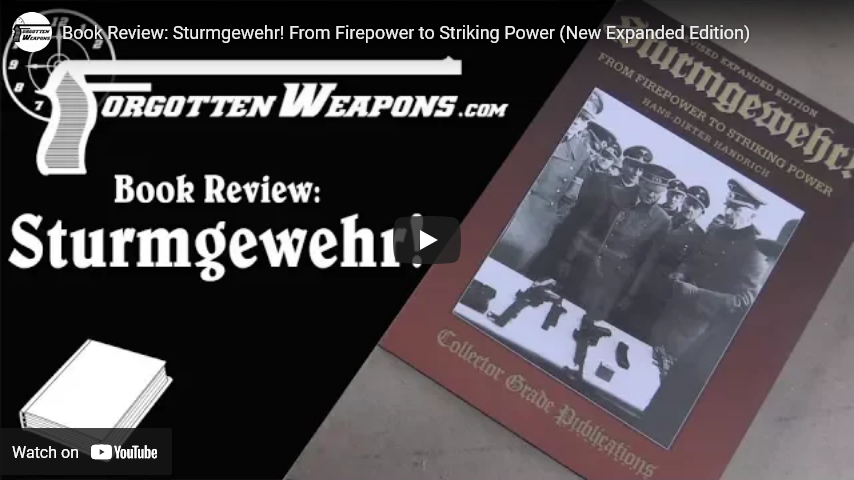
Book Review: Sturmgewehr! From Firepower to Striking Power (New Expanded Edition)
Forgotten Weapons
Published 17 Sep 2017Get your copy from Collector Grade Publications: http://www.collectorgrade.com/bookshe…
Collector Grade is known for being a premiere publisher of technical firearms reference books, and I would be willing to argue that Sturmgewehr! by Hans-Dieter Handrich is the best book they have yet printed. The book was originally printed in 2004, and by the time I started looking for a copy myself, it was out of print and the price had jumped to at least $250, when I could even find a copy. I could never quite bring myself to pay that much, and so I was very excited when I learned that an expanded second edition was in the works. Well, that second edition is available now, and it’s even better than I had anticipated.
What makes Sturmgewehr! such an excellent book in my opinion is how it tackles the story of the MP43/MP44/StG44 from several different angles in depth. It has the mechanical development of the gun from prewar experiments to the open-bolt MKb-42 trials guns to the production versions. But it also puts those guns in historical context, how they related to the other weapons being used by both Germany and other nations. It discusses how the design criteria of the Sturmgewehr were arrived at, in terms of logistics and manufacturing methodologies. It explains in detail the political disagreements and convoluted process of weapon design and adoption in Germany, including the three direct rejections of the concept by Hitler.
In short, it gives you the fully-rounded story of how the German military conceived and implemented a whole new class of small arms. In this way, it is really much more than just a book about a single gun’s history — what you learn reading Handrich’s work will give you insight into virtually all arms design programs of the 20th century, from the Chauchat to the 7.62mm NATO rifle trials to the SA80.
If you already have a copy of the original work, you will probably want this one as well, to get the additional 120 pages of information that have been added. And it should go without saying that if you don’t have the original, you should absolutely get a copy of this new edition before it also falls out of print!
http://www.patreon.com/ForgottenWeapons
Cool Forgotten Weapons merchandise! http://shop.bbtv.com/collections/forg…
If you enjoy Forgotten Weapons, check out its sister channel, InRangeTV! http://www.youtube.com/InRangeTVShow
Comments Off on Book Review: Sturmgewehr! From Firepower to Striking Power (New Expanded Edition)
April 10, 2022
Mussolini is Tired of War – WW2 – 189 – April 9th , 1943
World War Two
Published 9 Apr 2022Adolf Hitler meets with Benito Mussolini to hopefully restore his flagging morale and convince him that the Axis can hold out in North Africa, but the situation there grows more precarious and this week there the Allies advancing from the west and the east link up for the first time. The Axis are also holding out in the Caucasus, as new Soviet attacks to take Krymskaya begin.
(more…)
Comments Off on Mussolini is Tired of War – WW2 – 189 – April 9th , 1943
History of Rome in 15 Buildings 04. Ara Pacis
toldinstone
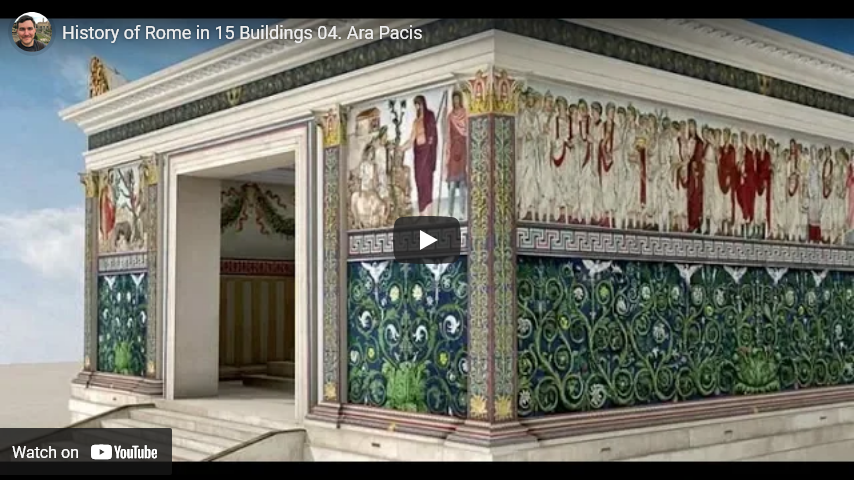
Published 27 Sep 2018Augustus dominates this fourth episode of our History of Rome, which uses the Ara Pacis Augustae (Altar of the Augustan Peace) to discuss the first emperor’s reign, reforms, and propaganda. I also threw in a gripping description of the Battle of Actium.
If you enjoyed this video, you might be interested in my book Naked Statues, Fat Gladiators, and War Elephants: Frequently Asked Questions about the Ancient Greeks and Romans. You can find a preview of the book here:
https://toldinstone.com/naked-statues…
If you’re so inclined, you can follow me elsewhere on the web:
https://www.reddit.com/r/AskHistorian…
https://www.instagram.com/toldinstone/To see the story and photo essay associated with this video, go to:
https://toldinstone.com/ara-pacis/Thanks for watching!
Comments Off on History of Rome in 15 Buildings 04. Ara Pacis
April 9, 2022
Bicycle – Can You Put a Gun on It? – WW2 Special
World War Two
Published 8 Apr 2022“Bicycling to victory! Soldiers were moved by trucks and trains to the front, transported on the backs of tanks and armoured vehicles into combat. But sometimes they also went by using the good old bicycle. Pedaling over the paved roads of Western Europe and East Asia, specialised bicycle-companies surprised through mobility and independence. Bikes were comparatively cheap to mass produce and did not need fuel nor fodder. So they proved a real alternative to those nations that had to budget their oil resources.”
(more…)
Comments Off on Bicycle – Can You Put a Gun on It? – WW2 Special
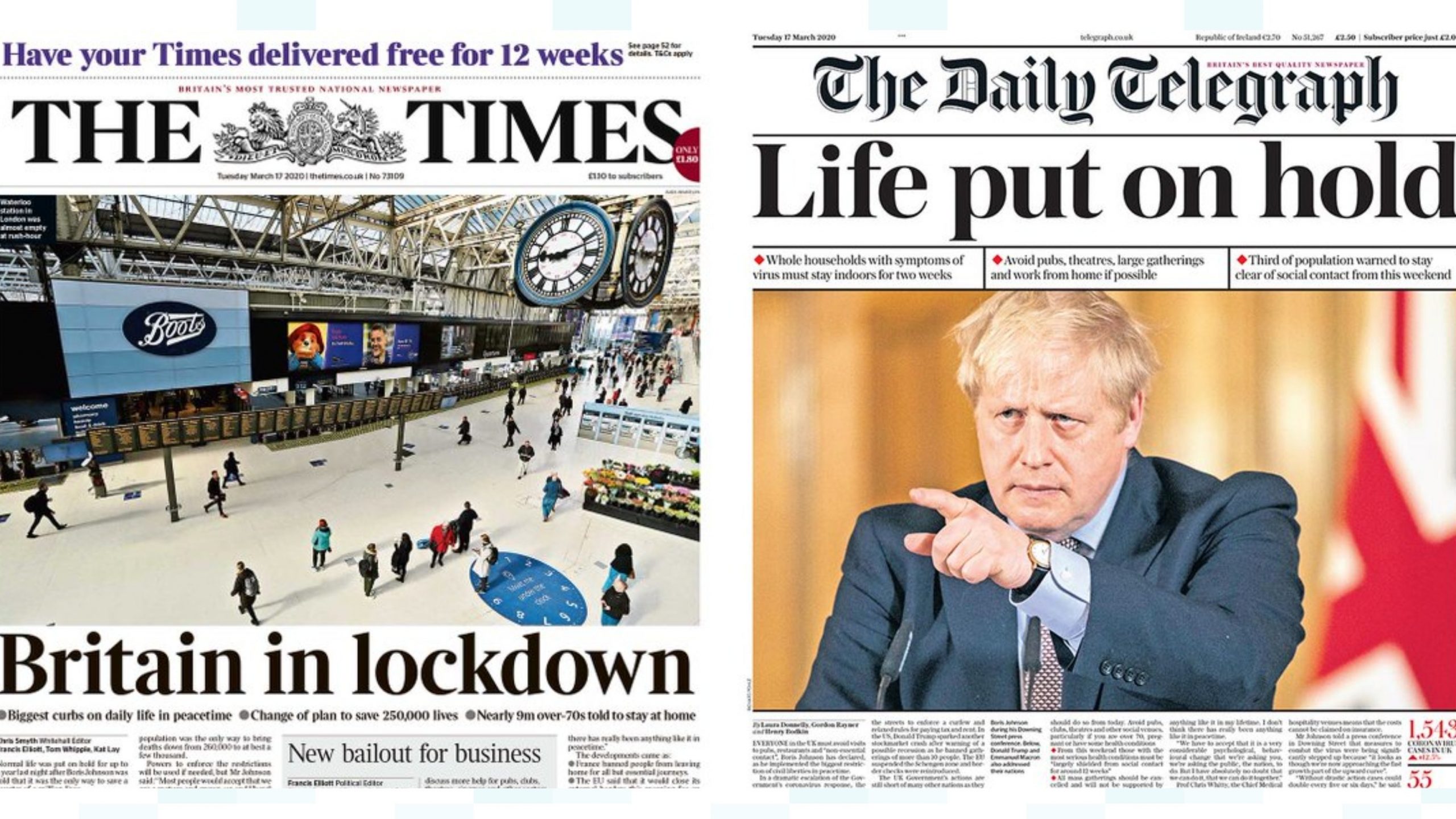
It wasn’t the Wuhan Coronavirus that crippled the world economy — it was government reaction to the pandemic
Dan Sanchez points out the undeniable truth that most of the economic damage we’ve sustained over the last two years wasn’t due to the pandemic itself, but to the incredibly disruptive public health measures almost every western government implemented in response (with huge connivance on the part of the legacy media and the social media companies):
… it will not be the coronavirus making us poorer, but the fallacy, embraced by officials from Beijing to DC, that central planners can manage society-wide problems, like “healing” a global pandemic or “fixing” a global supply chain.
As the great economists Ludwig von Mises and F.A. Hayek explained, societies and economies are inconceivably complex, and it is literally impossible for anyone to centrally plan something so far beyond their comprehension. To think otherwise is, as Hayek called it, a “fatal conceit”.
The fatal conceit of central planners is manifest in the very term “global supply chain”. The metaphor of a “chain” portrays the economy as something static and linear: something simple enough for a single mind to “fix”.
But, as Leonard Read vividly showed in his classic essay “I, Pencil”, even a seemingly simple good like a pencil is not the product of a single supply chain. Every good in the economy is descended from a vast “family tree” of innumerable factors of production. And all the family trees of all goods are intricately interconnected, making the economy, not a “chain”, but as economist Murray Rothbard depicted it, “a highly complex, interacting latticework of exchanges”.
This vast, dynamic latticework is self-healing and self-fixing: through the actions and interactions of its constituent individuals. Blundering, arrogant central planners only get in the way and make things worse.
That has been the lesson of free-market economists and social theorists going back to Adam Smith. The western world partly embraced that lesson, and it flourished as a result, becoming a beacon to the world. Starting in the 1970s, even Communist China emulated its example, opening up its markets. This was a humanitarian miracle for the Chinese people and a boon for us all. If not for Chinese manufacturing being integrated into the global division of labor, it is hard to imagine the west having the modern high-tech living standards and super-comfortable working conditions we enjoy (however precariously) today.
Whereas once China liberalized in emulation of the west, now the leaders of the “free world” are emulating (and, in the case of Canada’s prime minister, openly admiring) the authoritarianism of the CCP. As crises continue to mount, it is clear that this turn toward tyranny is putting our future at risk.
Comments Off on It wasn’t the Wuhan Coronavirus that crippled the world economy — it was government reaction to the pandemic
Tank Chats #142 | Humber Scout Car | The Tank Museum
The Tank Museum
Published 17 Dec 2021Our Patreons have already enjoyed Early Access and AD free viewing of our weekly YouTube video! Consider becoming a Patreon Supporter today: https://www.patreon.com/tankmuseum
Join David Fletcher this week for a Tank Chat on Humber Scout Car which is a relative of the Daimler Dingo.
Timestamp:
00:00 – Intro
00:26 – What is the Humber Scout Car
4:23 – The Humber post war
(more…)
Comments Off on Tank Chats #142 | Humber Scout Car | The Tank Museum
April 8, 2022
Napoleon Conquers A Heap of Ashes – Battle of Smolensk 1812
Real Time History
Published 7 Apr 2022Sign up at https://curiositystream.com/realtimeh… and get Nebula bundled in.
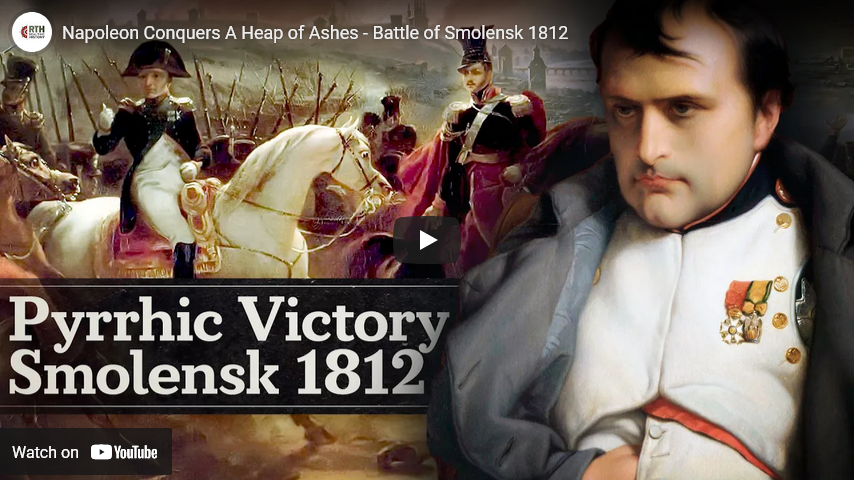
Smolensk is an important symbolic city to the Russians in 1812, for Napoleon it’s a strategic objective he wants to conquer to improve is deteriorating supply situation. The Battle of Smolensk leads to an inferno in the city, it gets virtually destroyed and nearly all residents flee.
» SUPPORT US ON PATREON
https://patreon.com/realtimehistory» THANK YOU TO OUR CO-PRODUCERS
John Ozment, James Darcangelo, Jacob Carter Landt, Thomas Brendan, Kurt Gillies, Scott Deederly, John Belland, Adam Smith, Taylor Allen, Rustem Sharipov, Christoph Wolf, Simen Røste, Marcus Bondura, Ramon Rijkhoek, Theodore Patrick Shannon, Philip Schoffman, Avi Woolf,» SOURCES
Der Feldzug der Österreicher gegen Rußland im Jahre 1812. Aus offiziellen Quellen von Ludwig Freiherrn von Welden, Wien 1870.
Vojtêch Kessler: Der österreichische Pyrrhos – Der Feldzug des österreichischen Auxiliar-Korps im Jahre 1812 in den Briefen des Oberbefehlshabers Karl Fürst von Schwarzenberg an seine Frau.
Boudon, Jacques-Olivier. Napoléon et la campagne de Russie en 1812. 2021.
Holzhausen, Paul. Die Deutschen in Russland 1812. Leben und Leiden auf der Moskauer Heerfahrt. Berlin 1912.
Lieven, Dominic. Russia Against Napoleon. 2010.
Rey, Marie-Pierre. L’effroyable tragédie: une nouvelle histoire de la campagne de Russie. 2012.
Zamoyski, Adam. 1812: Napoleon’s Fatal March on Moscow. 2005.» OUR STORE
Website: https://realtimehistory.net»CREDITS
Presented by: Jesse Alexander
Written by: Jesse Alexander
Director: Toni Steller & Florian Wittig
Director of Photography: Toni Steller
Sound: Above Zero
Editing: Toni Steller
Motion Design: Toni Steller
Mixing, Mastering & Sound Design: http://above-zero.com
Digital Maps: Canadian Research and Mapping Association (CRMA)
Research by: Jesse Alexander
Fact checking: Florian WittigChannel Design: Simon Buckmaster
Contains licensed material by getty images
Maps: MapTiler/OpenStreetMap Contributors & GEOlayers3
All rights reserved – Real Time History GmbH 2022
Comments Off on Napoleon Conquers A Heap of Ashes – Battle of Smolensk 1812
QotD: The fearlessness of De Gaulle
Like many monsters — for he could be a monster to those who defied him, and was often cruel and unfair to his most devoted supporters — he had enormous charm when he chose to turn it on. He was deeply mischievous and enjoyed puzzling and wrong-footing others. When he did not wish to give ground, he could be obtuse, an experience described by one victim as like “being confined … with a cormorant who spoke only cormorant.”
The evidence suggests that he was one of those dangerous people who simply do not know what fear is, and that he discovered this quite early in his long life. If a sergeant had not fallen dead on top of the young Lieutenant de Gaulle when he first went into battle at Dinant in August 1914, he would probably have died in some useless, gallant sacrifice and never have been heard of again. If he had not been knocked unconscious by the blast of a grenade at Verdun in March 1916, it is hard to believe that he would have allowed himself to be taken prisoner by the Germans. In that case he would almost certainly have died in that frightful battle, or not long afterward, another silent shade in that huge legion of shades who marched off into the dark during that appalling war.
Only his wife Yvonne was unimpressed by his grandeur, more than once urging him to retire, or puncturing his ambition. During the long, frustrating wilderness years between his wartime glory and his final presidential triumph, he mused to her that he might one day repeat his great rallying call of 1940. Using the rather patronizing endearment “Pauvre Ami,” she declared flatly, “Nobody will follow you.” He snapped back, “Shut up, Yvonne! I am old enough to know what I want to do!” In fact, on that occasion he was wrong and she was right. She even mocked his soldierly abilities. When the general’s aides suggested that they might install a machine gun at their remote, forbidding country home in Colombey, in case of an attack by communists, Yvonne scoffed that her husband would have no idea how to use it. Perhaps she would have.
Peter Hitchens, “A Certain Idea of France”, First Things, 2019-04.
Comments Off on QotD: The fearlessness of De Gaulle
April 7, 2022
Republic to Empire: The Triumph of Caesar
seangabb
Published 5 Mar 2021In 120 BC, Rome was a republic with touches of democracy. A century later, it was a divine right military dictatorship. Between January and March 2021, Sean Gabb explored this transformation with his students. Here is one of his lectures. All student contributions have been removed.
(more…)
Comments Off on Republic to Empire: The Triumph of Caesar
The EU only cares about democracy as long as the voters make the “correct” choice
In Spiked, Tom Slater points out the most recent proof that the EU’s principled defence of democracy fades out quickly when the voters don’t vote the way they’re “supposed to”:

Remember the other day when the European Union was pretending to care about sovereignty and democracy? When Russia’s imperialist invasion of Ukraine had supposedly united European elites in their staunch, unflinching belief in a people’s right to determine their own destiny and shape their nation? You’ll be shocked to learn that they didn’t really mean it, at least if their reaction to the Hungarian election is anything to go by.
On Sunday, Viktor Orbán and his ruling Fidesz party won a landslide victory. Already the longest-serving EU leader, Orbán is now heading into a fourth consecutive term, with a two-thirds majority in parliament and an increased mandate. United for Hungary – an opposition coalition stretching from ex-communists to ex-fascists – defied the raised expectations of Euro elites and put in a dreadful showing, capped by gaffe-prone leader Péter Márki-Zay failing to win his own constituency race.
In the election, Orbán presented himself as a doughty defender of Hungarian national identity and interests against a meddlesome European Union and international set. Budapest and Brussels have been locked in a years-long battle over alleged “rule of law” breaches and LGBT rights. The EU is currently withholding €7 billion of coronavirus recovery funds from Hungary as part of a bitter legal standoff. In this, Márki-Zay was an all-too-willing foil, arguing that his government would be a “grand prize” for the EU.
In February, the European Court of Justice rejected a challenge by Hungary and Poland, upholding the legality of withholding funds from member states if they fail to adhere to “core values”. It sent a clear message to the Hungarian electorate in the run-up to the election: reject – or at least humble – this troublesome government or else. Now that Hungarians have politely refused to be pushed around, the European Commission has said it will press ahead with the formal mechanism that will deprive Hungary of the funds indefinitely.
Meanwhile, the European liberal media took a break from piously intoning about the defence of democracy in Ukraine to decry the election result in Hungary. Timothy Garton Ash even linked the ballot-box revolt to the barbarism in Bucha. “The Ukrainian horrors are clearly far worse than the Hungarian miseries, but the two are fatefully connected”, he wrote in the Guardian, accusing Orbán of being a Putin stooge. “Europe should now get tough on both the Russian enemy without and the Hungarian enemy within.” A Guardian editorial similarly called for swift EU action against this pesky central European state.
Comments Off on The EU only cares about democracy as long as the voters make the “correct” choice
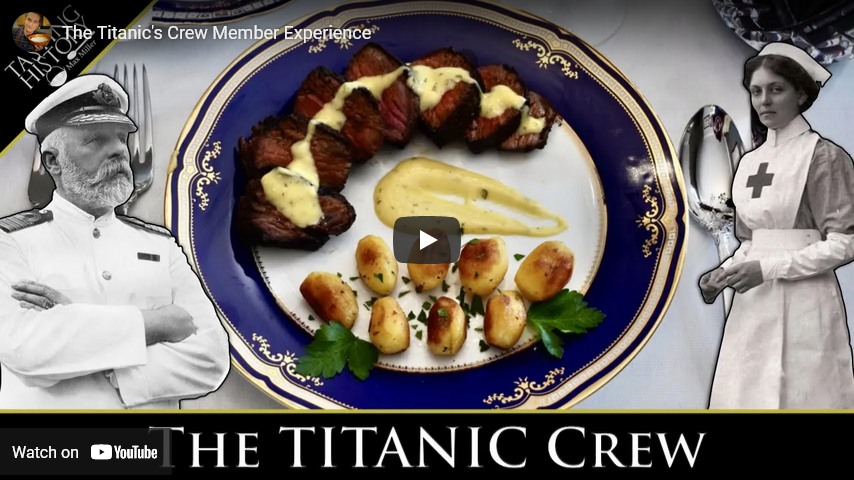
The Titanic‘s Crew Member Experience
Tasting History with Max Miller
Published 5 Apr 2022Use code TASTINGHISTORY16 for up to 16 FREE MEALS + 3 Surprise Gifts across 6 HelloFresh boxes plus free shipping at https://bit.ly/32fHZYT
Support the Channel with Patreon ► https://www.patreon.com/tastinghistory
Merch ► crowdmade.com/collections/tastinghistory
Instagram ► https://www.instagram.com/tastinghist…
Twitter ► https://twitter.com/TastingHistory1
Tiktok ► TastingHistory
Reddit ► https://www.reddit.com/r/TastingHistory/
Discord ► https://discord.gg/d7nbEpy
Amazon Wish List ► https://amzn.to/3i0mwGtSend mail to:
Tasting History
PO Box 766
Burbank, CA 91503LINKS TO INGREDIENTS & EQUIPMENT**
Sony Alpha 7C Camera: https://amzn.to/2MQbNTK
Sigma 24-70mm f/2.8 Lens: https://amzn.to/35tjyoW
Brown Stock: https://amzn.to/3K4Prq8
Tarragon Vinegar: https://amzn.to/3iV2HBNLINKS TO SOURCES**
Guide to the Crew of Titanic by Günter Bäbler: https://amzn.to/3IUiYS8
Last Dinner on the Titanic: https://amzn.to/3u8M6RH
The Last Night on the Titanic by Veronica Hinke: https://amzn.to/3qUH5tPRECIPE
Sirloin Steak
1lb small golden potatoes
2 tablespoons clarified butter
Brown Stock: https://amzn.to/3K4Prq8
(100ml) White wine
(100ml) Tarragon Vinegar: https://amzn.to/3iV2HBN
2 tablespoons chopped Shallots
1 cup (15g) tarragon leaves, roughly chopped
2 teaspoons (2.5g) Whole Peppercorns, roughly pounded
Pinch of Salt
3 large Egg yolks
2 ¼ sticks (250g) Butter
3/4 tablespoon finely chopped tarragon
Pinch of CayenneSlowly reduce the brown stock until it coats the back of a spoon.
Wash then carve the potatoes into small olive shapes. Melt the clarified butter with a little salt and pepper then, over a very low heat, add the potatoes and cook until golden brown.
Prepare the Béarnaise sauce using Escoffier’s recipe below. I have cut the ingredients in half and still had more than 2 cups of sauce.
Escoffier’s Béarnaise:
Sauce Béarnaise
“Place 2 dl each of white wine and tarragon vinegar in a small pan with 4 tbs chopped shallots, 20g chopped tarragon leaves, 10g chopped chervil, 5g crushed peppercorns and a pinch of salt. Reduce by two thirds and allow to cool.
“Add 6 egg yolks to the reduction and prepare the sauce over a gentle heat by whisking in 500g of ordinary or melted butter. The cohesion and emulsification of the sauce is effected by the progressive cooking of the egg yolks which depends to a great extent on its preparation over a slow heat.
“When the butter has been completely incorporated, pass the sauce through a fine strainer; correct the seasoning, add a little Cayenne and finish by mixing in 1 tbs chopped tarragon and ½ tbs chopped chervil.”**Some of the links and other products that appear on this video are from companies which Tasting History will earn an affiliate commission or referral bonus. Each purchase made from these links will help to support this channel with no additional cost to you. The content in this video is accurate as of the posting date. Some of the offers mentioned may no longer be available.
Subtitles: Jose Mendoza | IG @ worldagainstjose
#tastinghistory #titanic
Comments Off on The Titanic‘s Crew Member Experience
Alberta’s recall law
Recall laws are not common in Canada, with Alberta’s new law being only the second example:

The Recall Act, which was part of a 2019 UCP platform pledge to “strengthen democracy and accountability in Alberta” mirrors the terms of the recall law enacted in B.C. after the 1991 election that swept a scandal-plagued Social Credit party out of power (and, a few years later, out of existence). Like Alberta’s law, the B.C. law requires the signatures of 40 per cent of eligible voters in a constituency gathered within a 60-day period to trigger a by-election. In B.C., this barrier has not yet been cleared despite 26 recall initiatives (although, in a few cases, politicians have resigned rather than fight).
Recall laws are not unique to Canada. The United Kingdom has had recall legislation since 2015, but it differs from the Alberta and B.C. laws in that it is triggered not by disgruntled voters but by MP wrongdoing, including being convicted of expense fraud, suspended from the House of Commons or sentenced to prison. Despite this extra requirement, the apparent criminal propensity of U.K. politicians plus a low threshold of 10 per cent of voters to trigger a by-election mean that the law has already been used successfully twice.
You may also remember the California vote last summer, in which the oleaginous Governor Gavin Newsom comfortably survived a state-wide recall. After some early uncertainty, California’s fit of popular pique ended in exactly the same place as the gubernatorial election three years earlier — literally, to the decimal place — with 61.9 per cent support for Newsom. After 18 months and half a billion dollars, all the process proved was that the period of appointed military governors from 1847-1850 remains the high-water mark for good governance in California.
The argument against recalls starts with the fact that they bear the same relationship to democracy that a mulligan does to the rules of golf. We already have regular elections to vote out unpopular politicians. A recall is for people who can’t wait four years to admit their own mistake. It is an impetuous power for impatient people. Besides, voting the bums out is the chief joy of democracy — surely we can wait a few years to savour the moment.
Some elected politicians are unworthy of the trust placed in them. But that is our fault as voters. Venting our frustrations at the people we elected is a cop out. Mencken infamously wrote that “Democracy is the theory that the common people know what they want, and deserve to get it good and hard.” He was right. In an hereditary aristocracy, you can blame the bad luck of the genetic lottery, and in an autocracy you can fume about the injustice of might making right. But in a democracy, we have no one to blame but ourselves. We voted ’em in, and now we deserve to get it good and hard … for four years at least.
Comments Off on Alberta’s recall law
Look at Life – Taxi Taxi – The Knowledge (1960)
KPICS
Published 10 Mar 2014The London Taxi industry in 1960.

Comments Off on Look at Life – Taxi Taxi – The Knowledge (1960)
April 6, 2022
How To Build a Nazi Fortress – WW2 Special
World War Two
Published 5 Apr 2022Few things of the Second World War are more intimidating than the iconic German bunker. Made out of reinforced concrete with a thickness of up to 3.5 meters, these casemates and pillboxes were incredibly tough to destroy. Built to withstand shells and bombs, they provided shelter to troops and civilians alike. But there were also some even larger super-structures. From giant U-Boat shelters and fearsome Flak-Towers, to the ultimate Führerbunker, the Germans perfected the art of bunker building.
(more…)
Comments Off on How To Build a Nazi Fortress – WW2 Special


