
… we have already noted that year after year Sparta would invade Attica with hoplite armies which were singularly incapable of actually achieving the strategic objective of bringing Athens to the negotiating table. The problem here is summed up in the concept of a strategic center of gravity – as Clausewitz says (drink!), it is the source of an enemy’s strength and thus the key element of an enemy’s force which must be targeted to achieve victory. The obvious center of gravity for the Athenians was their maritime empire, which provided the tribute that funded their war effort. The Corinthians saw this before the war even started. So long as the tribute rolled in, Athens could fight forever.
It takes Sparta years of fighting Athens to finally recognize this – an effort in 413/2 to support revolts from Athens is pathetically slow and under-funded (Thuc. 8, basically all of it) and it isn’t until Sparta not only allies with Persia but entrusts its fleet to the mothax Lysander that they seriously set about a strategy of cutting Athens’ naval supply lines. This isn’t a one-time affair: Sparta’s inability to coordinate ends and means shows up again in the Corinthian war (e.g. in Argos, Xen. Hell. 4.7), where they are pulled into a debilitating defensive stalemate because the Corinthians won’t come out and fight and the Spartans have no other answers.
This is compounded by the fact that the Spartans are awful at diplomacy. Sparta could be the lynch-pin of a decent alliance of cities when the outside threat was obvious and severe – as in the case of the Persian wars, or the expansion of Athenian hegemony. But otherwise, Sparta consistently and repeatedly alienates allies to its own peril. Spartan leadership at the end of the Persian wars had been so arrogant and hamfisted that leadership of the anti-Persian alliance passed to Athens (creating what would become the Athenian Empire, so Spartan diplomatic incompetence led directly to the titanic conflict of the late fifth century). And to be clear, Athenian diplomacy does not score high marks either, but it is still a far sight better than the Spartans (Greek diplomacy, in general was awful – rude, arrogant and focused on compulsion rather than suasion – so it is telling that the Spartans are very bad at it, even by Greek standards).
In 461, Spartan arrogance towards an Athenian military expedition sent to help Sparta against a helot revolt utterly discredited the pro-Sparta political voices at Athens and in turn set the two states on a collision course. Sparta had ejected the friendly army so roughly that it had created an outrage in Athens.
During the Peloponnesian War, Spartan diplomatic miscalculations repeatedly hurt their cause, as with the destruction of Plataea – the symbol of Greek resistence to Persia. Later on in the war, terrible Spartan diplomacy repeatedly derails efforts to work with the Persian satrap Tissaphernes, who has the money and resources Sparta needs to defeat Athens; it is the decidedly un-Spartan actions first of Alcibiades (then being a traitor to Athens) and later Lysander who rescue the alliance. After the end of the Peloponnesian War, Sparta promptly alienated its key allies, ending up at war first with Corinth (the Corinthian War (394-386) and then with Thebes (378-371), both of which had been stalwarts of Sparta’s anti-Athenian efforts (Corinth was itself a member of the Peloponnesian League). This led directly to the loss of Messenia and the breaking of Spartan power.
In short, whenever Sparta was confronted with a problem – superior enemy forces, maritime enemies, fortified enemy positions, the need to keep alliances together, financial demands – any problem which could not be solved by frontal attack with hoplites, the traditional Spartan leadership alienated friends and flailed uselessly. Often the Spartans attempted – as with Corinth and later Thebes – to compel friendship with hoplite armies, which worked exactly as poorly as you might imagine.
It is hard not to see both the strategic inflexibility of Sparta and the arrogant diplomatic incompetence of the spartiates as a direct consequence of the agoge‘s rigid system of indoctrination. Young Spartiates, after all, were taught that anyone with a craft was to be despised and that anyone who had to work was lesser than they – is it any surprise that they disdained the sort of warfare and statecraft that depended on such men? The agoge – as we are told – enforced its rules with copious violence and was designed to create and encourage strict, violent hierarchies to encourage obedience. It can be no surprise that men indoctrinated in such a system – and thus liable to attempt to use its methods abroad – made poor diplomats and strategic thinkers abroad.
Bret Devereaux, “Collections: This. Isn’t. Sparta. Part VII: Spartan Ends”, A Collection of Unmitigated Pedantry, 2019-09-27.
October 15, 2022
QotD: Spartan strategic and diplomatic blunders during and after the Peloponnesian War
October 14, 2022
That time that H.G. Wells fell afoul of Muslim sentiments
In the New English Review, Esmerelda Weatherwax recounts an incident from the 1930s where Muslim protestors took to the streets of London in reaction to a recent Hindustani translation of H.G. Wells’ A Short History of the World:
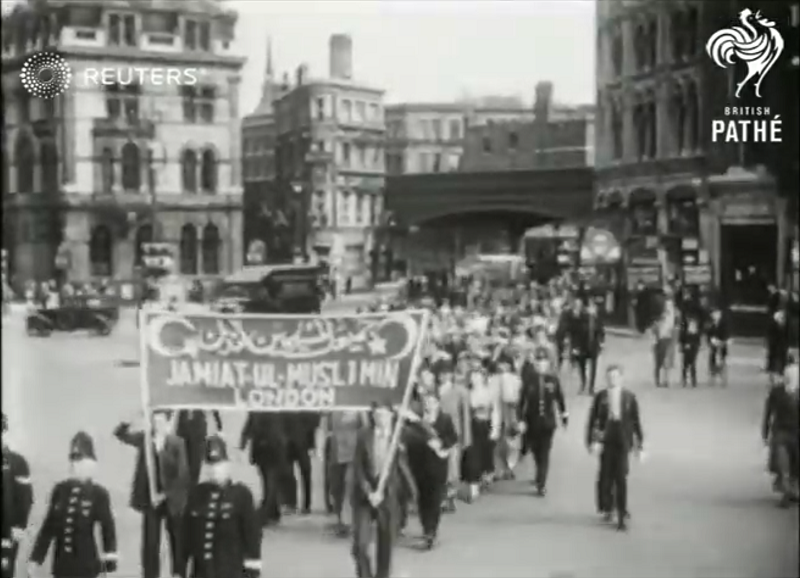
Screen capture of the 1938 Muslim protest march in London from a British Pathé newsreel – https://www.youtube.com/watch?v=ADausiEe4pM
… my husband was at the Museum of London and spotted a very brief mention of this protest in 1938 on a list of 20th century London events. I did some research.
The book they objected to was HG Wells’ A Short History of the World. This was originally published in 1922 but in 1938 an abridged version was tranlated into Hindustani and published in India. His observations about the Prophet Mohammed did not find favour with Indian Muslims (and as you know pre-partition the area called India covered what is now Pakistan and Bangladesh). There were protest meetings in Calcutta and Mumbai (then transliterated as Bombay) and the consignments of the books that WH Smith the booksellers sent to Hyderabad mysteriously never arrived. Investigation showed that the Sind government banned its import. Protests spread to east Africa and were reported in Nairobi and Mombasa.
The paragraphs concerned said “He seems to have been a man compounded of very considerable vanity, greed, cunning, self-deception, and quite sincere religious passion”. Wells concludes, not unfavourably, that “when the manifest defects of Muhammad’s life and writing have been allowed for, there remains in Islam, this faith he imposed upon the Arabs, much power and inspiration”.
There had been a number of Muslims living in east London for some years, sailors who came through the docks, retired servants, some professional men and in 1934 they formed a charitable association for the promotion of Islam called Jamiat-ul-Muslimin; they met on Fridays at a hall in Commercial Road.
On Friday 12th August 1938 a copy of A Short History of the World was, as apparently reported in the Manchester Guardian the following day “ceremoniously burned”. The main Nazi book burnings were over 5 years previously but I can’t but be reminded of them. I can’t access the Guardian on-line archive for 1938 as I don’t have a subscription, but I have no reason to doubt what they reported.
A few days later Dr Mohammed Buksh of Jamiat-ul-Muslimin attended upon Sir Feroz Khan Noon, the high commissioner for India. Sir Feroz tried to explain that in Britain we could (or could then) freely criticise Christianity, the Royal family and government as a right. He reminded Dr Buksh that Muslims were “a very small minority in England, and it would do them no good to try and be mischievous in this country, no matter how genuine their grievances were”.
Nazis Suck at Sabotage – WW2 – Spies & Ties 23
World War Two
Published 13 Oct 2022They say every masterpiece has its cheap copy. Well, the German Sicherheitsdienst are trying to copy the success of the Soviet Partisans. With Walter Schellenberg, Heinrich Himmler, and Reinhard Heydrich in charge, you know it’s going to be a bloody affair.
(more…)
When Potatoes were Illegal
Tasting History with Max Miller
Published 7 Jun 2022
(more…)
October 13, 2022
The Nazis’ Justification for the Genocide – October 9, 1943 – WAH 081
World War Two
Published 12 Oct 2022This week the Nazis go on the record about their genocide of the Jews. Meanwhile the Jews in Denmark are coming closer to safety, and the Roman Jews are again at peril.
(more…)
QotD: “Russia is a nation built for tank warfare”
Russia also benefits from an outstanding rail network able to quickly move tanks and other heavy elements of military power such as APCs and self-propelled guns around easily, and has the space and reserves of conscript manpower from previous generations to draw on to crew its simple but effective designs, such as the T64 and T72.
This is underpinned by a national philosophy which is best summed up as “don’t throw away any military asset that, no matter how old it is, could be used to kill an invader”. There are storehouses across Russia full of elderly tanks that with a bit of TLC could, probably function as a last gasp capability. Russia regularly exercises its armoured capability, mobilising forces and moving them around the country to test readiness against the theoretical threat of a NATO invasion.
Russia then is a nation intended for operating tanks, but only when supported by a logistics chain that can support the front. Start moving away from the Russian landmass and their ability to sustain a force at any distances is quickly called into doubt. While Russia may “rank” as the largest tank operator in the world, much of this is only a threat to any nation foolish enough to invade Russia in the first place.
Sir Humphrey, “Tanks for nothing — Why it does not matter if the British Army has fewer tanks than Cambodia”, Thin Pinstriped Line, 2019-04-24.
October 12, 2022
History’s Real Macbeth
Tasting History with Max Miller
Published 11 Oct 2022
(more…)
Walther P38 Development
Forgotten Weapons
Published 13 Apr 2016The Walther P38 was adopted by Germany in 1938 as a replacement for the P08 Luger — not because the Luger was a bad pistol, but because it was an expensive pistol. Walther began development of its replacement in 1932 with two different development tracks — one was a scaled-up Model PP blowback in 9x19mm and the other was the locked-breech design that would become the P38.
The initial prototypes look externally quite similar to the final P38, although the locking system went through several changes and the controls did as well. Several of the early developmental models used shrouded hammers.
In this video I will take a look at both initial “MP” pistols (the blowback and the locked breech), then the Armee Pistole (aka the AP) in its standard configuration and also a long barreled model with a shoulder stock, then the second Model MP, and finally the HP which was the commercial model of the final P38. In addition, I will check out a sheet metal prototype of the locked breech model form the very beginning of the development program.
(more…)
October 11, 2022
QotD: The debt we owe to the Carolingian Renaissance
Bret Devereaux, “Collections: A Trip Through Dhuoda of Uzès (Carolingian Values)”, A Collection of Unmitigated Pedantry, 2020-03-27.
October 10, 2022
Chinese Warlords and the Royal Canadian Navy – WW2 – OOTF 028
World War Two
Published 9 Oct 2022In today’s episode of Out of the Foxholes, we discuss the role of Chinese warlords played in the war against Japan, while also shining a bit more light on the Canadian Navy and its impact on WW2.
(more…)
Look at Life — Trouble Shooters (1964)
PauliosVids
Published 20 Nov 2018
From the comments:
David Mills
1 year ago
We never wore berets but jungle hats. This is an honest attempt to illustrate their role but so obviously, painfully stage managed. In reality, it was a hot, sweaty, stinking environment with constant tensions. Contacts were few and far between. Going into the IBAN long houses and chatting with the headman (Kampong Ketua) was fascinating, useful and, for the short period, relaxing. Between June 1965 and Aug 1982 I had four tours in the area. Learning Malay was essential and welcomed by the indigenous population.Iolis
1 year ago
The late Paddy Ashdown at 6.36. Later in life he would becone leader of Britain’s Liberal Democrat Party. He sadly died on 22 December 2018.
October 9, 2022
Could the Soviets Cut Off Crimea? – WW2 – 215 – October 8, 1943
World War Two
Published 8 Oct 2022The Germans booby-trapped Naples when they evacuated last week and local civilians now pay the price. In the Mediterranean, Kos falls to the Germans while Corsica is liberated by the French. There is action all along the Dnieper in the USSR, and the Australians advance in New Guinea, and the Japanese evacuate Vella Lavella in the Solomons.
(more…)
The Nanny State’s manifold failings
Christopher Snowden scoffs at the pro-Big Nanny maunderings of Matthew Parris in the Spectator recently:
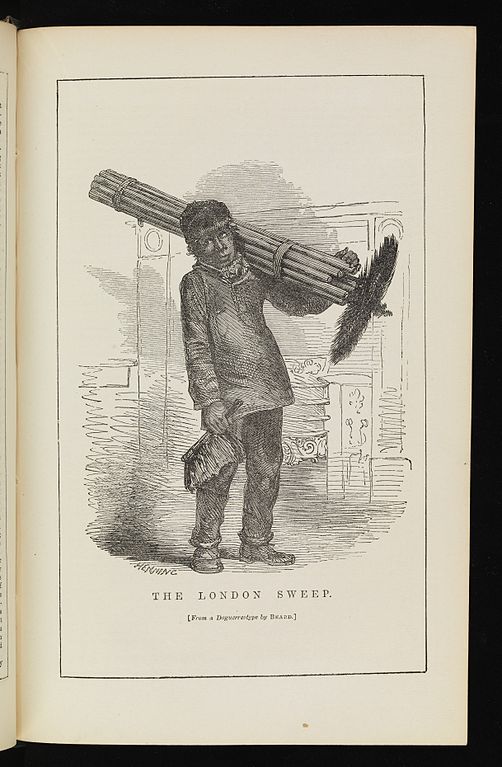
The London Sweep (from a Daguerreotype by BEARD).
Image from London labour and the London poor: a cyclopaedia of the condition and earnings of those that will work, those that cannot work, and those that will not work, 1851, via the Wellcome Collection.
A few years ago I was on the panel at the Battle of Ideas in London. I can’t remember what the topic was exactly, but it was something like the sugar tax or e-cigarette regulation. Rather than deal with the merits of these policies directly, I noticed that my opponents talked in general terms about the good that government can do, referencing the abolition of slavery and the ban on children going up chimneys.
Given all the regulation of recent decades, I found it telling that they had to go back 200 years to find laws that everyone can agree were jolly good. If I had been presenting the case for anarchism, their arguments might have landed, but since I was making the more modest case that perhaps there might be one or two laws in existence that are unnecessary and illiberal, their approach looked more like a diversionary tactic.
Matthew Parris did the same thing in last week’s Spectator. Thanks to the Royal Mail strike, it only landed on my doormat today, but you can read it here. It is titled “Maybe Nanny does know best”. Confusingly, Parris does not use the term “nanny state” in the conventional sense meaning lifestyle paternalism, but as a catch-all term for any government regulation whatsoever.
His target is Liz Truss whom Parris dislikes even more than he disliked Brexit and Boris Johnson. Unless Rory Stewart or Nick Clegg somehow become Prime Minister, I suspect that Parris will be demanding the head of whoever is in charge of the government until his dying day. He is not impressed by Truss’s “dash for growth”.
Parris’s argument is that Big Government is the friend of economic growth, not its foe. He confesses that he, like Truss, once held the view that the “dead hand of the state” stifled growth and led to inefficiencies but that he has grown out of all that stuff now and, with two gin-scented tears trickling down the sides of his nose, he welcomes his bureaucratic overlords.
Why? Because, a hundred years ago, the government gave women the vote and allowed them to work.
There was a time not so long ago when a certain group – half our potential workforce – were all but disqualified from contributing to Britain’s GDP. This group were called “women”. Women were generally unable to own property, or to play much more than a menial role in business (let alone politics, where they could not vote). So who helped unleash women’s potential, gave them rights in the workplace, stopped employers throttling their potential by restricting them to mindless occupations? Was it free trade? Was it big business? Was it competition? Was it Adam Smith’s “Invisible Hand”? No. Step forward Nanny. Nanny it was – legislation, the House of Commons, the first world war, the state – who commanded these things, driven in part by the forces of democracy.
The idea that women only started “contributing to Britain’s GDP” — i.e. working for pay — after the First World War is historically illiterate. It may have been true of the upper class and some of the middle classes, but for all other households it was a financial necessity for women to work, whether in agriculture, textiles, domestic service, pubs or whatever. It is true that more men were employed than women, but women were pregnant a lot of the time and had an enormous amount of unpaid work to do. They were certainly never “all but disqualified” from working, except in a few sectors such as the police force.
And who was it who banned women from owning property and voting in the first place? It wasn’t Adam Smith. It was the government, or, as Parris, would have it, the “nanny state”. So which nanny state are we supposed to be thankful for — the one that gave women the vote for a hundred years or the one that denied them the vote for hundreds of years?
Nanny had been busy since the 18th century, when in the Papists Act of 1778 she decreed that Catholics should not be excluded from key parts of the economy. She was still busy in the 20th century, starting with the Sex Disqualification (Removal) Act 1919, and later the 1944 Education Act outlawing the barring of married women from teaching.
Again, who excluded Catholics from key parts of the economy in the first place? Who barred married women from teaching? That’s right, it’s our old friend Big Government, the arsonist that Parris treats like a fireman.
QotD: The Paras in peacetime … the “Millwall of the British Army”
The Regimental history is littered with gallantry awards and tales of valour that are both inspirational and humbling to read. There is no doubt that within their world, the airborne infantryman can, when deployed on operations, be a ferocious foe, who few would wish to tangle with. The problem is that this aggression and drive is not something that is commonly needed outside of military operations, and the chances of these occurring are in ever shorter supply.
After a period when there were opportunities for deployments and kinetic action in Afghanistan and Iraq, the call for missions for Paratroopers is, currently, slim. Designed as a force intended to be ready to go when called, their leadership have to balance off maintaining an aggressive “ready for anything” mentality, coupled with trying to keep the behaviour of their people under manageable control.
Sir Humphrey, “Values, Standards, and Leadership in the Internet Age”, Thin Pinstriped Line, 2022-06-18.
October 8, 2022
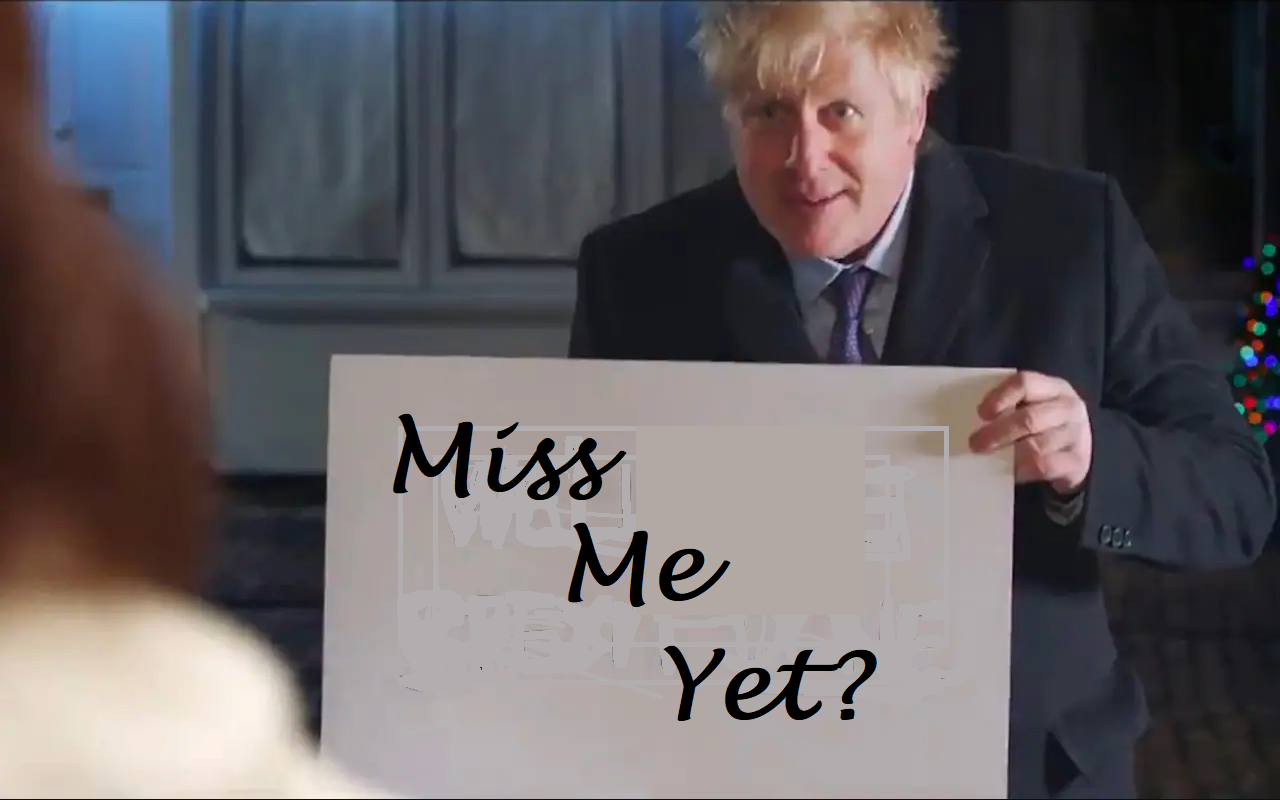
First BoJo “Miss me yet?” meme time?
Dominic Sandbrook on the terrible, awful, very bad start to Liz Truss’s Premiership:
If you believe the mainstream media, it has been yet another cosmically dire week for the Conservatives. But let’s stop going on about all the little things that went wrong, and concentrate instead on what went right. Nobody died. Liz Truss got through her speech without losing her voice, losing her mind or falling off the stage. The pound is back up to its level before Kwasi Kwarteng’s Fiscal Event. And maybe, just maybe, things are going to come right after all.
The winter energy crisis won’t be as bad as everybody fears. Inflation will start to come down. By the spring, that enormous Labour poll lead will be a fading memory. And as the next election approaches, ordinary people across the land will throw their caps in the air and cheer the name of Good Queen Liz …
No. No, I can’t do it. Tempting as it is to tilt against the conventional wisdom, sometimes you just have to face facts. The conference was awful. The speech was awful. This has been the worst start to any premiership, I think, in recent history — perhaps even in all British history.
Perhaps some readers will think this very harsh. But one close Truss ally, speaking off-the-record to the Financial Times, didn’t seem to think so. “I just went back to my hotel room and cried,” he said. “It’s a total disaster.” That’s pretty much what the general public think, too. In focus groups this week, the words that came up again and again were “incompetent”, “useless”, “untrustworthy”, “dangerous” and “clueless”. The punters aren’t always right, of course. But this time they are right, aren’t they?
“Our policy is great,” Penny Mordaunt told a fringe conference audience a couple of days ago, “but our comms is shit.” But if your comms really is shit, then who cares about the policy? Who even knows about it? Communicating your policy is the very essence of politics. If you can’t do it, you’ll never win another election.
I watched Truss’s speech through my fingers, embarrassed not just by the sheer lack of content, but the comically wooden and childlike delivery. It speaks volumes that in their desperation to find something, anything, nice to say about it, sympathetic papers applauded her for staying calm after she was interrupted by hecklers. Only somebody who had never heard of Harold Wilson, Margaret Thatcher or Tony Blair — all of whom were brilliant at dealing with interruptions — could have possibly thought this worth applauding.
For although academics and activists often prefer to talk about the abstractions of ideology or the nuts and bolts of policy, performance really, really matters in politics. To some extent, in fact, performance is politics. Even in a parliamentary system, you need a messenger who embodies the message, a leader who can charm and explain. Watch Thatcher talking to Robin Day in 1984, or Jim Callaghan being interviewed by Thames TV’s This Week in 1978, and it’s like entering a different world. Whatever their ideological differences, Thatcher and Callaghan are seasoned, accomplished performers, at the top of their respective games. They think about the questions. They talk in complete sentences, even complete paragraphs. They give long, considered, serious answers. They seem like impressive, well-informed, formidable people. Then watch Truss again, and try not to weep.


