Herodotus’ work was well known, even in antiquity, and he set the tone for all subsequent retellings of the Persian wars (despite the frequent complaints by later ancient authors that Herodotus’ reliability was – let’s say, complicated. I don’t want to give the wrong impression: Herodotus is a valuable source, just one that – like all sources – has his own agenda at play). The Spartan reputation thus seems to be the product of half a century spent fighting far, far weaker opponents, combined with one very skilled propagandist with an agenda.
That reputation was already deeply held even by the early stages of the Peloponnesian War, such that Thucydides notes that “Nothing that happened in the war so shocked the Greeks so much as” the surrender of 120 Spartiates at Pylos/Sphacteria, instead of dying with their weapons in their hands (Thuc. 4.40.1). The Athenians had, in the event, managed to trap a force of Spartans – Spartiates and other Laconians – on an island and harassed them with arrow fire from a distance, never closing with them, until the Spartans surrendered. This is, I must stress, in the context of a war that obliterated entire poleis, shredded the diplomatic fabric of Greece and was by far the largest war between Greeks that any of them knew of. But this, the shattering – if just for a moment – of the Spartan reputation, that was what shocked people. The image of Sparta – whatever the reality – was that deeply set.
Thucydides, amusingly, relates that some Greeks were so shocked that they couldn’t believe it, and one ally of Athens inquired to the Spartiates – then held as captives in Athens – if perhaps what had happened was that all of the brave men (you know, the real Spartiates) had been felled by the arrows, to which the Spartans responded, “an arrow would be worth a great deal if it could pick out noble and good men from the rest, in allusion to the fact that the killed were those whom the stones and the arrows happened to hit” (Thuc. 4.40.2).
Bret Devereaux, “Collections: This. Isn’t. Sparta. Part VI: Spartan Battle”, A Collection of Unmitigated Pedantry, 2019-09-20.
October 23, 2022
QotD: Sparta’s military reputation in the Peloponnesian War
October 22, 2022
Battle of the Bulge 1944: Could the German Plan Work?
Real Time History
Published 21 Oct 2022Sign up for Nebula and watch Rhineland 45: https://nebula.tv/realtimehistory
The Battle of the Bulge was one of the last German offensives during the Second World War. It caught the US Army off guard in the Ardennes sector but ultimately the Allies prevailed. But did Unternehmen Wacht am Rhein (“Operation Watch on the Rhine”) ever have a chance to succeed and reach Antwerp?
(more…)
Two new works on British architecture through the years
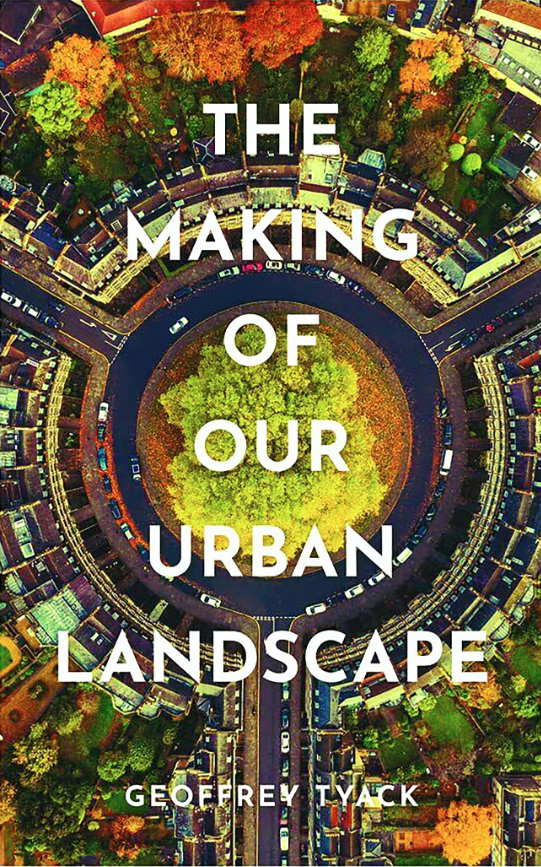
In The Critic, James Stevens Curl discusses two recent books on the “monuments and monstrosities” of British architecture:
The most startling achievement of the Victorian period was Britain’s urbanisation. By the 1850s the numbers living in rural parts were fractionally down on those in urban areas. By the end of Victoria’s reign more than 75 per cent of the population were town-dwellers, and a romantic nostalgic longing for a lost rural paradise was fostered by those who denigrated urbanisation. This myth of a lost rural ideal led to phenomena such as garden cities and suburbia. Anti-urbanists and critics of the era detested the one thing that gave the Victorian city its great qualities: they were frightened of and hated the Sublime.
These two books deal with the urban landscape in different ways. Tyack provides a chronological narrative of the history of some British towns and cities spread over two millennia from Roman times to the present day, so his is a very ambitious work. Most towns of modern Britain already existed in some form by 1300, he rightly states, though a few were abandoned, such as Calleva Atrebatum (Silchester) in Hampshire, a haunted place of great and poignant beauty with impressive remains still visible. Most Roman towns were more successful, surviving and developing through the centuries, none more so than London. Tyack describes several in broad, perhaps too broad, terms.
He outlines the creation of dignified civic buildings from the 1830s onwards, reflecting the evolution of local government as power shifted to the growing professional, manufacturing and middle classes: fine town halls, art galleries, museums, libraries, concert halls, educational buildings and the like proliferated, many of supreme architectural importance. Yet the civic public realm has been under almost continuous attack from central government and the often corrupt forces of privatisation for the last half century.
Tyack is far too lenient when considering the unholy alliances between legalised theft masquerading as “comprehensive redevelopment”, local and national government, architects, planners and large construction firms with plentiful supplies of bulging brown envelopes. Perfectly decent buildings, which could have been rehabilitated and updated, were torn down, and whole communities were forcibly uprooted in what was the greatest assault in history on the urban fabric of Britain and the obliteration of the nation’s history and culture.
One of the worst professional crimes ever inflicted on humanity was the application of utopian modernism to the public housing-stock of Britain from the 1950s onwards: this dehumanised communities, spoiled landscapes and ruined lives, yet the architectural establishment remained in total denial. In 1968–72 the Hulme district of Manchester was flattened to make way for a modernist dystopia created by a team of devotees of Corbusianity.
The huge quarter-mile long six-storey deck-access “Crescents” were shabbily named after architects of the Georgian, Regency and early-Victorian periods (Adam, Barry, Kent and Nash). This monstrous, hubristic imposition rapidly became one of the most notoriously dysfunctional housing estates in Europe, a spectacular failure whose problems were all-too-apparent from the very beginning. Yet in The Buildings of England 1969, Manchester was praised for “doing more perhaps than any other city in England … in the field of council housing”. The “Crescents” were recognised quickly as unparalleled disasters and hated by the unfortunates forced to live there. They were demolished in the 1990s, but the creators of that hell were never punished.
October 21, 2022
Britain’s Royal Spy – WW2 – Spies & Ties 24
World War Two
Published 20 Oct 2022SOE agents come from all walks of life but very few can claim to be royalty. Few except Noor Inayat Khan. She’s been sent as a radio operator to France, arriving right in the middle of a German crackdown on the resistance. Now she is the sole link between London and Paris.
(more…)
The brief career of Liz Truss as British Prime Minister
As I was typing the heading for yesterday’s post on former British Chancellor Kwasi Kwarteng, it occurred to me that I might need the same phrasing for the Prime Minister … but I expected her to stumble on a few more weeks or months rather than following Kwarteng out the door this quickly:
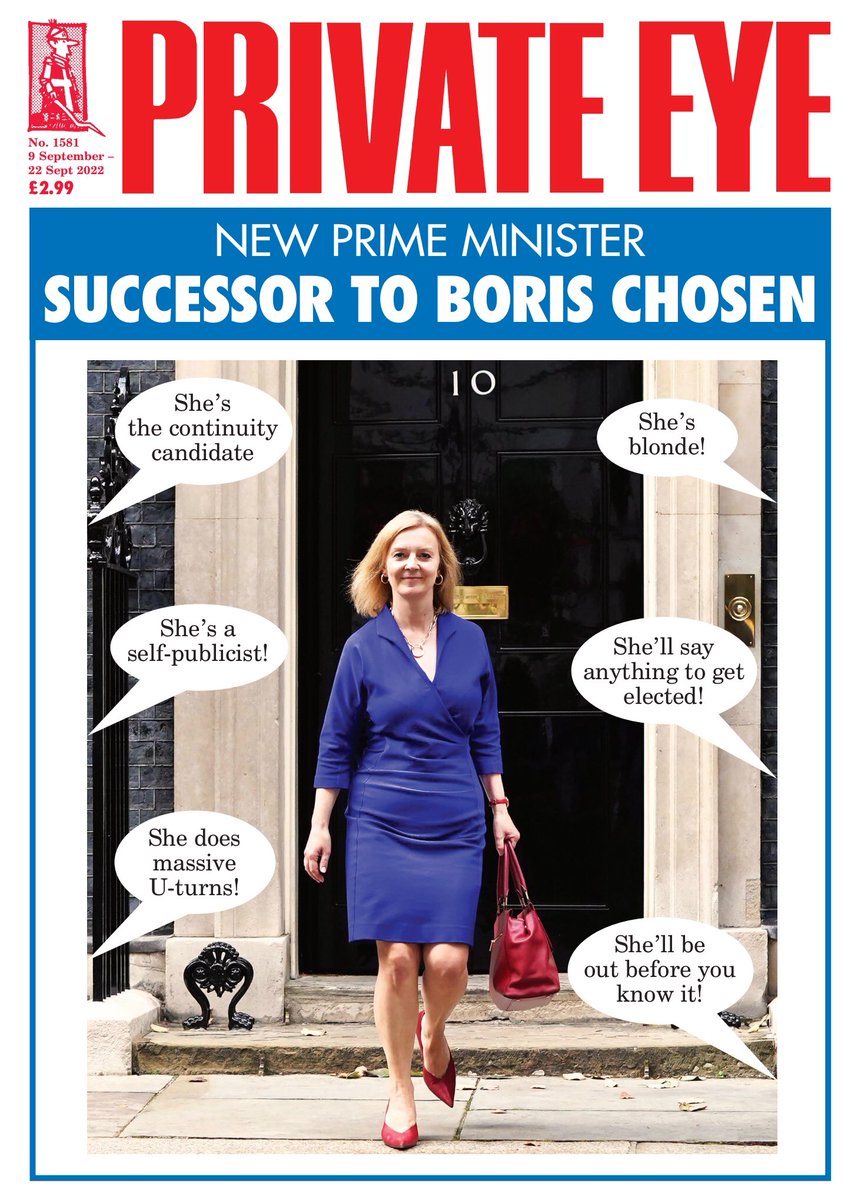
Edmund Burke – one of the great theorists of the state – argued that for a government to rule successfully, it must have consent. Liz Truss lacked that consent; she moved like Thomas Hobbes’ Leviathan, ruling with an iron fist towards her economic vision without the consent, explicit or implicit, to rule in that manner and pursue that agenda.
Her economic programme was wholly unsuitable for the climate and deeply damaging. The result was that her reign, like Hobbes’ state of nature where nobody had the political legitimacy to rule, was nasty, brutish and short. It has left the mantle impossibly difficult for her successor.
Liz Truss has become the first prime minister since Neville Chamberlain to never face a general election whilst in office, and her successor will be under immediate pressure to call one. The economic situation is far more dire than it was before her disastrous mini-budget, and trust is shattered. This is before expected interest rate increases could tip millions into unaffordable mortgages, and the expiry of the energy support scheme (except for targeted support). Whoever takes over will face crises on multiple fronts that may prove impossible to arrest.
There’s rarely been a political downfall that didn’t merit at least a nod to the famous bunker scene:
If you haven’t seen Downfall, you’ve almost certainly seen its most famous scene. As shells fall on Berlin and the Red Army advances, Hitler sits in his bunker and listens as his generals lay out exactly how bad the situation is. One by one, his options are whittled away until eventually it sinks in that all that awaits is total defeat, humiliation, and annihilation.
On an entirely unrelated note, as Liz Truss returns to her bunker underneath the big table in the Cabinet Office Briefing Room, difficult conversations are happening in Downing Street. It’s 11am on a Thursday morning …
Penny Mordaunt attempts a cheerful smile. She does not succeed. “Prime Minister – the Labour party has made a breakthrough across a wide front. In the South they are taking Bedfordshire and Norfolk. In the North, the Red Wall is broken. In the East and West, losses are limited because fish don’t vote. But indications are that even the haddock are pretty gloomy about your prospects.”
Truss waves this away. “Don’t worry. Kwasi’s resignation will bring it under control.”
The Cabinet exchanges uneasy glances. Mordaunt steps forward from the crowd. “Prime minister … Kwasi …”
Jacob Rees-Mogg finishes the thought. “Kwasi is briefing against you in the Times. He says you have weeks remaining in office.”
An awkward silence develops, extends. In this room, time now has no meaning. Glaciers run like rivers. The sun and moon flicker across the sky. Empires rise and fall, newly sapient species emerge, flourish, and die off. Eventually the universe undergoes total heat death, frozen into stasis until a spark suddenly appears; a second big bang. Energy. Light. The reinvention of particle physics, and eventually an earth, evolution, Britain, and
“Prime Minister?”
“Yes. I see.”
A second pause, blessedly shorter. Mordaunt and Rees-Mogg glance nervously at each other. Eventually, Truss settles on a response: “Would everyone who has briefed against me in the last week please leave the room.”
In Spiked, Brendan O’Neill makes the argument that Britain is now a political wasteland:
So Liz Truss is out. After just 44 days her premiership is no more. “I’m a fighter, not a quitter”, she said in parliament yesterday, and now she’s quit. Her premiership deserves to live in ignominy. Not necessarily because her blunders were so spectacular – though many of them were – but because of what this strangled-at-birth stint in Downing Street tells us about British politics more broadly. Which is that it’s a wasteland. An ideological void. A dustbowl of ideas. The lack of even the faintest glimmer of leadership material anywhere in the Westminster circus is horrifying to me. Trussism is but a symptom of a wider malady afflicting our political class.
[…]
Let’s go beyond Truss and Hunt and ask what this all tells us about the Conservative Party. This is the oldest political party in Europe, arguably the world. It’s the party that gave us Peel, Churchill, Thatcher, properly historic figures. Which birthed so much of the legal and political order we live under. Which The Economist aptly called “the world’s most successful party”. And which once reached, through Conservative Associations, the Church and other formal and informal networks, into communities across the land.
Now it’s a hollow machine, bereft of strategy, in dire want of ideas, out of touch with the public, disorientated, and infamous for having a PM who couldn’t last a naff, paltry 50 days in Downing St. The factional Tories cheering Truss’s demise are fools. Your entire party is indicted by this shitshow. And by the fact that your big replacement for lame Liz – Hunt – is a man so disconnected from British people, British history and British politics that he prefers EU oversight to national sovereignty, technocracy to belief, and “competence” to passion. Congrats!
To see the true state of the Tory Party, look no further than a comment piece penned by one of its former leaders, William Hague, this week. “Ideology is dead: it’s competence we need now”, the headline said. In short, you’ve had your fun with Brexit and Boris and the mad populist experiment – now it’s time for the adults to come back into the room and take control. Not only is this undemocratic (14million people voted for Boris to be PM, no one voted for Hunt to be de facto PM). Not only is it anti-political. Not only is it bureaucratic, stiff and unabashedly concerned more with making the trains run on time than with inspiring the people with proposals for a genuinely better life. It is also an admission that they have no ideas left. That the once great Conservative Party is completely out of steam. That Westminster itself is knackered. “Competence” is the last refuge of the visionless. They’re finished. Kaput. Clueless. Not just Liz, all of them. The need for a political overhaul has never been so pressing and so great.
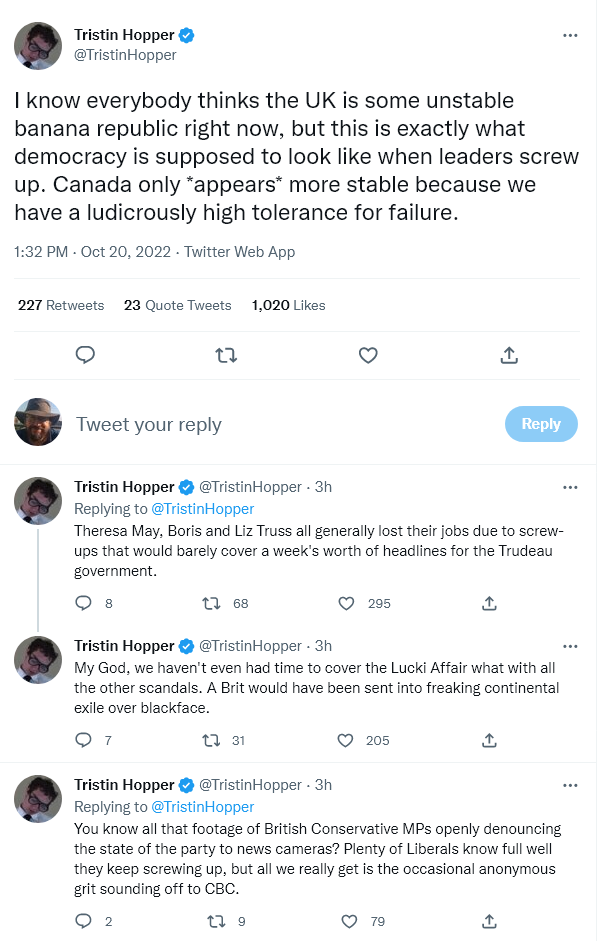
Despite the “bad optics”, as Tristin Hopper points out here, this is what’s supposed to happen when the PM gets it totally wrong, and Canadians have no grounds to criticize Britain here:
What is Gruel?
Tasting History with Max Miller
Published 14 Jun 2022
(more…)
October 20, 2022
The brief career of Kwasi Kwarteng as Chancellor of the Exchequer
Dominic Sandbrook had the misfortune of having fever dreams in which he found himself pursued by Kwasi Kwarteng. I sympathize, having recently had similar fever dreams, though lacking Mr. Kwarteng’s participation. His very brief time as Chancellor was as unpleasant for all concerned as it could have been:
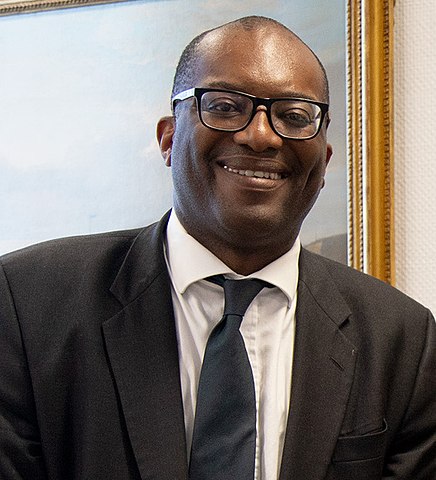
Detail of a photo of Kwasi Kwarteng at a meeting with the US Ambassador, 25 August 2022.
Photo by the Office of U.S. Ambassador to the United Kingdom via Wikimedia Commons.
Nightmares about public failure are very common. There can be few readers who haven’t dreamed about turning up to an exam entirely unprepared, or about walking onstage having neglected to learn the lines. Anecdotal evidence suggests that the more you care about such things, the more likely they are to haunt you, which is why they’re so common among academic high-achievers. So perhaps Kwarteng himself, whose academic credentials are second to none, has had such dreams. And if he did, here’s the twist. His nightmares came true.
What happened to Kwarteng on Friday — and again yesterday, when Jeremy Hunt ripped up his mini-budget, poured petrol on the debris and set the whole thing alight — was more than your standard political sacking. It was a humiliation on the grandest possible scale, as the Chancellor was forced to fly back early from Washington, with some 6,000 people gleefully tracking his flight, before Liz Truss delivered the inevitable bullet. He had been in command at the Treasury for just 38 days, saved only from a post-war record by Iain Macleod’s heart attack in July 1970.
It’s hard to think of many British political figures with such a catastrophic trajectory. Kwarteng had been Boris Johnson’s Business Secretary since January 2021, but it’s a safe bet most ordinary punters had never heard of him. Then, suddenly, he was Chancellor, with a breathtakingly radical plan to defy the markets and turbo-charge a new era of growth. Then, equally suddenly, he became the most unpopular Chancellor in the history of the Ipsos-Mori poll, with even less public support than Denis Healey after the International Monetary Fund bailout in 1976 or Norman Lamont after Black Wednesday in 1992. And then he was gone, and it was all over. What a career!
You might assume from all this that Kwarteng is a fool. But he really isn’t a fool. Giving school talks, I’ve twice come across people who taught him, and both told me he was the cleverest boy they’d ever known. Were they wrong? Obviously not, for when you look at his biography, it’s a proud parent’s dream. At prep school he won a national history prize; at Eton he was a King’s Scholar and won the Newcastle Scholarship for philosophy, a competition examined by Stephen Sykes, Bishop of Ely and former Regius Professor of Divinity at Cambridge.
Kwarteng himself went to Cambridge, where he got a double first, twice won the Browne Medal for Latin and Greek poetry and even won University Challenge. He was a Kennedy Scholar at Harvard. He did a PhD on William III’s attempt to reform the coinage in the 1690s. And he’s written history books — two of which I reviewed at the time. “Well-researched and crisply written, Kwarteng’s book is a lot better than most MPs’ efforts,” I wrote of Ghosts of Empire, which examined the legacy of Britain’s rule overseas. “A politician with a sense of nuance: whatever next?”
For much of his gilded life, then, Kwarteng knew only success. And when he looked forward, he could reasonably expect more in the future. When he daydreamed, he surely imagined himself as a titanic reforming Chancellor to rank alongside William Gladstone or Sir Geoffrey Howe — and perhaps even as Prime Minister. And now? He’s the answer to a quiz question, the 38-day Chancellor whose tax bombshell exploded in his own face. To put that another way, if he were an England football manager, he’d be the love child of Steve McClaren and Sam Allardyce.
Omnium consensu capax imperii nisi imperasset. “All would have agreed that he was capable of being emperor, if only he had never been it.” So wrote Tacitus of the short-lived Roman emperor Galba — who, in fairness, lasted almost seven times longer in his top job than Kwarteng did at the Treasury. It’s a line that often recurs in British political commentary. I’ve seen it applied to Prime Ministers as diverse as Lord Rosebery, Arthur Balfour, Sir Anthony Eden, Harold Wilson, Gordon Brown and Boris Johnson. Perhaps that tells you something about the job — an office in which, one way or another, failure is almost guaranteed.
French C6 Long-Recoil Prototype Semiauto Rifle
Forgotten Weapons
Published 18 Nov 2016France began working on developing military self-loading rifles virtually as soon as the 1886 Lebel was adopted, and they would pursue a pretty elaborate series of trials right up to World War I. One series was developed by Etienne Meunier at the Artillery Technical Section using gas operated mechanisms, and designated the A series. The B series was the work of M. Rossignol at the Musketry School, using mostly direct gas impingement systems. The C series was designed by Louis Chauchat and M. Sutter at the Puteaux Arsenal, and these were long-recoil actions. Trials commenced in 1911 and 1912 on the latest rifles from each series, and ultimately none was judged really ready for military service — although the A6 Meunier would be produced in small numbers (about a thousand) and issued in 1916.
This particular rifle is a C6, from Chauchat and Sutter. The C7 was in the formal testing, and this C6 is a very similar rifle. It uses a long recoil action, a unique locking system with two pivoting locking lugs somewhat similar to the Kjellman system, and a remarkably powerful 7mm rimless cartridge fed from 6-round Mannlicher-type clips. It was deemed too complicated at trial, not surprisingly.
(more…)
October 19, 2022
South Atlantic D-Day: Battle of San Carlos – Falklands War
Historigraph
Published 15 Oct 2022On May 21st 1982, the United Kingdom landed thousands of troops at San Carlos Water in the Falkland Islands, to begin their recapture from Argentina. But only hours after arriving, British forces were under intense attack, as the Argentine air force attempted to push the troops clambering ashore back into the sea. This was the Battle of San Carlos.
0:00 – Intro
0:37 – Britain’s Invasion Plans
2:59 – Bespoke Post
4:16 – The Argentine Onslaught
8:46 – Attack on Coventry and Conveyer
(more…)
Luxury beliefs in action
In The Critic, Sebastian Milbank looks at the young vandals, er “activists” who decided that throwing soup on a famous painting was a totally sensible and reasonable thing to do in order to direct our attention to their luxury beliefs:

On Friday Phoebe Plummer, a 21-year-old graduate student and activist, threw a tin of soup over a Van Gogh painting in the National Gallery, before proceeding to glue herself to the wall. “What is worth more, art or life?” she shouted in a manner reminiscent of an especially tiresome student at the Oxford Union. Whilst Phoebe didn’t exactly make it to Oxford, she was the beneficiary of a £15,000 a year boarding school education. Having rich parents probably helps if your lifestyle involves dying your hair pink, covering yourself in glitter and getting glued to a succession of defaced public monuments. The legal fees alone must be a headache.
That said, perhaps the organisation she cheerfully acts in the name of — Just Stop Oil — can foot the bills. After all, it’s a registered charity funded by the US-based organisation The Climate Emergency Fund. The Fund boasts on its website that “We provide a safe and legal means for donors to support disruptive protest that wakes up the public and puts intense pressure on lawmakers”, not to mention “Our robust legal team”. The charity comes with endorsements by high profile organisations such as fashion magazine Marie Claire and the backing of donors like the group’s co-founder, oil heiress Aileen Getty who is quoted as saying, “Don’t we have responsibility to take every means to protect the Earth”.
I can think of other organisations that provide “A safe harbour for donors” and put “intense pressure on lawmakers”, not to mention having “robust legal teams” — though they generally feature rather more Italian accents and bodies dumped in the river, and rather fewer celebrity endorsements (Frank Sinatra could not be reached for comment).
The Just Stop Oil organisation itself is even more explicit about its willingness to countenance potentially illegal means. In its FAQ section it calls for people to “use tactics such as strikes, boycotts, mass protests and disruption to withdraw their cooperation from the state”, and announces that they “are willing to take part in Nonviolent direct action targeting the UK’s oil and gas infrastructure should the Government fail to meet our demand by 14 March 2022”. Well the date has past. “Will there be arrests?” the next section asks. The answer? “Probably”.
Quite why organisations that openly fund illegal — sorry “disruptive” — protest, and hire teams of lawyers to avoid the legal consequences, are allowed to enjoy charitable status, let alone avoid investigation by the authorities, is beyond me. Nor is it clear to me how attacks on works of art, or stopping traffic in the road, can attract support for environmental causes, or challenge those who profit from ecological destruction.
The answer lies with the nature of the radical environmental movement, which is often starkly at odds with many of the finest traditions of ecological and anti-industrial thought. Early critics of industrial capitalism like Ruskin and Morris were as concerned with the protection of traditional culture as they were with the destruction of the natural world. Their humanist challenge to industrialism was to call for the return of craft, the embrace of localism, a built environment on a human scale, and an economy that fed the spiritual as well as material needs of mankind.
Theodore Dalrymple on the mindset of the perps:
Youth is often said to be an age of idealism, but if my recollection of my own youth is accurate, it could also be characterized as an age of self-righteousness liberally dosed with hypocrisy, at least when it has known no real hardship that isn’t of its own making.
The two girls who threw a tin of soup at a Van Gogh in the National Gallery in London and then glued themselves to the wall certainly evinced a humorless self-righteousness and self-importance: indeed, they seemed almost to secrete it as a physiological product. They were part of a movement of dogmatic and indoctrinated young people called Just Stop Oil that’s currently making a public nuisance of itself in this fashion in Britain, holding up traffic and causing misery to thousands, in what it believes to be the best of all good causes, saving the planet.
[…]
Youth suffers from both fevered over-imagination and a complete absence of imagination. This is the natural consequence of a lack of experience of life, in which limited experience is taken as the total of all possible human experience. Youth accepts uncritically its own wildest projections and doesn’t know the limitations of its own knowledge. It believes itself endowed with moral purity and allows for no ambiguity, let alone tragic choice. It’s sure of itself.
The young women who threw soup at the Van Gogh probably didn’t know that, even if the man-made climate change hypothesis were wholly correct, they lived in a country that produced about 1 to 2 percent of the alleged greenhouse gases in the world, so that even if their action put a complete end to that contribution (a most unlikely outcome) it would make absolutely no difference whatever to the fate of the planet. Their action certainly caused the public irritation and expense, and its most likely long-term outcome is a costly increase in surveillance and security at the gallery because the two of them were able to do what they did with such ease.
However, they were probably dimly aware, or had the good sense to know, that it would have been inadvisable for them to make their gesture in some country responsible for a far greater proportion of the alleged causation of climate change than their own—China, for example. Cowardice, after all, is the better part of self-righteousness.
October 18, 2022
CENSORED: The Great Escape from Death Camp Sobibor – October 16, 1943 – WAH 082
World War Two
Published 16 Oct 2022The German Nazis and their helpers are facing increasing resistance, this week in Rome from the Vatican, and at the Sobibor extermination camp from their victims.
(more…)
The War That Ended the Ancient World
toldinstone
Published 10 Jun 2022In the early seventh century, a generation-long war exhausted and virtually destroyed the Roman Empire. This video explores that conflict through the lens of an Armenian cathedral built to celebrate the Roman victory.
(more…)
October 17, 2022
Tank Chat #156 | FV432 Bulldog | The Tank Museum
The Tank Museum
Published 10 Jun 2022Want to learn more about Bulldog? Check out David Willey’s Tank Chat on this infantry transport vehicle this week.
(more…)
October 16, 2022
Zaporizhzhia! – WW2 – 216 – October 15, 1943
World War Two
Published 15 Oct 2022The Allies begin an aerial bombing campaign against the Japanese base at Rabaul. It has big success, though Allied bombing in Europe this week achieves big failure. The Allied advance in Italy is slowing down to a crawl, but in the USSR the advance across the Dnieper continues, specifically at the Zaporozhe bridgehead.
(more…)
October 15, 2022
From perpetual motion machines to “Philosopher’s Stoves” (no, that’s not a misprint)
In the latest Age of Invention newsletter, Anton Howes digs deeper into the question of why it took so long for the steam engine to be invented:
As I hinted in Part II, there were still more wonders to issue from [Cornelis] Drebbel’s workshop — many of them building on the same principles as his perpetual motion machine.
So it’s worth a very brief recap of how that device worked. Drebbel had improved upon an ancient experiment involving an inverted flask in water: that is, to heat the base of a long-necked glass flask and place it mouth-first into a bucket of water. The heated air trapped inside the flask would bubble out, and as the remaining air cooled, the water of the bucket would rise up into the flask.
The inverted flask experiment. The air bubbles out on the left. As the remaining trapped air cools, on the right, the water rises up the flask (in fact pushed up by the pressure of the atmosphere).Drebbel’s big breakthrough was to notice that once the water was already sucked into the flask, it would continue to rise and fall even when it wasn’t being heated or cooled on purpose — movements that were the result of natural changes to atmospheric pressure and temperature.
From this continued movement — to his mind, a harnessing of the perpetual movement of the universe itself — Drebbel then constructed a machine that seemed to show the ebb and flow of the tides, as the liquid inside it rose and fell between the cold of night and the heat of day. He also exploited that same rise and fall of the liquid in order to rewind clockwork that continually showed the time, day, months, and years, along with the cycle of the zodiac and the phases of the moon.
Few have now heard of Drebbel’s perpetual motion machine, but noticing that same rise and fall of the liquid in response to changes in the weather would also serve as the basis for the invention of the thermometer and barometer. Or, more accurately, to the reinterpretation of the ancient inverted flask experiment as a device capable of measuring both temperature and atmospheric pressure. (The two different applications were not disentangled and isolated until later, as we’ll see below, and so in modern terminology the initial device is often referred to as an air thermoscope.)
[…]
For alchemists like Drebbel, being able to control the temperature of furnaces and ovens was a valuable prize, because so much of their skill in manipulating metals and minerals depended upon it. The alchemist’s art — the intangible, tacit skill built up over years of experience — was one of sensitivity to heat, being able to judge, by feel and by look, the varying intensities of flame, and then to manipulate it so as to keep it at a constant level. The art was known as pyronomia, or as regimen ignis — the governing of fire.
At some point before 1624, Drebbel worked out that he could exploit the inverted flask experiment to radically improve furnaces. He did this in two ways. One was simply to affix a mercury thermometer to the furnace, to indicate its heat (mercury, with a higher boiling point, would be less liable than water to simply evaporate away). But the other, and more ingenious way, was to create a feedback mechanism to control the oven’s heat automatically. Drebbel placed a cork to float atop the mercury in yet another thermometer, which as it rose or fell would then cover or uncover the furnace’s air supply. He could thus choose a desired heat, and then let the oven do the rest. If it grew too hot, the air supply would be restricted. If it grew too cold, it would be increased. Drebbel had invented the thermostat, and perhaps one of the first widely-applied practical feedback control mechanisms.
Drebbelian self-regulating ovens, or Philosopher’s Stoves, spread beyond England, to be adopted in France, the Netherlands, Germany, and even across the ocean in New England — they were a major source of business for the husbands of Drebbel’s daughters, the brothers Abraham and Johannes Sibertus Kuffler, to whom he passed many of his secrets. Drebbel even applied its thermostatic principles to artificially incubating eggs, for which maintaining a constant temperature was essential. To give an idea of how big a deal this was, Francis Bacon filled his techno-utopian vision of a New Atlantis with “furnaces of great diversities, and that keep great diversity of heats; fierce and quick; strong and constant; soft and mild; blown, quiet; dry, moist; and the like”, some of which, like the incubator, were able to provide even the gentle heat of animal bodies. Drebbel, in Bacon’s lifetime, was thus producing the stuff of science fiction. He was, as one admirer termed him, a true Mysteriarch.
And the Mysteriarch did not stop there. Just before his death in 1633 he was working on improving the stoves, making them more efficient, reducing the need for people to attend the fire, and reducing their smoke. They could thus be applied to drying hops, malt, fruit, spices, and gunpowder, heating rooms in houses, and distilling fresh water from sea water. His heirs, the Kufflers, even made the stoves portable enough to be used for baking the bread for armies — they were allegedly used by Frederick Henry, Prince of Orange, in his various successful campaigns against Spain. Both the portable ovens and the seawater distilling machines were apparently used in the 1650s aboard ships headed for the Indian Ocean.
By the 1620s, then, many of the key elements for a steam engine were already coming into fairly widespread use. Scientists across Europe, inspired by Drebbel’s perpetual motion and Santorio’s thermometer, were eagerly pursuing the possibilities from expanding and contracting gases. And Drebbel had invented a widely-used thermostatic feedback system — a general concept that would later prove extremely useful in making steam engines practicable. Feedback systems and safety valves would come to regulate the movements of engines and reduce the risks of them overheating and exploding.