
Tasting History with Max Miller
Published 28 Jun 2022
(more…)
October 29, 2022
The Absinthe Murder
Comments Off on The Absinthe Murder
October 28, 2022
“Real Trussnomics” has never been tried, cry the disgruntled free-marketeers
Kristian Niemietz investigates the economic theories that Liz Truss and Kwasi Kwarteng attempted to implement during their very brief moment in power:
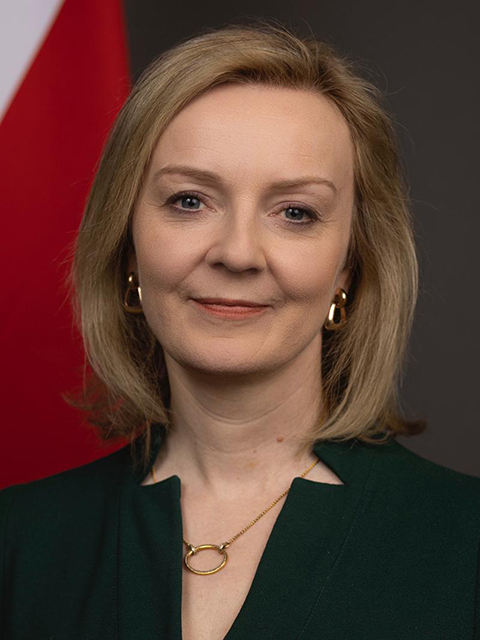
British Prime Minister Liz Truss, 1 May 2022.
Official portrait via Wikimedia Commons.
Over the past couple of years, I have written a lot about how socialists always disown every socialist project as soon as its failures become apparent, and then go on to claim that the project was never “really” socialist to begin with. The idea of socialism is pure, noble and flawless. It cannot fail. It cannot be refuted by real-world evidence. It can only be “badly implemented”, “distorted” or “misappropriated”.
In recent weeks, however, the rhetoric of “Yes, but … not like that!” has not come from socialists talking about Venezuela or Nicaragua, but from disgruntled free-marketeers [https://www.reuters.com/world/uk/trusss-demise-ends-revival-thatchers-libertarian-economics-2022-10-20/] talking about the ill-fated Truss/Kwarteng government.
Whenever this happens, inevitably, within a few minutes, my Twitter notifications fill up with comments like “Oooh, so what you guys are saying is, Trussism-Kwartengism wasn’t real free-market economics? Real free-market economics has never been tried? Hmmm, what does this remind me of? An idea for your next book there, eh, Herr Niemietz?”
Fair enough, I suppose! It would be a bit rich of me to complain about that. My work on socialism was, after all, was not just about socialism per se, but also, more broadly, about the lack of accountability in the world of ideas. If you argue that people should be held to account for the track record of the ideas they advocate, you cannot credibly complain when you find yourself at the receiving end of that.
And, yes, admittedly, in recent weeks, disgruntled free-marketeers really have sounded very much like Continuity-Corbynites. “Truss and Kwarteng had the right ideas, their plan was just terribly executed”; “Truss and Kwarteng were never given a chance, the entire media establishment immediately ganged up on them”; “Truss and Kwarteng were undermined by their own party at every step of the way” – we have heard this all before, just substitute “Corbyn” for “Truss”, and “McDonnell” for “Kwarteng”.
So I cannot blame people for making this comparison. But that does not mean that I have to accept it: I believe that this is a fundamental false equivalence, and I would like to explain why.
(I should, at this stage, make clear that the IEA has no corporate view, so I cannot speak for any of my colleagues or ex-colleagues, or people from other pro-market think tanks. Where I refer to what other people have said, I will specifically say so.)
Comments Off on “Real Trussnomics” has never been tried, cry the disgruntled free-marketeers
The Byzantine Empire: Part 7 – Recovery and Return to Hegemony, 717-1025 AD
seangabb
Published 2 May 2022In this, the seventh video in the series, Sean Gabb explains how, following the disaster of the seventh century, the Byzantine Empire not only survived, but even recovered its old position as hegemonic power in the Eastern Mediterranean. It also supervised a missionary outreach that spread Orthodox Christianity and civilisation to within reach of the Arctic Circle.
Subjects covered:
The legitimacy of the words “Byzantine” and “Byzantium”
The reign of the Empress Irene and its central importance to recovery
The recovery of the West and the Rise of the Franks
Charlemagne and the Holy Roman Empire
The Conversion of the Russians – St Vladimir or Vladimir the Damned?
The reign of Basil IIBetween 330 AD and 1453, Constantinople (modern Istanbul) was the capital of the Roman Empire, otherwise known as the Later Roman Empire, the Eastern Roman Empire, the Mediaeval Roman Empire, or The Byzantine Empire. For most of this time, it was the largest and richest city in Christendom. The territories of which it was the central capital enjoyed better protections of life, liberty and property, and a higher standard of living, than any other Christian territory, and usually compared favourably with the neighbouring and rival Islamic empires.
(more…)
Comments Off on The Byzantine Empire: Part 7 – Recovery and Return to Hegemony, 717-1025 AD
History Summarized: Mycenaean Greece & the Bronze Age Collapse
Overly Sarcastic Productions
Published 24 Jun 2022I’m pronouncing Mycenaean & Mycenae with a hard “K” sound because that’s how it sounds in Greek, and I would not be so impolite as to mispronounce the name of the first Greek-speaking civilization in history. (The name of “Mycenae” can be spelled Μυκῆναι or Μυκήνη, and I’m using the first one: mee-KEE-neh)
(more…)
Comments Off on History Summarized: Mycenaean Greece & the Bronze Age Collapse
October 27, 2022
500 Years of Correcting “Historical” Halloween Costumes
Bernadette Banner
Published 26 Oct 2019Ft. my attempts to re-draw them But Better.
[The auction is now concluded.]FOOTNOTES
1. “A literal armful of skirt”: Portrait of Giovanni(?) Arnolfini and his Wife by Jan van Eyck, 1434 http://bit.ly/33ZToHd
2. 16th century split front skirts and square neckline, for comparison: “Portrait of Katherine Parr”, c. 1545 http://bit.ly/2BSUCs5
3. Examples of gowns cut in long panels: from Le Livre des faiz monseigneur saint Loys, composé à la requête du cardinal de Bourbon et de la duchesse de Bourbonnois (p. 195), 1401 – 1500 http://bit.ly/2WcpWLu
4. Exceedingly Extra sleeves: “Saint George Slaying the Dragon” by Jost Haller, c. 1450. Unterlinden Museum. Digital image from Wikimedia Commons. http://bit.ly/2JksLFe
5. Hoods: Le Livre des faiz monseigneur saint Loys, composé à la requête du cardinal de Bourbon et de la duchesse de Bourbonnois (p. 205), 1401 – 1500 http://bit.ly/33Ya7e6
6. Cap? Fillet? from Le Livre des faiz monseigneur saint Loys, composé à la requête du cardinal de Bourbon et de la duchesse de Bourbonnois (p. 211), 1401 – 1500 http://bit.ly/33ZI0Lx
7. French farthingale: “Ballet des fées des forêts de Saint-Germain – Entrée des Esperculates” Daneil Rabel, 1626 http://bit.ly/31M3dal
8. Queen Elizabeth I effigy bodies: “Corset from Elizabeth I’s wax effigy 1603” http://bit.ly/369ezJ5
9. “The Merchant Taylors”, 1749. The British Museum http://bit.ly/2JiYR42
(more…)
Comments Off on 500 Years of Correcting “Historical” Halloween Costumes
Rishi Sunak becoming PM apparently – wait for it – proves that systemic racism is still a thing in Britain
You’d think the first non-white British PM would help dispel the constant claims that British society is still deeply racist, but as Theodore Dalrymple shows, that underestimates the political need to use “racism” as a rhetorical stick to beat the electorate with:
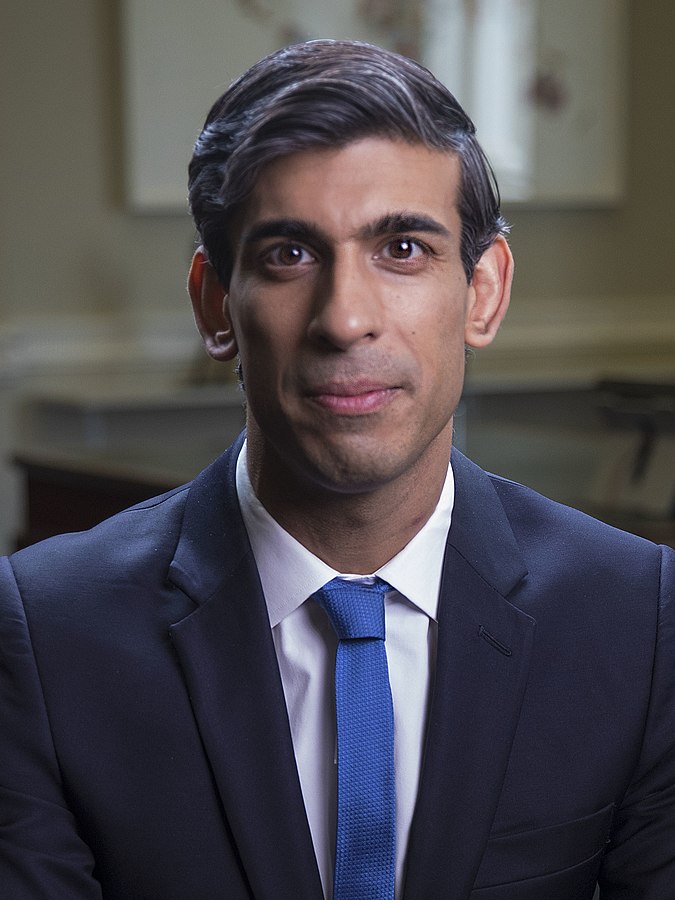
Rishi Sunak shortly after becoming Chancellor of the Exchequer in 2020.
The new British Prime Minister, Rishi Sunak, is the son of Punjabi immigrants from East Africa. You might have thought that this would satisfy, or at least please, the anti-racism lobby, by demonstrating that British society is an open one, not completely sclerosed by racist prejudice: but you would be wrong.
An opposition member of parliament called Nadia Whittome, herself of Indian origin, tweeted that Sunak’s appointment to the highest political position was not a victory for Asian representation.
This follows the assertion not long ago by Rupa Huq, another Member of Parliament of Indian subcontinental origin, that Kwasi Kwarteng, former Prime Minister Liz Truss’s short-lived Chancellor of the Exchequer, was only “superficially black” because he spoke what in England is called the King’s English. She said that, listening to him on the radio, one would not even know that he was black. Instead, he spoke like the highly educated person he was, which in Huq’s opinion was incompatible with being black. Whites are not the only racists.
The remarks by these two female politicians, all the more significant because they were spontaneous rather than deeply considered, reveal something about the nature of modern identity politics: that the function of minorities (whether racial, sexual, or other) is to act as vote-fodder for political entrepreneurs of a certain stripe. It’s therefore the duty of minorities to remain the victims of prejudice against them and not to rise in the social scale by their own efforts: To do so is to betray the cause and above all their supposed leaders.
The reason that Whittome considers that Sunak’s appointment isn’t a victory for Asian representation is that, although of Asian origin, his parents (his father was a doctor) had him expensively educated and Sunak is now a multimillionaire, unlike most people of Asian origin — to say nothing of most whites.
There are, of course, other ways in which he isn’t representative of the Asian, or any other, population, the most important of which is that he’s of far above-average intelligence. (I must here point out also that while a certain level of intelligence is a necessary condition for a successful political career, it’s far from being a sufficient one.)
Representative government doesn’t mean that the representatives in the legislature or government must reflect the population demographically, such that — for example — 5 percent of them must have IQ’s of less than 70, though increasingly it may appear that they do. Nor are a person’s political or social views straightforwardly a reflection of his or her own economic position: If they were, Engels (who was a factory owner and rode to hounds) would never have been Marx’s collaborator, and Marx himself would not have written Capital, for he was no more proletarian than is King Charles.
Comments Off on Rishi Sunak becoming PM apparently – wait for it – proves that systemic racism is still a thing in Britain
MPi-81: Steyr Basically Makes the Uzi
Forgotten Weapons
Published 17 Jun 2022
(more…)
Comments Off on MPi-81: Steyr Basically Makes the Uzi
October 26, 2022
Sin Eaters & Funeral Biscuits
Tasting History with Max Miller
Published 25 Oct 2022
(more…)
Comments Off on Sin Eaters & Funeral Biscuits
October 25, 2022
Rishi Sunak becomes Britain’s latest Prime Minister
I don’t know how the oddsmakers rate the new PM’s chances, but there’s bound to be money made and lost on how long he sticks around. In The Line, Andrew MacDougall wishes Rishi Sunak good luck in his new post:
Rishi Sunak shortly after becoming Chancellor of the Exchequer in 2020.
Wikimedia Commons.
It says something about the current dysfunction in British politics that the elevation of a third prime minister in a matter of just two months — without a single vote cast, by anyone — is seen as a relief. So all hail the new PM Rishi Sunak, a.k.a. the man who lost to Liz Truss eight weeks ago, as he takes the wheel of this drunken nation.
Sunak won the leadership of the Conservative Party — and through it, the premiership of the country — in the short and sharp race triggered by the spectacular end of the Trussterfuck all of (checks notes) four days ago. With the declared support of nearly 200 of his Parliamentary colleagues, Sunak was able to see off challenges from former prime minister Boris Johnson and current House Leader Penny Mordaunt. Both Mordaunt and Johnson declined to seek a vote by the party membership, prioritizing “party unity” instead.
It will now be up to the 42-year old Sunak, an MP for only seven years, to deliver that party unity. And good luck, as they say, with that. Because the Tories are now riven into warring factions which appear to have no more in common with each other than Jagmeet Singh does with success.
Yeah, it’s that bad.
A good first step for Sunak would be to not repeat the errors of the Truss … era? When you’re in a hole, stop digging, etc. Thankfully, Sunak already has credibility here, having spent the summer telling everyone that Truss’s economic policies would be disastrous. The former chancellor of the Exchequer is, thank Christ, well acquainted with economic reality and is expected to continue the new course set out by Jeremy Hunt, the current chancellor, who has spent his time erasing all of the dick-and-ball doodles Truss scribbled onto the economy. This will surely please the international bond markets, who are the actual rulers of the United Kingdom. It will also please mortgage holders, whose payments are now expected to go up less than during Trussonomics.
But it won’t please everyone.
Robert Hutton in The Critic, for one, welcomes the new robot PM:
The morning had been hugely enjoyable, hours of watching Tory MPs rushing to endorse Rishi Sunak while there was still time. Boris Johnson had suddenly disappeared from view, claiming that he could have won, easily, but had decided not to try. Penny Mordaunt tried her best, and claims to have come within touching distance of the 100-nomination threshold, but, just before Sir Graham Brady was going to announce the result, she issued a statement saying that she hadn’t made it. It was, of course, significantly more gracious than Johnson’s. For all the claims that his time on holiday has made him a more thoughtful and humble figure, his Sunday evening statement suggests he is as much of a petulant man-child as he ever was.
And so to the desk-banging. In fairness, the appointment of Rishi Sunak as leader and prime minister-in-waiting was, for a lot of Tory MPs, an unexpected and huge relief. People who six long weeks ago thought they’d never see the inside of a ministerial car again now glimpse a future bright with possibility, at least as far as they personally are concerned.
[…]
The oddity to the day was that we hadn’t heard from our incoming prime minister. In fact, he didn’t seem to have spoken a word in public since the start of September. Finally he popped up, and we worked out why they’d been keeping him away from the cameras.
It was a brief statement, throughout which he stared at a point just off camera, giving the impression to the viewer that he was looking over your left shoulder, hoping to catch the eye of someone more interesting who was standing behind you.
He opened by paying tribute to Liz Truss “who has led with dignity and grace through a time of great change”. Or, as the rest of us call it, “September”. His delivery was awkward, as though he had read about public speaking in a book, with frequent random pauses. “I am,” he said. “Humbled. And honoured. To have the support of my parliamentary colleagues. And to be elected as leader. Of the Conservative. And Unionist Party!”
Sebastian Millbank, on the other hand, sees Sunak as heralding the end of British sovereignty:
Sunak will be praised, despite being arguably the most privileged man in British politics, as being a triumph for diversity and social mobility, Britain’s first ethnic minority Prime Minister. But he’s also our first Californian Prime Minister — a man who believes heart and soul in the Silicon Valley “Californian ideology“, and boasts of his time in Stanford as a formative experience that gave him a “bigger, more dynamic approach to change”.
In choosing Rishi Sunak in a panicked attempt to retain power and calm the markets, Tory MPs have signed away what is left of British sovereignty over our own affairs. You will hear claims that “this is how the British system works”, that in a parliamentary democracy he need only win the confidence of parliament, and does not need to go to the country.
This is sheer and utter nonsense. The Conservative majority was elected, in its current form, on the basis of the 2019 manifesto, with its promises to strengthen the public sector, heal regional inequality, and reclaim sovereignty over our borders, law and finances. If Sunak and his party no longer intend to honour those commitments, they must win a fresh mandate in a general election.
Comments Off on Rishi Sunak becomes Britain’s latest Prime Minister
The Byzantine Empire: Part 6 – Weathering the Storm, 628-717 AD
seangabb
Published 16 Feb 2022In this, the sixth video in the series, Sean Gabb discusses the impact on the Byzantine Empire of the Islamic expansion of the seventh century. It begins with an overview of the Empire at the end of the great war with Persia, passes through the first use of Greek Fire, and ends with a consideration of the radically different Byzantine Empire of the Middle Ages.
Between 330 AD and 1453, Constantinople (modern Istanbul) was the capital of the Roman Empire, otherwise known as the Later Roman Empire, the Eastern Roman Empire, the Mediaeval Roman Empire, or the Byzantine Empire. For most of this time, it was the largest and richest city in Christendom. The territories of which it was the central capital enjoyed better protections of life, liberty and property, and a higher standard of living, than any other Christian territory, and usually compared favourably with the neighbouring and rival Islamic empires.
The purpose of this course is to give an overview of Byzantine history, from the refoundation of the City by Constantine the Great to its final capture by the Turks.
Here is a series of lectures given by Sean Gabb in late 2021, in which he discusses and tries to explain the history of Byzantium. For reasons of politeness and data protection, all student contributions have been removed.
(more…)
Comments Off on The Byzantine Empire: Part 6 – Weathering the Storm, 628-717 AD
October 24, 2022
Another bombed city – war still not ended – October 23, 1943 – WAH 083
World War Two
Published 23 Oct 2022Trainload after trainload arrives at the slave and murder factories in Auschwitz, and a Fürstin is created in Kassel, while the United Nations War Crimes Committee UNWCC is formed.
(more…)
Comments Off on Another bombed city – war still not ended – October 23, 1943 – WAH 083
The Beretta AR70
Forgotten Weapons
Published 2 May 2017After failing to acquire a license to produce the M16 rifle, Beretta worked with SIG from 1963 through 1968 to develop 5.56mm infantry rifles. When the companies parted ways, SIG went on to produce the SIG-540 and Beretta developed the AR-70. It was introduced on the market in 1972, and was adopted by the militaries of Jordan and Malaysia, as well as Italian special forces units (the Italian Army at large would adopt the 70/90 version in 1990).
The AR-70 takes several cues from the AK series of rifles, including the rock-in magazine with large rear paddle release and a two lug rotating bolt. In a somewhat unorthodox choice, the rifle uses a coil spring in tension for its mainspring, located around the gas piston and in front of the bolt. While this would likely cause heat-related problems in a light machine gun, it appears to have been acceptable in a rifle, as the improved 70/90 version maintain the same system. It does also allow simple use of folding or collapsing stocks, as there are no working parts in the stock.
Only a relatively small number of commercial AR70/223 rifles came into the United States in the 1980s, and they are a relatively unknown member of the black rifle family.
(more…)
Comments Off on The Beretta AR70
QotD: When the “Grand Tour” gave way to the mere “tourists”
Few of the many holidaymakers photographing their artisanal breakfast for a sunlit post on Instagram will have heard of Albert Smith. But they owe him a moment’s reflection: for if anyone can be said to have perfected the packaged visuals of a holiday abroad, it is Smith, a showbusiness titan of mid-Victorian London. Smith’s wildly popular panoramic spectaculars of his travels across Europe drew audiences of thousands. He was a prolific journalist, a bestselling novelist, a man-about-town, a mountaineer, and a dandy, but it was Smith’s innovative talent for boiling down his adventures abroad into a collection of vivid and memorable images that proved his biggest crowd-puller. Panoramas — vast paintings showing a 360-degree view of a landscape — had been part of the London scene since the turn of the century, but Smith took the panoramic experience to new levels of immersion: he was the self-appointed star of his own show, dramatising his own adventures against a sliding background of tableaux complete with music and props.
Smith’s most celebrated panorama relived his ascent of Mont Blanc in 1851 — which had been an astonishing physical feat for a clubbable bon viveur (though he had to be dragged to the summit barely conscious, he claimed to have celebrated by drinking a bottle of champagne and smoking a cigar). He pulled out all the stops to recreate Mont Blanc on the stage of the Egyptian Hall, Piccadilly in 1852, importing woodcarvers from Chamonix to recreate a Swiss chalet. St Bernards roamed the aisles and during the interval hot baked potatoes were dispensed for those in the audience feeling a glacial chill from the buckets of cold water placed around the hall. The stage was decked with alpine plants; there was a waterfall with real water, a mill wheel and a lily pond; the walls of the theatre were hung with chamois skins. “The Ascent of Mont Blanc” ran for six years and 2,000 performances, and on top of the fortune he made in ticket sales, Smith cannily expanded his repertoire by selling colouring books, fans, board games and miniature models of Mont Blanc.
Smith, an unrepentant populist (he liked to shock Thackeray by saying that Shakespeare was “all rot”), knocked the high culture out of the touristic experience. He made the adventure of foreign parts bite-sized and accessible — if not in reality, at least in dreams. He called it “the Alps in a box”. Figuratively speaking, Smith’s panoramas boxed up the great sights of the classical Grand Tour and sold them in miniature form, building them up with a dramatic flourish then cutting them down to size with a knowing dig in the ribs. Smith’s success runs parallel with the emergence of photography, the industrial manufacture of souvenirs, and the “I was here” frame of the postcard. After Smith, it became possible to think of “buying” the travel experience without actually going very far, framing it, and taking it home with you. Antiquarian high-culturists looked for quiddity and oddity when abroad but Smith encouraged a joyful appetite for mass-produced kitsch. His own apartment off Tottenham Court was a riot of knick-knackery from his travels. There was a figure of a Swiss peasant with a clock-face in his waistcoat, Venetian glasses, miniature Swiss chalets, soap from Vienna in the shape of fruit and a working model of a guillotine.
The tourist boom in Chamonix inspired by Smith was viewed with horror by those who thought the mountain were theirs to command. Ruskin found the “white leprosy of hotels” and souvenir shops that followed the visitors into the Alps was a blasphemy against “all the deep and sacred sensations of nature”. Everywhere the new tourists went, reported a journalist in 1856, they brought with them “Cockneyism, Albert Smithery, fun, frolic and vulgarity”. The rise in popular tourism to Europe, sparked most importantly by Thomas Cook, had highlighted a divide which has characterised British travelling ever since. In this paradigm, the tourist is the new bug and the traveller is the old soul. And even when they are gazing at the same view, the latter thinks the former is spoiling the view. The distaste is notable in how often crowds of tourists were, and still are, described in terms of mindless cattle or insects — they come in “herds” and “swarms” and “flocks”.
Lucy Lethbridge, “The snobbery of Brits abroad”, UnHerd, 2022-07-12.
Comments Off on QotD: When the “Grand Tour” gave way to the mere “tourists”
October 23, 2022
Stalin Agrees to the United Nations – WW2 – 217 – October 22, 1943
World War Two
Published 22 Oct 2022A conference in Moscow lays out some postwar plans of the Allies, but the war has to be won first. The Allies fight their way across both the Dnieper and Volturno Rivers, but the going looks like it’s going to be tougher after the crossings. Meanwhile, in the South Seas the Japanese change plans in the face of Allied advances over there.
(more…)
Comments Off on Stalin Agrees to the United Nations – WW2 – 217 – October 22, 1943
T. E. Lawrence: The True Lawrence of Arabia
Biographics
Published 13 Jun 2022
(more…)
Comments Off on T. E. Lawrence: The True Lawrence of Arabia


