
The Great War
Published 17 Feb 2023The 2nd Boer War saw the British Empire bring to bear the entire imperial might to put to rest a dispute with the Boer Republics in South Africa. With scorched earth tactics and the use of concentration camps, the Boer War was a glimpse of what was to come in 20th century warfare.
(more…)
February 18, 2023
British Empire Crackdown in South Africa – Boer War 1899-1902
Comments Off on British Empire Crackdown in South Africa – Boer War 1899-1902
George Hudson: Railway King or Prince of Darkness?
Jago Hazzard
Published 20 Dec 2020Entrepreneur, politician, businessman, visionary, benefactor, conman. There’s a lot to unpick with old George.
(more…)
Comments Off on George Hudson: Railway King or Prince of Darkness?
February 17, 2023
Spy ballooning has a remarkably long history (that’s clearly still ongoing)
In The Line, Scott Van Wynsberghe outlines the history of balloons in wartime and (as many are now aware from recent events) in peacetime:
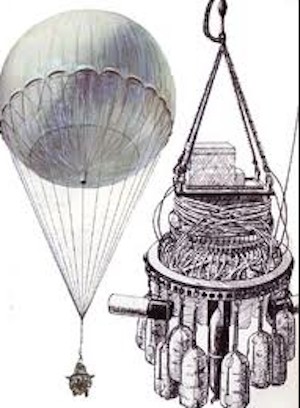
China’s balloon spying is shocking on so many levels that you can take your pick. There is the ultra-flagrant violation of foreign sovereignty, the stunningly surreal air of denial exhibited by Beijing, and the fearful sense that something in the world order just lurched. There is also puzzlement: what, balloon spying is still a thing? Indeed it is, and its centuries-long history is instructive as to what China is now doing. It also makes clear that the U.S. is no innocent victim here but rather a past offender with a cleaned-up act.
Among the first major studies of aerial reconnaissance was a book brought out by military author Glenn B. Infield way back in 1970. In a way, Infield was charting unknown territory. When he addressed balloons in particular, he traced their use in spying to the many wars associated with the French Revolutionary and Napoleonic eras. In 1794, he related, the French military officer Jean-Marie-Joseph Countelle made an ascent at the city of Maubeuge in order to monitor enemy forces in the area. In the process, Countelle became the first balloon spy.
As technology improved, other firsts followed. By the 1850s, cameras were mounted on French military balloons. In the 1860s, during the American Civil War, Union forces battling the Confederacy used balloons trailing telegraphic wires, which transmitted immediate updates from the balloonists. Yet technology cut both ways. By the early 1900s, balloons had a nemesis in sight, in the form of winged and powered aircraft.
The inevitable showdown occurred in the First World War, and it was ugly. Large numbers of observation balloons were used by all sides in the conflict, and WWI historian Denis Winter claims the Germans alone deployed 170 of them in France by 1917. Typically, such balloons were tethered in place near the frontline, floating at several thousand feet, with telephone wires dangling to the ground. Although they seemed vulnerable, they were actually protected from below by anti-aircraft units, which blasted at any enemy plane that got too close. However, the reverse was also true, with balloons themselves being fired at from the ground. By 1915, says aviation writer Ralph Barker, the British were losing at least a dozen balloons a month from all forms of enemy action. Those balloonists who were not shot to pieces often had to bail out, putting their faith in parachutes that did not always work. (Horrified onlookers called them “balloonatics.”) The fighter pilots responsible for much of this mayhem — which they called “balloon-busting” — may not have had an easy time, but some of them scored heavily, with one Frenchman named Coiffard tallying 28 balloons. Although observation balloons managed to make it to the end of the war, it was a near-run thing. According to author Linda Hervieux, nobody after the war was talking about repeating that experience in any future fighting.
[…]
Once the Second World War was underway, some propaganda leafleting did occur, but secret balloon activity seemed to be at a low level. That was very misleading, because one of the tensest moments in ballooning history was playing out in the background, but it occurred amid so much security that the entire tale took years to emerge. In 1944, Japan launched the first of over 9,000 bomb-rigged balloons across the Pacific. Robert C. Mikesh, in a comprehensive 1973 monograph issued by the Smithsonian Institution, noted that almost a thousand of the balloons may have reached North America, but the true number is unknowable, because so many came down in remote wilderness. (One was found by forestry workers in British Columbia as late as 2014.) Mikesh tabulated 285 known incidents, ranging from Alaska all the way south to Baja California and as far inland as Manitoba. Both the U.S. and Canada clamped down hard on any news about the balloons, for fear of providing Tokyo valuable feedback about the results of the campaign. (In other words, balloon counterintelligence became a priority.) In general, the balloons did not cause a lot of harm, but one of them slaughtered six people in Oregon in 1945. By a strange fluke, one of the few groups in the U.S. that knew the full story of the balloons was an element of the Black community. The all-Black 555th Parachute Infantry Battalion was sent to the U.S. West to handle emergencies caused by the balloons.
The remains of a Japanese balloon bomb found in the Monashee Mountains near Lumby, BC in 2014. It was detonated on-site by the bomb disposal unit of Maritime Forces Pacific of the Royal Canadian Navy.
There is a strong temptation to blame the Japanese balloon bombs for what happened next, because the U.S. unaccountably entered the Cold War as the most pugnacious exponent of clandestine ballooning up to that time. Whatever the explanation, the epic struggle between the United States and the Union of Soviet Socialist Republics plunged U.S. ballooning into a tangle of psychological warfare, shadowy science, under-the-table finances, and clandestine belligerence indistinguishable from military attacks. Plus, UFOs and breakfast foods were involved (seriously).

Comments Off on Spy ballooning has a remarkably long history (that’s clearly still ongoing)
QotD: Risk mitigation in pre-modern farming communities
Let’s start with the first sort of risk mitigation: reducing the risk of failure. We can actually detect a lot of these strategies by looking for deviations in farming patterns from obvious efficiency. Modern farms are built for efficiency – they typically focus on a single major crop (whatever brings the best returns for the land and market situation) because focusing on a single crop lets you maximize the value of equipment and minimize other costs. They rely on other businesses to provide everything else. Such farms tend to be geographically concentrated – all the fields together – to minimize transit time.
Subsistence farmers generally do not do this. Remember, the goal is not to maximize profit, but to avoid family destruction through starvation. If you only farm one crop (the “best” one) and you get too little rain or too much, or the temperature is wrong – that crop fails and the family starves. But if you farm several different crops, that mitigates the risk of any particular crop failing due to climate conditions, or blight (for the Romans, the standard combination seems to have been a mix of wheat, barley and beans, often with grapes or olives besides; there might also be a small garden space. Orchards might double as grazing-space for a small herd of animals, like pigs). By switching up crops like this and farming a bit of everything, the family is less profitable (and less engaged with markets, more on that in a bit), but much safer because the climate conditions that cause one crop to fail may not impact the others. A good example is actually wheat and barley – wheat is more nutritious and more valuable, but barley is more resistant to bad weather and dry-spells; if the rains don’t come, the wheat might be devastated, but the barley should make it and the family survives. On the flip side, if it rains too much, well the barley is likely to be on high-ground (because it likes the drier ground up there anyway) and so survives; that’d make for a hard year for the family, but a survivable one.
Likewise – as that example implies – our small farmers want to spread out their plots. And indeed, when you look at land-use maps of villages of subsistence farmers, what you often find is that each household farms many small plots which are geographically distributed (this is somewhat less true of the Romans, by the by). Farming, especially in the Mediterranean (but more generally as well) is very much a matter of micro-climates, especially when it comes to rainfall and moisture conditions (something that is less true on the vast flat of the American Great Plains, by the by). It is frequently the case that this side of the hill is dry while that side of the hill gets plenty of rain in a year and so on. Consequently, spreading plots out so that each family has say, a little bit of the valley, a little bit of the flat ground, a little bit of the hilly area, and so on shields each family from catastrophe is one of those micro-climates should completely fail (say, the valley floods, or the rain doesn’t fall and the hills are too dry for anything to grow).
Bret Devereaux, “Collections: Bread, How Did They Make It? Part I: Farmers!”, A collection of Unmitigated Pedantry, 2020-07-24.
Comments Off on QotD: Risk mitigation in pre-modern farming communities
February 15, 2023
Medieval French Toast
Tasting History with Max Miller
Published 14 Feb 2023
(more…)
Comments Off on Medieval French Toast
Ancient Rome’s Naked Fertility Festival (Lupercalia)
Tasting History with Max Miller
Published 8 Feb 2022
(more…)
Comments Off on Ancient Rome’s Naked Fertility Festival (Lupercalia)
QotD: The divine right of kings
England’s James I, for instance, was a deeply weird dude. Though he wrote a whole book about his divine right to rule, he kept his weirdness sufficiently in check so as not to alienate his court. Alas, his heir didn’t bother, and we know how that turned out. And so it went with just about any divine right monarch — the more people who actually saw him, the flimsier the theory seemed. History is full of examples of kingdoms “ruled” by insane kings, but not too many of kingdoms thriving when the people knew the king was a lunatic. Feebleminded monarchs are generally kept under lock and key by their courtiers, or they end up Epsteined.
Even democracies once understood this. Pick any 19th century American legislator, for example. As P.J. O’Rourke once said about rock stars, to call one of these guys a drunken, borderline-illiterate pervert just means you’ve read his autobiography. But they knew enough to keep it sufficiently in check around the voters, so that so long as they didn’t actually Chappaquiddick someone, they’d face no repercussions.
Speaking of Chappaquiddick, the Media has always been complicit in the great game of Fool-the-Rubes. They only do it for Democrats now, of course, but that’s the real problem these days: the Media has been doing all this for so long, and so successfully, that they no longer feel the need to bother. Just as Charles I decided to let his freak flag fly because hey, why not, I’m the king, so the Democrat-Media complex went all-in in 2008. You watch these guys — Don Lemon, say, mocking Trump voters as illiterate hicks — and the expression on their face is one of relief. It feels good to finally let it all out, and the more you do it, the better it feels.
Severian, “Rule by Lunatic”, Rotten Chestnuts, 2020-01-29.
Comments Off on QotD: The divine right of kings
February 14, 2023
QotD: Outrage
Julie Burchill, “The pervert community? Oh please”, Spiked!, 2019-05-08
Comments Off on QotD: Outrage
February 13, 2023
Prostitution in the Roman Empire

[Note: This is the introduction to a 95-minute lecture that can only be viewed on YouTube directly due to age restrictions. The link to the full video is here.]
seangabb
Published 13 Dec 2022This lecture is concerned with the customs and institutions of paid sex in the Roman World. The main focus is on the market for paid sex between the founding of the Empire in the last decades before the birth of Christ, down to the establishment of Christianity as the faith of the Empire, with a brief overview of the shifting views of paid sex by the authorities in the Christian Empire. It involves extensive quotation from legal and literary and other contemporary sources, plus modern research and the archaeology, to provide an overview of a subject that if often harrowing and even disgusting, but that is, or should be, a core unit in any history of the Roman World. Subjects covered include:
Sex slaves
“Free” Prostitutes
Forced prostitution
Foundlings as prostitutes
The age of consent in ancient times
The legal status of prostitutes
Violence against prostitutes
Male prostitution
Castration of male sex slaves
The price of sexual services
Brothels
Erotic art
Sexually transmitted diseases
Christianity and prostitutionThere is a full bibliography at the end of both ancient and modern sources.
Note: This lecture deals in an explicit manner with themes that are very controversial and that may give considerable offence. If you believe that you may be offended by any of the images and readings, please do not watch.
(more…)
Comments Off on Prostitution in the Roman Empire
QotD: Oaths in pre-modern cultures
Second, I should note that I’m drawing my definition of an oath from Alan Sommerstein’s excellent introduction in Horkos: The Oath in Greek Society (2007), edited by A. Sommerstein and J. Fletcher – one of the real “go-to” works on oath-taking in the ancient Mediterranean world. As I go, I’ll also use some medieval examples to hopefully convince you that the same basic principles apply to medieval oaths, especially the all-important oaths of fealty and homage.
(Pedantry note: now you may be saying, “wait, an introduction? Why use that?” As of when I last checked, there is no monograph (single author, single topic) treatment of oaths. Rather, Alan Sommerstein has co-authored a set of edited collections – Horkos (2007, with J. Fletcher), Oath and State (2013, with A. Bayliss) and Oaths and Swearing (2014, with I. Torrance). This can make Greek oaths a difficult topic to get a basic overview of, as opposed to a laundry list of the 101 ancient works you must read for examples. Discussions of Roman oaths are, if anything, even less welcoming to the beginner, because they intersect with the study of Roman law. I think the expectation has always been that the serious student of the classics would have read so many oaths in the process of learning Latin and Greek to develop a sort of instinct for the cultural institution. Nevertheless, Sommerstein’s introduction in Horkos presents my preferred definition of the structure of an oath.)
Alright – all of the quibbling out of the way: onward!
So what is an Oath? Is it the same as a Vow?
Ok, let’s start with definitions. In modern English, we often use oath and vow interchangeably, but they are not (usually) the same thing. Divine beings figure in both kinds of promises, but in different ways. In a vow, the god or gods in question are the recipients of the promise: you vow something to God (or a god). By contrast, an oath is made typically to a person and the role of the divine being in the whole affair is a bit more complex.
(Etymology digression: the word “oath” comes to us by way of Old English āþ (pronounced “ath” with a long ‘a’) and has close cousins in Dutch “Eed” and German “Eid”. The word vow comes from Latin (via Middle English, via French), from the word votum. A votum is specifically a gift to a god in exchange for some favor – the gift can be in the present tense or something promised in the future. By contrast, the Latin word for oath is ius (it has a few meanings) and to swear an oath is the verb iuro (thus the legal phrase “ius iurandum” – literally “the oath to be sworn”). This Latin distinction is preserved into the English usage, where “vow” retains its Latin meaning, and the word “oath” usurps the place of Latin ius (along with other words for specific kinds of oaths in Latin, e.g. sacramentum)).
In a vow, the participant promises something – either in the present or the future – to a god, typically in exchange for something. This is why we talk of an oath of fealty or homage (promises made to a human), but a monk’s vows. When a monk promises obedience, chastity and poverty, he is offering these things to God in exchange for grace, rather than to any mortal person. Those vows are not to the community (though it may be present), but to God (e.g. Benedict in his Rule notes that the vow “is done in the presence of God and his saints to impress on the novice that if he ever acts otherwise, he will surely be condemned by the one he mocks“. (RB 58.18)). Note that a physical thing given in a vow is called a votive (from that Latin root).
(More digressions: Why do we say “marriage vows” in English? Isn’t this a promise to another human being? I suspect this usage – functionally a “frozen” phrase – derives from the assumption that the vows are, in fact, not a promise to your better half, but to God to maintain. After all, the Latin Church held – and the Catholic Church still holds – that a marriage cannot be dissolved by the consent of both parties (unlike oaths, from which a person may be released with the consent of the recipient). The act of divine ratification makes God a party to the marriage, and thus the promise is to him. Thus a vow, and not an oath.)
So again, a vow is a promise to a divinity or other higher power (you can make vows to heroes and saints, for instance), whereas an oath is a promise to another human, which is somehow enforced, witnessed or guaranteed by that higher power.
An example of this important distinction being handled in a very awkward manner is the “oath” of the Night’s Watch in Game of Thrones (delivered in S1E7, but taken, short a few words, verbatim from the books). The recruits call out to … someone … (they never name who, which as we’ll see, is a problem) to “hear my words and bear witness to my vow”. Except it’s not clear to me that this is a vow, so much as an oath. The supernatural being you are vowing something to does not bear witness because they are the primary participant – they don’t witness the gift, they receive it.
I strongly suspect that Martin is riffing off of here are the religious military orders of the Middle Ages (who did frequently take vows), but if this is a vow, it raises serious questions. It is absolutely possible to vow a certain future behavior – to essentially make yourself the gift – but who are they vowing to? The tree? It may well be “the Old Gods” who are supposed to be both nameless and numerous (this is, forgive me, not how ancient paganism worked – am I going to have to write that post too?) and who witness things (such as the Pact, itself definitely an oath, through the trees), but if so, surely you would want to specify that. Societies that do votives – especially when there are many gods – are often quite concerned that gifts might go awry. You want to be very specific as to who, exactly, you are vowing something to.
This is all the more important given that (as in the books) the Night’s Watch oath may be sworn in a sept as well as to a Weirwood tree. It wouldn’t do to vow yourself to the wrong gods! More importantly, the interchangeability of the gods in question points very strongly to this being an oath. Gods tend to be very particular about the votives they will receive; one can imagine saying “swear by whatever gods you have here” but not “vow yourself to whatever gods you have here”. Who is to say the local gods take such gifts?
Moreover, while they pledge their lives, they aren’t receiving anything in return. Here I think the problem may be that we are so used to the theologically obvious request of Christian vows (salvation and the life after death) that it doesn’t occur to us that you would need to specify what you get for a vow. But the Old Gods don’t seem to be in a position to offer salvation. Votives to gods in polytheistic systems almost always follow the do ut des system (lit. “I give, that you might give”). Things are not offered just for the heck of it – something is sought in return. And if you want that thing, you need to say it. Jupiter is not going to try to figure it out on his own. If you are asking the Old Gods to protect you, or the wall, or mankind, you need to ask.
(Pliny the Elder puts it neatly declaring, “of course, either to sacrifice without prayer or to consult the gods without sacrifice is useless” (Nat. Hist. 28.3). Prayer here (Latin: precatio) really means “asking for something” – as in the sense of “I pray thee (or ‘prithee’) tell me what happened?” And to be clear, the connection of Christian religious practice to the do ut des formula of pre-Christian paganism is a complex theological question better addressed to a theologian or church historian.)
The scene makes more sense as an oath – the oath-takers are swearing to the rest of the Night’s Watch to keep these promises, with the Weirwood Trees (and through them, the Old Gods – although again, they should specify) acting as witnesses. As a vow, too much is up in the air and the idea that a military order would permit its members to vow themselves to this or that god at random is nonsense. For a vow, the recipient – the god – is paramount.
Bret Devereaux, “Collections: Oaths! How do they Work?”, A Collection of Unmitigated Pedantry, 2019-06-28.
Comments Off on QotD: Oaths in pre-modern cultures
February 12, 2023
German Desperation in Korsun Pocket – Week 233 – February 11, 1944
World War Two
Published 11 Feb 2023It is crisis mode in the Korsun Pocket this week for the Axis troops surrounded, but they are also losing ground all over the Eastern Front this week, including the big prize of Nikopol. In Italy, it is a different story as the Germans play offense at Anzio, though with only small gains.
(more…)
Comments Off on German Desperation in Korsun Pocket – Week 233 – February 11, 1944
Avro Vulcan: What made the Vulcan the best V bomber?
Imperial War Museums
Published 28 Apr 2021The Avro Vulcan Bomber, the most famous of the British V bombers, is known for its distinctive howl and delta wing. Initially one of the delivery agents of Britain’s independent nuclear deterrent during the Cold War, the Vulcan later fulfilled another role, undertaking the longest bombing raid in history for Operation Black Buck in the Falklands Campaign of 1982. One of the first operational RAF aircraft with a delta wing, this impressive Cold War jet has never lost its appeal. In this video, events and experiences coordinator Liam Shaw takes us through the extraordinary history and technological achievements of the Avro Vulcan. We go into the cockpit and hear first-hand from the people who flew this unique machine throughout its long and remarkable history.
(more…)
Comments Off on Avro Vulcan: What made the Vulcan the best V bomber?
QotD: The heyday of Victorian newspapers
Now, the principal quality or characteristic of the sellers of patent medicine has always been effrontery, that is to say the blatant insinuation of the false. Thomas Holloway’s innovation was to insinuate such falsehood on a mass or industrial scale. There was hardly a newspaper in which he did not place a weekly advertisement; moreover, he pioneered the advertisement that masquerades as news story. He would ensure that reports of miracle cures in faraway places, supposedly wrought by his pills and ointment, and written as matter-of-factly as possible, were placed in every newspaper, reports whose veracity no one could possibly check for himself, of course.
As Napoleon once said, repetition is the only rhetorical technique that really works — besides which hope and fear render people susceptible to effrontery. In Thomas Holloway’s time, the fear of illness was often, and the hope of cure rarely, justified; at least Holloway’s preparations were unlikely to do much harm (they contained aloe, myrrh, and saffron), unlike the prescriptions of the orthodox doctors of the time. They allowed for the possibility of natural recovery, whereas orthodox medicine often hurried its consumers into their graves. Nevertheless, the claims Holloway made for his ointment and pills were preposterous, and something is not curative just because it fails to kill.
Holloway made an immense fortune by his effrontery and founded a women’s college in the University of London on the proceeds.
Theodore Dalrymple, “The Way of Che”, Taki’s Magazine, 2017-10-28.
Comments Off on QotD: The heyday of Victorian newspapers
February 11, 2023
Americans tend to think other countries are just like America, but with weird accents and quaint clothing
Sarah Hoyt on the common problem Americans (and to a lesser extent, Canadians) have in trying to understand other nations even if they’ve done some international travel:
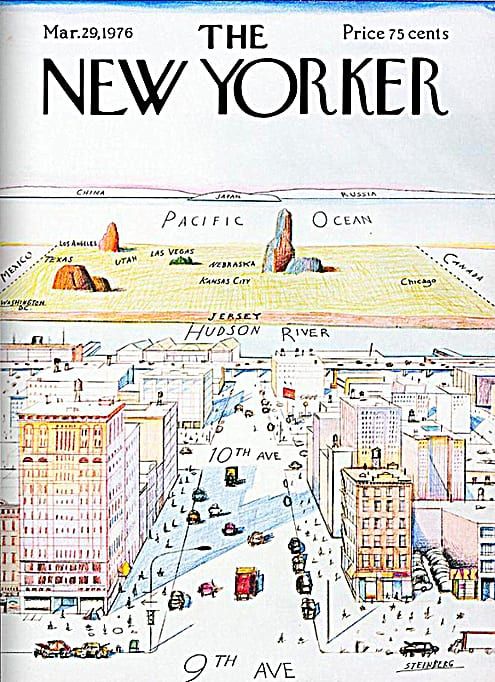
I also see every country, regardless of their history making the assumption that the modus operandi and motives of other cultures and organizations is exactly the same as theirs. I’ve now mentioned about a million times the idiots who went over as Human Shields to Iraq because “they can’t even provide drinking water for their people, how would they have missiles” thereby completely missing the fact that other countries — dictatorships at that — have different priorities than say the US or England, even. In the same way, Portugal assumes that every country is as fraught as corruption as they are. Which works fine for other Latin countries, but fails them when it comes to other places, because as corrupt as we are … yeah. It’s nowhere near there yet. Russia assumes everyone moves, breathes and thinks only about them, and that everyone’s intention is to threaten them or conquer them, because they are obsessed with their dreams of national glory, and they think they should rule the world. And the US by and large goes around like a large vaguely autistic child who really, really, really doesn’t understand how different it is from other nations, or if it does assumes it’s worse.
Look, it’s part of the reason our intelligence services are so sucky. To completely understand what other countries are doing and why, you have to know they have very different cultures. They’re not you. Most countries can sort of extrapolate other countries, but America is so different we suck at it. This is why we tend to think places like the USSR (Russia’s party mask) were totes super powers. Because for America to do and say the things they did and said, we’d have to be very sure of our power. But other countries aren’t America. So we go through the world acting like gullible giants.
In fact Americans have one of the weirder cultures in the world. It’s just not in your face weird as China (whose history reads like they should be extra-terrestrials.) It’s subtle and more in the mental furniture.
Because of this, and because we’re a continent-sized nation, born and bred Americans (as opposed to imports like me) read not just the rest of the world but history hilariously wrong. (The history part is because at least when I went through school here — one year — American schools suck at teaching history. It’s all names and dates, not “Why did France do that?” Yeah, probably not worse than the rest of the world, now that all the books have just-so Marxist explanations, but still stupid.)
I had friends in my writers’ group back when who were writing, say, ancient Egyptian families and couldn’t understand in most of them the teens wouldn’t be/act the same as American teens now. Heck, my dad’s generation in Portugal, less than 100 years ago weren’t “teens” really. Their equivalent was under ten. Because by 12 most of the boys in the village were apprenticed in the job they’d have for life. (And dad was in school, yes, but it was way tougher than even I had.) They didn’t have time. And even I — and you guys know my basic disposition — didn’t sass my parents as American teens do, because there was a deep “fund” of “respect the elders” in the culture. I still have trouble calling people older than I — even colleagues — by their first name.
And then there’s the hilarious — or sad — misunderstandings like the Human Shields mentioned above. It’s sad, because they will buy other countries at face value, but are willing to entertain their own country might be evil. Which is why we have a large contingent of open-mouth guppies who think that the US invented slavery. Even though places around the world still have slavery. Including China, where everyone is a slave, it’s the degree that varies, of course.
The problem is made worse — not better — by idiotic travel abroad.
To understand the differences in a country, you need to live with them, as one of them, for a while. You need to speak the language well enough you understand overheard conversations. Etc.
My experience coming over as an exchange student for 12th grade was about ideal. I lived with an American family, as one of their kids, and attended a school nowhere USA (okay, a suburb of Akron, Ohio) and yeah, I had slight celebrity status in the school — being one of three foreign exchange students — but not that much. So I got to experience the normal life of normal people in normal circumstances, which was an eye-opener.
I always wanted my kids to follow me in this experience, but you know, things got complicated around the time they were of age to do it. So they didn’t. They still have experienced life as an every day foreigner when we visit my parents. In fact the issue there is that they never get past the irritation “What do you mean we can’t do that” and towards “oh, it’s just different. Still sucky, but different.”
Going over for two weeks, with or without the guided tour, staying in nice hotels and associating only with people at your social level and not past the level of polite interaction does not enlarge the mind. Instead, it gives a false sense of knowing what the world is like. This is where we get the “socialists” who know it’s good, because look at all the magnificent buildings in Europe, and the fact everyone has time to sit in the coffee shop and socialize with friends. And look at all the amazing public transportation. And and and. If you lived there, or knew history, you’d know most of the buildings created by socialists in the 20th and 21st century are already crumbling. (Some start before being finished.) You’d know people sit around in coffee shops either because they are unemployed, they pretend to work and their boss pretends to pay them, or all of the above. And all of it is paid for in a significant reduction in lifestyle and just the general comfort of life. (Take it from me. Their lifestyle is two social economic levels down from us, for the same relative “income level.” So, you know, upper class is middle-middle class here.) And you’d know the frustration of waiting for the bus on a rainy, windy day, getting soaked, but the bus is late because all the bus drivers went out for a pint together. And suddenly there’s five of them in a row, but you’re already soaked and starting to cough. More importantly you’d know the public transport only works because everyone works in the city and lives in crowded suburbs, in stack-a-prole apartments, while the countryside is relatively empty. And the people who live there need to buy gas at ridiculous prices, so they can barely afford it.
Comments Off on Americans tend to think other countries are just like America, but with weird accents and quaint clothing
Napoleon’s Downfall: Why He Lost the Battle of Nations
Real Time History
Published 10 Feb 2023After the brief summer 1813 cease fire, Napoleon’s campaign in Germany resumes. Surrounded by the Allies — which also manage to slowly turn the tide at Großbeeren, Dennewitz, Kulm, and Dresden — his only remaining option is the ultimate battle which takes place in October 1813 at Leipzig: The Battle of Nations.
(more…)
Comments Off on Napoleon’s Downfall: Why He Lost the Battle of Nations


