
Epic History TV
Published Jun 21, 2019Six weeks after his bloody repulse at the Battle of Aspern-Essling, Napoleon led his reinforced army back across the Danube. The resulting clash with Archduke Charles’s Austrian army was the biggest and bloodiest battle yet seen in European history, and despite heavy French losses, resulted in a decisive strategic victory for the French Emperor.
(more…)
February 10, 2024
Napoleon’s Revenge: Wagram 1809
Comments Off on Napoleon’s Revenge: Wagram 1809
QotD: When Manchuria became Manchukuo
Back around the turn of the 20th century, the Russians decided to build a railroad across Siberia, the better to (among other things) supply their spiffy new naval base at Port Arthur, on the strategic Liaodong Peninsula (linking up with their Chinese Eastern Railway). This pissed off the Japanese, who claimed the Peninsula by right of conquest in the First Sino-Japanese War. Unpleasantness ensued.
Further unpleasantness ensued in the wake of World War I, when both Imperial Russia and Republican China collapsed. The Japanese had a big railroad project of their own going in the Kwantung Leased Territory, which was threatened by the chaos. Moreover, the big Japanese railroad project had grown — as Japanese industrial concerns tend to do — into a ginormous, all-encompassing combine known as Mantetsu.
So far, so recondite, I suppose, but stop me if this part sounds familiar: Mantetsu was so big, and so shady, that it was all but impossible to tell where “the guys running Mantetsu” ended and “the Japanese government” began. And it gets better: Thanks to the Japanese Empire’s distinctive (to put it mildly, and kindly) administrative structure, it was equally hard to tell where “the Japanese government” ended and “the Japanese military” began. Even better — by which I mean much, much worse, but again feel free to stop me when this sounds familiar — “the Japanese military” was itself composed of several wildly different, mutually hostile chains of command, all competing with each other for political power, economic access, and glory. Best of all — by which, again, I mean worst — since Mantetsu was so big, and so wired-in to every level of the Japanese government, it basically got its own army, which was effectively separate even from the Army High Command back in Tokyo.
Here again, the granular details are insanely complex, and I’m not qualified to walk you through them, but the upshot is: Thanks to all of the above, plus the active enmity of the rapidly-rearming Soviet Union and the rapidly-accelerating chaos of the Warlord Period in China, Japan’s foreign policy ended up being dictated by the Kwantung Army, with almost no reference to even the High Command, let alone the civilian politicians, back in Tokyo. A particular warlord giving the Mantetsu Board of Directors — or, you know, whoever — grief? No problem — boom! Oh, that didn’t solve the problem, and now the politicians are dragging their feet? Might as well blow up a different part of your own railway, seize a whole bunch of territory on that flimsy pretext, and set up a puppet government to give you cover …
I don’t expect y’all to follow all the links right away, so trust me on this: Nobody involved in any of that stuff ranked higher than colonel. Indeed, the guy most “responsible” — if that’s really the word — for all of this stuff was a staff pogue, also a colonel, named Kanji Ishiwara. He and another staff pogue, Seishiro Itagaki, who was head of the Kwantung Army’s intelligence section, orchestrated the Japanese invasion of China, and while it’s oversimplifying things a bit too much to say those two clowns started World War II in the Pacific, I’m not stopping you from saying it.
From there, events took on a logic of their own. The rest of the Army was soon committed to the war in North China, which rapidly became the war in all the rest of China. The Navy, not wanting to let the Army hog all the glory, had gotten in on the war a few years prior to the Marco Polo Bridge, and soon enough they were causing all kinds of international grief on their own account. Put simply, but not unfairly, you had the Navy chasing the Army, and the Army chasing itself, all across China, with the civilian politicians lagging way behind in the rear, desperately trying to catch up, or even just figure out what the hell was going on …
Severian, “Lessons from Manchuria”, Rotten Chestnuts, 2021-04-21.
Comments Off on QotD: When Manchuria became Manchukuo
February 9, 2024
Rome: Part 2 – Consolidation of the Republic
seangabb
Published Feb 8, 2024This course provides an exploration of Rome’s formative years, its rise to power in the Mediterranean, and the exceptional challenges it faced during the wars with Carthage.
Lecture 2: Consolidation of the Republic
• The Roman Revolution against the Kings
• How Brutus put his own sons to death
• How Horatius kept the Bridge
• Scaevola and Lars Porsena
• The Roman Constitution: an Overview
(more…)
Comments Off on Rome: Part 2 – Consolidation of the Republic
The (so-far limited) ability to read the Herculaneum Papyri may vastly increase our knowledge about the Roman world
Colby Cosh on the achievement of the three young researchers who were awarded the Vesuvius Challenge prize earlier this month, and what it might mean for classicists and other academics:
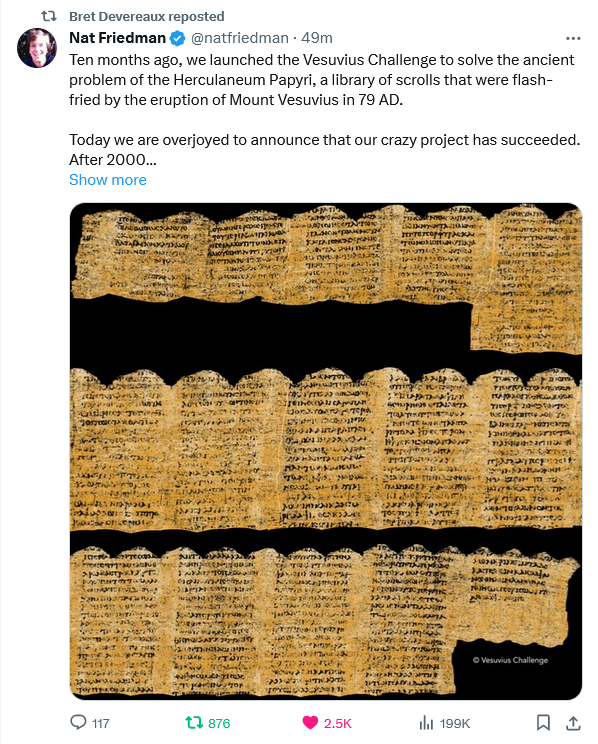
On Monday morning, Farritor and two other young Vesuvius Challenge notables, Youssef Nader and Julian Schillinger, were announced as winners of the grand prize. Nader and Schillinger had, like Farritor, already won Vesuvius Challenge prizes for smaller technical discoveries, and Nader had in fact been a mere heartbeat behind Farritor in producing the same “porphyras” from the same scan. After Farritor nabbed his US$40,000 “first letters” prize, the three decided to combine their efforts to net the big fish.
The result is a text that represents about five per cent of one of the thousands of scrolls recovered — and there may be more not yet recovered — from the Villa of the Papyri. The enormous villa was owned by an unknown Roman notable, but there are clues that one of its librarians was the Epicurean philosopher Philodemus of Gadara, who lived from around 110 to 35 BC. Until his identity was connected with the library, Philodemus did not receive too much attention even from classicists. But the Vesuvius Challenge efforts have now yielded fragments of what has to be an Epicurean text — one which discusses the delights of music and food, and condemns an unnamed adversary, possibly a Stoic, for failing to give a philosophical account of sensual pleasure.
The recovery of dozens more of the works of Philodemus would be — one might now say “will be” — a world-changing event for the classics. We know Philodemus was close to Calpurnius Piso (101-43 BC), the father-in-law of Julius Caesar and a likely owner of the doomed villa. He almost certainly had a front-row seat for the prelude to the end of the Roman Republic. We know he wrote works on religion, on natural philosophy and on history: even his thoughts on music and poetry would be of marked interest.
But nobody knows what else, what copies of older works, may be lurking in Philodemus’s library. At this moment antiquarians know the titles of dozens of lost plays by Aeschylus and Sophocles and Euripides and Aristophanes; we are missing major works of Aristotle and Euclid and Archimedes and Eratosthenes. We know that Sulla wrote his memoirs and that Cato the Elder wrote a seven-book history of Rome. Any of these old writings, or others of equal significance, may materialize suddenly out of oblivion now, thanks to the Vesuvius Challenge. It’s an impressive triumph for the idea of prize-giving as an approach to solving scientific problems, and the news release from the challenge offers a discussion of what the funding team got right and where the project will go next.
Comments Off on The (so-far limited) ability to read the Herculaneum Papyri may vastly increase our knowledge about the Roman world
His Year: Julius Caesar (59 BC)
Historia Civilis
Published Jul 5, 2016
(more…)
Comments Off on His Year: Julius Caesar (59 BC)
QotD: “Five, Four, Three, Two, One. Thunderbirds Are Go!”
Although there had been earlier offerings from the same stable, such as Supercar, Fireball XL5 and Stingray, and others which followed, it was Thunderbirds that gripped my generation and has never really let go. Set in the future, the genre devised by Gerry Anderson focused on the heroic exploits of secret but benevolent organisations operating from remote or hidden bases on land, in the sky or on the moon. Equipped with advanced technology, their missions were to protect civilisation from aggression, accident and sabotage, countering devious, often extra-terrestrial opponents. It was his brother’s service in the RAF that gave Anderson a life-long fascination with flying machines. Thunderbird Field at Glendale, Arizona, where his older brother learned to fly, provided a name for the series.
In his future worlds, planet Earth is generally united under a world president, in contrast to the traumas of the recently passed world war. Each programme featured life-like puppets, filmed in what Anderson dubbed “Supermarionation”. They were tributes to his brother. It was on 27 April 1944 that these future television series were really born. Flight Sergeant Lionel Anderson never got to pilot Stingray or Thunderbird One, or fly an Interceptor from Cloudbase, for during the early hours of that April Thursday, his twin-engined Mosquito was hit by flak on a night intruder raid and crashed near Deelen in Holland. Now he and his navigator, Sergeant Bert Hayward, lie in the corner of a cemetery in Arnhem, “Mourned by his devoted parents and brother Gerald”, as the Commonwealth War Grave headstone reads.
The war traumatised Gerry Anderson, whose Jewish grandparents had fled pogroms on the Polish–Russian frontier. He would complete his own national service in the RAF and experienced two more dramatic flying events. In 1948, he saw a Mosquito — his brother’s aircraft type — crash during an air display, killing many bystanders. Later a Spitfire came in to land without its undercarriage lowered. The helplessness he felt, and need for some divine intervention, such as that provided by the World Aquanaut Security Patrol (Stingray), International Rescue (Thunderbirds), Spectrum (Captain Scarlet) or Supreme Headquarters Alien Defence Organisation (UFO), provided more seeds for the future series, where the world was united and fought external foes. In German, the last was screened as Weltraumkommando SHADO, but the concept precisely echoed the UNIT organisation of Doctor Who.
Throughout the 1950s and 1960s we were promised robots, space travel, lunar colonies and travel to Mars. Films, television series, science fiction short stories and magazines guaranteed it to the point of entitlement. Airfix plastic model kits, cardboard cut-outs on cereal packets, Matchbox, Corgi and Dinky diecast toys reinforced this expectation, underwritten by the real, manned Mercury missions of 1961–63, Gemini space launches of 1965–66 and Apollo craft of 1968–72. Gerry Anderson’s vision (shared by the American script writers of Star Trek, which debuted exactly a year after Thunderbirds on 8 September 1966) of a world government did not seem absurd to the young minds of 1965. It is partly the innocence of those years which touches us today. I, for one, still feel short-changed.
Peter Caddick-Adams, “Broadcasting anniversaries”, The Critic, 2023-11-04.
Comments Off on QotD: “Five, Four, Three, Two, One. Thunderbirds Are Go!”
February 8, 2024
“Mwa-mwa-mwa”, they said
Chris Bray expands on the topic of yesterday’s post about the legacy media wanting you not to do your own research because it might lead to the “wrong” kind of answers:
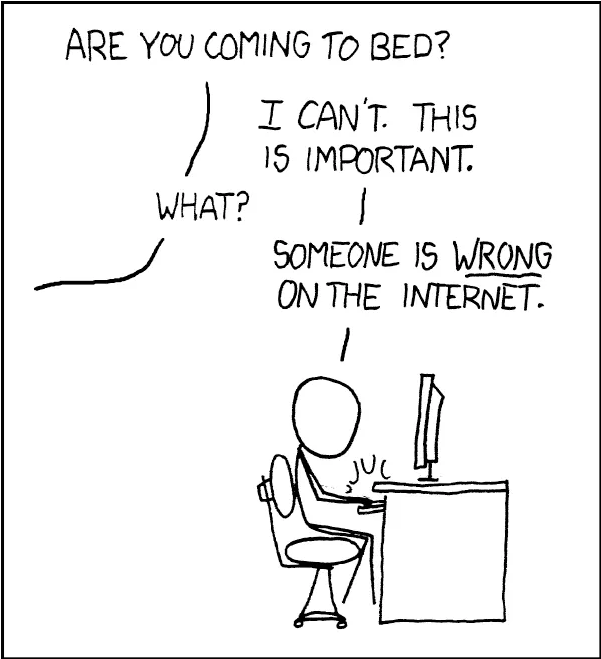
I’m a hundred pages into a book I’ve been meaning to read for years, and I meant to spend last night reading it. But then I accidentally looked at social media.
For years, now, I’ve been watching as journalists and politicians connect a set of fact claims to a conclusion that has nothing to do with the evidence they’ve just given: This happened, and this happened, and this happened, and, trust us, all of that means this. It snaps your head back, because the statement about the meaning of the evidence is so ridiculous they can’t possibly have failed to notice. The news is frequently a series of bizarre interpretive non-sequiturs.
I wrote about a favorite example here, as an army of Barack Obama hagiographers described The Lightbringer’s glorious childhood in Indonesia. He went there with his mother and Indonesian stepfather in 1966, during a massive purge of communists by the army that included a great deal of mass killing, and Obama’s biographers describe the future American president being a young child in a place where rivers were choked with corpses and soldiers marched prisoners through the streets. Then, casually, they conclude that his time in Indonesia was idyllic and warm, and Jakarta was the place where this wonderfully decent future leader learned the gentle values of civic engagement and democratic pluralism.
See also this example, from back in the days when I didn’t have many subscribers, discussing an op-ed piece that described the Freedom Convoy as a movement of anti-government radicals who wanted to live in a society with no rules at all and marched on Ottawa behind the banner of authoritarianism to implement their fascist agenda.
Over and over again, reading the “news” that these people write, you catch yourself muttering but you JUST SAID …
Fact claims don’t add up, categories clash, paragraphs self-refute, sentences start out insistently claiming X and then wander into a firm insistence upon Not X before the period arrives at the end. The great complex of global news and politics has the internal consistency and logic of the day ward at a mental hospital.
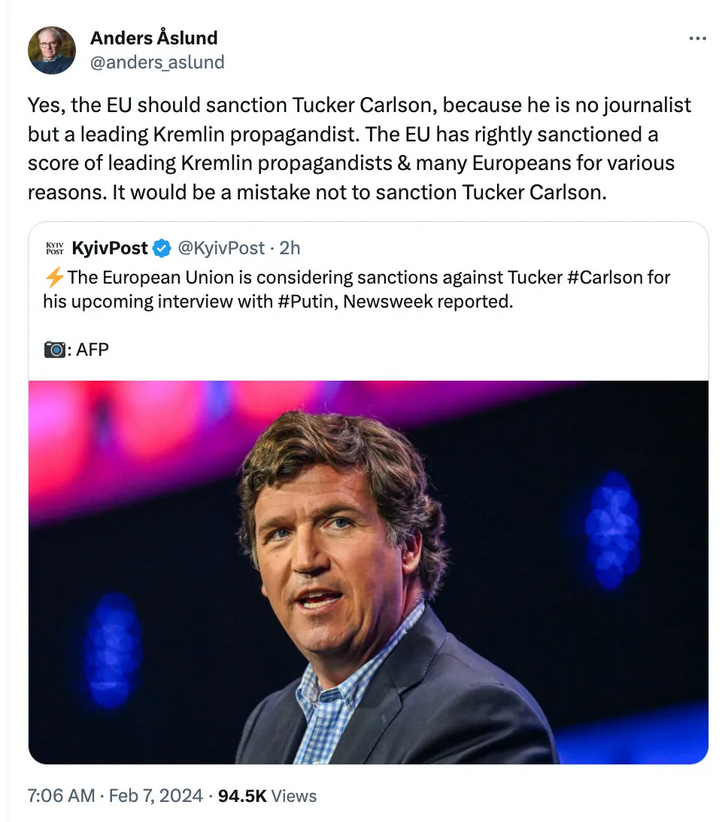
Last night we seem to have suddenly turned the knob on that machine up to eleven, BECAUSE HITLER IS IN MOSCOW TO DO AN INTERVIEW. The people who are proud that we’re fighting authoritarianism by arresting the leading figure of the political opposition and throwing him off the ballot are also very angry that Tucker Carlson is interviewing an autocrat, and they hate autocracy, so Tucker Carlson must be arrested and bankrupted and barred from returning to the United States, to stand up to authoritarianism. I had a moment last night when I sincerely wondered about the wisdom of paying attention, because the experience of hearing from The Responsible People™ became painfully hallucinatory.
The officials at the EU get to decide who counts as a real journalist and who gets ruined, to protect democracy. Ukraine is the brave and incorruptible vanguard of ideal democracy, by the way, and so pure it floats, like an ad for soap. Nothing bad has ever happened there, you Nazi, but now Satan Putin’s vampire fangs drip with innocent blood, and there’s absolutely nothing else to say about it, send cash.
Watching people like Bill Kristol and David Frum comment on real-world events now is like watching a homeless drug addict having a psychotic break at a bus shelter. The connection between fact and interpretation has become painfully severed. A whole layer of allegedly high-status people have gone barking mad. We need to arrest everyone who disagrees with us about politics or else we’re going to lose our system of open society to authoritarianism, and you really ought to smoke some of whatever we have inside this glass pipe.
Comments Off on “Mwa-mwa-mwa”, they said
The lead-up to the Russo-Ukrainian War
At Founding Questions, “El Barbudo” has a guest-post on the situation in Ukraine, including a lot of background to the outbreak of full-scale combat with Russia’s “Special Military Operation” strike that was intended to decapitate the Ukrainian government and capture Kyiv in February, 2022:
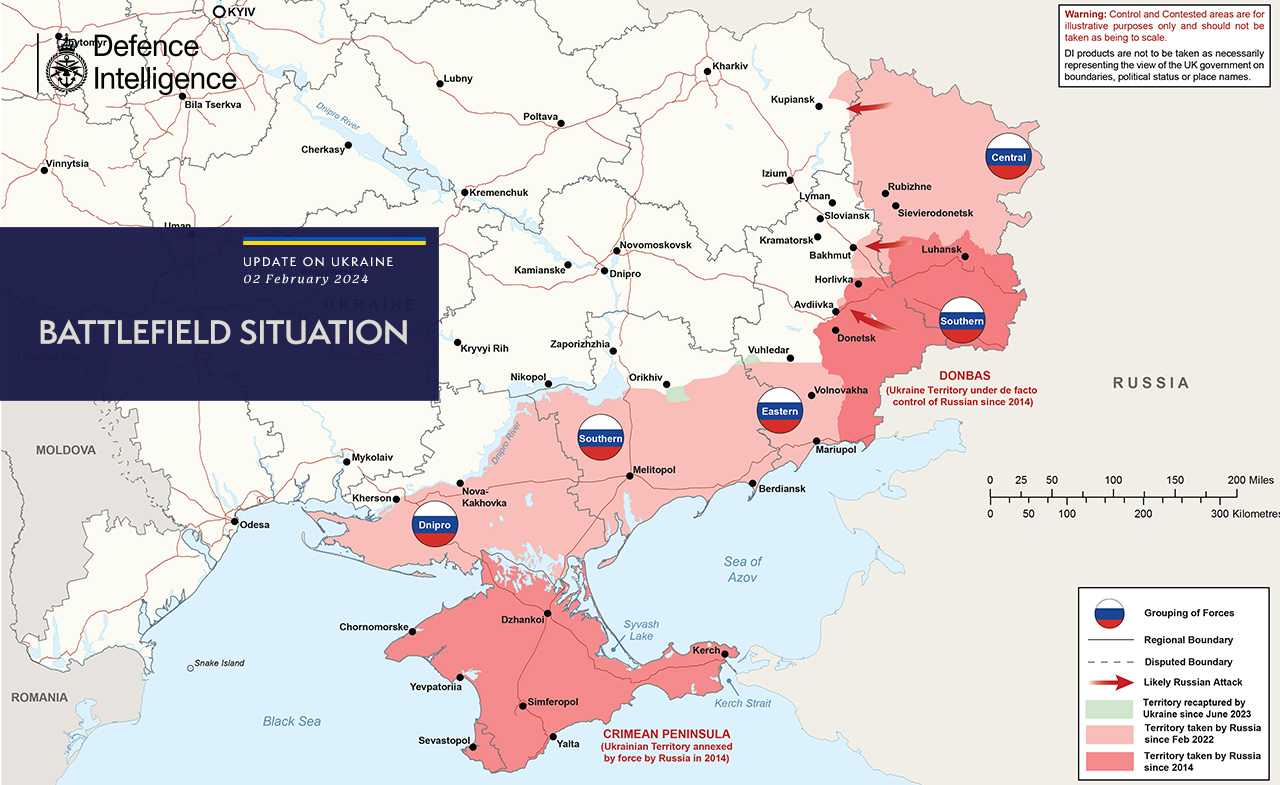
Britain’s Ministry of Defence regularly posts these situation maps through their Twit-, er, I mean “X” account. This is the most recent one from 2024-02-02.
One framing point: the Russians are fighting a conventional, industrial war, for real-world (economic, territorial and national-security) objectives. The Ukrainians are fighting a proxy information war — large-scale armed propaganda, if you will — where the primary purpose of battlefield action is to feed political-warfare objectives, and thereby maintain western support. Seen from Kyiv, the centre of gravity (the thing from which Ukraine draws its strength and freedom of action) is western support — making narrative (as seen from the west) central, while the media is enlisted as a conduit for narrative warfare. Hence, through a western media lens, what you’re seeing is carefully curated to influence rather than inform. (Nothing new here — I defer to the historians, but I think Paul Fussell made this point about World War Two. Ask yourself when was the last time you saw a dead Ukrainian soldier, intact or otherwise.)
What that means is that battlefield defeats can be managed, as long as the narrative — the core of the war, as western sponsors see it and as the Ukrainians therefore are forced to see it — can be maintained. What’s causing the current crisis is not so much the death, destruction or loss of territory (though those are real). It’s that the mismatch between rhetoric and reality has finally reached the point that people are noticing.
[…]
Ukraine has been at war with Russia in some fashion since 2013, with violence first spiking into the open in February 2014. The Ukrainians call the 2014-2022 period the Anti-Terrorist Operation (ATO) but it involved fairly heavy fighting — against Russian-backed separatist militias in the east, and internal to Ukraine among various factions including, yes, the Banderite nationalists (“neo-Nazis”) beloved of Russian media and Canadian parliamentarians alike, though they’re less prominent now (mainly because a lot of them are dead).
We should also note how this arose — first Russia and the U.S. forcing Ukraine to give up its nukes in 1994, then NATO expansion after Bosnia, and (publicly acknowledged) US interference in Russia’s 1996 election to ensure Boris Yeltsin got re-elected, creating a sense of threat in Moscow. Then Kosovo 1999, Bush and Putin’s failed attempt to make nice after 9/11, Estonia, Georgia, the Reset Button of 2009 and betrayal over Libya in 2011. (Hillary promised no ground troops or regime change, persuading then-president Dmitry Medvedev to abstain on the UN Security Council Resolution that authorised the intervention, only to renege on all counts then laugh on live TV when she found out Gaddafi had just been sodomised to death with a bayonet).
All of which infuriated the Kremlin, and confirmed the West was not “agreement-capable” (they have euphemisms in Moscow too) leading them to intervene in Syria to support the Assad regime. Then came the Ghouta gas attack of September 2013 — in which Obama failed to enforce his own Red Line, and John Kerry had to beg Sergey Lavrov (Russian foreign minister) to save us from the consequences of our own weakness … which convinced Russian leaders we were not only threatening and untrustworthy, but also weak. More great work there.
Russia’s seizure of Crimea followed, four months after the red-line debacle. It was clearly a result of Russian hatred and contempt. (Oderint dum metuant — the hatred was long-standing; what was new was the realisation, after Ghouta, that they had nothing to fear). Crimea was also a reaction to a US-backed revolution in Ukraine (Euromaidan), and the operation’s popularity should have made it clear that Ukraine is seen by Russians, of all political orientations, as integral to their identity, along with Belarus. No Russian politician could tolerate western advisers or weapons in Ukraine … which was the policy pursued after 2014. (There’s a chicken-and-egg security dilemma here. The west was reacting to perceived aggression from Russia, which was reacting to perceived western aggression. Both sides saw themselves as innocently defensive, and the other as aggressive.) [NR: Emphasis mine.]
Putin, by Russian standards, is a relative moderate on Ukraine — he frequently gets panned by war bloggers, retired generals and divers chickenhawks for being soft on the west, not prosecuting the war hard enough. If the neocons got their way and he was regime-changed, his replacement would likely be far worse for their interests — someone like, say, Nikolai Patrushev. Putin gets painted as Hitler in the media, but this is an artefact of the Alinskyite approach American political/media players take to any conflict: first freeze the target (no negotiation is possible) then personalise the enemy via an individual leader (Bin Laden, Mullah Omar, Saddam, Gaddafi, Kim etc), then paint that leader as irrational and evil (without limits, restraints or goals except to be evil). From that point, it’s good versus evil, any means necessary, war as moral imperative. Putin is the latest foreigner to get this treatment, Trump the latest domestic equivalent. Trump’s greatest foreign policy crime, in fact, may have been his willingness to treat Putin, Kim, Xi, MBS etc. as rational actors worthy of respect (for Trump values of “respect”) rather than moral pariahs. This has hilarious consequences when people previously given the pariah treatment (Maduro, MBS, the Taliban) need to be rehabilitated via creative retconning so the narrative can keep rolling.
Anyway, from 2014 to 2022 the war was pretty static, with a few bigger battles (Debaltsevo the main one), artillery exchanges and trench warfare: a foreshadowing of how things are today, though without the massive tech acceleration we’ve seen since February 2022, and far fewer casualties.
Trump’s people have suggested Putin was frightened of him, which is why Russia didn’t invade during Trump’s term. There may be some truth to that (Trump after all reversed Obama’s prohibition on lethal aid) but it’s more likely the Russians just saw Trump as dangerously unpredictable, a decision-maker who never fully controlled his own government, especially on Ukraine (see Impeachment #1). The Russian way of war involves predicting an adversary’s reaction to provocation, then doing just enough, ambiguously enough, to achieve a fait accompli without triggering a response. This goes back to Trotsky and Tukhachevsky in the 1920s, but when your adversary is Trump, it becomes impossible to predict the trigger or the reaction if you piss him off. (Qasim Soleimani says hi). There was also one particular battle in Syria in February 2018 where US SOF killed some large number of Wagner guys by refusing to play their little games, and when the Russians complained Trump basically said it served them right.
Once Trump was gone — with Washington in disarray after January 6th — the Russians sensed an opportunity, and began building up around the Ukrainian border from April 2021. Then in August, when we covered ourselves in glory during the Great Kabul Pants-Shitting, the Russians probably thought they had the measure of Biden — who they knew of old — and decided we were so flaccid they’d get away with a lightning move against Kyiv, “Crimea 2014 on steroids”. (PS: when neocons start overtly asserting, in their in-house journal, that “the Afghan withdrawal did not trigger the Ukraine invasion” you know it’s true — even if the Russians hadn’t already said as much, in as many words.)
So, the Russians tried Crimea on Steroids in February 2022 — and their plan failed by breakfast on D Day, triggering the protracted war of attrition we have now. The reasons were partly bad luck for the leading Russian air-assault units attempting to seize the airfield at Hostomel outside Kyiv, partly good initiative by U.S. and U.K. trained Ukrainian SOF and territorial defence guys, partly over-compartmentalisation on the Russian side — key players were kept out of the loop for OPSEC reasons, and the invasion was mostly planned by political hacks with limited military understanding. (Why should we have the monopoly on that?) This video is a decent open-source account of that happened.
Comments Off on The lead-up to the Russo-Ukrainian War
Beretta 1915: The first of the Beretta pistols
Forgotten Weapons
Published Jun 22, 2016The Italian military went into WWI having already adopted a semiautomatic sidearm — the Model 1910 Glisenti (and its somewhat simplified Brixia cousin). However, the 1910 Glisenti was a very complex design, and much too expensive to be practical for the needs of the global cataclysm that was the Great War. In response to a need for something cheaper, Tulio Marengoni of the Beretta company designed the Model 1915, a simple blowback handgun chambered for the 9mm Glisenti cartridge.
Only 15,300 of the Model 1915 pistol were made, because even they proved to be a bit more than the military really needed. One of their most interesting mechanical features is a pair of manual safeties — one on the back of the frame to lock the hammer and one on the left side to block the trigger. This proved a bit redundant, and the gun overall was rather large and heavy. In 1917 a scaled-down version in .32 ACP (7.65mm) was introduced which would be produced in much larger numbers. The 1915/17 would also omit the rather unnecessary hammer safety.
It is important to note that while the 9mm Glisenti cartridge is dimensionally interchangeable with 9×19 Parabellum, pistols designed for the Glisenti cartridge should never be used with standard 9×19 ammunition, as it is nearly 50% more powerful than the Glisenti specs, and doing so will quickly cause damage (and potentially catastrophic failure).
Comments Off on Beretta 1915: The first of the Beretta pistols
February 7, 2024
The Magician Who Fooled the Nazis (and all of us)
World War Two
Published 7 Nov 2023Military deception is tricky. Sometimes you need to destroy a crucial piece of war industry or make an entire harbour disappear. Who do you call for this sort of job? Well, someone who knows a thing or two about tricking the eye. You need a professional magician. You need Jasper Maskelyne. But is there more to this illusionist than meets the eye?
(more…)
Comments Off on The Magician Who Fooled the Nazis (and all of us)
February 6, 2024
Greek History and Civilisation, Part 1 – What Makes the Greeks Special?
seangabb
Published Feb 1, 2024This first lecture in the course makes a case for the Greeks as the exceptional people of the Ancient World. They were not saints: they were at least as willing as anyone else to engage in aggressive wars, enslavement, and sometimes human sacrifice. At the same time, working without any strong outside inspiration, they provided at least the foundations for the science, mathematics, philosophy, art and secular literature of later peoples.
(more…)
Comments Off on Greek History and Civilisation, Part 1 – What Makes the Greeks Special?
5 HEAVY Tanks | Tank Chats
The Tank Museum
Published Nov 10, 2023Enjoy this compilation of classic Tank Chats presented by David Fletcher. We’ve put together David’s chats on TOG 2, FV4005, Conqueror, Conway and the 40 Ton Centurion – representing some of the heaviest tanks in our collection.
(more…)
Comments Off on 5 HEAVY Tanks | Tank Chats
QotD: Sparta’s actually mediocre military performance
The Spartans were at best tactically and strategically uncreative. Tactically, Sparta employed the phalanx, a close-order shield and spear formation. But while elements of the hoplite phalanx are often presented in popular culture as uniquely Spartan, the formation and its equipment were common among the Greeks from at least the early fifth century, if not earlier. And beyond the phalanx, the Spartans were not innovators, slow to experiment with new tactics, combined arms, and naval operations. Instead, Spartan leaders consistently tried to solve their military problems with pitched hoplite battles. Spartan efforts to compel friendship by hoplite battle were particularly unsuccessful, as with the failed Spartan efforts to compel Corinth to rejoin the Spartan-led Peloponnesian League by force during the Corinthian War.
Sparta’s military mediocrity seems inexplicable given the city-state’s popular reputation as a highly militarized society, but modern scholarship has shown that this, too, is mostly a mirage. The agoge, Sparta’s rearing system for citizen boys, frequently represented in popular culture as akin to an intense military bootcamp, in fact included no arms training or military drills and was primarily designed to instill obedience and conformity rather than skill at arms or tactics. In order to instill that obedience, the older boys were encouraged to police the younger boys with violence, with the result that even in adulthood Spartan citizens were liable to settle disputes with their fists, a tendency that predictably made them poor diplomats.
Bret Devereaux, “Spartans Were Losers”, Foreign Policy, 2023-07/22.
Comments Off on QotD: Sparta’s actually mediocre military performance
February 5, 2024
The Vesuvius Challenge prize has been awarded!
Scrolling through Twit-, er, I mean “X” this morning brought me this amazing piece of news for classical scholars:
We received many excellent submissions for the Vesuvius Challenge Grand Prize, several in the final minutes before the midnight deadline on January 1st.
We presented these submissions to the review team, and they were met with widespread amazement. We spent the month of January carefully reviewing all submissions. Our team of eminent papyrologists worked day and night to review 15 columns of text in anonymized submissions, while the technical team audited and reproduced the submitted code and methods.
There was one submission that stood out clearly from the rest. Working independently, each member of our team of papyrologists recovered more text from this submission than any other. Remarkably, the entry achieved the criteria we set when announcing the Vesuvius Challenge in March: 4 passages of 140 characters each, with at least 85% of characters recoverable. This was not a given: most of us on the organizing team assigned a less than 30% probability of success when we announced these criteria! And in addition, the submission includes another 11 (!) columns of text — more than 2000 characters total.
The results of this review were clear and unanimous: the Vesuvius Challenge Grand Prize of $700,000 is awarded to a team of three for their excellent submission. Congratulations to Youssef Nader, Luke Farritor, and Julian Schilliger!
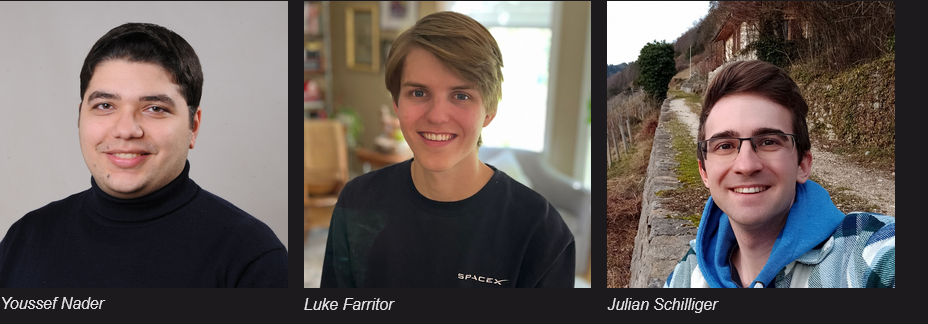
Much more information at the Vesuvius Challenge site.
“Why can’t these Russians see how they’re being oppressed?”
As the war in Ukraine has gone on, western media seem to have completely lost track of what ordinary Russians think about their government, replacing reality with a westernized imaginarium of Russia somehow being little more than a mirror of western progressive opinion:
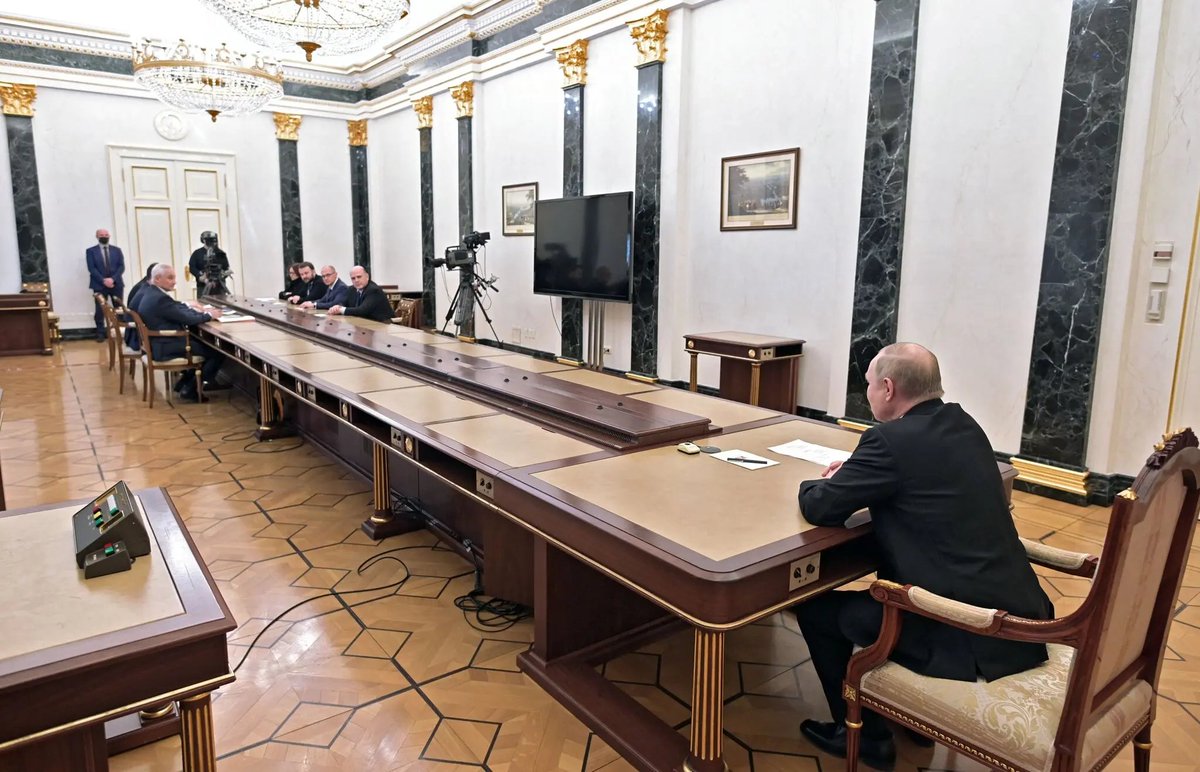
For the average western normie, Russians are suffering under a brutal and vicious dictatorship, and cannot wait for the day that Putin loses power and western liberal democracy becomes the law of the land.
None of you reading this are normies, and all of you know full well that the overwhelming majority of Russians are not buying what western media and think tanks are selling. They have a unique (and foreign) history and culture that has at times moved towards Europe, but they have always managed to stand apart. This informs how Russians view their country and how they deal with the rulers that rule over them.
Many had hoped that the War in Ukraine would finally see Russians rise up against their own government and remove it from power. Those hopes were always misplaced and naive. Western journalists have long been blinded by their own false assumptions regarding the “superiority of western liberal democracy” and Russian sentiment. “Why can’t these Russians see how they’re being oppressed?”, is the generalized refrain. Harper’s Magazine sent two journalists to explore Russia along the Volga River, and what they found was a culture far removed from the West, and very proud of its own. It’s a long piece, so here are some highlights:
Piotrovsky, who is mild-mannered and cerebral, and who wore his jacket loosely over hunched shoulders, seemed to have become a warrior. “Russia is many people, but one nation,” he asserted. “Russia along the Volga was able to incorporate everyone. Islam is just as much a religion of Russian tradition and identity as is Christian Orthodoxy. In Europe, in America, you speak of nothing but multiculturalism, but your cities are bursting with hate. For us, it didn’t take much to include everyone, because we’re an imperial civilization.” Then he grew more animated. “Look at the Hermitage!” he said, opening his arms to the room around us, widening his eyes. “It’s the encyclopedia of world culture, but it’s written in Russian because it’s our interpretation of world history. It may be arrogant, but that’s what we are.”
On renewed trade with Asia:
Sergeeva took me to see the Jewish, Armenian, and Iranian neighborhoods of Astrakhan. An exhibition of photographs highlighting the civilian volunteers supporting the military was being set up outside of a park. At sunset, the elegant riverfront was swarmed with families and groups of young people talking and laughing in hushed tones. Couples sat on railings eating watermelon while food stalls projected multicolored lights on the Volga. There was a fin de siècle quality to the atmosphere, curls of smoke emanating from shashlik grills, a warm breeze delivering the lament of a distant violin. No military uniforms in sight.
The café façades and the wrought-iron balconies reminded me of New Orleans. Sergeeva pointed out the renovations along the canal that runs through the old town, indicating the nineteenth-century wooden villas that will soon become hotels and luxury homes. “They seemed destined to crumble,” she said. “But now that money is going around, Astrakhan is once again the gateway to European Russia, Central Asia, and India. This is how it is for now. Later, we’ll see.“
and
In Astrakhan, it was rumored that the Iranians had invested billions in the development of the Caspian-Volga-Don corridor. There was talk of trafficking agricultural products and oil, but also turbines, spare mechanical parts, medicine, and nuclear components. I couldn’t verify this, but it was clear that Astrakhan is central to the anti-Western economic bloc’s efforts to turn east.
The general opinion in February of 2022 was that the Russians would easily seize much of Ukraine, but that they would pay a very large economic price, possibly the destruction of their entire economy. This was a safe bet, and it was totally wrong.
Import substitution:
“The Russians are reacting to the sanctions in an extraordinary way, even with a weak ruble and the inevitable inflation. The prices of essential goods have held steady. And now we’re consuming better and healthier products than before the war, even exceptional cheeses.”
I had never imagined that the rise of hyperlocal food would be one of the recurring themes of this trip. But it appears that the Western sanctions and war economy have intensified a traditional Russian gastronomy movement. Western products had piqued the palates of average urban Russians, and local producers were trying to fill their vacuum, proudly offering Russian-made Camembert and prosciutto, as if to provide some material evidence of Russkiy Mir, Putin’s ideology of Russian supremacy. As I dined along the Volga, menus often specified the farms from which ingredients had been sourced. Restaurants served svekolnik and okroshka, simple cold summer soups, exalting the quality of local radishes grown without Western fertilizers.
An ethnic Tatar foodstuffs producer from Kazan, Tatarstan on the sanctions regime leveled against Russia:
Since then, the company’s net worth has become the stuff of legend. But Kazankov, too, is a great supporter of Western sanctions: “They’re an incredible developmental tool for Russia,” he told me. “The West should have imposed them back in the Nineties. We’d be the engine of the world by now. Too bad.” For him, the sanctions are pure adrenaline, and to prove it he added that his company has copied Italian, German, and Israeli “production means” to the letter: “We doubled processing in one year and we supply almost a thousand supermarkets in all of Russia.” Ivan believes that his “full-circle communist company” is the ideal model for “rebuilding a new Soviet Union with healthy local food from our lands.”
On the loss of vacationing in Europe:
Was this fatalism? Indifference? Or arrogance, as Piotrovsky had implied back at the Hermitage? I struggled to find room in hotels or on ferries, all of which were overflowing with tourists forced to give up on the Mediterranean and make do with the Volga. Take Tatiana, the middle-aged manager of a supermarket chain. When I met her on a ferry in Yaroslavl, she wore a Panama hat, Gucci sunglasses, and capri sandals; she was heading downstream, to the same dacha where she had spent her summers as a girl. “I’ve had a boat docked in Mykonos for three years — who knows when I’ll see it again,” she told me. “I’m getting to know my river again. I’m running into friends I haven’t seen in thirty years. An interesting vacation.” I told her she looked a bit sad and resigned. “Russians have been sad and resigned for thousands of years,” she replied. “It’s how we stay resilient. I’m against this war, but I can’t do anything but wait, like everyone else. They manipulate us with artificial ideas. Garbage. But the West has been humiliating us for too long. Don’t we also have a right to be who we want to be without feeling like barbarians?“
Comments Off on “Why can’t these Russians see how they’re being oppressed?”


