
World War Two and Spartacus Olsson
Published 13 Jun 2026In 1937, Nazi Germany moved from controlling politics to controlling thought itself. Churches, artists, workers, and dissenters all came under attack.
Berlin, September 1937. From the outside, Germany can seem strangely quiet while the rest of the world slides deeper into war, civil conflict, and authoritarianism. But inside the Reich, the Nazi state is tightening its grip on the last spaces where dissent can still exist.
This quarter, the Gestapo arrests Pastor Martin Niemöller and intensifies the attack on the Confessing Church. The regime opens the House of German Art in Munich, then stages the infamous “Degenerate Art” exhibition to mock, vilify, and destroy modernist culture. The SS establishes Buchenwald near Weimar, forcing prisoners to build their own prison. Meanwhile, Göring’s new state industrial empire and the Nuremberg “Rally of Work” reveal a society being reorganized for war.
This is Step 19 in the death of democracy: when the authoritarian state stops merely silencing opposition and begins fighting the inner freedom to believe, imagine, worship, create, and think.
June 14, 2026
How to Make Dissent Disappear – Death of Democracy 19 – Q3 1937
Mauser M80SA: Actually a High Power and Actually Hungarian
Forgotten Weapons
Published 21 Jan 2026In the 1980s, the Mauser company was completely adrift, without any real plans or goals or good leadership. They had been trying to get by on relaunched old designs, and not been very successful. By the late 80s they move on to just buying guns from other companies (like Renato Gamba) and relabelling them as Mauser. One of these partnerships was with FEG in Hungary.
In 1990, Mauser contracted with FEG to buy Browning High Power copies. FEG had actually licensed the high Power design from FN back in the 1970s, and was already tooled up for production, so they just added a Mauser roll mark and called the gun the M80. It was a straight copy of the High Power, except for the omission of the magazine safety. Production ran from 1990 until 1995, with only 3,200 made. The gun did not sell well, which should [not] be very surprising — this was a very outdated design by the 1990s and the Mauser name just wasn’t worth much as a value-add.
(more…)
June 12, 2026
How one German soldier survived WW1
The Great War
Published 12 Dec 2025Order Alexander’s Diary in The Other Trench in English and Der andere Graben in German: https://www.theothertrench.com
More than 13 million men served in the German army during the First World War. Most wrote letters home, some kept diaries, and some wrote memoirs if they survived. But over a century later, it’s rare to have a window into the everyday thoughts and feelings of one man, a time capsule of the experience of one of those 13 million.
(more…)
June 7, 2026
How Hitler Tested His Next War in Spain – Death of Democracy 18 – Q2 1937
World War Two and Spartacus Olsson
Published 6 Jun 2026Berlin, June 30, 1937. Hitler has not staged a major diplomatic shock this quarter — but beneath the surface, Nazi Germany is preparing for war.
In Spain, the Condor Legion helps Franco’s Nationalists and the bombing of Guernica gives the world a terrifying preview of modern aerial terror. At home, the regime escalates its assault on the Catholic Church, begins the purge of “degenerate art”, tightens the link between courts and concentration camps, and hides rearmament behind spectacles of economic success.
This episode of Death of Democracy looks at Q2 1937: the quarter when Nazi Germany normalized aggression abroad while deepening tyranny at home.
00:00 Berlin, June 30, 1937
00:05 No Hitler Surprise — But War Preparations Continue
00:51 The Hindenburg and the Shadow of Modern War
01:50 The “Give Me Four Years” Exhibition
02:25 Guernica and the Condor Legion
02:55 The Bombardment of Almería
03:11 Case Green and Case Otto
03:54 Degenerate Art and Cultural Cleansing
04:22 The Judiciary and the Concentration Camps
05:13 The Nazi Assault on the Catholic Church
06:07 Goebbels, Propaganda, and the Morality Trials
07:45 Autarky, Rearmament, and Hidden Austerity
08:52 Mood Inside the Nazi Leadership
09:48 Ordinary Germans and Apathy
12:15 Analysis: War Abroad, Tyranny at Home
14:19 Conclusion: Nazi Double-Talk
May 31, 2026
How the Nazis Got Rich Preparing Germany for War – Death of Democracy 17 – Q1 1937
World War Two
Published 30 May 2026By March 1937, Nazi Germany had renewed dictatorship, buried Versailles, and turned rearmament into a corruption machine.
Berlin, March 31, 1937. Adolf Hitler’s regime appears stronger than ever. The Enabling Act is extended for another four years, the civil service is bound more tightly to Hitler personally, and Germany formally rescinds its signature from the war-guilt clause of the Versailles Treaty.
But behind the speeches about honor, work, and national revival, another transformation is underway.
In the first quarter of 1937, Nazi Germany moves deeper into an economy built around rearmament, Party patronage, racial exclusion, corporate privilege, and theft. The new German Corporation Law weakens ordinary shareholder control and strengthens management boards. Industrial giants profit from military preparation. Jewish property becomes a field of extortion and enrichment. Hitler himself grows wealthy through book royalties, image rights, hidden payments, and political slush funds.At the same time, the regime tightens control over public life. Civil servants are required to serve the Nazi state without reservation. Journalists, professors, doctors, artists, and Jewish Germans are pushed out of public and professional life. Concentration camp roundups expand beyond political opponents. And on Palm Sunday, Pope Pius XI’s Mit brennender Sorge is read from Catholic pulpits across Germany, openly challenging Nazi ideology.
This episode looks at Germany in the first quarter of 1937: a moment when dictatorship no longer needs to look revolutionary. It looks administrative, profitable, respectable — and permanent. This is the story of how power, profit, propaganda, and fear helped turn a modern state into a robber regime preparing for war.
0:00 Berlin, March 31, 1937
0:47 A World in Crisis
01:10 Germany Extends the Legal Shell of Dictatorship
01:23 Civil Servants Bound to Hitler
01:51 Hitler Rejects the Versailles War-Guilt Clause
02:21 The Enabling Act Is Renewed
02:48 Göring in Rome, Reassurances in Warsaw
03:44 The New Corporation Law
04:00 The Catholic Church Challenges Nazi Ideology
05:08 Police Roundups and Expanding Concentration Camps
05:46 Press, Education, Medicine, and Culture Under Control
08:20 The Nazi Economy: Private Profit, State Power
09:41 Aryanization and Organized Theft
10:20 Rearmament, Industry, and Oligarch Profits
12:21 How Hitler Personally Got Rich
14:55 The Party Mood: Confidence at the Top
15:22 German Public Sentiment and Victor Klemperer
16:20 Analysis: How Results Become Consent
17:06 Conclusion: The Quiet Theft of Democracy
18:27 Never Forget / Support TimeGhost
The Battle Of Jutland: How Britain Should Have “ANNIHILATED” Germany’s Fleet & Won EASILY
History Undone with James Hanson
Published 13 Dec 2024James Hanson is joined by Rear Admiral Dr Chris Parry and the YouTuber and naval historian @Drachinifel to discuss the Battle of Jutland. It was the largest naval battle of the First World War and the only time the British and German fleets went head to head.
So just how significant was it and should it have ended differently? This is History Undone.
May 24, 2026
How to Indoctrinate a Generation – Death of Democracy 16 – Q4 1936
World War Two and Spartacus Olsson
Published 23 May 2026How did Nazi Germany seize control of its youth by the end of 1936? In this episode, Spartacus traces the Hitler Youth Law, the Four-Year Plan, Winterhilfswerk, the Anti-Comintern Pact, Goebbels’ attack on criticism, and the tightening exclusion of German Jews.
Berlin, December 31, 1936. The Nazi regime did not need another single dramatic coup. It connected the household, the factory, the school, the street collection, the newspaper, and the foreign threat into one system of mobilization.
This episode covers how the Law on the Hitler Youth declared all German youth organized within the Hitler Youth; how the Four-Year Plan redirected recovery toward rearmament and autarky; how charity became mandated patriotic ritual through Winterhilfswerk; how anti-Bolshevik propaganda linked Spain, Japan, Italy, and Germany; and how Jewish Germans were pushed further into isolation through administrative humiliation and police control.
This is an educational historical documentary condemning Nazism, antisemitism, dictatorship, racial exclusion, and political indoctrination.
May 22, 2026
Achtung! Achtung! Extremely extreme extreme-right alert! Achtung! Achtung!
Shocking and dreadful news from democratic Germany comes to us from eugyppius, as the extremely extreme extreme-right Hitler Nazi Fascist party continues to soar in the polls, signalling existential danger for “Our Democracy”, just like the 1930s all over again:
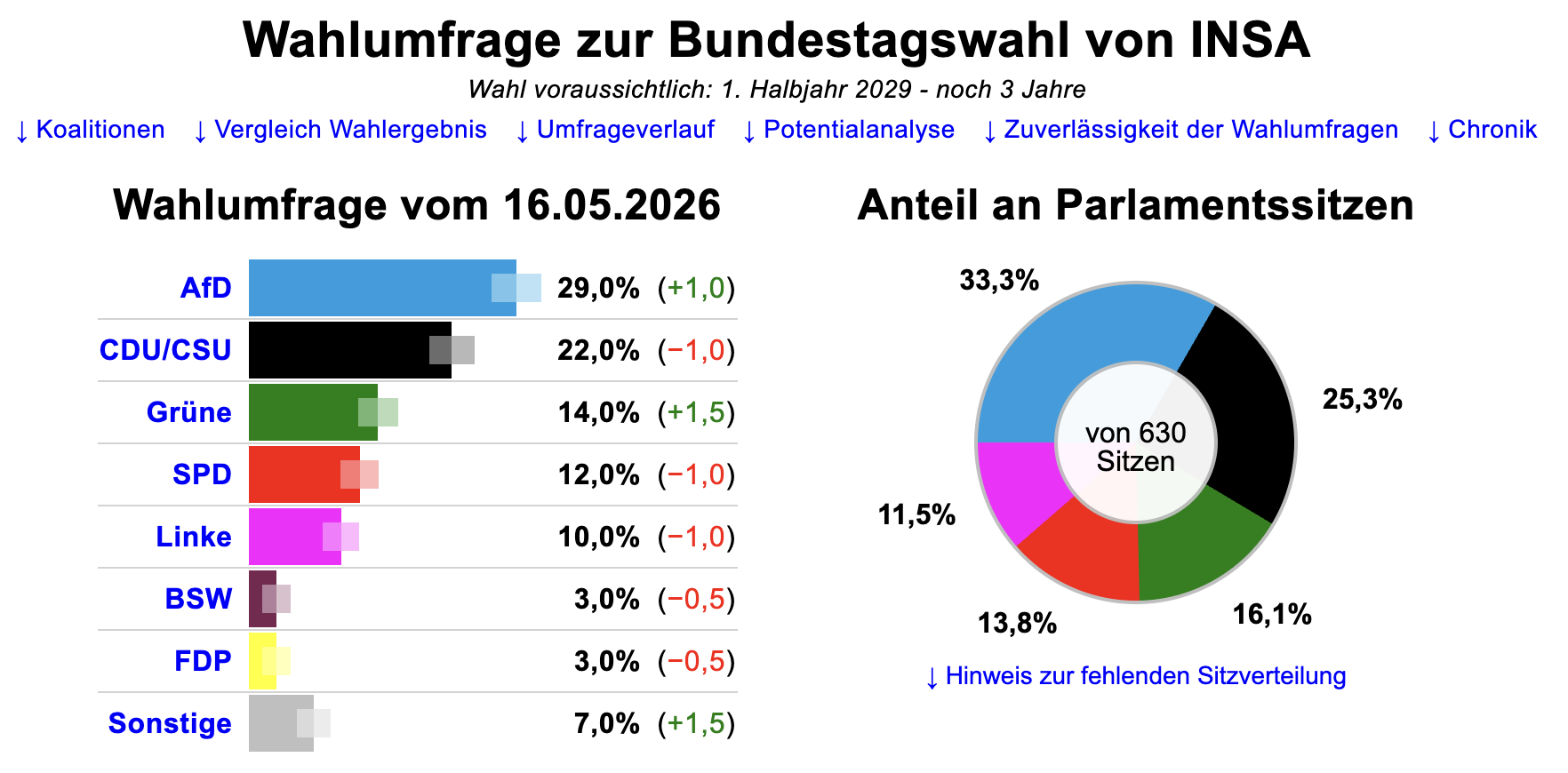
Last Saturday, INSA published a nationwide poll that caused immense disquiet among the defenders of Our Democracy because it showed Alternative für Deutschland a whole seven fat points ahead of the centre-right Union parties. That beastly Evil Fascist Nazi Hitler AfD had never polled so strongly before and had also never clocked such a large lead over the Union before.
Suddenly 1933 was that much closer, and this made the Defenders of Our Democracy uncomfortable. Thus there ensued a lot of hand-wringing and panic and motivated reasoning about how this poll might just be an outlier and also too leftoid conspiracy theories that INSA because reasons and as part of a nefarious plot might be cooking the numbers to make AfD look stronger than they actually are.
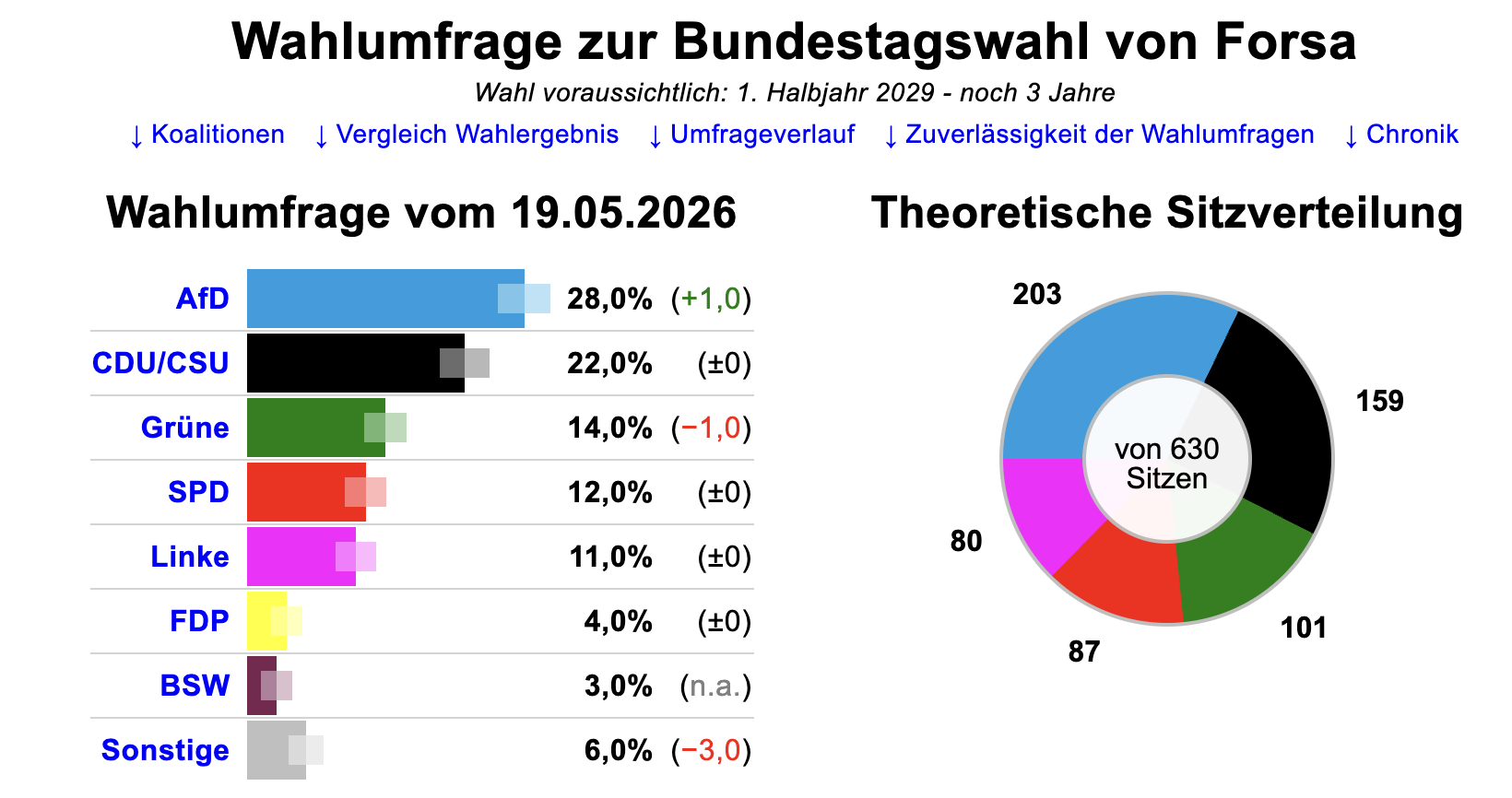
People stopped saying things like that when Forsa, another polling operation, published their own nationwide survey three days later, which had the AfD at 28% with a six-point lead over the CDU …
[…]
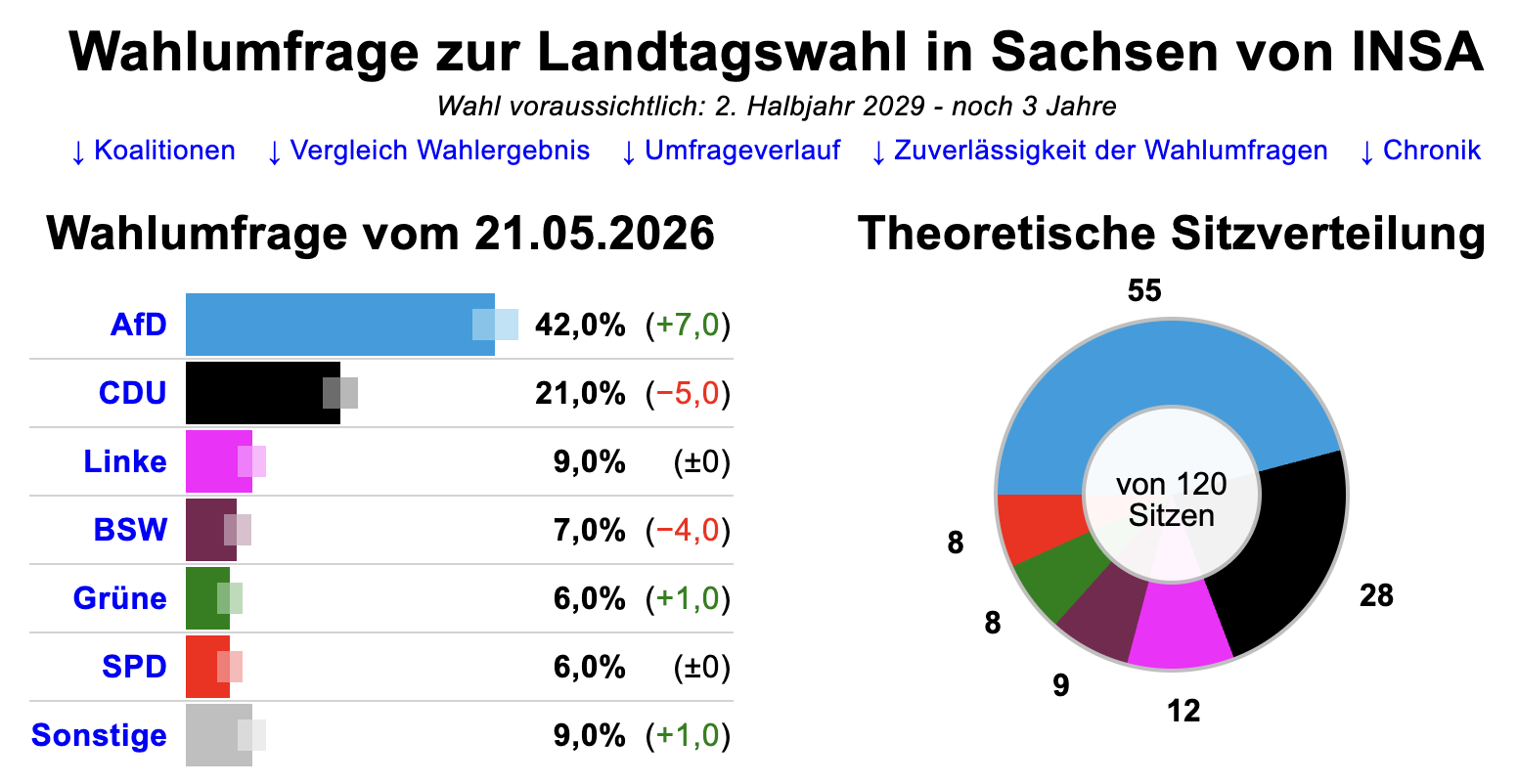
The establishment received their latest shit sandwich this morning, in the form of yet another INSA survey – this time a state poll – showing that the AfD in the Free State of Saxony with 42% support, against a badly weakened CDU at 21%:
These numbers are very close to a recent poll of Sachsen-Anhalt. Together, these polls show that the AfD is on track to achieve outright parliamentary majorities across multiple East German states in the coming years. Basically, we’re looking at a preference cascade, as the press turns on a badly weakened Pigeon Chancellor Friedrich Merz, voters move their support to the only CDU alternative in view, and AfD support thereby becomes socially normalised – which draws still more voters towards the party in turn. Who knows when it will end, or if any of these alienated voters can ever be won back from Evil Nazi Hitler Fascism to Our Democracy, or how the Union can hope to survive the tectonic shifts that are already moving the ground beneath them.
These and other imponderables have driven our political establishment to the brink of psychosis. The CDU have responded to their impending doom by publishing a defamatory 36-page pamphlet screeching that the AfD are “Detrimental to democracy”, “Anti-Semitic” and “Nationalist”. The screed reads like it was written by a pinched schoolmarm and portions of it are very likely legally actionable, mainly because they contain straight-up unadulterated lies. The document raised eyebrows across Germany because its hysterical, desperate tone is so out of character for the staid, unimaginative propagandists of the Union. They must really be losing their minds over there in the CDU.
May 18, 2026
The American Civil War was “two armed mobs chasing each other around the country, from which nothing could be learned”
Ben Duval looks at the implications of the quote above (attributed to Moltke the Elder) and shows that there were indeed lessons to be learned from that conflict:
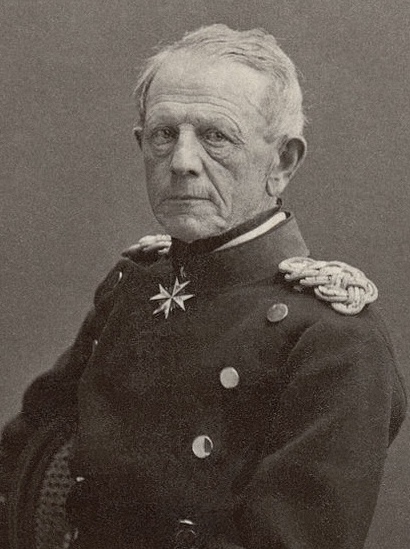
Chief of the Prussian General Staff Helmuth von Moltke the Elder (1800-1891).
Photo by Carl Günther via Wikimedia Commons.
A famous, if apocryphal, quote attributed to Moltke dismissed the American Civil War as “two armed mobs chasing each other around the country, from which nothing could be learned”. There were certainly lessons to be learned — it could hardly be otherwise in so long and intense a conflict. The war showcased many new technologies on a large scale, including rail and telegraph, while the growing accuracy of firearms showed the growing importance of field fortifications in pitched battle. It also gave witness to many expedients and innovations, including the first known employment of indirect fire (although that would take much longer to be appreciated).
Nevertheless, the readiness with which Moltke’s spurious quote was accepted is suggestive of fundamental differences between Europe’s large professional armies and the hastily-raised volunteers that fought for both North and South. The Civil War saw a mobilization of unprecedented scale, expanding from a pre-war regular army of 15,000 to a total of nearly 2 million at its peak.
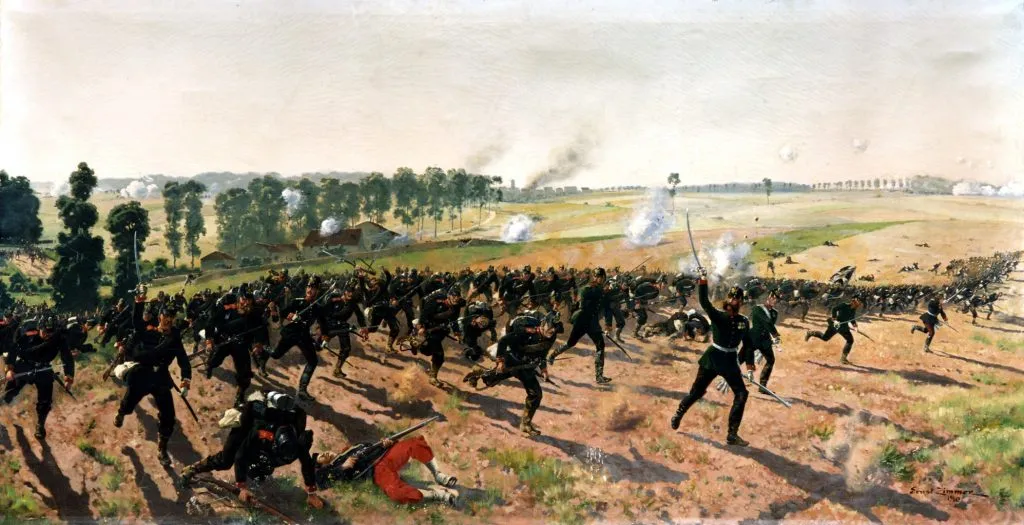
At some critical battles, like Antietam, many regiments had mustered bare weeks before. At best, these soldiers could handle their weapons reasonably well; large-scale maneuvers in the heat of combat were out of the question. Even long-serving formations did not have much of a chance to redress these deficiencies, as demonstrated by the disjointed conduct of Pickett’s Charge. What immediate lessons could the Prussian and French, efficiently maneuvering under fire at Gravelotte or Mars-la-Tour, have learned from Civil War armies?
Prussian attack at Gravelotte on 18 August 1870.
Lessons at the Right Level
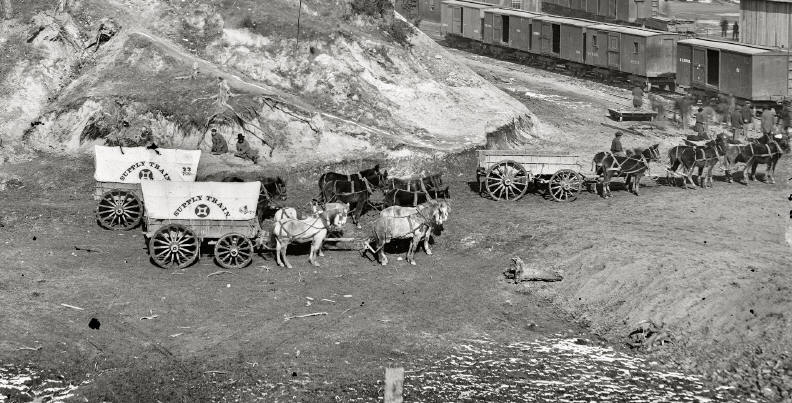
Perhaps not much at the tactical level, but there was plenty to be learned at the operational. Never before had railroads been employed at such scale to shift troops within and between theaters; nor the telegraph, which was used to coordinate such movements. Efficient logistical services allowed both sides to undertake bold maneuvers involving massive numbers of troops (it is noteworthy how many generals had previous experience working for railroad companies, and how many more went on to high management or board positions after the war).
Union supply wagons loading up at a railhead.
But the point also holds more broadly, beyond the particular technical specialties of 1860s America. Whenever tactics alone cannot suffice—either because both sides are extremely skilled, as in the First World War, or because organizational breakdowns rule out more complex maneuvers — decisive action can by default only occur at the operational level. This was an essential point in Saladin the Strategist. Muslim and Crusader armies, through long experience fighting each other, had developed unique fighting styles tailored to blunt each other’s edges: barring a fluke, decision could only be won through some higher-level maneuver.
In such cases, the fighting capabilities of an army matter less in any absolute sense than in their ability to effect a particular operational scheme. Tactical proficiency is but one variable among many, and not necessarily the most important. Whether a general is dealing with poorly-trained militia or long-serving professionals, it is above all their relative odds that factor into his calculations.
May 17, 2026
Why Didn’t Germans Resist Hitler? – Death of Democracy
World War Two and Spartacus Olsson
Published 16 May 2026Why didn’t Germans resist Hitler? Were they all Nazis, or were they terrorized into silence by the Gestapo?
The truth is more unsettling. The Nazi regime ruled through a combination of targeted terror, social atomization, propaganda, popular support, opportunism, and broad accommodation. This episode examines why mass resistance never emerged — and why millions of ordinary Germans accepted, enabled, or benefited from the Third Reich.
00:00 Why didn’t Germans resist Hitler?
00:33 The myth of the all-powerful Gestapo
01:36 Targeted terror and selective repression
02:39 The Nazi seizure of power
03:09 Gleichschaltung and the destruction of civil society
03:38 Inner emigration and private conformity
04:16 Why early Nazi successes mattered
04:33 Unemployment, rearmament, and national pride
05:39 Versailles, trauma, and German victimhood
06:22 Identity, propaganda, and belonging
07:25 Volksgemeinschaft and the “Hitler Myth”
08:54 Kristallnacht and the failure of collective action
10:40 What the numbers suggest
11:47 Postwar surveys and lingering Nazi support
13:31 Terror, consent, and accommodation
15:07 Did this absolve ordinary Germans?
16:16 Democracy, responsibility, and Never Forget
May 16, 2026
The failure of Operation Crossbow in 1943-45
Timing is everything in war — well, if not everything, it’s extremely important. An example was the development delays for the German V-1 and V-2 systems that kept them from being a potentially devastating weapon against the Anglo-American invasion forces on D-Day. Secretary of Defense Rock explains why allied air attacks to suppress the German launch sites were an almost unmitigated failure:
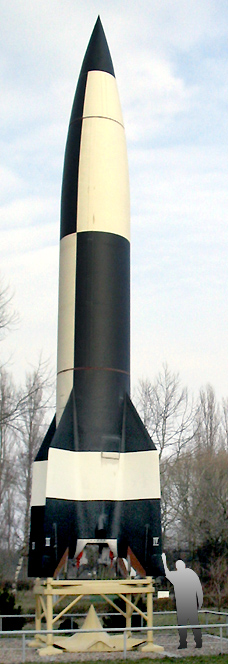
German A4 or V-2 replica at Peenemünde
Photo from Wikimedia Commons.
Two campaigns separated by 50 years — the Anglo-American CROSSBOW campaign against German V-weapons in 1943–1945 and the “Great Scud Chase” of Desert Storm in 1991 — suggest that what is happening over Iran today is not a deviation from the norm but simply a repeat of it. As Colonel Mark Kipphut argued in his 1996 study comparing the two campaigns, the failure to internalize CROSSBOW’s lessons was itself one of the reasons those same failures were repeated in 1991; the present campaign against Iran suggests we might still not have learned them.1
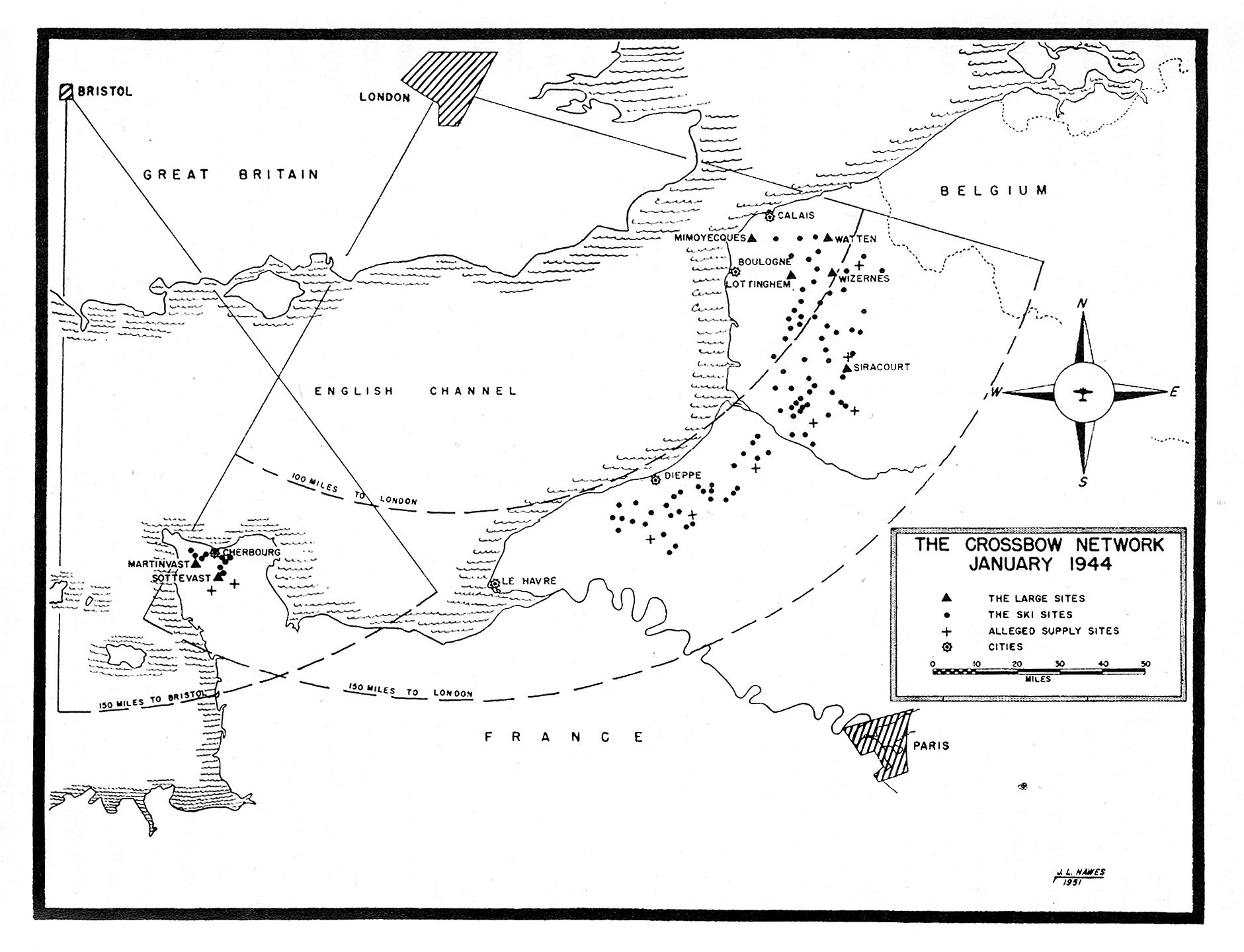
The first lesson of CROSSBOW is that fixed infrastructure is easy to destroy and that adversaries do not stay fixed for long. British intelligence had received “reliable and relatively full information” on German long-range weapons as early as November 1939 two months into the war.2 It wasn’t till four years later, in 1943, that Allied photo-reconnaissance first identified the German “ski-sites” in northwestern France, named for the curious shape of one of the buildings on each launcher complex.3 Within weeks, the U.S. Strategic Bombing Survey would later report, ninety-six sites had been cataloged, and a sustained bombing offensive against them had begun. Of these ninety-six sites, no more than two were ever used operationally.4 On its face, this was a complete victory. Allied airpower had, by direct attack, denied the Luftwaffe permanent launching infrastructure before the V-1 campaign could begin.5
The Germans drew the obvious conclusion. The Survey noted that during the period of the Allied counterattack, the Germans developed methods for launching V-1s and V-2s from small, inconspicuous sites that required minimal engineering work and freed firing operations from the elaborate sites originally planned.6 These were the “modified sites”, first photographed on April 26, 1944, which were well camouflaged, dependent largely on prefabricated buildings, of which more than sixty had been identified before the first V-1 was launched in England in mid-June.7 The “modified sites”, the Survey concluded plainly, were “heavily bombed without marked effect on the scale of effort”.8
Kipphut, working from the same primary documents, formalizes the consequence as a two-phase division of the campaign. CROSSBOW I, running from April 1943 to early June 1944, was a qualified success: it delayed the start of V-weapon attacks by an estimated three to six months and so allowed OVERLORD to proceed before the full weight of Hitler’s missile arsenal could be brought to bear.9 Eisenhower himself wrote that had the Germans perfected the weapons six months earlier, the invasion of Europe would have been “exceedingly difficult, perhaps impossible”, and that a sustained V-weapons attack on the Portsmouth-Southampton embarkation area could have caused OVERLORD to be written off entirely.10 CROSSBOW II, however, the campaign to suppress launches once they had begun, was in Kipphut’s assessment a “dismal failure”; despite thousands of sorties against more than 250 targets in the critical summer of 1944, the Germans averaged just over 80 launches per day, and German sources contend they never failed to launch on account of either Allied air attack or weapons shortages.11
A World War II map shows the two areas where the Germans were setting up their secret “V” weapons to bombard England (right, center). These are the areas in which the Royal Air Force and 8th Air Force heavy bombers concentrated their bombs in order to knock out the weapons — part of the pre-invasion plan. This event was given the operational code name Crossbow during World War II. The grouping (left, center) is the site of the Invasion of Normandy.
The implications for Allied resource allocation were severe. Between the beginning of May 1943 and the end of March 1944, nearly 40% of Allied reconnaissance sorties over Europe were devoted to supporting CROSSBOW, with those planes taking more than 1.25 million photographs and service members preparing more than 4 million prints for study and analysis.12 Over the course of the campaign, U.S. and British air forces flew approximately 68,913 sorties against CROSSBOW targets and dropped roughly 136,789 tons of munitions.13 During the thirteen-month peak period from August 1943 to August 1944, the joint strategic-bomber effort absorbed 13.7% of its sorties and 15.5% of its tonnage on V-weapon targets.14 By the autumn of 1944 and into the winter, RAF Fighter Command devoted 79% of its offensive sorties to CROSSBOW.15 Eisenhower, faced with the apparent failure of CROSSBOW II to suppress the launches that began on D-Day plus seven, directed that V-weapon suppression take priority over all other Allied air operations, including direct support to the Normandy lodgment and the Combined Bomber Offensive.16
That bombing, which failed against the dispersed V-2 launch sites, was almost overdetermined. The Survey concluded bluntly that after the initial Allied success, the firing sites for V-2s were small, well camouflaged, and made poor targets for bombers.17 No comparable problem arises with a factory complex. The V-2 launcher, like the modified V-1 ramp, was small, mobile, and concealable, and the strategic-bomber instrument was designed and procured to flatten large, stationary targets. In the end, Kipphut notes, silencing the V-weapons required ground forces to overrun the launch sites.18
- Mark E. Kipphut, “Crossbow and Gulf War Counter-Scud Efforts: Lessons from History”, Counterproliferation Paper No. 15 (Maxwell AFB, AL: USAF Counterproliferation Center, February 2003), 1–3. Originally published in Airpower Journal, Winter 1996.
- Wesley Frank Craven and James Lea Cate, eds., The Army Air Forces in World War II, vol. 3, Europe: Argument to V-E Day: January 1944 to May 1945 (Chicago: University of Chicago Press, 1951), 89.
- United States Strategic Bombing Survey, V-Weapons (Crossbow) Campaign, Military Analysis Division, 2nd ed. (Washington, D.C., January 1947), 5–6.
- Ibid, 6.
- Craven and Cate, eds., have a full chapter on the operational history of CROSSBOW, 84-106.
- Ibid, 2.
- Ibid, 6.
- Ibid, 6.
- Kipphut, 7–8.
- Dwight Eisenhower, Crusade in Europe (New York: Doubleday, 1948), 260, quoted in Kipphut, 5.
- Kipphut, “Crossbow and Gulf War Counter-Scud Efforts”, 8, citing Phillip Henshall, Hitler’s Rocket Sites (New York: St. Martin’s Press, 1985), 187.
- Craven and Cate, eds., 89.
- Kipphut, “Crossbow and Gulf War Counter-Scud Efforts”, 8
- USSBS, “V-Weapons (Crossbow) Campaign”, 28.
- USSBS, “V-Weapons (Crossbow) Campaign, 28”; Kipphut, 8–9.
- Kipphut, 5.
- USSBS, “V-Weapons (Crossbow) Campaign”, 7
- Kipphut, 10.
May 15, 2026
Bloodier Than Verdun? Winter Battles on the Eastern Front 1915
The Great War
Published 16 Jan 2026The first four months of 1915 witnessed a titanic struggle on the Eastern Front, in East Prussia, the Carpathians, Bukovina, and at Przemysl. Both sides suffered staggering casualties that surpass those of the Somme or Verdun the following year. Ironically, the Austro-Hungarians lost far more men trying to save Przemysl than there were in the fortress.
(more…)
May 13, 2026
“Electoral authoritarian” regimes
eugyppius points out that the reflexive descriptions of the former Hungarian prime minister Viktor Orbán’s government as “electoral authoritarian” fail to note just how authoritarian the rest of the EU’s national governments have become:
this description of an “electoral authoritarian” regime applies far more aptly to Germany than to Hungary. What did Orbán do, defund a few NGOs? meanwhile our police, intelligence agencies & state media have all collaborated for years to keep the opposition out of power.
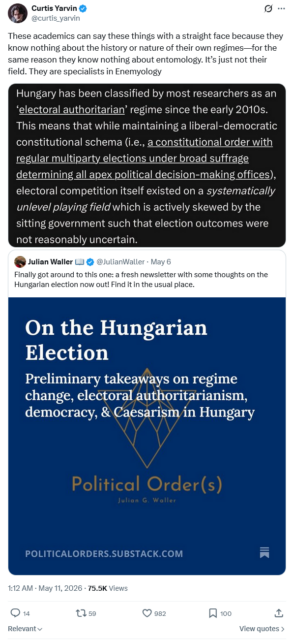
And after some harumphing from the cheap seats, he followed up with:
Various people are clapping back at this, so let me tell you what is happen in liberal democratic non-authoritarian Germany:
– Getting raided by police, charged with speech crimes, etc. because you post online is a professional risk, I personally know various people to whom this has happened and I live my life with a bunch of opsec annoyances for the day it happens to me.
– State media coordinates with intelligence agencies to smear and harass not only the political opposition but their prominent supporters, for example by doxxing them, getting them fired, subjecting them to harassment.
– The state funds a vast “civil society” network of violent street thugs to intimidate the political opposition and also anybody identified by state-sanctioned ops like those detailed in the above item. Opposition party congresses, other events routinely disrupted by coordinated civil society protests, where the local population is sympathetic (as in many east German venues) they bus in protesters from the west and the big cities to create the necessary atmosphere.
– Domestic intelligence agencies use espionage methods to surveil and compromise the political opposition; among other things they pay informants, tap telephones, read emails, and so on. We’ve had various indications that materials gathered in these operations are then used for state media smear campaigns.
– Yes, domestic intelligence openly coordinates with state media and certain private media elements too. Various aspects of political coverage in Germany are staged by secretive unelected bureaucrats.
– Procedural rules, other laws are routinely changed in ad hoc ways to disadvantage political opposition, though we haven’t had any outright gerrymandering like in the US so that means Our Democracy is safe. 👍
And:
I’m sure I’m forgetting some things. I’ve spent years documenting this shit on my blog and literally none of the present Hungary hyperventilators have ever given the slightest shit. Orbán was a guy who observed the Euro freak show as it is manifested in countries like Germany and tried in a kind of inept half-hearted way to imitate this machine from the right, the results were ridiculous and transparent and like 25% as effective as what the German state gets up to but nevertheless all these clowns confronted with a hint of their own methods started shrieking about FaSciSm.
May 11, 2026
Were the Nazis socialists?
If you’re ever bored and want to kick off an argument online, you can take either side of this statement and watch the signal-to-noise ratio drop precipitously. The NSDAP, the Nazis, began as one of the many, many groups of angry young Germans in the days after the end of the First World War. The full name of the party — the National Socialist German Worker’s Party — indicates who the original party founders thought would be the engine of their political rise. They were explicitly anti-communist, as the spectre of the Russian Revolution terrified many Germans, but German socialism was still within the Overton Window of political debate.
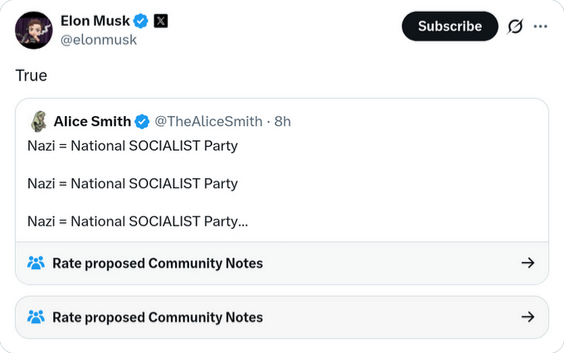
Lots of arguments about this one.
Many people assume Nazis could not have been socialists, despite all the time and energy they devoted to jumping up and down screaming “We are socialists!”, because they were “right-wing” and socialism is supposed to be “left-wing”.
Except “right-wing” and “left-wing” don’t have rigid definitions outside the context of the French revolution. In any other context, they’re just a metaphor.
So why did the NATIONAL Socialist German Workers’ Party and the INTERNATIONAL Marxist-Leninist Socialist Workers’ Movement hate each other so much?
It’s pretty obvious when you look at the names.
National.
International.
To Nazis, the race and culture of a people are everything. They are what the state is supposed to represent. Ein Volk, as they would say. The purpose of Nazi socialism is to control capital assets, subordinating them to the will and welfare of the ethnostate.
But Marxist-Leninists seek to abolish all ethnostates. They are a globalist movement, seeking to place all capital assets under the control of a universal proletariat in theory, which is in practice represented by one world government.
Thus, Nazis sought to use socialist policies for the welfare of the German people and Marxist-Leninists seek to abolish “German” as a meaningful distinction, along with all other cultures.
The antipathy between Nazis and communists was a sectarian struggle within socialism. Same methods, but different sacred groups.
Since the defeat of National Socialism by International Socialism in WW2, all modern socialism is pretty much of the international variety.
This does, however, suggest that there is a contrast between National Capitalism and International Capitalism as well.
Which is the source of the current sectarian struggle between elements of the American right wing.
Update, 12 May: Welcome, Instapundit readers! Have a look around at some of my other posts you may find of interest. I send out a daily summary of posts here through my Substack – https://substack.com/@nicholasrusson that you can subscribe to if you’d like to be informed of new posts in the future.
May 10, 2026
How to Make Nazi Germany Look Normal – Death of Democracy 15 – Q4 1936
World War Two and Spartacus Olsson
Published 9 May 2026How did Hitler use the 1936 Berlin Olympics to make Nazi Germany look peaceful — while preparing the country for war?
Berlin, September 30, 1936. Under the Olympic flame, Nazi Germany staged one of the most successful propaganda spectacles of the twentieth century. Foreign visitors saw order, ceremony, technology, pageantry, and athletic triumph. But behind the facade, the regime hid antisemitic persecution, rounded up Sinti and Roma, intensified police repression, intervened in the Spanish Civil War, and moved toward a massive new war economy.
In this episode, Spartacus Olsson looks back at the third quarter of 1936: the Berlin Olympics, Jesse Owens’ victories, Hitler’s secret war memorandum, the Four-Year Plan, Nazi propaganda, Germany’s growing involvement in Spain, and the dictatorship’s attempt to sell peace to the world while preparing for conquest.
The Olympics gave Hitler international validation. The Four-Year Plan revealed what he truly intended.
In this episode:
– How Nazi Germany sanitized Berlin before the Olympic Games
– How the regime temporarily hid antisemitic violence from foreign visitors
– How Sinti and Roma were forced out of sight before the Games
– How Jesse Owens challenged Nazi racial mythology on the track
– How Hitler moved Germany toward a war economy
– How the Four-Year Plan tied German recovery to rearmament
– How Germany’s intervention in Spain marked a new stage of escalation
– How propaganda, spectacle, and controlled media helped normalize dictatorshipThis is not just a story about the 1936 Olympics. It is a story about how authoritarian regimes use spectacle, national pride, media control, and international complacency to hide what they are becoming.
Never Forget.


