
Forgotten Weapons
Published 25 Feb 2026In the late 1980s and early 1990s, the Mauser firm was not in good shape. It had no new products, and its ability to survive marketing its name and legacy pistols was waning. Without much vision for the future, it turned to rebranding production from other companies, like Renato Gamba in Italy and FÉG in Hungary. From FEG they got the “Mauser Model 80” — a licensed copy of the Browning High Power — and the “Mauser Model 90” — a rebadged FEG P9R.
The P9R / Mauser 90 is often assumed to simply be a double-action modification of the High Power, but this is not true. The slide is almost identical in appearance to the High Power slide except for the decocking lever, but the frame has several important differences. The barrel lockup is taken from the S&W series of automatic pistols instead of the High Power, and the trigger mechanism is a stirrup around the magazine well instead of moving through the slide like a High Power.
In total, FEG made 26,000 of these pistols for Mauser. The plan was to sell them in Europe, but by 1995 sales remained poor and about 18,000 remained in Mauser inventory. In order to get rid of them, they were offered on the American market, where they were gobbled up by importers like Century between 1995 and 2001.
(more…)
July 21, 2026
Mauser M90 DA: Not Mauser and Not a High Power
July 20, 2026
Eight Great Powers Invade China: the Boxer Uprising 1900-1901
Real Time History
Published 20 Feb 2026After the defeat in the 1st Sino-Japanese War, the Qing Dynasty is under pressure: Some are calling for domestic reforms and ousting Western influence, while the Great Powers want to further open up China for their businesses. Violence erupts when the so called Boxer movement kills several Westerners.
(more…)
July 19, 2026
How to Set a Militia Free on a Minority – Death of Democracy 24 – Q4 1938
World War Two and Spartacus Olsson
Published 18 Jul 2026In this episode of Death of Democracy, Spartacus Olsson examines Germany in Q4 1938 — the quarter in which Nazi persecution exploded from exclusion and intimidation into open, state-sponsored terror.
From the occupation of the Sudetenland and the Polenaktion, to the assassination of Ernst vom Rath, the orchestrated violence of Kristallnacht, the mass arrest of 30,000 Jewish men, the acceleration of Aryanization, and the first Kindertransport, this episode traces how the Nazi regime turned antisemitic hatred into systematic plunder, social death, and mass fear.
It is also the quarter in which the illusion of “peace in our time” began to unravel. While Britain and France clung to the hope that Munich had preserved peace, Hitler was already preparing the next stage of expansion — and the wider road to war.
This is the story of how a dictatorship unleashes paramilitary violence against its own citizens, how ordinary people react, and how appeasement abroad helped convince the regime that it could escalate even further.
July 18, 2026
The Top WW2 Spy Was a Disabled Woman
World War Two
Published 16 Jul 2026Virginia Hall was one of the most extraordinary spies of World War II. An American operative for Britain’s Special Operations Executive and later the OSS, Hall built resistance networks in occupied France, coordinated intelligence, organized safe houses, helped escaped prisoners and airmen, and supported maquis fighters who sabotaged German operations during the liberation of France.
Known to the Gestapo as “the Limping Lady”, Hall worked with a wooden prosthetic leg she nicknamed Cuthbert. After escaping over the Pyrenees, she returned to France in 1944 in disguise, operating a radio, arranging parachute drops, and helping organize resistance forces against the German occupation.
This is the true story of Virginia Hall: the disabled American spy who became one of the most feared Allied agents in Nazi-occupied Europe — and one of the most important women in WWII intelligence history.
July 12, 2026
How WW2 Really Started: Appeasement! – Death of Democracy 23 – Q3 1938
World War Two and Spartacus Olsson
Published 11 Jul 2026On September 30, 1938, Neville Chamberlain returned from Munich promising “peace for our time”. Adolf Hitler returned to Berlin with the Sudetenland.
In this episode of “Death of Democracy”, Spartacus Olsson reports from Berlin as Nazi Germany escalates on two fronts: terror against Jewish citizens at home, and diplomatic blackmail against Czechoslovakia abroad.
While the Evian Conference fails to open the world’s doors to Jewish refugees, the Nazi regime tightens the trap with identity cards, forced names, professional bans, the opening of Mauthausen, and Eichmann’s machinery of forced emigration in Vienna.
At the same time, Hitler manufactures the Sudeten Crisis, threatens war, breaks Czechoslovakia’s defenses through the Munich Agreement, and convinces much of Europe that surrendering another country’s territory is the price of peace.
This is Germany in Q3 1938: the lie that Hitler would not start another war — and the world’s decision to believe him.
July 8, 2026
Don’t call them “U-boats”!
In his latest post for The Line, Matt Gurney violates the cardinal rule of discussing German naval equipment … don’t call ’em “U-boats”!
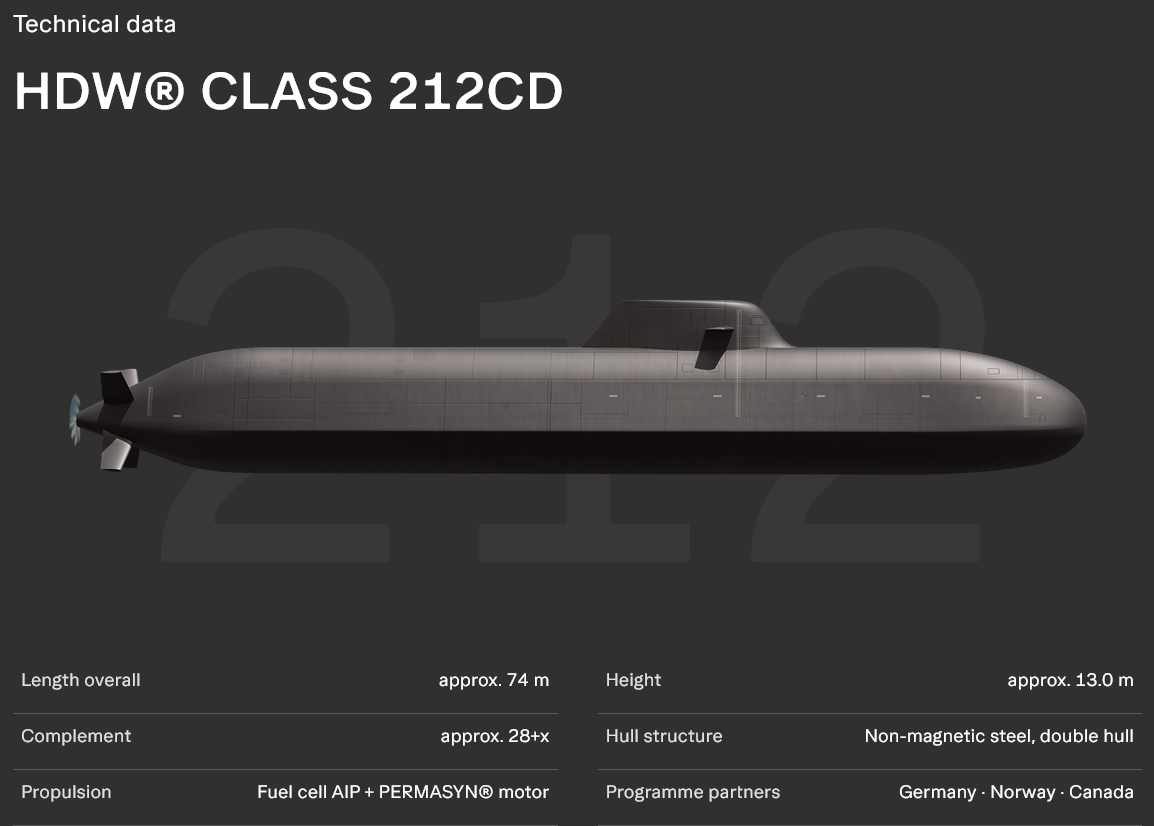
In Halifax on Monday, Prime Minister Mark Carney announced that Canada had chosen a preferred vendor for our new fleet of patrol submarines. Canada will (probably) be going with a German-Norwegian consortium that was offering the Type 212CD submarine, and not the South Korean boats offered by Hanwha. The prime minister said it was a close finish between the two competitors and noted that either design would have met Canada’s needs. The decision announced Monday is not a final purchase order but rather a determination of who our preferred partner would be. The prime minister said that if the negotiations with TKMS, the German company offering the 212CD, did not go well, Hanwha remained an acceptable option.
Personally, I was rooting for the Koreans. I liked their submarine’s ability to launch missiles vertically, which would’ve given the Canadian fleet some powerful strike options. I also tripped a little over the thought of Canadians in U-boats — I suspect many historically minded Canadians will also blink hard at that little twist of fate. But I fundamentally agree with the prime minister — either boat is fine for our purposes. The 212CD will be an excellent asset once it enters Canadian service (presumably with a snappier name).
Sooner would be better. The prime minister noted repeatedly during his remarks on Monday that the government was moving quickly to make this announcement, having settled on a preferred partner five years ahead of the original schedule. This is true, and I give the prime minister full credit for that. I would also note that the schedule was already ridiculously long. We actually should have begun replacing the submarines a decade ago. The PM’s comments reminded me that I had written a column about the urgent need to just get on with replacing the submarines when we had last announced another cycle of refurbishments to keep the current fleet in service because we had yet again delayed a decision on a replacement.
I found my old article. I wrote it seven years ago.
That was bad. Carney accelerating it is good. It’s also good that we are looking at a much larger fleet of submarines, going from four to as many as 12. Submarines are very complicated machines. For every boat you want available for service, you need three or four in your fleet. This gives you a large enough fleet to have an operational submarine available while others undergo maintenance or refits or participate in training exercises with their crews. The four Victoria-class submarines Canada possesses today mean that we typically might have one available for service at any given time, so a fleet of 12 will give us a much more robust presence. Given that we claim three oceans, and that the world is pretty much a dumpster fire these days, having a submarine available on each coast at all times seems like a good idea.
Time is of the essence. Germany and Norway, the prime minister said, have offered to allow Canada to cut ahead of them in line for deliveries of the submarines, which are already under construction but haven’t yet entered service. Given the decrepit state of our elderly existing fleet, that was obviously a meaningful sweetener, and the PM said the first boats could be in Canadian service in seven or eight years, which is pushing the Victorias to their limits, but should work. We hope?
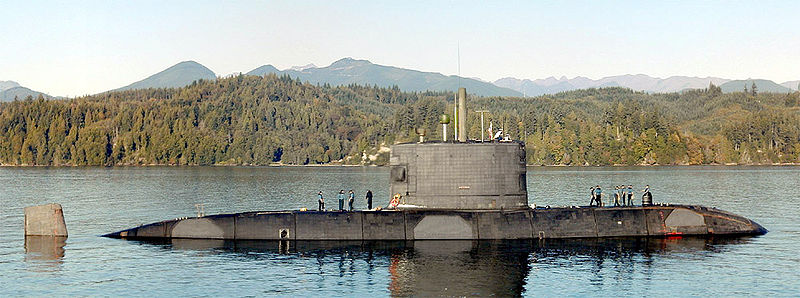
HMCS Victoria, one of four ex-Royal Navy submarines in Canadian service, will have to carry on in service — as much as the class can carry on — until the early 2030s.
Image via Wikimedia Commons.
July 7, 2026
Canada decides to buy German submarines
I wouldn’t say I’ve been closely following the Canadian Patrol Submarines Project (CPSP), but I was interested enough to do a bit of reading about both of the contending bidders and their offerings. Based on my understanding of the RCN’s needs, I expected the South Korean KSS-III submarine to be the final winner, but I was wrong: Prime Minister Mark Carney announced that the German/Norwegian TKMS Type 212CD submarine had been selected instead.
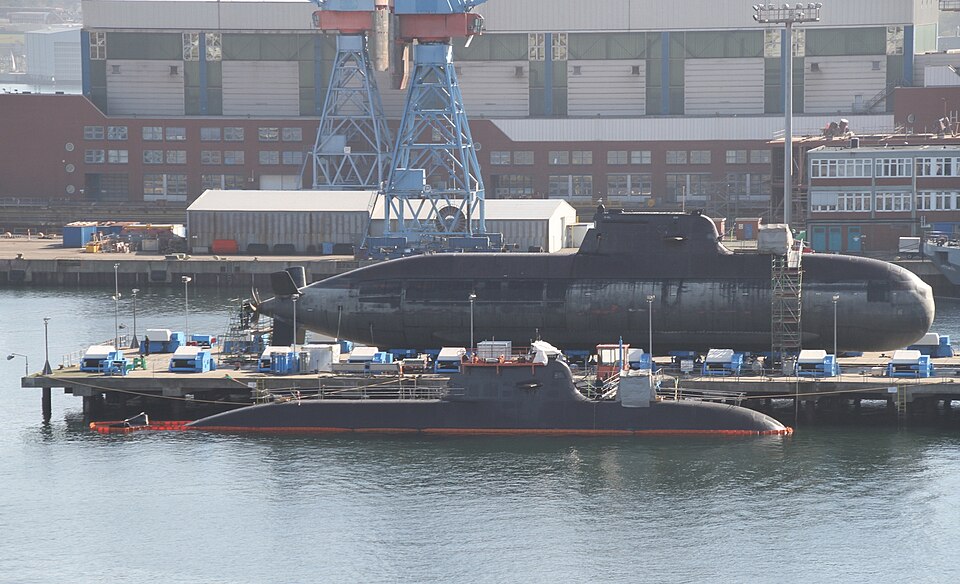
Type 212 submarines at the HDW shipyard in Kiel, Germany, 1 May 2013.
Photo by Bjoertvedt via Wikimedia Commons.Submarines enable the Royal Canadian Navy (RCN) to defend threats near and far from Canada’s shores. Yet, our current fleet is aging, with only one of four submarines seaworthy. With the longest coastline in the world, Canada’s ability to deploy underwater surveillance capability is critical. Our security and sovereignty depend on them.
Today, at Canadian Forces Base Halifax, the Prime Minister, Mark Carney, announced that Thyssenkrupp Marine Systems (TKMS) has been selected as the preferred supplier to begin negotiations for delivering Canada’s next fleet of submarines to the RCN. This will be the largest defence procurement in Canadian history, and it will equip the RCN with the capabilities they need to keep Canadians safe.
With ultra-low acoustic and magnetic signatures, TKMS’ 212CD is one of the stealthiest submarines in the world. It is capable of Arctic patrol, undersea surveillance, special forces deployment, and it is fully NATO-interoperable. These submarines provide an unparalleled combination of advanced technology and lethality that will enable the RCN to detect, track, deter and, if necessary, defeat adversaries in all three oceans bordering Canada. This procurement will bolster Canadian security through a platform shared by Germany and Norway, two of Canada’s closest Allies.
The Government of Canada and TKMS will now enter into negotiations to finalise the contracts and all arrangements required to deliver the requirements of the CPSP. Canada will conclude contracting no later than the end of 2027, with the first four submarines to be delivered ahead of schedule, in 2034. In the event that negotiations with the preferred supplier are unsuccessful, Canada may designate Hanwha Ocean as the preferred supplier and enter into negotiations.
The CPSP is being advanced by the Defence Investment Agency and aligns with Canada’s Defence Industrial Strategy. Under the Build-Partner-Buy framework, the project demonstrates the Partner approach, with collaborations with trusted Allies to develop and deliver capabilities while ensuring industrial and economic benefits for Canada. The CPSP will prioritise investments across the Canadian supply chain, to create high-paying jobs, leverage Canadian defence industries, and maximise benefits for Canadian workers and businesses.
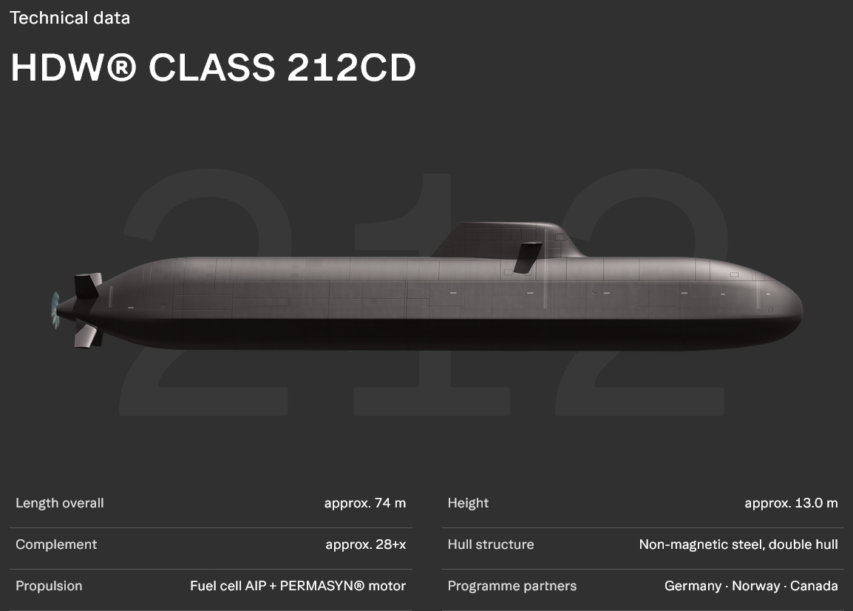
Noah comments on the press release information and some wider issues to do with the CPSP:
And with this, the long-awaited Canadian Patrol Submarine Project finds its home. What started as an ambitious RFI back in 2024 has quickly turned into one of the most consequential, publicized, and dynamic projects, I would say, in Canadian history.
TKMS and Kongsberg, operating as Team GERNOR, have claimed the preferred supplier designation from the federal government. As always, there is no contract today. The selection of a preferred supplier merely sets the table for negotiations to a final contract.
While the federal government will want to move quickly, and I’m sure that the Navy would like to see the contract signed, it is highly likely that comes in 2027. The typical “quick” timeframe is about a year. Keeping in mind, of course, that CPSP will be the largest procurement contract in federal history,1 and in this case also includes additional negotiations on build slots for submarines from both Germany and Norway.
[…]
There was no universal consensus, and I know this choice didn’t come easy for anyone. Both sides put all they could into it. Yet in the end, the GERNOR option pulled ahead. The European focus was championed heavily by those in the PMO as an opportunity to open doors and integrate Canadian industry into the wider European ecosystem, especially as European interest in Canadian expansion grows.
At the end of the day, that ecosystem came out on top. In the final weeks and months of the competition especially, the banner of Europe rallied to the call of unity, to stand with their hands at the back of Team GERNOR. That push, and that united front, is very likely what pushed that sense of alignment forward.
You don’t need to look far for it. Just after CANSEC, Italy’s Fincantieri, a noted ally of TKMS, signed a new MOU with Magellan Aerospace to investigate the potential production of heavyweight torpedoes and undersea countermeasures, building off the proposed investment TKMS plans to make.
While not in the 212CD network, Fincantieri is in the family, and they, among others, are also looking to Canada and our choices. It is the first example of the TKMS family taking notice and making proactive moves to jump in and secure capacity in a future Canadian submarine industry; and, as I understand it, far from the only one being discussed.
Another outside addition: Navantia of Spain and TKMS have also recently signed an MOU to investigate collaboration on naval shipbuilding. While this new agreement is young, I am also led to believe that Navantia is looking to Canada with interest, building off some of their previous engagements with industry.
Increasingly, the European front is united in industry, in the political sphere, and diplomatically to present the 212CD not as a German-Norwegian partnership but as a foundational Canada-Europe partnership that will build off the foundation of agreements like SAFE and the EU-Canada Security and Defence Partnership to create a united Atlantic front that promotes collaboration and joint investment, and opens the European market to Canadian industry.
- NR – “the largest procurement contract in federal history” … Canada’s major military purchases happen so rarely and always taking as long as bureaucratically/politically possible, so every ship, aircraft, helicopter, or tank purchase has a good chance of being the next “largest procurement contract in federal history”.
QotD: “I was just following orders” — the Nuremberg Defence
JerryRigEverything @ZacksJerryRig
It is illegal to obey illegal orders.
It is illegal to obey illegal orders.
It is illegal to obey illegal orders.
It is illegal to obey illegal orders.
It is illegal to obey illegal orders.
It is illegal to obey illegal orders.
Congress has not declared War.
Pass it on.Hot Take: The “Nuremberg Defense” should be completely legally valid because it was for the entirety of human history until the Nuremberg Trials.
The idea that the average GI Joe has the knowledge and capability to parse the legality of orders in life-and-death situations is one of the best examples of how Liberalism simply does not comport with reality.
Every lawyer knows this to be true, too. Ask any number of attorneys a question on a matter of law and if the question is worth a damn you’ll get as many answers as participants. All good legal questions start with the same answer: “It depends.”
If you can’t even get a team of attorneys to always agree on whether something is legal, with hours to days to weeks of research put into the question, why/how do you expect a normal joe to figure that out?
You don’t. He can’t. You know that.
You just want to inspire doubt, raise mutiny, and have a way to punish people who did things you don’t like on the orders of someone out of your reach.
J.T. Alexander, The social media site formerly known as Twitter, 2026-04-06.

July 5, 2026
How Hitler Targeted Czechoslovakia – Death of Democracy 22 – Q2 1938
World War Two
Published 4 Jul 2026Spring 1938: Hitler has taken Austria. Now he turns toward Czechoslovakia — and at home, Nazi Germany’s terror against Jews and other targeted minorities accelerates.
In this episode of Death of Democracy, Spartacus Olsson reports from Berlin at the end of Q2 1938, as the Nazi regime fuses foreign-policy intimidation with domestic repression.
After the Anschluss, Hitler pressures Czechoslovakia over the Sudetenland, but the May Crisis exposes that Germany may not yet be ready for war. Humiliated, Hitler secretly issues a revised Case Green directive: Czechoslovakia is to be smashed by military action.
At the same time, persecution inside the Reich escalates. Jews are forced to register assets. The Nuremberg Laws are extended to annexed Austria. The Great Synagogue in Munich is demolished. Berlin sees orchestrated anti-Jewish street violence. And during “Operation Work-Shy Reich“, thousands of so-called “asocials” are sent to concentration camps — including the first mass arrest of Jews since Hitler’s seizure of power.
This is the quarter when the road from Anschluss to Munich becomes clearer: diplomatic extortion abroad, racial terror at home, and a world still hoping that concessions might preserve peace.
In this episode:
– The April 1938 Anschluss plebiscite
– Jewish asset registration and Aryanization
– The extension of the Nuremberg Laws to Austria
– The Sudeten May Crisis
– Hitler’s Case Green directive against Czechoslovakia
– The demolition of Munich’s Great Synagogue
– Anti-Jewish violence in Berlin
– Operation Work-Shy Reich
– Flossenbürg and the expansion of concentration-camp labor
– The world’s hesitant response to Nazi escalation
July 1, 2026
Elleander Morning: Causes vs Catalysts
Feral Historian
Published 6 Mar 2026Elleander Morning (Jerry Yulsman) is a peculiar bit of alt-history, brilliant in some ways and immensely clunky in others. It’s a story of a war averted, or perhaps only postponed, and it plays with some fundamental questions of history.
00:00 Intro
02:30 Implications left hanging
03:29 The Books
06:15 The New Catalyst
12:06 Gaming the Past
13:04 Concluding Musings
(more…)
June 29, 2026
Stupid Super Heavies: Germany’s Biggest Tanks
The Tank Museum
Published 27 Feb 2026By late 1943 Germany was losing the war …
They needed tanks, and lots of them, if they were going to wrestle back the initiative. Instead, they became obsessed with wonder weapons they hoped could change their fate
From the logistical paralysis of King Tiger, growing ever bigger and more unwieldy with the Maus, ultimately reaching the madness of the thousand tonne Ratte.
Like Augustus Gloop, German tank development in the Second World War greedily ate up more and more resources.
While an absolute boon for historians working at The Tank Museum, it made no logical sense … What were they thinking?
This is the bewildering story of the “Super Heavies”
00:00 | Introduction
00:48 | The Panther Problem
02:27 | Bigger is Better
05:42 | Pushing the Limits
09:19 | Gigantic Fantasies
12:03 | Losing the War (and the Plot)
(more…)
June 28, 2026
How to Steal a Country Without a European War – Death of Democracy 21 – Q1 1938
World War Two and Spartacus Olsson
Published 27 Jun 2026In early 1938, Adolf Hitler turned a military scandal into personal control over the Wehrmacht — and within weeks used that power to pressure, invade, and annex Austria in the Anschluss. This episode follows the Blomberg-Fritsch crisis, Hitler’s February 4 command takeover, the Berchtesgaden ultimatum, Schuschnigg’s failed plebiscite gamble, the German invasion of March 12, and the terror that followed in Vienna.
This was not just a border crisis. It was the moment Nazi Germany moved from internal dictatorship to open territorial expansion. Britain and France did not intervene, Austria was erased as a sovereign state, and Hitler’s next target — Czechoslovakia — was already coming into view.
This historical documentary examines Nazi Germany, the Anschluss of Austria, the Wehrmacht, appeasement, antisemitic terror, propaganda, and the collapse of the post-1919 European order.
Educational documentary. Nazi symbols and imagery are shown only in a historical, critical, and anti-fascist context.
June 26, 2026
Magda Goebbels: The Nazi Mother Who Murdered Her Children
World War Two
Published 25 Jun 2026Magda Goebbels was one of the most infamous women in Hitler’s inner circle. Known as the wife of Nazi Propaganda Minister Joseph Goebbels and often treated as an unofficial “First Lady” of the Third Reich, she helped project an image of family, elegance, and loyalty while standing beside one of history’s most murderous regimes. But her story ends in one of the darkest acts of the Second World War.
As Berlin collapsed in 1945, Magda Goebbels took her six children into Hitler’s Führerbunker. Offered chances to escape, she refused. One day after Hitler’s suicide, she helped murder her own children with cyanide, claiming that a world without National Socialism was not worth living in.
In this episode of our new format, Baddies and Battleaxes, Anna Deinhard returns to tell the story of Magda Goebbels: socialite, Nazi fanatic, mother, accomplice, and child murderer. Her life reveals how women in the Third Reich were not always passive bystanders. Some, like Magda, actively embraced Nazi ideology, helped legitimize the regime, and chose loyalty to Hitler over humanity itself.
This is the story of the Nazi “First Lady” who followed fascism all the way into the bunker.
Who should Anna cover next in Baddies and Battleaxes? Tell us which heroines and villainesses of WW2 you want to see in a future episode.
June 25, 2026
Coenders’ Bolt-Less Last Ditch Bolt Action Rifle
Forgotten Weapons
Published 4 Feb 2026When the German Army tested last-ditch Volkssturm rifles late in World War Two, one of the particularly obscure submissions was August Coenders’ Coenders-Rochling Volkssturmkarabiner. This was a bolt-action rifle chambered for 8mm Mauser with a 5-round magazine. However, instead of using a traditional bolt action system it had a fixed breechblock and the handle was attached to the barrel. Cycling the action meant unlocking the barrel and sliding it forward, while the breechblock held the fired case in place. When the barrel was fully forward, the next round in the magazine would kick out the empty case, and pull the barrel rearward seated the next cartridge, ready to fire. In testing, the rifle was, frankly, terrible.
Thanks to the Springfield Armory National Historic Site for giving me access to this unique specimen from their reference collection to film for you! Don’t miss the chance to visit the museum there if you have a day free in Springfield, Massachusetts: https://www.nps.gov/spar/index.htm
(more…)
June 21, 2026
How To Make War Inevitable – Death of Democracy 20 – Q4 1937
World War Two and Spartacus Olsson
Published 20 Jun 2026By late 1937, Nazi Germany’s rearmament economy had trapped itself. Autarky was failing. Hjalmar Schacht was pushed aside. Göring’s Four-Year Plan dominated economic policy. And at the secret Hossbach meeting of November 5, Hitler turned economic impossibility into an argument for territorial conquest.
This episode covers Q4 1937: the Hossbach Memorandum, Schacht’s resignation, the Anti-Comintern alignment, Lord Halifax’s visit, Himmler’s police-state consolidation, the December “Preventive Crime Fighting” decree, and the antisemitic propaganda exhibition Der Ewige Jude.
The argument is not that war was metaphysically inevitable. It is that the Nazi regime built an ideological, economic, and police-state machine that made war look increasingly necessary to its own leadership. This is a historical analysis of Nazi dictatorship, antisemitic propaganda, and war planning. It condemns Nazism and uses extremist material only for educational and documentary context.
Chapters:
0:00 Q4 1937 Intro
0:53 The world at the end of 1937
1:36 Germany’s quarter of acceleration
3:30 Himmler Tightens Police Power
6:26 Der Ewige Jude and dehumanization
8:30 Hossbach: autarky fails
11:16 Halifax and diplomatic confidence
13:03 Mood inside Germany
15:09 Mein Kampf has become policy
17:16 Conclusion: the politics of beasts


