Quotulatiousness

March 23, 2025

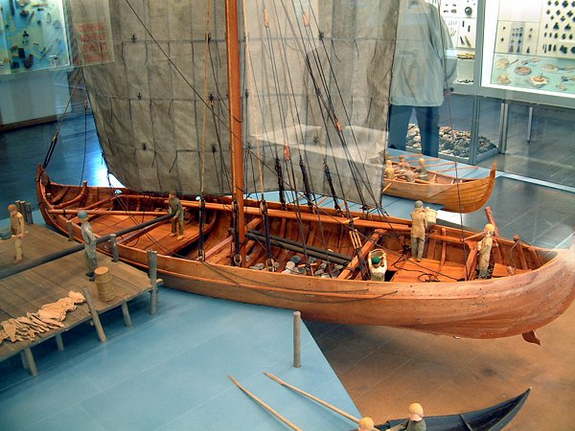
How To Invade France

HardThrasher
Published 2 Feb 2023

For more than 1,000 years British people have studied how to invade France, here then are the fruits of that wisdom.

1. Be German
2. Head for Sedan

March 22, 2025

How One Movie Drove Hitler’s Men Crazy – Rise of Hitler 12, December 1930

Filed under: Germany, History, Media — Tags: , , , , , , — Nicholas @ 04:00

World War Two
Published 20 Mar 2025

December 1930 plunges Germany deeper into chaos. Nazis and Communists join forces against Chancellor Brüning’s emergency decrees, while a shocking court decision boosts Hitler’s power. Violent riots erupt over the film All Quiet on the Western Front, and police uncover a terrifying communist bomb plot aimed at sparking civil war. With extremism rising, is Weimar democracy heading for disaster?
(more…)

March 17, 2025

German politicians are willing to literally bankrupt the country to keep the AfD out of power

Filed under: Economics, Environment, Germany, Government, Media, Politics — Tags: , , , , , — Nicholas @ 03:00

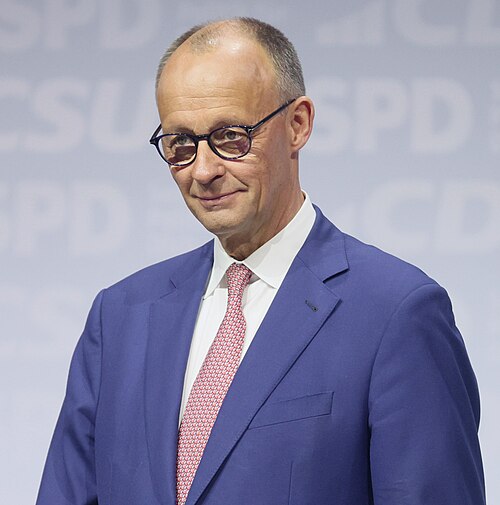
eugyppius is clearly no fan of Friedrich Merz, the CDU leader and presumptive next Chancellor of Germany, but even he seems boggled at how much Merz is willing to concede to his ideological enemies to get himself into that position:

Let us summarise, briefly, what has happened so far:

  • The CDU are the party of fiscal responsibility. His Triviality the Pigeon Chancellor Friedrich Merz presented himself throughout the campaign as an unusual fan of Germany’s constitutionally-anchored debt brake. He told everybody that he could not imagine ever borrowing in excess of 0.35% of annual GDP, so interested was he in limiting the tax burden of future generations.
  • All of the while, Merz and his advisers were scheming in secret about how they might overhaul the debt brake, firstly because they could not give the slightest shit about the tax burdens of future generations, and secondly because they spent the months since November 2023 observing what happens when a government that has no ideas is also deprived of money. “I have no ideas,” Merz said to himself during this time. “What happens if like Olaf Scholz I also end up with no money?”
  • Exactly two weeks ago, U.S. President Donald J. Trump and Ukrainian President Vladimir Zelensky had a verbal spat in the Oval Office. This spat put the fear of God into the Eurocrat establishment, for whom the Ukraine war has become a sacred and essentially religious cause. Merz capitalised on the panic to unveil his massive debt spending plan. He and his would-be coalition partners, the Social Democrats, announced that they wished to spend 500 billion Euros of debt on “infrastructure” and untold hundreds of billions of debt on defence. This would entail adjustments to the debt brake, in the same way setting your house on fire would entail adjustments to your living arrangements.
  • This massive spending package will require a constitutional amendment, which can only be achieved with a two-thirds vote of the Bundestag. In the newly elected Bundestag, Die Linke and AfD will be in a position to block this amendment and Merz will be stuck with the debt brake. Thus Merz wants to break the debt brake in the final days of the old Bundestag – a strategy that has put him in the amazing position of groveling before the election’s biggest losers. Specifically, Merz has spent the past few days feverishly negotiating with the Green Party, who will not even have any role in his government, just to get them to sign off on his insane spending plans.

I wrote a lot here and on Twitter about the election nightmare scenario I called the “Kenyapocalypse” – a hypothetical in which the Greens and the Social Democrats would each be too weak to give the Union parties a majority on their own, such that Friedrich Merz would be forced to negotiate a coalition deal with both of them at once. In the end, Kenyapocalypse did not happen; the CDU avoided it by a razor’s breadth. Merz, however, turns out to be such a monumental retard that he has managed to recreate a simulacrum of Kenyapocalypse for himself. The man has been on his knees kissing not only Social Democrat but also Green ass for days. He has been begging the Greens to sign onto his debt plan, and the Greens have finally agreed, in return for the following concessions:

  1. The “defence” funding that will be exempt from the debt brake is to be defined as widely as possible. All kinds of things will count as debt brake-exempt “defence” spending now, probably including various climate nonsense.
  2. The 500 billion-Euro “infrastructure” debt is to include 100 billion Euros specifically earmarked for the “Climate and Transformation Fund” – the central financial instrument of the energy transition. This is basically infinity windmill money, you might as well set it on fire. Beyond this specific allocation, any projects that contribute to making Germany “climate neutral by 2045” will also be eligible for the 500 billion-Euro exception. This whole thing will be a massive wad of debt for Green nonsense and I would like to take this moment to laugh at everyone who told me how happy I should be that Merz was trying to fix Germany’s bridges with this debt bullshit. Nothing of the sort is going to happen.
  3. You will note that the explicit goal of achieving “climate neutrality” by 2045 is slated to be among the very few positive political points anchored in the German constitution. “Climate neutrality” is a more expansive concept than mere “carbon neutrality”, or net zero. It describes a utopian state of affairs in which human actions have no influence on the climate whatsoever.

These are prizes the Greens could not achieve even at the height of their influence, in the 2021 elections. Strictly speaking, the entire traffic light coalition fell apart over a matter of 3 billion Euros. Now the Greens are getting 100 billion Euros for free, all because Merz is determined to become Chancellor whatever the cost.

March 14, 2025

“CDU Chancellor hopeful Friedrich Merz is screwing up”

Filed under: Germany, Government, Media, Politics — Tags: , , , , — Nicholas @ 03:00

I don’t follow German politics closely, so I depend on regular updates from euygppius, like this post from the other day which I’m sure wasn’t popular among CDU voters or personal fans of Friedrich Merz, the likely next German Chancellor:

For some time now, I’ve wanted to catalogue in one place all the ways that CDU Chancellor hopeful Friedrich Merz is screwing up. His strategic failures are really a thing to behold; I’ve never seen anybody screw up this frequently and this dramatically before. Yet I have delayed writing this post, above all because I wanted Merz to reach the end of his present streak and stop screwing up for a while. I wanted to have a complete unit – a full collection of screwups – to present to my readers for analysis. I now accept that this is never going to happen, and that the coming months and years are going to provide nothing but an unending parade of screwups, one after the other, each more inexplicable and baffling than the last. We must begin the tiresome work of trying to understand Merz’s screwing up now, because there will only ever be more of this.

As with all deeply rooted phenomena, it is hard to tell where the present parade of screwing up began. There was the lacklustre CDU election campaign and Merz’s ill-advised flirtations with the Greens that began last autumn, which cost the Union parties precious points in the polls. None of that looked auspicious, but the screwing up did not begin in earnest until January, in the wake of Aschaffenburg – when Merz decided to violate the firewall against Alternative für Deutschland. For the first time in history, the CDU, the CSU and the FDP voted with AfD in the Bundestag, first in a successful attempt to pass a meaningless if sternly worded anti-migration resolution, and then in a failed attempt to pass an actual piece of legislation that would take real steps to stem the influx of asylees from the developing world.

This manoeuvre had the real glimmerings of strategy, and so we would do well to ascribe it to Merz’s underlings rather than to Merz himself. It was only superficially an attempt to stop the tide of voter defections to the AfD. Above all, it was an effort to gain leverage over the Greens and the Social Democrats in any future coalition negotiations. Merz and his CDU, sobered by polls showing a left so weakened that they feared having to govern in a nightmare Kenya coalition with the SPD and the Greens both, wanted to send a clear message: “We’re not afraid to achieve parliamentary majorities with the AfD if you won’t go along with our programme”. Had Merz stuck to this line, he’d be in a far better place than he is today. Alas, the man chose to screw up instead. Spooked by yet another wave of leftist protests “against the right” – a “right” which now included not only the AfD but also the CDU and the CSU – Merz lost himself in a string of disavowals. A minority government with AfD support would be unthinkable, he and his lieutenants said. The Union parties would never work with the AfD, he and his lieutenants said.

In this way, Merz’s firewall gambit succeeded only in outraging and energising his future coalition partners, while achieving nothing for himself or his own party. A lot of CDU voters would like to see some measure of cooperation between the Union parties and the AfD, and for his constant never-again-with-the-AfD rhetoric Merz paid a price. The CDU underperformed the polls, crossing the finish line with a catastrophic 28.5% of the vote on 23 February. The Greens whom Merz had spent months courting – at the cost of alienating his own base! – emerged from the vote too weak to give his party a majority, and so the man was left to deal with the Social Democrats, newly radicalised not only by their own dim showing but also by Merz’s firewall trickery.

Thus it came to be that Merz ceded the high ground in negotiations to the SPD, the biggest losers in the 2025 German elections. That is itself remarkable, the kind of thing you could not be certain of achieving even if you tried. And yet it is only the beginning!

March 9, 2025

Italy’s Italian Fiasco

World War Two
Published 8 Mar 2025

Today Sebastian puts Indy and Sparty in the hot seat for questions about the war in China and North Africa. Just what is the deal with the Italian Army anyway? How much fighting did the CCP do against the Japanese? And what’s the most overlooked event of the first year of war?
(more…)

March 6, 2025

The Iron Curtain Descends – W2W 10 – News of 1946

TimeGhost History
Published 5 Mar 2025

1946 sees the world teetering on the brink of a new global conflict. George Kennan’s long telegram outlines Moscow’s fanatical drive against the capitalist West, while our panel covers escalating espionage, strategic disputes over Turkey, and the emerging ideological battle between the U.S. and the USSR. Tune in as we break down the news shaping the dawn of the Cold War.
(more…)

March 2, 2025

Which is better – Spitfire or Bf 109? – Battle of Britain Fireside Chat

Filed under: Britain, Germany, History, Military, WW2 — Tags: , , , , — Nicholas @ 04:00

World War Two
Published 1 Mar 2025

Indy and Sparty answer questions about the Battle of Britain! Spitfire vs Bf 109, the Big Wing Debate, and whether Goering had any kind of plan for the battle.
(more…)

March 1, 2025

Spoils of War: French Occupation-Production Mauser K98k svwMB

Filed under: France, Germany, History, Military, Weapons, WW2 — Tags: , , , — Nicholas @ 02:00

Forgotten Weapons
Published 11 Nov 2024

Allied troops occupied the Mauser factory complex in Oberndorf in April of 1945, right at the end of the war. The factory was put under French administration and by May that same year production lines were restarted to supply French forces (who needed as many arms as they could get). In total, just under 52,000 new K98k rifles were made for the French between May 1945 and June 1946, when the factory shut back down (and much of it was dynamited by the departing French forces).

The rifles made under French control were all marked with the receiver code svwMB. German production had switched to this code early in 1945 after producing an “a” block of svw45 rifles and about 5,500 guns in the svw45 “b” block. The factory shutdown came midway through svwMB “c” block, and the first French-property rifles had been assembled under German control and were waiting for final inspection when the factory was occupied. Mauser production was non-linear, and some “c” block receivers had been finished and shipped to German forces before the shutdown, while others remained at the factory. There is no specific transition point between French and German rifles because of this. Production of the “c” block ran into the 29,000 range, and was followed by three suffixes of entirely French-production guns; “d”, “h”, and “k”.

The K98k being produced by this point — and what was continued under the French — was the Kriegsmodell, the last-ditch simplified model of the K98k. It had many stamped and welded parts, no barrel band springs (screws were used instead) and no bayonet lug. The French produced the guns in exactly the same configuration as the Germans had, simply substituting a five-pointed star as a final inspection stamp in front of the receiver serial number. At some point later, the French rebuilt many of these rifles and added two distinctive features that are often thought to have been original factory production elements. These are the hexagonal stacking rod under the muzzle and the left-side sling bar on the stock. When these rebuilds were done, the bolts were also scrubbed and renumbered with just the last 3 digits of the receiver serial number.
(more…)

February 26, 2025

G33/40: Special Carbine for the Gebirgsjager

Filed under: Europe, Germany, History, Military, Weapons, WW2 — Tags: , , , — Nicholas @ 02:00

Forgotten Weapons
Published 8 Nov 2024

When the Germans took over control of the Czechoslovakian arms industry, they took some time to work out what out to mass produce at the Brno factory. In the interim, they decided to restart production of the Czech vz33 Mauser carbine as the Gewehr 33/40 for German mountain troops. This was a truly short carbine with a 19.4 inch (490mm) barrel, which the Czechs had used for mostly police applications. German had used a short carbine back before World War One, but with Spitzer ammunition it was deemed too harsh shooting (both blast and recoil) to be worth the reduced length. Well, that calculation was different for mountain troops.

The G33/40 also had a distinctive added metal plate on the left side of the stock to help protect it in mountain use. The G33/40 would remain in production for three years, from 1940 until 1942 (after which the rifle production changed to standard K98ks). About 130,000 were made, with 945 receiver codes in 1940 and dot codes thereafter.
(more…)

February 25, 2025

German election results

Filed under: Germany, Government, Media, Politics — Tags: , , , , , — Nicholas @ 03:00

Germany voted on Sunday (on paper, and the votes all got counted in less than 24 hours) and the most likely result will be a coalition between the centre-right CDU and the social democratic SPD, excluding the second-largest party, the extremely extreme extreme right-wing AfD:

The federal elections in Germany are over, and the preliminary count is in. The CDU/CSU have narrowly avoided the Kenyapocalypse, as the Bündnis Sahra Wagenknecht failed to meet the 5% hurdle for representation in the Bundestag by a mere 13,435 votes. In consequence, the Social Democrats and the Union parties together will command a thin but workable parliamentary majority of 328 seats. In all likelihood, we will have a black-red government under CDU Chancellor Friedrich Merz – a not-so-grand coalition of the kind we grew used to under Angela Merkel.

Here is a district-by-district map of the election results, with each district coloured according to the winning party. Black is CDU/CSU, blue is AfD, red is SPD and green is Green:

My district is the one all the way due south of Munich on the Austrian border. The CSU got 41.9% of the party vote here – one of their best showings in all of Bavaria.

The Losers

The preliminary results of each party compared to the last elections in 2021 reveal last night’s losers clearly enough:

This vote was as poignant a rejection of Olaf Scholz’s parodically bad traffic light coalition as anyone could imagine. Everybody has improved at the expense of red-green-yellow, but it is interesting to observe who has done the worst.

The Greens dominated the traffic light, and voters have dealt them the lightest punishment of all. Imagine how crazy you have to be ever to enter a government with this toxic party: They get their way on all major political issues and you get punished for it. Even so, the Greens did much worse than I thought they would. Almost everybody beyond their hardcore devotees has abandoned them, and Green Chancellor Candidate Robert Habeck (who also lost his direct mandate in Flensburg-Schleswig) has announced he will never again seek a leading role in the party. We have finally rid ourselves of his Majesty the Sun Chancellor, the champion of speech crime charges, and that alone is worth a stiff celebratory scotch.

The FDP lost far harder than the Greens. Last night was their worst showing of all time – worse even than the last time they were chased out of the Bundestag in 2013. Party chief Christian Lindner will resign and withdraw from politics, and he should. The FDP stood idly by and waved through ruinous Green policies like the building heating ordinances, all the time pleading that things would be even worse if the FDP weren’t in government. After the constitutional court in Karlsruhe killed the budgetary schemes of the traffic light, the FDP could have left the coalition, but they subjected all of us to another year of Scholzian incompetence and insanity. If there is any justice in the world the FDP will become a minor West German party that nobody thinks about anymore.

The next biggest loser of the night was the Social Democrats, who likewise booked their worst electoral result in history, and also achieved the worst-ever electoral collapse of a chancellor party in the 80-year history of the Federal Republic. Olaf Scholz has said he will not participate in any future government or coalition negotiations, and party co-chair Lars Klingbeil spoke last night of a “caesura” in the history of the SPD, promising substantial changes in party leadership. The first such change happened almost immediately, with the resignation of SPD faction leader Rolf Mützenich. Klingbeil will replace him. Many expect that Klingbeil’s co-chair, Saskia Esken, will also be forced out before long, although she is clinging to her job for the moment.

Looking from the US, CDR Salamander notes the very high turnout for a federal election with approval:

Sunday, Germany held national elections for the parliament, the Bundestag. Congrats to the German people and their ~83% turnout, the greatest I believe, since unification.

The previous government led by SPD and hobbled the the Greens was unstable at best, and was not doing great things for the German people. That would be why the SPD’s results were the worst since 1887.

    Defense Minister Boris Pistorius has clear words for the performance of his SPD. “This is a devastating, catastrophic result,” he said. “There is no way to sugarcoat it.” He congratulated the Union on its election victory. “I hope that — especially in view of Friedrich Merz’s speech in Munich yesterday — they will now strike the right tone and understand that it is about keeping the democrats together and not playing them off against each other.” An AfD at 20 percent cannot leave the Social Democrats in particular at rest.

Nuff said.

The above numbers were from Sunday night and are not final, but we can safely assume that they are roughly where the final count will be.

You need 316 seats to control, and you need 5% to enter government. That last bit puts FDP and BSW out of the picture. I’ll chat a bit about that at the bottom of the post, but let’s focus on the big boys.

First things first, Germany voted for right-wing governance. CDU/CSU (Union), and AfD got 49.2% of the vote. However, no one will form a government with them, so the Germans will not be getting what they voted for.

[…]

AfD broke into the former West Germany. Both Kaiserslautern and Gelsenkirchen voted for AfD. I also find it interesting that in addition to the West Germany/East Germany divide, the East Berlin/West Berlin divide is still there.

History is sticky.

I lived with Germans for four years, yet I don’t fully grasp German politics. Still, some political constants hold true everywhere.

Again, the Germans voted for a right-wing government. With Union having to partner with SPD, that will pull the center of the government to the left, further away of the center of the electorate … again.

Were I a German, I would want a few things, in this order:

  1. Cheaper energy — lower monthly bills and prices across the board. It will also make German manufacturing more competitive. Yes, the only way to do that is to restart the nuclear power plants. With the Greens gone, no reason not to.
  2. Stop migration. Expel illegal migrants. If someone has vacationed in the nation they claimed to seek asylum from, deport them. Etc.
  3. Be a player in ending the war in Ukraine, if it can be ended. If Russia refuses to be reasonable at the table, then fully back the Ukrainian fight. As this is aligned with the general direction of the USA and other allies, it makes sense.
  4. Redouble spending on national defense. 2% will not do. 2.5% is the floor, and must be reached faster.

All the four above will be more difficult with SPD in government. Remember my long-held position that applies everywhere, not just in Germany:

    When the center-right and center-left refuse to address the legitimate concerns of the people, especially in issues of migration and culture, then the people will look elsewhere for their concerns to be met.

If AfD were brought into government, they would be forced to moderate and to be held accountable for the action of government. With AfD in opposition — with a bone in their teeth — they will most likely, if they do not implode due to their well-known “personnel challenges”, they will increase their popularity with voters.

February 23, 2025

How WW2 Changed Espionage Forever

World War Two
Published 22 Feb 2025

In their struggle to defeat German and Japanese espionage efforts, the Allied intelligence agencies of the KGB, CIA, MI6 and DGSE are all transformed into modern, global, espionage forces. But even as East and West work together to defeat the Axis, they are fighting the first underground battles of a new Cold War against one another.
(more…)

Portuguese Navy Lugers: Model m/910 from DWM and Mauser

Filed under: Europe, Germany, History, Military, Weapons — Tags: , , , , — Nicholas @ 02:00

Forgotten Weapons
Published 2 Nov 2024

Following Portuguese Army adoption in 1908, the Portuguese Navy adopted the Luger in 1909 as the m/910. The pattern they chose was a “new model” Luger in 9x19mm, with a 100mm / 4″ barrel. A total of 650 were ordered in late 1909 and delivered between 1910 and 1912. The guns had Portuguese-language safety and extractor markings (“Seguranca” and “Carregada“) and included grip safeties. They were in a dedicated serial number range of 1 to 650. The first 350 were delivered under the reign of Portuguese King Manuel II and had crown-over-anchor chamber crests. With the establishment of a Republic in Portugal, that marking was changed to “R.P.” over an anchor, which was used on the remaining guns (351-650).

In the mid 1930s, the Navy ordered another 156 m/910 Luger pistols, this time from the Mauser company. These had the same Portuguese markings, but without any special crest — just blank chambers. They were numbered in Mauser’s export/commercial serial number range, and are in the “v” block of numbers. A few more very small orders were placed in 1941 and 1942, but these were filled with basically straight German P08 pistols.
(more…)

February 22, 2025

“German politics have become a sad farce”

Filed under: Germany, Media, Politics — Tags: , , , , , , — Nicholas @ 03:00

German elections will be held very soon, and the all-party-but-one alliance to keep the extremely extreme extreme right wing out is sagging badly but the technocrats and the media are doing everything they can to hold the line:

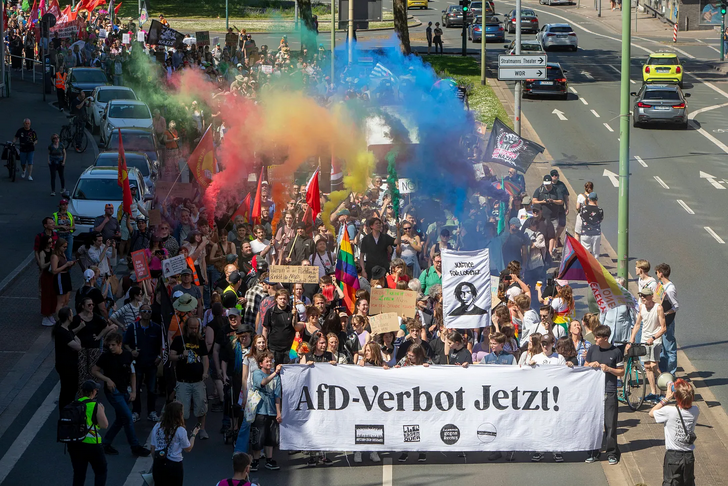
“We are the cordon sanitaire – no cooperation with the AfD”: the banner leading the Berlin protest against AfD and CDU on 2 February, which was financed in part by the German taxpayer and arranged by semi-affiliated apron organisations of the governing Green and Social Democrat parties of Germany.

Behind all of the disingenuous fact-checking and the performative outrage, one detects in German mainstream commentary the deeper recognition that J.D. Vance was very far from wrong about a great many things in his landmark speech at the Munich Security Conference last Friday. Only the truth can provoke the kind of panicked and intemperate reactions that followed Vance’s remarks. German politics have become a sad farce – a ridiculous performance that every day I find a little more embarrassing. The primary reason for this farce, as Vance said, is the fear our political class harbour towards their own people, and their complete inability to reverse course on any of the catastrophic policies they have put their names to, from the energy transition to mass migration to the war in Ukraine.

The firewall will keep German politics frozen in amber for some time still. It will keep everything as it was ten years ago under Angela Merkel, until this inflexible, sclerotic system suddenly breaks and unleashes all of the potential energy it has accumulated in one great chaotic crisis. And make no mistake about it, that crisis coming, precisely because the controlled demolition that would be in the best interests of our rulers is also utterly beyond their imaginations and their talents. This might read at first like a pessimistic post, but I promise it’s not. I’m developing a cautious optimism almost despite myself as I try to ponder what will happen in the coming months.

In two days and thirteen hours, German voters will elect a new Bundestag. The polls could not be worse for the centre-right Christian Democratic Union and their smaller Bavarian sister party, the Christian Social Union. The latest INSA survey presents a nightmare scenario for both parties. It has CDU/CSU at 30%, Alternative für Deutschland at 21%, the Social Democrats (SPD) at 15%, the Greens at 13%, Die Linke (the Left Party) at 7% and the Bündnis Sahra Wagenknecht (BSW) at 5%.

On the left are the INSA poll results, and on the right is the “theoretical seat distribution” that these numbers, if they were election results, would yield.

Readers often ask me whether the polls are understating AfD support. That is possible, but I’d argue the question is not important, because whether AfD come in at 20% or 23% won’t make much difference. Everything actually depends on the small socialist parties that few are talking about right now. Die Linke – successor to the DDR-era Socialist Unity Party – seems all but certain to make it back into the Bundestag, following a social media blitz that has won them wild popularity with young voters. The BSW, meanwhile, probably have even odds of clearing the 5% hurdle for representation.

If both Linke and BSW make it in, CDU and CSU are absolutely screwed, and this by their own cowardly insistence on the firewall. Refusing AfD votes means they will have to cave to the SPD and the Greens on everything to form a coalition with them. Otherwise, the left-wing parties will band together, hijack Bundestag procedure and form their own minority government right under their noses.

That’s right: The firewall means we stand a real chance of getting basically the same deeply unpopular SPD-Green government we have now, additionally radicalised by the hardline socialists of Die Linke. This is precisely the thing nobody wants and precisely the thing our political elites are prepared to deliver, all to keep the Evil Fascist Nazi Party away from power. If this happens, we’ll get a paralysed leftoid Chancellor who is incapable of so much as passing a budget. The AfD will climb in the polls and the CDU will bleed voters until the pressure grows so great, or the political crisis so intense, that they decide to break the firewall after all and chase the leftists out of power.

February 21, 2025

Berlin ’45: City of Spies

Filed under: Britain, France, Germany, History, Russia — Tags: , , , , — Nicholas @ 04:00

World War Two
Published 20 Feb 2025

In 1945, Berlin is a city in ruins — but for the world’s spies, it’s a goldmine. As the Soviets, Americans, British, and French carve up the capital, they scramble to seize Nazi secrets, recruit informants, and outmaneuver each other in an intelligence war that will define the Cold War. From stolen blueprints to fabricated reports, Berlin becomes the world’s first battleground of espionage.
(more…)

February 16, 2025

Bismarck’s Final Battle – The Bismarck Part 4

Filed under: Britain, Germany, History, Military, WW2 — Tags: , , , , , — Nicholas @ 04:00

World War Two
Published 15 Feb 2025

It is the end for the Bismarck; crippled by airstrikes, there is no hope of salvation. As the British battleships close in, Admiral Gunter Lutjens gives a final Sieg Heil, readies his guns, and prepares to meet his destiny.
(more…)

« Newer PostsOlder Posts »

Powered by WordPress