Quotulatiousness

September 3, 2012

Military-political jockeying in the East China Sea

Filed under: China, Japan, Military — Tags: , , , , — Nicholas @ 10:26

At sp!ked, James Woudhuysen has a long essay on the many tiny islands in the East China Sea (and South China Sea) that may feature in future shooting wars:

Outside East Asia, very few people know where the Senkaku islands are. But inside East Asia, the Senkaku prompt great bitterness between Japan, China and Taiwan. At stake is the national pride of each country, which believes that it alone owns them. At stake also are each country’s hopes that it might find oil or gas nearby, and its desire to sail round them unimpeded. But there is more. The Senkaku, and islands like them, signify how, among all the continents in the world, Asia’s past century has been the most enduringly explosive — and how its next could follow the same pattern.

Two hundred nautical miles (nm) west of the Japanese prefecture of Okinawa, 200 nm east of the province of Fujian in the People’s Republic of China, and just 120 nm north-east of Taiwan, there lies an archipelago of five uninhabited islands, covering just seven square kilometres and covered in jungle. Coming from Tokyo, a team of 25 city officials, surveyors and — inevitably — estate agents circled the islands just this weekend, hoping to reinforce Japan’s control over them. In the past, similar moves by both Japan and China have prompted fury, and not a little diplomatic concern elsewhere.

In mid-August, a group of Chinese sailed to the islands in order to uphold Beijing’s claim to them, only to meet with deportation at the hands of Japan. A little later, 150 Japanese nationalists came by in a flotilla and 10 of them swam ashore to raise the Japanese flag. Then, in the latest of a series of tit-for-tat episodes stretching back years, demonstrators in several Chinese cities insisted that Japan get out of the islands. All that’s missing now is that, on top of Tokyo’s rule over what it calls Senkaku and Beijing’s claim over what it calls Diaoyu, is a Taiwanese incursion over what they call the Diaoyutai.

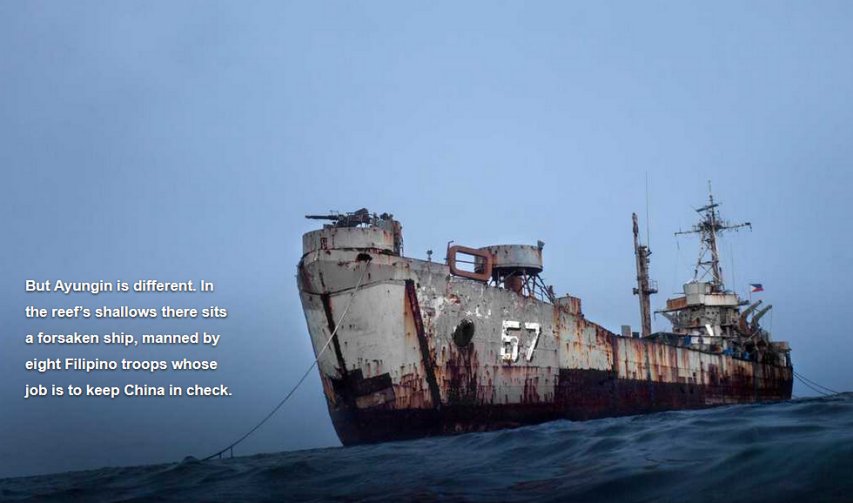
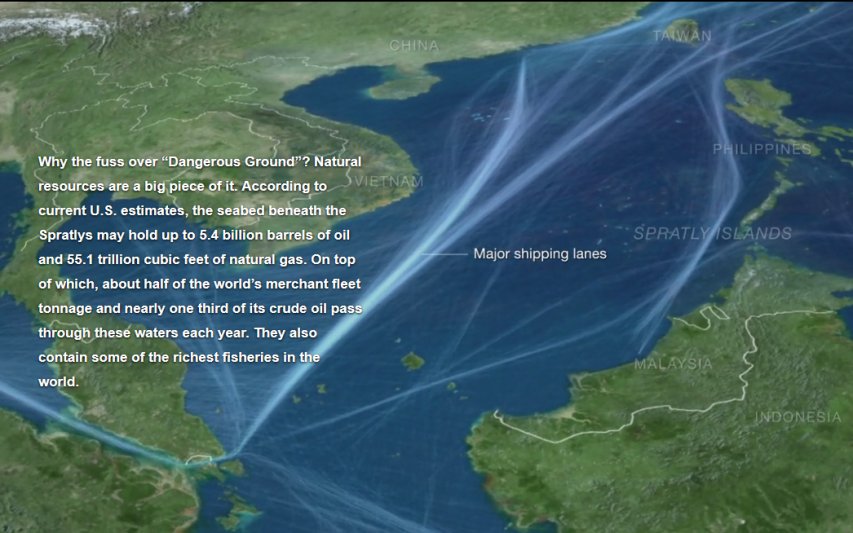
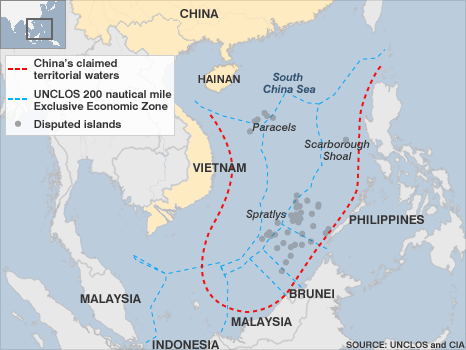
What’s going on? Could all this lead to some kind of fearsome war between Japan, China and Taiwan? And why are there disputes not only in the East China Sea, but also in the South China Sea? There, south-east of Hainan Island (China) and east of Vietnam, China controls the Paracel Islands and resists the complaints of Taiwan and Vietnam about them. There, too, all three parties occupy and are in contention over the myriad Spratly islands, which, lying west of the Philippines and north of Malaysia and Brunei, are also partly controlled and certainly contested by these three nations.

September 2, 2012

The (mostly) forgotten Soviet-Japanese conflict of 1939

Filed under: China, History, Japan, Military, WW2 — Tags: , — Nicholas @ 11:17

Japan’s conduct of the opening stages of World War 2 were literally schizophrenic: the Imperial Japanese Navy viewed their primary opponent as the United States, while the Imperial Japanese Army viewed their primary opponent as the Soviet Union. The army’s fears were based on a little-known but very significant campaign in an undeclared war fought between Japan and the Soviet Union in 1939:

In the summer of 1939, Soviet and Japanese armies clashed on the Manchurian-Mongolian frontier in a little-known conflict with far-reaching consequences. No mere border clash, this undeclared war raged from May to September 1939 embroiling over 100,000 troops and 1,000 tanks and aircraft. Some 30,000-50,000 men were killed and wounded. In the climactic battle, August 20-31, 1939, the Japanese were crushed. This coincided precisely with the conclusion of the German-Soviet Nonaggression Pact (August 23, 1939) — the green light for Hitler’s invasion of Poland and the outbreak of World War II one week later. These events are connected. This conflict also influenced key decisions in Tokyo and Moscow in 1941 that shaped the conduct and ultimately the outcome of the war.

This conflict (called the Nomonhan Incident by Japanese, the Battle of Khalkhin Gol by Russians) was provoked by a notorious Japanese officer named TSUJI Masanobu, ring-leader of a clique in Japan’s Kwantung Army, which occupied Manchuria. On the other side, Georgy Zhukov, who would later lead the Red Army to victory over Nazi Germany, commanded the Soviet forces. In the first large clash in May 1939, a Japanese punitive attack failed and Soviet/Mongolian forces wiped out a 200-man Japanese unit. Infuriated, Kwantung Army escalated the fighting through June and July, launching a large bombing attack deep inside Mongolian territory and attacking across the border in division strength. As successive Japanese assaults were repulsed by the Red Army, the Japanese continually upped the ante, believing they could force Moscow to back down. Stalin, however, outmaneuvered the Japanese and stunned them with a simultaneous military and diplomatic counter strike.

[. . .]

But what if there had been no Nomonhan Incident, or if it had ended differently, say in a stalemate or a Japanese victory? In that case, the Japanese decision to move south might have turned out very differently. A Japan less impressed with Soviet military capability and faced with choosing between war against the Anglo-American powers or joining Germany in finishing off the U.S.S.R., might have viewed the northern course as the best choice.

If Japan had decided to attack northward in 1941, that could well have changed the course of the war, and of history. Many believe that the Soviet Union could not have survived a two-front war in 1941-1942. The Soviet margin of victory in the Battle of Moscow, and at Stalingrad a year later, was excruciatingly thin. A determined Japanese foe in the east might have tipped the balance in Hitler’s favor. Furthermore, if Japan had moved against the Soviet Union in 1941, it could not also have attacked the United States that year. The United States might not have entered the war until a year later, under circumstances in Europe far more unfavorable than the actual grim reality in the winter of 1941. How then would Nazi domination of Europe been broken?

August 14, 2012

O’Neill: London outdid Beijing in politicizing the Olympics

Filed under: Britain, China, Sports — Tags: , , , — Nicholas @ 08:22

Brendan O’Neill says that the London Olympics were far more politicized than the Beijing games in 2008:

From the flurry of fanboy commentary that followed Danny Boyle’s am-dram opening ceremony to the insistence that the Games represented the coming to fruition of the post-Diana dream of a new, less stuffy Britain, the urge to politicise the Games has been intense. That the political classes have sought so shamelessly to usher in ‘another kind of Britain’ on the back of the Games speaks volumes about their desperate need for a new national narrative, and their disillusionment with the democratic route to social overhaul.

Normally we frown upon elites that heap their political obsessions on to mass sporting events. We think of Hitler turning the Berlin Games into an advert for Aryan superiority (a vision shot down by Jesse Owens) or of the Beijing opening ceremony’s thousands of fantastically coordinated drummers and boastful history lesson, described by one British hack last week as ‘crypto-fascist’. And yet, Britain’s ostensibly liberal observers thought nothing of turning 2012 into an advert for their own allegedly superior way of life and thinking.

The tone was set by Labour MP and historian Tristram Hunt, who described Boyle’s opening ceremony as the ‘march past’ — that is, victory parade — of his side in the Culture Wars. The ceremony was proof, said Hunt, that ‘the left took victory in the Culture Wars’, and moreover that a New Britain was being born: if the Queen’s Jubilee celebrated a ‘staid and nostalgic national identity’, this ceremony ‘offered an attractively contradictory, complicated, and above all creative conception of these Isles of Wonder’.

There has since been a concerted effort to turn the ‘bonkers’ opening ceremony into a new national narrative. Somewhat defensively, the Guardian’s Jonathan Freedland insists that it is ‘not just Guardian types’ who are exalting in the new political vision provided by both the ceremony and the multicultural message of the Games that followed — the whole nation is, apparently, recognising that ‘we have glimpsed another kind of Britain’, and that we should ‘love the country we have become — informal, mixed, quirky — rather than the one we used to be… reactionary’.

August 13, 2012

After five years, the Great Recession still shows little sign of ending

Filed under: China, Economics, Europe, USA — Tags: , , — Nicholas @ 09:02

For your daily dose of doom, here’s Ambrose Evans-Pritchard at the Telegraph:

The world remains in barely contained slump. Industrial output is still below earlier peaks in Germany (-2), US (-3), Canada (-8) France (-9), Sweden (-10), Britain (-11), Belgium (-12), Japan (-15), Hungary (-15) Italy (-17), Spain (-22), Greece (-27), according to St Louis Fed data. By that gauge this is proving more intractable than the Great Depression.

[. . .]

The original trigger for the Great Recession has since faded into insignificance. America’s house price bubble — modest by European or Chinese standards — has by now entirely deflated. Warren Buffett is betting on a rebound. Fannie and Freddie are making money again.

Five years on it is clear that subprime was merely the first bubble to pop, a symptom not a cause. Europe had its own parallel follies. Britons were extracting almost 5pc of GDP each year in home equity by the end. Spain built 800,00 homes in 2007 for a market of 250,000. Iceland ran amok, so did Latvia and Hungary. The credit debacle was global. If there was an epicentre, it was Europe’s €35 trillion banking nexus.

[. . .]

A study by Stephen Cecchetti at the Bank for International Settlements concludes that debt turns “bad” at roughly 85pc of GDP for public debt, 85pc for household debt, and 90pc corporate debt. If all three break the limit together, the system loses its shock absorbers.

“Debt is a two-edged sword. Used wisely and in moderation, it clearly improves welfare. Used imprudently and in excess, the result can be disaster,” he said.

Did China peak in 2008?

Walter Russell Mead wonders if the Chinese economy actually hit its peak in 2008 and will not be able to get back to that level of performance:

According to The Diplomat, the long term outlook is even more depressing. China will have to confront a series of structural challenges if it is to continue to achieve the kind of dynamic growth that lifted the country from economic backwater to emerging great power in just three decades.

The most obvious challenge is demographics. A RAND study observed that the proportion of the Chinese population of working age peaked in 2011 and began slowing this year. The share of the elderly population is rising. Healthcare and pension costs will soar as a result. So will labor costs. Investment and savings will diminish. In short, China may face the prospect, unknown in human history, of growing old before it gets rich.

The environment presents another dilemma. Like many rapidly industrializing economies, China sacrificed environmental protection at the altar of economic growth. But the effects of this approach have taken a toll: already, argues The Diplomat, ”Water and air pollution today cause 750,000 premature deaths and around 8 percent of GDP.” And as Via Meadia recently pointed out, the political costs of this approach are starting to mount as well. An outbreak of NIMBYism has forced many local officials to cancel major industrial projects as ordinary Chinese citizens demand an end to environmentally unsound development.

Of greater concern is that China has backed away from market reforms in the last decade and embraced a version of “state capitalism” that emphasizes the state far more than it does capitalism. But as state-run entities have become more powerful, their political backers — and financial beneficiaries — have an even greater stake in blocking attempts at reform.

H/T to Jon, my former virtual landlord, for the link.

August 12, 2012

China’s economic situation in Keynesian and Austrian terms

Filed under: China, Economics — Tags: , , , , — Nicholas @ 09:27

Tyler Cowen in the New York Times:

Keynesian economics holds that aggregate demand — the sum of all consumption, investment, government spending and net exports — drives stability, and that government can and should help in difficult times. But the Austrian perspective, developed by the Austrian economists Ludwig von Mises and Friedrich A. Hayek, and championed today by many libertarians and conservatives, emphasizes how government policy often makes things worse, not better.

Economists of all stripes agree that China may be in for a spill. John Maynard Keynes emphasized back in the 1930s the dangers of speculative bubbles, and China certainly seems to have had one in its property market.

[. . .]

The Austrian perspective introduces some scarier considerations. China has been investing 40 percent to 50 percent of its national income. But it is hard to invest so much money wisely, particularly in an environment of economic favoritism. And this rate of investment is artificially high to begin with.

Beijing is often accused of manipulating the value of its currency, the renminbi, to subsidize its manufacturing. The government also funnels domestic savings into the national banking system and grants subsidies to politically favored businesses, and it seems obsessed with building infrastructure. All of this tips the economy in very particular directions.

The Austrian approach raises the possibility that there is no way for China to make good on enough of its oversubsidized investments. At first, they create lots of jobs and revenue, but as the business cycle proceeds, new marginal investments become less valuable and more prone to allocation by corruption. The giddy booms of earlier times wear off, and suddenly not every decision seems wise. The combination can lead to an economic crackup — not because aggregate demand is too low, but because the economy has been producing the wrong mix of goods and services.

Lots of earlier discussion of the problems in China’s economy here.

Relative poverty is not a very useful measurement

Filed under: China, Economics — Tags: , — Nicholas @ 08:37

At the Adam Smith Institute blog, Tim Worstall explains why measuring relative poverty isn’t helpful:

Here actually is the problem with using relative poverty as a measure:

    Compared to the 1960s, China today has higher income inequality, but also incomparably lower levels of material poverty. By Brady’s definition, China was less impoverished in the near-starvation years of the 1960s than it is as an economic superpower today. According to the OECD, during the last three decades the share of Chinese living in absolute poverty dramatically declined from eight in ten to one in ten (Garroway and de Laiglesia 2011). During the same period, relative poverty, measured exactly as Brady measures it, roughly doubled. Although inequality and relative poverty are not irrelevant for measuring the well-being of a society, we should be apprehensive about a measure of poverty that is incapable of detecting the largest decline in material poverty in human history.

As pointed out, a measure of poverty that not just ignores, but actually gets the sign wrong on, the largest reduction in poverty in the history of our species is of limited value.

[. . .]

Which leads us to something of a conclusion: it’s fine to consider the distribution of incomes within a society. But we do it rather too much with the constant political obsession over relative poverty. We need to be paying a lot more attention to absolute standards of living: most especially how these change over time. Most specifically I’m thinking about the effects attempts to reduce relative poverty might affect our ability to increase absolute standards of living in the future.

August 1, 2012

Badminton in the headlines, but not in a good way

Filed under: Britain, China, Sports — Tags: , , , , — Nicholas @ 09:53

It’s not a sport that generally attracts a lot of attention during the Olympics, but several Badminton players are accused of deliberately losing games to secure better match-ups in the elimination round:

China’s Olympic sports delegation has begun an investigation into allegations two badminton players “deliberately lost” their match, state media say.

Doubles players Yu Yang and Wang Xiaoli are among eight players charged by the Badminton World Federation (BWF) with “not using one’s best efforts to win”.

Four players from South Korea and two from Indonesia have also been charged.

Some of the players said they were saving energy. Reports say they wanted to lose to secure an easier draw.

It may not be a technical violation of the rules to “take it easy” in a non-critical game, but it does sound as if these particular players didn’t even bother to make it look like they were competing.

The match between the top-seeded Chinese duo and South Koreans Jung Kyung-eun and Kim Ha-na came under scrutiny after the longest rally in their game lasted four shots.

Match referee Thorsten Berg came on court at one point to warn the players, who also appeared to make deliberate errors.

Both pairs were already through to the quarter-finals.

The Chinese duo lost, meaning — Xinhua noted — that if both Chinese pairs continue to do well, they will not meet until the final.

Update: The IOC Badminton World Federation (BWF) brings out the ban hammer:

EIGHT female badminton players have been sent home from the Olympics, disqualified by the sport’s world federation after throwing matches in a case condemned by London Games boss Sebastian Coe as “depressing” and “unacceptable”.

A disciplinary hearing held this morning, which Australia’s badminton coach made a submission to, found that four players from South Korea, two from Indonesia and the competition’s top seeds from China deliberately tried to lose their qualifying matches in an attempt to manipulate their draws.

The four sets of doubles teams were charged after matches on Tuesday littered with basic errors. Accused by badminton’s international governing body of “conducting oneself in a manner that is clearly abusive or detrimental to the sport”, they were ultimately found guilty of trying to lose with the motive of improving their positions for the knockout stages.

The spectators who attended the matches on Tuesday night will not be offered refunds by the London organizers, according to the BBC:

Update, the second: I couldn’t find any actual footage of the match in question until CTV posted it (not embeddable, unfortunately). It’s amazingly bad. The audience absolutely deserve a full refund.

July 23, 2012

China’s latest ploy in the South China Sea

Filed under: China, Military, Pacific — Tags: , , , — Nicholas @ 12:29

To cement Chinese claims to the vast majority of the South China Sea, a garrison is being established in the Paracel Islands:

China’s powerful Central Military Commission has approved the formal establishment of a military garrison for the disputed South China Sea, state media said, in a move which could further boost tensions in already fractious region.

The Sansha garrison would be responsible for “national defence mobilisation … guarding the city and supporting local emergency rescue and disaster relief” and “carrying out military missions”, the Xinhua news agency said on Sunday.

China has a substantial military presence in the South China Sea and the move is a further assertion of its sovereignty claims after it last month upped the administrative status of the seas to the level of a city, which it calls Sansha.

Sansha city is based on what is known in English as Woody Island, part of the Paracel Islands also claimed by Vietnam and Taiwan.

July 19, 2012

The messy internal state of North Korea

Filed under: Asia, China, Economics, Media — Tags: , , , , , , — Nicholas @ 09:49

Strategy Page on internal affairs of North Korea in the early stage of Kim Jong Un’s leadership:

China remains the foreign power with the most influence over North Korea, but that isn’t saying much. When given unwelcome advice from China, which represents nearly 80 percent of foreign trade and the only source of free food and fuel aid, North Korea still tends to adopt a suicidal attitude. For the northern leadership, it’s “death before dishonor” and that means Chinese demands, even backed by threats of aid cuts, are ignored. For this reason, China is believed involved in the current reorganization of the senior North Korean leadership. China has long developed friends and relationships among the North Korean elite. As corruption became more of a factor in the last decade, China knew how to cope. China is awash in corruption, and Chinese leaders have learned how to use it (even as they struggle to lose it). In effect, China’s decade-long effort to overwhelm the “old school” faction in North Korea appears to have succeeded. But the “old school” crowd are still numerous, scared and armed. This could get messy. This does not bother China, which has plenty of experience with messy.

In the last month or so North Korea’s new leader (Kim Jong Un) has removed hundreds of military and government officials and promptly installed younger replacements. Un has made it clear, in public announcements, that it’s time for a new generation. Many of the dismissed older officials were seemingly loyal to and supportive of Un, so this appears to be more a desire to shake up the leadership, than to purge opponents. Kim Jong Un isn’t doing this by himself, as he has a small group of advisors he relies on a lot. This includes his uncle, Jang Sung Taek, who is married to Kim Jong Ils sister. Jang has long been a powerful government official, and is believed to be quite wealthy. That’s because Jang has a lot to say about how North Korea earns (by legal, or illegal means) foreign currency. In a country so extremely poor, the man who controls the most money has a lot of power. Jang, for example earlier this year ordered house searches of families believed to be hoarding foreign currency (Chinese or American), rather than, as the law demands, putting it in the bank. People do not want to put their foreign currency in the bank because the government pays you less for it (in North Korean currency) than the black market money changers (who give fair market value). Jang understands how the North Korean economy really works, and is trying to increase government control over the “new economy.” Yang and his wife have a lot more knowledge of, and experience with, the North Korea government and economy than their nephew Kim Jong Un and, for the moment, they have his ear, and trust.

[. . .]

The food situation in the north is getting worse, with food prices (in the growing number of free markets) at record levels. Government distributions of food are declining. Worse, the government is printing more money, increasing inflation (because there’s now more money chasing the same amount of food.)

North Korean censors finally caught on to the fact that young North Koreans had been taking South Korean or Western popular songs, adding new lyrics that have a double (anti-government) meaning in the north, and spreading them widely. North Korea doesn’t have much Internet access, but there are memory sticks, CDs and floppy disks. Stuff gets around, and now the police have been ordered to crack down on a list of over 500 subversive songs. The cops love this sort of thing, as it creates plenty of new bribery opportunities. That’s because many of those involved in this music conspiracy are children of ruling families, and can afford a fine (rather than anger their parents by getting arrested.)

Update: In the Guardian, Paul Watson says we’re all sheep and ignoring the horrific crimes of South Korea and vilifying the peace-loving, friendly, warm-hearted North Koreans:

Reunification and conciliation are usually portrayed as South Korean concepts, while North Korea is seen as a closed state, hostile to such talk on “idealistic grounds” – a view perpetuated by media outlets’ lack of interest in all recent North Korean initiatives. In fact it is almost impossible to find any piece of positive European journalism relating to the Democratic People’s Republic of Korea (DPRK). The days of cold war pantomime journalism and great ideological battles might be over, but North Korea remains an area in which journalists have free licence for sensationalism and partiality.

The lack of western sources in North Korea has allowed the media to conjure up fantastic stories that enthrall readers but aren’t grounded in hard fact. No attempt is made to see both sides of the Korean conflict: it is much easier and more palatable to a western audience to pigeonhole the DPRK as a dangerous maverick state ruled by a capricious dictator and South Korea as its long-suffering, patient neighbour.

These roles are dusted off whenever there are flare-ups, such as the Yeonpyeong Island incident of 2010 when North Korea was condemned for firing shots at South Korean military and civilians in an “unprovoked attack”. It was not widely reported that South Korea had been test firing artillery in a patch of ocean that North Korea claims ownership of or that North Korea’s repeated demands for an explanation were ignored. While military intervention may not have been wise, it was far from the random act of hostility it was made out to be.

July 13, 2012

Questioning the accuracy of official Chinese economic figures

Filed under: Business, China, Economics, Government — Tags: , , , — Nicholas @ 09:50

Yes, we’ve heard this several times before, and for good reason:

China’s relatively mild slowdown in the second quarter has reignited a controversy about whether its official statistics can be trusted.

Chinese growth edged down to 7.6 per cent in the second quarter from 8.1 per cent in the first quarter, and analysts said the momentum in June, from stronger bank lending to rising investment, pointed to a rebound in the second half of the year.

But rather than delivering reassurance, the numbers instead provoked questions about whether the reality is worse than the government is letting on.

Economists with Barclays noted that a deceleration in industrial production was consistent with 7.0-7.3 per cent growth. Analysts at Capital Economics said that the true figure was probably closer to 7.0 per cent.

[. . .]

Doubts about Chinese data have a fine pedigree. Li Keqiang, who is widely expected to succeed Wen Jiabao later this year as premier, confided to U.S. officials in 2007 that gross domestic product was “man made” and “for reference only”, according to a diplomatic cable published by WikiLeaks.

Earlier posts on the Chinese economy are here.

July 6, 2012

US Navy re-thinks their Pacific strategy options

Filed under: China, Military, Pacific, USA — Tags: , , , — Nicholas @ 08:07

Strategy Page discusses the historical uses of the submarine in the Pacific and why things would not be the same in the case of a Chinese war:

The U.S. Navy is rethinking how it will use its submarines in a future Pacific War. The problem is that a campaign against Chinese shipping is unlikely, in part because of what actually happened during the last great anti-shipping campaign, which occurred during World War II (1939-45). After the war, the U.S. analyzed its operations against Japanese shipping and found that submarines were important, but not the only weapon effective against shipping. Some 8.9 million tons of Japanese shipping was sunk or so seriously damaged (disabled) at the end of the war. Submarines accounted for 54.7 percent of this. But 16.3 percent was attributable to carrier-based aircraft, 14.5 percent to land- based planes and 9.3 percent to mines (most dropped by B-29s). Less than one percent was due to surface gunfire, and the balance of 4 percent was caused by accidents.

[. . .]

Meanwhile, the U.S. has adopted a new approach to any potential war with China. The U.S. Department of Defense has been told that, for the foreseeable future, there will be no more large-scale land campaigns. The air force, navy, and marines responded with a plan (AirSea Battle) that has been in the work for years. The new strategy is designed to cope with the rising power of China in the Pacific. AirSea Battle involves tighter planning and coordination of navy, marine, and navy forces, plus the development of some new weapons and tactics and cooperation with allies.

[. . .]

AirSea battle concentrates on military operations. But these will be heavily influenced by economic factors. For example, during World War II the United States was a largely self-sufficient “continental power.” We exported much (more than any other nation on the planet), but did not have to import much. That has changed. Now the U.S. has to import a lot of its oil, special raw materials (like “rare earths” from China) and a lot of manufactured goods. The U.S. is now like much of the rest of the world, China included. If there were a maritime blockade of China, the U.S. and many other Chinese trading partners would suffer severe economic disruptions. There would be massive unemployment for all concerned and that would happen despite energetic efforts by everyone to find alternative sources to goods no longer available because of the disruption of the China trade.

[. . .]

Meanwhile, the nuclear submarine community has done the math and found that their greatest contribution these days is not attacking enemy warships, but land bombardment with cruise missiles and intelligence collecting. Since the first nuclear subs showed up in the 1950s, only one, a British boat, has used a torpedo to sink a hostile warship. But hundreds of cruise missiles have been launched at land targets and uncounted (because they are highly classified) intelligence missions have been, and continue to be, carried out. All that is the recent past for subs, and is likely to be the future as well. World War II in the Pacific is not likely to be rerun. The U.S. Navy still expects its subs to go after enemy warships, and its surface and air forces to battle enemy subs. But a major war on shipping is much less likely.

June 29, 2012

From Maoism to Kleptocracy in one generation

Filed under: Business, China, Economics, Government — Tags: , , , — Nicholas @ 08:14

China’s economic growth has been one of the wonders of the modern world, as one of the poorest nations has pulled itself well up the economic tables over just the last twenty years. What it has not done, however, is replace the communist leadership with democratically elected leaders. What has happened is that switching from a pure command economy to a freer economy has created fantastic opportunities for graft and corruption. Opportunities which have been grasped eagerly by party leaders and their friends and family:

As I set out in The Fall of the Communist Dynasty, and a HT to John Hempton’s piece within which he contends that the entire Chinese economy is a Kleptocracy , this week we have news from Citron Research who reports that Evergrande Real Estate Group Ltd is ‘a deception on a grande scale’ .

Citron quote ;-

‘Evergrande who ranks among the top 5 Chinese property companies. Our analysis and primary research reveal that: 1] Evergrande is insolvent; and 2] Evergrande will be severely challenged from a liquidity perspective. The Company’s management has applied at least 6 accounting shenanigans to mask Evergrande’s insolvency. Our research indicates that a total write-­down of RMB 71bn is required and Evergrande’s pro forma equity is negative 36bn.’

What sparked Citrons interest in Evergrande was the mail order doctorate the chairman claimed from the University of West Alabama, a small college 230 miles north of New Orleans with 2300 on-campus students. Evergrande’s is one of the top 5 players in the Chinese property market that fell for its 8th consecutive month in May. My experience with these types of matters is that small things can be excellent markers to greater problems. Small examples of dishonesty in one area of life are often reflected in larger undiscovered examples in other areas of a person’s life.

[. . .]

Zoomlion has an interesting business model, it is similar in many of ways to Caterpillar, except whereas Caterpillar report falling sales, Zoomlion reports astounding sales growth with a fivefold increase in revenue since 2007. Zoomlion customers sometimes buy ten concrete mixers when they planned to initially by one or two. They have a perverse incentive to buy more than they need because these concrete trucks are purchased via finance packages supplied by Zoomlion.

Then the machines can be garaged and used as collateral to borrow further funds from other lenders. Zoomlion continues to grow while cement sales have plunged. In May, cement output increased 4.3 per cent YoY, down from 19.2 per cent recorded last year. Zoomlion’s new debt of $22.5B buys roughly 900,000 trucks which could produce enough concrete (at six loads a day) to build over thirty Great Pyramids of Giza a day.

[. . .]

All revolutions have class and economic matters at their core. Ironically, the difference in a future Chinese collapse is that the expropriators in China in this cycle have been the Communist Party political class. The CCP have become the Kleptopreneur bourgeoisie who have expropriated from China’s proletariat (the industrial working class), via corruption and theft from the state and state owned enterprises. The Ka-Ching Dynasty is responsible for the greatest looting of a nation in history.

Marx wrote that modern bourgeois society (Capitalism) has conjured up such gigantic means of production and of exchange, that it is like the sorcerer who is no longer able to control the powers of the nether world whom he has called up by his spells (Karl Marx)

The CCP ‘sorcerers’ have summoned up a political and economic nether world that is so systemically corrupted it is in the process of spiralling into same revolutionary physics that destroyed the original Chinese merchant bourgeoisie that Mao overthrew.

Earlier posts on China’s economy are here. H/T to Cory Doctorow for the link.

June 28, 2012

Don’t expect Korean re-unification to follow the German script of the 1990s

Filed under: Asia, China, Japan, Media, Military — Tags: , , , , , , — Nicholas @ 09:03

Some potentially chilling geo-strategic news from China:

The government has had reports issued denying American and Japanese studies of the rapid expansion of Chinese military power in the last decade. The Chinese reports were issued in Chinese, English and Japanese. China’s official line is that their armed forces are only for defense and are growing at a far more modest rate than foreign analysts are claiming. The Chinese are having a hard time refuting the foreign analysts, given the availability of satellite photos and many cell phone images of new Chinese weapons. China tries to control this sort of information leak, but has been unable to do so.

Another problem for China is the fact that internal propaganda campaigns cannot be kept secret from the outside world. This was never possible, but even with a heavily censored Chinese Internet, such embarrassing news quickly gets to an international audience very quickly. The latest example of this is remarks by Chinese officials about the “Great Wall of China.” The new claims are that the wall was larger than its current official size, and incorporates parts of North Korea. This was alarming news in South Korea, which is preparing to take over North Korea when the communist dictatorship up there collapses. The collapse is expected soon. With this new “Great Wall” argument the Chinese are announcing that if the North Korean government losses control, China will reclaim some “lost provinces” and the foreigners (including South Korea, Japan and the United States) had better stay out of it.

Given the Chinese claims in the South China Sea (that is, almost all of it), it is probably no surprise to the other nations that China might also have designs on part or all of the territory of modern day North Korea. When the German Democratic Republic (aka East Germany) collapsed in the early 1990s, the Federal Republic (West Germany) was able to pick up the pieces in a relatively co-ordinated manner. China may not want South Korea doing the same thing after a North Korean collapse.

June 26, 2012

China’s aircraft carrier moves closer to operational status

Filed under: China, Military — Tags: , , — Nicholas @ 09:13

And update from Strategy Page on the Chinese aircraft carrier Shi Lang:

China’s first aircraft carrier, the Shi Lang (formerly the Russian Varyag), recently went to sea for the eighth time since it began sea trials last August. The latest trip is to last 13 days. The previous longest trip was last November 28, when the Shi Lang went out for 12 days. The first trip (last August 11) was for three days, most subsequent ones were for 9-11 days. So far, the Shi Lang has been at sea for ten weeks. All preparations have been made for flight operations, which have not taken place yet.

The Shi Lang has apparently performed well during these extended sea trials. Three months ago some aircraft were spotted on the flight deck. This was probably to make sure aircraft could be moved around the deck, and down to the hanger deck, without any problems. Last year China confirmed that the Shi Lang will primarily be a training carrier. The Chinese Navy is supposed to take possession of the Shi Lang later this year. The Chinese apparently plan to station up to 24 jet fighters and 26 helicopters on the Shi Lang.

[. . .]

China is believed to be building the first of several locally designed aircraft carriers but little is known of this project. The only official announcements have alluded to the need for two or three aircraft carriers, in addition to the Shi Lang. Construction of such large ships has not yet been seen in any shipyard.

Earlier posts on the Chinese carrier program are here.

« Newer PostsOlder Posts »

Powered by WordPress