
Knowledge base. This is both over- and under-supplied in the Biz [teaching history]. If one were inclined to make efforts to remain humble, History is a good place to start, because a) it’s accessible to all, which means b) a lot of your “students” know a LOT more, about a lot more things, than you do. […]
The point is this: Even if I were an expert in that particular field (I’m not; as with Sovietology, I’m a gentleman amateur), there are zillions of people who know more of the details than I do. It seems like half the Internet can reel off, from memory, the entire command structure of the 6th Volksgrenadier regiment. Teach a “Modern Europe” class, and you’re guaranteed to have at least one of them among the studentry. Knowledge, in that sense, is over-supplied.
It’s over-supplied in another way, too. There have been tremendous recent advances in the study of, say, the Roman Empire. Computer modeling of seed-distribution patterns and asdzlsjdfjkha … sorry, my head hit the keyboard, I can’t stay awake for this stuff, but I’m sure glad someone can, because it’s important. As I understand it, there have been revolutions even in older fields like numismatics and epigraphy — you can learn a lot from coins and inscriptions, and they’re changing our understanding of some fundamental stuff (see e.g. Roman coins in Japan).
But knowledge is also under-supplied, especially from the teachers’ side. Not just “knowledge of human nature”, above, though of course that’s a biggie. Here’s a far from exhaustive list of what I was NOT taught in graduate school:
- economics
- military strategy
- ecology
- agriculture
- logistics
- Western languages
- non-Western languages
and so on. Now, some of these you’re supposed to have supplied yourself (e.g. the languages, provided you don’t need them for your specialty, and at one time I could muddle through a few), but nobody checks. Obviously nobody checks when it comes to economics, because everyone in the Biz is a Marxist, and sentence one of page one of any basic economics textbook should read “Marxism is a comprehensive crock of horseshit”, but it works that way for all the others, too. Considering that “farming” and “fighting” are two of the Three F’s that comprise “what almost all humans did, all the time, for all of recorded history”, those are some pretty goddamn big oversights … you know, if actually knowing how humans do is the point.1
Severian, “How to Teach History”, Rotten Chestnuts, 2020-12-23.
1. the third F, for the record, is “fucking”, and like the languages, you’re supposed to have acquired a working knowledge of that on your own before you arrive. Alas, that obviously didn’t work out as planned. The 40 Year Old Virgin wasn’t supposed to be a documentary, but it’s pretty much cinéma vérité in your average graduate program. Trust me: The persyn with bespoke pronouns has them because xzhey have absolutely no idea what to do with their naughty bits. When I say that a night on the town with a sailor on shore leave would cure most of these … organisms … of the majority of their problems, I mean it. Getting eggheads blued, screwed, and tattooed wouldn’t save America, but it would be a damn good start.
August 4, 2023
QotD: The “knowledge base” problem in teaching history
July 25, 2023
QotD: Non-free farm labourers in pre-modern agriculture
Bret Devereaux, “Collections: Bread, How Did They Make It? Part II: Big Farms”, A Collection of Unmitigated Pedantry, 2020-07-31.
July 9, 2023
Imperial Rome
In UnHerd, Freddie Sayers talks to historian and podcaster Tom Holland about his latest book, Pax:
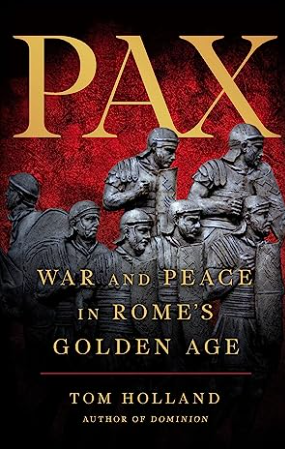
To his army of ardent followers, Tom Holland has a unique ability to bring antiquity alive. An award-winning British historian, biographer and broadcaster, his thrilling accounts offer more than a mere snapshot of life in Ancient Greece and Rome. In Pax — the third in his encyclopaedic trilogy of best-sellers narrating the rise of the Roman Empire — Holland establishes how peace was finally achieved during the Golden Age, with a forensic recreation of key lives within the civilisation, from emperors to slaves.
This week, Holland came to the UnHerd club to talk about Roman sex lives, Christian morality, and the rise and fall of empires. Below is an edited transcript of the conversation.
Freddie Sayers: Let’s kick off with the very first year in your book.
Tom Holland: It opens in AD 68, which is the year that Nero committed suicide: a key moment in Roman history, and a very, very obvious crisis point. Nero is the last living descendant of Augustus, and Augustus is a god. To be descended from Augustus is to have his divine blood in your veins. And there is a feeling among the Roman people that this is what qualifies you to rule as a Caesar, to rule as an emperor. And so the question that then hangs over Rome in the wake of Nero’s death is: what do we do now? We no longer have a descendant of the divine Augustus treading this mortal earth of ours. How is Rome, how is its empire, going to cohere?
FS: It seemed to me, when I was reading Pax, that there was a recurring theme: a movement between what’s considered decadence, and then a reassertion of either a more manly, martial atmosphere, or a return to how things used to be — to the good old days. With each new emperor in this amazing narrative, it often feels like there’s that same kind of mood, which is: things have gotten a bit soft. We’re going to return to proper Rome.
TH: It’s absolutely a dynamic that runs throughout this period. And it reflects a moral anxiety on the part of the Romans that has been characteristic of them, really, from the time that they start conquering massively wealthy cities in the East — the cities in Asia Minor or Syria or, most of all, Egypt. There’s this anxiety that this wealth is feminising them, that it’s making them weak, it’s making them soft — even as it is felt that the spectacular array of seafood, the gold, the splendid marble with which Rome can be beautified, is what Romans should have, because they are the rulers of the world.
That incredible tension is heightened by class anxieties. There’s no snob like a senatorial snob. They want to distinguish themselves from the masses. But at the same time, there’s the anxiety that if they do this in too Greek a way, in too effeminate a way, then are they really Romans? And so the whole way through this period, the issue of how you can enjoy your wealth, if you are a wealthy Roman, without seeming “unRoman”, is an endearing tension. And of course, there is no figure in the empire who has to wrestle with that tension more significantly than Caesar himself.
FS: The 100-odd years that you’re covering in this volume is a period of great peace and prosperity and power, and yet at each juncture, it feels like there’s this anxiety. That’s what surprised me as a reader. There’s this sense of the precariousness of the empire — maybe it’s become softer, maybe it’s decadent, or maybe it needs to rediscover how it used to be.
TH: And, you see, this is the significance of AD 69, “the Year of the Four Emperors”, because the question is, are the cycles of civil war expressive of faults? Of a kind of dry rot in the fabric of the Empire that is terminal? Of the anger of the gods? And whether, therefore, the Romans need to find a way to appease the gods so that the whole Empire doesn’t collapse. This is an anxiety that lingers for several decades. It looks to us like this is the heyday of the Empire. They’re building the Colosseum, they’re building great temples everywhere. But they’re worrying: “Have the gods turned against us?”
And of course, there is a very famous incident, 10 years after the Year of the Four Emperors, which is the explosion of Vesuvius. And this is definitely seen as another warning from the gods, because it coincides with a terrible plague in Rome, and it coincides with the incineration (for the second time in a decade) of the most significant temple in Rome — the great temple to Jupiter on the Capitol, the most sacred of the seven hills of Rome.
Romans offer sacrifice to the gods or you pay dues to the gods rather in the way that we take out an insurance policy. And if the gods are busy burying famous towns on the Bay of Naples beneath pyroclastic flows, or sending plagues, or burning down temples, then this, to most, is evidence that the Roman people have not been paying their dues. So a lot of what is going on — certainly in the imperial centre — in this period, is an attempt to try and get the Roman Empire back on a stable moral footing.
July 3, 2023
Three Forgotten Roman Megaprojects
toldinstone
Published 31 Mar 2023The longest tunnel in ancient history. A highway suspended over a raging river. A secret harbor for the Roman navy. These are three of the most impressive Roman engineering projects that you’ve probably never heard of.
(more…)
June 24, 2023
QotD: The plight of miners in pre-industrial societies
In the ancient Mediterranean, the clear testimony of the sources is that mining was a low-status occupation, one for enslaved people, criminals and the truly desperate. Being “sent to the mines” is presented, alongside being sent to work in the mills, as a standard terrible punishment for enslaved people who didn’t obey their owners and it is fairly clear in many cases that being sent to the mines was effectively a delayed death sentence. Diodorus Siculus describes mining labor in the gold mines of Egypt this way, in a passage that is fairly representative of the ancient sources on mining labor more generally (3.13.3, trans Oldfather (1935)):
For no leniency or respite of any kind is given to any man who is sick, or maimed, or aged, or in the case of a woman for her weakness, but all without exception are compelled by blows to persevere in their labours, until through ill-treatment they die in the midst of their tortures. Consequently the poor unfortunates believe, because their punishment is so excessively severe, that the future will always be more terrible than the present and therefore look forward to death as more to be desired than life.
It is clear that conditions in Greek and Roman mines were not much better. Examples of chains and fetters – and sometimes human remains still so chained – occur in numerous Greek and Roman mines. Unfortunately our sources are mostly concerned with precious metal mines and those mines also seem to have been the worst sorts of mines to work in, since the long underground shafts and galleries exposed the miners to greater dangers from bad air to mine-collapses. That said, it is hard to imagine working an open-pit iron mine by hand, while perhaps somewhat safer, was any less back-breaking, miserable toil, even if it might have been marginally safer.
Conditions were not always so bad though, particularly for free miners (being paid a wage) who tended to be treated better, especially where their labor was sorely needed. For instance, a set of rules for the Roman mines at Vipasca, Spain provided for contractors to supply various amenities, including public baths maintained year-round. The labor force at Vipasca was clearly free and these amenities seem to have been a concession to the need to make the life of the workers livable in order to get a sufficient number of them in a relatively sparsely populated part of Spain.
The conditions for miners in medieval Europe seems to have been somewhat better. We see mining communities often setting up their own institutions and occasionally even having their own guilds (for instance, there was a coal-workers guild in Liege in the 13th century) or internal regulations. These mining communities, which in large mining operations might become small towns in their own right, seem to have often had some degree of legal privileges when compared to the general rural population (though it should be noted that, as the mines were typically owned by the local lord or state, exemption from taxes was essentially illusory as the lord or king’s cut of the mine’s profits was the taxes). It does seem notable that while conditions in medieval mines were never quite so bad as those in the ancient world, the rapid expansion of mining activity beginning in the 15th century seems to have coincided with a loss of the special status and privileges of earlier medieval European miners and the status associated with the labor declined back down to effectively the bottom of the social spectrum.
(That said, it seems necessary to note that precious metal-mining done by non-free Native American laborers at the order of European colonial states appears to have been every bit as cruel and deadly as mining in the ancient world.)
Bret Devereaux, “Iron, How Did They Make It? Part I, Mining”, A Collection of Unmitigated Pedantry, 2020-09-18.
June 20, 2023
QotD: When kings and emperors become gods
Divine rulership was not universal however – it was subject to cultural context. In Egypt, the Pharaoh was the Living Horus, a physical incarnation of the divine; when he died he became Osiris, the ruler over the underworld. The mystery of the duality whereby a Pharaoh was both a specific person (and might be a different person in the future) but also the same god each time seems to owe something to the multipart Egyptian conception of the soul. Naram-Sin, an Akkadian King (2254-2218 B.C.) represents himself as divine (shown by his having horns) on his victory stele; future kings of Akkad followed suit in claiming a form of divinity, albeit a lesser one than the big-time great gods.
But in Mesopotamia, the rulers of Akkad were the exception; other Mesopotamian kings (Sumerian, Babylonian, etc) did not claim to be gods – even very great kings (at least while alive – declaring a legendary ruler a god is rather more like a divine founder figure). Hammurabi (king of Babylon, c.1810-c.1750 B.C.) is shown in his royal artwork very much a man – albeit one who receives his mandate to rule from the gods Shamash and Marduk. Crucially, and I want to stress this, the Achaemenid kings of Persia were not considered gods (except inasmuch as some of them also occupied the position of Pharaoh of Egypt; it’s not clear how seriously they took this – less seriously than Alexander and Ptolemy, quite clearly). The assumption that the Persians practiced a divine kingship is mostly a product of Greek misunderstandings of Persian court ritual, magnified in the popular culture by centuries of using the Persian “other” as a mirror and (usually false) contrast for European cultures.
But the practice that my students often find most confusing is that of the Roman emperors. To be clear, Roman emperors were not divinized while they were alive. Augustus had his adoptive father, Julius Caesar divinized (this practice would repeat for future emperors divinizing their predecessors), but not himself; the emperor Vespasian, on his deathbed, famously made fun of this by declaring as a joke, “Alas! I think I’m becoming a god” (Suet. Vesp. 23.4). And yet, at the same time, outside of Rome, even Augustus – the first emperor – received cult and divine honors, either to his person or to his genius (remember, that’s not how smart he is, but the divine spirit that protects him and his family).
I think it is common for us, sitting outside of these systems, to view this sort of two-step dance, “I’m not a god, but you can give me divine honors in the provinces and call me a god, just don’t do it too loudly” as fundamentally cynical – and to some degree it might have been; Augustus was capable of immense cynicism. But I think it is possible to view this relationship outside of that cynicism through the lens of the ideas and rules we’ve laid out.
Bret Devereaux, “Collections: Practical Polytheism, Part IV: Little Gods and Big People”, A Collection of Unmitigated Pedantry, 2019-11-15.
April 21, 2023
Tiberius Caesar, the second Roman Emperor
Andrew Doyle considers how the reputation of Emperor Tiberius was shaped (and blackened) by later historians:
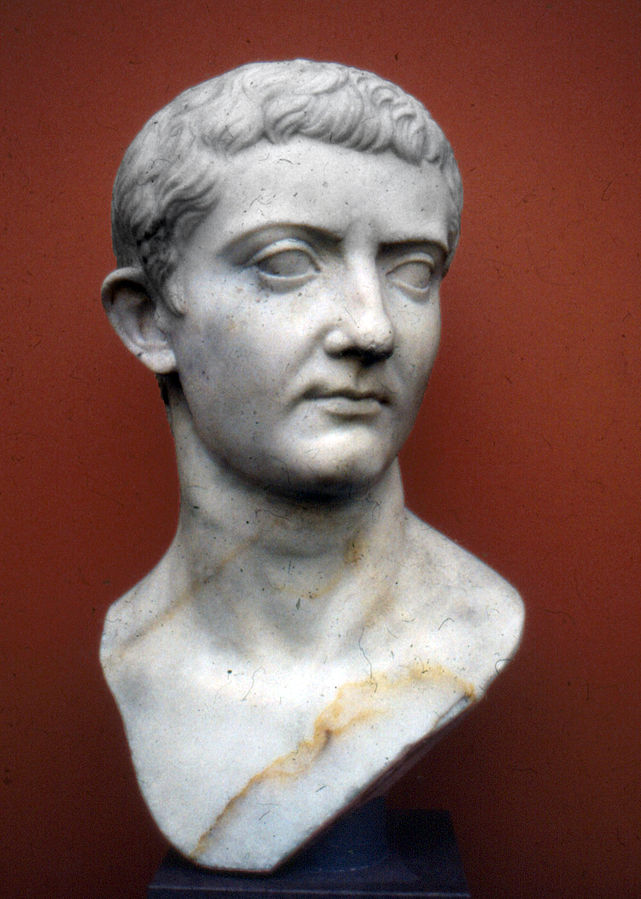
Tiberius Caesar
Original in Ny Carlsberg Glyptotek, Copenhagen via Wikimedia Commons.
I am at the home of a psychopath. Here on the easternmost point of the island of Capri, the ancient ruins of the Villa Jovis still cling to the summit of the mountain. This was the former residence of the Emperor Tiberius, who retired here for the last decade of his life in order to indulge in what Milton described as “his horrid lusts”. He conducted wild orgies for his nymphs and catamites. He forced children to swim between his thighs, calling them his “little fish”. He raped two brothers and broke their legs when they complained. He threw countless individuals to their deaths from a precipice looming high over the sea.
That these stories are unlikely to be true is beside the point; Tiberius’s reputation has done wonders for the tourist trade here on Capri. The historians Suetonius and Tacitus started the rumours and, with the help of successive generations of sensationalists, established a tradition that was to persist for almost two millennia.
All of which serves as a reminder that reputations can be constructed and sustained on the flimsiest of foundations. Suetonius and Tacitus were writing almost a century after the emperor’s death, and many of their lurid stories were doubtless echoes of those circulated by his most spiteful enemies. Or perhaps it’s simply a matter of prurience. Who can deny that the more lascivious and outlandish acts of the Roman emperors are by far the most memorable? One thinks immediately of Caligula having sex with his siblings and appointing his horse as consul. Or Nero murdering his own mother, and taking a castrated slave for his bride, naming him after the wife he had kicked to death. For all their horror, who doesn’t feel cheated when such tales turn out to be false?
Our reputations are changelings: protean shades of other people’s imaginations. More often than not, they are birthed from a combination of uninformed prejudice and wishful thinking. And we should be in no doubt that in our online age, when lies are disseminated at lightning speed and casual defamation has become the activist’s principal strategy, reputations are harder to heal once tarnished.
I am tempted to feel pity for future historians. Quite how they will be expected to wade through endless reams of emails, texts, and other digital materials — an infinitude of conflicting narratives and individual “truths” — really is beyond me. At least when there is a dearth of primary sources it is possible to piggyback onto a firm conclusion. “Suetonius said” has a satisfactory and definitive air, but only because there are so few of his contemporary voices available to contradict him.
April 17, 2023
QotD: Tenant-farming (aka “sharecropping”) in pre-modern societies
In many cases, small freeholders might also work as tenants on a nearby large estate as well. There are many good reasons for a small free-holding peasant to want this sort of arrangement […]. So a given area of countryside might have free-holding subsistence farmers who do flexible sharecropping labor on the big estate from time to time alongside full-time tenants who worked land entirely or almost entirely owned by the large landholder. Now, as you might imagine, the situation of tenants – open to eviction and owing their landlords considerable rent – makes them very vulnerable to the landlord compared to neighboring freeholders.
That said, tenants in this sense were generally considered free persons who had the right to leave (even if, as a matter of survival, it was rarely an option, leaving them under the control of their landlords), in contrast to non-free laborers, an umbrella-category covering a wide range of individuals and statuses. I should be clear on one point: nearly every pre-modern complex agrarian society had some form of non-free labor, though the specifics of those systems varied significantly from place to place. Slavery of some form tends to be the rule, rather than the exception for these pre-modern agrarian societies. Two of the largest categories of note here are chattel slavery and debt bondage (also called “debt-peonage”), which in some cases could also shade into each other, but were often considered separate (many ancient societies abolished debt bondage but not chattel slavery for instance and debt-bondsmen often couldn’t be freely sold, unlike chattel slaves). Chattel slaves could be bought, sold and freely traded by their slave masters. In many societies these people were enslaved through warfare with captured soldiers and civilians alike reduced to bondage; the heritability of that status varies quite a lot from one society to the next, as does the likelihood of manumission (that is, becoming free).
Under debt bondage, people who fell into debt might sell (or be forced to sell) dependent family members (selling children is fairly common) or their own person to repay the debt; that bonded status might be permanent, or might hold only till the debt is repaid. In the later case, as remains true in a depressing amount of the world, it was often trivially easy for powerful landlord/slave-holders to ensure that the debt was never paid and in some systems this debt-peon status was heritable. Needless to say, the situation of both of these groups could be and often was quite terrible. The abolition of debt-bondage in Athens and Rome in the sixth and fourth centuries B.C. respectively is generally taken as a strong marker of the rising importance and political influence of the class of rural, poorer citizens and you can readily see why this is a reform they would press for.
Bret Devereaux, “Collections: Bread, How Did They Make It? Part II: Big Farms”, A Collection of Unmitigated Pedantry, 2020-07-31.
April 10, 2023
QotD: Interaction between “big” farmers and subsistence farmers in pre-modern societies
And then just over the way, you have the large manor estate, or the Roman villa, or the lands owned by a monastery (because yes, large landholders were sometimes organizations; in medieval Europe, monasteries filled this function in some places) or even just a very rich, successful peasant household. Something of that sort. They have the capital (plow-teams, manure, storage, processing) to more intensively farm the little land our small farmers have, but also, where the small farmer has more labor than land, the large landholder has more land than labor.
The other basic reality that is going to shape our large farmers is their different goals. By and large our small farmers were subsistence farmers – they were trying to farm enough to survive. Subsistence and a little bit more. But most large landholders are looking to use the surplus from their large holdings to support some other activity – typically the lifestyle of wealthy elites, which in turn require supporting many non-farmers as domestic servants, retainers (including military retainers), merchants and craftsmen (who provide the status-signalling luxuries). They may even need the surplus to support political activities (warfare, electioneering, royal patronage, and so on). Consequently, our large landholders want a lot of surplus, which can be readily converted into other things.
The space for a transactional relationship is pretty obvious, though as we will see, the power imbalances here are extreme, so this relationship tends to be quite exploitative in most cases. Let’s start with the labor component. But the fact that our large landholders are looking mainly to produce a large surplus (they are still not, as a rule, profit maximizing, by the by, because often social status and political ends are more important than raw economic profit for maintaining their position in society) means that instead of having a farm to support a family unit, they are seeking labor to support the farm, trying to tailor their labor to the minimum requirements of their holdings.
[…]
The tricky thing for the large landholder is that labor needs throughout the year are not constant. The window for the planting season is generally very narrow and fairly labor intensive: a lot needs to get done in a fairly short time. But harvest is even narrower and more labor intensive. In between those, there is still a fair lot of work to do, but it is not so urgent nor does it require so much labor.
You can readily imagine then the ideal labor arrangement would be to have a permanent labor supply that meets only the low-ebb labor demands of the off-seasons and then supplement that labor supply during the peak seasons (harvest and to a lesser extent planting) with just temporary labor for those seasons. Roman latifundia may have actually come close to realizing this theory; enslaved workers (put into bondage as part of Rome’s many wars of conquest) composed the villa’s primary year-round work force, but the owner (or more likely the villa’s overseer, the vilicus, who might himself be an enslaved person) could contract in sharecroppers or wage labor to cover the needs of the peak labor periods. Those temporary laborers are going to come from the surrounding rural population (again, households with too much labor and too little land who need more work to survive). Some Roman estates may have actually leased out land to tenant farmers for the purpose of creating that “flexible” local labor supply on marginal parts of the estate’s own grounds. Consequently, the large estates of the very wealthy required the impoverished many subsistence farmers in order to function.
Bret Devereaux, “Collections: Bread, How Did They Make It? Part II: Big Farms”, A Collection of Unmitigated Pedantry, 2020-07-31.
April 8, 2023
QotD: Rome’s “excess labour” problem
The thing is — as old-school historians would tell you if any were still alive — technology is all about saving labor. Physical labor, mental labor, same deal. Consider the abacus, for instance. It’s a childishly simple device — it’s literally a child’s toy now — but think about actually doing math with it, when the only alternative is scratch paper. How much time do you save, not having to jot things down (remember where you put the jottings, etc.)?
I’m sure you see where this is going. The Romans did NOT lack for labor. They had, in fact, the exact opposite problem: Far, far too much labor. It’s almost a cliché to say that a particular group in the ancient world didn’t qualify as a “civilization” until they started putting up as ginormous a monument as they could figure out. They raised monuments for lots of reasons, of course, but not least among them was the excess-labor problem. What else are you supposed to do with the tribe you just conquered? Unless you want to wipe them out, to the last old man, woman, and child, slavery is the only humane solution.
If that’s true, then the opposite should also hold — technological innovation starts with a labor shortage. Survey says … yep. There’s a reason the Scientific Revolution dates to the Renaissance: The massive labor shortage following the Black Death. That this is also the start of the great age of exploration is also no accident. While the labor (over-)supply was fairly constant in the ancient world, once technological innovation really got going, the labor-supply pendulum started swinging wildly. The under-supply after the Black Death led to over-supply once technological work-arounds were discovered; that over-supply was exported to the colonies, which were grossly under-supplied, etc.
In short: If you want to know what kind of society you’re going to have, look at labor mobility.
Severian, “Excess Labor”, Rotten Chestnuts, 2020-07-28.
April 1, 2023
Athenian or Visigoth? Western civilization or barbarism?
Jon Miltimore recalls Neil Postman’s 1988 essay titled “My Graduation Speech”, which seems even more relevant today than when he wrote it:
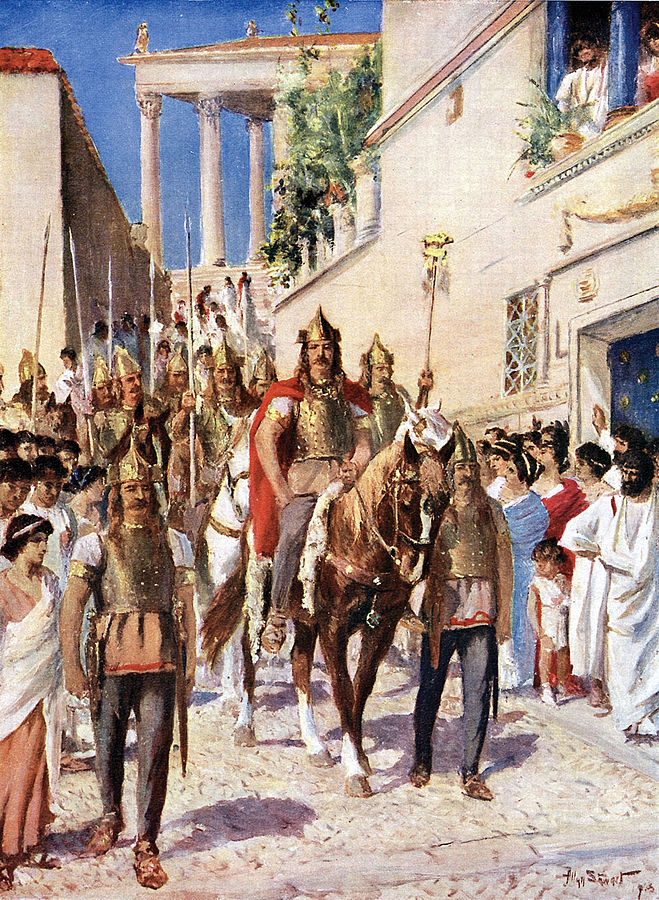
Alaric, King of the Visigoths, entering Athens in 395 AD.
Public domain illustration originally published in the Encyclopedia Britannica, 1920 via Wikimedia Commons.
What seemed to bother Postman was a nagging suspicion that modern humans were taking civilization for granted. This sentiment was more clearly expressed in one of Postman’s less-known literary works, his 1988 essay titled “My Graduation Speech“.
In his speech, Postman discusses two historic civilizations familiar to most people today — Athenians and Visigoths. One group, the Athenians, thrived about 2,300 years ago. The other, the Visigoths, made their mark about 1,700 years ago. But these civilizations were separated by much more than time, Postman explained.
The Athenians gave birth to a cultural enlightenment whose fruits are still visible today — in our art, education, language, literary works, and architecture. The Visigoths, on the other hand, are notable mostly for the destruction of civilization.
Postman mentions these peoples because, he argued, they still survive today. Here is what he wrote:
I do not mean, of course, that our modern-day Athenians roam abstractedly through the streets reciting poetry and philosophy, or that the modern-day Visigoths are killers. I mean that to be an Athenian or a Visigoth is to organize your life around a set of values. An Athenian is an idea. And a Visigoth is an idea.
But what ideas? What values? Postman explains:
To be an Athenian is to hold knowledge and, especially the quest for knowledge in high esteem. To contemplate, to reason, to experiment, to question — these are, to an Athenian, the most exalted activities a person can perform. To a Visigoth, the quest for knowledge is useless unless it can help you to earn money or to gain power over other people.
To be an Athenian is to cherish language because you believe it to be humankind’s most precious gift. In their use of language, Athenians strive for grace, precision, and variety. And they admire those who can achieve such skill. To a Visigoth, one word is as good as another, one sentence in distinguishable from another. A Visigoth’s language aspires to nothing higher than the cliché.
To be an Athenian is to understand that the thread which holds civilized society together is thin and vulnerable; therefore, Athenians place great value on tradition, social restraint, and continuity. To an Athenian, bad manners are acts of violence against the social order. The modern Visigoth cares very little about any of this. The Visigoths think of themselves as the center of the universe. Tradition exists for their own convenience, good manners are an affectation and a burden, and history is merely what is in yesterday’s newspaper.
To be an Athenian is to take an interest in public affairs and the improvement of public behavior. Indeed, the ancient Athenians had a word for people who did not. The word was idiotes, from which we get our word “idiot”. A modern Visigoth is interested only in his own affairs and has no sense of the meaning of community.
Postman said all people must choose whether to be an Athenian or a Visigoth. But how does one tell one from the other? One might be tempted to think that education is the proper path to becoming an Athenian. Alas, Postman argued that this was not the case.
I must tell you that you do not become an Athenian merely by attending school or accumulating academic degrees. My father-in-law was one of the most committed Athenians I have ever known, and he spent his entire adult life working as a dress cutter on Seventh Avenue in New York City. On the other hand, I know physicians, lawyers, and engineers who are Visigoths of unmistakable persuasion. And I must also tell you, as much in sorrow as in shame, that at some of our great universities, perhaps even this one, there are professors of whom we may fairly say they are closet Visigoths.
Postman concluded his speech by expressing his wish that the student body to which he was speaking would graduate more Athenians than Visigoths.
The production of educated barbarians was relatively low in 1988, despite Postman’s pessimism. The production of such modern-day Visigoths is unimaginably higher now than the tail end of the Cold War when he was writing. I fear we have already made our decision … and may God have mercy upon our souls.
March 23, 2023
History Summarized: Rome After Empire
Overly Sarcastic Productions
Published 11 Nov 2022“It’s gonna take more than killing me to kill me” – Rome, constantly.
Rome “Fell” in 476 … but we still have Rome. How’d that happen, and what does the Pope have to do with it?
(more…)
QotD: “Slave societies” and “societies with slaves”
So, taking the Antebellum South in particular: Could its economy have survived without slavery? Sure. You don’t have to be a historian to see it, either. Some quick back-of-the-envelope math will suffice. An “agricultural laborer” — surely we agree slaves were that? — in 1860 made, on average, 97 cents a day. Round that up to a dollar, multiply by six days a week, and you get $6 a week. Multiply that by 50 (let’s give everyone two weeks’ vacation) and you get $300 per year. A “prime field hand” in 1860 cost $1600, purchase price. Plus all his “maintenance and upkeep,” year-round, for life. It’s grossly inefficient, what with agriculture being a largely seasonal occupation and all. And that’s before you factor in the mechanization trend that was already well underway at the time of the Civil War.***
Could the South have survived culturally without slavery? Of course not. That’s the whole point of Berlin’s distinction. Neither could any other slave society. The Roman Empire, all of it, is inconceivable without slavery. Here’s the proof: There were lots of freedmen in the Roman Empire. The first thing they did, pretty much without exception, is buy as many slaves as they could afford. Even Athens, the “birthplace of democracy”, depended on slave labor.
* Just to placate any field specialists who want to argue that medieval villeinage wasn’t merely slavery by another name.
** With the (admittedly large) exception of Great Britain, which in true British Imperial style managed to profit hugely from slavery without consciously admitting it. See, for example, Eric Williams’ Capitalism and Slavery, which manages the neat trick of being a Marxist polemic that is (mostly) factually accurate and (largely) argued in good faith. Published in 1944, natch, by a scholar way out on Western Civ’s fringes, but such a thing was possible even for White folks back then — see e.g. the work of Christopher Hill). They’re the other “society with slaves”, and since we’re talking about their spiritual descendants in places like Boston and Providence it’s a distinction without a difference.
*** The fact that Antebellum Northerners thought they couldn’t economically compete with slave labor has nothing to do with the economic reality of slave labor. “Free Soil, Free Labor, Free Men” is a nice piece of campaign rhetoric (it was the Republican Party slogan in their first election, 1856), but that’s all it is. And again, you don’t have to be a professional historian to see it. France’s economy was ok after the loss of Saint-Domingue (at one time the most valuable piece of real estate in the world). Great Britain did pretty good, economically, after freeing their slaves in places like Bermuda, Barbados, and Jamaica (again, some of the most valuable real estate in the world in the 18th century).
Severian, “On Slavery”, Rotten Chestnuts, 2020-06-18.
March 19, 2023
QotD: Are we re-enacting the “Crisis of the Third Century” or “Fall of the Roman Empire” this time?
Again, my knowledge of the topic is pretty weak, but y’all know that in general I believe inertia is one of the strongest forces in human affairs (just behind accident and error). What can’t continue, won’t … eventually, but there’s a lot of give in “can’t”. The “collapse” of the 5th century looked an awful lot like the “crisis” of the 3rd century, and not only did the Empire survive the third century crisis, in many ways it came back stronger than ever (one wonders what golden age might’ve been born had Aurelian lived).
It certainly does seem like we’re heading into a major crisis (yeah yeah, I know, thanks Nostradamus). Is it The End, or “merely” the Third Century Crisis? One wonders how it’s going down there in Brazil, and if there are any cagey young officers in the AINO Imperial Garrisons taking notes. The guys who grabbed the purple in the Third Century Crisis were called “the barracks emperors” for a reason, and we know (from the comments yesterday) that there are cabals of perverts alive and well in the officer corps.
2023 is shaping up to be really interesting. Ace of Grillers has done some reporting on the fossil fuel-intensive “Green” private jet flights of our beloved Transportation Secretary, Anal Pete. AOG thinks this is pretty obviously the butt bandit announcing his 2024 presidential run, and it’s hard to argue against it. Frankly I’m amazed Brandon has survived this long — is Dr. Jill that canny a political infighter, or is it just dumb luck that no one has felt the need to finish him off? — but it’s hard to see him making it too far into 2024. Veep Throat is of course running; we have yet to see Z Man’s predicted replacement of her with Gavin Hairgel, but I’m sure he’s in, too …
Frankly, I’m rooting for the Russians. You really want the wheels to come off, then start cheering for a big winter offensive from Ivan. Provided AINO doesn’t start cracking off nukes — a big, big IF — nothing would force the crisis like our “victory or death!” Juggalos getting their asses handed to them in the Donbas. The Z Man thinks they’ll pull a Ngo Dinh Diem on the Jewish Comedian here before too long; I wonder if they’ll even get the chance, or if it would matter if they did. I’m pretty sure Vlad’s done talking, if for no other reason than that he knows whatever faction of Juggalos he cuts a deal with will be betrayed by some other Juggalo faction. Unless the AINO peace proposals come written in the still-hot blood of a shitload of Kagans, he has zero reason to negotiate. And since The Media is still all in on their “total Ukrainian victory is just around the corner!” narrative …
Severian, “Friday Mailbag”, Founding Questions, 2022-12-16.
March 17, 2023
QotD: The unique nature of Roman Egypt
[…]
… what makes Roman Egypt’s uniqueness so important is one of the unique things about it: Roman Egypt preserves a much larger slice of our evidence than any other place in the ancient world. This comes down to climate (as do most things); Egypt is a climatically extreme place. On the one hand, most of the country is desert and here I mean hard desert, with absolutely minuscule amounts of precipitation. On the other hand, the Nile River creates a fertile, at points almost lush, band cutting through the country running to the coast. The change between these two environments is extremely stark; it is, I have been told (I haven’t yet been to Egypt), entirely possible in many places to stand with one foot in the “green” and another foot in the hard desert.
That in turn matters because while Egypt was hardly the only arid region Rome controlled, it was the only place you were likely to find very many large settlements and lots of people living in such close proximity to such extremely arid environments (other large North African settlements tend to be coastal). And that in turn matters for preservation. When objects are deposited – lost, thrown away, carefully placed in a sanctuary, whatever – they begin to degrade. Organic objects (textile, leather, paper, wood) rot as microorganisms use them as food, while metal objects oxidize (that is, rust). Aridity arrests (at least somewhat) both processes. Consequently things survive from the Roman period (or indeed, from even more ancient periods) in Egypt that simply wouldn’t survive almost anywhere else.
By far the most important of those things is paper, particularly papyrus paper. The Romans actually had a number of writing solutions. For short-term documents, they used wax writing tablets, an ancient sort of “dry erase board” which could be scraped smooth to write a new text when needed; these only survive under very unusual circumstances. For more permanent documents, wood and papyrus were used. Wood tablets, such as those famously recovered from the Roman fort at Vindolanda, are fairly simple: thin wooden slats are smoothed so they can be written on with ink and a pen, creating a rigid but workable and cheap writing surface; when we find these tablets they have tended to be short documents like letters or temporary lists, presumably in part because storing lots of wood tablets would be hard so more serious records would go on the easier to store papyrus paper.
Papyrus paper was lighter, more portable, more storeable option. Papyrus paper is produced by taking the pith of the papyrus plant, which is sticky, and placing it in two layers at right angles to each other, before compressing (or crushing) those layers together to produce a single sheet, which is then dried, creating a sheet of paper (albeit a very fibery sort of paper). Papyrus paper originated in Egypt and the papyrus plant is native to Egypt, but by the Roman period we generally suppose papyrus paper to have been used widely over much of the Roman Empire; it is sometimes supposed that papyrus was cheaper and more commonly used in Egypt than elsewhere, but it is hard to be sure.
Now within the typical European and Mediterranean humidity, papyrus doesn’t last forever (unlike the parchment paper produced in the Middle Ages which was far more expensive but also lasts much longer); papyrus paper will degrade over anything from a few decades to a couple hundred years – the more humidity, the faster decay. Of course wood tablets and wax tablets fare no better. What that means is that in most parts of the Roman Empire, very little casual writing survives; what does survive were the sorts of important official documents which might be inscribed on stone (along with the literary works that were worth painstakingly copying over and over again by hand through the Middle Ages). But letters, receipts, tax returns, census records, shopping lists, school assignments – these sorts of documents were all written on less durable materials which don’t survive except in a few exceptional sites like Vindolanda.
Or Egypt. Not individual places in Egypt; pretty much the whole province.
In the extremely dry conditions of the Egyptian desert, papyrus can survive (albeit typically in damaged scraps rather than complete scrolls) from antiquity to the present. Now the coverage of these surviving papyri is not even. The Roman period is far better represented in the surviving papyri than the Ptolemaic period (much less the proceeding “late” period or the New Kingdom before that). It’s also not evenly distributed geographically; the Arsinoite nome (what is today el-Fayyum, an oasis basin to the West of the Nile) and the Oxyrhynchus nome (roughly in the middle of Egypt, on the Nile) are both substantially overrepresented, while the Nile Delta itself has fewer (but by no means zero) finds. Consequently, we need to be worried not only about the degree to which Egypt might be representative of the larger Roman world, but also the degree to which these two nomes (a nome is an administrative district within Egypt, we’ll talk about them more in a bit) are representative of Egypt. That’s complicated in turn by the fact that the Arsinoite nome is not a normal nome; extensive cultivation there only really begins under Ptolemaic rule, which raises questions about how typical it was. It also means we lack a really good trove of papyri from a nome in Lower Egypt proper (the northern part of the country, covering the delta of the Nile) which, because of its different terrain, we might imagine was in some ways different.
Nevertheless, it is difficult to overstate the value of the papyri we do recover from Egypt. Documents containing census and tax information can give us important clues about the structure of ancient households (revealing, for instance, a lot of complex composite households). Tax receipts (particularly for customs taxes) can illuminate a lot about how Roman customs taxes (portoria) were assessed and conducted. Military pay stubs from Roman Egypt also provide the foundation for our understanding of how Roman soldiers were paid, recording for instance, pay deductions for rations, clothes and gear. We also occasionally recover fragments of literary works that we know existed but which otherwise did not survive to the present. And there is so much of this material. Whereas new additions to the corpus of ancient literary texts are extremely infrequent (the last very long such text was the recovery of the Athenaion Polteia or Constitution of the Athenians, from a papyrus discovered in the Fayyum (of course), published in 1891), the quantity of unpublished papyri from Egypt remains vast and there is frankly a real shortage of trained Egyptologists who can work through and publish this material (to the point that the vast troves of unpublished material has created deeply unfortunate opportunities for theft and fraud).
And so that is the first way in which Egypt is unusual: we know a lot more about daily life in Roman Egypt, especially when it comes to affairs below the upper-tier of society. Recovered papyrological evidence makes petty government officials, regular soldiers, small farming households, affluent “middle class” families and so on much more visible to us. But of course that immediately raises debates over how typical those people we can see are, because we’d like to be able to generalize information we learn about small farmers or petty government officials more broadly around the empire, to use that information to “fill in” regions where the evidence just does not survive. But of course the rejoinder is natural to point out the ways in which Egypt may be unusual beyond merely the survival of evidence (to include the possibility that cheaper papyrus in Egypt may have meant that more things were committed to paper here than elsewhere).
Consequently the debate about how strange a place Roman Egypt was is also a fairly important and active area of scholarship. We can divide those arguments into two large categories: the way in which Roman rule itself in Egypt was unusual and the ways in which Egypt was a potentially unusual place in comparison to the rest of Roman world already.
Bret Devereaux, “Collections: Why Roman Egypt Was Such a Strange Province”, A Collection of Unmitigated Pedantry, 2022-12-02.


