Quotulatiousness

December 17, 2020

QotD: Light rail systems are almost always an upper middle class boondoggle

What we can see here is exactly what Randall O’Toole of Cato has been saying for years — that light rail projects tend to actually hurt total transit use as they scavenge resources from other modes, like buses. This is because light rail costs so much more to move a passenger, both in terms of capital investment and operating cost, so $X shifted from buses to rail reduces total system capacity and ridership substantially. We have seen this in Phoenix, as light rail costs have forced closing or reduced services in a number of bus routes, with obvious results in the ridership numbers.

[…]

The problem with light rail (and the reason it is popular with government officials) is that it is an upper middle class boondoggle. There can be no higher use of transit than to provide mobility to poorer people who can’t afford reliable automobiles. Buses fulfill this goal better than any mode of transit. They are flexible and can reach into many corners of the city. The problem with buses, from the perspective of government officials, is that upper middle class people don’t like to ride on them. They like trains. So the government builds hugely expensive trains for these influential, wealthier voters. Since the trains are so expensive, the government can only build a few routes, so those routes end up being down upper middle class commuting corridors. As the costs mount for the trains, the bus routes that serve the poor and their dispersed commuting destinations are steadily cut.

Warren Meyer, “Phoenix Light Rail Fail, 2019 Update”, Coyote Blog, 2019-11-13.

November 20, 2020

Quebec makes Canada’s politics really weird

J.J. McCullough
Published 2 Mar 2019

Hypocrisies and blind spots stemming from the role played by French Canadians and the French language in Canada’s politics.

FOLLOW ME:

🇨🇦Support me on Patreon! https://www.patreon.com/jjmccullough
🤖Join my Discord! https://discord.gg/xQzjBRE
👾Watch me on Twitch! https://www.twitch.tv/jj_mccullough
🇺🇸Follow me on Instagram! https://www.instagram.com/jjmccullough/
🇨🇦Visit my Canada Website http://thecanadaguide.com

November 12, 2020

The party of the Lucky Winners

Filed under: History, Politics, USA — Tags: , , , , , — Nicholas @ 03:00

Brian Micklethwait sends some thoughts from his sick-bed on the (still in question) outcome of the US election:

“Polling Place Vote Here” by Scott Beale is licensed under CC BY-NC-ND 2.0

Democrat electoral cheating is not a new story. I’ve been reading stuff about America and American politics all my life, off and on and mostly off, and like a thread through it all is the fact that in big cities that they run and are determined to go on running, Democrats cheat in elections. So Democrats cheating in elections this time around is not the big change.

The big change is a Republican refusing to retreat in the face of it. Why? Why is Trump being so unpresidential, so undignified, so … just so ghastly? The answer is that the big political picture has been transformed, partly by him, but partly by him responding to the fact that it has already changed so much.

Time was when Republicans were the party of the Lucky Winners. Country clubbers, corporate executives, yacht owners, owners of houses with several garages, presided over by perfectly manicured wives, in charge of several well behaved children and subservient servants. The Democrats, meanwhile, were the party of the workers, of people struggling to do work or even to get work. Any plutocrats who were attached to the Democrats, like the Kennedys or (FD) Roosevelt, were numerically insignificant oddities. (Whether that was true, I don’t know. But this was the dominant narrative, as people say now.)

But that’s all changed. The Democrats are now the party of the Lucky Winners, and also of the unlucky losers at the very bottom of the heap who can only now depend on the crumbs of comfort bestowed upon them by the Lucky Winner class. The Republicans have become the party of the workers in the middle, the middle class, as Americans accurately describe them. The Republicans are the party of the people who still struggle to work and to stay working, and who hate the whole idea of giving up and becoming dependant upon the Lucky Winners.

Not all “workers” voted for Trump. A lot of workers, especially in things like IT, are still solidly Democrat. But the heart of the Trump vote was workers of a certain sort. The heart of the Trump vote was no longer the Lucky Winners class. They have migrated over to the Democrats.

Okay, now for the key bit of what I’m saying.

In olden times, if you were a member of the Lucky Winners class, and your guy lost an election, complaining about cheating was frankly a bit, well, undignified. You and your pals controlled almost all the levers of power in society. You owned the big corporations. Your children were creaming off most of the expensive education. The world was yours. Were you going to bitch about electoral corner-cutting by a few machine politician Democrats in big cities who had enough clout to say boo to you, every once in a while? This was not a good look. And on the whole, Republicans took their defeats, and if Democrat cheating cost them a win or two, well, that was how it crumbled, cookie-wise. Legally, that may not have been the rule, but actually, that was the rule. Noblesse oblige. Let the people picked by the struggling class have their turn. Suck it up. Go play golf.

But now? Now, what is happening is that the Lucky Winners class is telling the class definitely below it in the pecking order that this subordinate class now has to just lie back and let it happen, when the electoral cheating happens all over them.

This is not a good look either, but it’s what the Lucky Winner class now think they can do, and get away with. Maybe they can, in the sense that they may well get their guy over the line this time around. But if they do, but if it then becomes clear that they did this by cheating on a large scale in this election, then the words “reap” and “whirlwind” spring to mind.

November 6, 2020

QotD: When you use a racist lens, everything looks like racism

Filed under: Books, Media, Politics, Quotations, USA — Tags: , , , , — Nicholas @ 01:00

[White Fragility author Robin] DiAngelo uses similar techniques to support her second core theory that all white people are racist. For example, DiAngelo lays another trap that makes it impossible for white people to speak ill of any neighborhood with high crime rates in which many people of color reside. When DiAngelo’s friends warned her not to buy a home in neighborhoods with relatively high crime rates and poorly rated schools, DiAngelo later discovered that the neighborhoods had a high percentage of black and brown residents. From this, she concluded that her friends’ warnings were racially motivated and that “my fellow whites had communicated the racial boundaries to me.” Did you spot the trap?

If DiAngelo’s friends had told her not to live in the neighborhoods because they had black and brown residents, she could call them out for overt racism. But even when her friends made no mention of race whatsoever, DiAngelo attributed their warnings to racism as well. There was no way for her friends to mention the neighborhood’s high crime rates without DiAngelo finding them guilty of racism.

DiAngelo also supports her theory that all white people are racist by interpreting ambiguous events to support her conclusions, despite other plausible explanations. In one anecdote, DiAngelo describes an incident in which a white female teacher had two black students at her desk. The teacher prefaced something she said with the word “girl.” One student felt that the use of the word “girl” was racist. The other student disagreed, saying that the teacher called all her students “girl” regardless of their race.

Any reasonable person would conclude that if the teacher called every student — white, black, Asian, Latinx — “girl,” the teacher’s use of the word resides somewhere between “not racist” and “open to interpretation.” But DiAngelo reached a different conclusion, demonizing the teacher’s lack of concern for the offended student’s feelings, and calling the teacher arrogant for thinking the use of “girl” was not racist. To be clear, while teachers should listen to their students’ concerns, there is no proof this teacher’s word choice was racially motivated. And ironically, DiAngelo is guilty of everything she criticizes the teacher for because DiAngelo arrogantly ignores the other black student who did not think the comment was racist.

David Edward Burke, “The Intellectual Fraud of Robin DiAngelo’s White Fragility“, The Logical Liberal, 2020-06-13.

September 30, 2020

QotD: Victimhood culture

Filed under: Books, Politics, Quotations — Tags: , , , , , — Nicholas @ 01:00

In their newly released book, The Rise of Victimhood Culture: Microaggressions, Safe Spaces, and the New Culture Wars, the moral sociologists Bradley Campbell and Jason Manning describe the three main moral cultures that exist today, which they give the shorthand labels of dignity, honor, and victimhood. A dignity culture, which has been the dominant moral culture of Western middle classes for some time, has a set of moral values that promotes the idea of moral equality and was crystallized in Martin Luther King Jr.’s vision that people ought to be judged according to the content of their character, not the color of their skin.

Victimhood culture departs from dignity culture in several important ways. Moral worth is in large part defined by the color of one’s skin, or at least one’s membership in a fixed identity group: i.e., women, people of color, LGBTIQ, Muslims, or indigenous peoples. Such groups are sacred, and a lack of deference to them is seen as a sign of deviance. The reverse is true for those who belong to groups that are considered historical oppressors: whites, males, straight people, Zionists. Anyone belonging to an “oppressor” group is stained by their privilege, or “whiteness,” and is cast onto the moral scrapheap.

Claire Lehmann, “The Evils of Cultural Appropriation”, Tablet, 2018-06-11.

September 29, 2020

QotD: Robin DiAngelo’s theory of “White Fragility”

Filed under: Books, Media, Politics, Quotations, USA — Tags: , , , , — Nicholas @ 01:00

Throughout White Fragility DiAngelo tries to convince readers of two things. First, DiAngelo argues that white people are inescapably racist, writing, “All white people are invested in and collude with racism,” and that “The white collective fundamentally hates blackness for what it reminds us of: that we are capable and guilty of perpetrating immeasurable harm and that our gains come through the subjugation of others.”

Second, DiAngelo argues that any white person who does not admit to their own racism is blinded by their “white fragility.” In DiAngelo’s words, because white people are, “Socialized into a deeply internalized sense of superiority that we either are unaware of or can never admit to ourselves, we become highly fragile in conversations about race.” This fragility purportedly explains why, “people who identify as white are so difficult in conversations regarding race.”

It’s not difficult to see why the theory of white fragility might catch on. Race is a sensitive subject that many people of all races are uncomfortable discussing. Furthermore, white people publicly accused of racism risk social ostracization and professional ruin. The idea that some white people may be defensive when accused of racism is not surprising. But though some white people may exhibit a degree of what DiAngelo calls fragility, her grandiose theory as applied to all or even most white people has two fatal flaws.

First, DiAngelo’s theory of white fragility is unfalsifiable. It is impossible for someone to prove that they are not fragile, just as it is impossible for someone to prove they are not possessed by a demon. One could play mad libs with racial groups and nouns — “Asian Insecurity,” “Black Hostility,” etc. — and there would be no way for members of those groups to prove they are not insecure or hostile.

More insidiously, DiAngelo frames her theory of white fragility such that any conceivable reaction a white person has when discussing race is purportedly evidence of fragility, and any denial of her theory is interpreted as proof of its validity. For example, DiAngelo writes that,

    The mere suggestion that being white has meaning often triggers a range of defensive responses. These include emotions such as anger, fear, guilt, and behaviors such as argumentation, silence, and withdrawal from the stress-inducing situation. These responses work to reinstate white equilibrium as they repel the challenge, return our racial comfort, and maintain our dominance within the racial hierarchy. I conceptualize this process as white fragility. Though white fragility is triggered by discomfort and anxiety, it is born of superiority and entitlement.

In other words, if DiAngelo accuses you of racism or fragility and you disagree with her in any way — through argument, silence, or withdrawal — your reaction is considered proof of your fragility. DiAngelo leaves white readers with only two options. Either acknowledge your fragility, which proves DiAngelo’s theory, or deny your fragility, which according to DiAngelo, also proves her theory. This is a logical fallacy known as a Kafkatrap. If our legal system worked this way, no person accused of a crime would ever be acquitted because their denial would prove their guilt.

David Edward Burke, “The Intellectual Fraud of Robin DiAngelo’s White Fragility“, The Logical Liberal, 2020-06-13.

September 3, 2020

QotD: Racism

Filed under: History, Politics, Quotations, USA — Tags: , , , — Nicholas @ 01:00

Racism is stupid. Humans come in different shades for obvious biological reasons to do with the intensity of sunlight where their ancestors grew up. Apart from calculating intake of Vitamin D when living in cold climates, it shouldn’t matter. Yet people keep on making it matter — for all kinds of reasons; few if any of them good.

America’s race relations problems arise from its shameful history with slavery. Black Americans clearly feel a sense of solidarity based on that history. I can understand the magnificent language of the Declaration of Independence or the majestic ideas behind the US Constitution are tainted for black American students knowing, as they learn about them, that they didn’t apply to their ancestors. It must be hard for them to take the same pride in the foundation of their great nation as white classmates. I get that “Plymouth Rock landed on us” idea.

Many White Americans do feel a corresponding sense of shame but it’s daft to feel guilty for stuff people who share some random attribute with you did. Short people are not to blame for Napoleon and nor (fun though it is to tease them about him) are French people. No doubt we all do feel pride and shame about our ancestors’ achievements and sins, but it’s nuts to base law or policy on those irrational feelings or to allow them to taint relationships today.

Even if we were to go down the mad road of punishing people for the sins of the fathers, we’d have to find out what those “fathers” actually did, person by person. To do it skin tone by skin tone would itself be racist. It would involve, for example, some British people being heroes because their ancestors sailed with the Royal Navy squadron detailed to suppress the Slave Trade while others are villains because theirs crewed slave ships. There would be no way of knowing if you were hero or villain until you played that historical lottery.

As I told a Jewish American friend who teased me one Fourth of July about losing the American Revolutionary War, “That was a dispute between two sets of my ancestors — yours were in Germany at the time. Stay out of our family quarrels.” That’s a good joke but it would be dumb to base a social science on it. Yet America’s “grievance studies” types have done something remarkably similar in creating the wicked notion of “white privilege”.

Tom Paine, “Checking my privilege”, The Last Ditch, 2020-06-02.

August 9, 2020

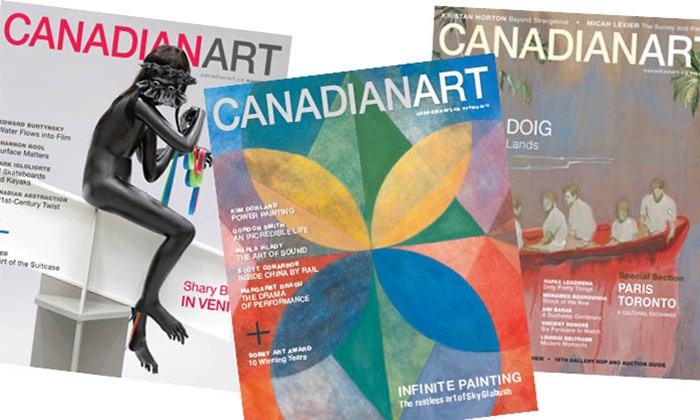
Canadian Art magazine’s “woke suicide pact”

As a cultural barbarian and all-around Neanderthal, it will come as little surprise to both my readers that I’d never even heard of Canadian Art magazine. As a result, the recent decision to cease publication due to the unresolved (and almost certainly unresolvable) issues of needing to be funded by rich white people:

These evils were explained in a long article published by Canadian Art‘s former editor-in-chief, David Balzer (self-describedgay, fag, queer. Ambivalent Libra“), in which he complains that the progressive agenda of the magazine he edited was forever being undercut by the need to solicit funds from wealthy white donors. Or, as he describes it, the pursuit of: “white, liberal money — the champagne socialists.”

Shockingly, these donors are not especially fond an incessant slew of articles with titles such as Drop the Charges and Defund the Police, Says New Artists’ Letter for Black Lives, Give Us Permanence — Ending Anti-Black Racism in Canada’s Art Institutions, and A Crisis of Whiteness in Canada’s Art Museums.

Balzer’s analysis of the growing tension between establishment donor and do-good editor is spot on:

    Most boards, which are also majority white, are [interested] in going to where they believe the money is. So the argument goes: It takes a certain talent, panache, to be president, director, or CEO, to open those pocketbooks, and without these skills, culture cannot run. This argument implies that culture cannot run if its backrooms are not white … Many corporate partners make possible the lavish, yearly fundraising galas that cultural organizations host: ostentatious displays of whiteness and wealth that are the public-facing versions of the aforementioned work done by white presidents, directors and CEOs.

It’s a problem that every charity, art outlet, and activist organization in Canada will face. Supporting the arts is rarely an act of pure altruism. It has always been a status flex by the well-connected barons and baronesses of privilege. At its most cynical, arts funding is a high-class game of reputation laundering.

July 30, 2020

Membership in the Laurentian Elite isn’t about intelligence, it’s about power and status

Filed under: Cancon, Government, Politics — Tags: , , , , — Nicholas @ 03:00

In The Line, Andrew Potter wonders why Canadian political elites tend to be so … dumb:

Typical image search results for “Justin Trudeau socks”

Recent events in Canadian federal politics have raised anew the familiar conundrum: why are high status people so stupid?

Anyone who has had much interaction with high status individuals is familiar with the phenomenon. It isn’t the shallow ignorance of the merely uneducated, or the malevolent brainlessness of the criminal class. It’s not even your bog-standard lack of intelligence. No, high class stupidity is of a very special type: A sort of studied lack of interest in facts, an offhand relationship with norms, an outright animosity to new ideas.

But it is important to specify just what we mean by “high status,” because status means different things to different people. (Indeed, how you define “status” is one of the key markers of class differences in Canada.) For some people status is defined by money or wealth, for others it is a function of education, while for still others it is a matter of taste. And even if you are sure it comes down to money, there are clear status differences based on how you got rich. Everyone instinctively understands the difference between the guy who got rich off a chain of used car dealerships and the one who made his bundle selling his dotcom startup, and there’s a reason why “nouveau riche” is a derogatory term.

And so the high-status individuals we are talking about here are the highest of high, the upperest of upper, the ones whose wealth is inherited, whose lives are defined by their privilege, and for whom the question of which rung of the status ladder they stand upon never arises, because there is no one above them.

Which brings us to the Liberal government, and in particular to Prime Minister Justin Trudeau, Minister of Finance Bill Morneau and the scandal over the sole-sourced contract (sorry, “contribution agreement”) with a branch of the Kielburger-led WE conglomerate. First, Canadaland broke the story two weeks ago that Trudeau’s mother and brother had received almost a quarter of a million dollars in speakers’ fees from the WE organization.

[…]

Trudeau and Morneau are both very wealthy men, and if they were going to get into the business of selling their offices it wouldn’t be to a children’s charity for penny ante sums. No, as a number of columnists have pointed out, what is at work here is not corruption, it is privilege: It probably never occurred to either Trudeau or Morneau that this sort of thing was wrong. And it didn’t occur to them, because they are the sort of people who have spent their lives not worrying about the comings and goings of money and how it may affect their lives.

That is why the defining feature of the WE scandal is not the corruption, but the almost deliberate stupidity that is on display — in particular the lack of interest in basic material facts or in following the rules that govern the lives of most people. Which brings us back to the question we started with.

Update: Corrected the attribution for this … Andrew Potter’s article appeared in The Line, not The Dominion. Apologies for the brain fart…

July 29, 2020

The Equity, Inclusivity, and Diversity Industrial Complex

In The Dominion, Ben Woodfinden comments on a Ross Douthat column on the “antiracist” demands of our modern protestariat (the hordes of un- or under-employed university-educated young liberals and socialists):

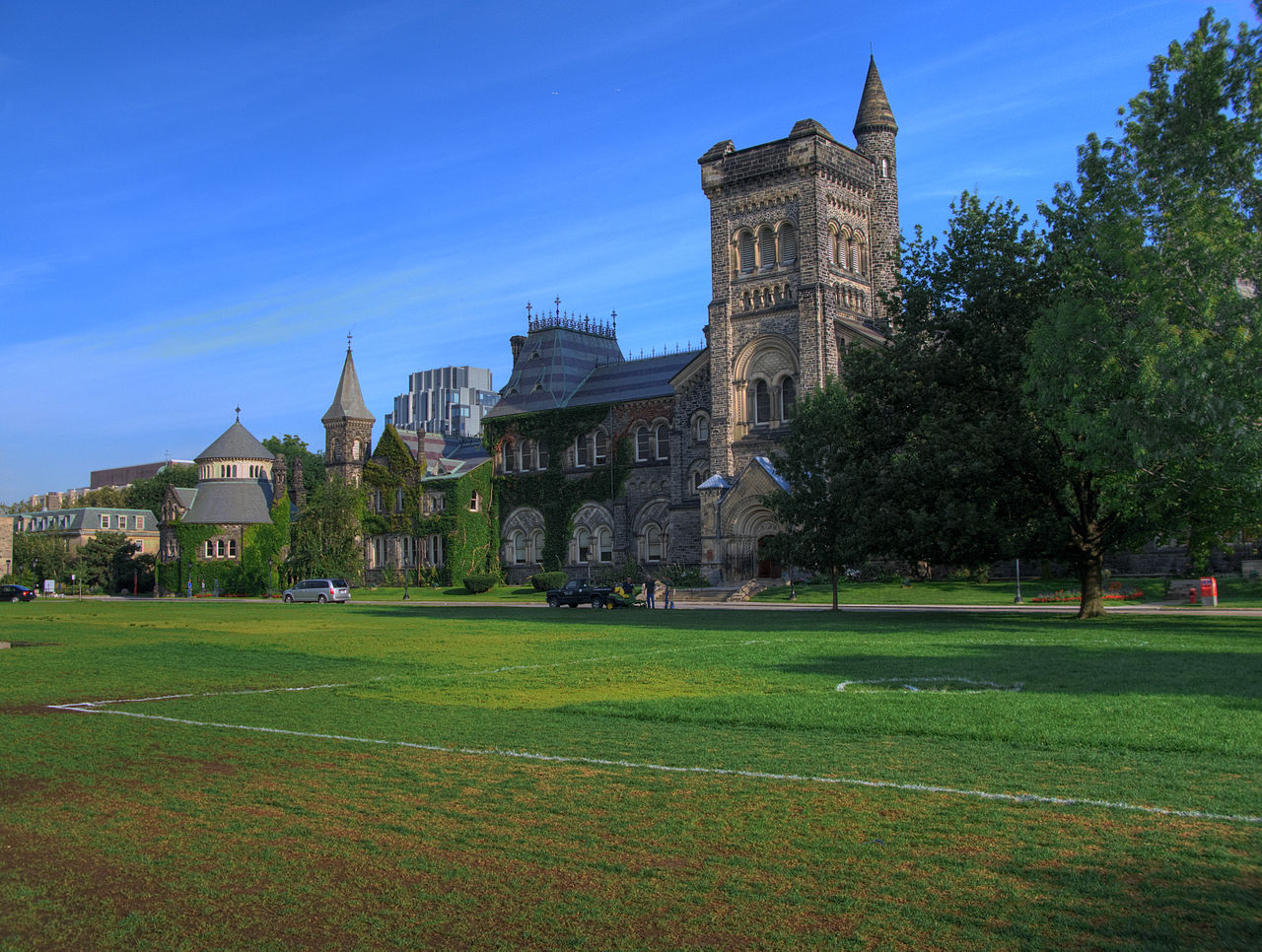
University College, University of Toronto, 31 July, 2008.
Photo by “SurlyDuff” via Wikimedia Commons.

… the most interesting aspect of this lockdown-induced outpouring of collective rage hasn’t been the protests, or the cancellations, but the woke job creation that is going on. The ideology behind things like “white fragility” is increasingly being transformed into what can be described as an equity-inclusivity-diversity (EID) industrial complex that might end up being the most significant long term structural change that emerges out of the protests.

One of the most common responses in elite institutions as they promise to address systemic racism has been the creation of new jobs and positions that will supposedly help to do so. For instance, the Washington Post created a set of new positions that will be focusing on racial issues. This included hiring a “Managing Editor for Diversity and Inclusion.” At Princeton, the administration announced, like many other elite universities, new courses (which means new teaching opportunities) focused on racial injustice, as well as new projects and funding for research to explore and address racial issues. Stanford has created a new Centre for Racial Justice at its law school.

This direct job creation is just the tip of the iceberg. The real EID industrial complex is in the creation of a vast number of new jobs dedicated to the promotion and advancement of the basic tenets of this ascendant ideology through the expansion of human resource departments to deal with these issues, the creation of new EID bureaucrats and administrators in universities, corporations, government departments, the rise of EID consulting and mandatory courses and workshops for employees, new jobs and potential litigation for lawyers, as well as courses and modules in law schools to teach aspiring lawyers about these things.

In the bestselling Ibram X. Kendi book How To Be An Antiracist, one of Kendi’s central solutions is to pass an anti-racist amendment to the U.S. Constitution and permanently establish and fund a Department of Anti-racism. This department:

    would be comprised of formally trained experts on racism and no political appointees. The DOA would be responsible for preclearing all local, state and federal public policies to ensure they won’t yield racial inequity, monitor those policies, investigate private racist policies when racial inequity surfaces, and monitor public officials for expressions of racist ideas. The DOA would be empowered with disciplinary tools to wield over and against policymakers and public officials who do not voluntarily change their racist policy and ideas.

The radical tendencies of the bourgeois bolsheviks in the streets might make them seem like true revolutionaries, but what this movement seems to actually want to create, with remarkable success, is new employment opportunities for true believers in the new anti-racist creeds. Racism won’t so much be solved by tearing society down, but by massively expanding new professional and managerial jobs that can guarantee full employment for the credentialed class of true believers.

O’Boyle’s thesis is that the revolutions that swept across European cities in 1848 were because a large surplus of resentful and overeducated men felt society was denying to them what they were rightfully owed. O’Boyle looks at Germany, where university education was cheap, and was “emphasized as an avenue to wealth and power.” This ending up producing an excess of ambitious, but resentful and frustrated men who felt society was not allotting them the status and comfort they deserved. The same was true in France. But in Britain, the opportunities produced by industrialization that had yet to fully materialize on the continent kept this excess surplus of overeducated men much smaller, and helped insulate Britain from revolution.

What if the EID industrial complex actually helps to reduce the scarcity of opportunities in elite fields and institutions that will put a lid on the unrest that overproduction breeds? The EID industry is worth billions of dollars, and in a way it might be the solution liberalism offers to both the radical progressivism of this ideology, and to the challenge posed by elite overproduction.

July 17, 2020

Not being racist isn’t enough … now you need to be actively anti-racist

Filed under: Books, Politics — Tags: , , , — Nicholas @ 05:00

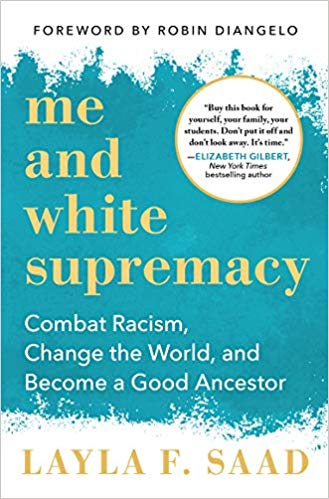
In The Critic, Ewa Dymek and Mateusz Dymek review Me and White Supremacy: How to Recognize your Privilege, Combat Racism and Change the World by Layla F. Saad (the North American release is subtitled “Combat Racism, Change the World and Become a Good Ancestor”):

Conceptually, systemic racism is a fuzzy concept. It morphs from being defined as an institution with racist policies to one with no racist policies and no racist individuals but is nevertheless still racist. In certain circles to come out and ask for clarity on what systemic racism is, is to reveal your own deep lack of intellectual sophistication: because nowadays everyone knows what it is – it’s this BIG thing. How big? What follows is quite a lot wide, circular arm movements illustrating that systemic racism is BIG and EVERYWHERE. And exactly where everywhere, is followed by eye rolling. Then, inevitably, the words “unconscious bias” will accompany the definition, to which a genuine response might be: “But you don’t consider yourself a racist, do you?” And silence will follow. It wasn’t a trick question but any answer in this particular milieu is tricky. To say out loud: “Yes, I am a racist” can obviously sound somewhat KKK. But to say the opposite could, according to the “creative visionary” Ms. Layla Saad, mean that “you have been conditioned into a white supremacist ideology, whether you have realized it or not.”

This, of course, is not an outlier view but in line with modern “Anti-racist” theories, such as Ibram X Kendi’s assertion that “the claim of ‘not racist’ neutrality is a mask for racism” or Robin DiAngelo’s insistence that a person declaring herself non-prejudice “only protects racism” (the author of White Fragility also penned the foreword to this book).

If these contradictions make perfect sense to you and wide, circular hand gestures are enough to explain the nuances of omnipresent racism, then you are primed for Ms. Saad’s acutely distressing self-help book Me and White Supremacy: Combat Racism, Change the World, and Become a Good Ancestor. Adapted from her 28-day Instagram challenge and drawn from childhood experiences of white supremacy in Wales and Swindon (before finishing up her schooling at a British private school in Qatar), the book is a heady mix of Mein Kampf meets The Secret. This bestseller takes the shape of an arduous course where each day you solemnly address the nuances of your deep hidden and latent racism towards the “BIPOCs” (Black, Indigenous, Persons of Colour). Daily written responses to journaling prompts are demanded of you (one would imagine in a jotter with a clenched black fist on its cover).

The core tenet of the Anti-Racist movement, as well as Ms. Saad’s curriculum, is to see the Western world through a racialist perspective, i.e. race and racism is always there to be found if you just put the hard work in. Ms. Saad explains: “I can count on one hand the number of times I experienced overt racism” but her teachings are not about that tangible, obvious type of racism, it’s about another type. The big and everywhere type. Through the Me and White Supremacy experience you will have to (if you’re white or “white-passing”) scrutinise every interaction with a person of a different skin colour for evidence of fetishisation, tokenism, colourism and “optical allyship” (helping a BIPOC just for show). Even as a bi-racial person, you will learn how each and every encounter with a BIPOC is probably an oppression and/or aggression that upholds your “internalised white privilege”. If the BIPOC in question happens to be your own child, you may find you are tokenising them too.

March 23, 2020

QotD: Men’s blindness toward women

Filed under: Health, Politics, Quotations, USA — Tags: , , , , , , — Nicholas @ 01:00

There is a lot of talk about Toxic Masculinity. No one ever talks about Toxic Femininity. Though every woman who is a functional human being knows about it, as does anyone who has ever lived or worked in a predominantly female environment.

So, why does no one talk about it? Well, mostly because the left believes that “designated victims”™ are sacred and must never be called on their own bullshit, no matter how smelly. Hence also the bizarre idea of racial “privilege” that tells you holocaust survivors should be attacked for “white privilege” but the Obama girls raised as the creme de la creme, and never facing a day of privation in their lives don’t have any privilege and are victims.

But there’s also other stuff going into it. To an extent — to the extent that historically for biological reasons men dominated public life — the fact that no one talks about the bad side of female modes of being in society is the result of patriarchy.

Men are ridiculously, idiotically, insanely blinkered about women. They don’t really see women as they see other men, but through rosy glasses as much better than men. The “oh so smart” former president with the depth of a rain puddle in Colorado told us that women are so much better than men and that the world would be better under women. Which means he’s basically a bog standard male who has never given the matter a thought, and is going on what “everybody knows.” (It occurs to me this man, if he’d been born to an ultra conservative Arab family in one of the ultra conservative Muslim countries would also be telling us that women’s hair emits seductive rays. He’s a suit that speaks. Or an empty chair, if you prefer.)

Of course it is right evolutionarilly that men should feel that way about women. It keeps the species going. It is also bizarre though, and leaves men curiously defenseless now that women view themselves as an aggrieved class and are trying to take over public life and exclude men.

In fact it leaves as the only defense in society that most women — even the feminists who pretend otherwise — unless completely and extensively broken and indoctrinated know what other women are and therefore will not trust any of them. As they shouldn’t. I can’t imagine a worse hell than what Obama is proposing.

Sarah Hoyt, “Toxic Femininity”, According to Hoyt, 2019-12-18.

January 30, 2020

French immersion is still like private school for the middle class

Filed under: Cancon, Education — Tags: , , — Nicholas @ 03:00

Chris Selley talks about the differences between Canadian official bilingual opinion and reality for Canadian students:

Inevitably in these discussions, however, someone dares mention the unspeakable truth: that when it comes to bilingualism, not all Canadians are born equal. Conservative MP and possible leadership candidate Michelle Rempel Garner suggested bilingualism was a matter of “privilege” — “either financially, access to education, or time required.” And the National Post‘s Alberta correspondent, Tyler Dawson, ventured that in most of the country, “it’s nearly impossible to finish high school fluent in French and English.”

These perfectly axiomatic observations produced the standard anecdote-laden blowback. Author and journalist Chris Turner boasted of his “fully bilingual” 14-year-old daughter, the beneficiary of “a public immersion program in Calgary, which is maybe Canada’s least French city.” Former Parliament Hill reporter Rosemary Thompson claimed “there are many options in the public school system for French” in “rural Alberta.” Shannon Phillips, the Alberta NDP’s finance critic, claimed “there is French-language education of high quality almost everywhere in this country.”

It’s frankly bizarre that Canadians who think bilingualism is important could be this misinformed. The internet is full of studies, papers and op-eds from the Official Languages Commissioner, the Senate’s Standing Committee on Official Languages and the various chapters of Canadian Parents for French bemoaning widespread lack of access to French-as-a-second-language education.

The numbers back that up. Never mind graduating high school bilingual; the vast majority of Canadian students aren’t even studying it after elementary. In the 2017-18 school year, excepting Quebec and New Brunswick, just under 50 per cent of Canadian Grade 9 students were in either core French or French immersion programs. In Grade 10 that was down to 22 per cent; in Grade 11, 15 per cent; in Grade 12, eight per cent.

Where French classes are available, moreover, they are too often shoddy. A 2017 report from the Senate committee noted a study finding 78 per cent of teachers teaching core French in British Columbia “felt uncomfortable speaking French.” Why would parents waste their kids’ time with that, if competent instruction in Mandarin, Punjabi or Japanese were available down the hall? (French isn’t mandatory at any grade level in British Columbia.)

As for French immersion, demand vastly outstrips supply. Lotteries and waiting lists are de rigueur. The Senate report told of cases where parents “camp(ed) outside schools to enrol their child in French immersion programs (for) up to four days.” Most parents have to go to work.

Back in 2015, Aaron Hutchins covered this for Maclean’s:

French-English bilingualism rates may be on the decline in Canada, but when it comes to getting kids into French immersion programs — which have come to be seen by many as a free private school within the public school system — there is nothing, it seems, that a Canadian parent won’t do.

Alyvia is now in Grade 2 and loving French classes. But for every student who graduates from French immersion, there’s at least one other who has been bumped out of the program and put into an English-only stream that many deem inferior. Well-meaning parents may feel that French immersion is the answer for every child. In reality, it has become an elitist, overly restrictive system, geared to benefit a certain type of student.

[…]

“What a program like French immersion does is it siphons off those kids who have engaged families who make sure the kids do all their homework,” says Andrew Campbell, a Grade 5 teacher in Brantford, Ont. “Because of that, the opportunities in the rest of the system are affected because the modelling and interaction those kids would provide for the other kids in the system aren’t there anymore.”

The immersion program creates division along lines of gender, social class and special needs students, wrote a 2008 study from the Canadian Research Institute for Social Policy looking at French immersion in New Brunswick. Girls are more likely to be enrolled than boys and the French stream has fewer kids in need of extra help. All things being equal in New Brunswick, every class — French or English — should have 3.4 students with special needs. But when a school offered French immersion, the average number of special needs students ending up in the English stream was 5.7. This kind of segregation is not unique to that province.

The richer the family, the more likely their kids will be immersed in French, according to figures from a Toronto District School Board study. In 2009-10, 23 per cent of all French immersion students came from families in the top 10 per cent of income. Meanwhile, only four per cent of French immersion students came from the bottom 10 per cent of family income.

“The program is open to lots of people, but it gets whittled down,” says Nancy Wise, a French immersion educational consultant and former special education teacher in the York region, just outside Toronto. “If you can’t cut it, you probably fall into one of these categories: [you’re a] new Canadian, this is your third language, you’ve got some learning challenges, or there’s a socio-economic factor. They jump on it in the schools and show them the door — and it’s just not right.”

January 22, 2020

You – yes, you – and your “White Supremacy” issues

Filed under: Randomness — Tags: , , , , — Nicholas @ 06:00

Antonia Senior is shocked, shocked to discover that she’s struggling with a whole bunch of internalized issues, according to a new book by Layla F. Saad:

I am a white supremacist. Who knew? I didn’t. I have, however, just read Me and White Supremacy by Layla F Saad, published next month by Quercus, which has made clear to me that I am white, therefore I am a racist. In fact, Ms Saad told me in the introduction to prepare to “become overwhelmed when you begin to discover the depths of your internalised white supremacy”.

On a similar note, a friend recently told me that my failure to recognise a vast malevolent patriarchy was as a result of “internalising your own oppression”. There seems to be a lot of internalised weirdness going on: gender victim battling it out with racist in my gut. I thought it was wind.

The publisher is pretty sure that the ranks of underpaid, bookish folk who work for them are also all white supremacists. It is distributing the tome to all the British employees of its parent company Hachette, and telling them to spend 28 days “reflecting on manifestations of white supremacy, including white privilege”.

The self-flagellation of all the white supremacists at Hachette is yet another example of how much the Woke borrow from the Church. Identity politics has become a secular religion, and “white privilege” is one of its shibboleths. Indeed Ms Saad makes the point clearly in her book, stating that “I strongly believe that anti-racism practice and social justice work are also spiritual work.”

To be woke demands faith in certain creeds, with the twins Equality and Diversity as unassailable deities. It demands a knowledge of the right language. You must believe in certain disprovable evils — like the existence of a malevolent patriarchy — and like many strict sects, it punishes its apostates most severely. The Twitter storms are fierce for those who express a non-woke view but should have known better than for those outside of the faith altogether.

Tom Holland, in his book Dominion, The making of the Western Mind, identifies the “trace elements” of Christianity in the woke world. The example he used was the intersectional feminists in the #MeToo movement offering white feminists the chance to “acknowledge their own entitlement, to confess their sins and to be granted absolution”.

December 11, 2019

Toward a working definition of “social justice”

David Thompson hacks through the jungle of misinformation to craft an initial working definition that appears to hit all the high points quite nicely:

“Social justice” entails treating people not as individuals but as mascots and categories. And judging a person and their actions based on which Designated Victim Group they supposedly belong to and then assigning various exemptions and indulgences depending on that notional group identity and whatever presumptuous baggage can be attached to it, with varying degrees of perversity. And conversely, assigning imaginary sins and “privilege” to someone else based on whatever Designated Oppressor Group they can be said to belong to, however fatuously, and regardless of the particulars of the actual person.

Which is to say, “social justice” is largely about judging people tribally, cartoonishly, and by different and contradictory standards, based on some supposed group identity, which apparently — and conveniently — overrides all else. It’s glib, question-begging and pernicious. Cargo-cult morality. Viewed with a cool eye, it’s something close to the opposite of justice. And yet, among our self-imagined betters, it’s the latest must-have.

In much the same way, “diversity” seems to be the belief that the less we have in common, and feel we have in common, the happier we will be. An unobvious proposition, to say the least. And then there’s “equity” — another word favoured by both educators and campus activists — and which is defined, if at all, only in the woolliest and most evasive of terms. And which, when used by those same educators and activists, seems to mean something like “equality of outcome regardless of inputs.” Inputs including diligence and punctuality. And that isn’t fair either.

« Newer PostsOlder Posts »

Powered by WordPress