Quotulatiousness

July 12, 2019

Mark Steyn urges caution when considering the Epstein case

Filed under: Government, Law, Politics, USA — Tags: , , , , — Nicholas @ 03:00

It may make sense to avoid a rush to judgement, as the way the federal justice system works these days does not encourage a belief in its impartiality or, for that matter, its dedication to the concept of “justice”:

I am wary of saying anything too definitive re the Jeffrey Epstein case, because so much of the reporting is way too trusting of the federal prosecutors’ official narrative. Don’t get me wrong: I take it as read that he’s an industrial-scale pedophile, if only because it seems to be the only thing anybody knows about him – including how he made his billion dollars. He apparently requires three “massages” a day by underage girls. So, upon being informed that Mr Epstein was flying his “Lolita Express” around Africa with Bill Clinton, Kevin Spacey and a softcore porn actress called Chauntae Davies on board, I’m disinclined to accept the official explanation that this was an Aids-relief “humanitarian” mission.

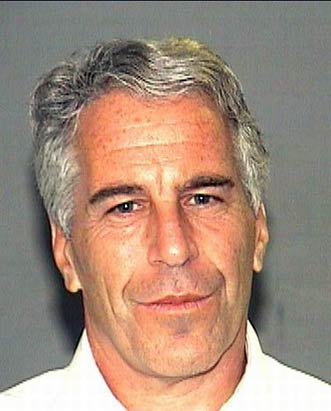
Mug shot of Jeffrey Epstein made available by the Palm Beach County Sheriff’s Department, taken following his indictment for soliciting a prostitute in 2006.
Image via Wikimedia Commons.

That said, as longtime readers know, I regard federal justice as appallingly corrupt, and so the sudden revival of Epstein’s prosecution is somewhat more than intriguing. First, and as often with prominent American cases, the details make no sense:

    In a memo filed to the court, prosecutors outlined the scope of Epstein’s vast wealth to argue that he has the means to flee the country and escape prosecution, noting that he not only has homes in Manhattan, Palm Beach, New Mexico and Paris — with his Upper East Side townhouse, of which prosecutors are seeking the forfeiture, alone worth $77 million — but also owns a private island in the US Virgin Islands.

    He also has three US passports, owns at least 15 vehicles and has access to two private jets, according to the memo.

I can understand how a rich man comes to have fifteen cars, but how pray, does one individual citizen acquire three US passports? And from a government supposedly on “orange alert” these last eighteen years.

Second, Epstein was the beneficiary of a ludicrously lenient federal plea deal a decade ago for exactly the same charges. So this would appear to be “double jeopardy”. Not so fast, say the feds:

    It is well-settled in the Second Circuit [appellate court] that a plea agreement in one US Attorney’s office does not bind another unless otherwise stated.

Is that so? Thanks to that litigious loser Cary Katz, I’m more familiar with Second Circuit jurisprudence than I might otherwise wish. But I had no idea of the above. So apparently, when you enter into a plea deal with “the United States” that says things like “the United States, in consultation with and subject to the good faith and approval of Epstein’s counsel, shall select an attorney representative for…” and “if Epstein successfully fulfills all of the terms and conditions of this agreement, the United States also agrees that it will not institute any criminal charges against…”, the words “the United States” only apply to the United States that resides at 27 Ocean View Parkway, Miami Beach and not the United States that resides at 32b Rotting Wharf Lane, The Bronx. So forget double jeopardy; you could have demicentuple jeopardy. Who knew?

One more thing: it seems fairly obvious that Epstein is also a procurer for those whose appetites likewise run to schoolgirls. This is where the manifests of his airplane are at least somewhat inferential. Yet the new indictment is concerned only with “the New York Residence” and “the Palm Beach Residence” — and not the Lolita Express jetting well-heeled buddies to Paedo Island. Is this some cozy arrangement to ensure that Bill Clinton et al are excluded from the case?

June 12, 2019

Men’s mental health and the conflicting demands they face

Filed under: Health, Media, Politics, USA — Tags: , , , — Nicholas @ 05:00

In Psychology Today, Rob Whitley explains the paradoxical demands that men make active efforts to talk about mental health issues and to “check their privilege” and shut up:

Men, Please Talk More

Men experience elevated rates of numerous mental health issues including suicide and substance use disorder while showing low rates of mental health service utilization and a tendency to bottle-up. This has led many scholars to posit a silent crisis of men’s mental health.

Consequently, many mental health organizations and high-profile individuals are sending out an insistent message that men must talk more about their mental health.

Even royalty has endorsed this message, with HRH Prince William stating in a recent documentary that we need to “pass the message onto men everywhere that it’s okay to talk about mental health… and be able to talk about our emotions.”

Fine words indeed.

Men, Please Shut Up

However, other individuals and organizations are sending out a completely different message, namely that men as a group need to remain silent and “check their privilege.” As wryly noted by Bloomberg journalist Ramesh Ponnuru “check your privilege means shut your mouth.”

Such messages can be seen all over the Internet, with pleas for men to shut-up or stop whining. Of note, these pleas come from both men and women. These echo comments men often hear in face-to-face interactions, even from their intimates and their employers.

Indeed, such perspectives can emanate from high places, including the U.S. Senate, with Hawaii Senator Mazie Hirono recently stating, “I just want to say to the men in this country: just shut up and step up. Do the right thing for a change.” For some, male silence is a sign of moral rectitude.

This situation creates a men’s mental health double-bind. On the one hand, men are being told to talk more and open-up; on the other hand, men are being told to check their privilege and be silent. This can only create cognitive and emotional distress.

Interestingly, the men’s mental health double-bind manifests itself beyond the borders of the U.S. As such, examples from the U.K and Canada are given below to illustrate its global nature.

March 7, 2019

QotD: Marxist absolutism

Filed under: Politics, Quotations — Tags: , , — Nicholas @ 01:00

Do you know why Marxists like absolutism so much? Why even a 99.9% success rate is not good enough for them? Because it gives them an excuse to continue to exist. No human society will ever reach 100% of anything. There will always be people who are poor, people who don’t get the care they need, people who die senselessly, idiots who get drunk and wreck someone’s life. Always.

Reducing the incidence of those things is a good and noble pursuit. But they can never be stopped completely. By saying that nothing is good enough unless it has a 100% success rate, the Marxist is giving himself power for life, and his organization power forever. Because so long as one person slips through the cracks, he can say “my work is not done yet.”

But the single-minded focus of Marxists on power politics is a good tell. Absolutism can tell you if someone is a Marxist, but so can an over-reliance on the language of political power. Normal people might talk politics for a while, even rant about it as I do here, but there are also times when they just don’t care about politics at all.

Marxists want to bring politics into everything. Are you eating a plate of Chinese takeout? Cultural Appropriation. Do you drive a nice car? Privilege! Do you like your hair a certain way? Racism! Everything must involve politics with them. They cannot stop thinking about their obsession for even the briefest of moments. At some point, a normie is likely to talk about his dog, or his kid, or how much he likes beer, or something totally unrelated to politics. The Marxist, on the other hand, will find a way to steer that back.

Dystopic, “Marxism: The bug wearing an Edgar suit”, The Declination, 2017-03-10.

October 24, 2018

Temporal privilege

Filed under: Books, Britain, Health, History — Tags: , , , — Nicholas @ 03:00

In the latest issue of Libertarian Enterprise, Sarah Hoyt discusses reading a recent historical novel that she nearly threw at the wall:

What brought about this rant is that I just read a Pride and Prejudice Variation written by someone who swallowed Dickens hook line and barbed socialist sinker.

Dickens was an amazing writer. What he was not was an historian or an impartial observer. What he put in his books has tainted people’s perception of the past and encouraged the cardinal “socialist virtue” of envy. It causes people to think those richer than themselves are callous bastards. It teaches people to see the past through that lens.

This book was almost walled when the woman assured us that the middle and upper classes did not care about the disappearance of a serving-woman.

It wasn’t many years after that the murder of a series of prostitutes set Victorian England aflutter, and yes, that included the upper and middle classes.

In the same way she waxes pathetic about how death was common among the poor in the Regency. B*tch, death was common in the Regency, period. If your entitled, propagandized ass were plopped down in a society with no antibiotics and uncertain house-heating, you’d learn really quickly how common. Young ladies in the upper reaches of society routinely made two baby shrouds as part of their trousseau. They were expected to lose at least that many children. And while we’re talking of children, yeah, death in child birth was really common too. As was death in any of the male occupations which, as is true throughout history, took them outside the house. Even noblemen were around horses a lot, and spent quite a bit of time — if they were worth their salt — managing their own lands, fraught occupations in a time when any wound could turn “septic” and any cold could turn “putrid” and carry you off.

Yeah. The people in these close-to-the-bone societies didn’t give money to people who’d waste it. They sometimes set conditions on distributing largesse. And they had definite opinions on what behaviors were “good” and which “bad.”

They weren’t tight-ass moralists, as the left imagines. They were following precepts and behaviors proven to lead to success. Mostly success in staying alive.

They were poorer than us and in that measure they were a lot more realistic.

They had to be. The other way lay death.

Spitting on our ancestors for not obsessing about gender-fluid trilobites is in fact the ultimate expression of “temporal privilege.” The left is yelling at people poorer, unhealthier and less able than themselves.

And they’re proud of it.

October 14, 2018

QotD: Variant forms of Kafkatrapping

Filed under: Politics, Quotations — Tags: , , , , — Nicholas @ 01:00

Sometimes the kafkatrap is presented in less direct forms. A common variant, which I’ll call the Model C, is to assert something like this: “Even if you do not feel yourself to be guilty of {sin, racism, sexism, homophobia, oppression, …}, you are guilty because you have benefited from the {sinful, racist, sexist, homophobic, oppressive, …} behavior of others in the system.” The aim of the Model C is to induce the subject to self-condemnation not on the basis of anything the individual subject has actually done, but on the basis of choices by others which the subject typically had no power to affect. The subject must at all costs be prevented from noticing that it is not ultimately possible to be responsible for the behavior of other free human beings.

A close variant of the model C is the model P: “Even if you do not feel yourself to be guilty of {sin, racism, sexism, homophobia, oppression, …}, you are guilty because you have a privileged position in the {sinful, racist, sexist, homophobic, oppressive, …} system.” For the model P to work, the subject must be prevented from noticing that the demand to self-condemn is not based on the subject’s own actions or choices or feelings, but rather on an in-group identification ascribed by the operator of the kafkatrap.

It is essential to the operation of all three of the variants of the kafkatrap so far described that the subject’s attention be deflected away from the fact that no wrongdoing by the subject, about which the subject need feel personally guilty, has actually been specified. The kafkatrapper’s objective is to hook into chronic self-doubt in the subject and inflate it, in much the same way an emotional abuser convinces a victim that the abuse is deserved – in fact, the mechanism is identical. Thus kafkatrapping tends to work best on weak and emotionally vulnerable personalities, and poorly on personalities with a strong internalized ethos.

In addition, the success of a model P kafkatrap depends on the subject not realizing that the group ascription pinned on by the operator can be rejected. The subject must be prevented from asserting his or her individuality and individual agency; better, the subject must be convinced that asserting individuality is yet another demonstration of denial and guilt. Need it be pointed out how ironic this is, given that kafkatrappers (other than old-fashioned religious authoritarians) generally claim to be against group stereotyping?

There are, of course, other variants. Consider the model S: “Skepticism about any particular anecdotal account of {sin, racism, sexism, homophobia, oppression, …}, or any attempt to deny that the particular anecdote implies a systemic problem in which you are one of the guilty parties, is itself sufficient to establish your guilt.” Again, the common theme here is that questioning the discourse that condemns you, condemns you. This variant differs from the model A and model P in that a specific crime against an actual person usually is in fact alleged. The operator of the kafkatrap relies on the subject’s emotional revulsion against the crime to sweep away all questions of representativeness and the basic fact that the subject didn’t do it.

Eric S. Raymond, “Kafkatrapping”, Armed and Dangerous, 2010-07-18.

September 15, 2018

NDP leader Jagmeet Singh hits a rough patch

Filed under: Cancon, Media, Politics — Tags: , , , — Nicholas @ 05:00

Colby Cosh on the federal NDP leader’s travails:

The thing about being a New Democratic Party leader is that there’s an oh-so-fine class line to walk, a line that is easier for the leaders of less socially concerned parties. No one really expects that the leader of the NDP will actually be a working-class person, and since Ed Broadbent’s time, even the expectation that the leader will have been raised working-class has diminished. Jack Layton and Thomas Mulcair have so many politicians brachiating in their family trees that if they lived in the U.K. they would probably have had peerages to renounce.

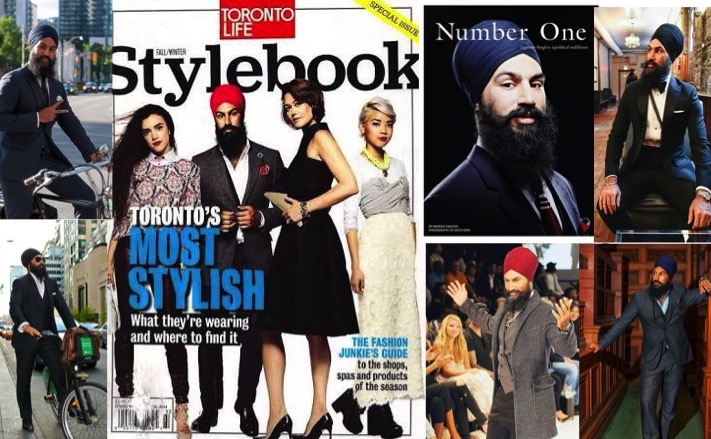
But until Jagmeet Singh came along, there was a still norm of personal austerity to be observed — a natural limit to how expensively one could dress, and how much conspicuous consumption one could indulge, while still serving up an NDP leader’s generous portion of lectures against selfishness and greed. Singh is the son of a psychiatrist: the tuition for the private American high school from which he graduated is, for the 2018-19 school year, US$31,260. He has been in GQ for his bespoke suits, and owns (according to Toronto Life) two Rolexes.

(I confess that the watches set me off. Rolexes aren’t arty like a Patek Philippe; they don’t do anything cool. They’re mostly kind of ugly. They are a pure, cold signifier of brute pride in wealth.)

Making Singh leader of the federal NDP was audacious. If ordinary New Democrats had a problem with his image and tastes, they probably felt that, with Justin Trudeau leading the Liberals, they had plenty of wiggle room on the left for a handsome leader with some celebrity dazzle. Trudeau had appetizing potential to make ghastly errors of Richie Rich cluelessness, and has delivered.

But it seems Singh will not entirely be able to avoid the day of reckoning, the day of exposure to a stricter New Democratic standard. The leader, as you probably know, has a problem in Saskatchewan, the party’s traditional heart. In May he threw MP Erin Weir out of the national NDP caucus after an independent investigation “upheld” complaints of harassment, sexual and otherwise, against Weir. Weir’s many friends in Saskatchewan are unhappy with how the case was handled.

May 22, 2018

QotD: Capitalism is the most feminist economic system ever

Filed under: Economics, History, Quotations — Tags: , , , , — Nicholas @ 01:00

We really do need to be pointing out that the Good Old Days are now. Both technological advance and productivity growth have been driven by that combination of capitalism and markets. Capitalism, in its lust for profits, leading to the invention. Markets and the ability to copy what works being what creates the general uplift in standards by the spreading and wide use of those inventions.

The net effect of this has been, well, it’s been to make women’s lives vastly better. Starting with the point that many women actually have lives as a result. Childbirth has moved from being the leading cause of female death* to a mild risk which kills very few – each one a tragedy which is why we’re so happy that we have reduced that risk. We’ve automated all the heavy lifting in society meaning that women can indeed, with their generally lighter musculature, compete in near all areas of work. We’ve done more automation of household drudgery than we have of anything else too, freeing the distaff side from that chain upon their ambitions.

We’ve even freed all from the child bearing consequences of bonking – much to the great pleasure of man and woman alike.

Women today are the most privileged, richest, group of women who have ever stumbled across the surface of this planet. And in comparison to the men in their society they’re the most equal too. All of which leads to an interesting question. Just why are they whining so much?

*Possibly an exaggeration but not much of one. Certainly not about the mid 19th century before Semmelweiss.

Tim Worstall, “Capitalism Is The Most Feminist Economic System Ever”, Continental Telegraph, 2018-04-30.

May 3, 2018

“[T]hose who cry ‘cultural appropriation’ are merely whingers with too much time on their hands”

Filed under: Britain, Liberty, Politics, USA — Tags: , , , — Nicholas @ 05:00

Naomi Firsht rightly calls cultural appropriation “the ultimate first world problem”:

If ever there was an entirely invented problem, it is ‘cultural appropriation’. No one had even heard of it five years ago. Now it pops up in news stories on an almost weekly basis.

Mansfield College at Oxford University cancelled a cannabis-themed party a few weeks ago because some students feared it could lead to cultural appropriation. It seems some were concerned that the team organising the event drew on the music and culture of the Caribbean in its invitation.

That anyone could care so much as to complain about an event that encouraged students to ‘Get creative with puns’ for fancy-dress ideas – ‘Ganjalf’, ‘The Grim Reefer’ and ‘Ganja Claus’ were among the suggestions – is just sad.

The people most likely to denounce others for their “cultural appropriation” are also the ones most likely to suffer at the sight (or thought) of anyone having fun. They’re modern-day Puritans with tattoos, piercings, and multi-coloured hair.

Let’s be honest, those who cry ‘cultural appropriation’ are merely whingers with too much time on their hands. Not only is this a non-problem, it is also an inherently First World, middle-class problem. Just take a look at Teen Vogue’s article on this year’s Coachella – the annual music and arts festival held in California.

Writer Dillon Johnson complains about ‘appropriative fashion’ at the festival, including bindis, box braids and warbonnets. ‘It’s never okay to wear someone’s culture as a costume, especially not for the sake of getting double taps’, writes Johnson, before generously offering to ‘inform and educate those that are willing to learn’.

Considering a ticket to this year’s Coachella cost a minimum of $429 (and that’s before you’ve paid for accommodation, travel and food), it’s unlikey the festival-goers’ fashion choices will be of much importance to most people.

One of the greatest things about culture is its unifying power. One group borrowing cultural aspects of another is a sign of a diverse society that is proud and admiring of its many influences. As an Ashkenazi (of Eastern Europe descent) Jew, I take immense pleasure in hearing Yiddish words (the language of my grandparents and great-grandparents) being used so liberally in the US. You’d be hard pressed to find a New Yorker who doesn’t know words like schmuck, bubbe and chutzpah. And the liberal littering of Yiddish phrases in Hollywood films always makes me smile. It breathes new life into an old language.

The rage against cultural appropriation sucks the fun out of culture, and, even worse, encourages a new kind of segregation. We should encourage cultural sharing – it enriches our society. Only a schmuck would think otherwise.

May 7, 2017

QotD: The privilege of colourblindness

Filed under: Media, Politics, Quotations — Tags: , , , , , , — Nicholas @ 01:00

In Slate magazine, SF author Ursula LeGuin complains that the producers of the new Earthsea miniseries have butchered her work. One form of butchery that she zeroes in on is by casting characters who she intended to be red, brown, or black as white people.

I have mixed feelings. LeGuin has every right to be POed at how her intentions were ignored, but on the other hand my opinion of her has not been improved by learning that she intended the books as yet another wearisomely PC exercise in multiculturalism/multiracialism.

I liked those books when I read them as a teenager. I didn’t notice any character’s skin color. I would really prefer not to have had my experience of those characters retrospectively messed with by LeGuin’s insistence that the race thing is important.

Note: I am not claiming that all casting should be colorblind. I remember once watching an otherwise excellent Kenneth Branagh production of Much Ado About Nothing that was somewhat marred for me by Branagh’s insistence on casting an American black man as a Renaissance Italian lord. This was wrong in exactly the same way that casting a blue-eyed blond as Chaka Zulu or Genghis Khan would be — it’s so anti-historical that it interferes with the suspension of disbelief. Fantasy like LeGuin’s, however, doesn’t have this kind of constraint. Ged and Tenar don’t become either more or less plausible if their skin color changes.

But what really annoyed me was LeGuin’s claim that only whites have the “privilege” of being colorblind. This is wrong and tendentious in several different ways. Colorblindness is not a privilege of anyone, it’s a duty of everyone — to judge people not by the color of their skin but the content of their character, and to make race a non-issue by whatever act of will it takes. (It doesn’t take any effort at all for me.)

Eric S. Raymond, “The Racist of Earthsea”, Armed and Dangerous, 2004-12-16.

March 21, 2017

QotD: Society’s unspoken rules and modern iconoclasts

Filed under: Politics, Quotations, USA — Tags: , , , , , , — Nicholas @ 01:00

Unfortunately for us, starting with Rousseau, someone mistook those rules for “arbitrary and unnecessary.” Now, a lot of them were, of course. Human societies acquire unspoken rules, a lot of them dross, like a dog acquires fleas. And yep, if you follow all the unspoken rules, you’ll reinforce the power of the elites because that’s what the rules are designed to do. […]

But the Rousseau attempt to change those rules started from the idea that all unspoken societal rules were wrong. ALL of them. And that absent them, humans would live in a sort of paradise. I wish he’d been acquainted with some savages, not the least because then he probably wouldn’t have lived to pen his awfully misguided ideas. His ideas have been bouncing around society for a while, aided by Marxism (Marx MUST have been Asperger’s. No, I mean that. He looked at society and had no clue why things functioned, and couldn’t see people as people but as widgets belonging to particular groups which MUST of course be opposed to other groups they interacted with) in its feminist and racialist versions, cut the threads of things that were actually important, functional, and so early-set-in that they were never spoken of.

So women didn’t see the two sides of the bargain and just saw the way their side of it “oppressed” them, which led them to lose the power they did have in society, and now they want it back – see the way they’re racing back to the fainting couch where men can’t touch them or look at them – but since they don’t understand its origins, they’re trying to get it back in all the wrong ways. It’s all “check your privilege” but without ever checking their own privilege, even as it causes white knights to run to their defense. I don’t know how long a society or a culture can last like this. Every time I know of in history, it ended in tears or guillotines.

Sarah Hoyt, “Noblesse Oblige and Mare’s Nests”, According to Hoyt, 2015-05-05.

March 7, 2017

QotD: Boys, girls, and Noblesse oblige

Filed under: Quotations, Randomness — Tags: , , , — Nicholas @ 01:00

Men are bigger and stronger than women. We’re talking women on average, of course. I think right now I’m bigger than my husband, though he’s still stronger. And probably Lizzy Lifter is stronger than Geoffrey Geek who spends his entire time playing computer games and never sees the sun. BUT on average, over the population, men are so much stronger/faster/physically able than women that any random man can overpower any given woman.

So, why aren’t ALL women victims of domestic abuse? Why are women even outside, without being raped? (And if you think all women are victims, you must be living in an Arab country, where those two above are the pre-assumptions of the cultural norms.) How is this possible? Why don’t men press home their advantage?

Well, first because men aren’t a group with “group consciousness.” Contrary to what “feminists” seem to think, men are not alien creatures who reproduce by fission. They’re women’s children, friends, brothers, fathers. So of course, being human, they care for some women and they’re decent enough to extrapolate their feelings to strange women. (And Women’s Studies programs make a lot of those.)

But more than that, there’s a built in noblesse oblige that prevents men from pressing home their last advantage. Our society runs with it, and is soaked deep with strains of female privilege.

No?

Well, take your three year old boy to a playground. Have him get in a fight with a girl. At that age, their strengths are equivalent, and the girl might be larger and stronger (girls develop faster.) Have him punch her. What do you do? You pull him back and say “you don’t hit a girl. Ever, ever, ever.”

At which point if the girl is a little sh*t who wasn’t taught her part in the bargain, she will beat him to a pulp, but never mind.

You do it because you have to. This is not some fossilized rule. It’s because if your boy doesn’t have that trained into him REALLY early, he’ll hit thirteen and seriously injure a girl. Worse, in an intimate relationship with a girl (should he turn out to like them) he will lose his cool (we all do) and suddenly become a wife abuser. Because the chances his wife will be smaller and weaker than himself are high.

So you tell your three year old this “arbitrary” rule and establish the boundaries of “female privilege” to stop him from becoming a monster when the imbalance of (physical) power sets in.

Of course, the rule has its opposite. Because women have power too, in the relationship. Oh, sure, not at three, when they’re just annoying, extra-whiney little boys as far as boys are concerned. (Average, statistical girls, that is. Some of us were Vengeance of G-d hellions.)

I tell you as the girl who was often pulled back from these with “girls don’t fight” or “girls don’t hit boys in public” but most often (my being outsized for my time and place) with “you don’t hit people smaller than you. Ever, ever, ever.”

Sarah Hoyt, “Noblesse Oblige and Mare’s Nests”, According to Hoyt, 2015-05-05.

February 27, 2017

QotD: Check your privilege

Filed under: Politics, Quotations, USA — Tags: , , — Nicholas @ 01:00

So who am I betraying by not conforming to the baneful Marxist stereotype of who I should be? Oh, right, the SJWs. That’s okay, I’m fine betraying them. Or at least fighting them. Hard to betray what you never belonged to. And, you know, most of them, even those with exotic names and claiming exotic identities (rolls eyes) are pasty-assed white people with real privilege as defined by having money and having attended the best universities and hanging out with all the “right” people and having the “right” (left) opinions. If they knew the meaning of the word privilege, they’d see it all over themselves.

But there are more egregious definitions of privilege. You see “check your privilege” is a tool of would-be elite whites to keep competition and challengers in check, while riding to glory by defining themselves as champions of the downtrodden. (It’s an old game, in place at least since the French revolution, but it’s the only one they have. Remember they lack both empathy and imagination. And since they have more or less overtaken the press, no one on the street realizes how old and tired this “clever” gambit is.)

However, when that hits academia, it becomes something even more poisonous.

Recently I heard someone talk about a difficult (as in very poor, with two working, Asian immigrant parents barely scrabbling to get by) childhood and say that as they always had books and were pushed to succeed they had “tons of white privilege.”

This person was a graduate of an ivy league school. So, of course, he had internalized the definitions of “white privilege” as meaning “doing that which brings success.”

This is sort of a self-defeating thing. If you want to have a voice in politics, you avoid “white privilege” which means if you want to have a voice in politics, you must not display those traits which logically lead to success in the culture. (You see how this is a tool of the white overclass to avoid competition from anyone else.)

This poisonous, totally unwarranted view of privilege serves only one purpose: to keep everyone else floundering and mute while these not-very-competent, credentialed, correctly-connected, politics-as-a-social good, lacking in empathy, totally devoid of imagination, largely white would-be-aristos lord it over us.

Sarah Hoyt, “The Privilege Of Not Caring”, According to Hoyt, 2015-05-17.

February 22, 2017

QotD: The microaggression micro-environment

Filed under: Politics, Quotations, USA — Tags: , , , , , — Nicholas @ 01:00

… these guidelines put whitemalemiddleclassheterosexualcisgender people in the wrong whatever they do. The rules are literally impossible to obey. The safest policy is not to interact with blackfemaleworkingclassLGBTQ people any more than you must. This avoidance will be yet more proof of your prejudice, but it’s not like there are any possible circumstances in which you would be declared unprejudiced. Not that anyone nowadays seeks wisdom from a dead white male, but Tacitus could have predicted the result of all this in AD 98: “Proprium humani ingenii est odisse quem laeseris.” The doctrine of microagression teaches that the victim classes are forever being injured by your acts. Let us hope that human nature has changed enough in the last nineteen hundred years that Tacitus’ observation that it is human nature to hate a person whom you have injured no longer applies.

What is it like to be the object of this code?

– Lonely. You will feel surrounded by enemies. And all outside your exact caste must be enemies: it is impossible for friendship to develop across the divides of privilege when every mundane interaction that might in other circumstances have led to friendship is fraught with tension. Thus one one of the main benefits claimed to accrue from diversity on campus is lost.

– Exhausting. You will be continually on the defensive, and for all your obligation to be constantly angry, passive and unable to control your own destiny. How could it be otherwise? You have chosen to centre your life on how your enemies perceive you. If black, your constant concern is what whites think of you; if female, what males think of you; whatever category you belong to defines you.

One of the attributes of status is that other people have to watch what they say around you, to mind their P’s and Q’s. The demands of political correctness can force high-status people to temporarily behave to low-status people in this respect as if their positions were reversed. But victim status is a very poor imitation of actual status. For one thing the apparent respect you get is gone the minute your back is turned – or a deniable microsecond earlier if the microagressor decides that he might as well be hanged for a sheep as a lamb and go macro. For another it’s, like, victimhood. You are officially a loser.

Natalie Solent, “Victim status is a lousy substitute for real status”, Samizdata, 2015-07-03.

February 20, 2017

QotD: Privilege

Filed under: Europe, History, Quotations — Tags: , , , , — Nicholas @ 01:00

Then there are the charming SJWs (no, it’s not an insult. They called themselves Social Justice Warriors. They don’t get to escape the name when it turns out everyone knows how stupid it is) in my field who call me a race and gender traitor. Children are confused like that. How can you be a traitor to an allegiance that doesn’t exist and which you never swore fealty to.

Doesn’t exist, you say? But race! Gender! Well, they SAY gender is a social construct and as for race, I know enough history (if they don’t) to know it’s a cultural construct. In the nineteenth century they talked of “the Portuguese race” and the “British race.” I understand that under the microscope, absent some kind of marker like sickle cell, you can’t tell anyone’s skin color. You can, interestingly enough, at the cellular level, tell the sex of the cells. But the SJWs tell us it’s a social construct, and they are honorable women and girly men.

Actually what is a social construct are the archetypes they push into those things: females and other races as archetypal oppressed races. As a Samoan e-friend put it, her people weren’t oppressed by whites. They didn’t care what whites were doing. The Portuguese might have been oppressed by the whiter parts of Europe, kind of sort of. I mean, at various times English Literature referred to them as a vile race, the French did whatever the French were doing, and the Germans tried to organize the study of Portuguese literature (among other things.) But in the end, the Portuguese were too busy fighting their eternal enemies, the Portuguese, and occasionally distracted enough to fight the Spaniards, to care overmuch about more remote European countries. They were rather busy not being eaten by Spain, as every other country in the Peninsula was. (Well, technically not being eaten by Castile, but…)

Here do I get oppressed by non-Latin people? Meh. I’d like to see the idiot with enough gumption to try to oppress me. Sometimes they stereotype me and are rude to me, but I ignore them and that works.

Sarah Hoyt, “The Privilege Of Not Caring”, According to Hoyt, 2015-05-17.

January 30, 2017

QotD: Everyone has prejudices

Filed under: Business, Quotations, USA — Tags: , , — Nicholas @ 01:00

I’ve told before the story of how my husband and I went car shopping and took along our best friends, both taller, blue eyed, and one of them blond. Inevitably, at whichever dealership we landed in (this was a lazy Saturday pursuit. You know what I mean) the salesman gravitated towards our friends who a) weren’t shopping for a car. b) were far less financially solvent than we were.

Racism? Oh, heck no, heuristics. Dan might or might not be as white as advertised, but outwardly he’s all white (nickname Count Dracula due to his inability to tan.) (Well, maybe the eyes give some clue to other genetic origins as in Portugal everyone assumes he’s from Macau and some level of cross breed. Meh.) And I can pass provided I haven’t been outside in a couple of weeks and don’t open my mouth. So, racism was highly unlikely. But we’re both short, overweight, dark haired, and were dressed almost terminally relaxed. Our friends fit the “double income” couple look better than we did, so salesmen gravitated to them.

Privilege? No. We got the chance to poke around at cars while our friends distracted pushy salespeople. BUT prejudice? You bet. Even though the two couples were superficially “white” you bet the sales people had an image of what “affluent” or relatively affluent (it was used dealerships) looked like, and it wasn’t Dan or I.

Sarah Hoyt, “The Privilege Of Not Caring”, According to Hoyt, 2015-05-17.

« Newer PostsOlder Posts »

Powered by WordPress