Quotulatiousness

July 6, 2024

“Western media resembles … the consumer landscape of the Soviet bloc. We find the same product on offer everywhere in all leading publications”

eugyppius invites us to contemplate the “awesome, terrifying power of the press”, and not for its useful role in keeping us proles informed about the goings-on of our governments and the doings of the great and the good, but its utterly cynical co-ordinated manipulation of “the narrative”:

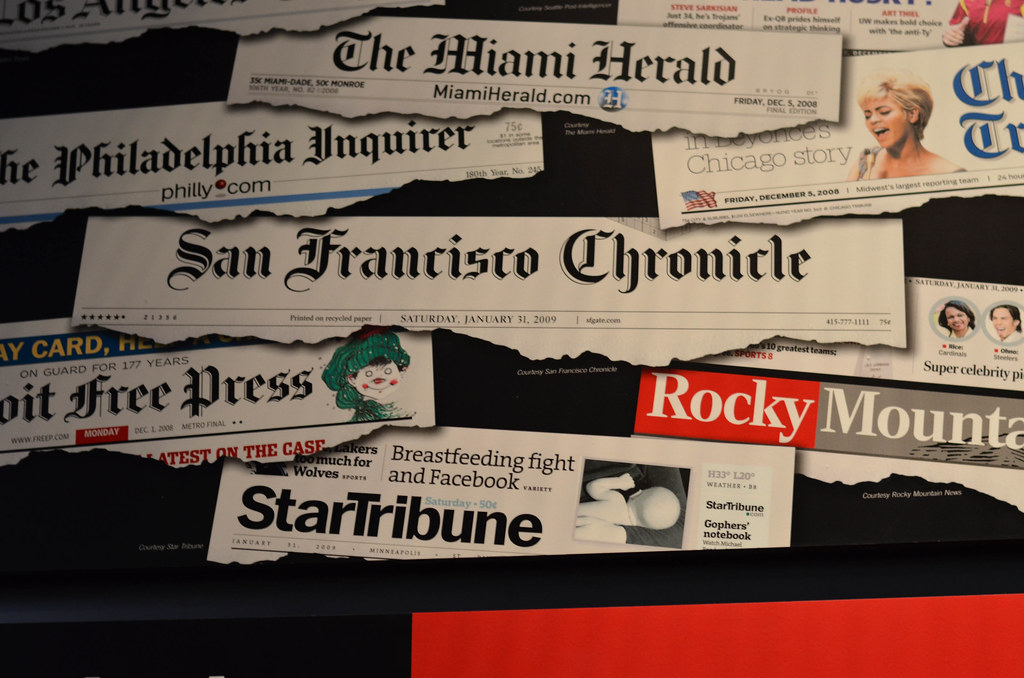
“Newseum newspaper headlines” by m01229 is licensed under CC BY 2.0 .

Take a moment to contemplate the awesome and terrifying power of the press.

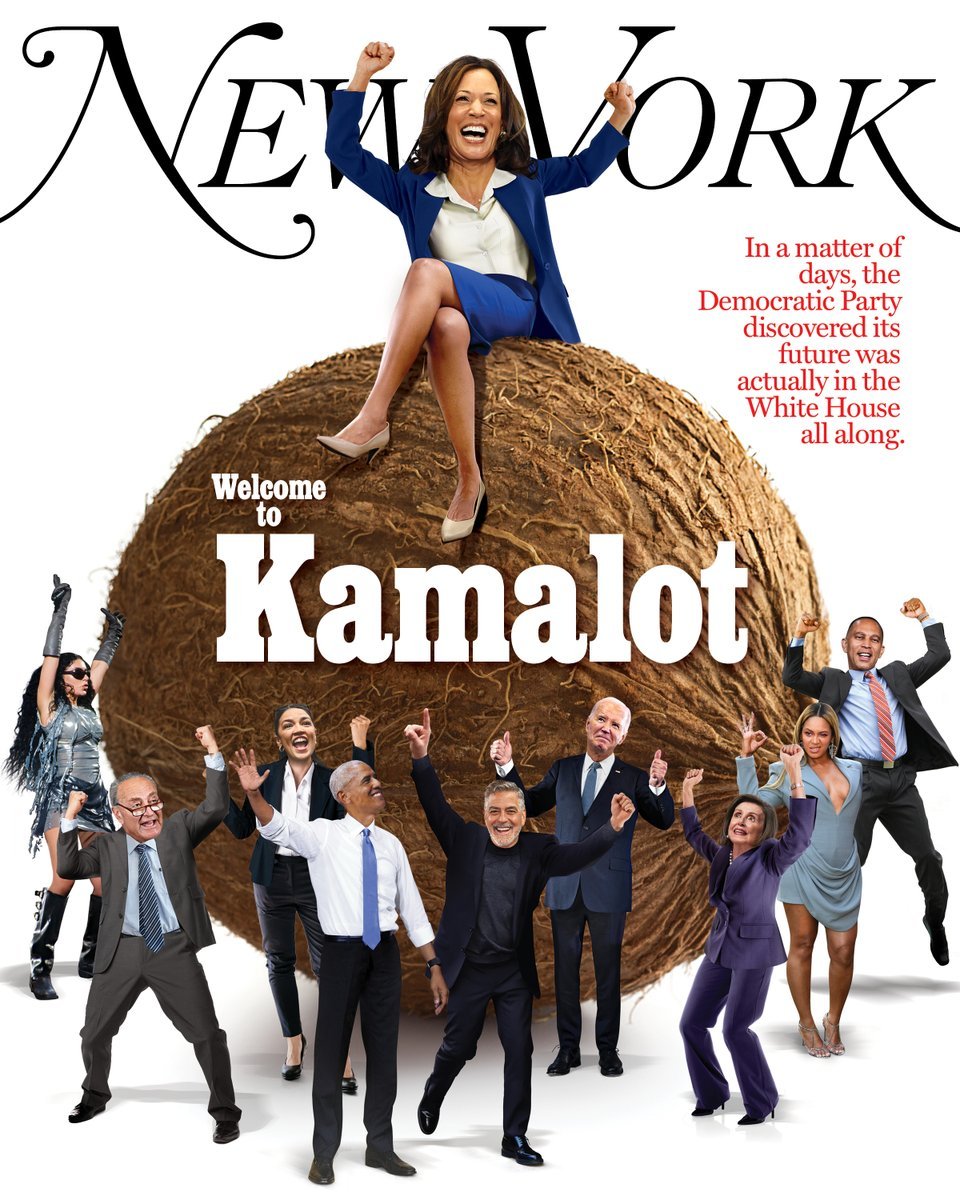
Since 2020, the United States have had a geriatric president who suffers from serious mental deficits. The media discounted this awkward state of affairs as a conspiracy theory or as Trumpist propaganda for years, substantially blunting the political impact of Biden’s dementia. Then, after the president’s terrible debate performance on 27 June, the press made Biden’s incapacity the centre of their coverage, finally welcoming this fact into official regime-sanctioned reality and bringing Biden’s candidacy into crisis. All of this happened within just hours. As I write this, Biden has no more than even odds of securing his party’s nomination, and the press are working overtime to rehabilitate Kamala Harris. Journalists who spent years quietly mocking the vice president for her abrasive personality and her bizarre speaking gaffes are now making the latter a cornerstone of her candidacy. Are you coconutpilled, dear reader?

The Biden Affair is nothing new. So overwhelming is the influence of the press over our politics, that many have described liberal democracies as media-steered regimes, wherein politicians adopt positions and enact policies calculated above all to secure favourable coverage from journalists.

As I mentioned the other day, a healthy media would provide a range of opinions wider than our current spectrum of centre-left/left/hard-left/totally woke. That they do not, despite that spectrum not covering the majority of beliefs among the general public, shows just how monolithic and partisan the surviving mainstream media outlets have become.

Imagine, for a moment, that you wanted to found your own periodical. Maybe you hope to run a weekly magazine or a daily newspaper, maybe you have ambitions of amassing an enormous audience of millions, or maybe you’re content to collect primarily regional readers. Whatever the details, you want to cover national politics in some way. The most rational approach – before you even rent office space or begin to hire staff – would be to study what existing publications are saying and what they’re reporting on, and plan to offer something different. Unless you provide content that your readers can’t get anywhere else, after all, you’ll have trouble convincing anyone to read you.

You’d think, therefore, that the media landscape would be a richly differentiated thing – especially when it comes to big, national stories. Variation like this is present everywhere else in the consumer economy. There are a near-infinite variety of headphones, energy drinks, shoes and coffee makers. Newspapers should be just as varied in their coverage, focus and analysis as all of these other things.

But of course, it is the opposite. Western media resembles much more the consumer landscape of the Soviet bloc. We find the same product on offer everywhere in all leading publications. As in the communist East, variety is confined to a kind of black market – that is to say an array of blogs, social media accounts and alternative (mostly online) publications that you’re not supposed to read and that the official discourse wholly ignores. This anomaly is easy enough to see if you spend multiple hours every day reading news stories. The average consumer of political reporting, however, has a much more casual and sporadic relationship to press discourse, and he’s apt to think that the convergence is entirely natural. The New York Times, the Süddeutsche Zeitung, and Le Monde report the very same things in the very same way at the very same time, often under extremely similar headlines, because they’re just reporting on the way the world is.

In hard authoritarian regimes, like National Socialist Germany, regime propaganda was an open, blunt instrument. Everybody who read the Völkischer Beobachter knew very well that the paper propagated the official Nazi Party line. The soft authoritarianism of the liberal West, in contrast, manages the information and opinions available to the public in a much more effective manner, namely by pretending not to. Millions of people open their newspapers every day in the belief that they contain accurate accounts of the goings-on in the world, and they form their beliefs and political preferences within this highly convincing illusion.

The distributed propaganda network maintained by our establishment press is very expensive. Especially the opportunity costs are very high. In a healthy, uncoordinated media environment, it would be impossible for somebody like me to make a living blogging about the insanity of German politics. I’d have very stiff competition from a multitude of professional, well-funded journalists who would be fighting at every moment to take my readers away from me by writing the kinds of things I do, only more effectively, more frequently and with fewer typographical errors. Of course I am a very small player in the broader ecosystem of alternative media; the audience for this content is hundreds of millions strong. It consists of all those people who have been written off by the establishment press, as the necessary price of exercising narrative control.

Among the forces that conspire to keep legacy media on-message is their aforementioned collaboration with the political establishment. This collaboration includes a tacit understanding that leading politicians and bureaucrats will only provide interviews and information to regime-adjacent journalists, granting them an effective monopoly on political news.

July 3, 2024

The profound, utter, inescapable uselessness of the legacy media

Filed under: Cancon, Government, Media, Politics, USA — Tags: , , , , — Nicholas @ 03:00

As an early and enthusiastic blog reader and eventually a blog creator, I’ve always sought interesting aspects of stories in the news — even when I disagreed with the source or the presentation, it’s always a good thing to approach any topic “in the round” whenever possible. Getting all your information from one viewpoint or even one source is a good way to gaslight yourself. Once upon a time, while the TV networks tended to be as bland as they could (because going too far toward sensationalism would be a good way to get in bad with the regulators who control your broadcasting privileges), newspapers were not under such strong moderation. You could find very progressive, mildly progressive, centrist, and even mildly conservative voices with relative ease. At least, that’s what a rosy view of media history suggests — I think you have to go back before World War II to find really vigorous debates among the major newspapers.

Here in Canada, the mass media were already overly deferential to the government of the day — unless it was a Conservative government, of course — and after the internet and social media ate all the profit out of their business, they turned as one to the government to bail them out. In return, they became even more deferential to official story lines unless the foreign press forced their collective hand to present a more complete story. Over the last few years, as the surviving mainstream media shed jobs, many journalists have “crossed the lines” and become much more like their distant predecessors in the media: diggers of dirt, tellers of uncomfortable truths, and impartial mockers of government incompetence (Canada’s The Line is an excellent example of this … even when I don’t link to them, I almost always find their articles interesting and informative.)

All that throat-clearing out of the way, here’s Chris Bray asking what you have learned from the mainstream media lately:

When was the last time you read something in the mainstream news media — an op-ed piece, a major revelation that some clever and persistent investigative reporter dug up, a sharp bit of news analysis — that surprised you? When was the last time you read something in the news that changed your understanding of a major issue? When was the last time something in the “news” reframed an issue in your head with an argument you hadn’t anticipated, or with new evidence that you hadn’t heard before? “Man, I’d never thought of it that way,” you say, tossing the New York Times down on the coffee table.

Related, when was the last time a report or a panel discussion on television news surprised you and made you see something differently?

My impression is that the public sphere is now made up almost entirely of people saying things that we already know they’re going to say. “Jennifer Rubin will now analyze the presidential debate.” You don’t need to hear that. There’s no need to listen to any of it, ever. Andrea Mitchell is for [current thing]. Of course she is. If you know what [current thing] is, what’s the point of an Andrea Mitchell?

It’s all so dull.

There are at least a couple hundred prominent media and academic figures in the United States who could die tonight without anyone noticing, as long as there was a tape or a computer program of some kind to go on posting the received wisdom of the day under their names.

June 16, 2024

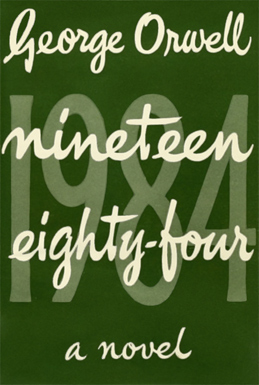
Orwell’s Nineteen Eighty-Four at 75

Ed West on the attempts by many different parties to claim the legacy of George Orwell for their own purposes:

No writer’s legacy and approval is so fought over as George Orwell, whose final — and most celebrated — work Nineteen-Eighty-Four was published seventy five years ago this month.

The most influential piece of political fiction in history, such is the success of the dystopian novel that its themes have been recited to death by columnists, often by people I imagine he would have loathed (including me).

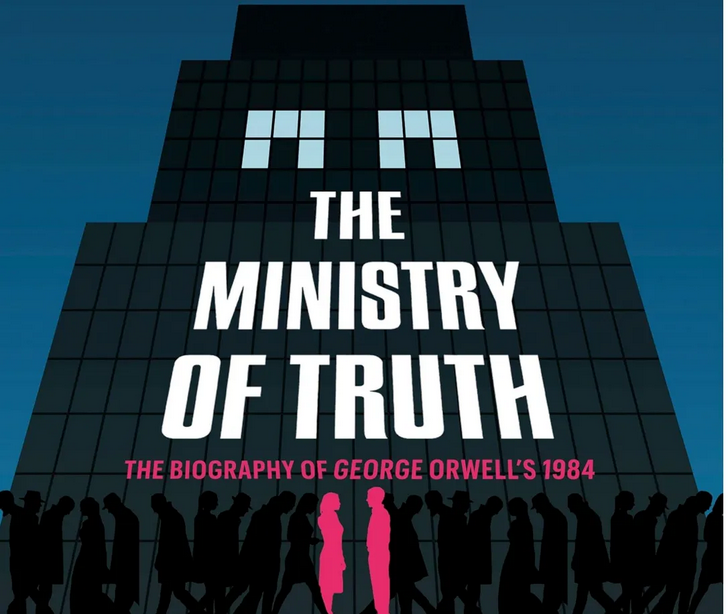
Orwell’s nightmare became a particular focus of conservative commentators from the 1990s with the rise of “political correctness”, which might be seen as both a form of politeness and at the same time a way of policing opinions by changing the language. As Orwell’s Newspeak was described, it was to ensure that dissent cannot be voiced because “the necessary words were not available”. Newspeak, along with thought police and doublethink, has become a part of our political vocabulary, while even the proles have Big Brother to entertain them. No one can doubt that Orwell has won the final victory, and the struggle for the writer’s soul forms part of Dorian Lynskey’s entertaining and informative The Ministry of Truth, a biography of Nineteen-Eighty-Four which was published at the time of the last significant anniversary.

Lynskey, a hugely gifted writer who specialises in the relationship between arts and politics, is very much on the Left and sees the modern parallels with the Trumpian disdain for truth, although the great man himself is now often more cited by the Right. Indeed the anniversary was recently celebrated by the free-market think-tank the Institute of Economic Affairs with a new edition and an introduction by my friend Christopher Snowdon.

Orwell was a paradoxical man, contradictory, sometimes hypocritical (aren’t we all?). In the preface to his book, publisher Victor Gollancz wrote that “The truth is that he is at one and the same time an extreme intellectual and a violent anti-intellectual. Similarly he is a frightful snob – still (he must forgive me for saying this), and a genuine hater of every form of snobbery.”

As Lynskey writes: “Until the end of his life, Orwell acknowledged that microbes of everything he criticised existed in himself. In fact, it was this awareness of his own flaws that inoculated him against utopian delusions of human perfectibility.”

Such awareness is surprisingly rare among intelligent journalists and commentators, especially when ideology takes a grip — and Orwell was introduced to this reality in quite brutal form.

The background to both Nineteen Eighty-Four and Animal Farm was Orwell’s disillusionment during the Spanish Civil War. The conflict between Nationalists and Republican galvanised western intellectuals and marked the turning point when the intelligentsia became firmly wedded to the Left. Over a thousand writers went to fight in Spain, and while few entirely understood the political situation they did grasp, as Malcolm Muggeridge said, that “it seemed certain that in Spain Good and Evil were at last joined in bloody combat”.

In reality it was a conflict in which both sides committed appalling atrocities, although Franco’s forces certainly outdid their enemies in murderous scale. That ruthlessness partly explains their victory, but the Republicans were not helped by the seemingly endless factionalism that saw various squabbling leftist acronyms fight each other, and which makes the war hard to follow. There was the socialist UGT, the Russian-backed PSUC, the anarchist FAI and anarcho-syndicalist CNT, and also the POUM, Workers’ Party of Marxist Unification, which rather belied its name by falling out with both Stalin and Trotsky.

Spain was an education for Orwell. Witnessing in Barcelona a Russian known only as “Charlie Chan”, allegedly an agent of NKVD, he wrote: “I watched him with some interest for it was the first time I had seen a person whose profession was telling lies — unless one counts journalists”.

He recorded how, with the honourable exception of the Manchester Guardian, “One of the dreariest effects of this has been to teach me that the Left-wing press is every bit as spurious and dishonest as that of the Right”. Welcome to the Intellectual Dark Web, George Orwell.

June 11, 2024

We’ve descended into some sort of bizarre hellworld where Jeremy Clarkson can be described as an “unlikely national treasure”

Filed under: Britain, Media — Tags: , , , , — Nicholas @ 05:00

In The Critic, Kara Kennedy considers the possibility that Jeremy Clarkson, the petrolhead’s petrolhead, might actually have a soul:

Screencap from Jeremy Clarkson’s banned Hawkstone Lager ad

The last truly poignant thing I watched on television was a show about a grumpy farmer raising piglets. He’s a city gentleman new to farming, but what may have started out as a gimmick has, over three growing seasons, transformed into a real calling. Or a passion, even. And one that, in some moments, sees him battle with life and death. Unfortunately, for a lot of the little piglets, it was death. After watching their births — their first moments and last, after their delinquent pig mothers smothered them without a care in the world — I cried. My husband cried. The friends who we harangued to watch the season again with us cried. And Jeremy Clarkson cried.

Yes, I am talking about Jeremy Clarkson on Clarkson’s Farm, streaming on Amazon Prime Video. Clarkson, over the last few decades, has made a career for himself in part by being easy to hate. It is uncomfortable for everybody, himself included, that the miserable boomer has turned into an unlikely national treasure, and all it took was some honest work.

Clarkson is cultural marmite. After 35 years on the BBC’s Top Gear, he is revered in the petrolhead community as a god. Newspapers love him because he’s impolite and will sell some prime “you can’t say anything anymore” content. Meghan Markle hates him after he once wrote he was “dreaming of the day” that British crowds threw lumps of shit at her. Feminists hate him for mostly that same reason. Leftists hate him for writing once that striking workers should be “shot in front of their families”. As for the denizens of the countryside, he has maintained a multi-decade fight in his newspaper column with ramblers.

Basically, the answer to whether you like Clarkson relies really on whether you take what a funny old guy says seriously. But there are some legitimate grievances towards the presenter too. When he was finally bounced from the Beeb, it was because he punched a producer. And as annoying as the people who had long had it in for Clarkson had always been, it is not some new Gen Z norm or innovation of “cancel culture” to say you can’t physically assault your colleague. That said, the producer in question did sue him for racial injury, which is a bit closer. (He called him Irish, for God’s sake!) The crux of it, anyway, is that Clarkson is badly behaved and probably too inconsistent to be trusted by any major TV network. He wound up on Amazon Prime’s The Grand Tour, a just-changed-enough-to-be-legal Top Gear clone, once again drawing a massive and mostly male audience that loves to memorise the 0-60 times of cars only oligarchs can ever afford.

But, once The Grand Tour began winding down — it now returns just for the occasional travel special — the old presenters went off to make spinoffs for Amazon. And Clarkson decided to make his, and to rejigger his Times column, around his 1000 acre country farm in the Cotswolds. And that is where, through epiphany, necessity, human nature, act of God, or sheer growing up, Clarkson was reborn as someone who not just the lovers of edgy humour and high horsepower figures can admire.

May 27, 2024

Visual metaphors in the British general election

Filed under: Britain, Media, Politics — Tags: , , , , , — Nicholas @ 03:00

When British PM Rishi Sunak decided to drop the writ for a general election, he must have thought he was boldly seizing the initiative but his timing was characteristically bad:

If your pitch to voters is that Britain needs protection in dangerous and uncertain times, it’s probably best to first show the voters that you can protect yourself.

For example, if it’s raining, you might want to consider demonstrating the good sense to wear a raincoat. Or carry an umbrella. Or if, say, you are the prime minister of an entire country, with an events team at your disposal, you might want to consider erecting a tent of some sort, something that can keep you dry without ruining your visuals.

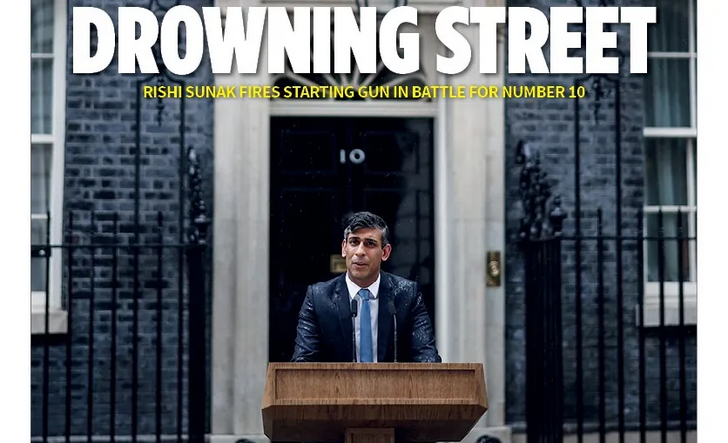
Or you can be Rishi Sunak, the beleaguered British prime minister, and stand out in the pouring rain, unprotected, and get drenched as you state your case for more time to be the country’s leader, evading the storm only when re-entering the house you will surely be vacating after voters have their say on July the 4th.

To be fair to Sunak, it’s not easy to predict the weather in London. Nor can you always control the timing of events. But when it rains all of the time where you live and you do absolutely control the timing of events, as a British prime minister does when calling an election, it’s unforgivable to be unprepared. There’s a reason most Brits keep an umbrella nailed to their hips, and it’s not style.

And if you think this is to make a mountain out of a molehill, you should check out the front pages of the U.K. papers on the morning after the election call. “Drown & out”, blared The Mirror. “Drowning Street”, chortled another broadsheet. “How long will (Sunak) rain over us,” chirped in a key regional title. Each headline was accompanied by a grim looking Sunak soaked to his whippet-like core. The presentational details matter, especially when you’re putting yourself in the shop window.

Then again, to expect anything more from a Conservative movement that is running on fumes after 14 turbulent years in power is to put hope over experience. It’s been a draining (nearly) decade and a half. There was the austerity and economic uncertainty of the coalition years. The referenda — Scottish and EU — that choked off most debate on other issues in the middle part of the last decade. And then came the double act of COVID and Ukraine, a compounding whammy that hammered supply chains and put up energy and other prices, prompting the worst cost-of-living crisis in generations. It would have been enough to test any leader’s mettle, which is probably why the Conservatives have had five prime ministers during their stretch in government, including three in 2022 alone.

April 13, 2024

When there was an active counterculture

Filed under: Books, History, Media, USA — Tags: , , , , , — Nicholas @ 05:00

Ted Gioia on a recent oral history of the countercultural touchstone, The Village Voice:

At the start of her oral history of The Village Voice, author Tricia Romano provides a “cast of characters”. It goes on for 15 pages, and includes 216 people — each with some connection to the alternative newspaper.

Many people nowadays have never lived in a society with such a vibrant counterculture. In a time when official sources all seem part of a predictable Disney-fied monoculture, just reading this list of names and mini-bios can be a revelation.

Many of these individuals are now revered as historic figures who changed society. They had power and prestige. It’s easy to forget that most of them operated as outsiders.

That’s how they wanted it.

These renegades at The Village Voice knew that working outside the system — and typically against the system — was their superpower. They could criticize ruling institutions. They could speak harsh truths. They could go against the grain.

One thing is certain: They didn’t align their interests with globalist corporate CEOs, billionaire technocrats, the surveillance state, and establishment bureaucracies. They would have laughed at journalists who did that — believing, rightly, that honest media requires distance, or even an adversarial stance, vis-à-vis entrenched powers.

Because that’s what a counterculture does. That’s what it’s expected to do.

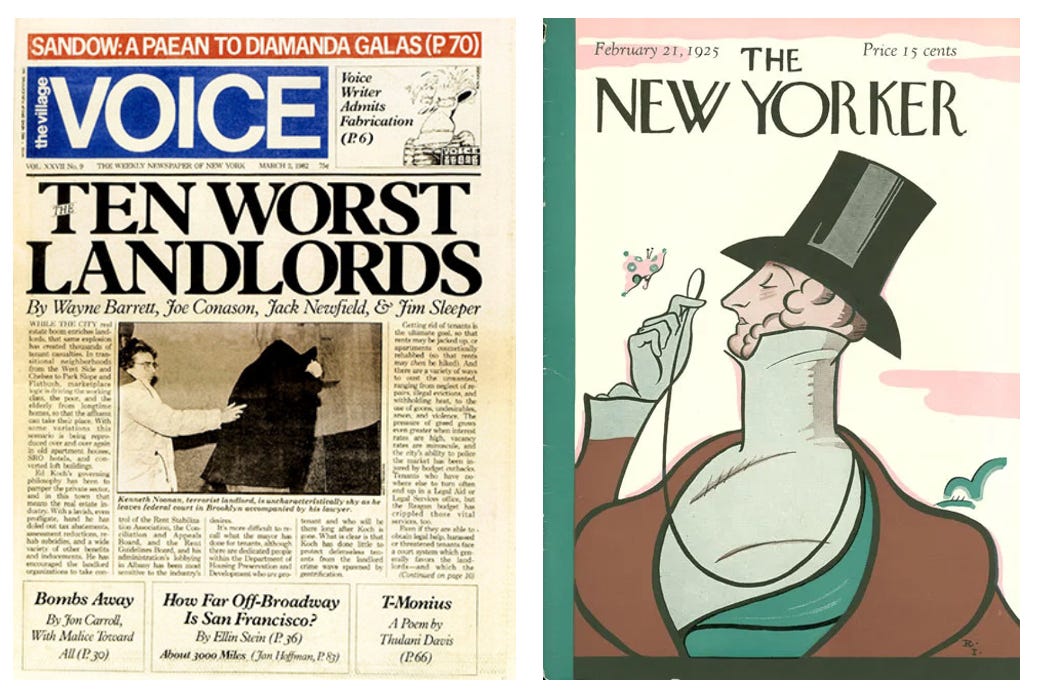
Romano captures the peculiar vibe in the title of her book The Freaks Came Out to Write. She makes clear that The Village Voice wasn’t The New York Times and it definitely wasn’t The New Yorker.

Nobody ever stepped into its madcap offices and said “Ah, the Gray Lady”. No reader ever picked up a copy and expected to see Eustace Tilley on the cover.

Can you tell the difference between culture and counterculture?

And The Voice was heard. Even establishment insiders knew they needed to listen to these “Freaks”. Sometimes they feared The Voice, sometimes they secretly agreed with it, but they always treated it as a force deserving respect.

Until recently that’s how it worked. The tension between insiders and outsiders was a source of creative energy in society. The upstarts provided alternative views and new ideas. They kept everybody accountable.

I’m pointing this out because this no longer happens. This is the world we’ve lost.

April 12, 2024

When it comes to media coverage of environmental issues “bad news sticks around like honey, while good news dries up like water”

In Spiked, Matt Ridley debunks the attitude — universal among climate activists — that humanity’s mere existence is “bad for the planet”:

A 16 foot high sculpture of a polar bear and cub, afloat on a small iceberg on the River Thames, passes in front of Tower Bridge on 26 January 2009 in London, England.
Spiked

Over the past few years, we have been subject to endless media reports on the devastating impact humanity is having on the global bee population. “Climate change is presenting huge challenges to our bees”, claimed the Irish Times last year. “Where has all the honey gone?”, asked the Guardian earlier this year.

The news from last week may come as a shock to some, then. It turns out that America actually has more bees than ever before, having added a million hives in just five years. The Washington Post, which reported these facts, was certainly surprised given what it calls “two decades of relentless colony-collapse coverage”.

Some of us, however, have been pointing out for more than a decade that the mysterious affliction called “colony collapse disorder”, which caused a blip in honey-bee numbers in the mid-2000s, was always only a temporary phenomenon. Globally, bees are doing better than ever. The trouble is that bad news sticks around like honey, while good news dries up like water.

Honey bees are a domesticated species, so their success depends partly on human incentives. In the case of America, the Texas state government’s decision to reduce property taxes on plots containing bee hives has boosted the popularity of beekeeping. When bees were in trouble, they were seen as a measure of the health of the environment generally. So their recovery can be regarded as a sign of good environmental health.

Why do stories of environmental doom, like this one about collapsing bee colonies, linger in the public consciousness, despite being outdated and wrong? The media are partly to blame. For environmental reporters, bad news is always more enticing than good. It’s more likely to catch the attention of editors and more likely to get clicks from readers. Good news is no news.

So I have a simple rule of thumb to work out when an environmental problem is on the mend: it drops out of the news. (The same is true of countries, by the way. When I was young, Angola and Mozambique were often in the news because they were torn by war; not today, because they are at peace.)

Take whales. In the 1960s, they were the (literal) posterboys of environmental alarm. There were just 5,000 humpback whales in the whole world and they seemed headed for extinction. Today, there are 135,000 humpback whales, which represents a 27-fold increase. For the first time in centuries they sometimes gather in groups of over a hundred. I have even seen them several times myself, which I had assumed as a boy I never would.

Most other whale species are doing almost as well: blue, fin, right, bowhead, sperm, grey, minke – all are increasing steadily in numbers (though certain subpopulations, such as North Atlantic right whales, are still struggling). But the story of whales’ resurgence just doesn’t make the news.

Or take polar bears. Just a few years ago, greens were constantly claiming that they were facing imminent extinction. In 2017, National Geographic published a video of a starving polar bear, with the tagline, “This is what climate change looks like”. It was viewed 2.5 billion times. No climate conference or Greenpeace telly advert was complete without a picture of a sad polar bear on an ice floe. Today, that’s a less common sight, because it is harder and harder to deny that polar bears are less and less rare. Despite heroic efforts by environmentalists to claim otherwise, there is now no hiding the fact that polar-bear numbers have not declined and have probably increased, with some populations having doubled over the past few decades. So much so that some environmentalists and researchers no longer think that polar bears are suitable symbols of man’s threat to the planet.

The refusal of polar-bear numbers to conform to the eco-pessimists’ narrative should not be a surprise. In 2009, Al Gore claimed that the Arctic polar ice cap could disappear in as little as five years. A decade on, that is still nowhere near happening yet. Besides, polar bears have always taken refuge on land in late summer in regions where the ice does melt, such as Hudson Bay.

Another Arctic species, the walrus, is doing so well now that it sometimes turns up on beaches in Britain. It’s the same story for fur seals, elephant seals and king penguins. A few years ago, I visited South Georgia in the Antarctic and saw thousands upon thousands of all three species, when little over a century ago they would have been very rare there.

These whales, seals, penguins and bears are booming for a very simple reason: we stopped killing them. Their meat could not compete with beef. And, above all, their fur and blubber could not compete with petroleum products. Or to put it another way, fossil fuels saved the whale.

April 11, 2024

The CIA would “brief the press on matters of national importance … when ‘we, the CIA, wanted to circulate disinformation on a particular issue'”

Filed under: Government, History, Media, Politics, USA — Tags: , , , , , , , — Nicholas @ 03:00

Jon Miltimore outlines the fascinating revelations from 1983 about how the CIA directly manipulated American journalists to propagandize certain issues in the way the Agency desired:

One of Snepp’s many jobs at the Agency was to brief the press on matters of national importance. Or in Snepp’s words, when “we, the CIA, wanted to circulate disinformation on a particular issue”.

Snepp made this statement in a 1983 interview (see above) that I’d encourage readers to watch. In the video, the former CIA analyst discusses how the CIA manipulates journalists with lies and half-truths in pursuit of its own agendas.

    For instance, if we wanted to get across to the American public that the North Vietnamese were building up there force structure in South Vietnam, I would go to a journalist and advise him that in the past 6 month X number of North Vietnamese forces had come down the Ho Chi Minh Trail system through southern Laos. There is no way a journalist can check that information, so either he goes with that information or he doesn’t. Usually the journalist goes with it, because it looks like some kind of exclusive.

What Snepp was describing was one of the most simple tactics the CIA has used for decades to control information. He said the success rate of planting these stories in the media was 70-80 percent.

“The correspondents we targeted were those who had terrific influence, the most respected journalists in Saigon,” Snepp said.

Snepp even offered the names of the journalists he successfully targeted: Bud Merrick of US News and World Report; Robert Chaplin of the New Yorker; Malcom Brown of the New York Times; and others.

Snepp worked his way into these journalists’ trust exactly as one would expect.

“I would be directed to cultivate them, to spend time with them at the Caravel Hotel or the Continental Hotel, to socialize with them, to slowly but surely gain their confidence,” Snepp said.

All of this sounds sleazy, but it gets worse.

March 26, 2024

Montreal’s La Presse issues apology for antisemitic editorial cartoon

Filed under: Cancon, Media, Middle East — Tags: , , , , , — Nicholas @ 03:00

Caroline Glick discusses the blood libel cartoon published by Montreal’s La Presse on 20 March, 2024:

According to Canada’s La Presse, Israeli Prime Minister Benjamin Netanyahu is a vampire, and he is poised to suck the life out of the Palestinians in Rafah, Hamas’s final outpost in southern Gaza. The publication that was once a paper of record in Canada ran a political cartoon on March 20 portraying Netanyahu as a vampire, with a huge hooked nose, pointy ears and claws for fingers, dressed in Dracula’s overcoat while standing on the deck of a pirate ship.

The caption, written in blood-dripping red letters, read: “Nosfenyahou: En Route Vers Rafah.” Nosferatu, the Romanian word for vampire, was the title of a proto-Nazi German silent horror film from 1922 chock-full of anti-Semitic poison. The film, which became something of a cult flick, featured a vampire with a long Jewish nose. He arrived at an idyllic German town with a box full of plague-carrying rats that he released on the innocent villagers as he plotted to suck his realtor’s blood.

La Presse‘s cartoon didn’t leave any room for imagination. It wasn’t making a political or military argument against Israel’s planned ground operation in Rafah. Its goal wasn’t to persuade anyone of anything.

The Netanyahu-the-vampire cartoon asserted simply that Netanyahu is a Jewish bloodsucker and, more broadly, the Jewish state — and Jews worldwide — must be vigorously opposed by all right-thinking people who don’t want Jewish vampires to kill them.

As the paper no doubt anticipated, the cartoon provoked an outcry from Canadian Jews and some politicians. And after a few hours, the newspaper took it off its website and apologized. Anyone who thinks that means that the good guys won misses the point of the move. The Jewish outcry and pile-on by politicians and media coverage proved the point. Jews are evil and control everything, even what a private paper can publish. Like Nosferatu in its day, the cartoon will become a piece of folklore, additional proof that the Jews are the enemy of humanity.

In other words, the cartoon was a blood libel.

We’re seeing lots and lots of it these days. And so, it is worth recalling what a blood libel is.

In its original form, of course, the libel was specifically about blood. About 1,000 years ago, Christians in England began accusing Jews of performing ritual murders of Christian children to use their blood to bake Passover matzahs.

The accusation was inherently insane. Jewish law prohibits murder. It prohibits cannibalism. It prohibits child sacrifice. It prohibits eating food with blood. But none of that mattered. Like the cartoon in La Presse, the blood libel didn’t seek to persuade anyone. It presumed that its target audiences already hated Jews or had a latent tendency to hate Jews, which the blood libel aimed to unleash. The purpose of the blood libel was to scapegoat the Jews and to incite target audiences from London to Damascus to act on that hatred. Over the millennium, hundreds of thousands of Jews were massacred in Europe and the Islamic world in response to blood libels.

March 1, 2024

Understanding the modern media

It’s hard for Baby Boomers and even some older Gen X folks to grasp just how much the mainstream media has changed since the 1960s and 70s. Helpfully, Severian provides the context to properly understand what drives them and why they do the things they do:

Proposed coat of arms for Founding Questions by “urbando”.
The Latin motto translates to “We are so irrevocably fucked”.

There is no local news, because all “news” is Apparat audition tape. Back when — back when they were called “reporters” — news people had a clear career progression within a specific industry. A hungry young reporter for the Toad Suck, Nebraska, Times-Picayune might end his days as a reporter for the New York Times or Washington Post, but that was as high as he could reasonably expect to go. Same with the television division — the bobblehead at WSUX in Toad Suck might end up, at most, on CNN or Fox.

These days, though, they call themselves “journalists”, and “journalist” is just an entry-level Apparat post. They’re not just auditioning for the NYT or CNN, of course. A hungry young “journalist” might end xzhyr career at either, of course, but also as a corporate communications director, a political campaign consultant, a professor of “journalism”, a Diversity Outreach Coordinator, any one of a million “Media strategies” and “Media consulting” gigs … or, of course, as an outright lobbyist, because all of those are just euphemisms for “lobbying” anyway.

And that’s before you consider that all the “independent” papers and stations have been bought up by huge conglomerates, and depend on advertising revenue. Noam Chomsky was right — the Media does dance to the tune its corporate paymasters’ call. He was just wrong on those paymasters’ political orientation. Combine all that, and even the most straight-up, just-the-facts-ma’am local “news” story will find some way to insert The Sermon. If you don’t see The Sermon, you’ve either found an incompetent journalist (which happens) … or you might be looking at something subtle.

[…]

The Media, like Skynet, is self-aware. This significantly complicates the stoyachnik‘s task, as The Media understands its own power, and it increasingly wants to drive Narratives itself, especially as its power is on the verge of… well, not collapse exactly, but certainly a sea change. Because The Media is not monolithic, and that’s part of its self-awareness. So many “journalists” do nothing but hit refresh on Twitter all day, and Twitter knows this — that makes Twitter the real power broker. Google, too, obviously is more self-aware than traditional Media. That ludicrous AI image generator represents years of effort; they expended enormous resources to get precisely that result. They understand how utterly dependent the lower layers of The Media are on them; they are more self-aware.

Let us […] use Google’s own AI “summarizer” to refamiliarize ourselves with the tale of Comrade Ogilvy:

    Comrade Ogilvy is an imaginary character in the novel 1984, created by Winston Smith to replace Comrade Withers, an Inner Party member who has fallen into disgrace and been vaporized. Comrade Ogilvy supposedly lived a patriotic and virtuous life, supported the party as a child, designed a highly effective hand grenade as an adult, and died in action at the age of 23 while protecting important dispatches for his country. He did not drink or smoke, was celibate, and only conversed about Party philosophy, Ingsoc. Comrade Ogilvy displays how easy it is for a member of The Party to be pulled from thin air, and how determined The Party is to keep unpersons from the media.

The Apparatchiks at Google are more self-aware than the Apparatchiks at, say, the New York Times. That is, they understand their place in the Apparat better, and see the networks more clearly. They know how mal-educated “journalists” are, far better than the “journalists” themselves do. Google, like Winston Smith, knows full well that there’s no Comrade Ogilvy. But the “journalists” at the New York Times who are utterly reliant on Google for their “facts” do NOT know this. How could they?

And thus, the only White people in all of human history were Nazis. At least according to Google’s AI image generator, and therefore — soon enough — it’s what “everybody knows”. (And it’s necessarily recursive. The second generation of Google engineers will not know there’s no Comrade Ogilvy, any more than the current generation of “journalists” does).

February 27, 2024

Javier Milei gets ghosted by US media after posting rare budget surplus in Argentina

Filed under: Americas, Economics, Government, Media — Tags: , , , , , — Nicholas @ 03:00

Jon Miltimore on Argentine President Javier Milei’s good economic news that the legacy US media are resolutely ignoring:

Argentine President Javier Milei speaking at the World Economic Forum gabfest in Davos, Switzerland, January 2024.
Photo by Flickr – World Economic Forum | CC BY-NC-SA 2.0

Argentines witnessed something amazing last week: the government’s first budget surplus in nearly a dozen years.

The Economy Ministry announced the figures Friday, and the government was $589 million in the black.

Argentina’s surplus comes on the heels of ambitious cuts in federal spending pushed by newly-elected President Javier Milei that included slashing bureaucracy, eliminating government publicity campaigns, reducing transportation subsidies, pausing all monetary transfers to local governments, and devaluing the peso.

Milei’s policies, which he has himself described as a kind of “shock therapy,” come as Argentina faces a historic economic crisis fueled by decades of government spending, money printing, and Peronism (a blend of national socialism and fascism).

These policies have pushed the inflation rate in Argentina, once one of the most prosperous countries in Latin America, above 200 percent. Today nearly 58 percent of the Argentine population lives in poverty, according to a recent study.

And Milei rightfully blames Argentina’s backward economic policies for its plight — policies that, he points out, are spreading across the world.

“The main leaders of the Western world have abandoned the model of freedom for different versions of what we call collectivism,” Milei said in a recent speech in Davos. “We’re here to tell you that collectivist experiments are never the solution to the problems that afflict the citizens of the world — rather they are the root cause.”

The revelation that Argentina has done something the US government hasn’t done in more than two decades — run a budget surplus — seems like a newsworthy event.

Yet to my surprise, I couldn’t find a word about it in major US media — not in the New York Times, the Associated Press, the Washington Post, or Reuters. (The New York Sun seems to be the only exception.)

I had to find the story in Australian media! (To be fair, the Agence France Presse also reported the story.)

One could argue that these outlets just aren’t very interested in Argentina’s politics and economics, but that’s not exactly true.

The Associated Press has covered Argentinian politics and Milei extensively, including a recent piece that reported how the new president’s policies were inducing “anxiety and resignation” in the populace. The same goes for Reuters and the other newspapers.

A cynic might suspect these media outlets simply don’t wish to report good news out of Argentina, now that Milei is president.

February 8, 2024

North American newspaper economics

Tim Worstall discusses some of the issues ailing Canadian and American newspapers which are not easily solvable (government subsidies, as attempted in Canada, just turn the recipients into an underpaid PR branch of the governing party … not a good look in a democratic nation):

“Newseum newspaper headlines” by m01229 is licensed under CC BY 2.0 .

So, as a little corrective, a quick jaunt through what actually ails American journalism. The concentration is upon the big newspapers because that’s where the problem is worst. The conclusion is that it’s gonna get a lot, lot, lot, worse too. Because the industry is facing a base economic problem that it’s not willing to actually face up to. Or, at least, all the journalists writing about it aren’t — there’s the occasional sign that some of the business side of the equation grasp it.

[…]

Before Y2K American newspapers were segmented along geographic lines. The size of the country, the lack of a long distance passenger railroad network, meant that this was just so. If you’re printing a daily paper then you’ve got to deliver it daily. On the day it’s meant to refer to as well. If Chicago is 1,100 miles (no, I’ve not looked it up but that’s within an order of magnitude of being right, which is better than many newspapers manage with numbers) from New Orleans then the same newspaper is going to find it difficult to print and deliver to both markets. Add in the fact that trains take a week to traverse that distance, passenger trains – anyone who has ever travelled Amtrak will say it feels that long at least — included.

You could not and therefore did not have national newspaper (USA Today, with satellite printing plants, was an attempt to deal with this and slightly earlier than our cut off date but doesn’t change the basic story) distributions. What you had was a series of local and regional monopolies. Each one centred on a large population centre and serving the area around it that could be reasonably reached by truck overnight. Chicago and Cincinnati, not 1,100 miles away from each other, did have entirely different newspapers.

By contrast, and just as an example, the British newspaper market was national from pre-WWI. We simply did have overnight at worst passenger rail that covered the country. Partly it’s a much, much, smaller place, partly the passenger rail system was just different. So, printing overnight (and some maintained separate Scottish editions and plants) meant that those papers that came off the press in London at 8pm were on sale in Glasgow at 8 am, those that came off the press in London at 4 am were on sale in London at 8am. That’s not exact but it’s a good enough pencil sketch.

Cincinnati newspaper(s) served Cincinnati. Chicago, Chicago and New Orleans the area of New Orleans. There simply wasn’t a “national press” in the US in that British sense.

OK. But this also meant that American newspapers were much more like a monopoly in their local area than anything else. Network effects still exist even before computer networks after all. The most important of which was the classifieds.

As with Facebook, we’re all on Facebook because everyone else is on Facebook. So, if we’re to join a social network we’re going to be on Facebook where everyone else is — except those three hipsters who are where it isn’t cool yet. This applies to classifieds sections. Folk advertise in the one with the most readers, the widest market. Readers buy the one with the most ads in it, the widest market. You advertise the bronzed baby shoes, unused, where there are the most people looking for bronzed baby shoes, unused.

So, the dominant paper will suck up the classifieds in any particular market. Classifieds, fairly obviously back in the days of prams, cheap used cars, waiters’ jobs and so on being geographically based.

No, this is important. A useful pencil sketch of American newspaper revenues pre-Y2K was that subscriptions produced some one third of revenues. They also, around and about, covered print costs and distribution. They were, roughly you understand, about a face wash in fact.

Display ads produced another one third and classifieds the final one third. Classifieds were also wildly profitable — no expensive journalists to pay, no bureaux, just a few women waiting to get married on the end of the phone line.

February 5, 2024

QotD: The history of slavery in America

Filed under: Education, History, Politics, Quotations, USA — Tags: , , , — Nicholas @ 01:00

This is therefore, in its over-reach, ideology masquerading as neutral scholarship. Take a simple claim: no aspect of our society is unaffected by the legacy of slavery. Sure. Absolutely. Of course. But, when you consider this statement a little more, you realize this is either banal or meaningless. The complexity of history in a country of such size and diversity means that everything we do now has roots in many, many things that came before us. You could say the same thing about the English common law, for example, or the use of the English language: no aspect of American life is untouched by it. You could say that about the Enlightenment. Or the climate. You could say that America’s unique existence as a frontier country bordered by lawlessness is felt even today in every mass shooting. You could cite the death of countless millions of Native Americans — by violence and disease — as something that defines all of us in America today. And in a way it does. But that would be to engage in a liberal inquiry into our past, teasing out the nuances, and the balance of various forces throughout history, weighing each against each other along with the thoughts and actions of remarkable individuals — in the manner of, say, the excellent new history of the U.S., These Truths by Jill Lepore.

But the NYT chose a neo-Marxist rather than liberal path to make a very specific claim: that slavery is not one of many things that describe America’s founding and culture, it is the definitive one. Arguing that the “true founding” was the arrival of African slaves on the continent, period, is a bitter rebuke to the actual founders and Lincoln. America is not a messy, evolving, multicultural, religiously infused, Enlightenment-based, racist, liberating, wealth-generating kaleidoscope of a society. It’s white supremacy, which started in 1619, and that’s the key to understand all of it. America’s only virtue, in this telling, belongs to those who have attempted and still attempt to end this malign manifestation of white supremacy.

I don’t believe most African-Americans believe this, outside the elites. They’re much less doctrinaire than elite white leftists on a whole range of subjects. I don’t buy it either — alongside, I suspect, most immigrants, including most immigrants of color. Who would ever want to immigrate to such a vile and oppressive place? But it is extremely telling that this is not merely aired in the paper of record (as it should be), but that it is aggressively presented as objective reality. That’s propaganda, directed, as we now know, from the very top — and now being marched through the entire educational system to achieve a specific end. To present a truth as the truth is, in fact, a deception. And it is hard to trust a paper engaged in trying to deceive its readers in order for its radical reporters and weak editors to transform the world.

Andrew Sullivan, “The New York Times Has Abandoned Liberalism for Activism”, New York, 2019-09-13.

February 2, 2024

“Who funds you?”

Filed under: Britain, Business, Media, Politics — Tags: , , , , , — Nicholas @ 03:00

Tim Worstall considers George Monbiot (lovingly known as “The Moonbat” to early bloggers) and his demand that others make their sources of income transparent to show whether their opinions are being “bought” by shady interested parties:

George Monbiot has his positive attributes. His change of mind on nuclear power in the face of the evidence from Fukushima — that no one at all died from three reactors going pop, while 15k and more did from the tsunami and therefore he became in favour of nuclear — is an example. OK, that’s rather hitting someone over the head with a cluebat but it’s also true that Caroline Lucas didn’t manage to note that same point. So, there is that. Even if “more aware of reality that Caroline Lucas” is a low bar to have to clear.

George can also rather dig himself into holes. As he is here with his insistence about funding of varied think tanks and so on.

And, OK, let’s go look at George’s registry of interests […]

OK, that’s the sword that George declares he’s going to live by. Fair play and all that.

Except, except. Last year was pretty good, book royalties flowing in and more power to that typing. The core earning is The Guardian, royalties on top. Not unusual for a writer to be honest. Gain a core contract that produces an ongoing and assured income, spend time floating books or other work out there to see what happens to income. Freelancing is certainly a great deal more fun if you already know where the monthly nut is going to come from with such a core contract.

But, but.

Book royalties, umm, Penguin? Used to be part owned by Pearson, also at the time owners of the Financial Times. So that’s a connection into the shadowy world of international capitalists. It’s now Bertelsman, so foreign international capitalists to boot. Macmillan? They admitted to bribery in Sudan over a school books contract. So a link to international thieving capitalists too. HarperCollins? That’s Murdoch, no more need be said, right?

But, but, a reasonable response would be that this is all far removed from the level George works at. That would be a fair enough response too.

But note the thing here. By agreeing that there’s some level of connection which is too ephemeral to matter we are agreeing that this thing called the corporate veil exists. We can indeed don the tin foil hats and connect near anything we want. Pretty much all Europeans are 16th cousins for example. So I — and George — am/are responsible for WWI because we’re both related to the Kaiser, Emperor and Tsar all at the same time. It’s our family wot dun it, see? Within economic connections that concept, that there’s this thing ‘ere which is responsible not the further connections away from that, is called that corporate veil. I shop at Sainsbury’s sometimes. The Labour Minister husband of a Sainsbury’s heiress employed two butlers (before dumping her for his boyfriend if memory serves). It’s possible to claim that I therefore fund dual butlership but it’s not a claim that all that many are going to regard as valid.

But The Guardian, that core contract. The newspaper seems to have returned to profit recently but there was a decade or so there where it was losing tens of millions a year — and more in some 12 month periods. Those losses were covered by the profits from Autotrader more than anything else. So, George was funded by the facilitation of climate destruction through the trade in internal combustion engined cars.

If, you know, we wanted to put it that way.

January 31, 2024

The LA Times recently laid off a bunch of “activists masquerading as reporters”

Filed under: Business, Media, Politics, USA — Tags: , , , , , — Nicholas @ 04:00

Tom Knighton illustrates one of the reasons so many legacy news organizations are being forced to cut back on staff in hopes of staying afloat:

Last week, the LA Times announced a massive layoff of journalists. They were just one of several places that kicked the activists masquerading as reporters to the curb.

This, of course, was met with consternation by the journalistic field as a whole.

Everyone seemed ready to warn of doom and gloom, telling us how important they are to society and that we need them.

Yet absolutely none of them seemed remotely interested in actually examining why the field is shrinking so horrifically.

Sure, the current landscape is very different due to technological advancements. For example, there’s places like Substack where I can reach out to readers directly instead of needing to filter things through a newspaper’s editorial voice.

But journalists also did this to themselves.

[…]

Because journalism’s “inherently political” tribe uses their politics to decide which stories are worth reporting. Journalists, if we can even really call them that anymore, aren’t simply sharing truth. They’re amplifying some stories and smothering others.

How often do we see stories claiming so-and-so is a white supremacist because he favors welfare reform or a tougher stance on illegal immigration? How many publications amplified the nonsense about Border Patrol agents “lassoing” illegal immigrants because of a picture they didn’t understand?

Journalism doesn’t represent the American people. It represents the Democratic Party.

In 1971, Republicans accounted for just over a quarter of all journalists. In 2022, they were 3.4 percent.

Original can be found here – https://www.theamericanjournalist.org/

Now, in 1971, those independents were probably divided between left-leaning and right-leaning to some degree or another, though the survey didn’t capture that.

In 2022, I suspect many who called themselves independent did so because they thought the Democrats were too right-leaning for their tastes.

What’s more, despite the lack of ideological diversity, that same source found that only 21.8 percent see that as needing to change.

What’s more, starting in 2016, news publications really stopped even trying to pretend they were unbiased. A form of blatantly activist journalism became common, with virtually every news agency in the nation showing at least some signs of it.

« Newer PostsOlder Posts »

Powered by WordPress