
Quotulatiousness

August 6, 2009

More threats to Royal Navy’s carrier plans

Filed under: Britain, Military — Tags: , , , , — Nicholas @ 12:03

An interesting report in The Register discussing the possibility of abandoning the planned STOVL variant of the F-35 and switching to the more traditional catapult-launch and tailhook-landing variant being developed for the US Navy:

The UK Ministry of Defence (MoD) is set to make a major change to the design of the new aircraft carriers for the Royal Navy, according to a newspaper report. It’s suggested that the ships will now be equipped with catapults and arrester wires, allowing them to operate normal carrier aircraft rather than the complex, expensive jump-jets which had been planned.

According to the Daily Telegraph today “the MoD has indicated that it will drop the jump-jet… The Daily Telegraph has learnt from senior defence officials that an announcement is due this autumn.”

There would definitely be advantages to going with a more traditional aircraft: less mechanical complexity, greater weapons-carrying capability, and (probably most important in the MoD) lower per-aircraft costs. It’s not a slam-dunk decision, however:

Catapults and arrester gear aren’t a significant expense in themselves, but current catapults are powered by steam from the ship’s engines. The planned new Royal Navy ships will be propelled by gas turbines, however, and so have no steam (US and French carriers use nuclear propulsion, which can easily furnish steam from their associated turbines).

Adding powerful auxiliary steam boilers for catapults or upgrading the ships to nuclear propulsion would significantly increase their cost. There is an alternative option, the use of electrically-powered catapults, but these don’t yet exist. They are being developed in the States for the next US carrier, but as a new technology there is naturally some risk that they won’t pan out, or may be subject to delays and cost increases.

Of course, there’s always the risk that the MoD, under pressure from the government of the day would cancel the ships altogether, as a cost-saving measure (see this post from last year for further grim speculation on that topic).

July 29, 2009

Another lost WW2 combat aircraft discovered

Filed under: History, Military — Tags: , , , — Nicholas @ 20:28

This time it’s a US Navy carrier plane:

On May 28, 1945, the SB2C-4 Helldiver was on a practice bombing run from a nearby aircraft carrier. The crew members survived the emergency landing.

At the time, the Navy opted not to recover the plane.

Yesterday, Raia said she couldn’t comment on how long it will take Navy officials to decide whether to salvage the plane. Typically, the Naval Aviation Museum in Pensacola, Fla., plays a major role in the evaluation process.

One of the pilots is believed to be 90 years old and living in Michigan, but the Navy hasn’t provided his name.

“Wouldn’t that be something to fly him out here and have him standing on the shoreline when they lift the plane out?” Manville said.

That’d be cool . . . as long as they don’t make him pay for the recovery of the plane.

July 26, 2009

I’ll take his word for it

Filed under: Britain, Cancon, History, Technology — Tags: , , , — Nicholas @ 00:14

. . . but it looks like a random collection of bits to me:

Fairey_Swordfish_wreck

It may not look like much to the untrained eye, but to those of us who are Warbird afficionados, it is incredibly complete. There have been rebuilds to fly from wrecks recently dragged out of the Russian wilderness which were found in worse condition that this.

July 24, 2009

Photo tour of the USS Hornet

Filed under: History, Military — Tags: , , , , — Nicholas @ 10:06

I’ve been onboard several retired battleships, but so far I’ve not managed to get onto an aircraft carrier. This will have to do for the time being:

The USS Hornet was on hand 40 years ago to pick up the Apollo 11 astronauts after their Columbia Command Module splashed down in the Pacific Ocean on July 24, 1969.

Today, the aircraft carrier is preserved as a museum in Alameda, California. Its main deck is littered with historic warplanes and space artifacts including an Apollo command module and Mobile Quarantine Facility from subsequent missions, pictured below. The first footsteps the Apollo 11 crew took on Earth after walking on the moon are traced on the deck.

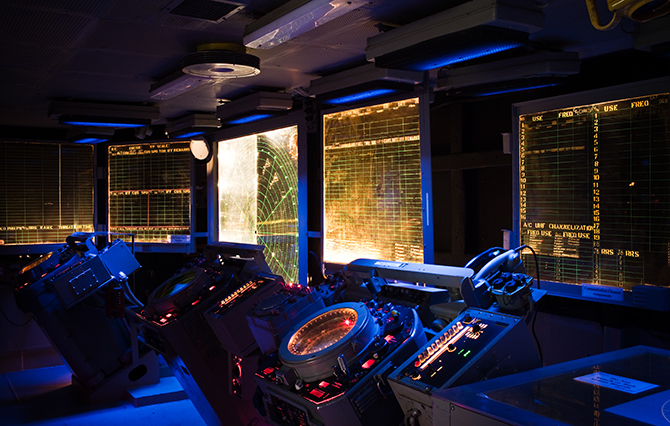
USS Hornet CIC

USS Hornet CIC

Above: The USS Hornet’s Crisis Information Center is pictured. While engaged in active warfare, crewmembers would stand behind transparent, hanging boards and write information backwards to keep from getting in the way of the officers who needed to read it.

I think it was actually the “Combat” Information Center, but I could be mistaken. Lots of cool images, but I’d like to see more . . .

July 10, 2009

Sunken 1812 vessel may be HMS Wolfe

Filed under: Cancon, History — Tags: , , , , — Nicholas @ 13:13

An interesting article in the Ottawa Citizen about a recently discovered wreck near Kingston, which may be the remains of HMS Wolfe:

A team of divers is set to plunge into Lake Ontario near Kingston, Ont., next week in a bid to confirm the discovery of a legendary Canadian-built ship from the War of 1812, the HMS Wolfe.

In collaboration with marine archeologists from Parks Canada, the divers plan to take detailed measurements, drawings and photographs of a sunken wooden sailing vessel that appears to match the size and last known location of the famous 32-metre sloop: the flagship of British naval commander James Yeo and star of a dramatic 1813 battle west of Toronto that helped thwart the U.S. invasion of Canada.

The suspected discovery comes just three years before the 200th anniversary of the war, adding urgency to the efforts to identify a possible new showcase relic for bi-national commemoration activities.

(Cross-posted to the old blog: http://bolditalic.com/quotulatiousness_archive/005570.html.)

« Newer Posts

Powered by WordPress


