Quotulatiousness

March 19, 2013

Punk Rock deemed harmful … to punks

Filed under: Media, USA — Tags: , , — Nicholas @ 09:35

In the Seattle Weekly, John Roderick explains why the punk social movement has been harmful to those who live the punk lifestyle:

For those of us who grew up in the shadow of the baby boom, force-fed the misremembered vainglory of Woodstock long after most hippies had become coked-out, craven yuppies on their way to becoming paranoid neo-cons, punk rock provided a corrective dose of hard truth. Punk was ugly and ugly was true, no matter how many new choruses the boomers added to their song of self-praise. It was this perceived honesty that we, the nascent Generation X, feared and worshipped. But over time punk swelled into a Stalinistic doctrine of self-denial that stunted us. The yuppies kept sucking, but by clinging to punk we started to suck too.

I have friends in their mid-40s who don’t even have a savings account because “saving money” never seemed punk rock. I can’t count the number of small businesses I’ve seen fail because worrying about inventory or actually charging customers didn’t seem very punk rock. I was once chastised for playing at a private Microsoft function by a guy who worked there, so disappointed was he that I would sell out by playing a corporate gig.

Punk taught us to rebel against authority until “authority” included everything: piano lessons, fire insurance, leather shoes, and, ultimately, growing up. Punk taught us to have contempt for every institution, except Fugazi, until contempt and suspicion were the first and only reactions we had to everything. Good news was embarrassing, success was shameful, and a happy childhood an unthinkable transgression. These personality disorders were just punk in practice.

It’s time we stopped disavowing happiness and measured pride, we punk survivors, wrapping ourselves in itchy thrift-store horse blankets thinking that only discomfort is honest. It’s time we stopped hating ourselves, our ambition, and our sincerity, guarding our integrity credentials in fear of interrogation by the secret punk police. It’s time to unmask punk rock, admit that it has done us no favors, and banish it from our minds. There is no one waiting for us at the gates of heaven with a big book of punk, ready to judge our souls and validate our credibility. Punk rock is bullshit, and was always bullshit. Say it with me.

H/T to Colby Cosh for the link.

February 15, 2013

A self-described hippie who loves capitalism. Ladies and gentlemen, please welcome Neil Young!

Filed under: Books, Business, Cancon, Media — Tags: , , — Nicholas @ 09:29

In sp!ked, Patrick Hayes reviews Neil Young’s new book, Waging Heavy Peace: A Hippie Dream.

Neil Young, the man who penned wistful lyrics about silver spaceships flying and about sleeping with Pocahontas, is, he openly admits in his autobiography, ‘a material guy’. After completing a project, he would ‘buy a car or something to celebrate’. He lavishes praise on Bill Ford, the executive chairman of Ford Motor Company. He gushes about the disruptive nature of new technologies. And he speaks romantically about developing business plans and navigating ‘the waters of venture capitalism’. When raving about being able to buy a green card to live in the US, Young even goes as far as to announce: ‘Capitalism rocks.’

In fact recently, he tells us, he has been dreaming more. Since his life-threatening brain aneurysm in 2005, when he decided to ditch his various narcotics, he dreams ‘every night, not like before, when I induced dreams in the waking hours to snatch them in their innocence and commit them to song and melody and words captured’.

While he has far from quit songwriting, kicking the drink and drugs has given Young a new sense of mission, something that makes him feel alive – in fact, a mission that makes him question whether he has ‘been asleep’ over the past 40 years. Young is currently ‘trying to rescue recorded sound so people can feel music again’. While a huge fan of the internet, Young has become increasingly infuriated that current methods of reproducing music digitally keep very little of the quality of the original. But he is never one to sit back and moan about how things were better in the days of vinyl. He has instead become obsessed with finding a solution.

And, with additional time due to a broken little toe, he also decided to tick another box by following in the footsteps of his father, famous Canadian author Scott Young, by writing a book. In this instance, an autobiography, with a second book tentatively titled Cars and Dogs planned, but ‘no matter how many books I write, I will eventually get to fiction’. He comments on the ease of writing: ‘No wonder my dad did this… writing could be just the ticket to a more relaxed life with fewer pressures and more time to enjoy with my family and friends – and paddleboarding!’

February 13, 2013

The Jazz Sweatshop (or the Harvard University of Jazz)

Filed under: History, Media, USA — Tags: , , — Nicholas @ 00:01

In the New York Review of Books, Christopher Carroll discusses the great Charles Mingus:

Mingus (1922-1979) would have turned ninety last year, and in celebration, Mosaic has released The Jazz Workshop Concerts: 1964-1965, a new box set with rare and previously unreleased performances by some of Mingus’s greatest ensembles. These concerts, recorded near the apex of Mingus’s career, are visceral and often unvarnished. At times, the music here can be forbidding — several tracks run beyond thirty minutes — and though it may not be as uniformly polished as some of his studio albums, at its best this set captures an element of shock and surprise that Mingus’s studio recordings sometimes don’t.

“Mingus music,” as he called it, was so complex and so much an extension of his own personality that it was largely played only by his own group, the Jazz Workshop. Turnover in the Workshop was high, partly because he couldn’t afford to pay his musicians very well, partly because the experience was so grueling (members called it the Jazz Sweatshop), and partly because so many of them, after sharpening their skills with Mingus, went on to lead their own bands (Gary Giddins once called it the Harvard University of Jazz).

Even with Mingus at the helm playing bass (and sometimes piano), Workshop performances often resembled practice sessions more than concerts. He did everything in his power to push his players beyond their limits: while a musician was soloing, he might double the tempo, cut it in half, or drop the accompaniment of the bass, drums, and piano entirely, all without warning. Often, players would buckle under the pressure and songs would grind to a halt, with Mingus screaming recriminations and heaping shame on everyone in sight. But sometimes his musicians would rise to the challenge, and it was the possibility of this transcendence that gave Jazz Workshop performances such an electrifying sense of expectation and adventure.

January 29, 2013

NYC’s petty bureaucrats and the evolution of modern jazz

Filed under: Bureaucracy, Law, Media — Tags: , , , , , , — Nicholas @ 11:09

From the latest issue of Reason, Chris Kjorness outlines some of the pitfalls New York City thoughtfully put in the way of some of the greatest performers of Jazz:

For more than two decades musicians, comedians, and anyone else employed by a Gotham nightclub would be fingerprinted, photographed, and interviewed by police in exchange for a license to work. The card had to be renewed every two years, and it could be revoked at the whim of the police. The story of the cabaret card illustrates how small men with a little bit of power can inhibit creative expression, stifle artistic growth, and humiliate individual citizens, all in the name of the “public good.”

The cabaret card had its origins in the roaring ’20s. Prohibition made outlaws out of ordinary Americans, and the allure of booze, jazz, and debauchery brought the upper and lower classes together in clandestine after-hours spots. It was the height of the Harlem Renaissance, and white New Yorkers frequently made the trip uptown, looking for adventure and an escape from the tight moral constraints of downtown society.

[. . .]

More than just a barrier to work, the cabaret card for beboppers was an impediment to self-expression and artistic fulfillment. While originating in nightclubs, bebop represented something much more than bar music. The color line had not been broken in American symphony orchestras, so for a young black musician at a prestigious music conservatory — Miles Davis at Julliard, for example — sharing a cramped stage in a 52nd Street nightclub with someone like Charlie Parker was the highest realization of artistic ambition. But before he could do so, a musician would have to be judged not just by lauded masters and discerning aficionados but by the police.

Cops distrusted beboppers for three main reasons: The new breed of jazzmen were anti-establishment, they were confrontational in matters of race, and they had a fondness for heroin. The police had an unlikely ally in their crusade against the upstarts: older establishment jazz musicians who had their own reasons to dislike the beboppers.

In a 1951 Ebony article, Cab Calloway, a king of the 1930s jazz world, decried the widespread drug use in the current jazz scene. Though Calloway didn’t single anyone out by name, the magazine illustrated his essay with photos of bebop musicians, and the publication coincided with an upswing in police enforcement. One musician snared in this crackdown was Charlie Parker.

January 22, 2013

Jazz has been shaped not only by musicians, but also by non-musical forces

Filed under: Books, History, Media, USA — Tags: , — Nicholas @ 13:42

Robert Fulford talks about some of the unexpected changes in society and how they impacted the evolution of Jazz music:

Marc Myers, who writes for the Wall Street Journal and blogs at JazzWax.com, shrewdly 
explains this process in his new book, Why Jazz Happened (University of California Press). He describes how events ranging from city planning to inventions in sound technology altered the nature of jazz during three decades beginning in 1942. In those 30 years jazz changed from an accompaniment to dancing and drinking to a concert-based performance art directed at careful, even scholarly listeners. Myers can give at least half a dozen reasons why this happened, beginning with the suburbs.

In California the sprawl of the cities did more than shrink the audiences for artists like Teagarden. It also redefined the way jazz musicians worked together. In New York they saw each other often, since most of them lived within a few subway stops. In California they were physically separated and saw each other less often. They had to plan their rehearsals and recordings with care. 
Arrangements became more important to them. And by the end of the 1950s West Coast jazz had its own smooth, orderly, distinctive style, music created by geography.

The G.I. Bill, by which the U.S. government paid the university costs of veterans, had an even larger effect. Under the G.I. Bill John Lewis spent years at the Manhattan School of Music and later founded the Modern Jazz Quartet, the most elegant group of the era. Dick Hyman studied music at Columbia and became a superb all-purpose arranger and pianist. Dave Brubeck learned techniques of composition from Darius Milhaud, a renowned French composer, at Mills College (And Brubeck never let you forget it.) Pete Rugolo, Nelson Riddle and Jimmy Giuffre made themselves musically literate with the government’s support.

They and their students and colleagues became a new community of broadly educated musicians, the first generation of that kind in jazz history. The government, by accident, altered the tone of an art form.

A single genius-level engineer changed the possibilities of jazz form more than anyone else. He was Peter Goldmark, a Jewish Hungarian immigrant who became the star of CBS Laboratories. His name doesn’t get mentioned in Why Jazz Happened, but Myers nevertheless pays tribute to his accomplishment. In 1948 Goldmark introduced the LP, the 33-1/3 rpm disc, which became the worldwide standard until the CD replaced it in the late 1980s.

Before Goldmark, musicians had been limited to single discs running three minutes. Improvisation had to be carefully limited. The LP record allowed them to write or improvise at much greater length.

January 17, 2013

BargainBinBlasphemy

Filed under: Humour, Media — Tags: , , , — Nicholas @ 14:53

Satan and Garfunkel - Sounds of Pestilence

A Tumblr blog that might be of interest: BargainBinBlasphemy.

H/T to Boing Boing for the link.

Joe Strummer to be posthumously square in Granada

Filed under: Europe, History, Media — Tags: , — Nicholas @ 09:34

After legendary punk band The Clash fell apart, Joe Strummer retired to Granada and the city is going to rename a square in memory of his time there:

Granada City Council’s Daniel Galan told the BBC: “The initiative came from a neighbourhood association, backed by some political parties and was approved. It was a popular movement. It is very well known the connection between Joe and the city and people still remember him.”

Strummer’s relationship Spain began back in the 1970s, when he first visited Granada with his then girlfriend Paloma Romero, who later became the drummer of The Slits, under the nom de rock Palmolive.

His interest in Andalucia, the celebrated poet Federico García Lorca and the Spanish Civil War is reflected in the classic Spanish bombs, from 1979’s London Calling. During his later self-imposed exile, Strummer hooked up with Granada punk band 091, producing their 1986 album Más de 100 lobos (More than 100 wolves).

Galan said: “Joe Strummer loved Granada. He loved the whole of Spain but he had a very good connection with Granada because he was friends with 091.”

December 28, 2012

You’ve all seen marching bands, but have you ever seen a dancing orchestra?

Filed under: Media — Tags: , — Nicholas @ 10:07

Movement and Music: University of Maryland Symphony Orchestra’s Prelude to the Afternoon of a Faun.

H/T to Paul Wells for the link.

December 21, 2012

Just in case…

Filed under: Media — Tags: , — Nicholas @ 08:48

December 8, 2012

A Holiday Album ad

Filed under: Business, Economics, Humour — Tags: , , , — Nicholas @ 00:01

H/t to Daniel J. Mitchell for the link.

November 30, 2012

Can we bury iTunes yet?

Filed under: Media, Technology — Tags: , , , — Nicholas @ 10:42

In Slate, Farhad Manjoo calls for the abolition of the worst carbuncle on Apple’s escutcheon:

iTunes 11 did not arrive on time. Apple originally promised to deliver the next version of its ubiquitous music-management program in October. Last month, though, the company announced that the release would slip to November, because the company needed “a little extra time to get it right.” This week the Wall Street Journal, citing “people who have seen it,” reported that the real cause was “engineering issues that required parts to be rebuilt.”

I suspect both those explanations are euphemisms for what’s really happening in Cupertino. I picture frazzled engineers growing increasingly alarmed as they discover that the iTunes codebase has been overrun by some kind of self-replicating virus that keeps adding random features and redesigns. The coders can’t figure out what’s going on — why iTunes, alone among Apple products, keeps growing more ungainly. At the head of the team is a grizzled old engineer who’s been at Apple forever. He’s surly and crude, always making vulgar jokes about iPads. But the company can’t afford to get rid of him — he’s the only one who understands how to operate the furnaces in the iTunes boiler room.

Then one morning the crew hears a strange clanging from iTunes’ starboard side. Scouts report that an ancient piston — something added for compatibility with the U2 iPod and then refashioned dozens of times — has been damaged while craftsmen removed the last remnants of a feature named Ping whose purpose has been lost to history. The old engineer dons his grease-covered overalls and heads down to check it out. Many anxious minutes pass. Then the crew is shaken by a huge blast. A minute later, they hear a lone, muffled wail. They send a medic, but it’s too late. The engineer has been battered by shrapnel from the iOS app management system, which is always on the fritz. His last words haunt the team forever: She can’t take much more of this. Too. Many. Features.

I use iTunes, but only because I need to back up my iPhone data … and nearly half the time, iTunes craps out on me and I have to go looking for fixes or work-arounds from Apple. Since I updated my iPhone to the most recent iOS version, I haven’t been able to sync with iTunes at all. Here’s hoping that the new version will fix that — and maybe, if we’re lucky, some other issues, too.

Update, 1 December: The update went well enough, but it still couldn’t contact the iTunes store or detect my iPhone. After a few minutes of looking through the Apple troubleshooting help pages, I reset the DNS cache and re-enabled iTunes to run in Administrator mode. That was enough to let it detect the iPhone and run a backup and re-synch.

November 13, 2012

Michael Geist on Canada’s new copyright law

Filed under: Cancon, Law, Media — Tags: , , , , — Nicholas @ 11:52

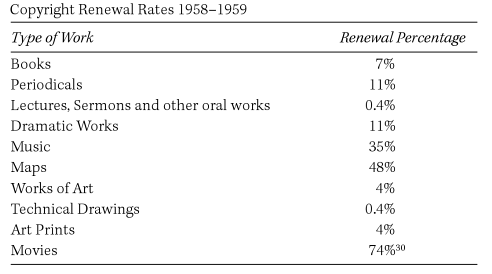
If you’re not going to read the entire body of the law (and let’s face it, most of us would rather do just about anything other than that), here’s a thumbnail summary of what the new law says:

The good news is that the law now features a wide range of user-oriented provisions that legalize common activities. For example, time shifting, or the recording of television shows, is now legal under Canadian copyright after years of residing in a grey area. The law also legalizes format shifting, copying for private purposes, and the creation of backup copies. This will prove helpful for those seeking to digitize content, transfer content to portable devices, or create backups to guard against accidental deletion or data loss.

Canadians can also take greater advantage of fair dealing, which allows users to make use of excerpts or other portions of copyright works without the need for permission or payment. The scope of fair dealing has been expanded with the addition of three new purposes: education, satire, and parody.

Fair dealing now covers eight purposes (research, private study, news reporting, criticism, and review comprise the other five). When combined with the Supreme Court of Canada’s recent decisions that emphasized the importance of fair dealing as users’ rights, the law now features considerable flexibility that allows Canadians to make greater use of works without prior permission or fear of liability.

The law also includes a unique user generated content provision that establishes a legal safe harbour for creators of non-commercial user generated content such as remixed music, mashup videos, or home movies with commercial music in the background. The provision is often referred to as the “YouTube exception”, though it is not limited to videos.

November 6, 2012

It’s official: Morris Dancers are “offensive”

Filed under: Britain, History, Media — Tags: , , , , — Nicholas @ 11:19

Well, they’re “offensive” to a couple of Police Constables in Surrey, anyway:

A group of Morris Dancers were ordered to stop performing in the middle of a routine after police received a complaint that their dancing was ‘offensive’.

The 15-strong group of English folk dancers from the respected Wild Hunt Bedlam Morris troupe were told to ‘stop making a din’ during a performance outside The White Lion pub in Warlingham, Surrey.

The folk dancers were performing in spooky costumes for a free Halloween show outside the 15th century pub to an audience of around 30 customers, but were cut short after just six dances.

The group had planned at least 10 other dances, but were interrupted by two police officers who told them to ‘down’ their handkerchiefs and sticks and ‘move on’ as they were causing a noise nuisance.

Despite pleading with the officers to continue their routine – which includes songs like Thor’s Hammer, Maiden Castle and Half a Farthing Candle, they were told to leave in the ‘interest of community relations’ last Tuesday.

Apparently the campaign against the evil Morris Dancers has been going on for a while:

In August last year a group of Morris dancers from the Slubbing Billys troupe were booted out of the Swan and Three Cygnets pub in Durham after a barmaid said the bells on their shoes broke the bar’s music ban.

H/T to Nick Packwood for the link.

November 3, 2012

Contract law and brown M&Ms

Filed under: Business, Law, Media — Tags: , , — Nicholas @ 09:40

What is it about Van Halen and their notorious demand for non-brown M&Ms in their contracts? It’s actually rather clever:

Take Van Halen, for example. On the surface, the group is famous not only for its music but also for stunts such as trashing green rooms over the presence of brown M&Ms, and it’s easy to write off such behavior as simply being symptomatic of a 1980’s rock diva mentality. In reality, however, the brown M&Ms served an important purpose from a contracting perspective.

Think about it- wouldn’t it be nice to have an easy way to observe whether your counterparty has paid attention to all of the details of a complicated contract? As it turns out, the brown M&Ms served exactly this function. [. . .]

Since Van Halen’s (long) tour rider stipulated M&Ms with the brown ones taken out, the group knew that they needed to double check a lot of safety items for the show if they saw brown M&Ms (or no M&Ms, for that matter) in the backstage area. They also knew that they could feel comfortable that the contract provisions had been fulfilled if they saw a bowl of M&Ms with the brown ones removed. (I’m pretty sure that trashing stuff was for some combined purpose of making the incident memorable and entertaining one’s self.) This is pretty smart, since it’s far more efficient to use this as a signal (the canary in the coal mine, in a way) rather than go around and check everything at each show. It’s even smarter that the signal was crafted in the fashion of typical rock star douchebaggery so as to not arouse suspicion.

November 2, 2012

The rise of celebrity endorsements is a sign of political immaturity

Filed under: Media, Politics — Tags: , , , — Nicholas @ 08:44

In sp!ked, Patrick West points out that celebrities who push political agendas or social issues are actually a sign of the failure of the political class:

This paradoxical egotism — protesting against ‘selfish’ right-wing people in order to make you appear morally superior — was mercilessly parodied in the 2004 film Team America: World Police. In it, marionettes representing the likes of Susan Sarandon, George Clooney and Matt Damon are shown as self-important dupes of Kim Jong-Il, parroting liberal-left vacuities. ‘As actors’, says Janeane Garofolo’s puppet, ‘it is our reponsibility to read the newspapers, and then say what we read on television like it’s our own opinion’. Like all good parodies, it helped to change the way people think. Sean Penn’s intervention on the matter of the Falkland Islands earlier this year generated unflattering comparisons to the movie, and I imagine Matt Damon still fears to speak on humanitarian issues, lest he be met with a collective cry of ‘Matt Day-Mon’.

Still, this hasn’t deterred the likes of Clooney and Whoopi Goldberg continuing to make known their support for the Democrats — who are liberal-left, and therefore Good People — in opposition to the Republicans, who are right-wing and by extension Bad People. Now from the pop world they have been joined by Katy Perry, who last week performed at a Las Vegas fundraiser for President Obama in the forthcoming presidential election, and by Madonna, who on Saturday declared at a concert in New Orleans: ‘I don’t care who you vote for as long as you vote for Obama.’ Having been met with jeers and booing, the Material Girl backtracked. ‘Seriously, I don’t care who you vote for as long as you take responsibility for the future of your country’, she recanted. ‘Do not take this privilege for granted. Go vote.’ Other Democrat supporters include Bruce Springsteen, Beyonce, Will.i.am and Jay-Z.

[. . .]

In terms of hollow egotism, popstars are not far removed from actors. The latter are fantasists and (literally) professional liars, pretending to be someone they aren’t, displaying emotions they don’t have. Popstars are often likewise insecure, craving attention and praise, to be told what good people they are — and consequently ensure that the world knows it.

They have been up to this sort of thing for years. Consider the self-important proclamations of John Lennon, imagining no possessions but having lots of them, Sting’s crusade to save the Brazilian rainforest and its noble savages and, of course, Bono, the humanitarian tax-avoider. The latter two featured in Band Aid, an ostentatiously big-hearted scheme that raised funds for governments in desperate need of more Mercedes-Benzes and Kalashnikovs. This is what happens when you combine paradoxical egotism and a Something Must Be Done mentality. Today, it’s the same toxic compound — intensified — that’s behind the grandstanding and aggressive ‘caring’ censoriousness you see on Twitter.

« Newer PostsOlder Posts »

Powered by WordPress