Quotulatiousness

January 23, 2019

The value of boredom

Filed under: Health, Liberty, Media, Technology — Tags: , , , — Nicholas @ 03:00

I must have missed this Quillette essay by Caroline ffiske when it was published earlier this month:

In their book The Coddling of the American Mind Jonathan Haidt and Greg Lukianoff wonder where it all went wrong. How did we get to a situation where so many of our kids see themselves as fragile victims, but at the same time throw their weight around, telling the rest of us what we are allowed to think and say and do? Haidt and Lukianoff have set up a website devoted to exploring the issue and finding solutions.

I have a suggestion. It hit me like a hammer blow when I read Joseph Brodsky’s essay “In Praise of Boredom.” This was delivered as a commencement address at Dartmouth College in July 1989. Here is the opening sentence: “A substantial part of what lies ahead of you is going to be claimed by boredom.” That’s right. Joseph Brodsky, winner of the Nobel Prize for literature in 1987, assumed that these Ivy League graduates, in common with the rest of humanity since the dawn of time would face hours of the psychological Sahara of boredom that “starts right in your bedroom and spurns the horizon.”

How could Brodsky have guessed that the young people he addressed in July 1989 would be the last Western generation to live alongside boredom: in their bedrooms, on the bus, at the end of the day, and in the morning? That now, when the tiniest tips of our little fingers feel the first twinges of tedium, while the elevator travels between ground and first, we reach for our screens to become masters of fate, captains of souls, kings of new continents.

Even the vocabulary of boredom is disappearing. Brodsky lists these: “anguish, ennui, tedium, doldrums, humdrum, the blahs, apathy, listlessness, stolidity, lethargy, languor, accidie, etc.” Most of those can be excised from the Dictionary. Tell me honestly when you last used any of them?

[…]

Why? Because boredom represents your window onto infinity. And that is to say, onto your own insignificance. “For boredom speaks the language of time, and it is to teach you the most valuable lesson in your life … the lesson of your utter insignificance.” Boredom puts your existence into perspective “the net result of which is precision and humility.” The more you learn about your own size “the more humble and compassionate you become to your likes.”

Is boredom the ingredient our “snowflake” generation is missing?

January 9, 2019

“I felt resolved to write this article in order to defend my generation”

Filed under: Humour, Politics — Tags: , — Nicholas @ 03:00

Godfrey Elfwick refuses to accept the abuse heaped on his generation by “dinosaurs” like Louis C.K.

I sat down on my futon the other night to enjoy a nourishing but humble bowl of organic vegan noodles with wakame seaweed and steamed honey-gilded pak choi. As I sat cross-legged at my chabudai and browsed the Wot’s Woke blogosphere on my iPad, the enjoyment of my simple peasant’s dish was severely marred as I came across a story about Louis C.K.

The article contained the link to a clip of a ‘so-called’ ‘stand up’ ‘comedy’ ‘routine’ in which ‘Louis’ ‘C.K.’ stood in front of his ‘audience’ and ‘delivered’ what can only be described as a torrent of hatred, the like of which I have not experienced since Ricky Gervais refused to call Caitlyn Jenner stunning and brave. He was accusing my generation of being weak and overemotional. Disrespecting the genuine need for nonbinary pronouns. My shoulders began to shake. Blind rage took over as I hurled my bowl of artisan noodles across the room, where they rained down like the tentacles of a tiny sea monster onto my priceless collection of Thelonius Monk original vinyl recordings.

As I sat there on my zabuton cushion, watching pieces of pak choi slide nonchalantly down the face of the greatest improvisational jazz pianist who ever lived, I felt hot angry tears drip down onto my cheeks. I rolled onto my back and wailed like a newborn babe. I let the sound of my screams cleanse and renew me. I did not hold back. After a while, maybe an hour or so, I curled my body into the fetal position where I slowly drifted off into an exhausted sleep.

I awoke around 4 a.m., the spiteful words of that vile white cisgender ogre still ringing in my ears. I had no more tears to give, I was spent. Instead, I felt resolved to write this article in order to defend my generation. To combat the hatred of old white cisgender men who accuse nonbinary people of being ‘attention seekers’ who only obsess over their fashionably made-up pronouns because they have a need to constantly feed their victimhood fetish… I mean, as if that could even be true! I felt resolved to confront this detestable bigotry head on. To fight the oppression with my fists a-flailing (metaphorically). To resist the prejudice (literally). To rise up to the challenge of our rival. To fight for the will to survive.

July 9, 2018

We used to joke about the “Pre-Fab Four”, but now every major artist is pre-fab

Filed under: Business, History, Media, Technology — Tags: , , — Nicholas @ 03:00

Not only pre-fabricated, but with a global audience that has been trained to like their music in advance. You could go so far as to say they’ve been brainwashed into liking it. ESR commented on this and shared the following video.

Not just a get-off-my-lawn rant, very exact information on how modern production techniques and producers’ economic incentives squeeze the life and variety out of popular music.

I actually didn’t know how bad it had gotten out there, I never hear any of this chart-topping crap because I select my music from niche genres without lyrics – instrumental prog metal, jazz fusion, space ambient. I thought that was just me, but maybe such strict selectivity is what one has to do to avoid being inundated in garbage these days.

May 29, 2018

Us vs Millennials

Filed under: Humour — Tags: , , — Nicholas @ 02:00

Owen Benjamin
Published on 7 Mar 2017

If you’re like me you’ve felt very alienated by how fast the world changes and how different each generation becomes. Hopefully this video helps you understand what’s happening.

hugepianist.com for tour dates and podcasts
@owenbenjamin twitter
@owenbenjam instagram
whydidnttheylaugh@gmail.com
write to me! I get very lonely. Feed the bear.

April 13, 2018

The free speech views of “Gen Z”

Filed under: Education, Liberty, Politics, USA — Tags: , , , — Nicholas @ 06:00

Sean Stevens and Jonathan Haidt argue that despite many nay-sayers, there really is a freedom of speech crisis on university campuses:

In our first post responding to the skeptics, we showed that the skeptics support their skepticism primarily by relying on data about the Millennial generation (those born 1982-1994). The skeptics are correct that Millennials are not much different than previous generations when asked about free speech issues. We also argued that this debate has nothing to do with Millennials; it is about CURRENT college students, who are not Millennials. By the fall of 2015, most college students (especially at elite four year schools) were members of iGen, the “Internet generation” (sometimes called “Gen Z”), which begins around birth year 1995, and which first arrived at college around 2013.

We noted that the new attitudes about speech — including the idea that speech can be violence (even when it includes no threat), and corresponding requests for safe spaces and trigger warnings — only began to appear on select campuses around 2013 or 2014, and we noted that these ideas only became widely known after the wave of student protests that began at the tail end of 2015. Therefore, we pointed out, it is unlikely that nationally representative samples, drawing on students in America’s 4,700 institutions of higher education, could have picked up any changes before 2015, when colleges were still full of Millennials who had never heard of trigger warnings and microaggressions. We proposed that the best way to evaluate whether or not things have changed on campus is to examine data collected on current college students in 2016 or later, and compare it to data on current college students from 2014 and before.

When we performed such comparisons, we found some evidence that in fact things are changing. There is not yet much data available to make direct comparisons, but the GSS does show a change for the little bit of iGen data that it has (see figure 1 in post 1), and the larger Knight study showed a change just from 2016 to 2017. In this post we do a much deeper dive. We present far more data on current college students and we assess whether the campus climate has changed in the last few years with regard to speaking up and sharing one’s views.

The key question is this: are students and professors today more reluctant than they were a few years ago to share their views or to question dominant views? If so, then there is a climate or culture problem on campuses where that change has occurred. We note that the overall climate can change rapidly even if there has been no change in average attitudes about speech. All that needs to happen is that a small group of students begins imposing social costs on those who say things they don’t like, while at the same time college administrators do nothing to stop them. (For a fuller explanation, see this essay by Lee Jussim, or this one by Nassim Taleb, whose title explains the key point: The most intolerant wins: The dictatorship of the small minority.) If college students are more likely to report the feeling of “walking on eggshells” in the years after 2015 than they did in the years before 2015, then there has been a change in the campus culture, even if the average student’s support for free speech has not changed.

March 27, 2018

Stereotype duel – Boomers versus Millennials

Filed under: Education, Media, Politics, USA — Tags: , , — Nicholas @ 05:00

In the latest Libertarian Enterprise, Sarah Hoyt discusses the long-term damage the Boomers have done to the Millennials:

I’m highly amused that the boomers, possibly the most media-stereotyped generation in history, where the decent members keep telling us they’re not like the lunatics who protested, shut down universities and joined sex communes to share medieval-like diseases from never bathing, are the ones most stereotyping the millennials, according to how the media portrays the millennials.

As some millennial readers here have said, and as I know from my circle, most millennials aren’t like the lazy, game addicted creatures who preach socialism at everyone that the media shows you. Most millennials I know were raised under the spur of boomer teachers who — sorry guys — really are stereotypical in “challenge all authority except mine!

Yes a lot of millennials got lost along the way, and yes, I know my share of millennials drifting through life with no aim, no job, no training, nothing.

But do consider these kids were assured from their youngest age that they were surplus (there are too many humans. I mean they tried to force both of my kids to sign a no-reproduction agreement); that there is nothing they can do (capitalism is inherently unjust, and we’re all ruled by corporations and big, shadowy forces); that no one cares about them (blood for oil; the only reason guns aren’t banned is because people want you to get shot); that their future is poorer and any children they have will be condemned to hell on Earth (we’re running out of oil, water (according to my kids’ teachers), glass (also according to my kids’ teachers) and anything else you can think of (including some things you can’t), there is no future for humanity (global warming is going to kill us all.)

The amazing thing is not that some millennials drift through life with no aim and no plan. Who cares, if it’s all going to end, anyway.

I’m fairly sure they resemble nothing so much as the generation that grew up in the shadow of the year 1000, except without the religious portion, since the prophecies that depress them pretend not to be religious. And yet, anyone who has seen a millennial white male talk about how he’s guilty of all the evils in the world and how he will never be clean of white privilege knows EXACTLY what the flagellants looked like.

Put yourself in their place. The kids who swallowed the gospel of human guilt for everything and in particular the gospel that the West is particularly evil and that the end is nigh and inevitable aren’t getting up and building. I’m shocked, aren’t you shocked?

The brighter they are, too, the easier it is for them to swallow that gospel, because it’s easier for smart people to become attracted by internally consistent systems even if (particularly if) they have no contact with the outside world.

Again, these aren’t all the millennials, just like the toking, commune dwelling lot weren’t all of the boomers.

But they are a significant portion, and in some way they might be the portion that would have been most dedicated/creative.

So, what can be done?

March 21, 2018

Millennials and economics

Filed under: Economics — Tags: , , — Nicholas @ 05:00

In the Continental Telegraph, Tim Worstall views-with-alarm the economic illiteracy of many Millennials:

A most amusing piece over in Salon about how American millennials are certain that capitalism just ain’t gonna be around in the future therefore they see no point in saving for their retirements. Boy, ain’t they gonna get a surprise! One of the larger ones being that an absence of capitalism is going to, as it was before the emergence of the system, make having some savings for old age rather more important than it is now.

But there’s more there, of course there is, this is Salon we’re talking about:

    The idea that we millennials’ only hope for retirement is the end of capitalism or the end of the world is actually quite common sentiment among the millennial left. Jokes about being unable to retire or anticipating utter social change by retirement age were ricocheting around the internet long before CNN’s article was published.

Well, that’s a generation shopping in the cat food aisle for their meat requirements in retirement then. But more:

    Many millennials expressed to me their interest in creating self-sustaining communities as their only hope for survival in old age;

Certainly, that’s one way to do it. Move back to that pre-capitalist idea of the self-sustaining community which takes care of its oldsters. Be useful to have a name for those sorts of things but fortunately we’ve got one that already fits – families. Go and have those 6 to 8 kids and hope like hell that one stays home to change diapers. You did it for them after all.

I’m pretty sure that’s not how they’d see it if you presented it to them that way…

Dear Lord, has anyone even taught them some Marxism? For what’s being described there is the True Communism that will arrive once we’ve abolished economic scarcity. The thing which will come through the productive powers of bourgeois capitalism. You know, as Karl The Beard insisted? As, arguably, we have by any reasonable historical standard. A recent potter around Primark – yes, I know, not high up the list of fashionable outlets – showed that you could, or can, purchase an historically adequate set of clothing for a person for £100. Two day’s minimum wage labour. One set of clothes for everyday, one for Sunday Best. Including a warm coat and more changes of underwear than was usual back then.

No, seriously, there’s not been a period of human history when clothing – to give but one example – was as cheap as it is now. Not in relation to the effort needed to acquire it at least.

There’s actually a serious argument to be made that true communism has already arrived. Certainly Karl and Friedrich would be astonished at a society rich enough to be able to afford diversity advisers – if societal productive surplus is great enough to support that idea then surely communism has indeed arrived?

Boy, aren’t these millennials going to have a surprise when they grow up? That the Good Old Days are now?

January 21, 2018

ESR responds to Megan McArdle’s column on disempowered women

Filed under: Media, Politics, USA — Tags: , , , , — Nicholas @ 03:00

A couple of days ago, I linked to one of Megan McArdle’s columns that discussed the oddity that modern day women often feel themselves to have even less agency in their own lives than their mothers or grandmothers did. ESR left a comment at Bloomberg View and then expanded on that comment on his own blog:

It’s not complicated, Megan. You actually got most of it already, but I don’t think you quite grasp how comprehensive the trap is yet. Younger women feel powerless because they live in a dating environment where sexual license has gone from an option to a minimum bid.

I’m not speaking as a prude or moralist here, but as a…well, the technical term is ‘praxeologist’ but few people know it so I’ll settle for “micro-economist”. The leading edge of the sexual revolution give women options they didn’t have before; its completion has taken away many of the choices they used to have by trapping them in a sexual-competition race for the bottom.

“Grace” behaved as she did because she doesn’t have a realistic option to hold out for romance before sex; women who do that put themselves at high risk of not getting second dates, there are too many others willing to play by the new rules. So she has to do sex instead and hope lightning strikes.

Couple this with the fact that as women get on average more educated there are fewer hypergamically-eligible males at every SES, and you have the jaws of a vicious vise. It’s especially hard on high-status women and low-status men. The main beneficiaries are high-status men, who often behave like entitled assholes because the new rules tilt the playing field in their favor even more than the old ones did.

(That last is not aimed at Ansari, who seems to me to have behaved quite like a gentleman, acceding to every request “Grace” actually made. It’s not his fault he couldn’t read her mind.)

I don’t have a fix for this problem. As you imply, if women were able to coordinate a retreat to withholding early sex they would regain some of their lost bargaining power, but I don’t see any realistic possibility of this today. The problem is that the refuseniks from such an agreement trying to form, and the defectors after it formed, would be rewarded with more sex with high-status men, which is exactly what every player on the female side is instinctively wired to want.

January 18, 2018

Why do young women today feel they have less agency than their grandmothers did?

Filed under: Media, Politics, USA — Tags: , , , , — Nicholas @ 06:00

Megan McArdle on the weird path young women have taken in recent years that earlier cohorts did not:

I have now had dozens of conversations about #MeToo with women my age or older, all of which are some variant on “What the hey?” It’s not that we’re opposed to #MeToo; we are overjoyed to see slime like Harvey Weinstein flushed out of the woodwork, and the studio system. But we see sharp distinctions between Weinstein and guys who press aggressively — embarrassingly, adulterously — for sex. To women in their 20s, it seems that distinction is invisible, and the social punishments demanded for the latter are scarcely less than those meted out for forcible rape.

There’s something else we notice, something that seems deeply connected to these demands for justice: These women express a feeling of overwhelming powerlessness, even though they are not being threatened, either physically or economically. How has the most empowered generation of women in all of human history come to feel less control over their bodies than their grandmothers did?

Let me propose a possible answer to this, suggested by a very smart social scientist of my acquaintance: They feel this way because we no longer have any moral language for talking about sex except consent. So when men do things that they feel are wrong — such as aggressively pursuing casual sex without caring about the feelings of their female target — we’re left flailing for some way to describe this as non-consensual, even when she agreed to the sex.

Under the old code, of course, we had ample condemnatory terms for men who slept with women carelessly, without much regard for their feelings: cads and rakes, bounders and boors. Those words have now decayed into archaism. Yet it seems to me that these are just the words that young women are reaching for, when instead they label things like mutually drunken encounters and horrible one-night stands as an abuse of power, a violation of consent — which is to say, as a crime, or something close to it. To which a lot of other people incredulously respond: now being a bad lover is a crime?

This isn’t working. And perhaps a little expansion of our moral language will illuminate not just our current dilemma, but the structural reasons behind it. I’m thinking of a fairly recent paper by political scientist Michael Munger, which introduced the concept of euvoluntary exchange. Put simply, though we talk a great deal about voluntary exchange, the fact is that we often think voluntary exchanges are morally wrong. After all, the quid pro quo offered by Weinstein was in some sense voluntary, and yet also, totally unacceptable. Likewise price gouging after natural disasters, blackmail and similar breaches.

We have an intuition, says Professor Munger, that in order for an exchange to be really valid, both parties need to have a minimally acceptable alternative to making the deal. And in the case of sex, I think that often women no longer feel they have those alternatives. So expanding Professor Munger’s analysis to consensual sex — we might call it euconsensual sex — may give us some insight into what’s gone wrong.

My generation of women was not exactly unfamiliar with casual sex, or aggressive come-ons. But we didn’t feel so traumatized by them or so outraged. If we went to a man’s apartment, we might be annoyed that he wouldn’t stop asking, but we weren’t offended, nor did we feel it was impossible for us to refuse, or leave.

November 16, 2017

Housing woes in the downtown core

Filed under: Britain, Humour — Tags: , , — Nicholas @ 03:00

A timely and clearly heartfelt plea by Eleanor Shaw that only needs a brief preface from Colby Cosh:

All I want are the same things my parents wanted – a good job, a loving partner and a two-bedroom live/work space with balcony in a nice area of the world’s third-richest city.

It’s easy for the Gen Xers and Baby Boomers. To them, with low property prices in areas considered ‘undesirable’ at the time and interest rates between five and 15 per cent, getting a mortgage was easy.

But for us, those opportunities have gone. To live anywhere in London, even somewhere unsexy, is prohibitively expensive. All the nice houses are already owned by older people with better jobs, a situation surely unique in the history of the world.

And it’s not just London. In all the other cool cities around the UK – Edinburgh, Bristol, Manchester – stylish city-centre properties suitable for fashionable twentysomethings are priced far, far beyond our reach.

[…]

The government must act now to build affordable properties for millennials, and support us during our tough first decade in the capital as we work our way up in our careers until we have cleared our debts and are pulling in seven figures.

Then, and only then, can we sell our London homes to developers and move to massive houses in the country.

September 19, 2017

How Millennials Worship The Establishment

Filed under: Britain, Politics — Tags: , , — Nicholas @ 02:00

Published on 3 Sep 2017

Brendan O’Neill http://brendanoneill.co.uk/

June 22, 2017

QotD: “The culture war has come to the ballot box”

Filed under: Britain, Politics, Quotations — Tags: , , — Nicholas @ 01:00

The message we’ve been bombarded with since Brexit and the Corbyn surge is that when the old vote, everything goes to shit, and the sooner these selfish, nostalgic bastards die, the better; but when the young vote, it’s all milk and honey and roses and light, and the sooner this fresh, caring generation takes over society, the better. The old are demonised, the young sacralised, giving rise to what must surely be one of the nastiest divides in our society right now. I can’t get behind the enthusiasm for the youth vote, I’m afraid, because much of it seems to me to be driven by a culture-war sense of entitlement against the apparently unfeeling, uneducated elderly. The culture war has come to the ballot box.

Brendan O’Neill, Facebook, 2017-06-11.

May 23, 2017

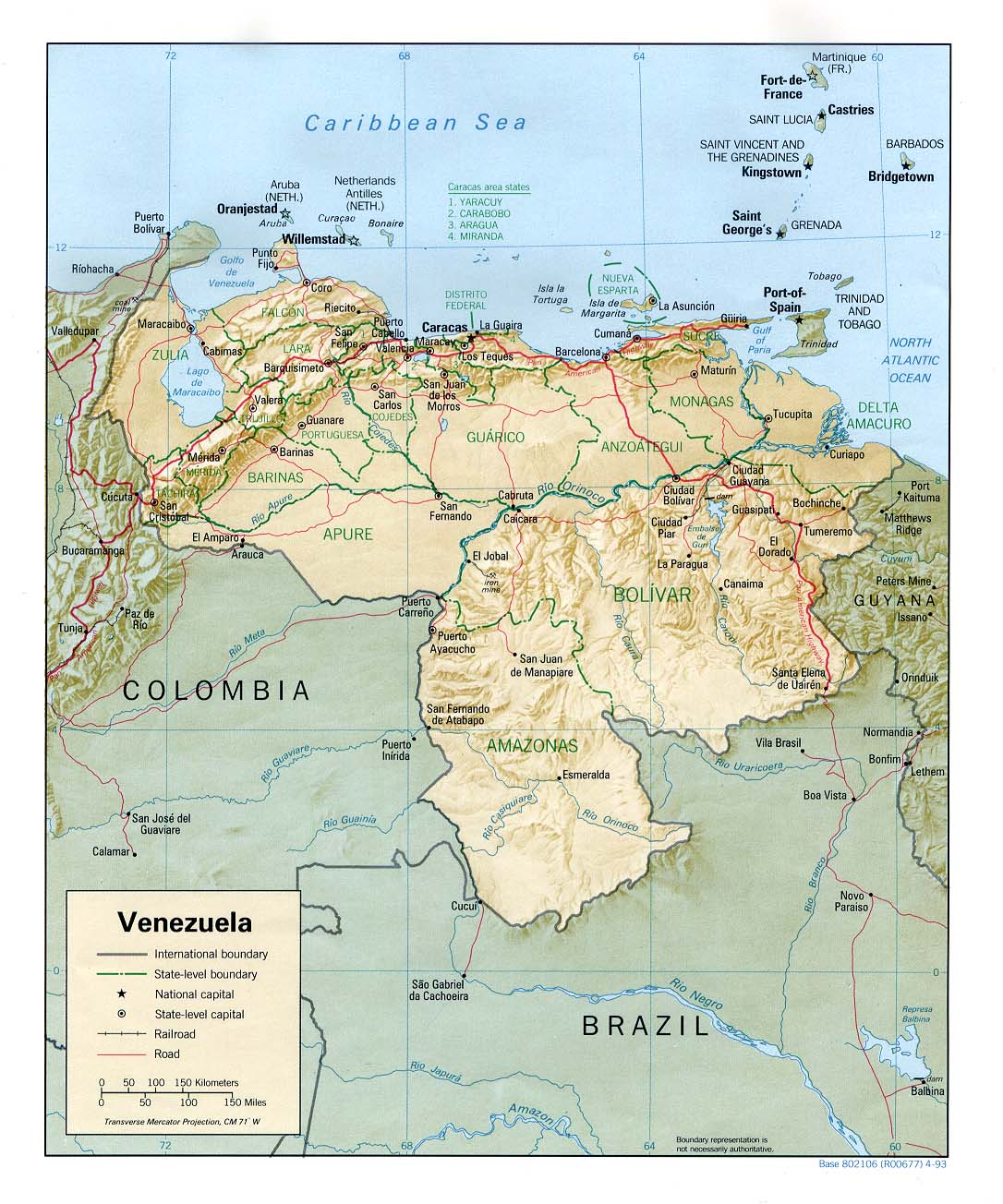
Venezuela’s American “useful idiots”

Filed under: Americas, Economics, Media — Tags: , , , , — Nicholas @ 04:00

Marian L. Tupy on the American apologists for the ongoing economic and humanitarian disaster unfolding in Venezuela, thanks to that country’s embrace of socialism:

… all socialist countries eventually come to experience similar economic and political problems. And, just as surely, there will always be those in the West who will jump to socialism’s defense. Vladimir Lenin, the founder of the Soviet state, called such people “useful idiots”.

I was reminded of the immensely seductive nature of socialism this week, when Tucker Carlson, the host of the eponymous show on Fox News, hosted a young socialist from The Students and Youth for a New America. To give you a sense of the conversation between the two, I have transcribed some of Dakotah Lilly’s statements below:

    “We need to acknowledge that what Venezuela is facing right now is terrorism at the hands of the opposition. Opposition has bombed schools, they have bombed buses, [and] they have taken wiring and strung it across roads to behead cops on motorcycles. These are not choir boys. These are violent extremists, hell-bent on taking away the progress that Venezuela has made over the past few years.”

    “If you look at the casualties that have happened in the past few months in these protests, the majority of those that have been killed have been trade unionist leaders, have been dedicated Chavistas, have been people on the Left.”

    “In terms of economics, the sanctions that the United States has put on Venezuela and the hoarding done by multi-national corporations in Venezuela, certainly does not help the [economic] situation.”

Almost everything that Lilly says here is demonstrably false. Extensive reporting by the New York Times, hardly a promoter and defender of “unbridled capitalism”, shows that most of the victims of political violence in Venezuela have been anti-government protesters.

Prey for Socialism’s Siren Call

Moreover, the sanctions imposed by the United States on a few individuals connected to the Venezuelan government have nothing to do with that country’s economic meltdown.

Aside from oil exports, Venezuela does not have or make anything that anyone in the world wants to buy. Thus, when the oil price collapsed from $140 to less than $50 a barrel, the country lost most of the foreign exchange it needed to purchase food and consumer goods abroad. Shortages ensued.

Admittedly, it is not entirely fair to criticize American millennials for their almost unfathomable ignorance. The state-schools system is, by and large, broken. American pupils can go through years of primary and secondary “education” without learning about communist crimes and socialist economic failures. Solutions to these problems are not easily to find. History and economics are not the most popular of subjects, and more often than not, the faculties are Left-leaning.

To make matters worse, young people, such as Dakotah Lilly, are deeply idealistic and easy prey to the siren call of socialism. They see the imperfections of free-market democracy at home and assume that countries with the opposite economic and political arrangements, such socialist Venezuela, must offer a better life to their people.

As Steven Horwitz pointed out earlier this month, “you can’t deny that Venezuela is a socialist calamity“:

This humanitarian disaster has raised the question of who or what to blame. That question puts self-proclaimed socialists and their progressive sympathizers in a difficult spot. After all, one can easily find lots of examples (from Michael Moore to Bernie Sanders) of people on the left praising or endorsing Chavez’s economic policies. So what can people who took that position say in the face of this disaster? And what can the defenders of free enterprise say as well?

Many on the left will start by denying that socialism is at fault. Sometimes they’ll deny that the Chavez-Maduro policies were “real” socialism. In other cases, they’ll argue that while their intentions might have been good, corruption and poor implementation doomed good policies to failure.

Both of these arguments have real problems.

If those policies were not “real” socialism, then why did so many sympathetic to socialism express so much support for them and argue that they would be transformative in ways socialists value? Chavez himself made such claims.

Do all of them not understand what socialism is? The variety of attempts Chavez made to prevent markets and prices from working and to substitute some form of economic planning in the name of the people have been broadly consistent with socialism since Marx. If that’s not socialism, what exactly is meant by that word anymore?

March 9, 2017

“… we’re psychologically training an entire swath of the population to be crazy”

Filed under: Health, USA — Tags: , , , , , — Nicholas @ 08:12

At Ace of Spades H.Q., Ace talks about the huge rise in reported personality disorders among Millennials:

Therapeutic behavioral conditioning trains people how to de-trigger themselves from triggers that cause panic, anxiety, depression, or bad behavior (drinking, etc.) That sort of behavioral conditioning teaches people to be mindful of their triggers, to understand that the trigger is just a tic with no real world purpose, and to train themselves to associate the trigger not with an adverse behavioral pattern (being in crowd triggers claustrophobia-like panic) but to train the trigger to lead to some other more benign consequence (being in crowd triggers recitation of the Ode to Joy).

The idea is that your brain has miswired itself to connect an input (too many people close to me) to an undesirable psycho-somatic reaction (heart racing, extreme anxiety), and that it takes a determined attempt to reprogram the brain and untangle those wires so that the triggering input leads first to a benign output and, ultimately, no particular output at all.

This works. Allen Carr’s How to Quit Smoking the Easy Way taught me how to re-wire the trigger (the anxiety/stress one feels when one’s 45 minute nicotine clock runs down to 0) into a different behavioral pattern (go outside, gulp in some fresh air, pace around a little bit like I used to do when smoking). It also taught me that the stress of not smoking was irrational, and that it would be helpful to view the addiction as a malignant parasite inside of me trying to manipulate my brain into keeping it fed while it ruined my body.

Works.

[…]

He realized that the process could be reversed. As brains with bad triggers could be un-triggered to be healthy, so too could completely healthy brains be deliberately taught to be triggered by harmless things and bring about various mental ailments, panic, anxiety, irrational emotional outbursts, a compulsion to violence, tantrums, etc.

And he brought this theory to a social psychologist named Haidt and asked him “Is this possible?” And Haidt said, “Damn it, not only is that possible, I think you’ve hit upon a very real malapplication of psychological techniques — we’re psychologically training an entire swath of the population to be crazy.”

Okay, he didn’t really say that. But that’s kind of the gist.

Definitely read it.

There’s no great mystery to what’s going on. People who train themselves to be cool and clear of mind will find themselves becoming more cool and clear of mind.

People who train themselves to go to pieces over every damn thing will find themselves getting better and better at going to pieces over every damn thing.

When you valorize a mental disorder and turn it into a virtue to be cultivated, guess what you’re gonna get? More mental disorders.

March 4, 2017

QotD: The freedoms of yesteryear versus the freedoms of today

Filed under: Britain, History — Tags: , , , — Nicholas @ 01:00

I am deeply concerned for the United Kingdom and its future. I look at the old country as it was in my youth and as it is today and, to use a fine Scots word, I am scunnered.

I know that some things are wonderfully better than they used to be: the new miracles of surgery, public attitudes to the disabled, the health and well-being of children, intelligent concern for the environment, the massive strides in science and technology.

Yes, there are material blessings and benefits innumerable which were unknown in our youth.

But much has deteriorated. The United Kingdom has begun to look more like a Third World country, shabby, littered, ugly, run down, without purpose or direction, misruled by a typical Third World government, corrupt, incompetent and undemocratic.

My generation has seen the decay of ordinary morality, standards of decency, sportsmanship, politeness, respect for the law, family values, politics and education and religion, the very character of the British.

Oh how Blimpish this must sound to modern ears, how out of date, how blind to “the need for change and the novelty of a new age”. But don’t worry about me. It’s the present generation with their permissive society, their anything-goes philosophy, and their generally laid-back, inyerface attitude I feel sorry for.

They regard themselves as a completely liberated society when in fact they are less free than any generation since the Middle Ages.

Indeed, there may never have been such an enslaved generation, in thrall to hang-ups, taboos, restrictions and oppressions unknown to their ancestors (to say nothing of being neck-deep in debt, thanks to a moneylender’s economy).

We were freer by far 50 years ago — yes, even with conscription, censorship, direction of labour, rationing, and shortages of everything that nowadays is regarded as essential to enjoyment.

We still had liberty beyond modern understanding because we had other freedoms, the really important ones, that are denied to the youth of today.

We could say what we liked; they can’t. We were not subject to the aggressive pressure of special interest minority groups; they are. We had no worries about race or sexual orientation; they have. We could, and did, differ from fashionable opinion with impunity, and would have laughed PC to scorn, had our society been weak and stupid enough to let it exist.

We had available to us an education system, public and private, that was the envy of the world. We had little reason to fear being mugged or raped (killed in war, maybe, but that was an acceptable hazard).

Our children could play in street and country in safety. We had few problems with bullies because society knew how to deal with bullying and was not afraid to punish it in ways that would send today’s progressives into hysterics.

We did not know the stifling tyranny of a liberal establishment, determined to impose its views, and beginning to resemble George Orwell’s Ministry of Truth.

Above all, we knew who we were and we lived in the knowledge that certain values and standards held true, and that our country, with all its faults and need for reforms, was sound at heart.

George MacDonald Fraser, “The last testament of Flashman’s creator: How Britain has destroyed itself”, Daily Mail, 2008-01-05.

« Newer PostsOlder Posts »

Powered by WordPress