
The Tank Museum
Published 11 Mar 2022► TIMESTAMP:
00:00 – INTRO
00:43 – FEATURES
(more…)
July 9, 2022
Tank Chat #151 Plastic Tank | The Tank Museum
Comments Off on Tank Chat #151 Plastic Tank | The Tank Museum
July 7, 2022
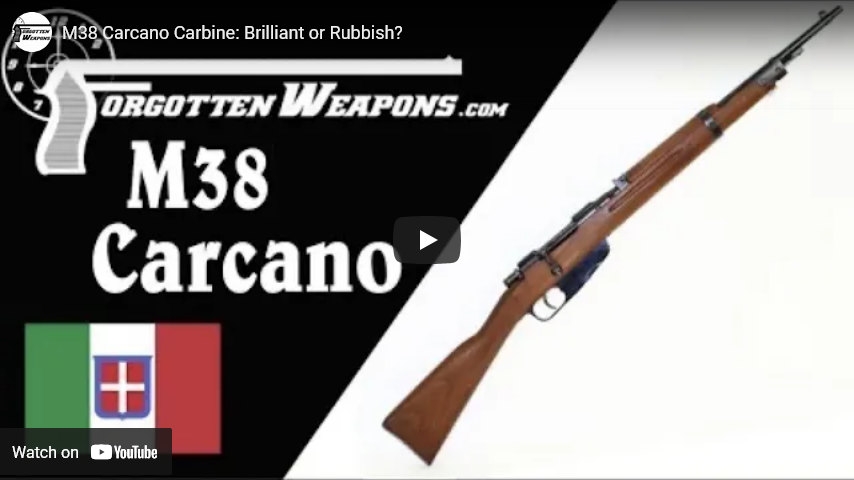
M38 Carcano Carbine: Brilliant or Rubbish?
Forgotten Weapons
Published 1 Aug 2017http://www.patreon.com/ForgottenWeapons
Cool Forgotten Weapons merchandise! http://shop.bbtv.com/collections/forg…
Carcano vs K98k Match video: https://www.youtube.com/watch?v=FAyxL…
I would like to propose that the M38 Carcano short rifle was, despite the poor reputation of the Carcano series of rifles, one of the best thought-out bolt action weapons of World War 2. Why, you ask? Well, let’s consider …
Only a few nations actually recognized the short ranges at which combat actually took place. Germany was one, as seen with its 8x33mm cartridge development, and Italy was another. The sights on the M38 series of carbines were made as simple fixed notches, with no adjustments to be knocked out of place unintentionally. With a 200 meter zero (or 150 meters, with the Finnish replacement front sight), the weapon needed no adjustment to make hits out to 300 meters, which is as far as anyone could realistically engage a target.
The M38 is a light and handy weapon compared to its contemporaries — 8.1 pounds and 40.2 inches (3.7kg and 1.02m) — and it fired a significantly lighter cartridge as well. The 7.35x51mm round used a 128gr (8.3g) bullet at 2400-2500 fps (735-755 m/s) depending on barrel length. This produced noticeably less recoil than rounds like the .30-06 or 8mm Mauser, which made it easier for troops to shoot effectively. The Carcano also had a 6-round capacity and fed with Mannlicher type clips, which are potentially faster to load than Mauser-type stripper clips.
Today we will discuss the M38 and these features (along with its predecessor, the M91 rifle) as they appear on paper. At the same time, over on InRangeTV, today we have the first stage of a 2-Gun Action Challenge Match in which I am shooting this M38 Carcano against Karl, who is using a Mauser K98k – so we will see how the theory works out in the field!
If you enjoy Forgotten Weapons, check out its sister channel, InRangeTV! http://www.youtube.com/InRangeTVShow
Comments Off on M38 Carcano Carbine: Brilliant or Rubbish?
July 1, 2022
More than just the iconic Snowbirds demonstrator aircraft: the story of the Canadair CT-114 Tutor
Polyus Studios
Published 13 Apr 2019Support me on Patreon – https://www.patreon.com/polyusstudios
The humble Canadair CT-114 Tutor, or “Toot” as it was affectionately called, trained every fast aircraft pilot in the RCAF from the mid-1960 through past the turn of the century. But it wasn’t just Canadians who benefited from its outstanding training qualities, the Tutor trained hundreds of pilots from other NATO and friendly countries. Today only the famous Snowbirds flight demonstration team continue to fly the jet and as the airframes age and fewer remain available, they too will eventually retire one of Canada’s most iconic jets.
**One of the Toots had a rather unique history that’s worth mentioning in detail. The first production CL-41G serial number 2201 was built in Montreal and delivered to Malaysia in 1967. It saw combat near the border with Thailand and after it was retired from military service in 1986, was sold to an American flight school in Michigan. It was then sold to the actor and accomplished pilot John Travolta. He flew it until 2001 when he donated it to a school in Florida who have kept it flying to this day.**
Aircraft mentioned:
CL-41A Tutor
CL-41R
CL-41G Tebuan
CF-104 Starfighter
CT-133 Shooting Star
AT-16 Harvard trainerMusic:
Denmark – Portland Cello ProjectResearch sources:
Canada Aviation and Space Museum Aircraft, Canadair Tutor by Bill Upton (huge thanks to Mr. Upton for his fine work)
https://www.militaryfactory.com/aircr…
http://www.royalaviationmuseum.com/78…
http://www.geocities.ws/faisal4589/te…
http://www.rwrwalker.ca/CAF_Tutor_det…
http://www.warbirdalley.com/tutor.htm
http://www.rcaf-arc.forces.gc.ca/en/a…
https://ingeniumcanada.org/aviation/c…
http://www.canadianflight.org/content…
https://www.wingsmagazine.com/operati…0:00 Introduction
1:48 Initial Development
4:04 The Tutor is Born
8:30 CL-41R Starfighter Radar Trainer
10:26 The Tutor enters service
13:13 Air Demonstration Squadrons
15:36 Heavily Armed Tutor
17:49 Proposed Advanced Variants
19:08 Upgrades and Final Flights
21:09 ConclusionCanadair CT-114 Tutor; The iconic Snowbirds demonstrator and NATO pilot training jet
#Snowbirds #RCAF #CanadianAerospace

Comments Off on More than just the iconic Snowbirds demonstrator aircraft: the story of the Canadair CT-114 Tutor
June 30, 2022
A Deep Dive into the Tiger I, by the Chieftain
World War Two
Published 29 Jun 2022The best tank of World War Two or a piece of junk? Using the original held at the U.S. Army Armor & Cavalry Collection, Chieftain and Rob Cogan take you on a literal deep dive into the iconic Tiger I.
(more…)
Comments Off on A Deep Dive into the Tiger I, by the Chieftain
June 24, 2022
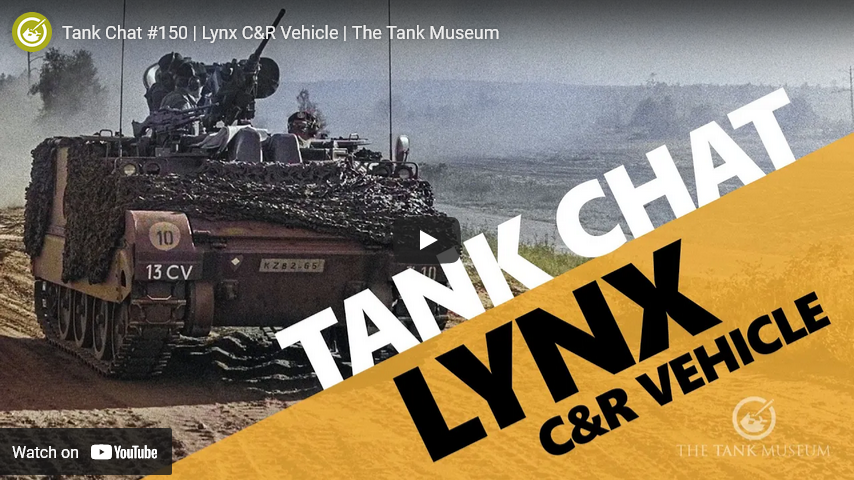
Tank Chat #150 Lynx C&R Vehicle | The Tank Museum
The Tank Museum
Published 4 Mar 2022► JOIN OUR PATREON: Our Patreons have already enjoyed Early Access and AD free viewing of our weekly YouTube video! Consider becoming a Patreon Supporter today: https://www.patreon.com/tankmuseum
► TIMESTAMP:
00:00 – INTRO
00:39 – FEATURES► SHOP THE TANK MUSEUM: tankmuseumshop.org
► FOLLOW THE TANK MUSEUM:
Instagram: https://www.instagram.com/tankmuseum/
Twitter: https://twitter.com/TankMuseum
Website: https://tankmuseum.org/
________________________◈ Created by The Tank Museum
#tankmuseum #tankchats #DavidFletcher
Comments Off on Tank Chat #150 Lynx C&R Vehicle | The Tank Museum
June 22, 2022
Johnson M1941 Rifle
Forgotten Weapons
Published 3 Oct 2016Cool Forgotten Weapons Merch! http://shop.bbtv.com/collections/forg…
Designed in 1936 by Melvin Johnson, the M1941 Johnson Automatic Rifle was a competitor to the M1 Garand, but not introduced in time to actually be adopted in place of the Garand. Instead, Johnson hoped to have his rifle accepted as a parallel second option for the US military in case something went wrong with the rollout of the Garand, or production simply couldn’t meet the required levels.
However, Johnson was not able to make his case to the military successfully. A small number of Johnson Light Machine Guns were acquired by the US Paramarines and the First Special Service Force, and a large order (30,000 rifles) was placed by the Dutch government for shipment to the colonies in southeast Asia (it is from this order that the M1941 designation comes). However, those colonies fell to the Japanese before a significant number of rifles were able to be shipped out. This left a substantial number of rifles orphaned in the US, and a small number of these were unofficially put in service by acquisitive Marines, mostly in the Pacific theater.
Mechanically, the Johnson is a short recoil system with a rotating bolt (very similar to the later AR-15 bolt, which Johnson would influence). It is chambered for the standard .30-06 cartridge, and feeds from a 10-round rotary fixed magazine which can be fed by stripper clips or with individual cartridges.

Comments Off on Johnson M1941 Rifle
June 18, 2022
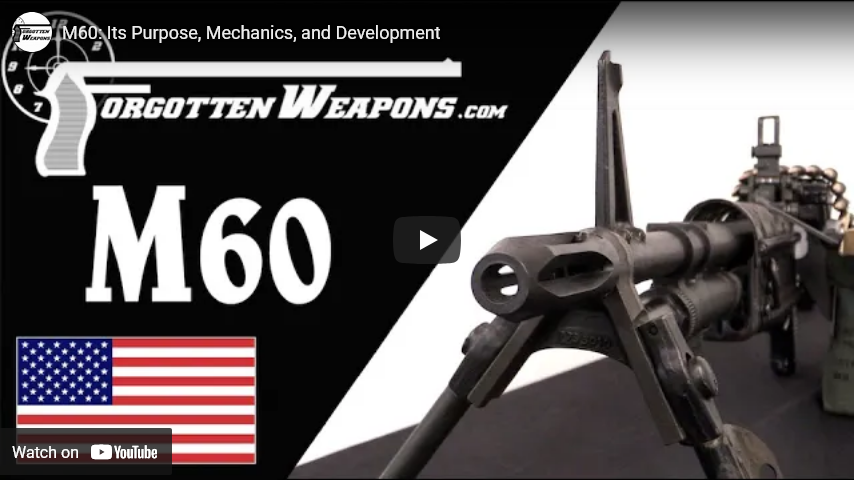
M60: Its Purpose, Mechanics, and Development
Forgotten Weapons
Published 25 Feb 2022https://utreon.com/c/forgottenweapons/
http://www.patreon.com/ForgottenWeapons
Cool Forgotten Weapons merch! http://shop.forgottenweapons.com
Contact:
Forgotten Weapons
6281 N. Oracle 36270
Tucson, AZ 85740
Comments Off on M60: Its Purpose, Mechanics, and Development
June 17, 2022
Tank Chat #149 Cut in Half Centurion | The Tank Museum
The Tank Museum
Published 25 Feb 2022► JOIN OUR PATREON: Our Patreons have already enjoyed Early Access and AD free viewing of our weekly YouTube video! Consider becoming a Patreon Supporter today: https://www.patreon.com/tankmuseum
► TIMESTAMP:
00:00 – INTRO
00:31 – FEATURES
(more…)
Comments Off on Tank Chat #149 Cut in Half Centurion | The Tank Museum
June 13, 2022
Lightning fast interceptor turned nuclear strike bomber: the Canadair CF-104 Starfighter
Polyus Studios
Published 29 Sep 2020Don’t forget to like the video and subscribe to my channel!
Support me on Patreon – https://www.patreon.com/polyusstudiosThis is an UPDATED version of the video. It includes many changes and corrections to the original video. Many thanks to Gary Watson for all his contributions!
Starting in 1959 Canadair began building Canada’s fastest jet at their plant in Montreal. It was designed as a sleek high altitude and high speed interceptor, but was adapted for low level ground strike missions with conventional and nuclear weapons. It was the Canadair CF-104 Starfighter, Canada’s missile with a man in it.
0:00 Introduction
0:33 Historical Context
2:01 Design Choice
4:15 Canadair’s Production Run
6:50 Configuration and Specifications
11:04 Nuclear Strike Role
12:13 Operational History
16:06 Conventional Role
17:53 Retirement and Replacement
19:28 Accidents, Controversy and Legacy
22:56 ConclusionMusic:
“Denmark” – Portland Cello ProjectResearch Sources:
Canadair CF-104 Starfighter by Harold A. Skaarup (http://silverhawkauthor.com/canadian-…)
Canadair CF-104 Starfighter by Canadian Starfighter Association (http://canadianstarfighterassociation…)
CF-104 Flight Operations by Air Force Museum of Alberta (https://www.rcaf.museum/history/rcaf-…)
Story of the F-104 Starfighter in Norwegian Service by Bjorn Hafsten (http://starfighter.no/hist-en3.html)
Starfighters with Turkey by Joe Baugher (http://www.joebaugher.com/usaf_fighte…)
ASN Aviation Safety Database by Aviation Safety Network (http://aviation-safety.net/wikibase/d…)
Starfighter by David L. Bashow (Fortress Publication, 1990, ISBN: 0-919195-12-1)
Photography credit 6mins10sec: Gary WatsonFootage Sources:
Personal Footage – Gary Watson
Cold War Fighter Pilot – Ken Castle, CD, Flight-Lieutenant (ret’d) – Canada Aviation and Space Museum (https://youtu.be/sEUOFyPLL94)
CF 104 Baden Soellingen 1965 – Gordon Price (https://youtu.be/4UZ9PE58Eq0)
CF104 Germany 1983/4 441 Squadron CAF – Tom Hammond (https://youtu.be/xrqjAKHflCo)
Great Planes Lockheed F-104 Starfighter – Discovery Channel (1996)
Avro Canada CF 100 Canuck – Avro (1956)#Starfighter #CanadianAerospace #PolyusStudios

Comments Off on Lightning fast interceptor turned nuclear strike bomber: the Canadair CF-104 Starfighter
June 11, 2022
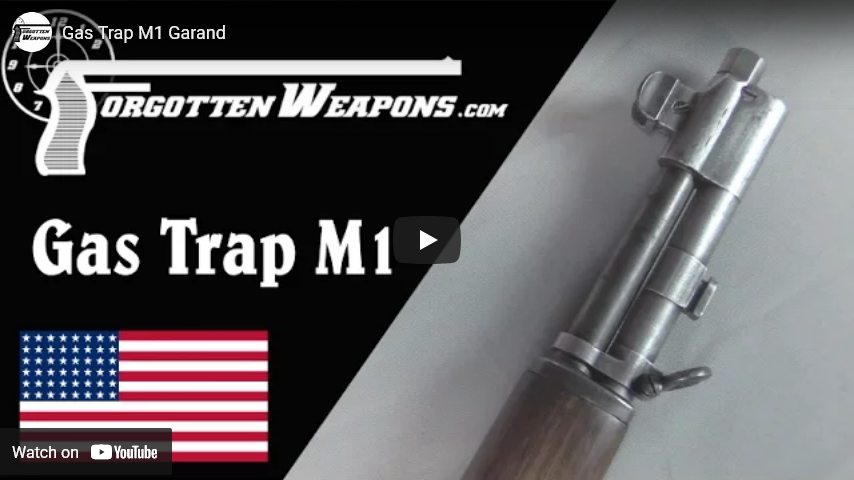
Gas Trap M1 Garand
Forgotten Weapons
Published 29 Sep 2016Cool Forgotten Weapons Merch! http://shop.bbtv.com/collections/forg…
The original design of the M1 Garand as adopted in 1936 used a “gas trap” system instead of a gas port drilled in the barrel. This system used a type of muzzle cap and false muzzle to redirect gas into the gas cylinder in the short distance between the end of the rifled barrel and when the bullet left the muzzle. The system worked, but was not ideal.
Several problems were found with the gas trap system as the guns went into production. These included cleaning complexity, an unstable front sight, and a potentially weak bayonet mounting point. Most significantly, however, one rifle in testing had a screw work loose in the muzzle cap, which allowed parts to shift out of alignment and resulted in a bullet striking the gas plug and blowing the entire assembly off the gun. This led to a decision to redesign the gas system of the M1 to use a simpler gas port drilled in the barrel.
When this design change was made, 18,000 rifles had been completed and parts were made for an additional 33,000. Those guns were completed with the available parts, and the new gas system was used for all further production. Gas trap M1s are very rare today because the guns were updated to the new system when they were overhauled during WWII, and in 1947 the Army ordered all remaining gas trap rifles destroyed.
Comments Off on Gas Trap M1 Garand
June 8, 2022
The Story Behind the Dambuster Raid – WW2 Special
World War Two
Published 7 Jun 2022The thousand-bomber offensive was about to begin as Air-Marshall Harris was assembling his forces. Yet one man was to challenge his strategy. The aircraft designer Barnes Wallis thought: “What if there was a way to destroy Germany’s industrial might not by simply dropping thousands of bombs over its cities, but by a precision strike against its dams?” For this, a new kind of bouncing bomb was to be delivered.
(more…)
Comments Off on The Story Behind the Dambuster Raid – WW2 Special
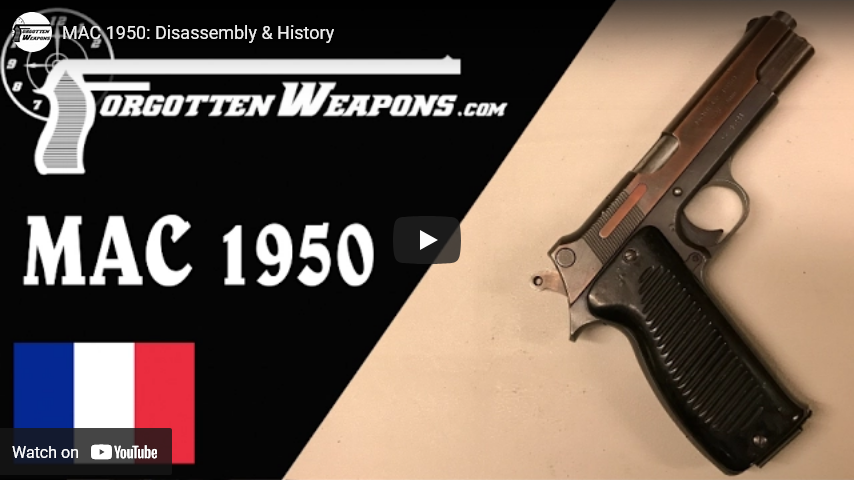
MAC 1950: Disassembly & History
Forgotten Weapons
Published 27 Feb 2017Shooting the MAC 1950: https://www.youtube.com/watch?v=sduZ4…
The PA MAC 1950 (Pistolet Automatique Modele 1950) was the result of a 1946 French effort to standardize on a single military pistol. By the end of WWII, the French military had accumulated a mess of different pistols of French, Spanish, American, and German origin; officially using the Luger, P38, Mauser HSc, 1911 (and A1), 1935A, 1935S, Star, Ruby, and Model 1892 revolver.
Trials were held in 1950, although the outcome was predetermined — this pistol, designed by St Etienne and largely derived from the Model 1935S, was to be the next French military sidearm. A design from the SACM company was also tested, as was a commercially purchased SIG SP47/8, but this was for comparison sake only. In fact, the SIG was the best performer in the testing, with the St Etienne design suffering from cracked parts and durability problems. It would be improved, however, and deemed suitable for adoption by early 1951.
Production began in 1953 at the Chatellerault arsenal (hence the “MAC” name used in the US). All of 221,900 were made by Chatellerault until it was shut down in 1963, when production transferred to St Etienne, where another 120,000 would be made by 1978.
Mechanically, the gun is largely taken form the Browning 1911, with a few improvements. The recoil spring is of a captive design, and the fire control group is all built into a single easily replaced unit (similar to the Tokarev and the 1935S). It is single action only, with hammer-block and magazine safeties and a 9-round magazine of standard 9x19mm ammunition. It is still in French service, having proven to be a reliable and dependable weapon, if outdated by today’s standards.
http://www.patreon.com/ForgottenWeapons
Cool Forgotten Weapons merch! http://shop.bbtv.com/collections/forg…
If you enjoy Forgotten Weapons, check out its sister channel, InRangeTV! http://www.youtube.com/InRangeTVShow
Comments Off on MAC 1950: Disassembly & History
May 25, 2022
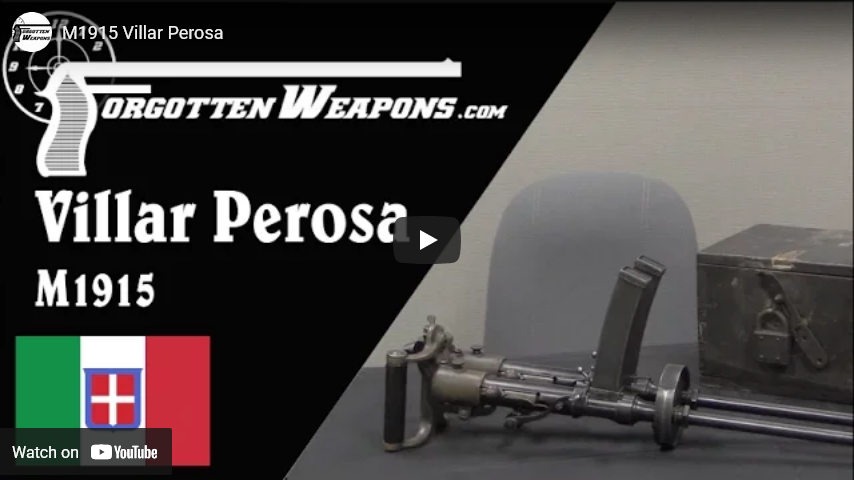
M1915 Villar Perosa
Forgotten Weapons
Published 5 Aug 2016http://www.patreon.com/ForgottenWeapons
The Villar Perosa is one of the first small machine guns developed and used by a military force. It was designed in Italy and introduced in 1915 as an aircraft weapon, to be used in a flexible mount by an airplane’s observer. The gun consists of two independent firing actions mounted together. Each fires from an open bolt as a rate of 1200-1500 rounds/minute, feeding from a 25 round magazine of 9mm Glisenti cartridges. This allowed the maximum possible volume of fire in an aerial combat situation, where in 1915 ballistic power was not particularly important.
As aircraft armaments improved and synchronized, belt-fed machine guns became practical, the Villar Perosa was quickly made obsolete in aerial use. The Italian military experimented with several applications of the weapon in ground combat, including slings and belt fittings for walking fire, tripods, mounts with integral armor shields, and bicycle mounts. None of these proved particularly successful, as the elements that made the gun well adapted to early aerial use (high rate of fire with a small cartridge) made it relatively ineffective for infantry use.
Ultimately, the best use of the Villar Perosa was to break them up and convert the actions into shoulder-fired submachine guns. Designs to do this were developed by both the Beretta company and Villar Perosa themselves, and in 1918 these guns entered service in the same approximate period as the first German MP-18 submachine guns. Because of this recycling, intact M1915 Villar Perosa guns are quite rare today.
Comments Off on M1915 Villar Perosa
May 21, 2022
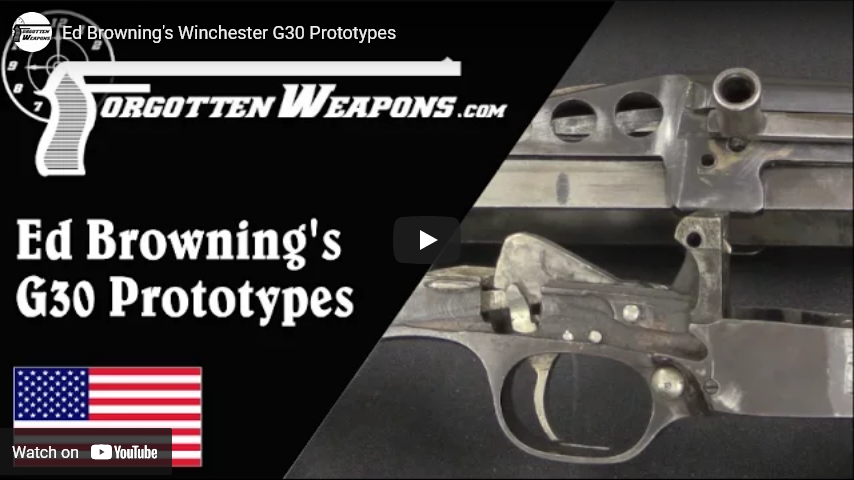
Ed Browning’s Winchester G30 Prototypes
Forgotten Weapons
Published 25 Jul 2016http://www.patreon.com/ForgottenWeapons/
After Jonathan Edward “Ed” Browning had his 1929 rifle dropped from US military testing, he took the design back to his shop in Utah and kept working on it. By 1938 he had made enough improvements that he was ready to present the gun to Winchester, hoping they would be interested in purchasing the design. Specifically, he redesigned the receiver to move much of the bolt travel into the wrist of the stock, shortening the action. He also replaced the short recoil action with an annular gas piston. He made two sample rifles, one in military configuration and one in sporting configuration.
Winchester was looking for a self-loading rifle to market at the time, because they could see that war in Europe appeared to be imminent. They had been caught without a military rifle of their own during World War One, and did not want to be in that situation again. They thought that Ed Browning’s design showed merit, so they agreed to purchase it, and brought Browning onboard to help continue development.
With Winchester’s resources, it was possible to make the guns more professionally. Winchester designated the rifle the G30, and we have one of the examples made by Winchester in the video as well.
The tilting bolt mechanism took inspiration from John Moses Browning’s 1911 pistol, and the trigger housing bears an interesting resemblance to that of the French Berthier rifles (which may or may not be coincidental). The rifles appear to have worked reasonably well, although the annular gas piston was a hindrance which Browning apparently was unwilling to abandon. With his death in 1939, the project moved on to a new phase with David Marshall Williams taking on the job of improving it.
Comments Off on Ed Browning’s Winchester G30 Prototypes
May 15, 2022
Tank Chat #147 M14/41 | The Tank Museum
The Tank Museum
Published 4 Feb 2022► JOIN OUR PATREON: Our Patreons have already enjoyed Early Access and AD free viewing of our weekly YouTube video! Consider becoming a Patreon Supporter today: https://www.patreon.com/tankmuseum
► TIMESTAMP:
00:00 – INTRO
00:22 – FEATURES
(more…)
Comments Off on Tank Chat #147 M14/41 | The Tank Museum


