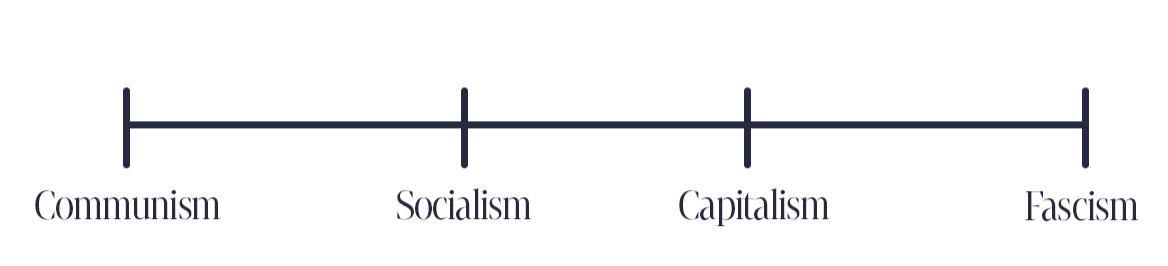
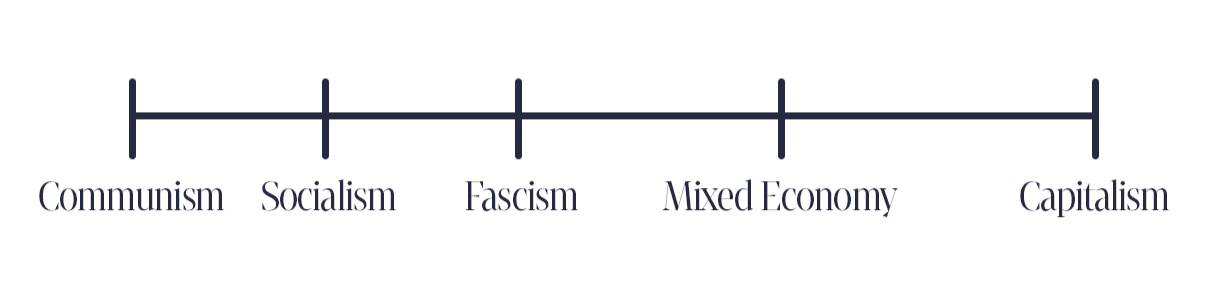
The Fascist theory of power … defines the system from above, naturally evolving quite rapidly into Führerprinzip, the cult of the absolute leader whose authority may not be questioned. One important consequence is that fascist strongmen like to create institutions parallel to the civil police and line military that are answerable directly and personally to the Maximum Leader. Of course the best known example is Hitler’s SS, but any well-developed fascism generates equivalents.
You can have a quite an effective totalitarianism without this; Stalin, for example, never bothered with an SS-equivalent. You can get similar developments under Communism; consider Mao’s Red Guards. And on the third hand, Franco copied that part of the formula without actually being a Fascist. Still – if you think you’ve spotted a fascist demagogue ramping up to takeover, one of the things to check is whether he’s trailing a thug army behind him ready to turn into a personal instrument of force. If he isn’t, you’re probably wrong.
Another thing that follows from the Fascist theory of power is hostility towards markets, free enterprise, and trade. Yes, yes, I know, you’ve heard all your life that fascists are or were tools of capitalist oligarchs, but this is another big lie. In reality about the last person you want to be is a “capitalist oligarch” in the way of one of Maximum Leader’s plans. Because even if he needs you to run your factories, you’re likely to find out all the ways utter ruthlessness can compel you. Threats to your family are one time-honored method. You can’t buy him, because has the power to take anything he really wants from you.
In fact, one of the reasons fascist regimes turn anti-Semitic so often is because Jews are identified with mercantile activity. Which in the Fascist view of things, is corrupting and disruptive of loyalty bonds that should be more important than wealth. Furthermore, Fascism inherited from its parent Marxism the whole critique about capitalism alienating workers from their production.
The political economics of fascism is always state-socialist, and explicitly so. This follows directly from the drive for centralization.
Eric S. Raymond, “Spotting the wild Fascist”, Armed and Dangerous, 2019-04-30.
July 14, 2022
QotD: Fascism and anti-semitism
July 5, 2022
The Republic of China’s “Porcupine strategy”
Originally published in the New York Sun and reposted by the New English Review, Conrad Black believes any attempted amphibious invasion of Taiwan will become the worst invasion outcome since the Athenians assaulted Syracuse in 414-413 BC:
There has for some time been a good deal of flippant talk about a Communist Chinese invasion of the Republic of China on Taiwan, as if that would be a simple military undertaking. It seems to be inadequately appreciated that Taiwan has thought of little else for many years, and is, unlike Ukraine, a very prosperous and technologically sophisticated country that is armed to the teeth with the most advanced American weaponry, and has plotted out a defense in depth that is called its “porcupine strategy”.
Though it is probably accidental, “porcupine” is the word applied to Switzerland by Adolf Hitler in 1941, when, after careful analysis by the German General Staff, he concluded Swiss defenders would inflict a much larger number of casualties on a German invasion force than could possibly be justified by the occupation of the country. (It can be lamented that more recent Western strategists did not apply the same test to Afghanistan.)
Comparisons with Ukraine are inapplicable, other than the fanatical determination of the defenders. Most obviously, Taiwan is not only an island but the Formosa Straits are three to four times as wide as the English Channel from the southern British ports to the beaches of Normandy. The People’s Republic of China would have no choice but to attack amphibiously as they could not possibly imagine success with fewer than 500,000 combat soldiers and no force remotely as large could be parachuted onto Taiwan.
A strike force of 500,000 would probably have to be supplemented by a follow-up force at least as large, all conveyed in a huge armada of slow and vulnerable craft. Taiwan has been supplied with the precise ground and air-launched missiles that the Ukrainians have used to such deadly effect in the Black Sea, including the sinking of the Russian flagship, the heavy missile cruiser Moskva.
Taiwan has a front-line Air Force of about 300 of the latest fully equipped fighter and interceptor aircraft that along with shore batteries could rain a dense and prolonged fire of missiles upon any invasion fleet. Such a fleet, even in the best of weather, would plod through open water for at least ten hours. They would be sitting, or at least slowly moving, ducks throughout that journey. It brings to mind the conclusion of one of Churchill’s Demosthenean addresses in the autumn of 1940: “We are still awaiting the long-promised invasion; so are the fishes.”
June 29, 2022
QotD: How Cadet Che shows that West Point isn’t West Point anymore
… but that’s the thing: West Point isn’t West Point, and hasn’t been for at least thirty years now. This kid went to Ranger school, did a tour in Afghanistan, and was commissioned in the 10th Mountain division after graduating from West Point. In case you don’t feel like clicking, he’s the kid who took selfies with a Che Guevara shirt under his cadet grays and “communism will win” scribbled on the inside of his hat. Note the timeline: the kid was commissioned after those selfies made the Internet rounds. He still graduated, and for a time was an active-duty officer in the United States Army.
Bad as that is, there’s much worse. Notice the passivity of it all. What were any of the parties involved trying to accomplish? If Cadet Che had wanted to get kicked out of the service (as it seems finally happened, according to the linked article), there are a million easier ways. In fact, cadets at West Point are volunteers. The Army makes a big production out of this: If you can’t hack it at the Point, you’re simply not officer material. All it takes is a letter to the commandant, and you’re out — Cadet Che could’ve been drinking beer with his fraternal socialist comrades at Big State 24 hours after turning in his resignation.
Even the kid’s form of “protest” was passive. There’d be a certain utility, I suppose, for the Revolution if the kid had written “I’m a Communist sleeper agent” on the inside of his hat — evidently our standards are so lax that we don’t do basic background checks on our potential military officers. But he didn’t write that. Instead, he wrote “Communism will win,” a passive, bloodless statement … and that’s it.
The passivity is the truly terrifying part. A West Point graduate is among the elite if anyone is — he has command of at least a platoon of heavily armed trained killers, and the radio one of them carries has the power to call in armor, air strikes, cruise missiles … and yet, not “I’m a communist,” not “¡Viva la Revolución!,” not even “Lenin lives!” Just … “communism will win.” How, comrade?
Severian, “The Man of the Hour”, Rotten Chestnuts, 2019-05-22.
June 25, 2022
QotD: The Left’s long march through the institutions
Old-school Commies were consummate players of the long game. They knew they’d have to completely undermine bourgeois society before they could carry off The Revolution, so they did. Antonio Gramsci laid it all out theoretically, if you feel like slogging through that gunk, but the Commies had been doing it in practice for decades before that. Starting with the educational “reformers” surrounding John Dewey at the turn of the 20th century, they took over our grade schools. Then they took over the universities, working their way up from the community colleges (often Commie fronts from the get-go; there’s a reason the number of jucos nationwide went from 20 to 170 in just ten years, from 1909 to 1919).
Once they were in, they of course credentialized everything, such that the cultural-transmission professions — journalism, education, even art and music — suddenly required college training … and all the trainers were Reds. Ever wonder why you seemingly have to have a fucking Master’s Degree to get your lit-wank novel published? Seriously: read the author bio of any of the flavor-of-the-minute wunderkinder that get their painfully quirky dreck blurbed in the New York Times Review of Books — every blessed one of them has some kind of advanced degree in “creative writing”. All those graduate-level “creative writing” programs aren’t just make-work for otherwise unemployable Eng-Lit PhDs, in other words. They’re what the Union of Soviet Writers was in the USSR: The guarantors of politically-reliable content.
That’s the setup. Ready for the twist?
They won, but they don’t know it. Not only was the Revolution televised, it’s still being televised, 24 hours a day, on 587+ satellite cable channels and umpteen digital streaming services. Eugene V. Debs’s wettest wet dream couldn’t compare to Current Year America. The SJWs are like the Seekers, out there desperately trying to prepare the world for the UFOs … but the UFO already landed in their backyard, and they were too busy trying to save the world to see it.
That’s why widespread political violence is inevitable, and damn soon. Nancy Pelosi may be the nastiest evil old bitch to ever slime through the halls of Congress, but she’s not stupid. She’s just in an impossible situation. She’s the leader of an organization that didn’t manage its True Believers, and now she’s fucked either way. […]
That’s what the old-school Commies didn’t see coming. Those poor deluded fools really thought that “intellectual” was an adjective. The Russian word for the noun version is intelligentsia, and they gave the Soviet Union no end of trouble — Stalin had to send boxcars of them to Siberia fairly regularly to keep them in line. In the West, though, they really thought that you can have an “intellectual” steelworker, or dockhand, or farmer, and the like. They were counting on it, in fact — see “community colleges were all Red fronts”, above.
Instead, “intellectual” is the True Believer’s self-chosen job description. You can meet some fearsomely learned people in your day-to-day, but the only people you’ll ever meet who use the word “intellectual” without sneering are Media types and their panty-sniffers in the ivory tower. They’re extremely useful idiots, which is why none of Palsy Pelosi’s predecessors sent them to Siberia like they should’ve. And now it’s too late.
Severian, “If the UFO Actually Comes, Part II”, Rotten Chestnuts, 2019-09-26.
March 16, 2022
QotD: Muslim views of western culture
Not surprisingly, even the less devout Moslems look on western civilisation with uncomprehending horror. They accept western technology and science, and envy western prosperity. But they largely reject the spirit of free inquiry, intellectual and practical, upon which the western ascendancy rests. Yasmin Alibhai, for example, has not only lived in England for several years, but also worked as a journalist for The New Statesman and Society. She is completely unable to understand how a nation with no taste for book burning and the murder of authors can be anything but a “moral chaos”. But the most explicit rejections come from the younger theorists of the Iranian Revolution. Majid Anaraki, who spent several years in southern California, sees the west as
a collection of casinos, supermarkets and whore-houses linked together by endless highways passing through nowhere. All that money, all that effort all those resources that are wasted so that idiotic women and shallow men can prolong their lives … You see ancient women who refuse to die at a normal time and who continue to paint themselves and crave youthful lovers right to the edge of the grave … To eat tons of hamburgers and popcorn, to imbibe oceans of Coca-Cola and whisky, to watch hundreds of hours of stupid television, to copulate mechanically a few hundred times, to be on guard minute against being robbed, raped or murdered. That is the American way of life.
Our civilisation is regarded as evil, and its destruction is taken as a sacred duty for reasons both defensive and offensive.
Defensive
There can be no doubt that Khomeini was a firm anti-communist. But, unlike the timid monarchies of the Arabian Peninsula, he saw quite clearly where the true threat to Islam lay. Throughout his reign, the Russians presented at least a potential threat to the northern borders of Iran, But this was as nothing to the actual ideological threat of the west, Marxism in Iran had converted its tens of thousands, and influenced its hundreds of thousands. But western civilisation — with its clothing fashions, its films, its music, its enshrinement of individual happiness, its secular knowledge — had captured its millions. There was a “Great Satan” devouring Islam; and its body was not communism, but the West; and its head was not Russia, but America, “We must break those pens” he wrote, “that teach people there is something other than divine law. We must smash those mouths that tell the people they are free to say whatever they please, regardless of right and wrong in accordance with the commands of the Almighty”. On this reasoning, to carry the fight from Iran, or wherever, into the west, is the equivalent of turning from the periphery to the centre of an infection.
Offensive
In one of his occasional attempts at humane argument, Khomeini justified a war of extirpation against the west on the following grounds:
If one allows the Infidels to continue playing their role of Corruptors on Earth, their eventual moral punishment will be all the stronger. Thus, if we kill the Infidels in order to put a stop to their [corrupting] activities, we have indeed done them a service. For their eventual punishment will be less.
For the most part, however, it is conversion to Islam that is desired of people in the west. Only those refusing to convert are to be slaughtered. In the first instance, all those areas of the world that were once Islamic, but have since been lost, are to be restored; and all those areas that contain sizeable Moslem minorities are to be Islamised. In 1982, a new map of the world was presented to Khomeini by the Cartological Society in Teheran. It was divided into three regions, distinguished by three colours. First, in green, came the House of Islam — this being the 41 member states of the Islamic Conference, together with soviet central Asia, southern Spain, Malta and Lampedusa, Albania, part of Yugoslavia, north eastern China, parts of Siam, Burma, the Philippines, and most of Africa. The remaining areas, the red and black, were divided between communism and the west. But the final state of affairs is to be a totally Islamic world. No part whatever is to be left in the hands of the “Cross worshippers”, as the Christians are contemptuously termed. Moslems in Great Britain at the moment comprise barely three per cent of the population. Nonetheless, “[t]hose Moslems” says Dr Shabbir Akhtar of the Bradford Council of Mosques, “who find it intolerable to live in a United Kingdom contaminated with the Rushdie virus need to seriously consider the Islamic alternatives of emigration (hijira) to the House of Islam or a declaration of holy war (jihad) in the House of Rejection. The latter may well seem a kind of hasty militancy that is out of the question, though, with Allah on one’s side, one is never in the minority. And England, like all else, belongs to Allah.
March 7, 2022
Wargaming the Spanish Civil War
Of all the wars of the 20th century, the Spanish Civil War has to have been one of the most confusing to outsiders at the time and virtually unreadable to moderns who didn’t live through that tumultuous era. I’ve read and enjoyed Orwell’s Homage to Catalonia, but it’s not a history of the whole war: Orwell was an enlisted volunteer who served on a “quiet” sector until he was seriously wounded by a Nationalist sniper. He discusses the situations he encountered personally and avoids, for the most part, editorializing the larger strategic conflict (the TimeGhost team did a pretty helpful video on how the war was triggered that may be informative). As a result of the lack of clarity and the confused narratives, the Spanish Civil War hasn’t been covered in wargames to any great degree, but Jonathan Kay found a scenario for Advanced Squad Leader on part of the conflict that he clearly found intriguing:
The Spanish Civil War was, in human terms, an epic clash of arms: Almost 300,000 combatants are thought to have been killed, as well as more than 150,000 civilians. The conflict also looms large in the history of the 20th century, having been memorably described by U.S. ambassador to Spain Claude Bowers as the “dress rehearsal” for World War II.
Among the idealistic combatants who travelled to Spain to join the fight against fascism were Ernest Hemingway and George Orwell, whose war experiences served to inform, respectively, For Whom the Bell Tolls and Homage to Catalonia. The war also inspired Pablo Picasso’s unsettling surrealist masterpiece Guernica, which depicted the bombing of the Basque town of the same name on April 26, 1937.
All in all, something like 50,000 foreigners assisted the Republican side through the International Brigades — whose Brigada Abraham Lincoln included a Washington Battalion made up of Americans, and a Mackenzie-Papineau Battalion made up of Canadians. At least a quarter of these international volunteers died in combat, but most of the rest went home with frightening stories to tell. Even before the Nazis invaded Poland, the world’s understanding of fascism’s existential threat to humanity was shaped by General Francisco Franco’s successful campaign to topple the Second Spanish Republic.
And yet one thing that the Spanish Civil War has not yielded is a wide array of popular boardgames. This may be partly due to the fact that the conflict was so greatly overshadowed in scale and importance by World War II. But it may also be due to the fact that neither side emerged as sympathetic. As Orwell described in Homage to Catalonia (and as Adam Hochschild described, from a U.S. perspective, in his 2016 book, Spain in Our Hearts: Americans in the Spanish Civil War, 1936–1939), the Republican war effort turned out to be incompetent, fractured, and cynical, with the dominant pro-Stalinist faction eventually turning murderously upon its Trotskyist and anarchist allies. And as late as early March, 1939, just weeks before Franco conquered Madrid and ended the war, Republican forces inside the capital city were engaged in a deadly power struggle within their own ranks. All in all, the many regional and political subplots make the war difficult to model in any kind of conventional wargame (though, of course, this hasn’t stopped numerous game designers from trying).
However, The Beleaguered Capital, HazMo scenario 11, presents a reminder that when Republican and Nationalist forces fought each other in pitched battles, the mode of combat really did offer a preview of World War II, including the use of air power and tanks. (While the only tanks that existed in Spain when the war broke out were a handful of tiny, World War I-era Renault FTs, the Russians sent T-26s to the Republicans while Germany dispatched Pz Is to the Nationalists. In both cases, these vehicles arrived in Spain during the Fall of 1936, just a few months before the December 16 dateline on The Beleaguered Capital.)
January 25, 2022
The fantasy of a modern economy without money
Jon Hersey and Thomas Walker-Werth consider the claim that we’d all be better off without money in a truly modern, egalitarian society:
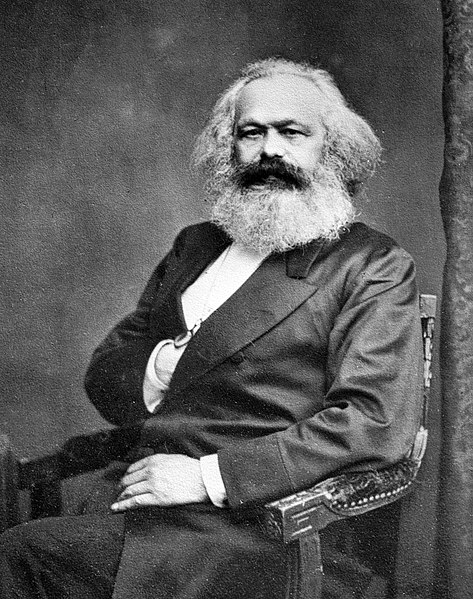
Capitalism, to the extent it has existed, has been incredibly successful at lifting most of humanity out of poverty, incentivizing the creation of incredible, life-enhancing technologies, such as those Maezawa used to make his fortune — not to mention, travel to space. But it’s long had its critics, and he is far from the first to propose a sort of Garden-of-Eden world where everything is plentiful and free. Karl Marx envisioned a similar utopia. Communism, he said, ultimately would bring about a world without money:
In the case of socialised production the money-capital is eliminated. Society distributes labour-power and means of production to the different branches of production. The producers may, for all it matters, receive paper vouchers entitling them to withdraw from the social supplies of consumer goods a quantity corresponding to their labour-time. These vouchers are not money. They do not circulate.
And although “society distributes labour-power” — meaning government planners tell people what to do to ensure that things (such as “free” Ferraris) get made — workers could also all pursue whatever hobbies or occupations strike their fancy. “[I]n communist society,” Marx explained,
where nobody has one exclusive sphere of activity but each can become accomplished in any branch he wishes, society regulates the general production and thus makes it possible for me to do one thing today and another tomorrow, to hunt in the morning, to fish in the afternoon, rear cattle in the evening, criticize after dinner, just as I have in mind, without ever becoming hunter, fisherman, shepherd or critic.
[…]
Although Marx considered himself a social scientist and economist — and although his ideas are still some of the most widely taught — they aren’t much taught in social science or economics departments, except as foils. That’s because virtually all of Marx’s hypotheses have been debunked. For one, who’s going to build the free Ferraris that Maezawa has dreamed up, never mind tackle more mundane tasks, with no incentive? But for those who don’t find such commonsense thought experiments convincing — or who think, as Marx did, that human nature will somehow mysteriously change — the impracticality of Marx’s moneyless state was demonstrated by what Austrian economists have come to call the calculation problem. Ludwig von Mises once explained the problem as follows:
If a hydroelectric power station is to be built, one must know whether or not this is the most economical way to produce the energy needed. How can he know this if he cannot calculate costs and output?
We may admit that in its initial period a socialist regime could to some extent rely upon the experience of the preceding age of capitalism. But what is to be done later, as conditions change more and more? Of what use could the prices of 1900 be for the director in 1949? And what use can the director in 1980 derive from the knowledge of the prices of 1949?
The paradox of “planning” is that it cannot plan, because of the absence of economic calculation. What is called a planned economy is no economy at all. It is just a system of groping about in the dark.
In short, without prices, people have no relatable, quantifiable means of comparing and contrasting options about how to spend time and capital, which is vital for determining how best to use these naturally scarce resources. “New Scientist magazine reported that in the future, cars could be powered by hazelnuts,” said comedian Jimmy Fallon, in a skit that captures this point hilariously. “That’s encouraging, considering an eight-ounce jar of hazelnuts costs about nine dollars. Yeah, I’ve got an idea for a car that runs on bald eagle heads and Fabergé eggs.”
January 18, 2022
Decadence
In the latest Libertarian Enterprise, Sarah Hoyt considers the old Soviet put-down of all of western culture (especially the American one) … that it was decadent:

“The Consummation of Empire” from the painting series “The Course of Empire” by Thomas Cole (1801-1848).
New York HIstorical Society collection via Wikimedia Commons.
Yes, sure. I hear any number of you gnashing your teeth on that side of the screen: the soft living, the snowflakery in — mostly — our universities, the demands that everyone cater to them, people being completely terrified of a bad cold. Oh, yeah, rampant crime and bad sexual morals. We’re OBVIOUSLY decadent. How can I make fun of it?
Very easily.
For one your gnashing of teeth rhymes eerily with Romans gnashing of teeth for millennia, long before Rome was anywhere near ripe to fall, and in fact while Rome was the bad ass of the world. Second, it echoes even more eerily all of the Christian explanations of why Rome fell, which curiously also echoed the Christian beliefs in the loss of paradise.
“Decadence is sinfulness, and then comes the end and only G-d can save you” is the narrative there. Which is fine, in a spiritual sense, and completely bonkers insane when it applies to cultures and history. But it served the nascent theocracy that replaced Rome quite well. One of the things it served was to explain why life was now much, much harder. Because you know, abundance is what leads to decadence. Life is too soft, you don’t work hard enough and … bam! suddenly you’re in the middle of an orgy or worshiping a goat or something. Never you mind that the Romans pretty much did that all along, even when they were the badasses of the world. It’s really easy to shape the history of a fallen civilization so it suits the purposes of its successor.
Which brings us to the fact that Communism is a Christian heresy, complete with paradise — the supposed egalitarian and property-free pre-history (it’s also really easy to shape a period that left no account of itself that we can find) — until greed — and in one version PATRIARCHY and in another “whiteness” WTF that means — kicked us out of it. Now we must force the perfect human (Homo Sovieticus!) to emerge, so we can go back to living in caves in (sing it) perfect harmony. (Yeah.)
The complaints of decadence I heard as a young woman were mostly Soviet Agit Prop. Yes, yours were too. They ranged from incoherent to frigging insane. Some of it was a very old rhyming chorus: Americans were decadent because they were too rich. They had too many choices. They were too immoral. They never had enough, and would commit crimes to be richer. They ate too much, drove too much, slept in too comfortable a bed, and in general were DECADENT. Just like Rome before it fell. (If you realize the actual structure of Imperial Rome was closer to the Soviet Union’s, a plunder culture that could only survive by stealing, the whole thing will take your breath away with its chutzpah.
The fact that our (even though at the time it was your, as I was a foreigner at least in some ways) entertainment and art echoed these crazy accusations only made the whole thing stick, so even the right, American loving side (which anyway always has a vast side of puritanism in America. And speaking of puritans, let’s talk about what some of them did to … turkeys? If weird sexual kinks are a sign of decadence, we’ve never been non-decadent) bought into it. I mean Spartacus (the novel) portrait of the decadence of Rome was meant to echo how bad America was. What’s that I hear? The author was a communist? You. Don’t. Say. I think I sent my shocked face out to be mended, but I won’t be a sec while I retrieve it.
In a more personal sense, my own family told me Portugal too was decadent. Why, unlike mom, I didn’t have to walk beside the train line to pick up enough coal for the family to cook. We had butane bottles delivered, even if they were super expensive, so we often cooked on a petrol lamp in the patio, if the weather was fine.
Decadent and soft living, I tell you. Sure, the bathroom was outside, but it was a bathroom, with running water included. JUST like Rome before the fall. How much longer till we started screwing Nightingales’ Tongues, eating Bear Sausages and electing horses to congress (I think in America we’ve been doing that all along, too. Though I’d prefer if every now and then we elected the front half of the horse.)
January 17, 2022
January 1, 2022
QotD: Heinlein’s “Crazy Years”, Alfred Korzybski’s General Semantics, and modern times
While Heinlein (as far as I know) supplied no rationale for the advent and the recession of the craziness in the Crazy Years, A.E. van Vogt was freer with his speculations: insanity, either of individuals or of peoples, in van Vogt’s stories (and perhaps in the theories of Alfred Korzybski, who discovered or invented General Semantics) is caused by a fracture or disjunction between symbol and object. When your thoughts, and the thing about which you think, do not match up on a cognitive level, that is a falsehood, a false belief. When the emotions associated with the thought do not match to the thing about which you think, that is a false-to-facts association, which can range from merely a mistake to neurosis to psychosis, depending on the severity of the disjunction. You are crazy. If you hate your sister because she reminds you of your mother who beat you, that association is false-to-facts, neurotic. If you hate your sister because you have hallucinated that you are Cinderella, that association is falser-to-facts, more removed from reality, possibly psychotic.
The great and dire events of the early Twentieth Century no doubt confirmed Korzybski in the rightness of this theory. Nothing prevents a race of people from contracting and fomenting a false-to-facts belief: the fantasies of the Nazi Germans, pseudo-biology and pseudo-economics combined with the romance of neo-paganism, stirred the psyche of the German people for quite understandable reasons. From the point of view of General Semantics, the Germans had divorced their symbols from reality, they mistook metaphors for truth, and their emotions adapted to and reinforced the prevailing narrative. They told themselves stories about Wotan and the Blood, about being betrayed during the Great War, about needing room to live, about the wickedness of Jewish bankers and shopkeepers, about the origin of the wealth of nations — and they went crazy.
The Russians, earlier, and for equally psychological and psychopathic reasons told themselves a more coherent but more unreal story about history and destiny, taken from a Millenarian cultist named Marx, and they were, on an emotional level even if not on a cognitive level, convinced that shedding the blood of millions would bring about wealth as if from nowhere. And, because they used the word “scientific” to describe their brand of socialism, they actually thought their play-pretend neurotic story was a scientific theory that had been discovered by rigorous ratiocination — and they went crazy.
Berlin was bombed into submission during the Second World War, and the Berlin Wall collapsed along with the Soviet Empire at the end of the Cold War. But the modern methods of erecting false-to-facts dramas appealing to mass psychology, once discovered, did not fall when their practitioners fell: scientific socialism, naziism, fascism, communism, all have in common the subordination of word-association to political will. All these doctrines have a common ancestor, which is the social engineering theory of language: if you change the connotation of word, so the theory runs, you change the connotations of thoughts. General Semantics says that if an individual, or whole people en mass, adopt deliberately false beliefs, supported by deliberately manipulative word-uses, he or they will have increasingly unrealistic and maladaptive behaviors. Introduce Political Correctness, ignore factual correctness, and the people will go crazy.
The main sign of when madness has possessed a crowd, or a civilization, is when the people are fearful of imaginary or trivial dangers but nonchalant about real and deep dangers. When that happens, there is gradual deterioration of mores, orientation, and social institutions — the Crazy Years have arrived.
John C. Wright, “The Crazy Years and their Empty Moral Vocabulary”, John C. Wright, 2019-02-18.
December 1, 2021
The Titanic Struggle for Reunion Island – WW2 Special
World War Two
Published 30 Nov 2021It might only be tangentially relevant to the war as a whole, but the Battle for Reunion Island is not only interesting in and of itself, it serves as a microcosm for the war for the French in general. Check it out!
(more…)
November 24, 2021
The Marshall Plan
The Cold War
Published 6 Jul 2019Our series on the history of the Cold War period continues with a documentary on the Marshall Plan and how the USA was able to help in the rebuild of the post-War World and gained valuable allies while doing it
Consider supporting us on Patreon: https://www.patreon.com/thecoldwar
November 7, 2021
QotD: Shoe manufacturing in the Soviet Union
The Commies weren’t big on consumer goods for obvious reasons, but even the proles need shoes. If you’re a Communist (or a teenager), it seems simple enough: send your flunkies out into a region, have them write down everyone’s shoe sizes, and then make those. Which would work, I guess, if not for the fact that industry doesn’t operate that way. Industries are only efficient through economies of scale. “A shoe factory” only beats “a cordwainer” because the factory can crank out 10,000 pairs of shoes in the time it takes the cordwainer to produce one pair. Worse, factories are massive resource sinks if they’re not running at full blast at all times …
After trying several workarounds, GOSPLAN, the state production ministry, decided to use “Gross Output Targets” to produce goods. Which probably worked ok for stuff like rebar, if you don’t care about quality (see Mao’s DIY backyard blast furnaces), but is terrible for stuff like shoes. So let’s say GOSPLAN decides that 100,000 lucky proles of Irkutsk Oblast shall receive one pair of shoes apiece. Since all materials had to be requisitioned in advance from GOSSNAB (I confess: I love Soviet acronyms), and since the production line would need to be re-tooled for each individual size and style of shoe, the factory managers — who had to hit the Gross Output Target, or go tour Siberia — did the only logical thing: They cranked out 100,000 baby shoes, all left feet. (Baby shoes use less leather; the excess can be sold or traded, see below).
Again, Commies couldn’t care less about consumer complaints, but eventually some up and comer in the Party will notice that everyone is wandering barefoot around a big pile of baby shoes. That might make him look bad, so he sends a report, and, after a long and convoluted bureaucratic process, GOSPLAN revises their order: 100,000 pairs of shoes, but in different sizes and styles, for men and women. In response to which, the factory manager does the only logical thing: 99,999 pairs of baby shoes, all left feet, plus one pump and one wingtip.
Lather, rinse, repeat. The factory manager isn’t a bad guy — in fact, let’s say he’s Wyatt. He’s just operating on an entirely different incentive structure than even his immediate boss, to say nothing of the faceless apparatchiks at GOSPLAN. Hitting any Gross Output Target is a real task, given that his workforce is a bunch of illiterate peasants who hate him and are constantly drunk. What probably seems like spectacularly inventive cruelty to the proles of Irkutsk Oblast is just Wyatt doing everything he can to keep his family out of the Gulag. And since Wyatt’s a smart guy, he can get around any target GOSPLAN sets. If they tell him to produce 100,000 pounds of shoes, his factory cranks out one enormous pair of concrete sneakers.
That’s one of Wyatt’s two overriding priorities: Staying out of the Gulag. The other one is: Using whatever he can scrimp, save, or scrounge from GOSSNAB as trade goods in the black market.
Here again, Wyatt’s not a bad guy. He’s not doing this to feather his own nest (though of course he lives a little better than others; he’s only human). In the words of the immortal Mike Tyson, everyone has a plan until he gets punched in the mouth, and even the most meticulously “scientific” management gets punched in the mouth all the time. As we’ve seen, GOSPLAN can’t even get it right with something as low-tech, as easy to mass-produce as shoes, so imagine how they do with more complex bits of equipment. The factory managers, who have to hit the Gross Output Targets, no matter what, quickly figure out that they’ll be waiting until doomsday if they try requisitioning what they need from GOSSNAB, so they form a kind of black market between themselves. Indeed there’s an entire class of quasi-criminals, whose name I forget, that exists only to facilitate such transactions.
Extend that paradigm to everything, and you’ve got life in the USSR. There’s the “official” economy, which is pure fantasy. There’s the black market economy at the factory level, where bulk materials change hands (since the official economy is pure fantasy, nobody blinks an eye when, say, 100,000 metric tons of concrete disappears off a manifest somewhere and reappears, un-manifested (as it were), somewhere else). There’s the black market at the consumer level, since of course the poor proles of Irkutsk Oblast have to have shoes and there’s no way they’re getting them from Wyatt’s factory. And finally, there’s the black market at the service level — those go-betweens arranging for 100,000 metric tons of concrete to fall off a truck in Vladivostok and appear, like magic, in Kiev (and their consumer-level equivalents — think pimps, but for everything).
Severian, “Darker Shade of Black IV: Black Market”, Rotten Chestnuts, 2021-04-02.
October 17, 2021
October 13, 2021
Josip Broz Tito — The “Maharaja of the Balkans”
In The Critic, Thomas Gallagher looks at the man and the myth of Yugoslavia’s communist leader, known to the world as “Tito”:
Decades after his death in 1980, Josip Broz Tito still casts a spell as a larger-than-life figure.
The legend portrays him as a famous military leader and anti-fascist guerrilla fighter who fought off the Nazis and defied Stalin. He then went on to be a champion of peace who stood up for various small nations snapping the coils of European overlordship. He was at home on imperial estates or, more often, on his secluded luxury home on the island of Brioni, with Old Masters adorning his walls and kings, emperors and fellow communist strongmen paying homage.
Despite clumsy language and hyperbole in places, as well as some avoidable errors, Tito’s Secret Empire seeks to debunk Tito’s legend and in several key respects it succeeds. The authors William Klinger and Dennis Kuljiš accord some honours to their subject.
He was a unique character well-equipped to surmount various obstacles during his 88-year life. For the British diplomat, Sir Fitzroy Maclean, he was “a fail-proof survivor”. In 1974 he was hailed by Germany’s Chancellor, Helmut Schmidt, as “the greatest of the winners of the Second World War”.
A benign image persisted, despite Tito being responsible for more acts of mass cruelty than any other European communist leader with the exception of the Soviets. He was admired as a wheeler-dealer in international affairs, from murky transactions to the most delicate undertakings in statecraft. This well-researched book deserves attention for those who wish to peer beyond the carefully cultivated image.
[…]
His 1954 state visit to then-royalist Greece, a regime which he had spent years trying to topple, was an unmistakable indication that he was placing himself at the head of a hybrid regime. Britain’s foreign secretary, Anthony Eden, had already visited him and urged the United States to prop up Tito financially. The favour was not returned. Evidence is provided that Tito played a major role in encouraging Egypt to nationalise the Suez Canal. He saw President Nasser as a kindred spirit, a populist unencumbered by ideology. Tito even more keenly sought to end French rule in Algeria, arming the rebels and offering diplomatic support.
In September 1961, he welcomed dozens of leaders from the promising new “non-aligned” bloc to a conference in Belgrade. Next year China invaded India and his soul-mate, Nehru, turned to the West for help. Thereafter, the non-aligned movement’s influence waned, as did Tito’s with it.
He increasingly became a pensioner of the Soviet Union. American ardour cooled as it became clear how reliant he was on Soviet arms and industrial licences which enabled this supposed ambassador of peace to export weapons to the Third World.