
Ever met someone who grew up behind the Iron Curtain? You’d expect a mouse, right? You know, with the secret police and all? But they’re the exact opposite of that. People who grew up under the KGB’s iron heel are fucking obnoxious, because they’re utterly shameless. It’s not “give ’em and inch and they’ll take a mile”; it’s “they’ll start by grabbing a mile, then demand ten more”.
Which makes sense if you think about it. When everybody’s snitching on everybody else, shameless is the only way to live. Everybody’s guilty of something, so own it — being, of course, perpetually prepared to snitch anyone and everyone else at a moment’s notice if someone drops the dime on you. Also, if you have to stand in line six hours to maybe get a few potatoes, damn it, you’re gonna get those potatoes. It doesn’t matter if you like potatoes, or have any possible use for potatoes at the present time. You’re going to take every single spud you can get your hands on, plus steal anything that isn’t nailed down, because you never know when you’ll get another chance.
As it turns out, overabundance creates the same conditions. When you’ve been standing in line for six hours with 1,000 of your new best friends just to get some tampons — and you’re a guy, you don’t need tampons, but you can always barter them for something — you’re not going to scruple to do anything and everything to get them. Indeed you want people to know Ivan’s got some tampons, because that’s how the black market works …
… anyway, as I say, we’re not in line for six hours, but we are perpetually at least under the threat of surveillance. And not from the Feds — just as Ivan’s not worried about the KGB, but rather his neighbors, so we don’t have to worry about the Feebs monitoring us. Instead, it’s that Basic College Girl with the iPhone. She’s not filming you, of course, she’s filming herself, but there you are anyway, in the background, doing whatever. Under those conditions — and when everyone’s volunteering the most intimate details of their lives on Fakebook and Twatter — shameless is the only way to live.
In other words, thanks to constant social media “surveillance”, it has gone in the blink of an eye from “It didn’t happen unless someone caught it on film” to “It’s all on film anyway, so fuck it, I’m gonna get mine”. I used to see this all the time in class. Basic College Girls will lie straight to your face, for any reason or no reason. They’ll do it on spec, just to see if you bite. More importantly, they’ll tell you such obvious, easily disproven whoppers that you start wondering if they’re having a schizoid break. You have to know I know you’re lying, right? That Dead Grandma Story is very sad, but you have pictures of yourself all over Twitter drunk at the sorority formal, when you told me you were at Nana’s funeral.
It’s not that they don’t know. It’s that they don’t care. Because somehow I’m the asshole for not believing them, despite the evidence of my own lying eyes.
Severian, “Friday Male Bag”, Founding Questions, 2022-06-03.
April 2, 2026
April 1, 2026
“Facilitated Communication (FC) is a discredited technique that should not be used”
Perhaps it’s just me, but I read Freddie deBoer‘s refutation of Facilitated Communication with a kind of rising horror, that a parent or trusted adult could so take advantage of a disabled person to commit this kind of fraud:
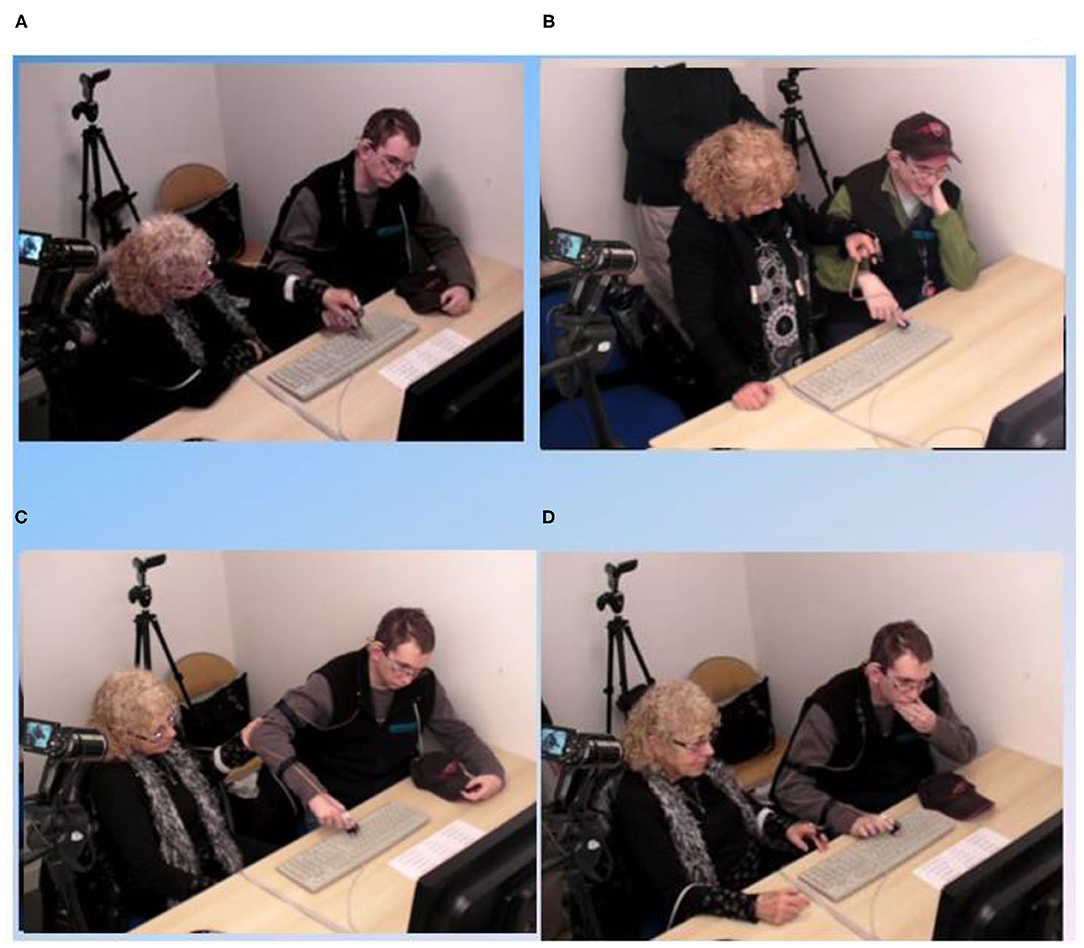
“Facilitated Communication” by Faure P, Legou T and Gepner B is licensed under CC BY-SA 4.0 

 .
.
Stop me if you’ve heard this one before: The New York Times has again casually endorsed facilitated communication, or FC, a relentlessly-discredited practice that plays on the desperation and credulousness of parents of severely disabled children. As in the past, they’ve done this while barely seeming to understand that they’re doing something controversial at all. The culprit this time is a review of the new novel Upward Bound “by” Woody Brown, a man with severe autism who has been nonverbal his entire life and dictated his book through FC, which is also the means through which he earned a masters degree and other remarkable feats. Brown, like so many others who have been “saved” through FC, was found to have all manner of remarkable intellectual abilities once someone else was “facilitating” his communication.
The review describes Brown “tapping letters on a board” while his mother interprets and voices the words. That is the textbook structure of FC: a disabled person who cannot otherwise communicate produces output while a facilitator mediates, guides, or stabilizes the process. Or so proponents claim. Without the facilitator, the disabled person is mute; with their guidance, they suddenly become remarkably verbally proficient, often learned and verbose. If you’re new to the FC debate, you should trust your skepticism: the fact that the mother has to be present and participating, the fact that Brown cannot manipulate the board without the mother’s involvement, the fact that he has never been subject to rigorous research that involves “message-passing” or “double-blind” tests … This is the inconvenient, damning reality.
Message passing, or double-blind, tests are simple and remarkably effective. Information is provided to both the disabled person and the facilitator, often in the form of pictures or individual words, with both the facilitator and the test subject receiving the same information some times and discordant information other times. That is to say, the disabled person and the facilitator will sometimes both be shown a star or a watermelon or a flower or a bird, while at other times one might get the star picture while the other gets the bird, etc. If the disabled person genuinely crafts their responses, this should be a trivially easy test to pass: the facilitated communication will produce the information that the disabled subject received. And yet very close to literally 100% of the time in rigorous research, across dozens of studies with thousands of combined attempts, interactions produce the information the facilitator received and not the information the disabled person received. Surveying the literature, the consistency of this finding is remarkable — and there is no coherent explanation for how this could happen if indeed FC results in messages being sent from a conscious and alert test subject. Instead, these findings are perfectly consistent with Occam’s razor and the assumption that the facilitator is the one speaking.
Thanks to this overwhelming body of research literature, professional societies have tended to be unusually blunt about FC. The American Speech-Language-Hearing Association, the leading professional body in this field, states unequivocally: “Facilitated Communication (FC) is a discredited technique that should not be used”. It continues: “There is no scientific evidence of the validity of FC, and there is extensive scientific evidence … that messages are authored by the ‘facilitator’ rather than the person with a disability”. This is not a marginal view; it reflects decades of careful studies across multiple countries. There are many other statements from relevant medical organizations and expert bodies that reach the same conclusion, which is to be expected, considering that the evidence points in only one direction. Are the facilitators deliberately engaging in fraud? No, it’s very likely that they’re being sincere, at least in the large majority of cases. The explanation is the ideomotor effect, the same unconscious motor influence that drives Ouija boards. The facilitator is not deliberately faking communication but unknowingly producing it, usually to satisfy their own desperate longing to connect with the disabled person.
So how did we get here? I guess the Times feels like it’s fine to smuggle in flagrant pseudoscience under the guise of a book review. Hey, it’s just a book review! But I’m afraid that claims of fact that appear in the paper’s pages are the paper’s responsibility, and this review represents a profound journalistic failure. The review treats FC as valid, when in fact FC has been exhaustively discredited for decades. In doing so, it does something worse than merely misinform; it participates in a harmful fiction that exploits vulnerable families and misrepresents disabled individuals. As I’ve said before, this issue is difficult to address in part because the families who fall for FC are so sympathetic. And the FC community goes to great lengths to enable this form of wishful thinking; they’ve created a number of superficially-different approaches to avoid scrutiny and defy the debunkings of the past, including avoiding the term “facilitated communication” itself. They now tend endorse tools like letter boards and techniques like “spelling”, which they claim are fundamentally different. But it’s all still FC, all still a matter of a verbal and cognitively-unimpaired adult “interpreting” the language of a severely disabled person and producing language that they’re consistently and conspicuously incapable of producing on their own.
The Korean War Week 93: Who Wants To Be President? – March 31, 1952
The Korean War by Indy Neidell
Published 31 Mar 2026A surprise announcement this week leaves the US wondering just who is going to run for President — the election is this fall. Whoever does run and win, it can’t help but have an impact on this war. As for what’s going on in the war, Operation Mixmaster winds up, having moved the US 1st Marine Division far to the west along the front lines. The operation was a success, but there are a host of new dangers to deal with in the new defenses. Operation Saturate goes into action- this is another aerial interdiction campaign against Communist logistics, but early results are disappointing, and the future composition of the South Korean armed forces because more and more an issue of contention.
00:00 Intro
00:46 Recap
01:14 Truman Won’t Run
07:04 Operation Mixmaster
11:04 Operation Saturate
13:17 Increase the ROK
16:32 Summary
16:46 Conclusion
(more…)
The fall of Rome and the rise of Islam
Gustavo Jalife points out that a work from nearly a century ago identified the rise of Islam as being far more disruptive to western civilization than the fall of the western Roman Empire (and the surge of Islamic power destroyed the Persian Empire and nearly toppled Constantinople as well):
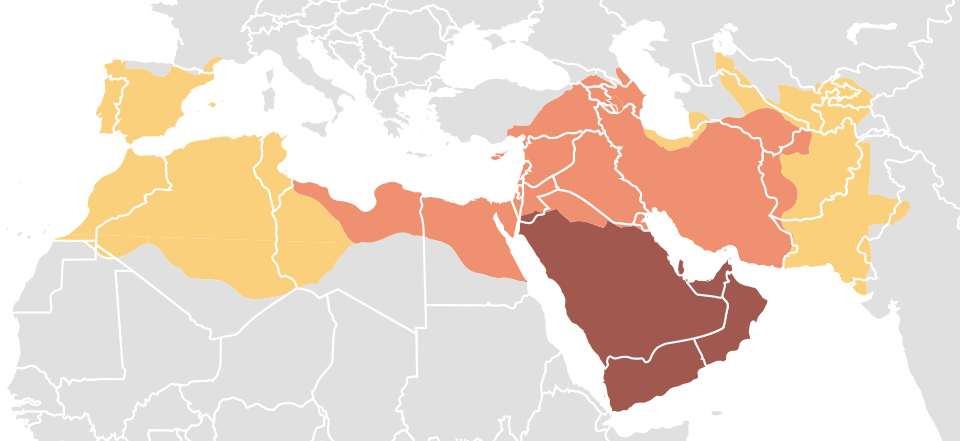
Expansion of the Caliphate: Mohammed, 622-632 (red), Rashidun Caliphate, 632-661 (orange), and the Umayyad Caliphate, 661-750 (yellow).
Wikimedia Commons.
In Mohammed and Charlemagne – posthumously published in 1937 – renowned historian Henri Pirenne (1862-1935) advanced a thesis at once simple and much contested: that the true rupture between Late Antiquity and the beginning of the Middle Ages was not the fall of Rome in the fifth century, as traditionally held, but the expansion of Islam in the seventh. The Germanic kingdoms, he argued, had preserved much of the Roman economic and cultural architecture. Trade across the Mediterranean continued; cities, though diminished, remained nodes in a wider network sustained by the circulation of goods and by administration. For the Romans, the mare nostrum was a highway rather than a barrier.
If a good article starts after it ends, one might say that a civilisation reveals itself most clearly not in its proclamations, but in the modification of its habits – when what was once assumed becomes contested. In such subtle alterations, Pirenne discerned the end of the ancient world.
With the Islamic expansion the greater part of the Mediterranean’s southern and eastern shores fell under Muslim control, from the Levant and Egypt to North Africa and the Iberian Peninsula. The sea was no longer a unified Roman basin, but a divided one. Authority and function shifted: the Mediterranean ceased to operate as a shared commercial zone. Long-distance trade dwindled, the flow of goods between East and West was disrupted and with it the urban and monetary life that depended upon it. Only then did Western Europe withdraw inward, shrinking into the medieval world as it is recognised today.
The argument has been debated, qualified, and revised. Yet its inner core endures: civilisations are sustained not merely by armies or laws, but by the invisible fibres of exchange – commercial, intellectual and cultural – that bind their parts together. Sever those threads and, without even the cut of a sword, a whole order may vanish into a rumour.
To draw a parallel with present-day Europe is to tread on disputed ground. The language of “invasion” is often employed with more heat than light; yet to deny that significant demographic and cultural changes are under way would be equally unhelpful. The question, then, is whether Pirenne’s model can illuminate what many believe is a tragedy without reducing it to a farce.
The spread of Islam in the seventh and eighth centuries was a series of military conquests. The Arab fleets that took North Africa and Spain, the armies that crossed into Gaul, and the long struggle for control of the Mediterranean were enterprises of war and empire. Contemporary migration into Europe, by contrast, occurs largely through civilian movement, legal and illegal. However, both historical processes demonstrate that massive migratory movements, whatever their specific nature, do not merely add numbers to a population; they introduce new networks, new loyalties, new values and new norms that eventually fracture the existing state of affairs.
Before the eighth century, the Mediterranean economy continues to function, vibrant and connected. After the eighth century, that system is shattered. The sea is closed. Trade disappears. Europe faces an empire whose only wealth is the land, where the movement of goods is reduced to a bare minimum. Far from advancing, society regresses.
Pirenne’s thesis gains thrust and edge in presenting the Islamic expansion as embodying a fundamental alteration in coexistence.
Generation Jones and the Temple of Boom(ers)
Wee Nips
Published 19 Sept 2025Generation Jones and the Temple of Boom(ers) explores the fascinating differences — and surprising overlaps — between Baby Boomers, Generation X, and the often-overlooked Generation Jones.
Were you too young for Woodstock but too old for grunge? Stuck between disco and Nirvana? You might just be a Joneser.
In this video, we’ll compare:
🎵 The cultural touchstones of Boomers, Gen X, and Jonesers
📉 The low points in history that shaped each generation’s outlook
💰 The economic conditions that defined their opportunities
🧠 The attitudes and stereotypes that still stick today
Generation Jones isn’t just a footnote — they’re the missing link between the optimism of the Boomers and the skepticism of Gen X.
0:00 Introduction
1:38 Definitions
2:42 Cultural Touchstones
3:38 Low Points in History
4:53 Economic Conditions
5:42 Social and Attitude Differences
6:38 Humorous Stereotypes
7:09 Overlaps and Connections
8:02 Closing
(more…)
QotD: “Colour-blind” casting
As a regular reader of this column, I have no doubt that you want to remain on the right side of history, and I imagine your instincts are to applaud anything that is annoying for conservatives, like diverse casting in historical dramas. Sometimes being an anti-racist can be hard work, but we don’t tell people to “do the work” for nothing.
First, we need to dispense with the “historical accuracy” argument. There are two ways to do this and the first is to say accuracy should play second fiddle to representation. This is apparently the Hilary Mantel argument. The Times says the Wolf Hall author blessed colour-blind casting before she died, saying that although it was difficult: “you’re in the realm of representation. I think we have to take on board the new thinking.” Everything in 21st Century Britain should reflect 21st Century Britain. We’re in year zero, and hence not employing non-white actors in a production made today, even though there were very few non-white people in sixteenth century England, is simply racist.
The second option is to straightforwardly argue that there were lots of Black and Brown people pottering around the court of Henry VIII, so the production is historically accurate. This is the BBC Horrible History approach. Were you there? Can you prove that it wasn’t full of People of Colour? And is it worth losing your job to do so?
I prefer to hold both of these arguments in my head at the same time. Too much consistency seems a bit right-wing.
Next we need to look at specifically who is being played. Thankfully, the “colour-blind casting” didn’t select any PoGMSTs (People of Global Majority Skin Tones) to play bad guys. This was both on purpose, because oppressed people cannot be bad, and it was also not on purpose, because otherwise it wouldn’t be colour-blind casting. Whichever one it was — and it was both — without PoGMSTs actors playing historic fictionalised evil people, we can avoid the completely random casting process being labelled as racist.
David Scullion, “People of Colour television”, The Critic, 2024-11-12.
March 31, 2026
Japan’s navy … uh, I mean the “Japan Maritime Self-Defense Force”
On Substack, Francis Turner discusses what serious countries do (so you know the topic isn’t anything to do with Canada), and part of the post is about the Japanese Navy Japan Maritime Self-Defense Force and its latest ship building program:

Last month Japan started work on its second ASEV (Aegis System Equipped Vessel), which should probably classed a Guided Missile Cruiser, though it is unclear if the C designation will be used (let’s face it Japan still calls its two “not really aircraft carriers, honest guv” aircraft carrying warships “Helicopter Destroyers”. Though apparently it plans to change that soon).
At 190m long and 25m broad, the ASEVs will be some of the largest non-aircraft carrier ships being built by anyone this century1 until the Trump battleships start construction. The Trump battleships are projected to be about 50% larger but they haven’t yet been funded let alone contracted. The USN’s Zumwalts are roughly the same size.
It isn’t just the size that is impressive, it is also the speed of construction. The ASEV as a concept showed up in ~2020 when Japan decided the land based Aegis Ashore program was a failure and cancelled it. In October 2024, after about four years, plans had been made, budget allocated and contracts awarded for the two ships. Construction of the first started last July (2025) and the second last month (February 2026). Construction time is estimated to be around three years, with the first delivered/commissioned in March 2028 and the second one year later. Why one year later and not six months earlier? My guess is that the reason is to incorporate lessons learned from sea trials and operating the first in the final construction stages of the second. This seems similar to the Izumo/Kaga construction a decade ago.
Put together and you have ships that will have gone from concept to contract award in 4 years and contract award to fully-functioning delivery in under 5 years — assuming there are no delays. That seems plausible, the Izumo and Kaga were built in about the same time frame, and stands in stark contrast to the procurement speed of the US Navy and any European navy. The first Zumwalt, for example took over 5 years to go from concept to start of construction and another 5+ from there to commissioning and then another 4 to full acceptance. The ASEVs are also expected to be a lot cheaper, costing around JPY400B or about US$2.5 billion for the initial version. There will undoubtedly be upgrades — e.g. drone defenses, laser or rail guns — and there are some new features compared to previous ships — the SPY7 radar from Lockheed Martin for example — but this is an evolution of existing Japanese and US Aegis destroyers rather than a brand new concept which helps explain why I am confident about the timeline and budget.
Although the ASEV’s primary role is missile defense, there is no reason why one might not, in the fullness of time, be loaded with offensive missiles such as the TLAM or antiship missiles. Indeed the Naval News article lists both as options:
Each vessel will feature a 128-cell Vertical Launch System (VLS) — significantly more than the 96 cells installed on Japan’s latest Aegis destroyers.
The VLS will be capable of launching:
– SM-3 Block IIA interceptors, jointly developed by Japan and the United States for ballistic missile defense
– SM-6 missiles, capable of engaging advanced aerial threats, including hypersonic glide vehicles
The ships will also support Japan’s emerging counterstrike capability.
Planned armament includes:
– the extended-range Type 12 anti-ship missile (ship-launched improved variant)
– the U.S.-made Tomahawk cruise missile
Is that TLAM in your launcher or are you pleased to see me?
Notably the Tomahawk capability has already been fitted to one of the Aegis destroyers this class is supposed to replace. A 128 cell ASEV firing TLAMs could be very unpleasant for Little Rocket Man; if it fired antiship missiles that could make a Chicom invasion of Taiwan pretty miserable just on its own. It would also make a phenomenal commerce raider / blockade enforcer if such roles were needed.
[Aside: Unlike some country’s missiles I’d be pretty confident that the Type 12 anti-ship missile will work well]
As CDR Salamander observed on X, the real question is why Japan doesn’t make a few more and sell them to countries/navies that struggle with procurement. And for that matter why it doesn’t make a couple more for itself. Perhaps it will. I figure there’s a couple of years before there will be yard space to build them so there’s no hurry to make that decision.
Russia’s Kirov class battlecruisers are larger but a) they were built in the 1970s/80s and b) only one is currently active (for some definition of active).

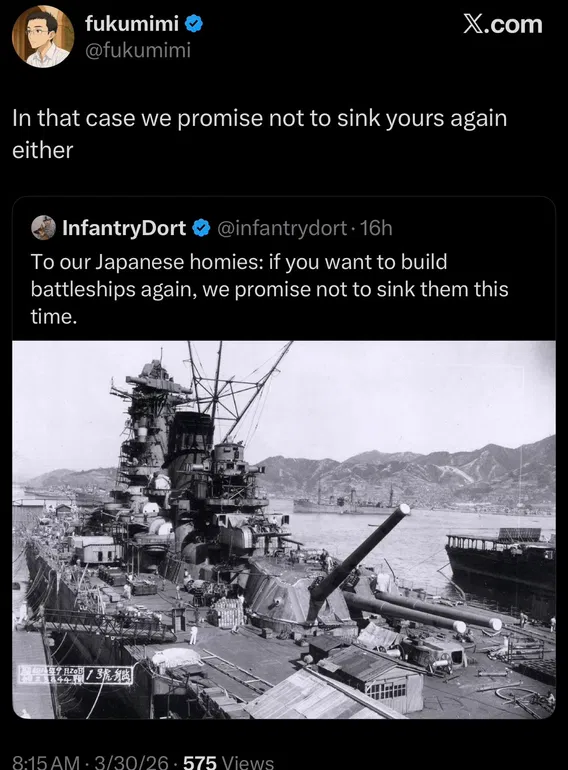
Japan’s decision to rebuild naval strength has been noted by others, too:
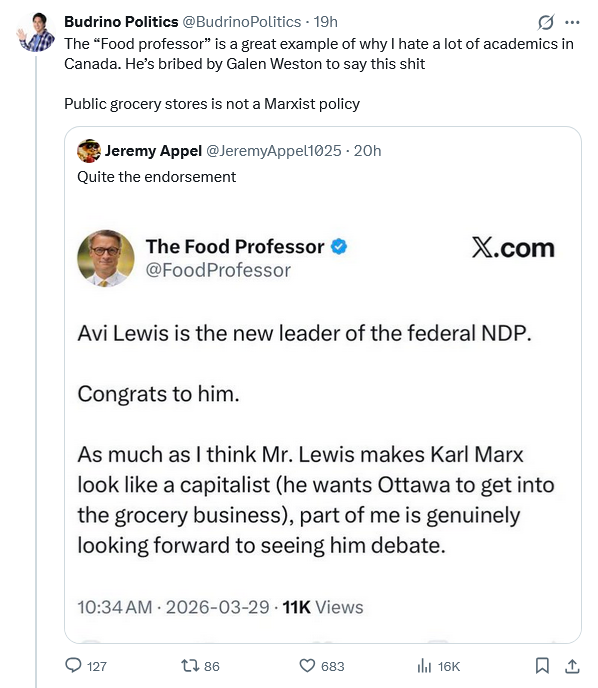
Reaction to Avi Lewis being elected federal NDP leader
On the social media site formerly known as Twitter, L. Wayne Mathison responds to an ill-informed snipe at @TheFoodProfessor for a post about Avi Lewis:
This take reads like someone who’s never had to meet a payroll or balance a ledger under real pressure.
Accusing the “Food Professor” of being bribed is just noise. No evidence, no numbers, just a conspiracy to avoid the actual argument. Classic move when the facts aren’t cooperating.
I ran a grocery business. Not a theory. Not a model. A real one. Thin margins, constant spoilage risk, price swings, labour costs, supplier pressure, and customers who notice every 10-cent increase. Grocery isn’t some gold mine. It’s a logistics grind with razor-thin profit.
Here’s the part people like this never mention:
Canada’s total grocery profits are roughly $6 billion. Spread that across 40 million people and you’re looking at maybe $12 a month per person if you wiped out every dollar of profit.So what’s the fantasy here?
Government steps in, runs stores “for the people”, eliminates profit… and somehow prices magically drop while efficiency improves?
Let’s test behaviour, not intentions.
What happens when you remove profit?
No incentive to optimize operations
No accountability for waste
Political hiring instead of performance hiring
Pricing driven by optics, not supply reality
Losses covered by taxpayers … meaning you, againYou don’t eliminate costs. You just hide them and move them.
I lived through high interest rates north of 20%, carried customer debt, and still had to make the numbers work. Government doesn’t operate under that discipline. It can fail indefinitely and call it policy.
Public grocery isn’t “not Marxist”. It’s not even that sophisticated. It’s just naive.
The real issue isn’t ideology. It’s a complete lack of understanding of how incentives drive outcomes.
You don’t fix affordability by replacing people who have to be efficient with a system that doesn’t.
You fix it by increasing competition, reducing regulatory drag, and letting supply actually respond.
Everything else is theatre.
In the National Post, Kelly McParland outlines the scale of challenge Lewis is facing to make the NDP electorally viable again:

Thumbnail of one of Avi Lewis’s campaign shorts
After two weeks on the road [Jagmeet Singh] finally conceded to reality, allowing that while “I would be honoured to serve as prime minister … I don’t want to presuppose the outcome of the election”.
Maybe Lewis should start straight off with that line, since choosing him as leader saves the party from pretending it expects to find itself in power. “The return of the NDP starts today!” Lewis declared in his victory speech, but as the most out-there ideologue of the candidates he defeated he’ll have a harder time convincing ordinary Canadians than he did winning over his fourth-place party. A film-maker and activist, he’s not just left-wing, but way off in a universe of his own.
His ambitions are dazzling: a Canada powered entirely by renewable energy in which everyone gets a guaranteed income, vast infrastructure projects are built to sustain the environment, farmers produce healthier, affordable, cleaner food while homebuilders concentrate on energy-efficient homes for lower income groups. All this paid for by an economy that somehow remains vibrant while its vital energy industry is crippled, jobs are lost, taxes are raised, royalties are increased, government spending balloons, the carbon tax is re-introduced and “the rich” are somehow found to have plenty of excess revenue to cover the costs.
Voters who continue to back the NDP will now know exactly what they’re casting their ballots for. That wasn’t always clear under previous leaders. Thomas Mulcair didn’t hate trade deals or pipelines enough to satisfy party stalwarts deeply hostile to both. To the unyielding, Singh did a deal with the devil when he agreed to prop up Justin Trudeau’s Liberals, even if the decision succeeded in squeezing out some policy victories.
Small victories aren’t in Lewis’s lexicon. He wants a revolution. “This is more than a rigged economy, it is a war on working people”, he declared on Sunday. “It is immoral, it is unCanadian and we cannot let it stand.”
This Recipe Took 3 Years … Ninja Kikatsugan
Tasting History with Max Miller
Published 23 Sept 2025Very bitter, very sake-flavored balls that include ginseng, coix seeds, and licorice
City/Region: Japan
Time Period: 1676Much like cowboys, pirates, and knights, ninja have been fictionalized to be a far cry from the intelligence gathering and sabotage experts of history. The term “ninja” didn’t even become popular until the mid-20th century.
Even the historical text I’m using here, the Bansenshukai, has been called into question. Because it was written over the period of several centuries, often by people who weren’t even alive during the period when ninja, or shinobi, were active, who knows if it’s an accurate portrayal of their tools and methods.
If this recipe is accurate, I feel bad for the people who had to eat them. They’re really bitter with an overwhelming sake flavor that isn’t pleasant. Really, I wouldn’t recommend making these; they’re not worth the 3 year time investment, and hyōrōgan are a much tastier ninja survival food.
Kikatsugan
10 ryō Asiatic ginseng
20 ryō Buckweat flour
20 ryō Millet Flour
20 ryō Yam
1 ryō Liquorice
10 ryō Coix seed
20 ryō Rice flour
Grind this into a powder, soak it in three shō of sake for three years until it has dried. Afterward, roll it into balls the size of peach pits.
Eating three of these daily will keep you healthy even when you have nothing else to eat.
Eating three will prevent both mental and physical fatigue.— Bansenshukai, 1676
QotD: Slavery
It is impolite to say of one’s spouse or one’s debtor that they are part of one’s property. With slaves, politeness is unnecessary. (Slavery and Social Death, P.22)
What makes a slave different from a wife, professional player or even a serf is that a slave is in a state of social death: they have no claims of social connection that their master (or anyone else) need pay attention to beyond that to the master.
This is not to say slaves have no legal personality — all slave systems are very well aware that slaves are people. Rather, the relationship of exclusive domination was such that they had no connections that anyone had any obligation to respect other than to their master.
Other individuals might be in relationships of servitude under a master but still retained connections with others subject to presumptive respect. This was true even of serfs and is what distinguishes various forms of serfdom from slavery. Even under Russian serfdom, a serf marriage was a legally recognised marriage; a serf father had legally recognised authority over his family; a serf could legally own property. Once somebody had suffered the social death of slavery, they were utterly bereft of any such connections.
Both serf and slave lacked any choice of master or about the nature and content of that mastery: that is what makes both forms of labour bondage. Nevertheless, a serf had legally recognised relationships, and choices about them, that a slave simply did not.
Slaves are violently dominated: the whip or equivalent has been a control device in every known system of slavery. They are natally alienated: both from from any (positive) standing from their ancestors or claims over their descendants. They are culturally degraded: whether in naming, clothing, hair style, marks on the body or required acts.
All this serves to establish, mark and reinforce the relationship of domination. For that level of domination is required to turn one human into the possession, and so the property, of another. (Karl Marx’s talk of “wage slave” is not only rhetorical excess, it is contemptible rhetorical excess: a manifestation of his comprehensive mischaracterisation of commerce.)
None of these key features of domination require the acknowledgement of the wider society. There are likely slaves in every major city in the world, even in economically highly developed democracies with the rule of law.
While it can be helpful to have your relationship of domination over a slave recognised by others, the crucial thing is the acknowledgment by the slave. Slavery is a relationship between people about an owned thing, where the slave acknowledges that they are the owned thing. This is a key element in the humiliation of slavery.
The mechanisms of domination are, however, obviously much more powerful if they are embedded in wider institutional acceptance of slavery. Where there is no such wider acknowledgement, then even greater isolation from the wider society is required to establish and maintain the relationship of domination.
In social systems that openly incorporate slaveholding, a slave’s state of domination, of the social nullity of no independent connection, normally meant that they could not be a formally recognised owner of property: that they could not be a legal owner of property, not a person who could have property. They lacked the sort of legal standing that could legally own things.
To do so would require the slave to have social and legal connections, beyond the claims and decisions of their master, that others are bound to accept or respect, and that is precisely what slavery, as a structure of domination of one by other, denies. The Ahaggar Tuaregs express this feature of slavery very directly, holding that:
without the master the slave does not exist, and he is only socializable through his master. (Slavery and Social Death, P.4.)
Slavery is, always and everywhere, a created relationship of dominion. As the Kel Gress group of the Tuareg say:
All persons are created by God, the slave is created by the Tuareg. (Slavery and Social Death, P.4)
In a society that accepts slavery, the conventions of acknowledged possession will operate for the master about the slave in a far more complete way than any other claim of property in another human. If other mechanisms of delegated control were sufficiently absent or attenuated, then slaves became preferred agents. The use of slaves as commercial agents was surprisingly common.
In societies dominated by kin-groups, slaves could make preferred warriors or officials precisely because they had no other connection entitled to presumptive respect than that to their master — hence the slave warriors of Greater Middle Eastern (Morocco to Pakistan) Islam.
The danger of kin-groups is that they readily colonise social institutions — rulers come and go, the kin-group is forever. Slave warriors and officials were a solution to that problem in societies where suppression of kin-groups was not a practicable option.
Imperial China found kin-groups useful for economising on administrative costs and Emperors used distance — officials could not be assigned to their home counties — and rotation of officials to inhibit kin-group colonisation of their administrations. Even so, much of the appeal of eunuchs to Emperors was precisely the presumed severing of kin-group ties. (They also had the advantage of being the only males, other than the Emperor, permitted overnight residence in the imperial palace.)
Nevertheless, slavery can exist without such wider acknowledgement by laws. For turning someone into a slave requires forcing them to acknowledge the relationship of domination to the point of being a possession of another.
So, slavery is not, at its core, a matter of property but of domination. Domination to the extent that the conventions of acknowledged possession can apply to slaves entire. Slaves can be turned into property without any other connections with presumptive respect or standing. Yet, even a slave could be a beneficial participant in the conventions of acknowledged possession.
For, so powerfully useful are the conventions of acknowledged possession, that masters have, surprisingly often, allowed slaves to also be accepted beneficiaries of the conventions of acknowledged possession. To be owners of property in practice, if not in law. This was done to lessen the burdens of control, the cost of subsistence or to enable the slave to buy their freedom. The Romans acknowledged this through the concept of peculium.
The Romans, being relentlessly logical in such matters, held a slave to be an owned animal. That is, a human on which such a comprehensive social death has been imposed that they are the legal equivalent of a domesticated animal. (Yet, somewhat awkwardly, still people.)
Just as you can geld an animal, you can castrate a slave. Despite the Islamic slave trade being on a comparable scale to, and lasting centuries longer than, the Transatlantic slave trade, there is no ex-slave diaspora within Islam, unlike the Americas. All children of a Muslim father are members of the Muslim community while so many of the male slaves were castrated.
The Roman concept of property as dominium, as absolute ownership of a thing, may have transferred the domination of slavery into a more general conception of property so as to absolutely separate slave (who suffers dominium) from citizen (who possesses it). Rome ran one of the most open slave systems in human history, such that a freed slave could become a citizen. This necessitated particularly sharp legal delineation of the difference between slave and citizen.
Such dominion is not a relationship between a person and thing (despite claims to the contrary) for it is still setting up a relationship with others regarding what is owned, remembering that the crucial thing in property is not mine! but yours!: the acknowledgement by others of possession and so the right-to-decide. Hence the importance of the signals of possession for slavery.
The Greeks also had citizenship and — particularly in the case of Athens — mass slavery. Greek citizenship was, however, far more exclusive than Roman citizenship and the existence of metis, resident non-citizens, further separated citizen from slave. The Greek city-states also operated much more convention-based, and distinctly less developed, laws than did Rome. If law is a matter of such abstraction as is needed to establish functional differences, and no more, the Romans perhaps felt more need to establish that a citizen could possess dominion.
Conversely, as Romans were not moral universalists, they felt no need to generate some justificatory abstraction about slavery: a slave was simply a loser. If a slave later became a Roman citizen, then, congratulations to them, they had become a winner (and few cultures have worshipped success quite as relentlessly as did the Romans). Hence freedmen would put their status as freedman on their tombstones.
Aristotle — as his moral theory did tend towards moral universalism — came up with a clumsy justificatory abstraction (natural slaves) as to why slaves could be morally degraded. Indeed, the combination of moral universalism and slavery invariably led to justifications that held some essential flaw in the slave justified their domination by others. A process much easier to manage if slaves were from a different continental region, so with distinguishing physical markers of their continental origin.
The Romans had no need of such Just-So stories to justify slavery and did not generate them. Muslims and Christians are moral universalists and so did manifest the need to tell such Just-So stories about enslaved groups: why children of God were being enslaved. (Because that is what they were fit for, clearly.)
Islamic writers generated the first major discourses of skin-colour racism, applying them to the populations they enslaved. In their case, generating both anti-black and anti-white racism, as they systematically enslaved both Sub-Saharan Africans and Europeans, particularly Eastern Europeans. It also led to some awkward rationalisations as to why the inhabitants of South Asia could have dark skins but not suffer from any deemed inherent inferiority.
Just as slavery continues, modern totalitarian Party-States have used forced labour — labour bondage — on massive scales, starting with the Soviet Union and then wartime Nazi Germany. Such continues to the present day in CCP China — infamously of the Uyghurs — and the Kim Family Regime of North Korea. From 1940 to 1956, the Soviet Union banned workers moving jobs without the permission of their existing workforce, the key element of serfdom.
Lorenzo Warby, “Owning people, owning animals, controlling attributes”, Lorenzo from Oz, 2025-12-25.
March 30, 2026
Canada’s official bilingualism benefits only one of the two “founding” peoples
Canada has been officially a bilingual country for decades, but it hasn’t made most Canadians capable of effective use of both official languages, especially in the western half of the country. Instead, with the imposition of mandatory bilingualism for most federal civil service roles, it’s functioned as a strong bias in favour of bilingual Quebeckers and against Canadians from majority anglophone provinces. Given that government jobs have been growing at a far faster rate than private-sector jobs, this injustice is fuelling anger and support for separatism in the west:
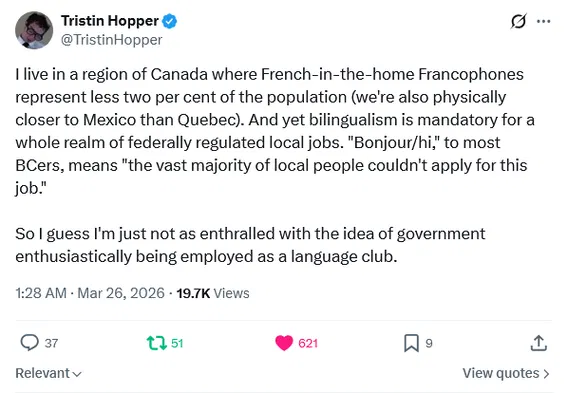
This is why French Immersion schools function as “private schools for the middle class” … it provides access to lucrative and secure government jobs for the children of the bourgeoisie, excluding most working class kids.
It’s a uniquely ridiculous Canadian story.
Two Canadian pilots were killed in a freak accident at LaGuardia airport and yet Canadian news coverage has been dominated by outrage over the fact that the CEO of the pilots’ airline, Michael Rousseau of Air Canada, released a condolence video that had French captions but no spoken French!
Though one of the two dead pilots was French Canadian, near as I can tell, none of the anger at Rousseau’s video is coming from anyone associated with the victims themselves, but rather the Canadian political class and punditocracy. Prime Minister Carney denounced the video for lacking “judgment” and “compassion,” and a bunch of other politicians have said similar things, particularly in Quebec, where the legislature passed a unanimous motion demanding Rousseau’s resignation. There have been a ton of angry anti-Rousseau editorials in all the leading Canadian papers.
It is obviously a highly performative, almost ritualistic, almost religious outrage occurring mostly so members of the Canadian establishment can collectively affirm one of their shibboleths: the country’s elite should be bilingual.
On social media, however, the reaction has been quite different, with ordinary Canadians expressing frustration and annoyance at the distasteful nature of it all. Two men are dead and this is what our betters are yapping about? An old debate — long stigmatized, but never successfully suppressed — has resurfaced: why are we doing this bilingualism thing at all?
I’ve been arguing against the Canadian elite’s cult of official bilingualism for a very long time. To the extent I have a controversial reputation in Canada and don’t get invited on things very much, it’s in large part because I’m very outspoken on this issue, which is often treated as the one line you’re not allowed to cross. Hating trans people or saying October 7 wasn’t so bad … those are edgy opinions that can be forgiven. Questioning bilingualism is a much more unforgivably toxic take, because it’s seen as offending Quebeckers, and a lot of elite Canada wants to be on Quebec’s good side.
But I also feel this is one issue where I’m very, very obviously in the right, and where I have the least self-doubt. There aren’t many issues where I feel I could hold my own in some Jubilee-style “Surrounded” debate bro type thing, but this is one.
So, with that being said, let me attempt to engage with some of the arguments you see made in favor of not just official bilingualism, but the idea of Canada requiring a bilingual ruling class in particular.
Canada is a bilingual country, so it makes sense for the Canadian government, and other Canadian national institutions, to provide nationwide services in both French and English.
Canada is a bilingual country by law, but not by fact. Canada is in fact an overwhelmingly English-speaking country. According to the 2021 census, 87% of Canadians can speak English while 11% can speak only French and about 2% can speak neither. Of this four million Canadians who can only speak French, 96% are located in the province of Quebec. Excluding Quebec, the rate of Canadians who can speak English rises to 97.8%.
It’s sensible for things in Quebec to function mostly in the French language, given about 94% of people in the province can speak it. It’s sensible for things outside of Quebec to operate mostly in English for the same reason. In both Quebec and the rest of Canada there is a very small minority of people, mostly in urban centers, who cannot speak the dominant language of where they live, so it’s reasonable for accommodations to be made for their needs on a case-by-case, community-by-community basis.
What is decidedly not reasonable, however, is to blindly organize all public (and in some cases, private) operations in this country as if there exists some substantial unilingual French-speaking minority everywhere from Newfoundland to Nunavut that is helpless without services specifically tailored to them — a minority in need of French-speaking receptionists and clerks and cops and teachers and librarians and journalists and guides and managers and lawyers and judges and HR departments and all the rest, all accessible at all times, anywhere in Canada.
For Canada’s service sector to go above and beyond in seeking to accommodate the needs of a unilingual French population in provinces and territories outside of Quebec that either barely exists or is substantially overshadowed by other linguistic minorities is to engage in a preposterous misallocation of resources simply to pay tribute to a bilingual fantasy version of Canada that’s never actually existed.
Net Zero or mass immigration, pick one (or better, pick neither)
Lorenzo Warby points out the blindingly obvious (to anyone with common sense) fact that the top two pet projects of western transnationalist elites — Net Zero and mass third-world immigration — are in direct conflict with one another. But rather than choosing one form of societal suicide over the other, the healthy alternative is to absolutely reject both:
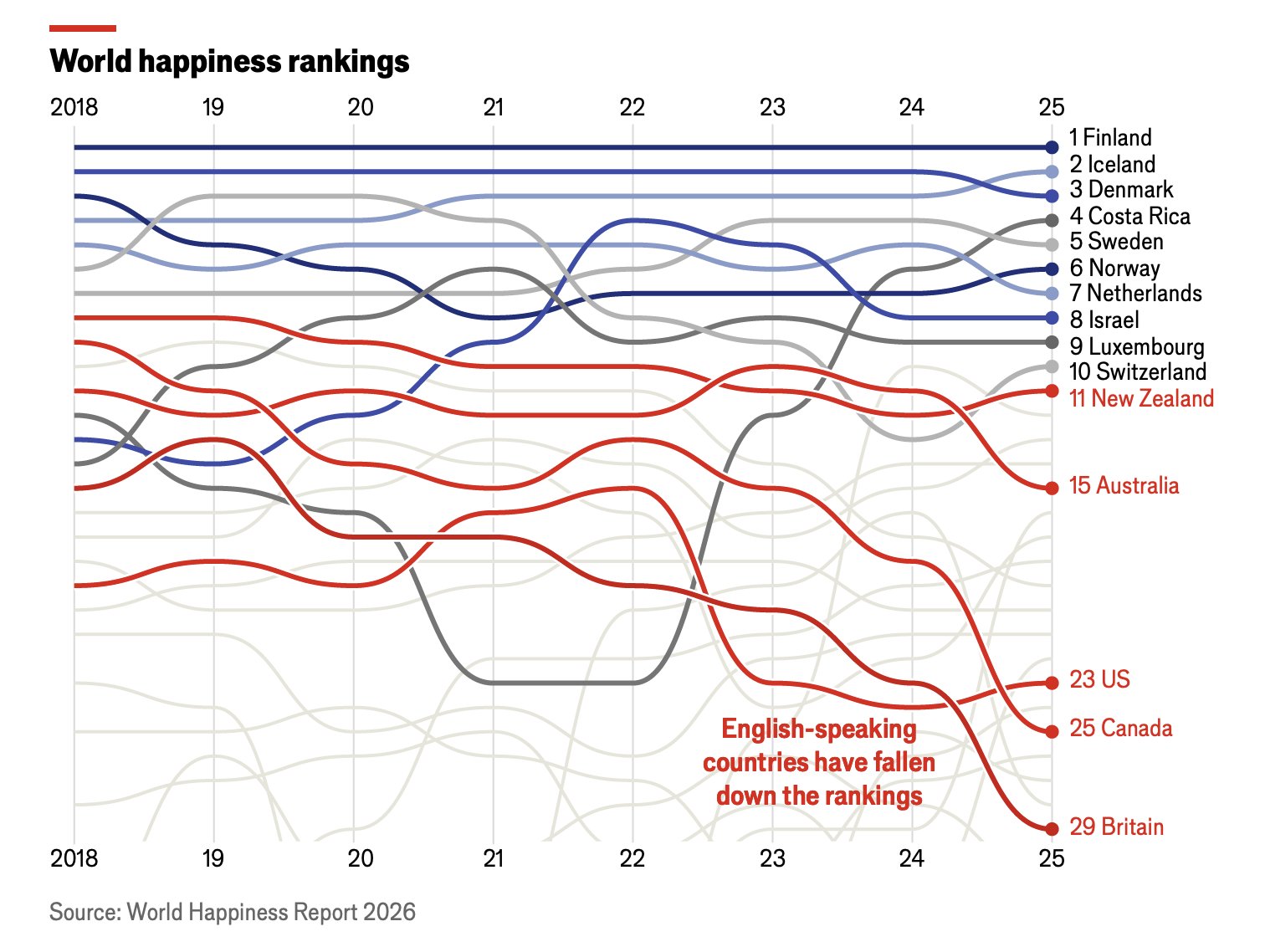
Culturally more homogeneous democracies are happier than more culturally diverse democracies. Also, in the Anglophone countries, where the centre-right won the most recent national election, happiness went up slightly. Where the centre-left won the most recent national election, happiness went down noticeably.
Australia is the latest developed democracy to experience conventional centre-right politics being threatened by a national populist surge. Just as country-club Republicans were Trumped, Gaullists were Le Penned, Forza Italia was Melonied, and the Tories are being Faraged, so the Liberal-National Party Coalition in Australia is getting Hansoned.
What Australia has in common with the pattern in the UK, and the rise of AfD (Alternative for Deutschland) in Germany, is the combination of Net Zero (or equivalent) with mass immigration leading to a national populist surge.
National populism well predates Net Zero. It does not predate the adoption of policies of elite display and elite benefit, particularly regarding immigration. The combination of Net Zero with mass immigration is, however, particularly conducive to surges electoral support for national populism, as we can see in the UK, Germany and now Australia.
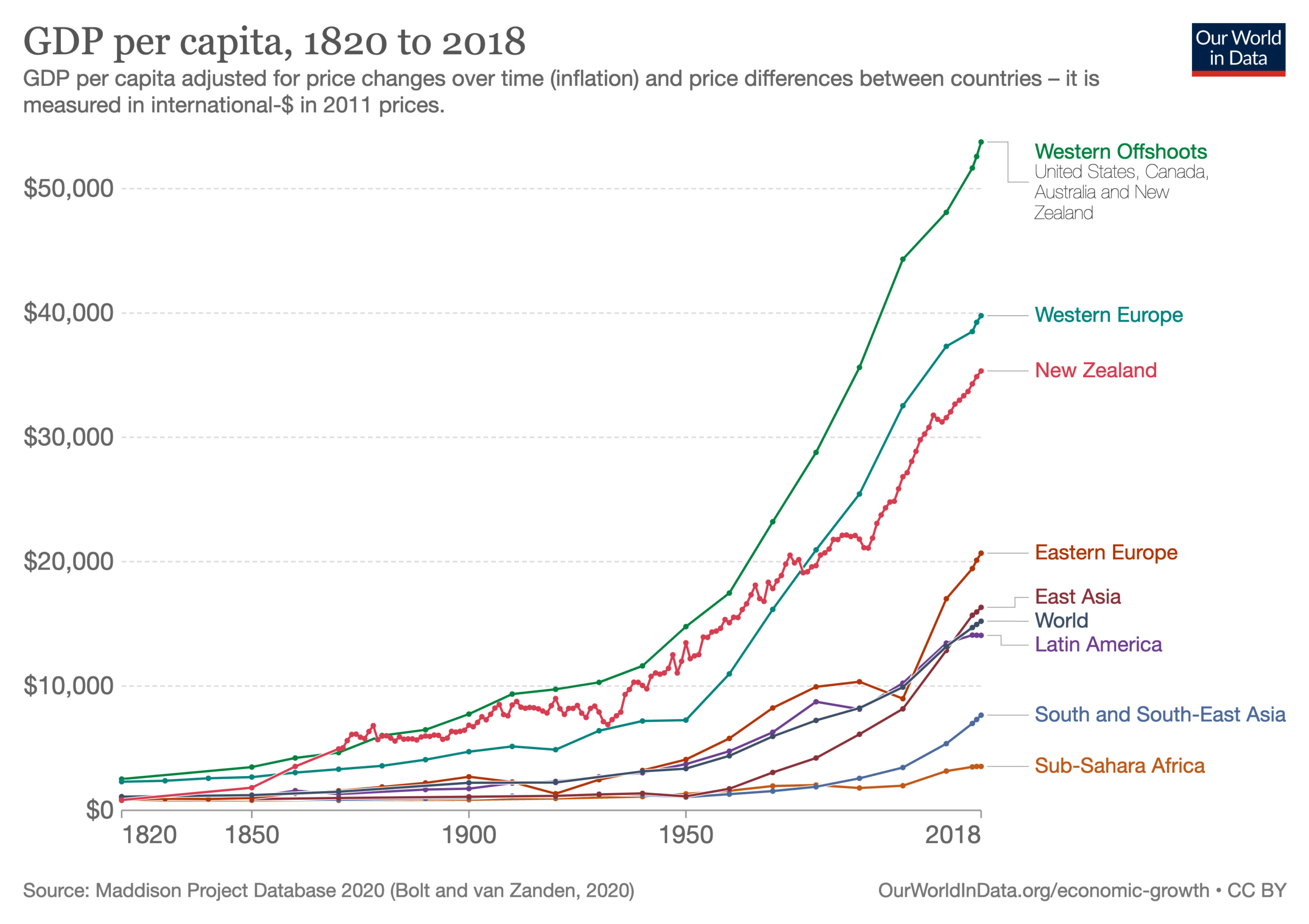
It is not hard to see why. Mass prosperity rests on cheap energy: that is much more important than, for instance, free trade. The Industrial Revolution is really the Mass Access To Cheap Energy Revolution. It is that access that is above all else responsible for The Great Enrichment.
As economic historian Jack Goldstone notes:
by 1850 the average English person has at his or her disposal more than ten times the amount of moveable, deployable fuel energy per person used by the rest of the world’s population.
Net Zero means raising the price of energy, thereby narrowing access to it, and, in particular, narrowing the range of economic activity that is commercially sustainable. Even without increasing the population, that will increase contestation over resources.
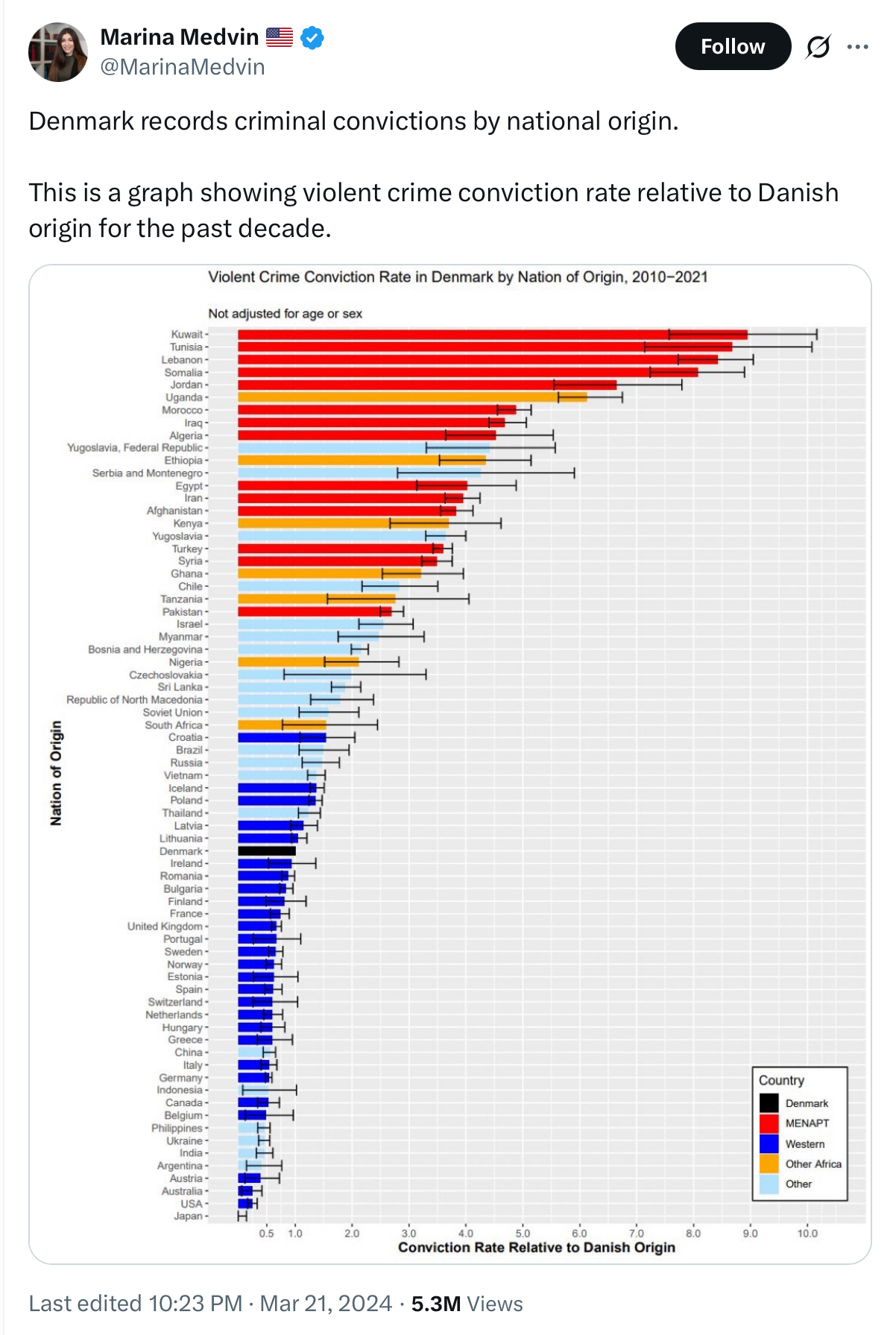
Add mass immigration to the mix, and that contestation becomes much worse. All the experienced costs of mass immigration — higher rents and house prices; increased congestion; downward pressure on wages and increased fiscal stress (if importing significant numbers of low-capital/skill immigrants); downward pressure on social trust and corrosive effects on the norms and rules that underpin institutions (if importing lots of people from very different cultures); increased crime (if importing significant numbers of people from higher crime cultures) — are then magnified.
Canada’s immigration fraud system
As Alexander Brown points out, “the purpose of a system is what it does”, and Canada’s immigration system produces vast amounts of fraudulent immigrants with only token attempts to detect and punish it. So Canada actually has an Immigration Fraud System, because that is what it does:

Let’s be clear about immigration fraud.
It started at the top. It was on purpose. And it’s still happening on purpose.
After a week of damning reports, and even a craven disregard for a return to decency, it has become abundantly clear that the government’s much-touted “reforms” are more about managing political perception than fixing a broken system. Behind the rhetoric lies a reality of widespread fraud, a continued lack of oversight, and an immigration department which has lost even greater control of its own bastardized mandate.
One of the most glaring failures has been the confirmed explosion of fraud within the international student program. Earlier this week, a scathing report from the Auditor General revealed that the IRCC failed to investigate the vast majority of cases flagged for potential fraud or non-compliance. Out of 153,000 cases identified in 2023 and 2024, only about 4,000 investigations were actually launched — a measly 2.6%. Even more troubling, 40% of these investigations were simply dropped because the students didn’t bother to respond to emails.
Speak to industry insiders and they’ll tell you that a “pay-to-play” market ran rampant between the years of 2021-2024, almost entirely on the basis of an understanding that fraudulent letters of acceptance, through equally dodgy institutions, would not be investigated through official immigration channels.
Let us not forget, even Ontario Premier Doug Ford touted this unvetted explosion — the worst policy decision in our nation’s history — as a success story. And yes, his office assisted in building for Conestoga, the worst offender of all the nation’s illegitimate institutions.
This culture of non-enforcement extends to the asylum system, which has seen a massive surge in claims. Since 2015, the backlog of refugee claimants has grown by a staggering 2,900%. While the government speaks of protecting the “vulnerable,” critics (read: normal people with morals and scruples) point out that the system is being exploited by those using it as a legal strategy to stall their removal from Canada. International students have spammed asylum claims after striking out in the labour force, making the trend so obvious that even then-immigration minister Marc Miller admitted it “[didn’t] smell good.”
Record levels of asylum fraud, in the six figures, is no mere matter of paperwork. The programme has become the safe haven for serial extortionists, varying degrees of triggermen from the Indian subcontinent, and those who have exploited a key loophole in the Safe Third Country Agreement: Canadian judges no longer care to enforce the law.
UOTCAF – EP 001 – The Royal Canadian Regiment – SWG
Stormwalker Group
Published 24 Oct 2025Dive into the rich legacy of the Royal Canadian Regiment (RCR) in the premiere episode of “Units of the CAF”, hosted by ex-reservist Mario Gaudet.
This 15-minute narration explores the RCR’s origins in 1883 as Canada’s first permanent infantry unit, the symbolism of their iconic “VRI” cap badge, unique uniform features, and their heroic battles from the North-West Rebellion to Afghanistan. We also spotlight some of the regiment’s most decorated soldiers.
Whether you’re a history buff, military enthusiast, or proud Canadian, this series honors the sacrifices and traditions of the Canadian Armed Forces.
(more…)
QotD: The Revenge of the Archaeologists
It is thus relevant that over the past half-century or so, it has so happened that effectively all ancient historians have had to develop a strong grasp of archaeological data; we don’t all necessarily learn to do the excavation work, of course (that’s what archaeologists do), but pretty much all ancient historians at this point are going to have to be able to read a site or artifact report as well as have a good theoretical grasp of what kinds of questions archaeology can be used to answer and how it can be used to answer those questions. This happened in ancient history in particular for two reasons: first, archaeology was a field effectively invented to better understand the classical past (which is now of course also used to understand the past in other periods and places) so it has been at work the longest there, but also because the sources for ancient history are so few. As I like to say, the problem for the modern historian is taking a sip of meaning from the fire-hose of evidence they have; but the challenge of an ancient historian is finding water in the desert. Archaeological data was a sudden, working well in that desert and much of the last two decades of ancient history has been built around it. Other fields of history are still processing their much larger quantity of texts; why dig so deep a well when you live next to a running river?
The result, in ancient history, has been what I tend to refer to as “the revenge of the archaeologists”. Not, mind you, revenge on medievalists, but in fact revenge on a very specific ancient historian and classicist, Moses Finley. Moses Finley was, from the 1950s to the 1980s, one of the most prominent classicists and his work touched on many fields, including the study of the ancient economy. Finley, writing in the 1960s was generally skeptical of the ability of archaeology to provide useful answers about the ancient economy (he preferred to understand the question by probing the mentalities of the Greek and Roman elite). Archaeology, Finley thought, was frequently over-interpreted and could never give a representative sample anyway; as he quipped in his 1965 article “Technical Innovation and Economic Progress in the Ancient World”, “we are too often victims of that great curse of archaeology, the indestructibility of pots”, a line for which, as far as I can tell, he is still quite unforgiven by some archaeologists.
As if in response, the archaeologists have spent the subsequent almost-six-decades proving again and again the tremendous value of their discipline by, among other things, utterly burying Finley’s The Ancient Economy (1973) under a mountain of archaeological data. It turns out the mentalités of aristocrats who largely hated merchants were not a good barometer of the activities of those merchants.
But you may now guess how this is going to play out in the discussion of Late Antiquity. The ancient historians come to the question ready to think in archaeological terms and ask what archaeological data can do to clear up these questions. Scholars of Late Antiquity trained as medievalists on the other hand, may or may not be well versed in archaeological methods or data (to be clear, some medievalists very much are versed, including prominent voices on the “change and continuity” side of this debate! But it is also very possible to be a “pure text” medievalist in a way that I don’t think I know a “pure text” ancient historian younger than sixty) because their field has not been forced, by dint of the paucity of sources, to revolve so heavily around archaeological data and because the archaeological data on the Middle Ages is not yet as voluminous as that on Classical Antiquity.
As I noted in the first post, beginning in the 1970s, what James O’Donnell calls the “reformation in Late Antique studies” launched a long overdue reassessment of Late Antiquity and the impact of the Fall of Rome – what we’ve called the “change and continuity” argument. I bring up all of this to note that the “counter-reformation” – what we’re calling the “decline and fall” argument – that really emerges beginning in the 90s is in many ways an extension of the “revenge of the archaeologists” in Classical studies (and especially the ancient economy) into the field of Late Antiquity. Indeed some of the scholars are the same (e.g. Willem Jongman) and many of them enter the debate on Late Antiquity as an extension of the debate about the Roman economy (in part demanding that “change and continuity” Late Antique scholars acknowledge things now generally considered “proved” by ancient historians about the earlier Roman economy).
In my own experience, particularly in more informal conversations, the methodological difference that interaction creates between ancient historians – for whom it has long been almost entirely settled that in a “fight” between archaeological evidence and effectively any other kind, the archaeological evidence “wins” – and medievalists for whom archaeology is a much less central part of their method (in part because their textual sources are more extensive) can lead to situations where the two sides of the debate talk past each other.
But when it comes to questions of demographics, economics and the conditions of life for the sort of people who rarely figure in our sources, archaeological evidence – although it is often incomplete and hard to interpret – offers the possibility of decisive answers to questions that otherwise would have to live entirely within the realm of speculation.
Bret Devereaux, “Collections: Rome: Decline and Fall? Part III: Things”, A Collection of Unmitigated Pedantry, 2022-02-11.


