
The first function aircraft were put to in WWI was reconnaissance. In 1914, that might mean locating the enemy in a fast-moving battlefield, but as soon as the trench stalemate set in, reconnaissance mostly meant identifying enemy buildups along the line and – still more importantly – serving as spotters for artillery. It wasn’t a huge cognitive leap to go from having aircraft which identified targets for the artillery to thinking that the aircraft could be the artillery. But as with tanks, the technical limitations of the platforms in use meant that actually meaningful close air support was still two decades away when the war ended. The rapid development of aircraft in these early days means that there is a truly bewildering array of aircraft designs in use during the war, but the Farman F.50 is a good sample for what the most advanced bombers in common use looked like towards the war’s end. It carried a maximum of eight 44kg (totalling 352kg) bombs under the wings, which were dropped unguided. With a maximum speed of less than 100mph and a service ceiling under 5000m, it was also an extremely vulnerable platform: fragile, slow and with a relatively low flight ceiling. The French mainly used bombers at night for this reason.
But how much airpower does it take to really move a division out of position? In 1944, at the start of Operation Cobra as part of the Normandy breakout, it was necessary for US forces to move the powerful armored division Panzer Lehr out of its prepared positions outside of St. Lo. Over the course of an hour and a half, the U.S. Eighth Air Force hit Panzer Lehr with approximately three thousand aircraft, including 1,800 heavy bombers (each of which might have had bomb-loads of c. 2-3,500kg; the attack would have been the equivalent of about 13,000 Farman F.50s (of which only a hundred or so were built!)). By this point, even medium bombers carried bomb loads in the thousands of pounds, like the B-25 Mitchell medium bomber, with a bomb load of 3000lbs (1360kg). This was followed by a hurricane artillery barrage! Despite this almost absurdly awesome amount of firepower (which, to be clear, inflicted tremendous damage; by the end of Operation Cobra, Panzer Lehr – the heaviest and most powerful Panzer division in the west – had effectively ceased to exist), Panzer Lehr, badly weakened was still very capable of resisting and had to be pushed out of position by ground attack over the next three days.
Needless to say, nothing on offer in 1918 or for a decade or more after, was prepared to offer that kind of offensive potential from the air. That kind of assault would have required many thousands of aircraft with capabilities far exceeding what even the best late-war WWI bombers could do. Once again, while close air support doctrine was developed with one eye on the trench stalemate and the role airpower could play in facilitating a breakthrough and restoring maneuver (either by blasting the breakthrough or – as in Soviet Deep Battle doctrine – engaging enemy rear echelon units to bog down reinforcements). But the technology wasn’t anywhere near the decisive point by 1918. Instead, the most important thing aircraft could do was spot for the artillery, which is mostly what aircraft continued to do, even in late 1918.
Bret Devereaux, “Collections: No Man’s Land, Part II: Breaking the Stalemate”, A Collection of Unmitigated Pedantry, 2021-09-24.
May 28, 2022
QotD: Breaking the trench stalemate with tactical air power
May 27, 2022
Minoru Yamasaki and the Pruitt–Igoe urban housing project
Joseph Kast recounts the story of a post-war government scheme to demolish slums, re-house the slum-dwellers in a massive public housing project and the architect whose career was forever blighted by the failure of the design:
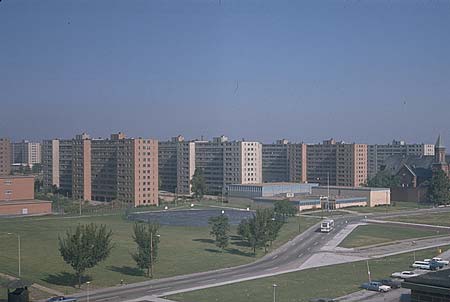
An undated overview of some of the 33 buildings of the Pruitt-Igoe complex in St. Louis, Missouri. Designed by Japanese-American architect Minoru Yamasaki and built in the early 1950s. All had been demolished by 1976.
Uncredited photo from Wikimedia Commons.
Can society be designed? Can an expert engineer alleviate people’s pains and struggles with a good-enough central plan and blueprint?
Minoru Yamasaki thought so.
Yamasaki was one of America’s most well-respected architects in the 20th century and was a member of the school of thought that people’s human nature could be improved (whether those people needed or wanted improving) by a properly planned building surrounding them.
Yamasaki got to test his theory by designing the public housing complex that promised to be a template for all public housing going forward. The complex, St. Louis’ Pruitt-Igoe, was made possible by post-war New Deal housing and urban development programs. And like many New Deal initiatives, Pruitt-Igoe was guided by the idea that good intentions, centralized planning, and strong government power would progress society more than protecting people’s rights or personal choices.
Pruitt-Igoe and Yamasaki’s designs were sold as the solution to poverty, crime, and housing in America’s major cities, but within just a few years, the complex would show the dangerous consequences when government planners take away people’s liberties and homes.
As with so many vast schemes to use the government’s power to reshape people’s lives, the hopes of the central planners quickly fell afoul of economic and social realities that the plan never took into account.
St. Louis quickly realized that Pruitt-Igoe was a problem. But it was unclear who, if anyone, could fix it. The federal government, the St. Louis Housing Authority, the state, and the City of St. Louis itself all shared responsibility for the complex. When a problem belongs to everyone, it belongs to no one.
Within five years of its launch, Yamasaki was regularly apologizing for his role in the project. Though the final design of the complex differed from his original vision, he came to question the core assumption behind the project: that people’s lives could be effectively engineered through urban design. He expressed regret for his “deplorable mistakes” with Pruitt-Igoe. By the late 1950s, he was giving eloquent speeches about the “tragedy of housing thousands in exactly look alike cells,” which “certainly does not foster our ideals of human dignity and individualism.”
To the Detroit Free Press, he put it more simply: “Social ills can’t be cured by nice buildings.”
By the early 1970s, the 33 concrete tombstones lining St. Louis’ skyline were a cautionary tale for utopian housing schemes. It was a den of crime and misery, rather than anything anyone could call home. When the decision came to demolish the complex, occupancy was only 10 percent.
The day the demolitions began at Pruitt-Igoe, architectural historian Charles Jencks declared the death of high modernist architecture and its grand assumptions: “It was finally put out of its misery. Boom, boom, boom.”
Three towers were demolished in 1972. The last tower finally came down in 1976, leaving nothing of Pruitt-Igoe behind.
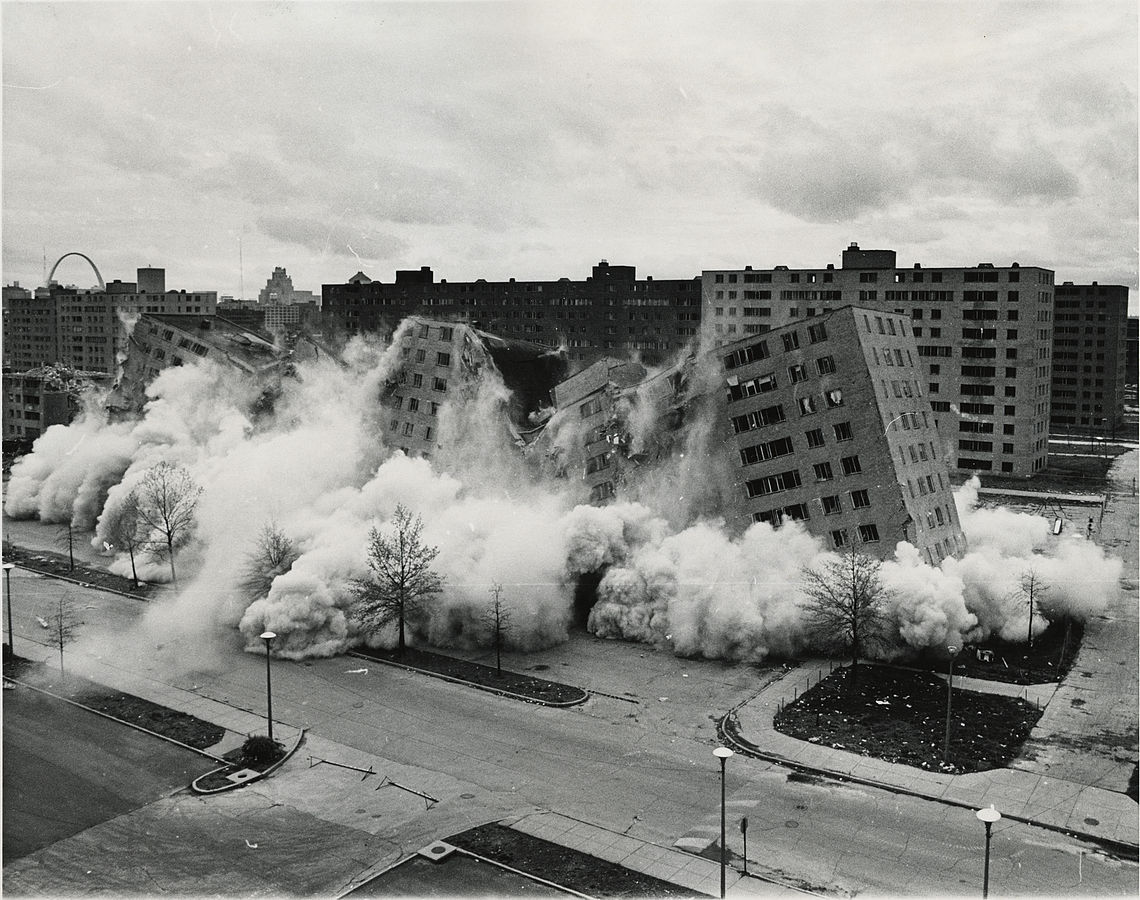
The demolition of one of the Pruitt-Igoe buildings, which began in 1972 with the final building demolished in 1976.
Uncredited image from Wikimedia Commons.
The Crusades: Part 8 – The Rise of Venice
seangabb
Published 12 Mar 2021The Crusades are the defining event of the Middle Ages. They brought the very different civilisations of Western Europe, Byzantium and Islam into an extended period of both conflict and peaceful co-existence. Between January and March 2021, Sean Gabb explored this long encounter with his students. Here is one of his lectures. All student contributions have been removed.
(more…)
The cognitive dissonance of the elites
Chris Bray on yet another example of our kakistocrats congratulating themselves after presiding over failure:
[Los Angeles County Public Health Director Barbara] Ferrer is a relentless and enthusiastic interventionist, one of the highest-profile lockdowners and mask fetishists in the country, and here she is still wearing a mask — in the third year of a pandemic that hasn’t been ended by the widespread mask-wearing that has prevailed, and still largely prevails, in Los Angeles. Do X to cause Y, she says, doing X for a third straight year but still rather obviously not causing Y. Again, here’s Ferrer’s chart showing the effect of her bold public health interventions:
You can really see how that infections trendline came right down as Barbara Ferrer boldly threw herself in front of the virus.
But here’s the part that I find most telling: After Ferrer offers a long presentation on mitigations showing clearly that they haven’t worked as advertised, and after she says repeatedly and explicitly that the available Covid-19 vaccines “don’t work so great at preventing infection”, and that vaccinated people will be infected, Ferrer sits down for a discussion with several members of an expert panel. One of the panelists is Michele Kipke, a psychology PhD who serves as a clinical professor at USC and the vice-chair of research at Children’s Hospital Los Angeles (and as a school board member in my own small town in the suburbs). Having heard repeated statements about the unmistakably limited effectiveness of the available Covid-19 vaccines, Kipke offers this as a question:
“So, first of all, I just need to say, it is such an honor to be on the same stage with you. Barbara, you are my hero, and I am so glad that you have been our leader through these extremely difficult two years. So thank you.” And then there’s a long round of applause from the panel and the audience. You can just feel the scholarly skepticism and clinical rigor in that auditorium. This, ladies and gentlemen, is obviously the room where the tough questions are asked.
And then she goes on: “And so, as I think about this, I’ve really been asking the questions, what are, just picking up on the, I think, the discussion here, what are those lessons learned? There are, you know, sort of obviously a very difficult couple of years, but we’ve seen some really phenomenal successes that have come out of the last couple years. As Dr. Hu mentioned earlier, I had the good fortune of being a part of leading Vaccinate L.A., where we brought fourteen schools and programmatic units within USC together, and all harmonized our efforts, to get out there and support our communities, and to think about how to support vaccinations. And we engaged local artists. We — it was a community driven initiative, we wanted to listen and learn from the community, and then partner with them …”
And so on, but you get the point. “But through that work we’ve achieved so much,” she eventually says. The video is cued to the start of her “question”, if you want to see it all, but her question, in short, is, Why, in your view, did we do such an amazing job? Pivoting from Ferrer’s extremely open and direct discussion about the obvious limits of the vaccines — again, that actual direct quote is, “Vaccinated people are very likely to get infected” — Kipke asks about the success of the vaccination program.

How To Feed A Roman Emperor: Vitellius & the Year of 4 Emperors
Tasting History with Max Miller
Published 20 Apr 2021Help Support the Channel with Patreon: https://www.patreon.com/tastinghistory
Tasting History Merchandise: crowdmade.com/collections/tastinghistoryFollow Tasting History here:
Instagram: https://www.instagram.com/tastinghist…
Twitter: https://twitter.com/TastingHistory1
Tiktok: TastingHistory
Reddit: r/TastingHistory
Discord: https://discord.gg/d7nbEpyTasting History’s Amazon Wish List: https://amzn.to/3i0mwGt
LINKS TO INGREDIENTS & EQUIPMENT**
Sony Alpha 7C Camera: https://amzn.to/2MQbNTK
Sigma 24-70mm f/2.8 Lens: https://amzn.to/35tjyoW
Garum: https://amzn.to/3dMXnO0
Dried Marrowfat Peas: https://amzn.to/2RhIqfa
Lovage: https://amzn.to/3saQyea
Dried Ginger Root: https://amzn.to/3uFCHymLINKS TO SOURCES**
Apicius, De Re Coquinaria (translated by Elisabeth Rosenbaum and Barbara Flower): https://amzn.to/3wLqA4A
The Twelve Caesars by Suetonius: https://amzn.to/3uDUt4W
69 AD The Year of Four Emperors by Gwyn Morgan: https://amzn.to/2RfsY39**Some of the links and other products that appear on this video are from companies which Tasting History will earn an affiliate commission or referral bonus. Each purchase made from these links will help to support this channel with no additional cost to you. The content in this video is accurate as of the posting date. Some of the offers mentioned may no longer be available.
Subtitles: Jose Mendoza
PHOTO CREDITS
De Re Coquinaria: By Bonho1962 – Own work, CC BY-SA 3.0, https://commons.wikimedia.org/w/index…
Tiberius: By Carole Raddato from FRANKFURT, Germany – Tiberius, Romisch-Germanisches Museum, CologneUploaded by Marcus Cyron, CC BY-SA 2.0, https://commons.wikimedia.org/w/index…
Caligula: By Tomk2ski – Own work, CC BY-SA 4.0, https://commons.wikimedia.org/w/index…
Vomitorium: By Przemek P – https://szarada.net/okreslenie-z-krzy…, CC BY-SA 3.0, https://commons.wikimedia.org/w/index…
Amphitheatre Spectacle: Dennis Jarvis, CC BY-SA 2.0 https://creativecommons.org/licenses/…, via Wikimedia Commons
Vespasian: By Sailko – Own work, CC BY 3.0, https://commons.wikimedia.org/w/index…
Close up of the coin hoard: By Portable Antiquities Scheme from London, England – Close up of the coin hoard, CC BY-SA 2.0, https://commons.wikimedia.org/w/index…#tastinghistory #ancientrome #totalwar

QotD: Elite overproduction and Canada’s managerial class
The managerial class in Canada is much more powerful than that in the U.S., for several reasons. First, the managerial class makes up a much larger share of Canada’s population, because far more Canadians go to college. Whereas 51.9 percent of Americans between the ages of 25–34 have tertiary education, in Canada it is almost 65 percent. While America’s elites are decentralized (Wall Street and Silicon Valley are very different), Canada’s elites are concentrated in the Laurentian corridor of Toronto-Ottawa-Montreal. And there is a revolving door between the managerial institutions. Since Lester Pearson, prime minister from 1963 to 1968, every leader of the Liberal party has begun his career as either a civil servant, academic, professional party hack, Bay Street lawyer, or leader of one of Canada’s Laurentian “continental corporations” — or as the son of one of these. These institutions receive generous federal funding. So does the Canadian media, which is now financially dependent on the federal government. Because these institutions are regionally concentrated and rely on symbiotic relationships with one another, Canada’s managerial classes hold hegemonic political power.
Canada’s vassalage to the U.S. intensifies the harmful effects of this situation. Once Canada surrendered its British character and integrated itself into the American empire, it became part of the continental system of elite overproduction. Ambitious Canadians seeking the top-tier education that will gain them elite status quickly discover that Canada’s universities are, as one professor once told me, “frustratingly above-average”. The most talented young Canadians therefore tend to jump ship and move to the U.S. The sine qua non for their success is mastering the American empire’s language, which is the language of liberalism. Every ambitious Canadian learns that to ascend, you must talk like American liberal elites. The Canadians who become fluent succeed: They get a top-tier U.S. degree and join the prestigious American networks. By and large, these people do not then want to move back to the imperial backwater. The few who do — such as former Liberal party leader Michael Ignatieff, who taught at Harvard, and the current Deputy Prime Minister Chrystia Freeland, who studied at Harvard and married a New York Times reporter — return home confident that they will be the big fish in the small pond. Hence Canada suffers a protracted brain drain to the U.S.
Nathan Pinkoski, “What Led To Canada’s Crisis”, First Things, 2022-02-24.
May 26, 2022
Why Napoleon’s Invasion of Russia Imploded in Moscow
Real Time History
Published 25 May 2022Sign up for the CuriosityStream + Nebula Bundle: https://curiositystream.com/realtimeh…
When Napoleon took Moscow, he expected victory over Russia was just a matter of time. But six weeks later he has to flee the city as his entire Russia campaign collapses. The strengthened Russian Army is attacking from three sides, winter is coming and in far away Paris a coup is underway.
» SUPPORT US ON PATREON
https://patreon.com/realtimehistory» THANK YOU TO OUR CO-PRODUCERS
John Ozment, James Darcangelo, Jacob Carter Landt, Thomas Brendan, Kurt Gillies, Scott Deederly, John Belland, Adam Smith, Taylor Allen, Rustem Sharipov, Christoph Wolf, Simen Røste, Marcus Bondura, Ramon Rijkhoek, Theodore Patrick Shannon, Philip Schoffman, Avi Woolf,» SOURCES
Boudon, Jacques-Olivier. Napoléon et la campagne de Russie en 1812. 2021.
Chandler, David. The Campaigns of Napoleon, Volume 1, New York 1966.
Lieven, Dominic. Russia Against Napoleon. 2010.
Maag, Albert. Die Schicksale der Schweizerregimente in Napoleons I. Feldzug nach Russland 1812. 1900.
Rey, Marie-Pierre. L’effroyable tragédie: une nouvelle histoire de la campagne de Russie. 2012.
Zamoyski, Adam. 1812: Napoleon’s Fatal March on Moscow. 2005.» OUR STORE
Website: https://realtimehistory.net»CREDITS
Presented by: Jesse Alexander
Written by: Jesse Alexander
Director: Toni Steller & Florian Wittig
Director of Photography: Toni Steller
Sound: Above Zero
Editing: Toni Steller
Motion Design: Toni Steller
Mixing, Mastering & Sound Design: http://above-zero.com
Digital Maps: Canadian Research and Mapping Association (CRMA)
Research by: Jesse Alexander
Fact checking: Florian WittigChannel Design: Simon Buckmaster
Contains licensed material by getty images
Maps: MapTiler/OpenStreetMap Contributors & GEOlayers3
All rights reserved – Real Time History GmbH 2022
The hierarchy of scientific journals
One of the readers of Scott Alexander’s Astral Codex Ten has contributed a review of Melinda Baldwin’s Making Nature: The History of a Scientific Journal. This is one of perhaps a dozen or so anonymous reviews that Scott publishes every year with the readers voting for the best review and the names of the contributors withheld until after the voting is finished:
The world of scientific publishing is organized as a hierarchy of status, much like the hierarchy of angels in the Abrahamic religions. At the bottom are the non-peer-reviewed blog posts and Twitter threads. Slightly above are the preprint servers like arXiv, and then big peer-reviewed journals like PLOS One. Above those are all the field-specific journals, some with higher reputation than others. And at the top, near the divine presence, are the CNS journals: Cell, Nature, and Science.
Full title: The Assumption of the Virgin..Artist: Francesco Botticini..Date made: probably about 1475-6..
For an actual hierarchy of journals based on citation data, see this paper, which puts Nature and Science at the top. Might be worth mentioning that it comes from a journal in the Nature Publishing Group family.
Leaving aside Cell, a more specialized biology journal that seems to have gotten into the CNS acronym the same way Netflix got into the FAANG acronym, Nature and Science are very similar. They both publish articles in all scientific fields. They both date from the 19th century. They’re published weekly. They jointly won a fancy prize for services to humanity in 2007. And having your paper in either is one of the best things that can happen to a scientist’s career, thanks to their immense prestige.
But how, exactly, did Nature and Science become so prestigious? This is the question I hoped Making Nature: The History of a Scientific Journal, a 2015 book by historian of science Melinda Baldwin, might answer. It focuses on Nature, but much of its lessons can likely be extrapolated to Science considering their similarity.
I grew curious about this when I realized that most researchers treat journal prestige as a given. Everyone knows that Nature and Science matter enormously, yet few would be able to say why exactly. But this is important! Prestigious institutions, from universities to media companies to major sports competitions, have a huge impact on the world. It’s useful to understand how they came to be, beyond “being famous for being famous”.
One reason this is more difficult than it sounds is that we often settle for superficial answers. Selectivity, for instance, is a common explanation: prestige simply comes from obtaining what is hard to obtain, such as a Harvard degree, an Olympic medal or a Nobel Prize. Nature is indeed highly selective, accepting less than 10% of submitted articles (and the vast majority of papers are not even deemed worthy of a submission to Nature by their authors). Yet harsh selectivity alone cannot explain prestige, or it would be trivial to launch a prestigious journal or university just by setting an artificially low acceptance rate.
Another facile explanation is longevity. It’s true that prestigious institutions are often old, and indeed Nature has been around for more than 150 years since its birth in 1869. Science is only slightly younger, having been founded in 1880. But there are many older scientific journals: the oldest one, the Philosophical Transactions of the Royal Society, was created two hundred years before Nature, in 1665. Then there are more recent publications that are prestigious: Cell, for instance, was founded in 1974. The correlation between prestige and longevity is real, but imperfect. It also says nothing of causation: does longevity cause prestige, or does prestige cause longevity?
What matters is not the span of time per se, but the specific events that happened — in other words, the history. Making Nature, while not specifically about prestige, gives us exactly that.

I’m Moving to a New Shop!!!
Rex Krueger
Published 25 May 2022It’s time to get out of the basement, but where am I going?
(more…)
Alex Tabarrok reviews The Parent Trap
At Marginal Revolution, Alex Tabarrok looks at Nate G. Hilger’s new book, The Parent Trap:
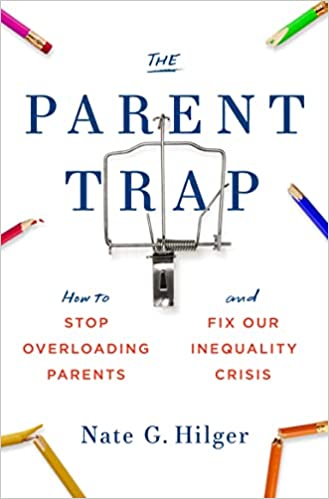
Hilger argues that the problems of poverty, pathology and inequality that bedevil the United States are not primarily due to poor schools, discrimination, or low incomes per se. The primary cause is parents: parents who are unable to teach their children the skills that are necessary to succeed in the modern world. Since parents can’t teach the necessary skills, Hilger calls for the state to take their place with a dramatic expansion of not just child care but collective parenting.
Let’s unpack some details. Begin with schooling. It’s very common to bemoan the state of schools in the “inner city” or to complain about “local financing” which supposedly guarantees that poor counties will have underfunded schools. All of this, however, is decades out-of-date.
A hundred years ago there really were massive public-school resource gaps by class and race. These days, however, state and federal spending play a larger role than local property tax revenue and distribute educational resources more progressively … In fact, when we include federal aid, 42 states spent more on poor school districts than on rich school districts in 2012. The same pattern holds between schools within districts
… The highest spending districts are large urban centers such as New York City, Boston and Baltimore. These cities spend large sums to educate rich and poor children alike. p. 10-11
Hilger is correct. No matter what you saw on The Wire, Baltimore spends more than sixteen thousand dollars per student, among the highest in the nation in large school districts and above average for the nation as a whole. Public schools are quite egalitarian in funding with any bias running towards more funding for poorer districts.
Schools, Hilger writes are “actually the smallest and most equalizing part of a much larger skill-building system.” The real problem, says Hilger, are parents.
But what about discrimination? When it comes to wage discrimination, Hilger is brutally honest:
If we compare individuals with similar cognitive test scores, Black college graduates earn higher wages than white college graduates. Studies that don’t control for test score differences but examine earnings gaps within specific professions — lawyers, physicians, nurses, engineers, scientists — tend to find Black workers earn zero to 10 percent less than white workers. These gaps could reflect discrimination, unmeasured skill differences, or other factors such as geography. In any case, such gaps are small compared to the 50 percent overall Black-white earnings gap and reinforce the idea that closing skills gaps would go a long way toward closing income gaps.
Hilger argues that racism does play an important role in explaining Black-white wage differentials but it’s the historical racism that made black parents less skilled and less able to pass on skills to their children. In the twentieth century, Asians, Hilger argues, were discriminated against in the United States at least much as Black Americans. But the Asians that came to the United States had high skills while the legacy of slavery meant that Black Americans began with low skills. Asians, therefore, were better able to overcome discrimination. The success of Nigerians and Jamaican immigrants in the United States also speaks to this point. (Long time readers may recall that in 2016 I dubbed Hilger’s paper on Asian Americans and Black Americans the Politically Incorrect Paper of the Year.)
The Banshee | Artifacts Interview Series
Legion Magazine
Published 15 Mar 2019Legion Magazine‘s Stephen J. Thorne sat down with Andrew Burtch, the Post-1945 historian at the Canadian War Museum, to discuss what was the crown jewel of the Royal Canadian Navy’s air fleet – the Banshee. Video edited by Adam Tindal.
For more information, visit: www.legionmagazine.com/artifacts

QotD: They don’t make good music any more
To state the hypothesis as it applies to music: If a song or an album has been remembered for 20 years, then it’s more likely to be remembered for another 20 years. If it’s been remembered for 50 years, then it’s probably pretty damn good. If it’s been remembered for centuries, then it’s probably better than you can understand.
If this is true, then it might explain why anyone who has been listening to music for more than a decade has the sense that music was simply better back in the day. It’s not that music is necessarily worse now, on average – we’re in the moment, and it’s difficult to sort the wheat from the chaff.
What we hear in the daily soundtrack of life, when you’re getting your hair cut, out shopping, something coming from someone’s phone at the other end of the bus, is noise. The quality of this music is going to vary wildly because what is popular doesn’t necessarily correlate to what is good. The signal is the true state of music, which fluctuates, and can come from anywhere from the top of the pop charts to underground niche movements.
What we think of as “good older music” is not representative of the general state of music back then. It might be the case those songs that are remembered, and still played on the radio, TV and movies, happen to be the exceptional outliers. The Lindy effect is about filtering: Time has sifted out the mediocre songs that were popular for arbitrary or non-universal reasons, or were just faddish. If you’re going to go to the trouble of looking back to the 1980s now, what you bring back for us better be good.
And what is considered as great music from decades ago wasn’t necessarily chart material. But in the long term, they have been rediscovered by subsequent generations.
James Smith, “The myth of ‘bad’ modern music”, Being Libertarian, 2019-02-25.
May 25, 2022
“What is a reasonable general concern?”
In The Line, Paula Simons has a concern that I think is quite reasonable:

“Canadian Border Sign” by jimmywayne is licensed under CC BY-NC-ND 2.0


What is a reasonable general concern?
That’s not a rhetorical question. I really don’t know the answer. I’m not sure anyone else does, either.
And that’s exactly the problem with Bill S-7, a new piece of government legislation, which amends both the Customs Act and the Preclearance Act.
Bill S-7 set a new standard to allow border services officers to search through our cellphones, laptops, tablets, Apple Watches and other personal computers. If the bill passes, it will allow officers who feel a “reasonable general concern” to search through the emails, documents, texts, instant messages, photos or videos stored on our digital devices, to look for evidence that we may have violated customs regulations.
Reasonable general concern. Or, as it says in the French-language draft of the bill, “des préoccupations générales raisonnables“.
It’s an absolutely novel legal threshold. That phrase, be it in English or French, doesn’t appear anywhere else in Canadian criminal or civil law. It’s not a standard borrowed from any other country. It’s a brand new legal test to authorize an invasive search of your most private personal records and correspondence.
A reasonable concern, one might intuit, is a lower standard than a reasonable suspicion, because a concern is less grave, less specific, than a suspicion.
But a general concern? A general preoccupation?
That sounds even more vague, more subjective, than a good old-fashioned hunch or inkling.
It seems counter-intuitive, to put it mildly, to create a lower, broader standard to search our private data on our private devices than to search our conventional mail, or our suitcases, or our car trunks. Yet that is exactly what Bill S-7 does.
How did we get here? The answer is an ironic one.
Back in 2020, the Alberta Court of Appeal ruled unanimously that portions of the Customs Act were unconstitutional.
The court found the act violated the protection against unreasonable search and seizure, because it allowed for what the court called “suspicion-less and unlimited” searches of our personal digital devices.
That violation, held the court, could not be saved by section 1 of the Charter, because it allowed unfettered and unrestricted access to people’s most personal and intimate information, and because it allowed the state almost unlimited latitude to dig around in the what the court called our “biographical core of identity”.
The Spy Game That Killed Yamamoto – WW2 – Spies & Ties 17
World War Two
Published 24 May 2022We’ve already seen the power of signals intelligence. Churchill loves being fed information from MI6’s Ultra. Now it brings a vengeance for his American allies. They manage to bag the scourge of Pearl Harbor, C-in-C of the Imperial Japanese Navy, Admiral Isoroku Yamamoto.
(more…)
British lack-of-flair in naming things
Ed West wonders why the Brits come up with such boring names for, well, everything:
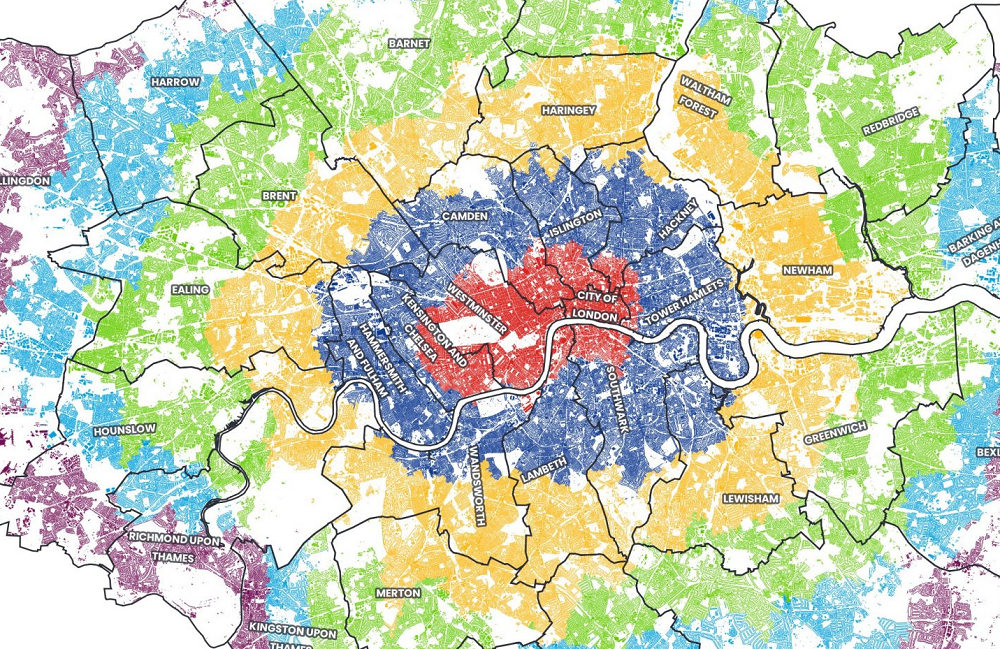
A detail from the Mapping London Tube Zones map – https://mappinglondon.co.uk/2021/tube-zones/
Back in the 1850s, when London was getting its first proper government, the authorities had a problem with street names – they were just so boring that it was actually confusing.
According to Judith Flanders’s The Victorian City: “In 1853, London had twenty-five Victoria Streets, thirty-seven King and twenty-seven Queen Streets, twenty-two Princes, seventeen Dukes, thirty-four Yorks and twenty-three Gloucesters – and that was without counting the similarly named Places, Roads, Squares, Courts, Alleys or Mews, or even the many synonyms that designated squalid backcourts: Rents, Rows, Gardens, Places, Buildings, Lanes, Yards and Walks. One parish alone had half a dozen George Streets.”
Bearing in mind how small London was at the time, no more than zone 1 and bits of zone 2, it’s quite impressive that they managed to have so many Victoria Streets. Impressive, and obviously stupid. The Metropolitan Board of Works forced parishes to rename duplicates; but even as the capital expanded, borough councils continued the practice, so that dozens of new Victoria roads and streets were created (many of which have since been changed).
Perhaps it reflects a deeply content and loyal public, but it’s more a testimony to how dull and unimaginative the British are about naming things. And it’s a fine tradition we continue today with the Elizabeth Line.
[…]
Although the new Elizabethans are in many ways the anti-Victorians – declinist, slow to get things built, filled with civilisational self-hatred – in our naming patterns we are recognisably the same people.
A few years back, when Britain launched its biggest ever warship, weighing in at 65,000 tons, they named it HMS Queen Elizabeth. This came after it was decided we needed a new name for our part of Antarctica – with huge originality, they went for “Queen Elizabeth Land”. Even Big Ben was renamed the Queen Elizabeth Tower in 2012.
The Queen, bizarrely, has twenty hospitals named after her, which led to a small revolt when the South Glasgow University Hospital became the latest. Considering how many brilliant scientists Scotland has produced, you might think they could have found someone else. Alexander Fleming, one of the alternatives suggested, grew up not far away in Ayrshire and saved literally hundreds of millions of lives.
Edward Jenner, meanwhile, has the Viale Edoardo Jenner in Milan named in his honour, and a town in Pennsylvania. While there is a Jenner Road in Stoke Newington, you wouldn’t necessarily know it was in tribute to the man who discovered vaccinations. That is because, when we honour someone with a street, the British shyly only feature their surname; the only time we follow the continental pattern of including the full name is, bizarrely, with local councillors. The people who run local government in Britain are not against honouring heroes in theory, they just think the real heroes aren’t explorers, scientists or military leaders, but the people who run local government.


