Quotulatiousness

May 25, 2022

M1915 Villar Perosa

Filed under: History, Italy, Military, Weapons, WW1 — Tags: , , , , , , — Nicholas @ 02:00

Forgotten Weapons
Published 5 Aug 2016

http://www.patreon.com/ForgottenWeapons

The Villar Perosa is one of the first small machine guns developed and used by a military force. It was designed in Italy and introduced in 1915 as an aircraft weapon, to be used in a flexible mount by an airplane’s observer. The gun consists of two independent firing actions mounted together. Each fires from an open bolt as a rate of 1200-1500 rounds/minute, feeding from a 25 round magazine of 9mm Glisenti cartridges. This allowed the maximum possible volume of fire in an aerial combat situation, where in 1915 ballistic power was not particularly important.

As aircraft armaments improved and synchronized, belt-fed machine guns became practical, the Villar Perosa was quickly made obsolete in aerial use. The Italian military experimented with several applications of the weapon in ground combat, including slings and belt fittings for walking fire, tripods, mounts with integral armor shields, and bicycle mounts. None of these proved particularly successful, as the elements that made the gun well adapted to early aerial use (high rate of fire with a small cartridge) made it relatively ineffective for infantry use.

Ultimately, the best use of the Villar Perosa was to break them up and convert the actions into shoulder-fired submachine guns. Designs to do this were developed by both the Beretta company and Villar Perosa themselves, and in 1918 these guns entered service in the same approximate period as the first German MP-18 submachine guns. Because of this recycling, intact M1915 Villar Perosa guns are quite rare today.


QotD: The “social responsibility” of business

Filed under: Business, Economics, Politics, Quotations, USA — Tags: , — Nicholas @ 01:00

When I hear businessmen speak eloquently about the “social responsibilities of business in a free-enterprise system,” I am reminded of the wonderful line about the Frenchman who discovered at the age of 70 that he had been speaking prose all his life. The businessmen believe that they are defending free enterprise when they declaim that business is not concerned “merely” with profit but also with promoting desirable “social” ends; that business has a “social conscience” and takes seriously its responsibilities for providing employment, eliminating discrimination, avoiding pollution and whatever else may be the catchwords of the contemporary crop of reformers. In fact they are — or would be if they or anyone else took them seriously — preaching pure and unadulterated socialism. Businessmen who talk this way are unwitting puppets of the intellectual forces that have been undermining the basis of a free society these past decades.

Milton Friedman, “The Social Responsibility of Business is to Increase its Profits”, New York Times, 1970-09-13.

May 24, 2022

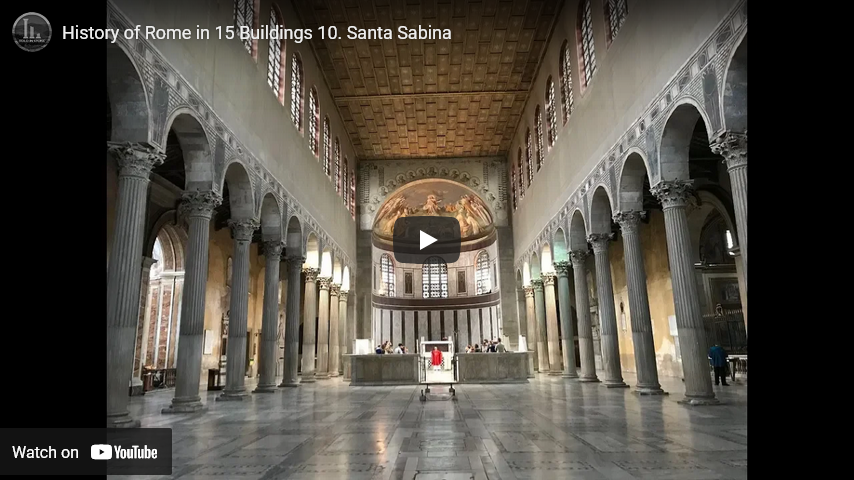
History of Rome in 15 Buildings 10. Santa Sabina

Filed under: Architecture, Europe, History, Military, Religion — Tags: , , , , — Nicholas @ 02:00

toldinstone
Published 2 Oct 2018

Through some combination of military disasters, barbarian migrations, social change, and dynastic bad luck, the Western Roman Empire collapsed in the fifth century. In this tenth episode of our History of Rome, focused on the church of Santa Sabina, we will consider some of the implications of this crisis.

If you enjoyed this video, you might be interested in my book Naked Statues, Fat Gladiators, and War Elephants: Frequently Asked Questions about the Ancient Greeks and Romans. You can find a preview of the book here:

https://toldinstone.com/naked-statues…

If you’re so inclined, you can follow me elsewhere on the web:

https://www.reddit.com/r/AskHistorian…
https://www.instagram.com/toldinstone/

To see the story and photo essay associated with this video, go to:
https://toldinstone.com/santa-sabina/

Thanks for watching!

QotD: Portuguese art and creative genius

Filed under: Business, Europe, Germany, History, Quotations — Tags: , , , , , — Nicholas @ 01:00

If Portugal weren’t such an old nation (but maybe it’s a second childhood) I’d call them the college kid of Europe. They can’t quite get their act straight, but they can be startlingly, amazingly creative. One of the things I’ve talked about here is how many of my brother’s cohort, coming of age at a time when there were NO jobs took up some kind of craft work, from making jewelry to (I used to covet them) making elaborate, hand painted wooden dragon mobiles and selling all of this. Looking back at that pre-EU time when it was relatively easy to set up a stall (illegal, of course) in downtown Porto, I realize most of the stuff on offer was downright artistic, and often incredibly creative when you realized what materials they were working with.

Then the economy recovered, they got jobs, a lot of them connected to or linked to government and all of that stopped. And of course with the EU there are no illegal stalls. I mean Papiere, bitte and all that.

And somehow, perhaps because the new generation knows they have all sorts of “benefits” and “support” coming to them and have never felt the bite of chaos, the crafts and arts in the stores are either startlingly mundane or bizarre. I’m still rather puzzled by entire “scenes from life” (including one that was an operating room) sculpted with penises instead of humans. I mean … who even buys that? Okay. We know who buys that. But do the German tourists and their nostalgie de la boue think they’re tapping into something uniquely “uninhibited and free”, some kind of wild Portuguese sexuality? Raises eyebrow. The Portuguese have been civilized land long before the Germans traded their furs for a place as Roman soldiers. And sure, the Romans could be startlingly and inappropriately sexual (I call to mind a mural, not out of place in a Roman middle class home that had monkeys copulating with children) but it didn’t mean that the culture was “free”, rather that they had different rules. Frankly, the sixties attempt to erase history has corrupted real art and … well, everything else.

Which is kind of the college student thing. Chaos and free time allows you to be very creative, but then you’re not organized enough to parlay that into a career. (I mean, if they’re destined to be the touristic “warm port” of Europe, perhaps they should consider letting real art flourish. Or even encouraging it. Grants for small businesses and young people. It beats the jobs that don’t exist. Just demand they be actually creative and accomplished, instead of giving grants for art that my kids could do at age two and about as interesting.

Sarah Hoyt, “The Ancient Enemy”, According to Hoyt, 2019-04-05.

May 23, 2022

Drowning Germans, Burning Jews – WAH 061 – May 22, 1943

World War Two
Published 22 May 2022

When Air Marshal Arthur Harris and Reichspropagandaminister Joseph Goebbels agree that a lot of death and destruction is not enough death and destruction, the world is in trouble.
(more…)

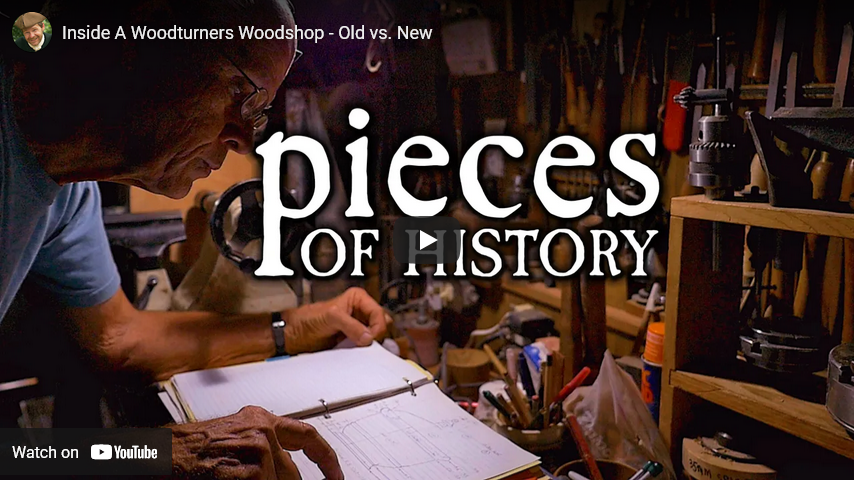
Inside A Woodturners Woodshop – Old vs. New

Filed under: History, Tools, Woodworking — Tags: , , — Nicholas @ 02:00

Townsends
Published 16 May 2022

Gen Nis He Yo Trading Company ➧ http://gennisheyotrading.com/ ➧➧

Our Brand New Viewing Experience ➧ https://townsendsplus.com/ ➧➧

Retail Website ➧ http://www.townsends.us/ ➧➧

Help support the channel with Patreon ➧ https://www.patreon.com/townsend ➧➧

Instagram ➧ townsends_official

QotD: The adoption of Astrology by the Greeks and Romans

Perhaps the most influential form of divination to arrive in the Roman world from the East was astrology. Systems for divining the will of the gods and the course of the future emerged in both Egypt and Mesopotamia c. 2000 B.C. and were thus both very ancient when Alexander the Great conquered both in the late fourth century. From there, astrology, practiced by professional experts, moved into the Greek and then Roman world, though Roman elites were often deeply ambivalent about this foreign method of divination; both Cato and Cicero express doubts (of course, the Roman practice of haruspicy was also foreign in that it was Etruscan, but this adoption had been sanctified by long use in Roman tradition and was thus mostly beyond reproach). Nevertheless, it is clear that this form of divination become common, with the writer, geographer and astronomer Ptolemy (c. 100-170 A.D.) even producing a long explication of the practice of astrology in his Tetrabiblos.

This portability is not restricted merely to divination. Herodotus’ suspicion that quite a bit of Greek religion might have come from somewhere else has merit, though Anatolia, not Egypt, appears to be the main source (see: M.L. West, The East Face of Helicon (1999); and for the person already writing this comment, yes I am aware of Bernal’s Black Athena and no I am not convinced, nor are many specialists in the field). The Romans were open about importing gods from Greece and make a clear distinction between gods worshiped in traditional Roman manner and those imported from Greece (a quite small number) and thus whose rituals followed ritus graecus – rituals in Greek fashion.

In other cases, the foreign practice was modified to fit the culture it arrived in. The Romans adopted the cult of Cybele, an Anatolian goddess, during the dark days of the Second Punic War (the Senate made that decision based on a consultation with the Sibylline books, a written source of oracular prophecy we can talk about another day). Cybele was called Magna Mater (“Great Mother”) in Rome, and it seems made some modifications to her rituals, in particular possibly limiting the role of the Galli (eunuch priests) whose rituals and style seemed decidedly “unRoman” (though I should note that the scholarship here is contested and the issue and evidence complex).

The normal technical term for this kind of religious borrowing is syncretism, and it is a sort of interweaving of religious traditions that polytheisms both ancient and modern are exceptionally capable of. It is simply not hard to add one more god or one more ritual into a religious system that already assumes the existence of innumerable gods.

Bret Devereaux, “Collections: Practical Polytheism, Part III: Polling the Gods”, A Collection of Unmitigated Pedantry, 2019-11-08.

May 22, 2022

Axis Prisoners Face French Wrath – WW2 – 195 – May 21 1943

Filed under: Africa, Britain, France, Germany, History, Italy, Military, Russia, USA, WW2 — Tags: , , , — Nicholas @ 16:00

World War Two
Published 21 May 2022

The Allies have won the battle for Africa, but now they have nearly 250,000 POWs to care for, and do not have the facilities to do so. The Trident Conference continues in Washington to try and decide the direction of the Allied war effort, but they launch the Dambuster Raids this week in Germany to try and cripple German water power — and thus, industry — with a new type of bomb.
(more…)

HMCS Bras D’Or; The world’s fastest warship and the pinnacle of hydrofoil development in Canada

Filed under: Cancon, History, Military, Technology — Tags: , , , , , , , — Nicholas @ 02:00

Polyus Studios
Published 3 Feb 2022

Don’t forget to like the video and subscribe to my channel!
Support me on Patreon – https://www.patreon.com/polyusstudios

HMCS Bras D’Or was the pinnacle of over 100 years of hydrofoil development in Canada. Starting with Alexander Graham Bell and ending with the Proteus, hydrofoils held the promise of faster travel over the waves. Unfortunately the technology never found a comfortable fit in either military or civil fleets. It was designed to be an ASW hunter but by the time she was ready, the Navy was settled on using the now familiar Destroyer/Helicopter combos.

0:00 Introduction
0:29 Alexander Graham Bell and Casey Baldwin
2:28 The R-100 Massawippi
5:46 The R-103 Baddeck
7:15 The Rx
8:48 Anti-submarine warfare hydrofoil concept
12:24 FHE-400 Bras D’Or
17:23 Testing and refinement
19:25 Cancellation
20:18 Proteus
20:45 Conclusion

Music:
“Denmark” – Portland Cello Project
“Your Suggestions” – Unicorn Heads

#BrasDor #CanadianAerospace #PolyusStudios

QotD: Surveying Upper Canada

Filed under: Cancon, History, Quotations — Tags: , , — Nicholas @ 01:00

Gentle reader is invited to draw a square on a piece of paper. Let each side be about ten miles. Eight miles will do, or nine; eleven or fourteen would also be acceptable. It could be more of a rectangle than a square, but try to make the corners sharp. Or even a triangle, if the paper runs out.

You have just drawn an Ontario Township.

Now, make your grid. The line roads, north and south, should be 100 chains apart (one-and-a-quarter miles), and the east-west sideroads either the same, or different. They needn’t come out evenly; you may leave a fraction on whichever side you didn’t start from. The whole board may have to be tilted at the “front” (baseline) to parallel a lakeshore, or accommodate the “back” of the next Township down. If you’re in the mood, you might want to draw a diagonal road, right through everything.

Congratulations. You may now have a job as one of His Majesty’s surveyors in pioneer Ontario. It’s a much better job than down south of British North America, where the land is somewhat populated already, and everyone seems to have an opinion. Up here, not yet any people in the way. But there is still the difficulty of slashing through the bush. You only draw “concessions” — future roads defining blocks, to be further subdivided into future farmlots. When the people granted land move in, they will be compelled by the guvmint to actually dig those endless, straight, access roads.

This will make the roads more interesting. Where the lines meet an obstacle, you get a little run around it. Or a big one, if the obstacle continues. Intersections don’t quite meet, so you get a jog. Or, you decide to put the jog in the middle of nowhere, instead. There were at least five major surveying systems in Upper Canada (later “Ontario”), and dozens of variations on each one. The line and side roads might be 66 chains apart, or more than twice that, depending on some local magnate’s whim. Or the surveyor may have been drunk that day.

David Warren, “Esquesan”, Essays in Idleness, 2019-04-10.

May 21, 2022

Ukraine & T-72: The death of the tank? | The Tank Museum

Filed under: Europe, History, Military, Russia, Technology, Weapons — Tags: , , , — Nicholas @ 04:00

The Tank Museum
Published 20 May 2022

Tank Museum Curator David Willey explores the current conflict in Ukraine and the performance of the T-72 tank; putting it into historical context and exploring other times during the last hundred years when the death of the tank has been predicted.

Consider becoming a Patreon Supporter today: https://www.patreon.com/tankmuseum

00:00 | Intro
00:40 | Wider context
11:01 | Tanks in History
(more…)

Despite government denials, CRTC will have the power to censor YouTube videos confirms CRTC Chair

Filed under: Bureaucracy, Cancon, Liberty, Media — Tags: , , , , — Nicholas @ 03:00

It’s long since got to the point that you never can take a Liberal cabinet minister’s word without verifying it for yourself. Today’s example is the constant denial from the government that their Bill C-11 would enable censorship of things like YouTube videos by the CRTC. In a Senate appearance on Wednesday, the head of the CRTC agreed that such censorship is allowed under the proposed legislation:

CRTC Chair Ian Scott appeared before the Standing Committee on Canadian Heritage yesterday and Bill C-11 proved to be a popular topic of discussion. The exchanges got testy at times as Scott seemingly stepped outside of his role as an independent regulatory by regularly defending government legislation, even veering into commenting on newspapers, which clearly falls outside the CRTC’s jurisdiction. With respect to Bill C-11, most newsworthy were two comments regarding the regulation of user content and the timelines for implementing the bill if it receives royal assent.

First, Scott was asked about the regulation of user content, confirming what has been obvious for months despite denials from Canadian Heritage Minister Pablo Rodriguez. The following exchange with Conservative MP Rachael Thomas got Scott on the record:

    Thomas: Bill C-11 does in fact leave it open to user generated content being regulated by the CRTC. I recognize that there have been arguments against this, however, Dr. Michael Geist has said “the indisputable reality is that the net result of those provisions is that user generated content is in the bill.” Jeanette Patel from Youtube Canada said “the draft law’s wording gives the broadcast regulator” – in other words you – “scope to oversee everyday videos posted for other users to watch.” Scott Benzie from Digital First Canada has also said that “while the government says the legislation will not capture digital first creators, the bill clearly does capture them.”

    So all these individuals are individual users creating content. It would appear that the bill does, or could in fact, capture them, correct?

    Scott: As constructed, there is a provision that would allow us to do it as required.

While Scott continued by arguing that the Commission already has equivalent regulatory powers and is not interested in regulating user content, the confirmation that Bill C-11 currently does cover user generated content should put an end to the government’s gaslighting that it does not.

Ed Browning’s Winchester G30 Prototypes

Filed under: History, Military, USA, Weapons — Tags: , , , — Nicholas @ 02:00

Forgotten Weapons
Published 25 Jul 2016

http://www.patreon.com/ForgottenWeapons/

After Jonathan Edward “Ed” Browning had his 1929 rifle dropped from US military testing, he took the design back to his shop in Utah and kept working on it. By 1938 he had made enough improvements that he was ready to present the gun to Winchester, hoping they would be interested in purchasing the design. Specifically, he redesigned the receiver to move much of the bolt travel into the wrist of the stock, shortening the action. He also replaced the short recoil action with an annular gas piston. He made two sample rifles, one in military configuration and one in sporting configuration.

Winchester was looking for a self-loading rifle to market at the time, because they could see that war in Europe appeared to be imminent. They had been caught without a military rifle of their own during World War One, and did not want to be in that situation again. They thought that Ed Browning’s design showed merit, so they agreed to purchase it, and brought Browning onboard to help continue development.

With Winchester’s resources, it was possible to make the guns more professionally. Winchester designated the rifle the G30, and we have one of the examples made by Winchester in the video as well.

The tilting bolt mechanism took inspiration from John Moses Browning’s 1911 pistol, and the trigger housing bears an interesting resemblance to that of the French Berthier rifles (which may or may not be coincidental). The rifles appear to have worked reasonably well, although the annular gas piston was a hindrance which Browning apparently was unwilling to abandon. With his death in 1939, the project moved on to a new phase with David Marshall Williams taking on the job of improving it.

QotD: People on social media

Filed under: Humour, Media, Quotations — Tags: , — Nicholas @ 01:00

I’ve come to the conclusion that at least 1 in 5 people on social media are the reason silica gel packets need to have “Do Not Eat” on them.

Amanda (Pandamoanimum) on Twitter, 2015-09-13.

May 20, 2022

The Crusades: Part 7 – The Third Crusade

seangabb
Published 5 Mar 2021

The Crusades are the defining event of the Middle Ages. They brought the very different civilisations of Western Europe, Byzantium and Islam into an extended period of both conflict and peaceful co-existence. Between January and March 2021, Sean Gabb explored this long encounter with his students. Here is one of his lectures. All student contributions have been removed.
(more…)

« Newer PostsOlder Posts »

Powered by WordPress