No, not that one. Though perhaps that one, or a more concrete incarnation of it. Though evil seems cohesive and organized, it is often either about to bring about the oldest enemy of mankind, perhaps the oldest enemy of life or perhaps just that enemy with a mask on, dancing forever formlessly in the void.
I was probably one of the few people not at all surprised that Jordan Peterson’s seminal work was subtitled “An antidote to chaos”. Because of course that is our ancient enemy, the enemy of everything that lives down to the smallest organized cell.
Perhaps it is my Greek ancestry (in culture, via the Romans, if nothing else. I mean 23 and me has opinions, but they revise my genetic makeup so often I’m not betting on anything. Also, frankly, they base it on today’s populations, so that if say every person in an extended family left Greece to colonize Iberia, today I’d show only Iberian genetics. [Spoiler: I don’t. Europeans are far more mixed up than they dream of in their philosophies.]) that makes me see Chaos as a vast force waiting in the darkness before and around this brief bit of light that is Earth and humanity, ready to devour us all.
I can’t be the only one impressed by this image, as I’ve run across echoes of it in countless stories both science fiction and fantasy. If you’re reading the kind of story that tries to scrute the ultimate inscrutable and unscrew the parts of the mental universe of humanity to take a metaphorical look under the hood, sooner or later you come across a scene where the main characters get to the end of it all and face howling chaos and darkness. Only it usually doesn’t even howl, nor is it dark. It’s just nothing. Which is the ultimate face and vision of chaos. And most of us know it. Perhaps writers, most of all.
I have a complex relation with chaos, in that part of me seems to be permanently submerged in it. Some of this is the culture in which I was brought up. You know, the Portuguese might have crime, but no one can accuse them of having organized crime. Or indeed organized much of anything.
It’s not just the disease of “late industrializing culture”. There’s something more at work. For one, the Portuguese pride themselves on it. They routinely contrast the British habit of queuing for everything to the Portuguese habit of queuing for nothing (And you haven’t lived till you see a communion scrum with the little old ladies having their elbows at the level of young men’s crotches) by describing the way Portuguese do not queue as “All in a pile and may G-d help us”.
Sarah Hoyt, “The Ancient Enemy”, According to Hoyt, 2019-04-05.
May 31, 2022
QotD: Chaos, the ancient enemy
May 30, 2022
The Line on Pierre Poilievre’s campaign for Conservative leader
I honestly haven’t been paying much attention to the never-ending leadership contest the federal Conservatives have been running for what feels like years at this point. If I had to choose, Pierre Poilievre would probably be my choice — since Mad Max won’t go back to the party that stabbed him in the back — and he appears to be the one to beat as the contest enters its third decade. In the abbreviated-for-nonpaying-cheapskates weekly post from The Line, the editors have concerns about Poilievre and how he may operate first as the leader of the Official Opposition and then potentially as Prime Minister:

Conservative MP Pierre Poilievre at a Manning Centre event, 1 March 2014.
Manning Centre photo via Wikimedia Commons.
We at The Line are going to preface this little blurb about CPC leadership contender Pierre Poilievre with the following two points; firstly, we suspect he’s going to win the leadership race. Secondly, we suspect he’s probably on a trajectory to become prime minister. The usual caveats apply: campaigns matter, polls can be wrong, it’s a long time to go and anything can happen. Of course, of course. But at this godforsaken moment, PP’s got the mo. The gatekeepers are down at heel, and the populists are on the march. We don’t have to agree with any of this, or even like it, to acknowledge that we can feel the current of the wind.
So take these critiques with those expectations in mind. Still: Skippy had a bad week.
Look, the general assumption of the Canadian punditocracy to date has been that Pierre Poilievre is not only dangerous and corrosive — but that he’s also full of shit, that he’s disingenuously stoking populist anger in order to win the leadership of the CPC. Most — who happen to think he’s too smart to actually fall for any of his own rhetoric — genuinely believe he’ll slip back to some kind of sensible, slightly more tribal, but still broadly sane centrist form of conservatism after he scores the leadership mandate. Win from the right, govern from the centre: this is generally a winning formula for Conservatives.
We have a different take.
What if Poilievre is 100 per cent genuine in his beliefs about bitcoin, central bankers, the WEF, banning foreign oil, the lot of it? We’ve said it here at The Line before: COVID has driven everybody a little bit nuts. What if this week, we really just started to see the mask slip?
Because if that’s the case, this is what we could be looking at by 2025, or sooner: a prime minister who probably doesn’t respect imperfect institutions well enough to leave them alone, whether those institutions be the central bank or the Supreme Court. We’d have a prime minister more inclined to take his financial cues from Robert Breedlove than Tiff Macklem; we’d have a prime minister who seems to genuinely believe that the World Economic Forum is some kind of sinister cabal of (((globalists))) led by Klaus Schwab, and is pulling the strings of government because the forum bestowed ego-stoking titles like “Young Global Leaders” on a bunch of up-and-coming Canadian politicians — including Conservative politicians. And it means we’re looking at a prime minister who thinks that banning the import of foreign oil, potentially cutting ourselves off from the global market and forcing western producers to supply energy resources to Canadians first, sounds like a dandy idea. (Does the term: “integrated North American Energy Market” hold any sway, here? You know how much a refinery costs? Just don’t call it a National Energy Program, we guess.)
Look, we think that Pierre is ahead for a reason. On the general sweep of the state of politics, we suspect he’s got the best grasp of his electorate. He’s young, he’s smart, and he’s willing to litigate serious problems and entertain novel ideas to solve them. We’re heading into a period of increased inflation, war, and potentially global famine, and Poilievre could use his considerable intellect to identify Canada’s crucial problems, and steer us in a credible direction.
But not if he’s acting like a goddamn lunatic. Because nothing says “conservatism” like protectionist economic policies, conspiracy theories, and railing against norms and institutions, right?
So Poilievre, Jenni, if you’re listening (are you listening?) don’t make the mistake that Jason Kenney did in Alberta. Don’t win on promises you can’t deliver on and by talking about problems you only half understand. Don’t insulate yourself with people who don’t challenge you intellectually. If you’re going to actually be prime minister, you’re going to need to work with the very experts and gatekeepers that you hold in such obvious contempt. You’re going to need to network with major global leaders — perhaps even at major global conferences hosted to discuss economic and geopolitical issues — without being beholden to said fora’s attendees and organizers. You’re going to need to be able to determine fact from fantasy and critique from conspiracy.
We don’t doubt Poilievre’s ability to win. Rather, we’re getting awfully nervous about his ability to govern once/if he does.
The Deadliest Job in World War Two – WAH 062 – May 29, 1943
World War Two
Published 29 May 2022Arthur Harris and the RAF set another record in bombing Germany, and the outnumbered Yugoslav Partisans show the Axis that numbers mean little when you’re clever.
(more…)
Technocratic meddling in developing countries at the local level
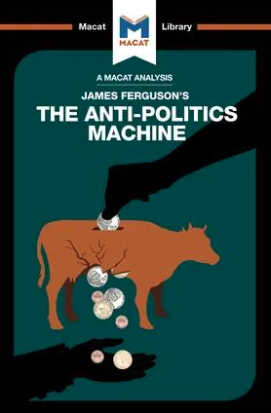
One of the readers of Scott Alexander’s Astral Codex Ten has contributed a review of James Ferguson’s The Anti-Politics Machine. The reviewer looked at a few development economics stories that illustrate some of the more common problems western technocrats encounter when they provide their “expert advice” to people in developing countries. This is one of perhaps a dozen or so anonymous reviews that Scott publishes every year with the readers voting for the best review and the names of the contributors withheld until after the voting is finished:
But even if the project was in some sense a “failure” as an agricultural development project, it is indisputable that many of its “side effects” had a powerful and far-reaching impact on the Thaba-Tseka region. […] Indeed, it may be that in a place like Mashai, the most visible of all the project’s effects was the indirect one of increased Government military presence in the region
As the program continued to unfold, the development officials became more and more disillusioned — not with their own choices, but with the people of Thaba-Tseka, who they perceived as petty, apathetic, and outright self-destructive. A project meant to provide firewood failed because locals kept breaking into the woodlots and uprooting the saplings. An experiment in pony-breeding fell apart when “unknown parties” drove the entire herd of ponies off of cliffs to their deaths. Why, Ferguson’s official contacts bemoaned, weren’t the people of Thaba-Tseka committed to their own “development”?
Who could possibly be opposed to trees and horses? Perhaps, the practitioners theorized, the people of Thaba-Tseka were just lazy. Perhaps they “didn’t want to be better”. Perhaps they weren’t in their right mind or had made a mistake. Perhaps poverty makes a person do strange things.
Or, as Ferguson points out, perhaps their anger had something to do with the fact that the best plots of land in the village had been forcibly confiscated to make room for wood and pony lots, without any sort of compensation. The central government was all too happy to help find land for the projects, which they took from political enemies and put in the control of party elites, especially when it could use a legitimate anti-poverty program as cover. In Ferguson’s words, the development project was functioning as an “anti-politics machine” the government could use to pretend political power moves were just “objective” solutions to technical problems.
A local student’s term paper captured the general discontent:
In spite of the superb aim of helping the people to become self-reliant, the first thing the project did was to take their very good arable land. When the people protested about their fields being taken, the project promised them employment. […] It employed them for two months, found them unfit for the work, and dismissed them. Without their fields and without employment they may turn up to be very self-reliant. It is rather hard to know.
Two things stand out to me from this story. First, the “development discourse” lens served to focus the practitioners’ attention on a handful of technical variables (quantity of wood, quality of pony), and kept them from thinking about any repercussions they hadn’t thought to measure.
This is a serious problem, because “negative effects on things that aren’t your primary outcome” are pretty common in the development literature. High-paying medical NGOs can pull talent away from government jobs. Foreign aid can worsen ongoing conflicts. Unconditional cash transfers can hurt neighbors who didn’t receive the cash. And the literature we have is implicitly conditioned on “only examining the variables academics have thought to look at” — surely our tools have rendered other effects completely invisible!
Second, the project organizers somewhat naively ignored the political goals of the government they’d partnered with, and therefore the extent to which these goals were shaping the project.
Lesotho’s recent political history had been tumultuous. The Basotho Nationalist Party (BNP), having gained power upon independence in 1965, refused to give up power after losing the 1970 elections to the Basotho Congress Party (BCP). Blaming the election results on “communists”, BNP Prime Minister Leabua Jonathan declared a state of emergency and began a campaign of terror, raiding the homes of opposition figures and funding paramilitary groups to intimidate, arrest, and potentially kill anyone who spoke up against BNP rule.
This had significant effects in Thaba-Tseka, where “villages […] were sharply divided over politics, but it was not a thing which was discussed openly” due to a fully justified fear of violence. The BNP, correctly sensing the presence of a substantial underground opposition, placed “development committees” in each village, which served primarily as local wings of the national party. These committees spied on potential supporters of the now-outlawed BCP and had deep connections to paramilitary “police” units.
When the Thaba-Tseka Development Project started, its international backers partnered directly with the BNP leadership, reasoning that sustainable development and public goods provision could only happen through a government whose role they primarily viewed as bureaucratic. As a result, nearly every decision had to make its way through the village development committees, who used the project to pursue their own goals: jobs and project funds found their way primarily to BNP supporters, while the “necessary costs of development” always seemed to be paid by opposition figures.
The funding coalition ended up paying for a number of projects that reinforced BNP power, from establishing a new “district capital” (which conveniently also served as a military base) to constructing new and better roads linking Thaba-Tseka to the district and national capitals (primarily helping the central government tax and police an opposition stronghold). Anything that could be remotely linked to “economic development” became part of the project as funders and practitioners failed to ask whether government power might have alternate, more concerning effects.
As we saw earlier, the population being “served” saw this much more clearly than the “servants”, and started to rebel against a project whose “help” seemed to be aimed more at consolidating BNP control than meeting their own needs. When they ultimately resorted to killing ponies and uprooting trees, project officials infatuated with “development” were left with “no idea why people would do such a thing”, completely oblivious to the real and lasting harm their “purely technical decisions” had inflicted.
Kitaro – “Caravansary” (live)
Kitaro
Published 17 Feb 2022Listen at Spotify: https://spoti.fi/2Q2T9qx
Listen at Apple Music: https://apple.co/2Iyx1QC
Listen at Amazon: https://amzn.to/2Q0opGp
for more info, visit: https://bit.ly/2W6CQMo#Kitaro #DomoMusicGroup

QotD: The end of Nicolae Ceaușescu
“You should have fired on them, and had they fallen, you should have taken them and shoved them into a cellar,” she said. “Weren’t you told that?”
Long one of the world’s most vicious dictators, Ceaușescu’s most recent plan for winning over the heartland was forcing half the country’s villagers to destroy their own homes — with pick-axes and hammers, if they couldn’t afford a bulldozer — and packing them into project apartments in new “agro-industrial towns”, for a “better future”. Despite this, and his long history of murder, terror, and spying, Ceaușescu to the end did not grasp that his unpopularity had an organic character. He was convinced ethnically Hungarian “terrorists” were behind the latest trouble.
After reaching the balcony of Bucharest’s Central Committee building to give a speech that December day, he’s genuinely surprised when the crowd turns on him. When he tells them to be quiet, he’s befuddled by their refusal, saying, “What, you can’t hear?” Elena jumps in and yells, “Silence!”, to which Ceaușescu, hilariously, replies, “Shut up!” The crowd listens to neither of them.
Paul Kenyon’s Children of the Night describes the morbid black comedy that ensued. The Ceaușescus and a motley gang of undead apparatchiks that included the “morbidly obese Prime Minister, Emil Bobu” later tried to load into a single helicopter — Bobu “waddled, walrus-like, to the rear” Kenyon writes — but there were too many of them, and the copter barely got off the ground. “Where to?” asked the pilot, and nobody knew, because there was no plan, since none of them had ever considered the possibility of this happening.
The sky was full of stuff, including other helicopters, which were dropping leaflets on the crowd giving what Kenyon described as a Marie Antoinette-like order to ignore “imperialist conspiracies” and return home “to a Christmas feast”. Four days later, a firing squad put the Ceaușescus against a wall and gave them their final, solid lead Christmas presents.
Ceaușescu’s balcony will forever be a symbol of elite cluelessness. Even in the face of the gravest danger, a certain kind of ruler will never be able to see the last salvo coming, if doing so requires any self-examination. The neoliberal political establishment in most of the Western world, the subject of repeat populist revolts of rising intensity in recent years, seems to suffer from the same disability.
Matt Taibbi, “Justin Trudeau’s Ceausescu Moment”, TK News by Matt Taibi, 2022-02-10.
May 29, 2022
We’ve evolved to the point that you don’t even need to turn the page for Gell-Mann Amnesia to kick in
Chris Bray has an almost unbelievable example of Gell-Mann Amnesia … literally on the same page of the site, two stories show how un-self-aware — and reflexively critical of non-progressives — the media can be:
Take exactly the same argument about exactly the same event and wedge it into two very different frames. Watch the result.
Here’s Politico, today, attending the NRA convention in Texas in the aftermath of a mass shooting at a school …
… and finding that NRA members are still gun-addled idiots who deflect concerns about guns by inventing a stupid fantasy argument — a conspiracy theory! — about mental illness:
Here, amid acres of guns and tactical gear inside a cavernous convention hall, the proximate cause of the mass shooting in Uvalde, Texas, was not a rifle, but mental illness, shadowy forces of evil or, as one man in a “Let’s Go Brandon” T-shirt put it, the “destruction of our children” by the teachings of the left.
These idiots, can you believe that? They were actually dumb enough to argue that the rifle didn’t cause the shooting, and instead they blamed — wait for it, because OMFG — mental illness. What morons! Imagine being so caught up in stupid far-right conspiracy theories that you’d blame a school shooting on mental illness.
Okay, now. Watch this.
On the very same day, Politico posted this story, right underneath the NRA story on the front page:
And this is what Politico says those professors found:
POLITICO: Can you take us through the profile of mass shooters that emerged from your research?
Peterson: There’s this really consistent pathway. Early childhood trauma seems to be the foundation, whether violence in the home, sexual assault, parental suicides, extreme bullying. Then you see the build toward hopelessness, despair, isolation, self-loathing, oftentimes rejection from peers. That turns into a really identifiable crisis point where they’re acting differently. Sometimes they have previous suicide attempts.
The professors go on to say that the start of the solution to the crisis of school shootings is to improve the quality of childhood mental health services: “We need to build teams to investigate when kids are in crisis and then link those kids to mental health services. The problem is that in a lot of places, those services are not there. There’s no community mental health and no school-based mental health.”
Same publication, same day, same page.


Black May, Nazi Subs Defeated – WW2 – 196 – May 28, 1943
World War Two
Published 28 May 2021German Grand Admiral Karl Dönitz orders the U-Boats to leave the Atlantic this week; the losses lately have just been too great for their patrols to continue there. There is active fighting in China, the Aleutians, and the Kuban, and there are special weapons tests in the skies over Germany.
(more…)
Approaching the “Chekhov’s gun” denouement in the Random Penguin-Simon & Schuster play
In the latest SHuSH newsletter, Kenneth Whyte updates us on the state of play in the long-running drama in the publishing world:

SHuSH readers know that back in November 2020, the fattest of the world’s five big publishing companies, Penguin Random House, outbid the second fattest, Rupert Murdoch’s HarperCollins, to acquire a listless third member of that group, Simon & Schuster.
Regulators in the UK, Canada, and the USA immediately began studying the $2.1-billion cash deal to determine if it would result in too much concentration of ownership and not enough competitiveness in the big leagues of book publishing. Last November, the US department of justice decided it would and sued to block it. A trial is expected this summer. Penguin Random House has until November to close the deal or it expires (with PRH owing S&S a dead-deal fee of $200-million).
For those of you who think in literary terms, the deal is Chekhov’s gun, and we’re coming in hard on the third act. Either S&S gets shot (acquired) or the play ends in an anticlimax (although whoever has been stewarding the deal at PRH may get shot by its parent company, Bertelsmann.)
If the deal fails, we’re in for a sequel because the current owner of S&S, Paramount (formerly ViacomCBS) won’t want it back. It is a motion picture/television company in the process of selling everything it owns not directly related to screen entertainment. It hopes to cement its status as a fourth-rate streaming service. S&S no longer fits, if it ever did.
Our view of the PRH-S&S deal is that the department of justice suit will fail to block the merger and S&S will be swallowed whole. It will be difficult to present the merger as the end of competition in the book industry when there are still four large publishers operating in the US, and a shitload of mid-size and smaller publishers. Combined, PRH&S&S may amount to less than a third of the American trade book market, and as little as 20 per cent, depending on how you do the math. That’s a long way from monopoly.
The DOJ, moreover, has chosen to fight its battle on low ground. It’s saying that the deal is bad for competition in books generally, but it is particularly concerned that the merger will result in less competition for the services of writers of anticipated top-selling books, loosely defined as authors commanding huge advances. You read that right: the DOJ is seeking justice for the .001% of the literary world. We argued all this at length, and destroyed the government’s case back in SHuSH 123.
The hoplite phalanx
HistoryMatters
Published 5 Jan 2016A short introductory video about on ancient Greek hoplite and phalanx.
Music: Wet by Michett

QotD: Was Biden’s Afghan evacuation driven by Twitter “optics”?
But the Apparat didn’t do that, and the reason was: Twitter.
All the Blue Checkmarks on Twatter agreed that “letting” Bad Orange Man pull out of Afghanistan would be “handing him a win”. After all, he said he was going to do it! And if he somehow got out before the 20th anniversary, that’d be an even bigger win. Obviously, then, they had to “let” Biden do it, because that’s a “win”. And of course he had to do it in August, so that he could “spike the football” on 9/11/2021.
So the withdrawal had to be pushed into 2021, and it had to be slapdash. Indeed, it had to be the exact opposite of whatever Bad Orange Man was planning to do, so that there was no possible way Bad Orange Man could claim a “win”. It had to be all Biden …
… and so it was. With results that anyone smarter than a concussed goldfish — which of course excludes everyone with a Blue Checkmark — could’ve predicted.
If the Blue Checkmark Borg on Twatter, then, decides that Brandon needs to look tough by nuking Moscow, then it’s go time. And since the social dynamic on Twitter is ever-spiraling lunacy — the only way to “win” Twitter is by being more screechingly insane about everything than everyone else — then whoever gets there fustest with the mostest is going to drive the “decision”.
Severian, “Ukraine”, Founding Questions, 2022-02-24.
May 28, 2022
Scott Alexander on the “Hearing Voices Movement”
I’d never heard of the Hearing Voices Movement, but I don’t read the [spit] New York Times [spit]. Scott Alexander almost certainly also avoids reading the NYT, but he responds to a recent article there on the phenomenon that some of his psychiatric patients have reported:
The New York Times has an article out on the Hearing Voices Movement — ie people with hallucinations and delusions who want this to be treated as normal and okay rather than medicalized. Freddie deBoer has a pretty passionate response here. Other people have differently passionate responses:
I’ve met some Hearing Voices members. My impression is that everyone on every side of this discussion is a good person trying to make the best of a bad situation (except of course New York Times journalists, who are evil people destroying America). Some specific thoughts:
2:
Plenty of people hear voices. Some of these people are your typical homeless schizophrenic, but many aren’t. One of my patients was a successful computer programmer who had near-daily auditory hallucinations. He realized they weren’t real, did his best to ignore them, and got on with his successful life — just like he had been doing for the past twenty years. He was seeing me for unrelated depression.
This guy kept his condition secret from his friends and co-workers. I don’t blame him for this choice at all. But when everybody who can hide it does, we only hear about the people who can’t keep it hidden, who are usually worst-case scenarios. Also (as a bunch of 1980s gay people can tell you) keeping a basic fact about yourself hidden from everyone you know sucks.
I recommended Hearing Voices Movement to this guy. I can’t remember whether he took me up on it or not. But I thought it would be helpful for him to have people he could talk to about his situation who wouldn’t think he was crazy, or try to get him locked up.
3:
People hate admitting that some cases are mild, and others are severe. Especially the kind of people who work at the New York Times
I talked about this a while back in the context of the autism rights movement. Many autistic people live great lives, enjoy the beneficial parts of their condition, and find it annoying or oppressive when psychiatrists keep trying to medicate them. Many other autistic people can’t live outside of institutions and constantly try to chew off their own body parts. A reasonable conclusion might be “the first group seem mild and should be left alone, the second group seem severe and probably need intensive treatment”, but it’s surprisingly hard to convince people of this.
Calling some cases “mild” sounds trivializing. Calling other cases “severe” sounds stigmatizing. Whatever your criteria for a mild case are, there will be someone who fits those criteria, but says the condition ruined their life and you are dismissing their pain. Whatever your criteria for a severe case are, there will be someone who fits those criteria but is thriving and living their best life and accuses you of wanting to imprison them in a hospital 24-7.
And that’s just the activists! We psychiatrists have the same problem from a different direction: we have seen some crazy @#!$. No matter how mild your case is, we’ve seen some case that looked like that at first glance, then slowly descended into a horror movie premise. Our instinct is naturally to round off the person who uses Xanax once a month to the lifetime drug abuser, the mildly depressed housewife to the gory suicide victim, and the occasional voice-hearer to the guy who needs to be in a straitjacket.
Still, some cases are mild and others are severe. People with mild psychosis — like my patient the programmer — probably don’t need to be on really strong medications with severe side effects. They probably just need support. In a perfect world, expert psychiatrists would have a major role in providing that support. In the real world, a lot of these patients expect their psychiatrist to freak out, overmedicate them, and maybe even commit them to a hospital. This being the real world, many of those patients are right. So they look elsewhere.

Morality is Dead. Hollywood Killed It.
Foundation for Economic Education
Published 27 May 2022What’s with all the nihilistic, amoral, dark anti-hero leads in movies and shows? Are we supposed to treat horrible characters as pinnacles of human behavior now?
The bleak content that’s crept its way mainstream over the last 10 years should concern us all. The stories we tell matter, for they influence what we believe and what values we adopt.
Fortunately, a renewed appreciation for natural rights and individualism could be the antidote to the immense darkness that’s blanketed American culture as of late. That’s what we’ll get down to on this feature episode of Out of Frame.
______________________________
FOLLOW/SUPPORT US:Support Out of Frame on Patreon or SubscribeStar:
https://www.patreon.com/OutofFrameShow
https://www.subscribestar.com/outoffr…Join our Discord: https://discord.gg/RKc4AcGQ9k
Sign up for our mailing list and never miss an episode again:
https://fee.org/oof-newsletterCheck out our podcast, Out of Frame: Behind the Scenes: https://www.youtube.com/channel/UCiS5…
Follow us EVERYWHERE!
https://linktr.ee/outofframefee
______________________________
CREDITS:
Written by Sean W. Malone
Produced by Sean W. Malone
Edited by Michael Ozias
Asst. Edited by Abby Richardson
“… the only thing that is history are any immediate hopes for a more competitive communications marketplace in Canada”
Michael Geist pans the latest official misinformation from the federal government on telecommunications legislation:

Innovation, Science and Industry François-Philippe Champagne unveiled the government’s proposed new telecom policy directive yesterday, hailing it as a “historic step”. However, a closer look at the policy suggests that the only thing that is history are any immediate hopes for a more competitive communications marketplace in Canada. Once again, the government has shown itself unwilling to take a strong stand in favour of consumers and competition, instead releasing a directive that largely retains the status quo and sends the message to CRTC Chair Ian Scott to stay the course. Indeed, the primary purpose behind the announcement would appear to be an attempt to shield the government from criticism over its decision to leave the controversial CRTC decision on wholesale Internet access intact, thereby denying consumers the prospect of lower costs for Internet services.
While the new proposed policy directive features much needed details and helpfully replaces the 2006 and 2019 directives that often conflicted and enabled the CRTC to pay little more than lip service to the issue, it sends a strong signal that it is happy with the Commission’s current approach. For example, the directive’s summary on measures to address wholesale Internet access are all about the status quo: “requiring large companies to continue to give access to competitors” or “directing the CRTC not to phase out the existing model for wholesale access.” These are not instructions to change.
The same is true for mobile wireless competition. Rather that using the opportunity to accelerate competition through mobile virtual network operators, the CRTC is instead to directed to improve its hybrid MVNO model “as necessary”. A full MVNO model? The government says it is prepared to support it “if needed”. Based on the current market, it apparently believes it isn’t needed.
Modele 1890 Berthier Cuirassier Carbine
Forgotten Weapons
Published 17 Jul 2017http://www.patreon.com/ForgottenWeapons
When the Modele 1890 Berthier carbine was adopted for the French cavalry, the decision was made to produce a special version for the Cuirassier troops. These were the elite heavy cavalry, equipped with steel breastplates and elaborate plumed helmets. They existed in that very brief window where the worlds of Napoleon and the smokeless-powder rifle coexisted.
The armor worn by the Cuirassier required some special adaptations to their firearms, specifically to the stocks. The scaled chinstrap of the helmet interfered with a normal cheek weld to the carbine, so the comb was removed from the stock. The metal buttplate also was a poor match for the metal cuirass, as it was difficult to hold the gun in position to aim. To account for this, a leather buttplate was used on these carbine, which would be much less slippery on armor.
Aside from these changes to the stock, the carbine was identical to the standard 1890 cavalry carbine. A total of 20,000 Cuirassier carbines were made in 1891 at the Chatellerault arsenal, and few survived World War One. By fairly early in 1915 the cavalry units had been repurposed as infantry, and the Cuirassier went into the trenches with the armor and carbines — perhaps better equipped, ironically, than the infantry in the greatcoats, kepis, and with Lebel rifles.
Thanks to Justin for finding this rifle for me!
If you enjoy Forgotten Weapons, check out its sister channel, InRangeTV! http://www.youtube.com/InRangeTVShow