
The Tank Museum
Published 18 Feb 2022► JOIN OUR PATREON: Our Patreons have already enjoyed Early Access and AD free viewing of our weekly YouTube video! Consider becoming a Patreon Supporter today: https://www.patreon.com/tankmuseum
► TIMESTAMP:
00:00 – INTRO
00:28 – FEATURES
(more…)
June 3, 2022
Chat Tanks #148 M548 | The Tank Museum
Comments Off on Chat Tanks #148 M548 | The Tank Museum
QotD: Snobbery and spying
During the Cold War, it was accepted that we would recruit spies and so would they.
Oxford and Cambridge became notorious hunting grounds for the Soviet Union, as they sought out clever young lefties who they might convince to go full retard into communism and then spy for the Motherland.
They had some success with some dapper young gentlemen called Philby, Maclean, Burgess, Blunt and Cairncross – that’s a story for another day.
It was notable that during the whole affair, British intelligence simply refused to believe that one of their own had been corrupted. They could not entertain such a notion, and so the Cambridge Five remained able to betray their country over and over again.
Alex Noble, “Hero Of The European Union”, Continental Telegraph, 2019-04-15.
Comments Off on QotD: Snobbery and spying
June 2, 2022
For Queen and Country (2010)
emptyangel
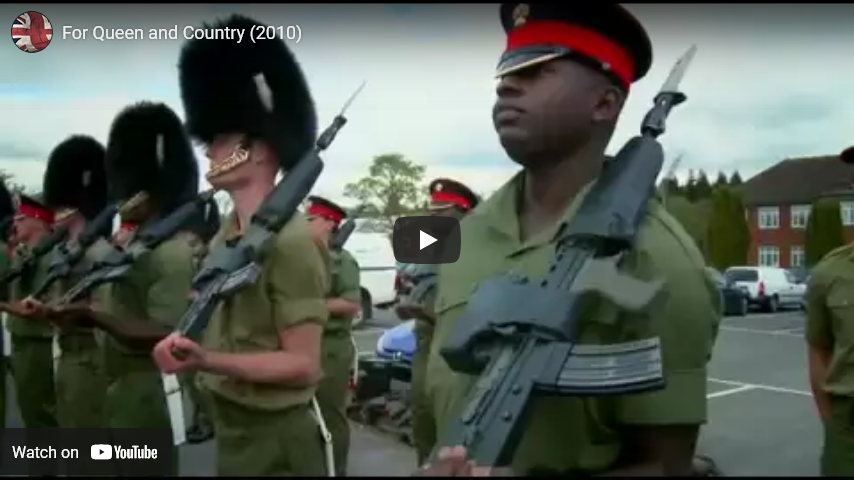
Published 14 Jun 2011“Documentary following the Grenadier Guards as they prepare to lead the 2010 Trooping the Colour. But these men have had precious little time to prepare; as fighting soldiers, they have just spent six months on the front line in Afghanistan’s Helmand Province. This is the story of how one and a half thousand men and women join together to create one of the greatest military ceremonies on earth. It is a ceremony with just one standard: Excellence.”
Comments Off on For Queen and Country (2010)
“Like many problems in American history, recycling began as a moral panic”
Jon Miltimore recounts the seminal event that kicked off the recycling pseudo-religion in North America:

The frenzy began in the spring of 1987 when a massive barge carrying more than 3,000 tons of garbage — the Mobro 4000 — was turned away from a North Carolina port because rumor had it the barge was carrying toxic waste. (It wasn’t.)
“Thus began one of the biggest garbage sagas in modern history,” Vice News reported in a feature published a quarter-century later, “a picaresque journey of a small boat overflowing with stuff no one wanted, a flotilla of waste, a trashier version of the Flying Dutchman, that ghost ship doomed to never make port.”
The Mobro was simply seeking a landfill to dump the garbage, but everywhere the barge went it was turned away. After North Carolina, the captain tried Louisiana. Nope. Then the Mobro tried Belize, then Mexico, then the Bahamas. No dice.
“The Mobro ended up spending six months at sea trying to find a place that would take its trash,” Kite & Key Media notes.
America became obsessed with the story. In 1987 there was no Netflix, smartphones, or Twitter, so apparently everyone just decided to watch this barge carrying tons of trash for entertainment. The Mobro became, in the words of Vice, “the most watched load of garbage in the memory of man.”
The Mobro also became perhaps the most consequential load of garbage in history.
“The Mobro had two big and related effects,” Kite & Key Media explains. “First, the media reporting around it convinced Americans that we were running out of landfill space to dispose of our trash. Second, it convinced them the solution was recycling.”
Neither claim, however, was true.
The idea that the US was running out of landfill space is a myth. The urban legend likely stems from the consolidation of landfills in the 1980s, which saw many waste depots retired because they were small and inefficient, not because of a national shortage. In fact, researchers estimate that if you take just the land the US uses for grazing in the Great Plains region, and use one-tenth of one percent of it, you’d have enough space for America’s garbage for the next thousand years. (This is not to say that regional problems do not exist, Slate points out.
The widespread imposition of recycling mandates across North America was probably an inevitable reaction to the voyage of the Mobro. For many people, this was the end of the story, as things that were previously just buried in landfill sites would now be safely and efficiently put back into the economy as re-used, re-purposed, or actual recycled products. Win-win, right?
Sadly, the economic case for recycling many items is weak to non-existant. The demand for recycled materials was lower than predicted and often only maintained through subsidies and hidden incentives that couldn’t last forever. Once the incentives went away, so did much of the created demand. Worse, the way a lot of the stream of recyclable materials was handled was by shipping it off to China or certain developing nations — in effect, paying them to take the problem off the hands of western governments. This resulted in even more problems:
Americans who’ve spent the last few decades recycling might think their hands are clean. Alas, they are not. As the Sierra Club noted in 2019, for decades Americans’ recycling bins have held “a dirty secret”.
“Half the plastic and much of the paper you put into it did not go to your local recycling center. Instead, it was stuffed onto giant container ships and sold to China,” journalist Edward Humes wrote. “There, the dirty bales of mixed paper and plastic were processed under the laxest of environmental controls. Much of it was simply dumped, washing down rivers to feed the crisis of ocean plastic pollution.”
It’s almost too hard to believe. We paid China to take our recycled trash. China used some and dumped the rest. All that washing, rinsing, and packaging of recyclables Americans were doing for decades — and much of it was simply being thrown into the water instead of into the ground.
The gig was up in 2017 when China announced they were done taking the world’s garbage through its oddly-named program, Operation National Sword. This made recycling much more expensive, which is why hundreds of cities began to scrap and scale back operations.
Comments Off on “Like many problems in American history, recycling began as a moral panic”
M1915 Howell Automatic Rifle Enfield Conversion
Forgotten Weapons
Published 28 Mar 2017The M1915 Howell Automatic Rifle is a conversion of a standard No1 MkIII Lee Enfield rifle into a semi-automatic, through the addition of a gas piston onto the right side of the barrel. Despite its very steampunk appearance, the Howell is actually a quite simple conversion mechanically. The rifle action had not been modified at all, and a curved plate on the end of the gas piston is used to cycle the bolt up, back, forward, and down just as it would be done manually.
The additional metal elements added to the gun are there to prevent the shooter from inadvertently getting their hand or face in the path of the bolt. The crude tubular pistol grip is necessary because the shooter’s hand on the wrist of the stock would normally be in the path of the bolt’s travel. Note that the Parker-Hale bipod on this example is a non-military addition from its time in private ownership.
In addition to these elements, the Howell has been fitted with a 20-round extended magazine to better exploit its rate of fire. However, the Howell was made as a semiautomatic rifle only, and not fully automatic. It was offered to the British military circa 1915, but never put into service. Instead, the British would significantly increase production and deployment of Lewis light machine guns. Howell would offer his conversion in basically the same form to the military again at the onset of World War 2, but was again turned down.
Shooting the Howell was remarkably successful — I had expected it to be very malfunction-prone, but in fact it ran almost completely without fault. In retrospect, I would attribute this to the simplicity of its conversion, which made no changes to the feeding and extraction/ejection elements of the SMLE. The gun was a bit awkward to hold, and the offset sights left one with really no cheek weld at all, but recoil was gentle thanks to the gas system’s function and added weight. Quite a remarkable gun, and one I am very glad to have been able to shoot.
http://www.patreon.com/ForgottenWeapons
Cool Forgotten Weapons merch, including this shirt specifically about the Howell! https://shop.bbtv.com/collections/for…
If you enjoy Forgotten Weapons, check out its sister channel, InRangeTV! http://www.youtube.com/InRangeTVShow

Comments Off on M1915 Howell Automatic Rifle Enfield Conversion
QotD: The rat race of modern academia
This means there’s a lot of competition for those tenure-trace position, so these PhDs have to outdo each other in their brave and transgressive publications. That their insights make little sense outside of their narrow fields, much less have any relation to reality, is of no import. Academic and career success is the ultimate goal here, nothing else.
Killer Marmot, commenting on “Have you tried less tiresome music?”, DavidThompson.com, 2022-03-01.
Comments Off on QotD: The rat race of modern academia
June 1, 2022
Vintage Russian T62 tanks reported in Ukraine
As with all discussions of the ongoing fighting between Russian and Ukrainian troops, it’s very difficult to be sure that what is being reported is in any way accurate — both sides pulled out all the stops on the PR/propaganda/disinformation machinery months ago. At Thin Pinstriped Line, Sir Humphrey seems to be convinced that the reports that the Russians have been dis-interring mothballed Soviet-era T62 tanks to send into combat in Ukrane are believable enough:
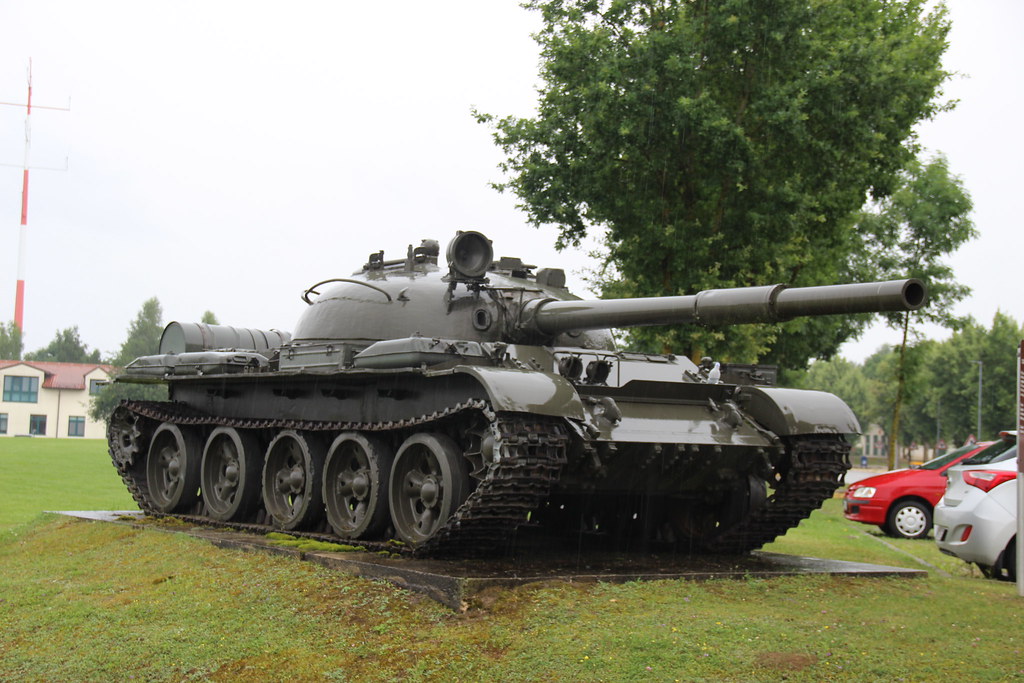
“Soviet T-62M MBT Standard Battle Tank” by Gary Lee Todd, Ph.D. is marked with CC0 1.0. To view the terms, visit https://creativecommons.org/publicdomain/zero/1.0/?ref=openverse.
The Russian Army has taken such significant losses of materiel that it has been forced to pull vintage T62 tanks from reserve, and commit them to front line operations. This statement makes plain just how costly the Russian advances have been in the Donbas area, and raises questions about what, if any, value, there is from retaining a war reserve of vehicles and equipment.
It is difficult to get an accurate picture on just how disastrous the Russian losses have been so far in the war, but most estimates suggest that at least 700 tanks have been destroyed, with many more damaged or captured. Each loss represents not only a small reduction in combat capability to Russia, but usually a far more valuable, and irreplaceable crew.
Russia is not a nation that likes to throw military equipment away, far from it. Their equipment is designed to be simple, reliable and last a very long time. As the outstandingly good website WW2 after WW2, which keeps track of what happened to military equipment after the war, lovingly documents, Soviet era equipment from WW2 just kept going (note, do not click on the link unless you wish to be sucked into a very big time sink!).
With huge reserves of people, no constraints on space or spending, and a mentality of “stores are for storing, not scrapping”, Russia has long kept ancient and utterly obsolete equipment in storage depots long past the point of being of any meaningful value. It is almost certain that there are still Russian Army depots out there with WW2 era equipment waiting for a recall to the colours if required.
The challenge facing Russia though is that due to the rampant corruption, the inability to hold units to account and ensure that readiness is tested, and just the sheer scale of the stockpile, most of the vehicles in their arsenal are probably not combat ready, and have probably been cannibalized beyond repair. Despite having thousands of T72 and T80 in service and storage, it seems that they are not deployable.
This poses a real challenge for Russia on two fronts – firstly, to bring the T62 out of retirement and into front line service as attrition reserves poses a significant support challenge. The vehicle is not compatible with later models of Russian tanks, so will require bespoke logistics support – placing further pressure on the already creaking supply chain.
Additionally, although simple to operate, it still requires crew to use it – with four, instead of three crew needed, this poses an additional headache for the Russian Army, which will have to find 25% uplift in tank crews to operate them properly. At a time when the Russians are low on people, and have churned through a significant proportion of their main army, it will require extraordinary efforts to find bodies to crew these tanks.
Bodies is perhaps the operative word here, for this is likely to be the fate of the crew in these vehicles. The T62 is utterly outclassed and completely obsolete for the environment in which it is operating. It may be good for gunning down demonstrators or strangling democratic protests in third world nations (the joy of socialist dictatorships), but against a highly experienced army, fighting with advanced equipment to defend its homeland, it is utterly hopeless. While it can still have some effect, the T62 units going into action are certain to be outclassed, outgunned and out of time when they face the Ukrainian Armed Forces.
Update: After I scheduled this post for publication, I saw that Berhard Kast (Military History Visualized) had posted a video analyzing the evidence, which you can check out here.
Update, 1 June: Apparently it helps when you include the link to the original post. Who knew?
Comments Off on Vintage Russian T62 tanks reported in Ukraine
How To Kill A U-Boat – WW2 Special
World War Two
Published 31 May 2022How to kill a U-Boat? The threat of the illusive and nearly undetectable submarines had been on the mind of every Allied naval planner since the Great War. As the Kriegsmarine once more unleashed its wolfpacks to the high seas, it became a race against time to find a way to stop the deadly stalkers from beneath the surface.
(more…)
Comments Off on How To Kill A U-Boat – WW2 Special
Trudeau’s new gun control plans will do nothing to reduce criminal use of firearms … and he doesn’t care
The proposed new rules will impose costs on legal gun owners and restrict their access to certain firearms, and almost certainly do nothing at all to reduce the headline-grabbing crimes that supposedly prompted the new rules in the first place:
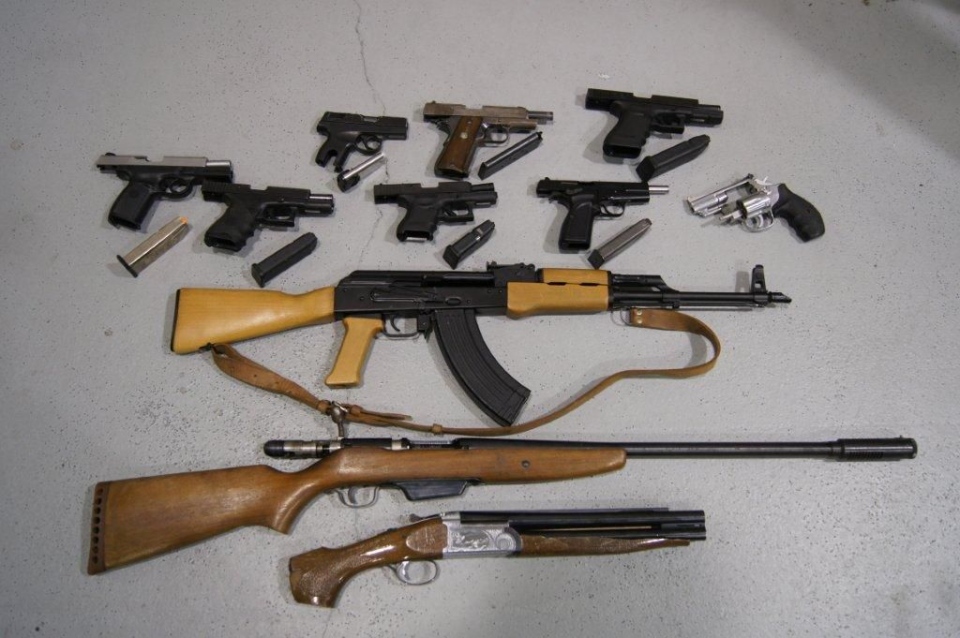
A 2018 Toronto Police Services publicity photo of guns seized in a recent operation.
In my 15 years or so of writing about firearms policy, here’s been a constant problem: gun policy is complicated, the broader public doesn’t know much about it, and it’s hard (impossible?) to make any coherent arguments without laying out the context, both of the specific proposals and the broader background. Working through what was announced yesterday, and how this clarifies a worrying shift in how the Liberals approach gun control, is going to be a bit of a process.
Get comfy.
As of Tuesday morning, we are short a lot of details, because the Liberals chose to make their high-publicity announcement before they provided any technical briefings. (We’ll come back to that later.) At first glance, it seems that lot of what the Liberals announced is stuff they’d either already committed to do or, in fact, already exists. (The Liberals?! Re-announcing stuff? Well, I never!) There is currently confusion about the ammunition magazine capacity limit — most non-gunnies won’t know the difference between an internal magazine and a detachable one, but it’s a huge difference, and the proposed legislation is unhelpfully vague. So stay tuned. But the actual centrepiece of the proposal, I have to admit, made me burst out laughing. On Twitter, I called it “peak Liberal”. It really is a pretty perfect example of what’s wrong with how the Liberals govern, but why they’re great at politics.
One of the jokes about Justin Trudeau when he entered politics was that he’d be much better suited to playing the role of political leader on TV than he would in real life. Several years later, the joke is on the Canadian voter because that’s turned out to be exactly the case: Trudeau loves posturing and pontificating for the cameras, and early in his first term as prime minister he became notorious for “unplanned” photo ops (despite being constantly accompanied by at least one staff photographer/videographer everywhere he went). I think this is one of the reasons the Liberals have been justly mocked for constantly re-announcing policies and programs — it looks good on camera.
The big reveal was a “freeze” on handgun sales in Canada, and their importation. Existing owners can keep theirs. It’s not clear exactly when this will go in effect, so I imagine gun stores across the land are going to set sales records in the next few days. Once in place, the sale or transfer of a handgun — from either a store to an individual or between individuals — will be eliminated. Again, “frozen”, as the Liberals call it.
At the most basic level, new government policies are intended to solve a problem: you see something that’s wrong with the status quo, and you try to enact a policy to improve it. Parties tend to wrap their policies in lots of rhetorical flourishes, but if you tune out what the politicians are saying and look at what they’re doing, you can get a decent sense of what their actual goal is. And there’s been an interesting shift in what the Liberals have been doing with gun control these last few years. Monday’s announcement is perhaps the ultimate example of this yet, the purest form of the new normal we’ve yet seen.
The Liberals are making a series of announcements that won’t actually change, at all, how safe Canadians are from gun violence. The announcements do get a lot of attention, though. Because, clearly, getting the attention is itself the goal. The public-safety talking points are just the PR frosting on top of what is an entirely political exercise. Why else make the announcement before you give the press the technical briefings? The sequence tells you all you need to know.
Trudeau’s general governing style might best be described as “provocatively performative”. If you think of him just portraying what he thinks a Prime Minister should look like, much of his performance makes more sense. As I joked on social media the other day “It’s about time Trudeau took decisive steps to crush these MAGA-hatted, gun-toting, pickup-truck-driving rednecks who keep coming into Toronto and gunning down innocent drug dealers, pimps, and aspiring rap artists who were just turning their lives around! ” It’s a theatrical performance on the political stage … but unfortunately ordinary Canadians are going to be forced to put up with his playing up to the urban and suburban voting galleries.
Note that while the government is puffing its collective chest for this “tough on guns” announcement, they are also pushing a bill in Parliament that would reduce or eliminate many “mandatory minimum penalties” for things like smuggling firearms into the country. This is apparently intended to address the “overincarceration rate” of First Nations and other “marginalized Canadians”. So, on the one hand, they’re planning to penalize legal gun owners and on the other hand, they’ll reduce the penalties that can be imposed on criminals who smuggle illegal weapons into the country. That only makes sense if it’s all a theatrical performance.
Comments Off on Trudeau’s new gun control plans will do nothing to reduce criminal use of firearms … and he doesn’t care
The Battle of The Glorious First of June 1794
MaritimeGB
Published 17 Feb 20131794 — After the failed harvest, France organises for a desperately needed grain convoy to cross the Atlantic. British Admiral Lord Howe is sent to intercept the French and although the British win the fight, the tactical victory goes to France.

Comments Off on The Battle of The Glorious First of June 1794
QotD: Spartiate Women
Sparta has obtained a reputation in the popular culture – derived from the sources – for affording a greater degree of freedom and importance to its women than any other Greek polis (I should stress this is a very low bar) and, so long as we are talking about spartiate women there is some truth to this.
Spartiate girls went through a similar “rearing” to spartiate boys, although they were not removed from the home as their brothers were. Spartiate girls ran races and were encouraged to be physically active (Plut. Lyk. 14.3; Mor. 227; Xen. Lac. 1.4). The evidence is thin, but points fairly strongly to the suggestion that spartiate women were generally literate, in quite the contrast (again, as the evidence permits) to the rest of Greece. Now our sources make clear that this is in part a product of the leisure that spartiate women had, since the primary domestic tasks of Greek women – textile manufacture and food preparation – were done entirely by slave labor forced upon helot women (Xen. Lac. 1.3; Plato, Laws. VII; Plut. Mor. 241d).
Whereas the sources paint a portrait of elite citizen Athenian women as practically cloistered, spartiate women had significantly more freedom of movement, in part because they appear to have been the primary managers of their households. Male spartiates didn’t live at home until thirty and were likely frequently away even after that (Plut. Lyc. 14.1; Mor. 228b). Spartiate women could also inherit and hold property in their own name to a greater degree than in Athens or elsewhere in Greece (note for instance Plut. Agis 7.3-4). The strong impression one gets from the sources is that this gave spartiate women quite a bit more sway; our largely male sources, especially Aristotle, disapprove, but we don’t need to (and shouldn’t!) share their misogyny. The sources are also very clear that spartiate women and girls felt much freer to speak their minds in public than Greek women in most poleis, although they were still completely and universally excluded from formal politics.
But – and you knew there would be a but (surprise! there are two) – but the role of women in Spartan society as we can observe it remains fundamentally instrumental: in the Spartan social order, spartiate women existed to produce spartiate boys. The exercise that spartiate girls undertook was justified under the assumption that it produced fitter (male) children (Plut. Lyc. 14.2; Xen. Lac. 1.4). Plutarch implies that the age of marriage for spartiate women was set in law, though generally older than in the rest of Greece (Plut. Lyc. 15.3; Mor. 228a).
Spartiate women appear to have had no more say in who they married than other Greek women, which is to say effectively none. Marriages seem to have been arranged and the marriage ceremony itself as it it related to us was a ritualized abduction (Plut. Lyc. 15.3-5; Hdt. 6.65) without even a fig-leaf of (largely illusory) consent present in some other ancient marriage rituals. Husbands apparently also “lent out” their wives to other spartiate men (Plut. Lyc 15.7; Xen. Lac. 1.7-8); descriptions of this passage stress the consent of the men involved, but completely omit the woman’s consent, although Xenophon implies that the woman involved will “want to take charge of two households” and thus presumably be in favor; I have my doubts.
Everything we have about the Spartans (honestly, just read Plutarch’s Sayings of Spartan Women, but also Xen. Lac. 1.4, 7-8, Plut. Lyc. 15, etc.) reinforces the impression that spartiate women were viewed primarily as a means towards producing spartiate boys. Gorgo’s retort that spartiate women “are the only women that are mothers of men” (Plut. Mor. 240e), her husband’s command that she in turn (when he died), “Marry a good man and bear good children” (Plut. Mor. 240e), the anonymous spartiate woman who shames an Ionian woman for being good at weaving because raising children “should be the employments of the good and honorable woman” (Plut Mor. 241d) and on and on. Most of the sayings that don’t involve the bearing of children, either involve spartiate women being happy that their sons died bravely, or disowning them for not doing so.
Now, there is a necessary and very important caveat here: this is the role of spartiate women as viewed by men. It is striking that the one of the largest things we can be reasonable sure that spartiate women did do – they seem to have had the full management of the household most of the time – doesn’t figure into these sayings or our sources hardly at all (save, to a degree, to Aristotle’s polemic in Book 2 of the Politics). We should not be surprised that our – elite, aristocratic and exclusively male sources pick out the roles that seem most important to them. The average spartiate woman may well have felt differently – for my part, I can hardly imagine many spartiate mothers were overjoyed to hear their sons had fallen in battle, whatever brave face they put on in polite society. And I have to imagine that many spartiate women were likely shrewd managers of their households, and probably took some pride in that skill.
All of that said, I think it is fair to say that, on the whole, spartiate women seem to have had a relatively better condition than free citizen women in other poleis in Greece. Where they were sharply constrained – and to be clear, by modern standards, spartiate women were still very sharply constrained – they were constrained in ways that were mostly typical in Greek society. Quite frankly, ancient Greek poleis did quite poorly by their women, even by the low, low standards of other pre-modern societies. But given that low bar, the life of spartiate women does seem quite a bit better and our sources reflect this fairly openly.
But – and this is the other “but” I alluded to above – a huge part of this is that spartiate women were freed from the demand to do hours and hours of difficult labor preparing and serving food and producing textiles. And here we circle back to last week’s problem: spartiate women probably represented around 6% of Spartan (including the helots) women. If we want to talk about the condition of women in Sparta, we need to talk about helot women.
Bret Devereaux, “Collections: This. Isn’t. Sparta. Part III: Spartan Women”, A Collection of Unmitigated Pedantry, 2019-08-29.
Comments Off on QotD: Spartiate Women
May 31, 2022
Conspiracy theorists, like the deeply paranoid, aren’t always wrong
Chris Bray responds to a common response he’s encountered from people who are worried that everything we’re seeing is somehow part of a deep-laid, nefarious plan to … do something. Something evil, something terrible, something … undefined but wrong:
If all of our problems are caused by a secret cabal who are having a new Wannsee Conference [Wiki]— twelve assholes sitting around a table and carefully planning our destruction — then we could solve that problem in half an hour with a dozen lampposts. We just need some names and an address: problem solved.
I think it’s much harder if there’s no they and no plan behind an event like the Uvalde school shooting. You can kill a few plotters, but how do you fix a broadly distributed collapse of courage, honor, decency, competence, knowledge, skill, morality and … a bunch of other things, but that list is a good start. If identifiable actors are tearing things apart, you can know where to put your hands to stop them; you can act. If we’re just trapped in a miasma of vicious mediocrity and weakness, where are the levers that change our course? What’s the solution to widespread societal degradation, to a suicidal loss of shared values and ordinary ability?
Facing an endless string of metastasizing and coalescing implosions — the lockdown-induced mental health crisis among children, appalling growth in energy prices, severe fertilizer shortages, supply chain collapse, unacknowledged vaccine injuries, vaccines that make illness more likely, military failure and the madness of the Afghanistan debacle, an emerging food shortage that’s starting to look really disturbing — the easiest way to deal with it is to say that it’s all one crisis planned and implemented by one set of people. If that’s true, the solution doesn’t even require a full box of ammunition, and we could wake up tomorrow morning in a world that we’ve repaired.
But the problem is that I mostly don’t think it’s true. I think it’s all one interwoven societal crisis, but that it’s connected by the uselessness of overcredentialed weak people. As for the view that they’re planning all of this, I increasingly think that our bullshit elites, our highly compliant social climbers in positions of power, mostly couldn’t plan a plate of toast.
Now, this is important: This doesn’t mean that I don’t think any of it is ever true. Of course there’s fake news. There are false flags, there are staged ops, and there are crisis actors. (The Ghost Of Kyiv, Ukraine’s boldest fighter pilot, agrees with me.) It seems pretty clear at this point that the plot to kidnap Gretchen Whitmer, that terrifying thing, was some socially awkward dorks being urgently and persistently goaded by FBI provocateurs. And it’s no longer possible to pretend that the Capitol Police didn’t just open the doors on January 6 to the “mob” that “broke in”.
But the transition from “some things are fake” to it’s all a lie and a plan every step of the way is a bigger claim — he says, carefully — and one that doesn’t make that much sense. With regard to Uvalde and the cops who wouldn’t act, for example, cowardice and incompetence work just fine as an explanation, because we have examples to compare the moment to. Peacetime militaries build an officer corps around rules-focused behavior, around the ability to comply and to operate within a hierarchy; then wartime militaries go through a period of officer purges, as they work to find high-functioning leaders who can tolerate the chaos and pain of battle. Confronted with a high level of brutality and danger, some people just can’t do it. This strikes me as an unremarkable fact, and one that doesn’t require extraordinary explanations. The school district police chief, a bureaucrat for decades, pushing paper and going to meetings, was confronted with sudden shock and horror on an extraordinarily harrowing scale, and he lacked the ability to respond. McClellan also couldn’t bring himself to attack Richmond.

Comments Off on Conspiracy theorists, like the deeply paranoid, aren’t always wrong
The Crusades: Part 9 – The Other Crusades
seangabb
Published 18 Mar 2021The Crusades are the defining event of the Middle Ages. They brought the very different civilisations of Western Europe, Byzantium and Islam into an extended period of both conflict and peaceful co-existence. Between January and March 2021, Sean Gabb explored this long encounter with his students. Here is one of his lectures. All student contributions have been removed.
(more…)
Comments Off on The Crusades: Part 9 – The Other Crusades
A new history of the evil empire. No, not that one. Not that one either. The other evil empire!
In The Critic, Barnaby Crowcroft reviews Caroline Elkins’ new history of the British empire, Legacy of Violence:

Elkins is correct that British decolonisation after the end of the war — if not “white-washed” — has got off lightly among historians, often via a contrast with the dreadful behaviour of the French. We remain far too influenced by the impression that Britain willingly and amicably handed over power (as Harold Macmillan put it) to Asian and African representatives of “agreeable, educated, Liberal, North Oxford society”.
There is a single map in this book which should definitively dispose of such ideas, showing all the colonial conflicts and states of emergency Britain was engaged in around the world after 1945. There are the well-known counterinsurgencies in Palestine, Malaya, Kenya, Cyprus and Aden. Alongside other, less well-known ones, however — British Guiana, Malaysia, Belize, Oman and the New Hebrides — bring us pretty much into the 1980s without a single year of global colonial peace.
In Kenya and Malaya, the British carried out massive coercive interventions in the 1950s, including the forcible resettlement of over a million people into closely monitored “new villages”, which, if they cannot be likened to concentration camps, certainly resemble the kinds of things the French were doing in Algeria. Difficult though it is to believe today, until very recently the British were a “warlike” and patriotic people, and their agents could be ruthless in the pursuit of imperial interest overseas.
Unfortunately, it is not possible to take seriously the more grandiose claims of Legacy of Violence, including Elkins’ presumption to have uncovered the Key to All Mythologies of British imperial wickedness in the form of Liberalism and Racism. The prose is part of the problem. Her introductory statement of the book’s bombastic aims reads more like something written by a professional satirist, than a professional historian.
“To study the British empire,” she writes, “is to unlock memory’s gate using the key of historical enquiry. But once inside, history’s fortress is bewildering … Unlike mythical fire-breathing monsters, however, the creatures inhabiting the annals of Britain’s imperial past are not illusions [but] monstrosities [which] inflicted untold suffering …”
Much of the book is given over to a plodding chronicle of nineteenth- and twentieth-century British history, in which events are construed — and often misconstrued — to give the meanest possible interpretation. British “arch-imperialists” resemble cartoon villains, who wear “Hitleresque moustaches” and “racist coattails” and are awarded MBEs and OBEs according to how much harm they inflict upon colonial subjects. There is even an imaginative reconstruction of British pilots all but laughing as they machine-gun “defenceless women and children”; readers are invited to listen to their “screams of pain”.
To determine whether Britain’s empire was uniquely violent invites the question: compared to what? Niall Ferguson earned opprobrium for suggesting in 2003 that alongside the rival empires which arose to challenge it in the middle of the twentieth century, Britain’s looked pretty attractive.
To her credit, Elkins does not disagree with this. Her treatment of Malaya’s communist insurgency suggests that she is not particularly exercised by violence when it is committed by ideological confrères. The only thing we get in the way of any broader comparison, however, is the notably wishy-washy one implied between the “East and the West”, which she describes as the contrast between “humanity and inhumanity”.
Comments Off on A new history of the evil empire. No, not that one. Not that one either. The other evil empire!
History of Rome in 15 Buildings 11. Santa Prassede
toldinstone
Published 2 Oct 2018After Leo III crowned Charlemagne Holy Roman Emperor in 800, Europe had two notional leaders: the pope and the emperor. In theory, they were the twin pillars of a well-ordered Christian society. In practice, they were usually at each other’s throats. One product of their rivalry was the ninth-century church of Santa Prassede, the subject of this eleventh episode in our history of Rome.
To see the story and photo essay associated with this video, go to:
https://toldinstone.com/santa-prassede/

Comments Off on History of Rome in 15 Buildings 11. Santa Prassede


