
Rich, creamy banana ice cream with banana compote
City/Region: England
Time Period: 1894Today, the Lusitania is most remembered for being the target of a German torpedo on May 7, 1915, but when she sailed, she was known for being the height of speed and luxury. This ice cream dessert was served to second class passengers on October 9, 1913 on board the Lusitania, and the same dessert is on a menu from April 11, 1912 aboard the Titanic.
It’s not hard to see why Victoria Pudding was served to fancy passengers. The flavors are layered and delicious, the texture is luxurious and creamy, and the compote is undeniably fancy. At first you get the flavor of the banana, then the floral notes from the orange flower water come in, and nothing is overpowering. The banana compote is quite a bit of work, and as it doesn’t add any new flavors to the dish, I think it’d be okay to skip it. If you’re going for maximum opulence, though, then definitely make it.
Victoria Pudding
Pouding à la Victoria
Take one pint of vanilla custard (Book of Ices, p. 23), add to it the purée of six large or eight small raw ripe bananas that have been pounded with one ounce of castor sugar, the pulp of two oranges and one lemon, and a quarter-pound of raw ripe or cooked pineapple; mix these together, and colour with a little of Marshall’s Apricot Yellow, and rub through a fine hair sieve; flavour with a wineglassful of orange-flower water, a teaspoonful of vanilla essence, and a wineglassful of brandy; pour the mixture into the charged freezer and freeze it to the consistency of a thick batter; then add half a pint of whipped cream that is sweetened with half an ounce of castor sugar; refreeze it and put it into a fancy pudding mould, place this in the charged ice cave for three and a half to four hours, during which time turn it occasionally from side to side, so as to get the ice evenly frozen. When ready to serve turn out the pudding in the usual way on to a dish, and serve round it a compote of bananas (see recipe).
This is a nice dish for a dinner or luncheon sweet, and if the mould has a pipe the space made by it can be filled with the compote of fruit.Compote of Bananas
Put two tablespoonfuls of thick apricot jam into a basin with the pulp of two bananas, a wineglassful of Marshall’s Maraschino Syrup, a few drops of Marshall’s Carmine, a saltspoonful of Marshall’s Apricot Yellow, the juice of one lemon and of one orange; mix these together with this purée three or four raw ripe bananas that have been freed from skin and sliced about a quarter of an inch thick; set it on ice till quite cold, then use.
— Fancy Ices by Agnes B. Marshall, 1894
August 16, 2024
Dining on the luxury liner RMS Lusitania
QotD: American football
[F]ootball isn’t really a sport in America. It’s a religion. Almost every single game is played on a Saturday (college) or Sunday (NFL), which, for a Judeo-Christian country, means it’s played on the Sabbath. Accordingly, families come to a standstill when football is on. Tumbleweeds roll through usually busy towns. If anything squares with America’s reputation as a bunch of religious kooks, our faith in football is it.
Jonathan David Morris, “Our National Pastime?”, Libertarian Enterprise, 2005-04-23.
August 15, 2024
“The Establishment … are indifferent to the deaths of the girls, but visibly outraged at protests and calls to end immigration”
Spaceman Spiff risks getting the full power and majesty of the British legal system arrayed against him for offering an opinion critical of the authorities and the ongoing immigration policies of this and previous British governments:

Britain is experiencing civil unrest in response to the recent murders of three young girls at the hands of an individual whose family was allowed to enter Britain from Africa and settle in Wales.
The Establishment response is similar to comparable European states like Ireland or Germany. They are indifferent to the deaths of the girls, but visibly outraged at protests and calls to end immigration.
Vocal rejection of multiculturalism and evidence of its failure in Britain is treated as a hate crime, a subject that cannot be discussed.
This has done nothing to quell discomfort and has done little more than show us Britain’s elites are lost in a bubble that is increasingly divorced from reality.
Mass immigration is deeply unpopular
Immigration has been an issue since the 1950s. Since the 1990s it has featured as one of the key issues in every election, often the top issue for most.
Conversely it has been summarily ignored by the educated classes who run the country. Immigration is here to stay, and Britain must change to accommodate it.
The elite section of society promoting immigration is especially indifferent to those most affected, low wage workers. There is also a strong cultural component beyond the economic arguments, an understanding the drive is to make Britain less white with very vocal attempts to champion non-natives in every area of life.
For many decades the educated classes have viewed notions of patriotism or national loyalty with suspicion. Many fancy themselves as internationalists more in tune with the educated in foreign nations than their working-class compatriots.
Now, after decades of immigration, whole communities have been displaced. Some areas of Britain have no Europeans living there. Some tourists complain parts of London do not look English.
[…]
It is the height of arrogance to believe we can somehow circumvent the wisdom accumulated throughout history. And the price being paid is by the British people who are losing their homeland.
Those behind our utopian schemes are working harder and harder to shore them up. Not just mixing cultures but expensive climate initiatives, radical feminism and fractional reserve banking to name only a few of today’s fads. None of them were ever going to work and now they are obviously failing.
The announcements represent the beginning of the end of bad ideas that were doomed from the start. A sane government would take note and begin a plan to reset Britain starting with listening to concerns about mass immigration.
Instead our ruling elite are digging in, and that will probably mean increased civil disturbance as more and more recognize they have no voice and no say.
Given who we are, who we really are under the political correctness and the good manners, this is absolute insanity on their part. Perhaps just the latest decision in a long line of bad ideas unable to accommodate reality. The distortions within their bubble are strong and they are becoming impossible to hide.
The end is nigh for the believers in Western liberalism.
Yet another revisionist history of World War II
In the latest anonymous review at Astral Codex Ten, the book to be considered is How the War Was Won by Phillips Payson O’Brien:
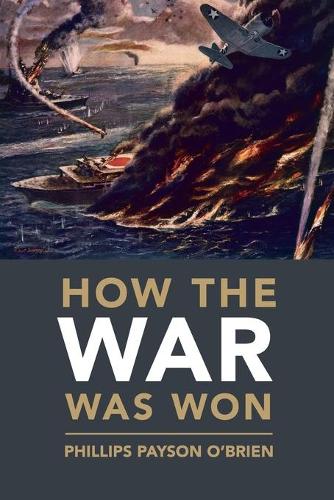
To a first approximation, there are a million books about World War II. Why should you care about How the War Was Won (hereinafter “HtWWW”) by Phillips Payson O’Brien?
- It provides a new, transformative view of the conflict by focusing on production of key goods and what affected that production instead of the ups and downs of battles at the front.
- That particular lens used can (and should) be applied outside of just World War II, and you can get a feel for how that might be done by reading HtWWW.
- I have lectured about World War II and read many, many books about it. I have never texted friends more excerpts of a book than this one.
I have some criticisms of HtWWW, but if the criticisms dissuade you from reading the book, I will have failed. These complaints are like tut-tutting Einstein’s penmanship.
The Wikipedia-Level Story of World War II (and O’Brien’s Counterargument)
To understand why O’Brien’s argument is so novel, you need to know the modern-day conventional understanding of the story of World War II. Here is my summary of the conventional narrative of World War II:
- Germany conquered Poland and France. It tried to bomb the UK into submission/maybe enable an invasion. That effort failed when Germany was defeated in the Battle of Britain, thanks largely to the plucky efforts of British airmen (memorably summarized by Winston Churchill: “Never in the field of human conflict was so much owed by so many to so few”.)
- Stymied in the West, Germany invaded the Soviet Union, won a bunch of crushing victories, but then got turned back at the gates of Moscow. The Soviets moved all of their factories east of the Ural Mountains and produced a vast tide of T-34 tanks that overpowered the Germans.
- The Germans suffered a catastrophic defeat at Stalingrad and a bloody strategic defeat at Kursk, after which the Soviets relentlessly pounded Germany to defeat.
- The US and the UK sent a lot of material help and eventually fought the Germans too, most notably in the D-Day invasion and the Battle of the Bulge. However, most of the fighting was done by the Soviets.
- It is very difficult to say how important the aerial bombing campaigns of the Western Allies were in defeating Germany. The Germans moved much of their production underground, insulating them from truly disastrous effects.
- The U.S. mostly fought alone against Japan, which won a series of impressive early victories (e.g., Pearl Harbor, the conquest of Singapore) until the decisive Battle of Midway, after which the vastly larger US industrial base outproduced Japan into oblivion.
- The US bombed the Japanese into submission by destroying Japanese cities, ultimately by dropping atom bombs on Hiroshima and Nagasaki.
By examining where the Axis focused their productive capacities and how the Allies disrupted those capacities, O’Brien challenges virtually every part of that narrative:
- The Battle of Britain was not a close-run thing. The fact that British fighter planes were flying over their own territory meant their attrition rate of pilots and aircraft were far lower than the Germans’.
- American and British bombing mattered far more to the war’s outcome than the battles of the Eastern Front, which consumed a much smaller portion of German expenditures.
- American and British airpower made German battlefield victories on the Western Front virtually impossible and dramatically limited the force Germany could bring to bear in the East.
- Japan (really, Japan plus the giant empire it conquered at the beginning of the war) was an industrial behemoth to rival the Soviet Union. However, the destruction of the Japanese merchant fleet by American air and sea forces wrecked Japan’s economy.
- The firebombing of Japanese cities and the atomic bombings of Hiroshima and Nagasaki had an ambiguous strategic effect. American air power played a much more important role in severing Japan from the natural resources it had conquered in the early part of the war.
Build the Square-Leg Craftsman Table (Part 3): Bandsaws are too easy!!! Make the round table top with basic tools
Rex Krueger
Published May 1, 2024Every table needs a top and every hand tool woodworker can use these skills.
QotD: The bitter fruit of deinstitutionalization
Freddie deBoer, “We Closed the Institutions That Housed the Severely Mentally Ill and We Made It Dramatically Harder to Compel Them to Receive Care”, Freddie deBoer, 2024-05-14.
August 14, 2024
All the news the legacy media chooses to share
Mark Steyn grudgingly pays a bit of attention to US politics, or more accurately, the parts of US politics that the legacy media wants Americans to know:

Donald Trump, surrounded by Secret Service agents, raises his fist after an attempt on his life during a campaign speech in Butler, PA on 13 July, 2024. One spectator was killed and two others were reported to be in critical condition. The shooter was killed by Pennsylvania State Troopers, according to reports in the succeeding hours.
In one party, the presidential candidate came within maybe an eighth-of-an-inch of having his head blown off on live TV.
In the other party, the presidential candidate was more successfully dispatched — and the millions of primary votes he’d supposedly received simply nullified.
Either of these would be extraordinary events in any other country. And yet, under the smooth narrative management of the American press, they were mere spasms of momentary discombobulation before the normal somnolent service was resumed. “Democracy Dies in Darkness”, The Washington Post informs its readers every morning. In fact, under the court eunuchs of the US media, democracy dies in broad daylight.
First, the Pennsylvania assassination attempt was memory-holed — in an industrial-strength illustration of Orwell’s brilliant coinage: any day now there will be some poll showing thirty-seven per cent of registered voters are entirely unaware that a would-be killer hit Trump in the ear. And this despite the fact that every few hours there are — oh, what’s the word they use in nations with a real press? — newsworthy revelations about all that the Secret Service did to facilitate the operation, to scrub the evidence afterwards, and to lie to Congress about both.
At this stage, they might as well remake In the Line of Fire with Clint lying on the roof next to the goofball lining up his shot and helpfully suggesting, “Think you might be maybe a half-centimeter off there, sonny …” (On the other hand, if you’re looking for some guys to break into a Massachusetts hair salon to use the toilet for two hours and then leave the joint unlocked for the rest of the weekend, this is the federal agency for you.)
In the American media, a tree can fall in the forest in front of twenty million people — and it still doesn’t make a sound.
On the other hand, we have … wossname, you know, the stiff who was nose-diving off the steps to Air Force One just twenty minutes ago. In the entirety of last week the so-called “President of the United States” had only one bit of state business to perform — a Monday telephone call with the King of Jordan. Her late Majesty Queen Elizabeth II had a heavier workload the day before she died at ninety-six. But the same people who’ve spent the last three-and-a-half years insisting that Joe Biden was the chief executive of the United States can no longer be bothered with the elaborate pretence: the show supposedly has five months to run, but they’ve struck the set and sent the crew home, and left the star sitting slack-jawed and drooling in his Chinese Barcalounger in the dark on an empty stage. Joe’s sole residual presence in the news cycle is when Nancy Pelosi goes on TV and breezily claims to be the one who had him whacked (although the party’s other “senior powerbrokers” are reported to be mildly irked by her braggadocio: they assert that, as in Murder on the Re-Orient Express, everybody did it).
So who is running the United States? If the presidency is so important it’s worth holding a two-year contest to decide who gets to occupy it, why isn’t who’s exercising those powers right now of any interest?
Well, that’s been memory-holed, too. America’s uniquely unique “peaceful transfer of power” has begun six months early, that’s all.
So, on the one side, 24/7 coverage of the candidate being indicted, sued, tried, convicted and (coming soon!) banged up in Rikers Island will continue … but it doesn’t leave any resources to investigate him getting shot in the head on live TV.
And, on the other side, a candidate with not a single primary vote to her name has been imposed on the party by who knows who … but it would be grossly disrespectful to the majesty of her office (President-Designate) to expect her to sit down for a puffball interview with George Stephanopoulos. (“Do you think all these GOP demands that you be able to answer questions on your platform and if you know where it’s being kept are because many Republican men are still uncomfortable with the idea of a strong black Montreal schoolgirl running for president?”)
But it’s not just the regime-aligned mainstream media who want to control what you get to see and hear — the European Union seems to think it can dictate to American social media companies what they’re allowed to share:
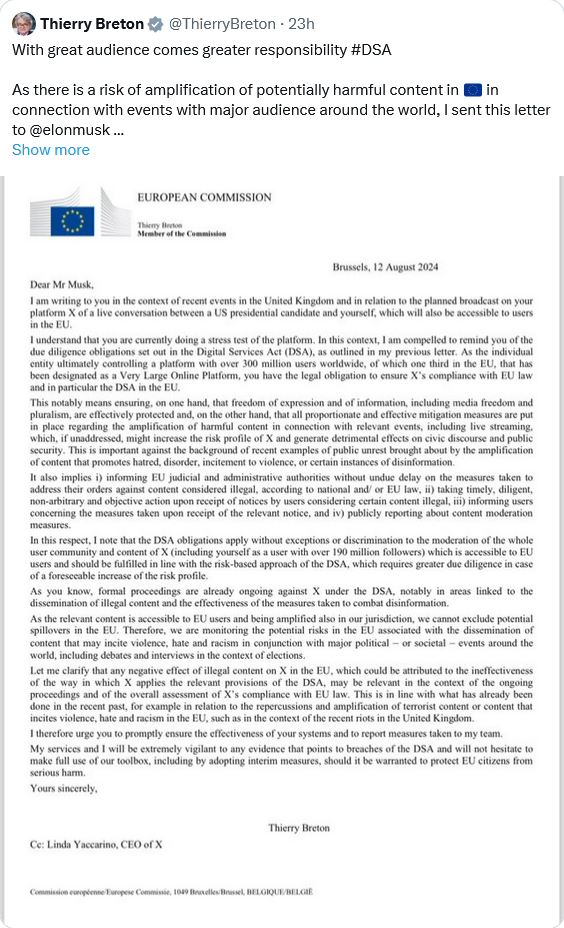
“The European Union’s digital enforcer wrote an open letter to tech mogul Elon Musk on Monday ahead of a planned interview with former United States President Donald Trump to remind him of the EU’s rules on promoting hate speech,” reports Politico.
“As the relevant content is accessible to EU users and being amplified also in our jurisdiction, we cannot exclude potential spillovers in the EU,” wrote Digital Commissioner Thierry Breton on X. “With great audience comes greater responsibility.”
Meanwhile, The Guardian reports that Bruce Daisley, Twitter’s former vice-president for Europe, the Middle East and Africa, has said Musk should face “personal sanctions” — which are “much more effective on executives than the risk of corporate fines” — and even, possibly, an “arrest warrant” if he “continue[s] stirring up unrest” on the platform.
“The question we are presented with is whether we’re willing to allow a billionaire oligarch to camp off the UK coastline and take potshots at our society,” says Daisley. “The idea that a boycott — whether by high-profile users or advertisers — should be our only sanction is clearly not meaningful.” (All Musk has done, for the record, is criticize British Prime Minister Keir Starmer for his handling of riots over immigration, calling him a “hypocrite” and “two-tier Keir“.)
The Korean War Week 008 – The First UN Counterattack – August 13, 1950
The Korean War by Indy Neidell
Published 13 Aug 2024The first UN large scale counterattack goes off this week; this by the American Task Force Kean. It has both successes and failures, and it runs right into a new North Korean offensive. The fighting happens just about everywhere on the Pusan Perimeter this week, though. That’s the area into which the UN forces have been compressed, and it is particularly threatening at the Naktong Bulge. It is, plain and simple, a week of desperate and bloody fighting and that’s about it.
Chapters
00:47 Recap
01:27 The Pusan Perimeter
04:31 Task Force Kean
07:44 The Naktong Bulge
10:09 The Fight Around Daegu
13:45 Summary
(more…)
Premier Doug Ford’s weird plan to hold the justice system to account
The problem with Premier Ford’s as-yet-unelaborated plan to collect formal statistics on the products of the criminal justice system is that it’s weird. And Canadians don’t like weird things because something something Donald Trump something something Hitler. Despite that, Colby Cosh thinks it’s a good idea:
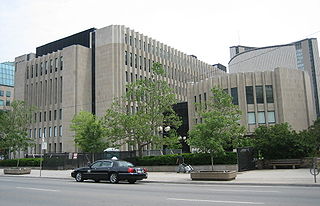
Superior Court of Justice building on University Avenue in Toronto (formerly the York County Court House).
… the very idea of addressing a social problem by gathering quantitative information is so un-Canadian as to seem radical and startling. It certainly seemed that way to the lawyers and civil libertarians who freaked out at Ford’s mention of “accountability” for judges who fail to protect the public from criminal predators.
Judicial independence is an axiom of our constitution — but to the degree that judges become policymakers, which is perpetually increasing as they discover creative new applications of the Charter, their lack of oversight by elected legislators and by the voting public is also a serious and obvious problem, purely in principle. It is no wonder the legal guild takes fright at the notion of “accountability” if it is interpreted to mean that judges might be subject to enforceable performance measures or firing by a minister.
But, of course, the word “account” is visible in there, and measurement of a social crisis is necessary to establish that one exists, even if almost everybody believes it to exist. Our courts are the first to castigate a government that makes some legislative change affecting individual rights without an attempt at inquiry into its reasonability and urgency. Ford, in proposing to establish the dimensions of preventable re-offending, is doing exactly what a legislator hoping to reduce crime ought to do: gather numbers. Collect and publish information. And let us specify that we mean publish publish, in an open, dependable, accessible way, with maximum detail.
Frankly, Ford’s announcement seems as much as anything like a reaction to being backed into a corner by an unresponsive Liberal government, which controls bail policy and the content of the Criminal Code, and by judges, whose irrational bail and sentencing decisions flood what’s left of our news media. Provincial politicians are bound to be judged by voters on the perceived prevalence of crime, but about all they can actually do about it is to, well, buy more choppers for the coppers and start collecting local data about revolving-door justice.
Update: Fixed broken link.
Madsen M50: From the Korean War to Star Trek
Forgotten Weapons
Published May 1, 2024During World War Two, Madsen (DISA) manufactured a licensed copy of the Finnish Suomi (see: Danish M1941 Suomi SMG). When the war ended, they wanted to replace this with a more modern, inexpensive design of their own. The result was the Model 1946 Madsen, a creative clamshell design of stamped parts. It is a very simple blowback, open-bolt 9x19mm SMG that perfectly fit the post-war era. The M46 version was sold to a few countries, and after some continued development and refinement the M50 version was demonstrated to a public audience in November 1950. This pattern was even simpler than before, and proved a popular gun for many unaligned countries in Central and South America and Southeast Asia — so much so that it remained in production until the 1980s. A bunch were imported into the US in the 1950s and 1960s, and they found a home in the movie industry, where they were often used in fantasy/sci-fi films to avoid having guns that would be recognized by American movie audiences.
(more…)
QotD: The solipsism of the American media
Severian, “Friday Mailbag”, Rotten Chestnuts, 2021-07-09.
August 13, 2024
“We just don’t understand the key role of ‘vibes’ in 2024”
In Spiked, Brendan O’Neill admits to being an “old square” who hasn’t really been able to figure out the Kamala Harris campaigning style:
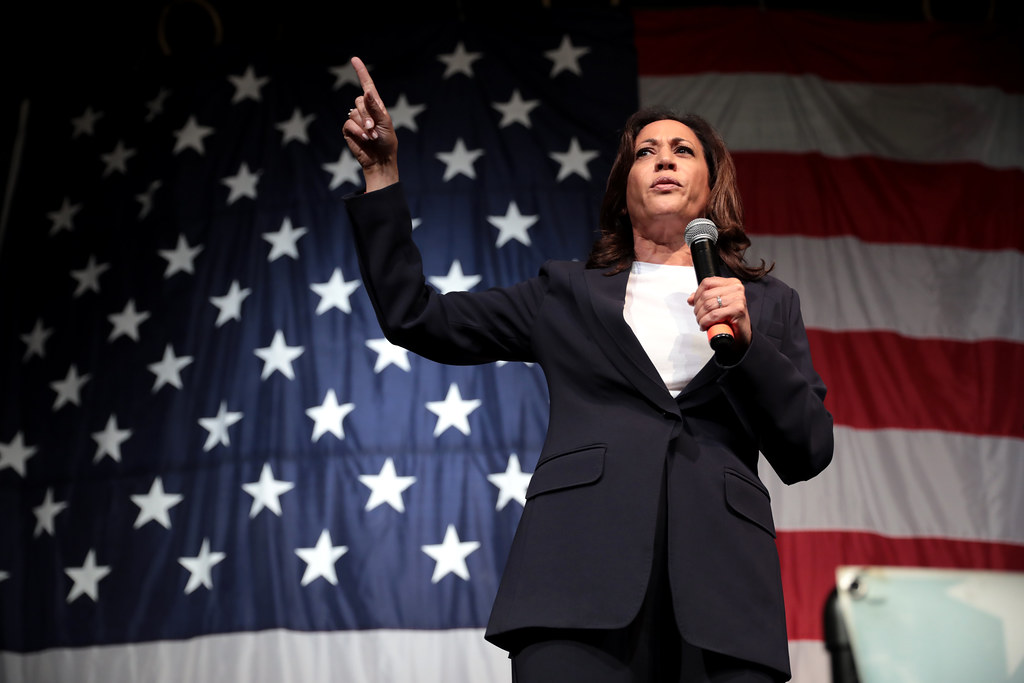
“Kamala Harris” by Gage Skidmore is licensed under CC BY-SA 2.0 

 .
.
I was thinking the other day: what do I know about Kamala Harris? Off the top of my head, no Googling, I know she was the attorney general of California. I know she locked up lots of people for marijuana violations. I know she likes Venn diagrams. I know she didn’t fall out of a coconut tree. I know she’s “brat”, though I don’t know what that means. I know her ceaseless cackle will haunt me to my grave. I know she’s unburdened by what has been. And I know she was the border czar, even if she herself seems to have forgotten that fact.
And that’s it. That is the long and short of my knowledge about the possible future leader of the free world. You could torture me for days and I wouldn’t be able to tell you her positions on the big issues presidential candidates once held forth on. Iran, say. Or global trade. Or job creation. I’m open to the possibility that this is partly down to my lack of reading, but there’s also more to it than that. The truth is Harris is a wholly new kind of politician. One who’s not meant to be known but felt. It’s less her policies we’re meant to be wowed by than her vibes. Brace yourselves: America might soon be ruled by a meme made flesh.
[…]
There’s a twisted irony to this feverish beatification of Kamala as the vibe goddess, the mother brat, the “Gen Z Meme Queen” (kill me now). Which is that it’s the handiwork of the kind of sniffy liberals who laugh at rednecks for falling for the “Cult of Trump“. It’s being pushed by online leftists who spend the rest of the time wringing their hands over Trump’s “demagoguery”, his sinister ensnaring of supposedly dim voters with rhetoric and style. These people urgently need to take a look in a mirror. For their creepy worship of Harris is the very definition of demagoguery. Their excuse-making for her ivory-tower style of campaigning makes the most wide-eyed MAGA people look critically minded in comparison. As to their lying down so that the Kamala vibes might wash over them and provide with them an emotional kick – it’s giving North Korea.
What are “vibes”, anyway? All I know, being middle-aged and literal, is that vibes is short for vibrations. It’s a Sixties thing, originally. It’s about pressing pause on all your thinking and worrying and just letting the beat rush through you. That’s fine in a club or art venue. But in politics? In a presidential campaign? Surely we should expect more from our elected representatives than a fleeting therapeutic thrill. It is a testament to the almost total hollowing out of public life, to “the fall of public man“, as Richard Sennett described the crisis of modernity nearly 50 years ago, that in an era of economic downturn, social conflict, war and fear, all we’re getting from one of the presidential candidates in the United States of America is vibes. And brat. And memes. And laughing. So much laughing.
The new politics of vibes is even more degraded than the politics of personality. That political style of the 1980s and 90s also spoke to a decline in democratic seriousness, where politicians would seek votes less on the basis of what they believed than on their spin-doctored pose as intimate, authentic “good guys”. But at least they tried to connect with us, at least they talked to us. Aloof, inscrutable “brat” Kamala is something far worse – a politician without substance or personality. Bereft of both vision and character, all she has to offer is strange vibrations.
Feelings … nothing more than (climate) feelings …
Have you been metaphorically beaten over the head about your climate sins? Your carbon buttprint? You know your very existence is a threat to Mother Gaia, right? Well, Katharina van Bronswijk is worried that you’ll stop listening to the neverending lectures about you and your evil externalities:
Climatism is a political programme bound to a broad social movement. Most of its momentum comes not from The Science or The Experts, but from diffuse cultural forces that we should probably try to understand, if only because they are driving our entire civilisation straight into the ground. Against all advice, I will therefore steer the plague chronicle into this ridiculous quagmire of leftoid green babble, with a look at our first lesson in Unlearnings, namely “Unlearn Repression”.
This superficial and disorganised essay is the work of an infuriating young woman named Katharina van Bronswijk. She’s a psychotherapist best known for her 2022 book, Climate in Our Heads. Fear, Anger, Hope: What the Ecological Crisis is Doing to Us. It belongs to that genre of inevitably unreadable monographs, in which the author herself appears on the cover, looking windswept, pioneering and undaunted:
“Climate feelings” are van Bronswijk’s niche in the extremely crowded enterprise of CO2-bothering. In “Unlearn Repression”, she argues that we should not suppress our negative feelings about climate change, but rather embrace them in constructive ways on behalf of the planet.
Now, van Bronswijk is the kind of deeply unoriginal person who just says the same things over and over. Everything she writes in “Unlearn Repression” flows directly from Climate in our Heads; she’s been digesting, reheating and reworking this same overboiled intellectual artichoke for almost two years now, through various media interviews and even in this English-language TEDx Talk. Throughout this woman’s work is the vague anxiety that the climatists have perhaps overdone it with doom and gloom, and that a lot of people have had enough of hearing about a climate apocalypse that never quite happens.
Van Bronswijk is naturally very dumb, but more than that she is painfully condescending, oblivious, verbose and just awash in litres of estrogen. I defy anyone to read her work and not come away from it a raging misogynist. This odious overpromoted schoolmarm belongs out of sight in a childcare centre teaching young children the alphabet. Perhaps she should also be in a choir, or part of a local environmental club dedicated to collecting litter in parks. That our society has denied van Bronswijk and so many others like her these proper outlets for their instincts and instead pushed them into public activism and intellectual production itself explains a great deal of what is wrong with the world.
“Unlearn Repression” opens with some autobiographical details, because of course everything van Bronswijk talks about is all about van Bronswijk. Like so many Germans of her generation, she was radicalised by school climate propaganda – specifically, by her teacher’s fateful screening of that classic propaganda film, An Inconvenient Truth:
Back then … I was happy for the welcome distraction of watching a film instead of doing normal lessons. But afterwards I was shocked and asked my mum for answers to all the questions and challenges. She didn’t have any solutions for me, how could she? I was alarmed and started to think about the impending consequences of climate change and what could be done about it. I found approaches in newsletters from NGOs and by reading up on animal and environmental protection … That was when my dream bubble burst and I realised: the world is unfair and, unlike all the Disney stories of my childhood, there will be no single hero*ine who saves the world. And there is no magical or technical miracle solution either.
Al Gore’s film so terrified the young van Bronswijk, that for a while she retreated into conspiratorial theories about why climate change is not happening, which qualifies our crayon psychotherapist to pronounce upon the psychology of those who deny the climate. This deeply evil and irrational movement is driven primarily by “white men”, because they “still enjoy most of the privileges in our society, and therefore have the most to lose”.

Taboo by Eric Kaufmann
In Quillette, John Lloyd reviews Eric Kaufmann’s Taboo:How Making Race Sacred Produced a Cultural Revolution:
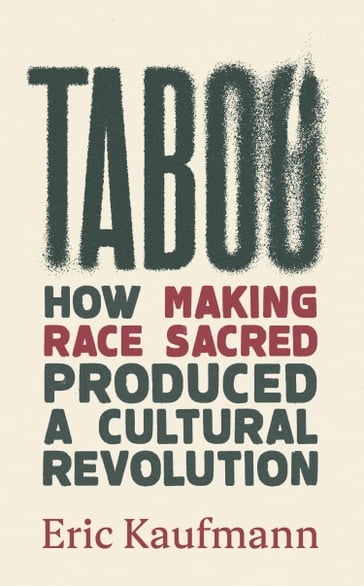
Earlier this year, Eric Kaufmann, a Canadian professor of political science, left Birkbeck College in the University of London where he had taught for twenty years. He was also head of the political science department there, and already had a number of deeply researched books behind him. But neither long service, departmental prominence, nor publishing success offered much of a defence against three separate attempts to cancel him. Indeed, his 2018 book Whiteshift told against him, since it argued, inter alia, that white majorities should have as much right to protect their identity and culture as minorities, a position now perceived by some as evidence of racism. “Repressing white identity as racist”, he wrote, “and demonising the white past, adds insult to the injury of this group’s demographic decline. This way lies growing populist discontent, or even terrorism.”
During the first part of his career, Kaufmann mostly kept his conservative views to himself, and with good reason. When he revealed them in Whiteshift, he became a marked man and spent several years fending off persistent efforts to strip him of his job and livelihood. His academic colleagues were generally unsupportive, and some of them participated in the campaign against him. So, he left Birkbeck for the University of Buckingham, the first of a small clutch of private universities created since the 1970s with the enthusiastic backing of Prime Minister Margaret Thatcher. Buckingham takes pride in rejecting leftist monoculture in favour of an approach that privileges open debate without the risk of career obliteration.
These days, Kaufmann is — as the Scots saying goes — a “bonnie hater” (or what others might call a “happy warrior”). With his new book, he joins the best of those (disproportionately American) writers, journalists, and politicians alarmed by the activities of ideologically motivated individuals and organisations operating under the vague umbrella term “wokeism”. This inchoate movement, Kaufmann maintains, is deeply destructive of freedom (and of freedom of speech in particular), learning, virtue, public morality, patriotism, and emotional continence. It is, Kaufman recently told the Daily Mail, an “Orwellian threat to the [E]nlightenment — free speech, equal treatment, due process, objective scientific truth. I believe this new woke ideology threatens the foundations of our civilisation.”
Wearying of the years of harassment he received for his views (none of which, he stresses, was ever physical), Kaufmann moved to Buckingham. He wanted to take advantage of the opportunity to establish a Centre for Heterodox Sociology where progressive doctrines could be studied, dissected, and debated, a pursuit he believes would be impossible anywhere else. Buckingham received first prize for free speech in last year’s National Student Survey. It will now be required to live up to that distinction, since Kaufman’s approach — after many years spent avoiding conflict — has become direct and uncompromising. Any determined left-leaning student or scholar would find this an intolerable provocation — a display of prejudice and bigotry meriting expulsion from the scholarly body lest it spread to innocent souls insufficiently prepared to counter it.
The list of progressive doctrines Kaufmann has compiled to define “wokeism” is probably the most comprehensive assembled to date. Much of what concerns him most relates to education. He believes that higher education, in particular, has become a place of inflexible dogmas on race, gender, emotional fragility, and anti-white bias rather than a home of serious study, reflection, and discussion. But he does not believe—as many other critics of contemporary progressivism do—that this is a kind of warmed-over Marxism, in which the fragile student has taken the place of the exploited proletarian. Instead, progressivism’s concern for the outnumbered, the vulnerable, and the frail can be traced back to Christ’s teachings, and especially to his Sermon on the Mount reported in Matthew 5:5: “Blessed are the meek, for they shall inherit the earth.” This injunction is now marshalled into a secular hallowing of blacks (above all), Muslims, women, and LGBT individuals.
Kaufmann calls the upshot of this genealogy “cultural socialism” — a movement that privileges equality, but equality of outcome not merely opportunity. He points to a speech that US president Lyndon Johnson delivered to students at the historically black Howard University in 1965, in which Johnson claimed that “we seek not just equality as a right and a theory, but equality as a fact and equality as a result”. Suddenly, Kaufmann remarks, “the door was open to restricting liberty and equal treatment in the name of achieving ‘equality of result’.” Such a regime, he points out, will inevitably disincentivise effort and excellence. Why forgo pleasure to work hard when the dedicated and indolent alike will all be made equal in the end? It’s worth remarking, however, that socialism does not necessarily provide the low road to unequal equality. Kaufmann quotes the historian Eric Hobsbawm — an unapologetic communist until he died in 2012 — who insisted that privileging one group over another will destroy society by breaking it into mutually hostile communities.
The Original Secret History
Tom Ayling
Published Apr 28, 2024This is the story of Procopius’s Secret History Of Justinian – originally written around 550, but not published until 1623.
In this video we look at how Procopius wrote the text, how it survived, almost unknown, for 1,000 years, how it came to be published in the 1620s, and the extraordinary ramifications when it was.
00:00 Introduction
00:44 The Original Composition Of The Secret History
02:40 The Survival Of The Text In Greek Manuscripts
05:56 The Rediscovery And Publication Of The Secret History
08:23 Secret Histories Go ViralTo learn more about Secret Histories, sign up to receive my catalogue of rare books devoted to the subject – https://www.tomwayling.co.uk/register
I couldn’t have made this video without the help of two works in particular. The first is Brian Croke’s magisterial Procopius: From Manuscripts To Books: 1400-1850. The second is The Secret History In Literature, 1660-1820 which is edited by Rebecca Bullard and Rachel Carnell.
My name’s Tom and I’m an antiquarian bookseller – you can browse the books I have for sale on my website: https://www.tomwayling.co.uk/


