World War Two
Published 30 Nov 2019While Hitler consolidates his power in occupied France, Japanese and Italian forces try to get an edge, but fail. The war is not looking too well for anyone at this point.
Join us on Patreon: https://www.patreon.com/TimeGhostHistory
Or join The TimeGhost Army directly at: https://timeghost.tvFollow WW2 day by day on Instagram @World_war_two_realtime https://www.instagram.com/world_war_t…
Join our Discord Server: https://discord.gg/D6D2aYN.
Between 2 Wars: https://www.youtube.com/playlist?list…
Source list: http://bit.ly/WW2sourcesWritten and Hosted by: Indy Neidell
Produced and Directed by: Spartacus Olsson and Astrid Deinhard
Executive Producers: Bodo Rittenauer, Astrid Deinhard, Indy Neidell, Spartacus Olsson
Creative Producer: Joram Appel
Post-Production Director: Wieke Kapteijns
Research by: Indy Neidell
Edited by: Mikołaj Cackowski
Map animations: Eastory (https://www.youtube.com/c/eastory)Colorizations by:
– Adrien Fillon (https://www.instagram.com/adrien.colo…)
– Dememorabilia (https://www.instagram.com/dememorabilia/)Sources:
-Archiwum CyfroweArchive by Screenocean/Reuters https://www.screenocean.com.
A TimeGhost chronological documentary produced by OnLion Entertainment GmbH.
December 1, 2019
The German Plan to Destroy French Culture – The Occupation of France – WW2 – 066 – November 30, 1940
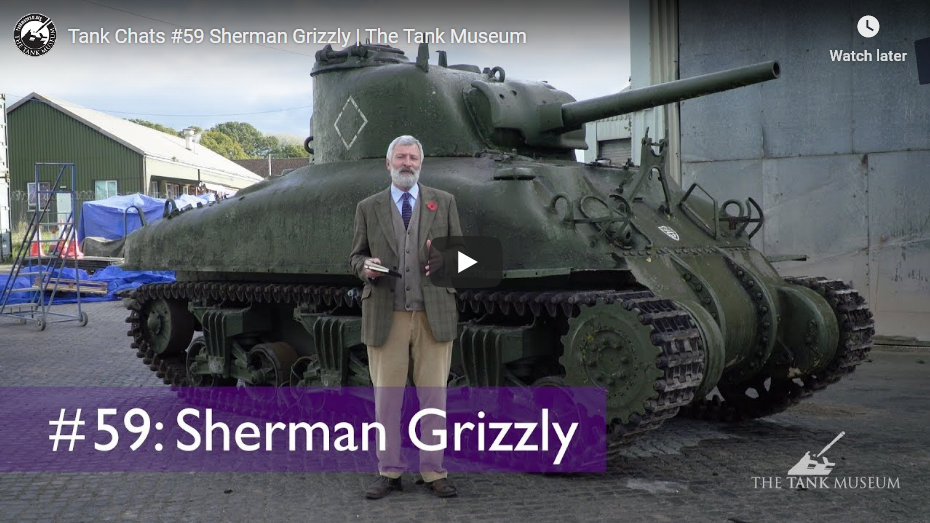
Tank Chats #56 Sherman DD | The Funnies | The Tank Museum
The Tank Museum
Published 7 Sep 2018Another episode in the Tank Chats Funnies Specials, with David Fletcher looking at the weird and wonderful vehicles of 79th Armoured Division led by Major General Percy Hobart, known as “Hobart’s Funnies”.
The Sherman DD, or Duplex Drive, was a term applied to Sherman tanks modified for amphibious operations. DD tanks were used by American, British and Canadian forces in WW2 on D-Day, 6 June 1944; by the Americans again in the south of France and by the Americans and British during the Rhine crossing.
Support the work of The Tank Museum on Patreon: ► https://www.patreon.com/tankmuseum
Or donate http://tankmuseum.org/support-us/donateVisit The Tank Museum SHOP: ► https://tankmuseumshop.org/
Twitter: ► https://twitter.com/TankMuseum
Tiger Tank Blog: ► http://blog.tiger-tank.com/
Tank 100 First World War Centenary Blog: ► http://tank100.com/ #tankmuseum #tanks #tankchats
November 26, 2019
Invasion of Poland 1939 – Fall Weiß – Case White
Military History Visualized
Published 30 Aug 2016The German Invasion of Poland in 1939 started the Second World War in Europe. The German name of operation was “Fall Weiß” meaning “Case White”. In this video I will take a look at the major German troop movements, the Soviet invasion of Poland, the losses and a final assessment.
» HOW YOU CAN SUPPORT MILITARY HISTORY VISUALIZED «
(A) You can support my channel on Patreon: https://www.patreon.com/mhv(B) You can also buy “Spoils of War” (merchandise) in the online shop: https://www.redbubble.com/people/mhvi…
(C) If you want to buy books that I use or recommend, here is the link to the Amazon Store: http://astore.amazon.com/ytmh-20 which has the same price for you and gives a small commission to me, thus it is a win/win.
» SOURCES & LINKS «
Maier, Klaus; Rohde, Horst; Stegemann, Bernd; Umbreit, Hans: Die Errichtung der Hegemonie auf dem europäischen Kontient. Das Deutsche Reich und der Zweite Weltkrieg (DR2WK), Band 2.
Müller, Rolf-Dieter: Hitler’s Wehrmacht, 1935-1945
Zaloga, Steven J.: Poland 1939 – The Birth of Blitzkrieg
Wettstein, Adrian: Wehrmacht im Stadtkampf
http://www.cgsc.edu/CARL/nafziger/939…
http://niehorster.org/029_poland/1939…
http://www.westpoint.edu/history/Site…
https://en.wikipedia.org/wiki/Soviet_…
» CREDITS & SPECIAL THX «
Song: Ethan Meixsell – “Demilitarized Zone”The Counter-Design is heavily inspired by Black ICE Mod for the game Hearts of Iron 3 by Paradox Interactive
https://forum.paradoxplaza.com/forum/…» DISCLAIMER «
Amazon Associates Program: “Bernhard Kast is a participant in the Amazon Services LLC Associates Program, an affiliate advertising program designed to provide a means for sites to earn advertising fees by advertising and linking to amazon.com.”
Tank Chats #55 Churchill Crocodile | The Funnies | The Tank Museum
The Tank Museum
Published 18 Aug 2018Another episode in the Tank Chats Funnies Specials, with David Fletcher looking at the weird and wonderful vehicles of 79th Armoured Division led by Major General Percy Hobart, known as “Hobart’s Funnies”.
The Churchill Crocodile was a British flamethrower tank and a variant of the Churchill Mark VII tank. The Crocodile was developed in time for the D-Day landings and used during the Allied invasion of North-West Europe.
Support the work of The Tank Museum on Patreon: ► https://www.patreon.com/tankmuseum
Or donate http://tankmuseum.org/support-us/donateVisit The Tank Museum SHOP: ► https://tankmuseumshop.org/
Twitter: ► https://twitter.com/TankMuseum
Tiger Tank Blog: ► http://blog.tiger-tank.com/
Tank 100 First World War Centenary Blog: ► http://tank100.com/ #tankmuseum #tanks #tankchats
November 24, 2019
Cracks in the Soviet-Nazi Alliance – WW2 – 065 – November 23, 1940
World War Two
Published 23 Nov 2019As the Greek campaign continues, Hitler points his attention eastwards. While he can’t invade the Soviet Union just yet, his dependence on it is making him nervous.
Join us on Patreon: https://www.patreon.com/TimeGhostHistory
Or join The TimeGhost Army directly at: https://timeghost.tvFollow WW2 day by day on Instagram @World_war_two_realtime https://www.instagram.com/world_war_t…
Join our Discord Server: https://discord.gg/D6D2aYN.
Between 2 Wars: https://www.youtube.com/playlist?list…
Source list: http://bit.ly/WW2sourcesWritten and Hosted by: Indy Neidell
Produced and Directed by: Spartacus Olsson and Astrid Deinhard
Executive Producers: Bodo Rittenauer, Astrid Deinhard, Indy Neidell, Spartacus Olsson
Creative Producer: Joram Appel
Post-Production Director: Wieke Kapteijns
Research by: Indy Neidell
Edited by: Iryna Dulka
Map animations: Eastory (https://www.youtube.com/c/eastory)Colorisations by:
– Julius Jääskeläinen (https://www.facebook.com/JJcolorization/)
– Adrien Fillon (https://www.instagram.com/adrien.colo…)
– Dememorabilia (https://www.instagram.com/dememorabilia/)Eastory’s channel: https://www.youtube.com/channel/UCEly…
Archive by Screenocean/Reuters https://www.screenocean.com.Sources:
– Coal energy by supalerk laipawat, wheat Grain Bag by Symbolon, oil barrel by BomSymbols from the Noun Project
– Portrait of Sir John Salmond courtessy of National Portrait Gallery, London
– Lord Beaverbrook photographed by Yousuf Karash
– IWM: HU 94169, D 1640, D 1556, D 1507, D 1589, D 1513, D 1567, H 12224
– Narodowe Archiwum CyfroweA TimeGhost chronological documentary produced by OnLion Entertainment GmbH.
From the comments:
World War Two
2 days ago (edited)
We have been shooting a bunch of new episodes this week. Besides the World War Two and Between Two Wars episodes, which by the way includes some pretty amazing history, we have also been working on some much requested episodes of our War Against Humanity series. We have shot three of those, so you will see the first of those coming in the next few weeks. Additionally, we have shot a very special mini-series that we will be airing during the holidays on the TimeGhost History Channel (https://www.youtube.com/channel/UCLfMmOriSyPbd5JhHpnj4Ng). We will disclose more about that soon, but it’s going to be pretty cool. So all in all, enough to look forward to!
Cheers, Joram
November 22, 2019
“Inmate 4859” – Witold Pilecki – Sabaton History 042 [Official]
Sabaton History
Published 21 Nov 2019Join Indy and Joakim as they dive into the out-of-life story of Witold Pilecki during the Second World War, that has made for this awesome song.
Support Sabaton History on Patreon: https://www.patreon.com/sabatonhistory
Listen to Heroes (where Inmate 4859 is featured):
CD: http://bit.ly/HeroesStore
Spotify: http://bit.ly/HeroesSpotify
Apple Music: http://bit.ly/HeroesAppleMusic
iTunes: http://bit.ly/HeroesiTunes
Amazon: http://bit.ly/HeroesAmz
Google Play: http://bit.ly/HeroesGooglePListen to Sabaton on Spotify: http://smarturl.it/SabatonSpotify
Official Sabaton Merchandise Shop: http://bit.ly/SabatonOfficialShopHosted by: Indy Neidell
Written by: Markus Linke and Indy Neidell
Directed by: Astrid Deinhard and Wieke Kapteijns
Produced by: Pär Sundström, Astrid Deinhard and Spartacus Olsson
Creative Producer: Joram Appel
Executive Producers: Pär Sundström, Joakim Broden, Tomas Sunmo, Indy Neidell, Astrid Deinhard, and Spartacus Olsson
Post-Production Director: Wieke Kapteijns
Edited by: Iryna Dulka
Sound Editing by: Marek KaminskiEastory YouTube Channel: https://www.youtube.com/channel/UCEly…
Archive by: Reuters/Screenocean https://www.screenocean.com
Music by Sabaton.An OnLion Entertainment GmbH and Raging Beaver Publishing AB co-Production.
© Raging Beaver Publishing AB, 2019 – all rights reserved.
From the comments:
Sabaton History
23 hours ago (edited)
Witold Pilecki is one of those larger-than-life characters, and listen to Joakim and Indy talk about this amazing song as well as the historical background behind it. Now thanks to all of you we have ben able to film the history part of this in a new studio which is both bigger and better. This is 100% thanks to the Patrons whose generous contributions made this possible. Do you want to be a part of this as well? Make sure to support us on Patreon: https://www.patreon.com/sabatonhistory
Cheers, The Sabaton History Team
Battle of Savo Island 1942: America’s Worst Naval Defeat
Montemayor
Published 26 Aug 2017(Animated Map) – WARNING: lower the volume if you are using headphones. sorry for the audio.
I do not own the rights to the songs or images. This video is purely for educational purposes.
No copyright intended, all image rights go to:
-Wikipedia Commons
https://commons.wikimedia.org/wiki/Ba…-Naval History Heritage and Command
https://www.history.navy.mil/-Portrait of Richmond K. Turner
https://www.ibiblio.org/hyperwar/Onli…–USS Jarvis
http://www.navsource.org/Images contained on this site that are donated from private sources are © copyrighted by the respective owner. Images credited to the National Archives (NA, NARA); Naval History & Heritage Command (NHHC), formerly Naval Historical Center (NHC); and U.S. Navy (USN) are believed to be in the public domain. Some images credited to the United States Naval Institute (USNI) are from © copyrighted collections, the rest are believed to be in the public domain.
All songs by Ross Budgen https://www.youtube.com/channel/UCQKG…
-“Welcome to Chaos”
-“House Lannister Theme” – Game of Thrones Season 4 (Original composition)
-“Run”
-“Parallel”Sources-
Hammel, E. (2017, March 6). “First Battle of Savo Island: The U.S. Navy’s Worst Defeat”. Retrieved August 25, 2017, from http://warfarehistorynetwork.com/dail…
Hornfischer, J. D. (2011). Neptunes Inferno: the U.S. Navy at Guadalcanal. New York: Bantam Books.
Newcomb, R. F., & Newcomb, R. F. (2002). The Battle of Savo Island. New York: H. Holt.
Stille, M. (2013). The Naval Battles for Guadalcanal 1942 (Vol. 225). Oxford, UK: Osprey Publishing.
Toll, I. W. (2016). The Conquering Tide: war in the Pacific Islands, 1942-1944. New York: W.W. Norton & Company.
USMC Casualty list taken from:
https://www.ibiblio.org/hyperwar/USMC…
November 20, 2019
The Sinking of the Royal Oak
Eoin MacFreeman
Published 19 Sep 2014STV and History channel documentary to coincide with the 70th anniversary of the sinking of HMS Royal Oak at Scapa Flow in Scotland. With harrowing eye witness accounts from survivors. Narrated by oor Alex Norton. We will remember them.
On 14 October 1939, Royal Oak was anchored at Scapa Flow in the Orkney Islands, Scotland, when she was torpedoed by the German submarine U-47. Of Royal Oak‘s complement of 1,234 men and boys, 833 were killed that night or died later of their wounds. The loss of the old ship – the first of the five Royal Navy battleships and battlecruisers sunk in the Second World War – did little to affect the numerical superiority enjoyed by the British navy and its allies, but the sinking had considerable effect on wartime morale. The raid made an immediate celebrity and war hero out of the U-boat commander, Günther Prien, who became the first German submarine officer to be awarded the Knight’s Cross of the Iron Cross. Before the sinking of Royal Oak, the Royal Navy had considered the naval base at Scapa Flow impregnable to submarine attack, and U-47‘s raid demonstrated that the German navy was capable of bringing the war to British home waters. The shock resulted in rapid changes to dockland security and the construction of the Churchill Barriers around Scapa Flow.
November 17, 2019
Britain shows Japan how to Attack Pearl Harbor – WW2 – 064 – November 16, 1940
World War Two
Published 16 Nov 2019Japan has two wins this week, and one might turn out to be very consequential for the rest of the war. In the meantime, the British RAF fights the Luftwaffe and Italy struggles in their offensive against Greece.
Join us on Patreon: https://www.patreon.com/TimeGhostHistory
Or join The TimeGhost Army directly at: https://timeghost.tvFollow WW2 day by day on Instagram @World_war_two_realtime https://www.instagram.com/world_war_t…
Join our Discord Server: https://discord.gg/D6D2aYN.
Between 2 Wars: https://www.youtube.com/playlist?list…
Source list: http://bit.ly/WW2sourcesWritten and Hosted by: Indy Neidell
Produced and Directed by: Spartacus Olsson and Astrid Deinhard
Executive Producers: Bodo Rittenauer, Astrid Deinhard, Indy Neidell, Spartacus Olsson
Creative Producer: Joram Appel
Post-Production Director: Wieke Kapteijns
Research by: Indy Neidell
Edited by: Iryna Dulka
Map animations: EastoryColorisations by: Julius Jääskeläinen, https://www.facebook.com/JJcolorization/
Eastory’s channel: https://www.youtube.com/channel/UCEly…
Archive by Screenocean/Reuters https://www.screenocean.com.Sources:
– Narodowe Archiwum Cyfrowe
– IWM: CM 164, C 1244
– Destroyed house icon by Gan Khoon Lay, people icon by Gregor Cresnar from the Noun ProjectA TimeGhost chronological documentary produced by OnLion Entertainment GmbH.
From the comments:
World War Two
2 days ago
Do you want more World War Two in realtime? We have a great Instagram page, where we make a daily post about what happened in the war on that day. This might be something completely different from what’s covered in these videos, or might add some more details. You can follow it by searching @world_war_two_realtime or by clicking here: https://www.instagram.com/world_war_two_realtime/. See you there!
Cheers, Joram
November 16, 2019
History of Space Travel – Kill Devil to V-2 – Extra History – #3
Extra Credits
Published 14 Nov 2019Start your Warframe journey now and prepare to face your personal nemesis, the Kuva Lich — an enemy that only grows stronger with every defeat. Take down this deadly foe, then get ready to take flight in Empyrean! Coming soon! http://bit.ly/EHWarframe
Early flight started as a utopian dream but quickly became the military’s top priority: first as reconnaissance vehicles, and then as weapons in their own right. After WW1, the threat of German aircraft led to the Treaty of Versailles banning Germany from having an airforce at all. But the Germans also found a loophole: rockets didn’t count as an airforce. Enter Werner Von Braun & the V-2 rockets.
War Exiles: Kaiser Bill, Polish Forces, and US Volunteers – WW2 – OOTF 006
World War Two
Published 14 Nov 2019What happened to Kaiser Wilhelm II after World War One? How did Polish soldiers flee to Allied territories after the 1939 invasion? And did any American volunteers serve in the war in 1939 and 1940? We answer all of this in this episode of Out of the Foxholes.
Join us on Patreon: https://www.patreon.com/TimeGhostHistory
Or join The TimeGhost Army directly at: https://timeghost.tvFollow WW2 day by day on Instagram @World_war_two_realtime https://www.instagram.com/world_war_t…
Join our Discord Server: https://discord.gg/D6D2aYN.
Between 2 Wars: https://www.youtube.com/playlist?list…
Source list: http://bit.ly/WW2sourcesHosted by: Indy Neidell
Produced and Directed by: Spartacus Olsson and Astrid Deinhard
Executive Producers: Bodo Rittenauer, Astrid Deinhard, Indy Neidell, Spartacus Olsson
Creative Producer: Joram Appel
Post Production Director: Wieke Kapteijns
Research by: Rune Vaever Hartvig
Edited by: Mikołaj Cackowski
Map animations: EastoryEastory’s channel: https://www.youtube.com/channel/UCEly…
Archive by Screenocean/Reuters https://www.screenocean.com.A TimeGhost chronological documentary produced by OnLion Entertainment GmbH.
From the comments:
World War Two
2 days ago (edited)
We get a ton of questions about the war on a daily basis. A lot of them are already answered in the YouTube comments to you all directly, but because some questions are very interesting indeed, we like to showcase some of them on the channel. Because the YouTube comments are hard to navigate, we have made a section on our forum where you can submit questions to be covered in Out of the Foxholes. You can do that here: https://community.timeghost.tv/c/Out-of-the-Foxholes-QsCheers,
The TimeGhost team
November 11, 2019
Mark Knopfler – “Remembrance Day”
Bob Oldfield
Published on 3 Nov 2011A Remembrance Day slideshow using Mark Knopfler’s wonderful “Remembrance Day” song from the album Get Lucky (2009). The early part of the song conveys many British images, but I have added some very Canadian images also which fit with many of the lyrics. The theme and message is universal… ‘we will remember them’.
In memoriam
A simple recognition of some of our family members who served in the First and Second World Wars:
The Great War
Private William Penman, Scots Guards, died 16 May, 1915 at Le Touret, age 25
(Elizabeth’s great uncle)- Private Archibald Turner Mulholland, Argyll & Sutherland Highlanders, mortally wounded 25 September, 1915 at Loos, age 27
(Elizabeth’s great uncle) - Private David Buller, Highland Light Infantry, died 21 October, 1915 at Loos, age 35
(Elizabeth’s great grandfather) - Private Harold Edgar Brand, East Yorkshire Regiment. died 4 June, 1917 at Tournai.
(My first cousin, three times removed) - Private Walter Porteous, Durham Light Infantry, died 4 October, 1917 at Passchendaele, age 18
(my great uncle) - Corporal John Mulholland, Argyll & Sutherland Highlanders, wounded 2 September, 1914 (shortly before the First Battle of the Aisne), wounded again 29 June, 1918, lived through the war.
(Elizabeth’s great uncle)
The Second World War
- Flying Officer Richard Porteous, RAF, survived the defeat in Malaya and lived through the war
(my great uncle) - Able Seaman John Penman, RN, served in the Defensively Equipped Merchant fleet on the Murmansk Run (and other convoy routes), lived through the war
(Elizabeth’s father) - Private Archie Black (commissioned after the war and retired as a Major), Gordon Highlanders, captured at Singapore (aged 15) and survived a Japanese POW camp
(Elizabeth’s uncle) - Elizabeth Buller, “Lumberjill” in the Women’s Land Army in Scotland through the war.
(Elizabeth’s mother) - Trooper Leslie Taplan Russon, 3rd Royal Tank Regiment, died at Tobruk, 19 December, 1942 (aged 23).
Leslie was my father’s first cousin, once removed (and therefore my first cousin, twice removed).
For the curious, the Commonwealth War Graves Commission the Royal British Legion, and the Library and Archives Canada WW1 and WW2 records site provide search engines you can use to look up your family name. The RBL’s Every One Remembered site shows you everyone who died in the Great War in British or Empire service (Canadians, Australians, New Zealanders, South Africans and other Imperial countries). The CWGC site also includes those who died in the Second World War.
In Flanders fields the poppies blow
Between the crosses row on row,
That mark our place; and in the sky
The larks, still bravely singing, fly
Scarce heard amid the guns below.We are the Dead. Short days ago
We lived, felt dawn, saw sunset glow,
Loved and were loved, and now we lie
In Flanders fields.Take up our quarrel with the foe:
To you from failing hands we throw
The torch; be yours to hold it high.
If ye break faith with us who die
We shall not sleep, though poppies grow
In Flanders fields.Lieutenant Colonel John McCrae, MD Canadian Army Medical Corps (1872-1918)
Too Late and Not Much Better: the Austen Mk II SMG
Forgotten Weapons
Published on 12 Sep 2019http://www.patreon.com/ForgottenWeapons
Cool Forgotten Weapons merch! http://shop.bbtv.com/collections/forg…
The story of the Austen submachine gun did not end when the Mk I guns were pulled from combat service in 1944. The manufacturer continued to work on an improved version, which would be ready in 1946, after the end of World War Two. Only 200 were made total, and they were both adopted and declared obsolete in August of 1946.
The changes made to the MkII Austen mostly involved increasing the use of die cast components, which fit the manufacturer’s tooling and experience. The front grip and magazine well casting was enlarged, and the whole rear assembly was made into a second cast part integrating the rear sight, stock mounting and latch, and fire control group. The one significant internal change was to remove the firing pin from the telescoping recoil spring assembly and make it an integral feature of the bolt face.
Many thanks to the Royal Armouries for allowing me to film this very rare artifact! The NFC collection there – perhaps the best military small arms collection in Western Europe – is available by appointment to researchers:
https://royalarmouries.org/research/n…
You can browse the various Armouries collections online here:
https://royalarmouries.org/collection/
Contact:
Forgotten Weapons
PO Box 87647
Tucson, AZ 85754
QotD: The British army from WW1 to the end of the Cold War
Before WW1 the army was optimised primarily as a colonial police force, coupled with a small expeditionary force of regular soldiers intended to deploy to the continent to work alongside the French or other allies in the event of war. WW1 was an event that really constituted three armies – the small regular/territorial force of barely 300,000 soldiers that mobilised in 1914 and was wiped out to buy time. The interim force of Territorials and Reservists that held the line in 1915-1916 while the army reconstituted, and the civilian volunteer/conscript force from 1916 onwards that saw the army grow to over 4 million men by 1918.
Rapid demobilisation followed, followed by regeneration in the 1920s and 30s to become the most mechanised army in the world by 1939, comprising some 224,000 regulars. It is often forgotten that the British army of 1940 had many more tanks and vehicles than the German Army – history is not kind to the losers. The army in WW2 grew to a citizen force of roughly 3.5 million men, before shrinking post war.
The continuation of National Service, the war in Korea and the end of empire saw the army stay at roughly 330,000 soldiers for much of the 1950s, causing significant damage to the national economy due to the cost and lack of manpower for rebuilding. By 1957 the army estimated that its regular strength was roughly 80,000 personnel (only a quarter of the whole force), many of whom were tied up training two-year National Servicemen. A major factor in the 1957 Sandys Defence White Paper was the need to reduce manpower costs and free people up for other economically important tasks.
The Sandys Review led to a reduction to 165,000 troops most of whom were focused on either colonial policing actions (it is often forgotten that in the early 1960s there were over 100,000 UK service personnel in the Far East) or deployed in Germany as part of the British Army of the Rhine (BAOR). The withdrawal from empire saw the army shrink to a strength of approximately 150,000 by the 1980s, where its role was primarily to provide a corps of four divisions in Germany in the event of general war, supported by mobilisation units from the UK which would provide further divisions to augment BAOR and conduct home defence roles.
The end of the Cold War saw the first deployment of a divisional-sized force, with an armoured division sent to the Gulf in 1990 for Operation Desert Storm. This happened just as the Options for Change review cut BAOR and reduced the army to approximately 120,000. Further deployments to Bosnia and Kosovo in the 1990s followed by the deployment of an armoured division to Iraq in 2003. Operations in Iraq and Afghanistan from 2003-2014 saw the army struggle to sustain itself on two fronts without heavy support from the RN and RAF providing extra manpower and resources.
The 2010 SDSR initially preserved the army at just under 100,000 personnel, although later reviews cut this down to 82,000 regulars supported by a target of approximately 30,000 reservists working in a far more integrated manner. Today the army is struggling to sustain itself at 82,000, with recent manpower figures showing a total of roughly 78,000 troops.
Sir Humphrey, “How Do You Solve a Problem Like a Deployable Division?”, Thin Pinstriped Line, 2017-08-06.