
File this one under “first world problems”. Air conditioning is something that I’ve tended to take for granted . . . until this week, when our air conditioner failed. I should be grateful that the unit managed to last until nearly the end of summer before giving up the ghost, but it’s hard to feel grateful when even sitting still produces profuse sweating.
Even going to the basement isn’t much of a relief. My miniscule wine cellar is in the corner of the basement, and I monitor the temperature there. It’s usually in the range of 17-19 degrees. Yesterday it was 24. <sarc>That’ll help age those wines nicely</sarc>.
Update: Oh, joy: “Today’s weather: A high of 30 C feeling more like 40 C, the humidex advisory continuing. A mix of sun and cloud with scattered showers.”
Update, the second: Even better: “Heat alert issued for Toronto, public encouraged to stay cool, drink lots of fluids and monitor those at risk for heat-related illness.”



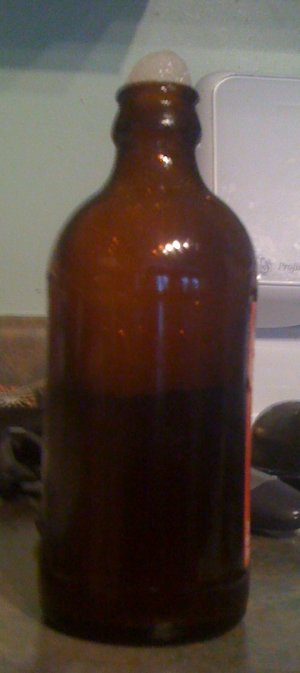 I’m always on the lookout for interesting beers (I’m very much into wine, but now and again a beer is the right beverage). I picked up a six-pack of “Sgt. Major India Pale Ale” from the Scotch Irish Brewing company on Friday. They’ve been in the fridge since then. I decided to open one earlier this afternoon, only to discover that the Sgt. Major is an excitable type.

